400 GSM vs 500 GSM Hoodies: Fit, Feel, Cost & Best Uses
Every brand that develops a fleece program eventually lands on the same two numbers, and eventually somebody in the room says the sentence you already know is coming: "Let's just go heavier — it'll feel more premium." That is usually the moment a good hoodie program starts drifting off course. Weight isn't a grade, and a hoodie isn't a mattress.
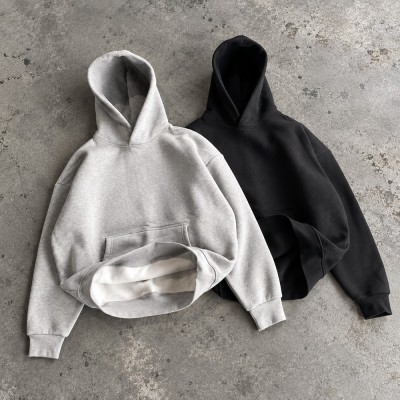
The short answer: 400 GSM and 500 GSM are two different heavyweight fleece tiers with two different jobs — not two quality levels of the same garment. A 400 GSM fleece reads as substantial the second you lift it, but it still behaves like clothing: it falls into soft folds, it packs, it dries at a believable speed. A 500 GSM fleece is a structural piece. The body holds its volume away from the wearer, folds read as crisp lines rather than curves, and the garment starts behaving less like a hoodie and more like a light shell. Choose 400 GSM for year-round retail and premium basics. Choose 500 GSM when the weight itself is the product.
One caution before you read on: every figure below is a development reference, not a stock specification. Confirm your own numbers on an approved swatch before you commit a single purchase order — that is exactly how our hoodie development team works with brands.
What Does GSM Actually Mean on a Hoodie?
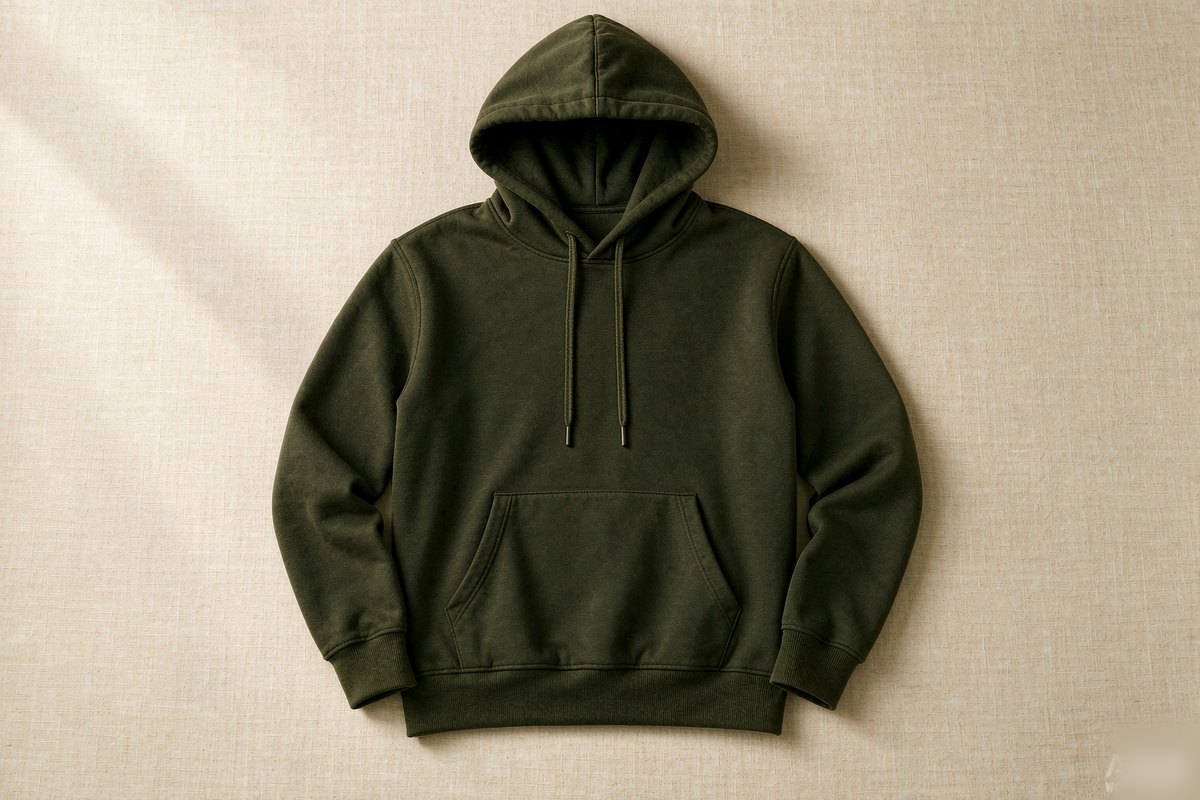
GSM stands for grams per square meter, and it measures exactly one thing: how much one square meter of that fabric weighs. That's the whole definition, and it fits in a sentence because the concept really is that simple. It is a mass figure. It is not a thickness figure, not a warmth figure, and absolutely not a quality grade.
Think about a loaf of bread. A heavier loaf tells you there's more dough in there — it tells you nothing about whether the crumb is any good. GSM works the same way. When you see 400 GSM or 500 GSM on a fabric card, you're looking at two candidates for the same job, weighed on the same scale. The interesting part is everything the scale can't see.
Why 400 and 500 GSM Became the Two Numbers Brands Ask For
These two numbers dominate briefs for a fairly mundane reason: they sit either side of a real behavioral cliff. Somewhere in the region of 380–420 GSM, a fleece hoodie crosses from "nice and warm" into "obviously heavy," and a customer notices the difference in their hands before they notice anything about the design. Move up to 500 GSM and the garment changes character again — it stops draping and starts standing.
So 400 GSM became the shorthand for premium but wearable, and 500 GSM became the shorthand for heavyweight statement. Both are legitimate product positions. Confusing them for each other is what costs brands money.
One clarification worth having early, because it always comes up in packaging reviews: GSM is an internal production specification, not a regulated label claim. The disclosures U.S. labeling rules actually require you to make are fiber content, country of origin and care instructions — which is exactly why a heavy hoodie can be perfectly labeled and still tell your customer nothing about how it was knit. The FTC's clothing and textiles guidance is the plain-English reference for what belongs on a permanent label versus what belongs in your tech pack.
Three Things the Number on the Fabric Card Cannot Tell You
If you take one thing from this article, take this: weight is one variable in a system, and it is rarely the loudest one once the garment is sewn. Two fabrics with the identical GSM number can feel and behave like different species. Here's what hides behind the figure.
Loft Is Not Weight
Loft is how much air the fabric traps in its structure, and air is the actual insulator. You can build a 500 GSM fleece that's dense and flat, or a 500 GSM fleece that's fluffy and tall — same mass, very different garment. Our production floor deals with this constantly: the weight is identical on the card, and the hoodie that comes off the line behaves nothing like the one beside it.
Loopback, Brushed Fleece and French Terry Behave Differently at the Same Weight
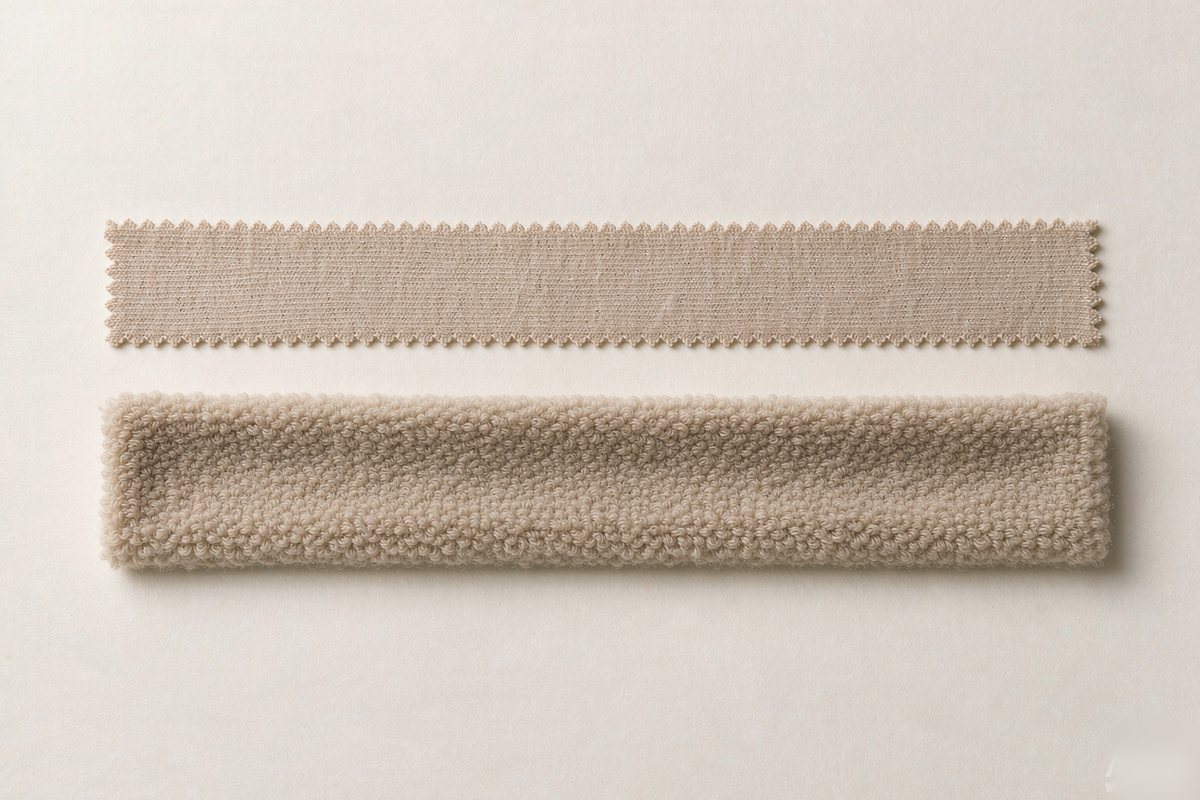
Brushed fleece is sanded on the inside to raise a soft nap — it feels generous immediately and flattens gradually with wear. Loopback leaves the knit loops intact, which gives a drier, more textured interior that ages beautifully but never feels as plush on day one. French terry is a lighter, flatter knit with an obvious summer-to-autumn personality. Put all three at 400 GSM and you get three different hoodies. If you want the long version of that comparison, we wrote a full breakdown of French terry versus fleece for custom hoodies.
Why "Heavier Is Better" Is the Most Expensive Myth in Hoodie Development
We understand the appeal. Weight is the easiest quality signal to sell, because a customer can feel it through a garment bag. But the myth has a cost attached, and it usually shows up in three places at once: the fabric bill goes up, the sewing floor slows down, and the customer who bought a 500 GSM hoodie for a mild autumn ends up leaving it in the car.
Weight has to match the market you're selling into. A heavier hoodie is more of something, not better at everything. Selling a weight the customer can't wear is not a premium position — it's an expensive one.
400 GSM vs 500 GSM: How Do They Actually Feel?
This is the comparison buyers keep asking for, and honestly it's the hardest one to write about, because "feel" is where language runs out and samples take over. Still, the behavior patterns are consistent enough to describe. When a brand asks us to build the same style in both weights, these are the differences that come back to the sample review.
Hand Feel: What Your Fingers Notice in the First Three Seconds
Pick up a 400 GSM hoodie and you get density with give. Your fingers can still push the fabric around, the body has a softness to its mass, and the hood holds a shape without feeling like a folded board. It reads as a serious piece of clothing that a person would happily wear for a whole day.
Pick up a 500 GSM hoodie and the feedback changes completely. There's a weight in the hand that announces itself immediately — a medium in a heavy brushed fleece can land in the region of 1.5–2 lb, depending on the cut and the trims. The fabric resists your fingers. It feels like a blanket that decided to grow a hood and a pocket, and for certain brands that is exactly the point.
Drape and Silhouette: The Argument the Number Can't Settle
Here's where the two weights really separate, and where the answer gets conditional. A 400 GSM hoodie falls. Move your arm and the fabric follows, folds stay soft, and an oversized cut reads as relaxed rather than rigid.
A 500 GSM hoodie stacks. Folds become angular, the body sits away from the torso, and a boxy pattern finally gets a body that can hold the shape the pattern was drawn for. That's why heavyweight statement pieces so often look better oversized and slightly awkward when cut slim — the fabric needs volume to work with. If your design depends on a slouchy, moving drape, 500 GSM will fight you. If it depends on architecture, 400 GSM can leave you with something sagging where you wanted an edge.
| Behavior point | 400 GSM fleece hoodie | 500 GSM fleece hoodie |
|---|---|---|
| Hand feel on the table | Dense but pliable; the fabric gives under your fingers | Unmistakably heavy; the fabric resists pressure and moves as a slab |
| How it falls | Soft, mobile folds that follow the wearer's movement | Crisp, near-static folds that hold their own line |
| Body volume on a fixed pattern | Moderate; the garment still references the body underneath | Pronounced; the garment sits away from the torso and hood stands on its own |
| Airflow through the knit | Steady; comfortable indoors and in shoulder-season weather | Reduced; noticeably hot in heated rooms and mild climates |
| Drying time | Slow but normal — a day on a rail is usually enough | Very slow, especially through the hood, pocket and ribbing |
| Print and embroidery surface | Slightly compressible; artwork sinks gently into the nap | Firm platform; artwork stays flat and reads crisply |
| Ribbing and seam load | Rib recovers easily at cuffs and hem | Ribbing works much harder and needs a heavier specification |
| Comfortable climate window | Cool autumn through mild winter, useful in a mixed market | Deep winter and cold-climate markets; a poor fit for warm regions |
Warmth and Breathability Are Two Different Currencies
People talk about these as if they were one dial. They aren't. Warmth comes largely from trapped air; breathability comes from how easily moisture vapor moves through the structure. A dense 500 GSM knit that's been heavily brushed can be extremely warm and still handle sweat reasonably well, because the nap holds a layer of air. A dense, tightly knitted 500 GSM with a flatter surface may be warmer against the wind while feeling stuffier indoors.
The practical consequence: don't let a weight come to a sample review alone. A 500 GSM heavyweight brushed fleece can feel more breathable day to day than a 500 GSM loopback built for structure. Which is a polite way of saying the number you argued about for two weeks doesn't decide this — the knit does. Our fabrics and techniques overview walks through the constructions we run most often for fleece programs.
How Each Weight Ages After Twenty Washes
New hoodies lie. It's what they do best. The version of a hoodie that exists after twenty washes at home is the product your customer will actually judge you on.
A 400 GSM fleece softens decisively. The nap settles, the body relaxes a little, and the piece becomes easier to wear — which is exactly what most customers want from an everyday hoodie. A 500 GSM fleece holds its structure far better, but the nap on a heavy brushed interior can flatten in the areas that take the most contact, and heavy bodies tend to show every change in stitch tension as they settle. Weight gives you shape retention. It doesn't give you forgiveness.
Vapor movement, dimensional change and pilling after laundering are measured with defined, repeatable test methods rather than eyeballed on a hanger — the AATCC test method library is the reference most fleece programs work from. That's the level of proof worth asking any supplier for. Our own quality control process runs inline checks through the sewing line and a final inspection against agreed acceptance criteria, so weight and hand feel stay consistent from the first sample to the replenishment order.
Does GSM Change Fit and Cost?
Two questions, two very different answers. Fit: yes, meaningfully, and in a way that surprises brands that approved a pattern at one weight. Cost: yes, but not for the reason most people assume — and the fabric bill is only part of it.
Same Pattern, Two Fabrics, Two Different Bodies
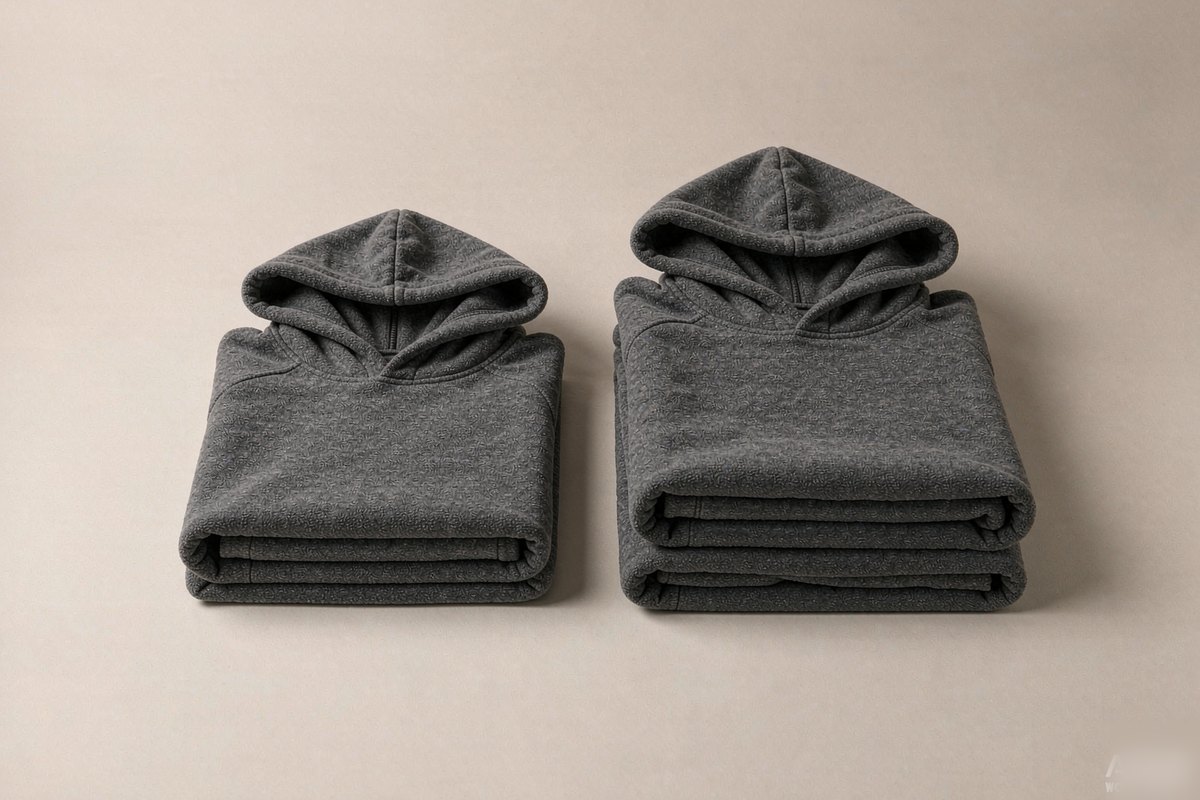
Here's the trap. You develop a pattern, approve the fit at 400 GSM, then switch the fabric to 500 GSM for "the premium version" and assume the fit carries over. It doesn't. A heavier fabric consumes more of the pattern's ease. The chest gets tighter where the fabric stacks, the sleeve head sits differently at the seam, the hood stands taller because it has more body to support, and a hem that hung cleanly at 400 GSM can start to push away where the weight pulls on the ribbing.
Oversized programs feel this most, which is why heavyweight streetwear often needs its own pattern rather than a graded version of the lighter style. If your brand runs pullover hoodies and zip-up hoodies across both weights, budget for two fit approvals, not one. A zipper is an especially unforgiving witness to a weight change — the tape has to hold a much heavier body without waviness.
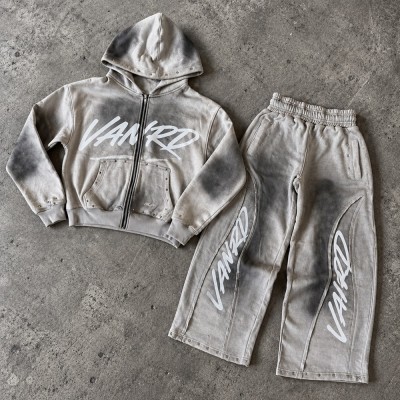
Where weight genuinely earns its money is the fit conversation you can't have any other way. A 400 GSM hoodie can look premium and oversized without losing its shape in the wash. A 500 GSM hoodie is what makes a boxy, structured, "the garment is the outfit" silhouette physically possible. A heavier fabric can survive an aggressive vintage wash program and still hold the shape the pattern intended, which is why vintage-style hoodie development so often starts from a heavier base cloth.
Why 500 GSM Costs More Than the Fabric Itself
The obvious cost is the cloth. More grams means more fiber, and on a heavier knit the fabric cost moves in a way you'll see clearly on the quote. But the fabric line is rarely the biggest surprise. Four other things move with it.
- Machine time. Heavy fleece sews slower. On a 500 GSM line, machines run at a reduced speed and may need heavier needles and a longer stitch length to avoid skipped stitches and needle damage, so the same hoodie takes longer to build.
- Construction upgrades. Bindings get reinforced, seam allowances get reconsidered, and ribbing has to be specified heavier to control a body that pulls on it. None of that is optional on a well-built heavy hoodie.
- Trims and hardware. Flat drawcords, eyelets, zippers and pocket bags all have to be chosen for a heavier garment. A trim that looks fine at 400 GSM can look underweight at 500 GSM.
- Freight and storage. Bulk is bulk. More units per carton at lower volumetric density means higher shipping costs and more warehouse space for the same order value.
That combination is why a quote for the same style in two weights doesn't scale linearly with the GSM number. If you want to see how we structure that into a real quote, the factory service process sets out what we need from you and when, and the OEM and ODM services page covers where development ends and production begins.
What GSM Does Not Change on Your Cost Sheet
Weight does not change your minimum order quantity. It doesn't change how many colors you can run. It doesn't change how long a sample takes to turn. For standard fleece programs the minimum sits at 100 pieces per color per style — so two colors means 200 pieces and four colors means 400 — and bulk production typically runs about 25–35 days after confirmation. Neither number moves because you chose a heavier fleece. Those are driven by your range plan, your fabric availability and the factory's scheduling, not by how heavy the cloth is.
Which means the honest question isn't "can we afford 500 GSM?" It's "does this weight earn its premium at retail?" A heavier fleece is one of the few specification decisions a customer can feel through a garment bag, and that's real marketing value. But that value only exists if the person buying it can wear it. Anything you're unsure about — the target market's climate, the retail price point, whether the piece is a core style or a limited drop — belongs in the brief before the sampling cycle starts. A complete hoodie tech pack saves everyone a sample round.
Which Hoodie Weight Fits Your Collection?
Stop asking which weight is better. Ask which weight your customer's weather, wardrobe and wallet will accept — and then decide whether the heavier piece is your core style or your seasonal headline.
Match the Weight to the Market, Not the Trend
Weight should follow where the garment is sold. A 500 GSM hoodie is a joy in a Canadian or Northern European winter and a mistake in a warm, humid market, where a heavier body becomes a novelty purchase nobody reorders. If your brand sells into a mixed geography, the sensible move is to anchor the range at a weight that fails in the fewest places and let the heavy pieces be the drop, not the core.

| Weight band | Typical knit construction | What this band is normally developed for |
|---|---|---|
| 240–280 GSM | French terry, unbrushed | Layering pieces, warm-climate year-round styles and print-led graphics on a smooth surface |
| 300–340 GSM | Brushed fleece | The volume default: brand staples, first ranges and the weight most decoration equipment is set up for |
| 380–420 GSM | Heavy brushed fleece | Premium streetwear drops and structured oversized fits, where the hoodie should feel expensive in the hand |
| 450–520 GSM | Super-heavy fleece, loopback or double-face | Flagship and statement pieces, cold-climate collections and ranges where the silhouette is the product |
| 550 GSM and above | Ultra-heavy knit | Novelty and marketing-led pieces; hard to wear daily and difficult to pack or dry, so treat it as a headline rather than a core |
Notice that the bands describe behavior, not status. Nothing in this table says a band is superior to the one above it — and that's the point the industry's marketing tends not to make. If your range includes knit products outside the classic fleece family, the same logic applies in a different material world; our breakdown of fleece versus nylon versus polyester for custom tracksuits shows how much construction changes the outcome at a comparable weight.
Which Option Fits Which Program?
Most briefs we see fall into one of four shapes. Here's how the weight decision usually resolves for each of them.
| Program type | Weight that usually wins | Why it wins | What to watch |
|---|---|---|---|
| Everyday commuter hoodie, sold year-round | 400 GSM brushed fleece | Warm enough to read as a real hoodie, still light enough to wear indoors and layer under outerwear | Hood, pocket and ribbing layers add bulk you didn't budget for in the fit approval |
| Vintage, washed, heavy-handle drop | 400 GSM, moving toward 500 GSM for the heaviest pieces | A heavier base cloth survives an aggressive wash program and keeps the body shape the pattern intended | Wash loss and shrinkage shift the final hand feel, so the approved hand must be judged after wash, not before |
| Four-season core for a mixed-climate market | 400 GSM, or a mid-weight loopback at a similar mass | Sells across the widest number of months instead of one cold quarter | Don't let a single flagship piece define the weight of the whole range |
| Cold-climate statement piece or limited drop | 500 GSM super-heavy fleece | Structure, thermal mass and an unmistakable hand are the product, and the customer is buying exactly that | Freight bulk, drying time and indoor wearability; size up the ribbing and hardware to match |
Related programs often land on 400 GSM as a shared base, which is one reason we build so many styles around one fleece specification — graphic and embroidered pieces, for example, behave predictably when the base cloth is settled. If that's your lane, embroidered hoodies and graphic hoodies are the two programs where a firmer 500 GSM surface tends to pay off most in stitch definition and print crispness.
Sampling Checklist: Prove the Weight Before You Commit
Fabric cards are a starting point, not evidence. A swatch tells you what a piece of cloth does when it's lying flat on a table, which is not how anyone wears a hoodie. Before you sign off on a weight, run the four checks below. They cost one sampling cycle and they save a lot more than that.
Step 1: Build the Same Pattern in Both Weights
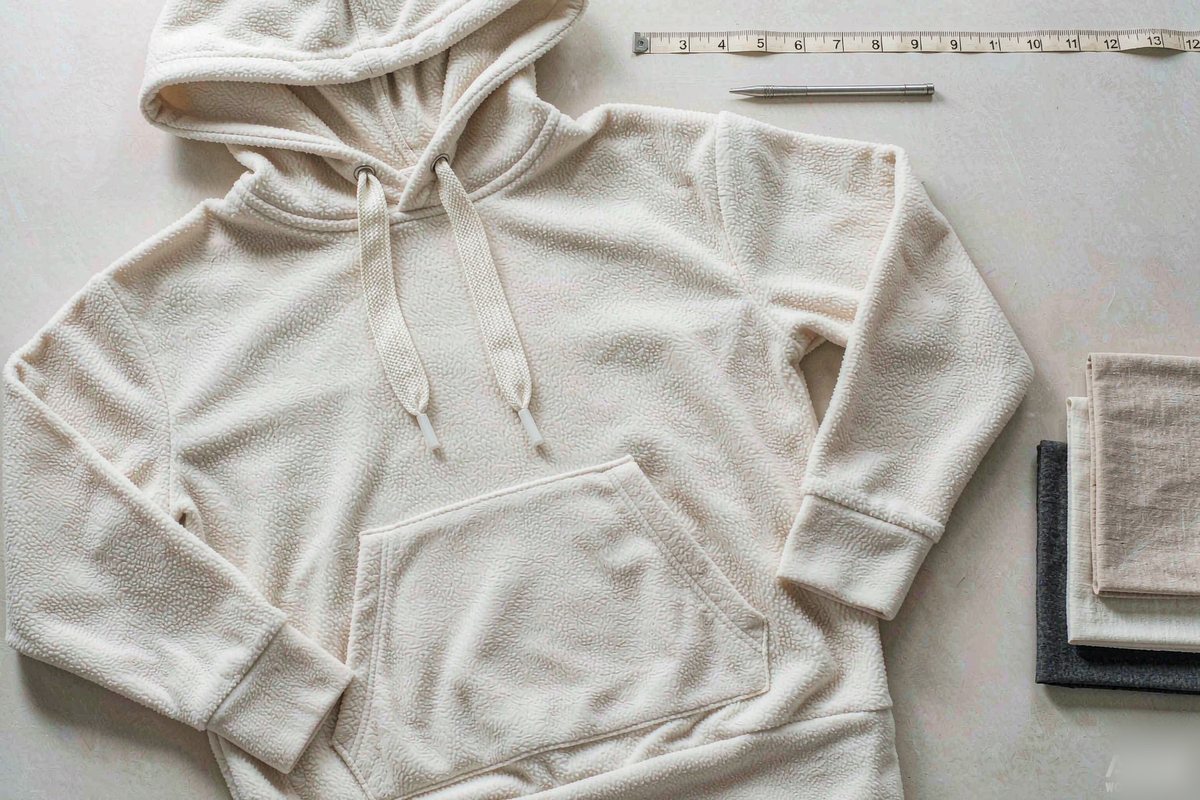
Order the identical style — same block, same trims, same pocket, same drawcords — in 400 GSM and 500 GSM. Nothing else should change. If the two samples differ in any other way, you'll never know which variable caused the difference you're feeling, and the comparison collapses into an opinion.
Step 2: Judge the Garment, Not the Swatch
Put both samples on a real person for ten minutes and let them move. Reach overhead, sit down, cross the arms. The questions you're answering are practical: does the shoulder seam ride, does the hem lift, does the 500 GSM body sit so far from the torso that it looks like someone else's size? This is also the moment to test decoration behavior if your range uses it — puff print and thick embroidery sit differently on a firm 500 GSM platform than on a compressible 400 GSM nap.
Step 3: Weigh the Finished Piece and Write the Number Down
Weigh the sample garment itself, not just the cloth, and record it against the size. A finished hoodie carries fabric, ribbing, pocket bag, drawcords, eyelets, and any application weight. That total is what your customer's arm feels, and it's the number that lets you hold a supplier accountable when a replenishment order turns up feeling lighter than the approved sample.
Step 4: Wash It Before You Approve It
Wash and dry the sample the way your customer will — normally, carelessly, repeatedly. Then look at four things: dimensional change at the body length and chest, how much the nap has flattened, whether the ribbing has recovered, and whether the hood still stands the way it did on day one. A weight that only works on day one isn't a product decision, it's a subscription to returns contact.
Timing matters here as much as technique. A standard sample program typically runs about 7–10 days with clear checkpoints, and complex custom development can extend that to 15–25 days, so build the wash-and-review loop into the calendar rather than discovering it late. There's a realistic breakdown in our guide to sampling lead times for custom hoodies, jackets and tracksuits. For a printable version of this whole process, several brands we work with use our service process checklist as the shared agenda for the sample review.
Conclusion: The Heaviest Hoodie Is Rarely the Best One
Here's where we land, five sections of argument later. GSM measures mass, and mass is one variable in a garment that also depends on yarn quality, knit construction, finishing, pattern and trims. A well-made 400 GSM fleece will feel more premium than a badly made 500 GSM every single time, and the market's obsession with the bigger number has quietly produced a lot of heavy, expensive, unwearable hoodies.
Both weights are genuinely good choices — for different jobs. A 400 GSM hoodie is the piece most brands should build first: wearable across seasons, comfortable in a mixed climate, easier to fit in both a pullover and a zip-through, and still heavy enough that a customer feels the quality through the bag. A 500 GSM hoodie is a statement, and statements are best deployed deliberately — for a cold-climate market, a flagship drop, or a brand whose entire visual language is structure, volume and weight.
The decision that actually matters isn't 400 or 500. It's whether you proved your choice on a finished garment, washed it, weighed it, and put it on a person from your target market before you committed the order. Do that, and you'll pick the right weight for reasons you can defend — instead of picking the heavier one because it sounded safer.
Which Option Fits Your Next Drop?
- Choose 400 GSM if your hoodie needs to sell in more than one season, your market is mixed or temperate, the piece will be worn indoors and outdoors on the same day, or you're building a core range where reorders matter more than headlines.
- Choose 500 GSM if the weight is the product, your market is genuinely cold, the piece is a flagship or limited drop, or your design depends on a boxy structure that only a heavy body can hold.
- Choose both, carefully, if you can afford two fit approvals and two sets of trims — and be honest with your customer about which one is the everyday piece and which one is the occasion piece.
- Choose neither yet if you haven't felt a finished sample in your target market's hands. No fabric card settles that question.
Frequently Asked Questions
Is a 400 GSM hoodie heavy enough to feel premium?
Yes — 400 GSM sits firmly in heavyweight territory, well above the 240–340 GSM range that most mainstream hoodies live in. The reason it reads as premium is that a customer feels a real density in the hand while the garment still behaves like clothing. A well-built 400 GSM fleece with good yarn, a clean stitch line and properly specified ribbing will feel more expensive than a poorly developed 500 GSM piece every time.
Is a 500 GSM hoodie too heavy for everyday wear?
For some customers in some climates, absolutely. A 500 GSM body is a deep-winter garment; wear it in a heated room or a warm, humid market and it becomes uncomfortable quickly. It's also slower to dry and heavier to carry. That doesn't make it a bad product — it makes it a seasonal or statement product. If you want a single hoodie that a customer reaches for most days, 400 GSM is the safer core.
Can I use one pattern for both 400 GSM and 500 GSM?
You can use one base block, but expect to re-approve the fit. Heavier fabric consumes more of the pattern's ease, so a chest that sat cleanly at 400 GSM can tighten where the fabric stacks, the hood gains height, and cuffs and hem come under more load. Plan for a separate fit approval in the heavier weight rather than assuming the lighter approval carries across.
Does a higher GSM hoodie shrink more in the wash?
Not automatically. Shrinkage depends mainly on how the fabric was prepared, the fiber blend and your wash and dry conditions rather than on the weight itself. The practical difference is behavior: heavier bodies tend to hold their shape better over time, while nap on a heavy brushed interior can flatten in high-contact areas. Always judge the sample after a realistic wash and dry cycle, and record dimensional change at the body length and chest.
What weight should a brand's first hoodie range use?
For most new programs, 400 GSM is the weight that fails in the fewest places. It's warm enough to be read as a proper hoodie, light enough to sell beyond deep winter, and forgiving across pullover and zip-up styles as well as decoration methods. Build the core at 400 GSM, then add a 500 GSM flagship piece once you know how your market responds and how the heavier body photographs and sells.
About this guide: written by the production team at VANRD, a custom hoodie and streetwear manufacturer working with private label brands, wholesalers and apparel teams in the US, UK, Australia and Canada. We've been building fleece programs since 2016 from a 10,000 m² facility with a 568-person team and an installed capacity of around 180,000 pieces a month, covering in-house pattern development, sampling, automated cutting, sewing and inspection. Every weight recommendation starts from a confirmed swatch, and every claim in this article is meant to be tested on your own sample rather than taken on trust. Browse the custom hoodie range to see how these specifications come together, or read our private label hoodie manufacturing guide for the full development picture.
Not sure which weight your hoodie should be?
Send your target hoodie fit and fabric reference for a suitable weight recommendation. Share your reference images, target quantity, destination country and the wearer you're building for, and our team will come back with a suitable weight and construction direction — plus what to check in your first sample.