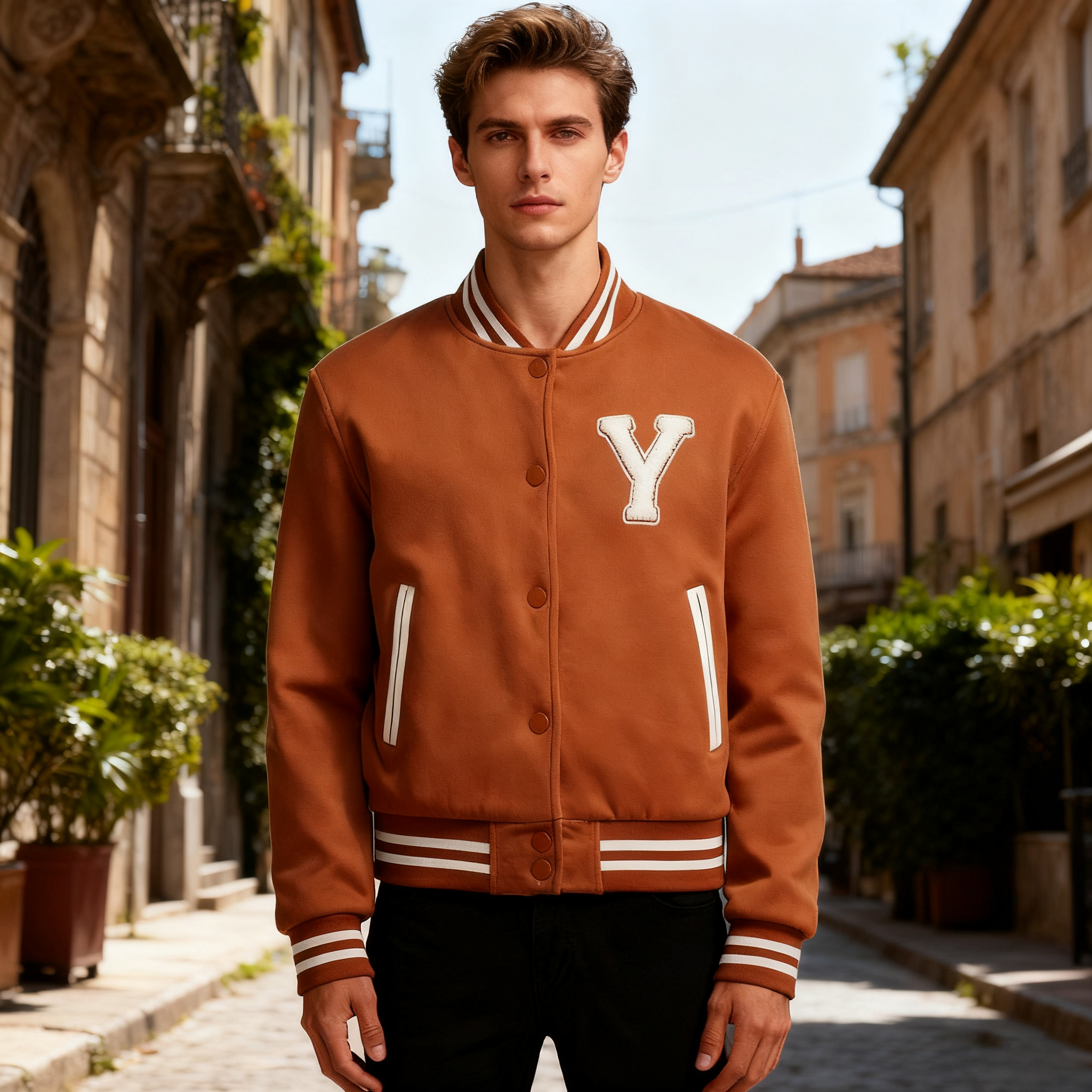
- MOQ 100+

- Samples 7–10 days

- OEM/ODM


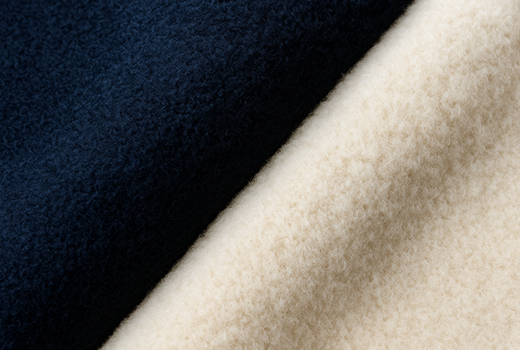
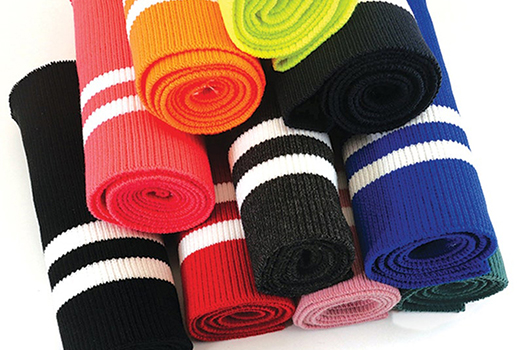
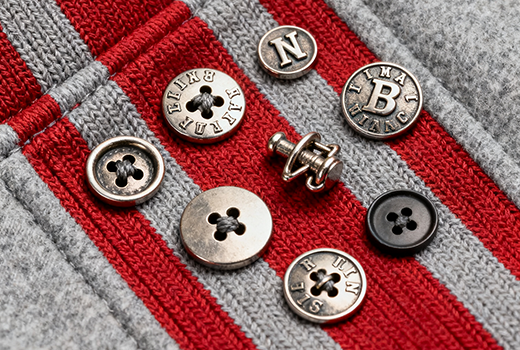

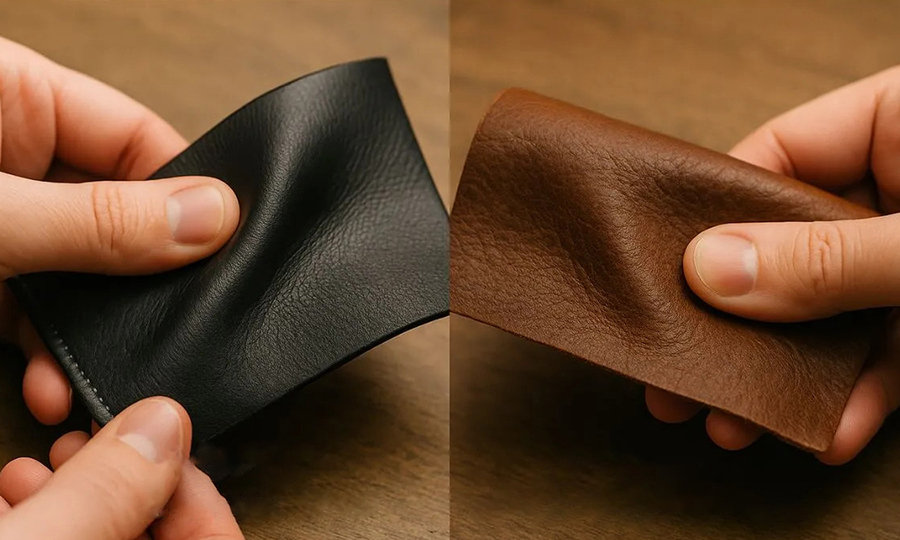
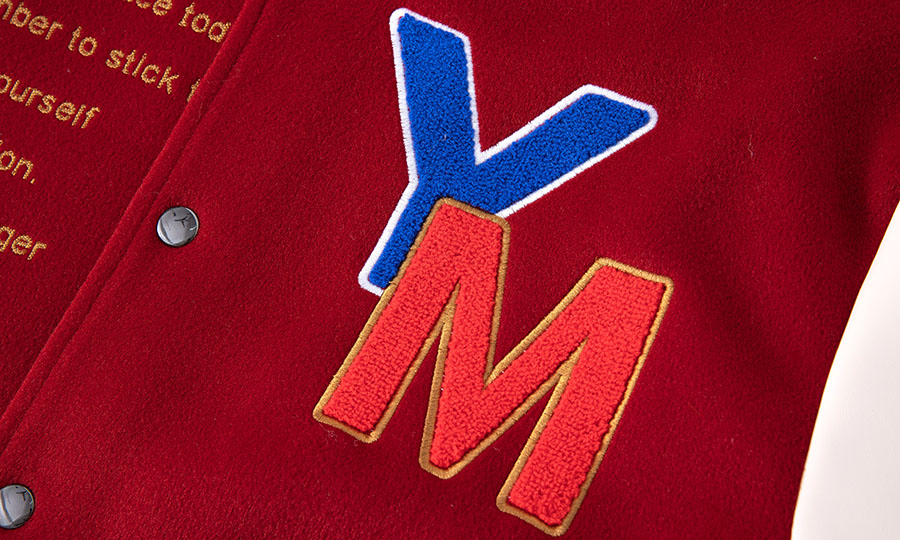
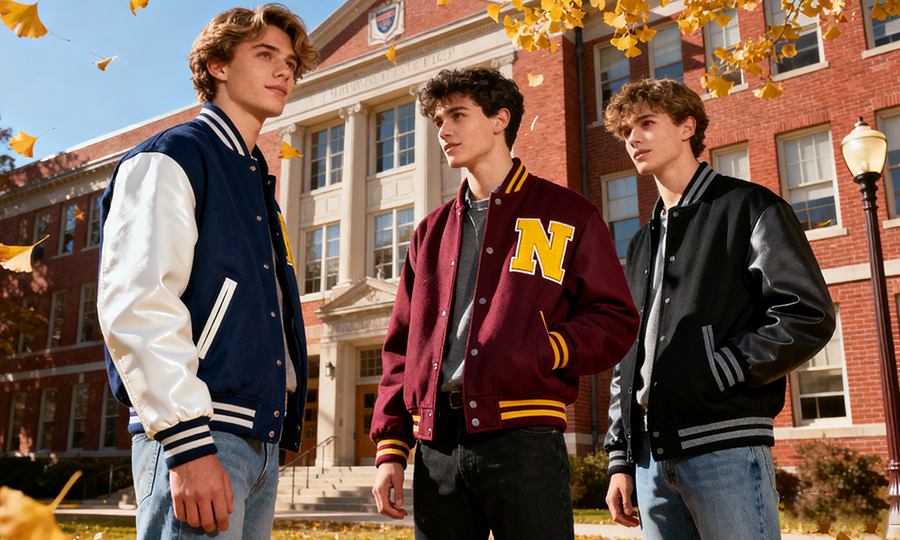


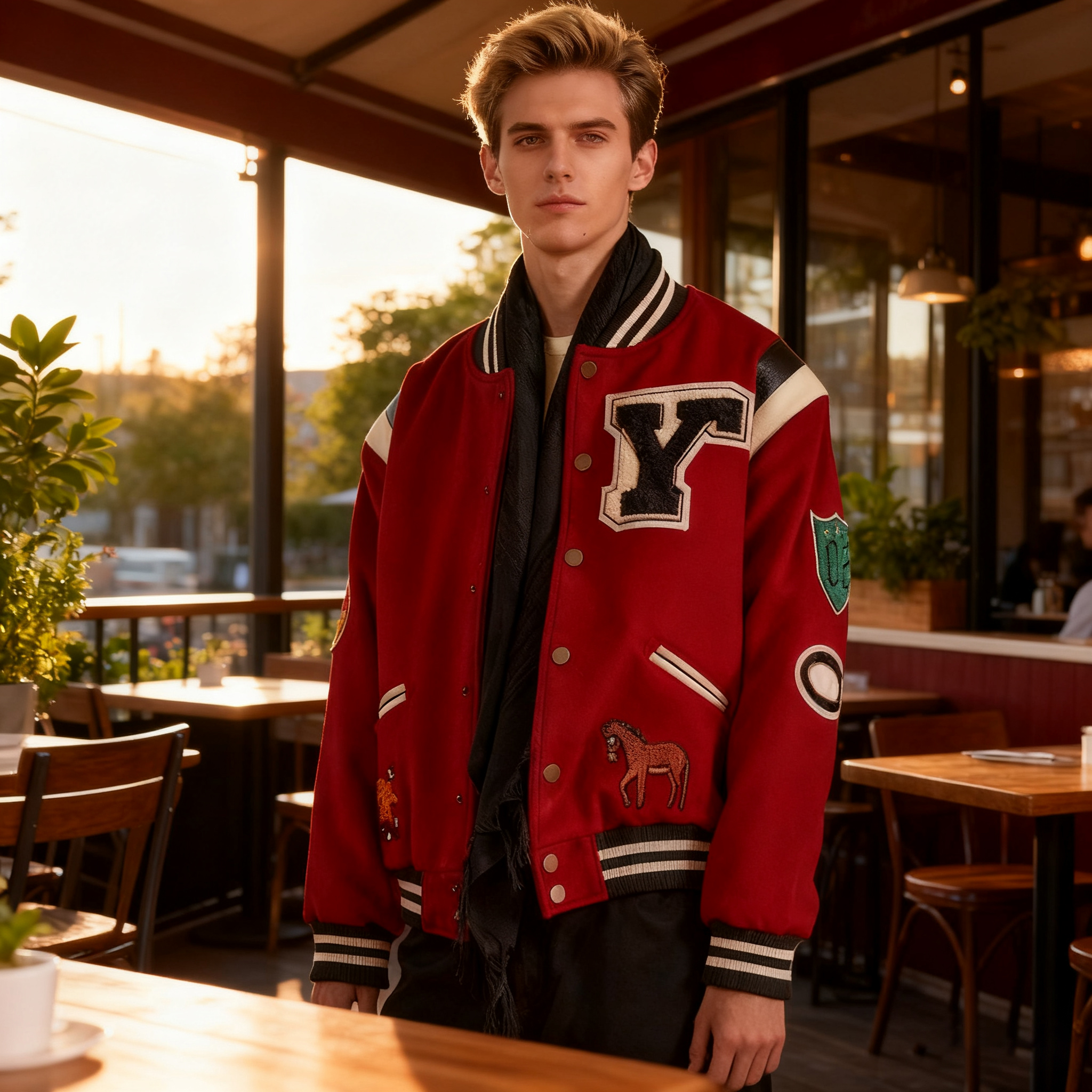
Before producing custom varsity jackets, brands should confirm body fabric, sleeve fabric, lining, padding, rib quality, snap buttons, pocket construction, chenille patches, embroidery, applique, label placement, size chart, and packaging. Varsity jackets involve many components, so missing one approval can delay the whole sample. Brands should provide artwork files, patch size, logo placement, color references, fit direction, and trim requirements. A reliable varsity jacket manufacturer should help confirm all components before bulk production.
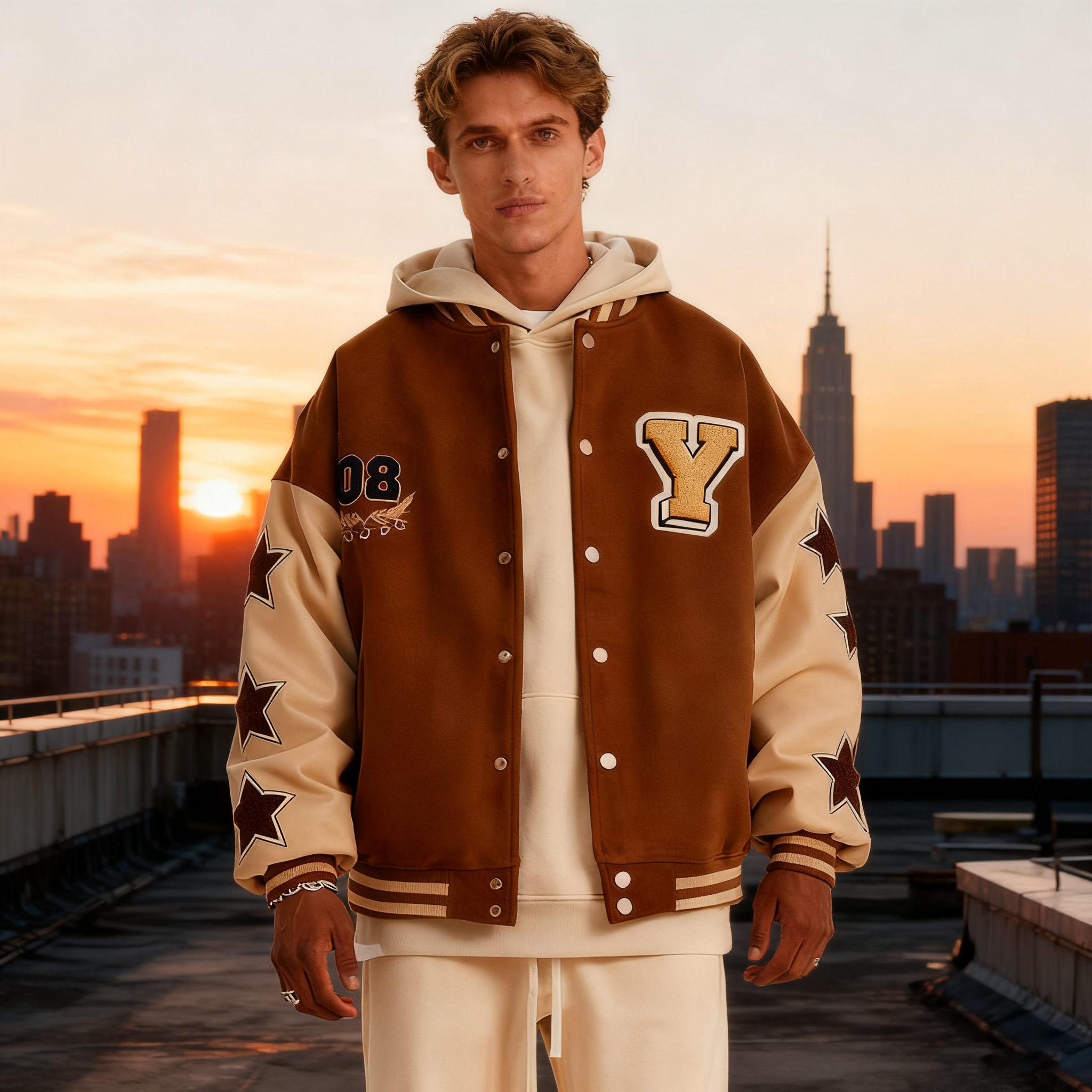
The best materials for custom varsity jackets depend on the target market, season, price level, and brand positioning. Wool blend and wool melton bodies are suitable for classic premium varsity jackets. Brushed fleece or heavy cotton blends can create a softer streetwear version. Satin, nylon, or denim can also be used for more fashion-led interpretations.
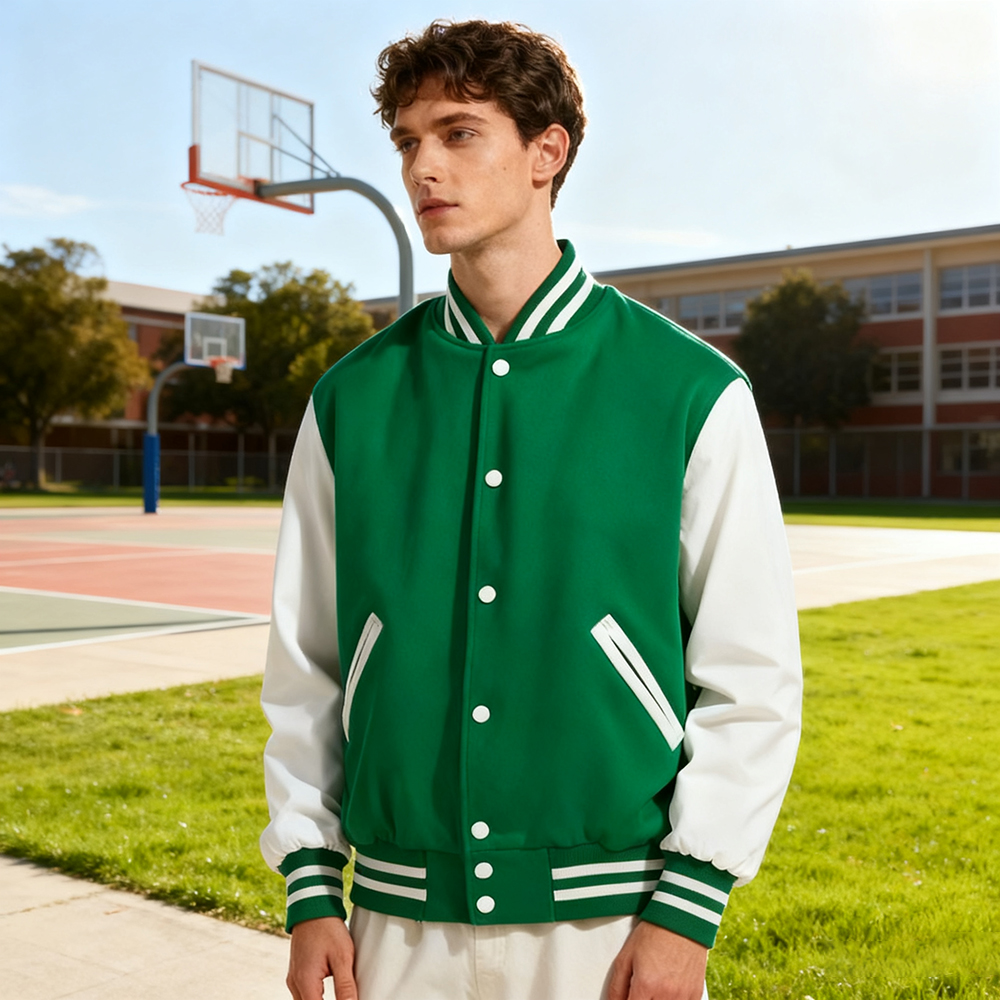
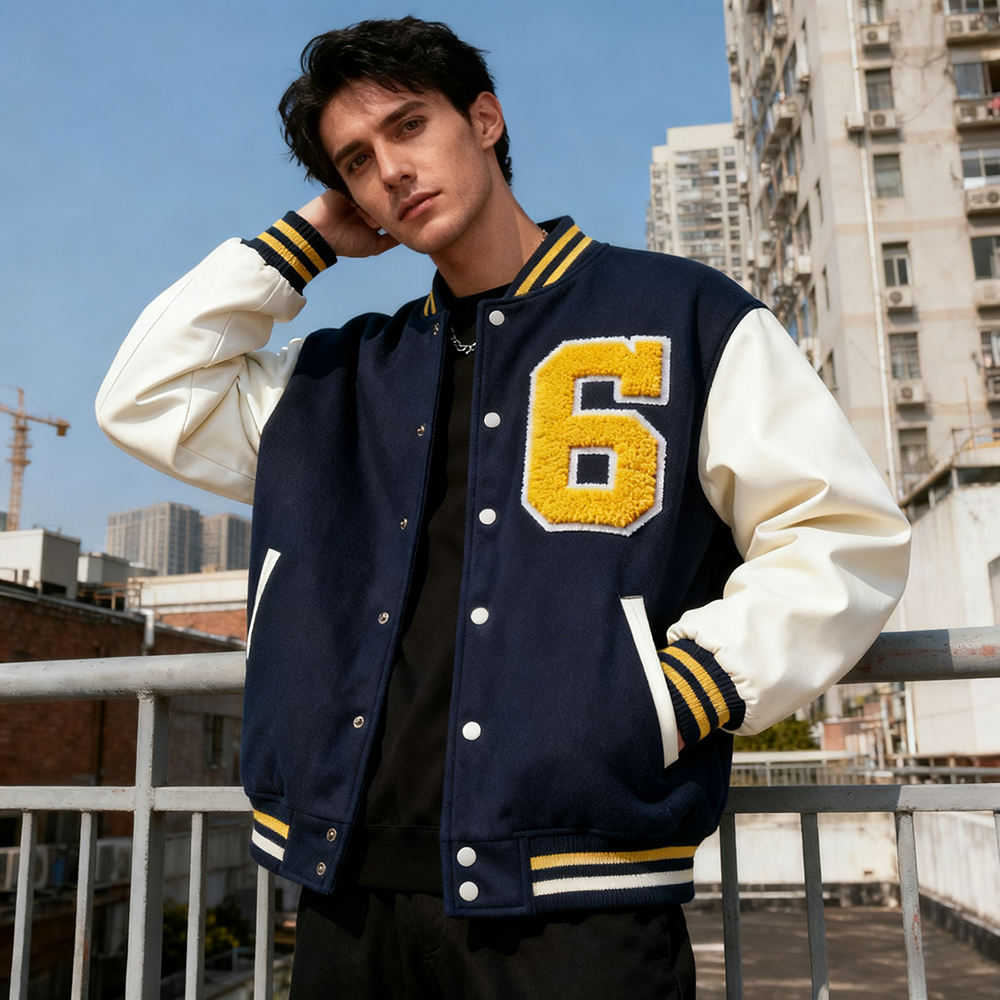
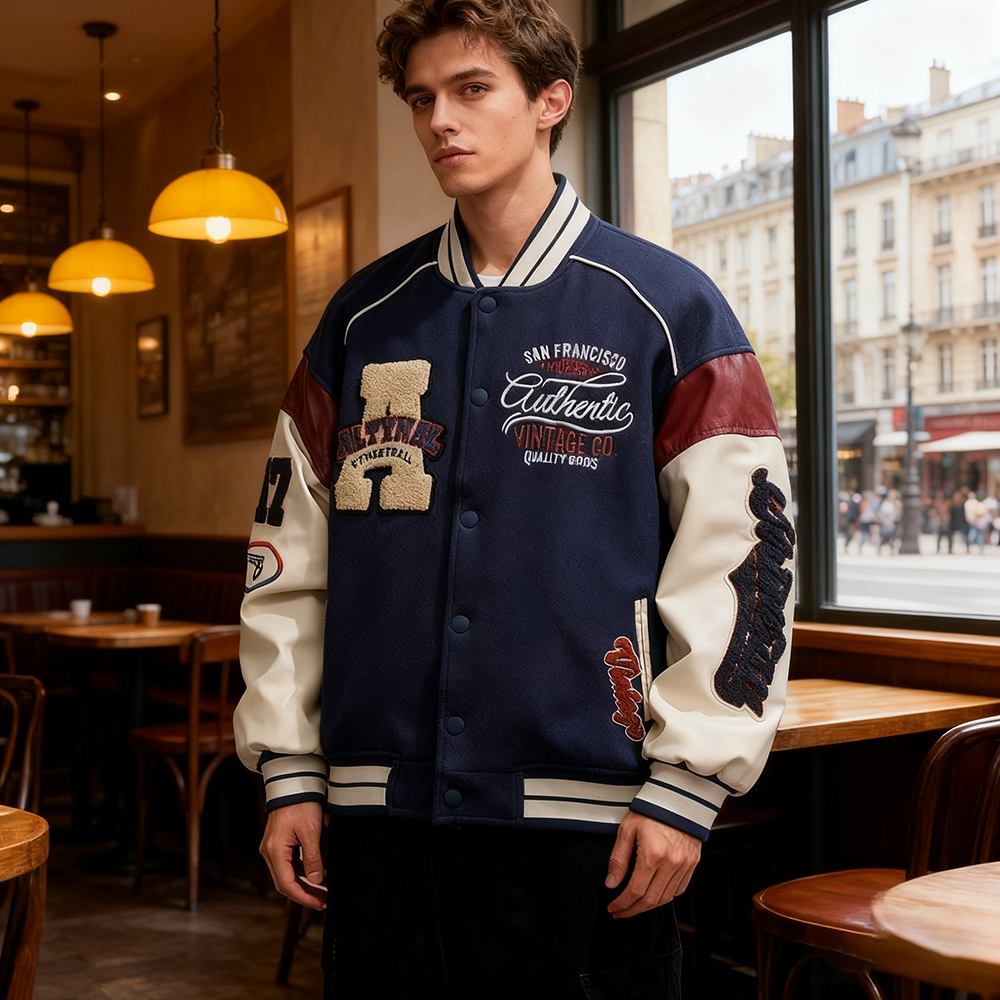
Sleeve material strongly affects the final look and cost. PU sleeves are common for price control and vegan-friendly collections. Leather-look coated sleeves can create a cleaner fashion finish. Genuine leather sleeves are more suitable for premium capsule collections or higher retail price points.
Rib trims also matter because the collar, cuffs, and hem define the varsity shape. Striped rib can create a classic school or team look, while solid rib feels cleaner and more modern. Brands should confirm rib quality, snap buttons, pocket structure, lining, patch backing, and label placement during sampling to avoid quality or proportion issues in bulk production.
Quality control for custom varsity jacket production starts with a clearly approved sample. Before bulk production, the body fabric, sleeve material, lining, rib trims, snap buttons, pocket construction, patch placement, embroidery size, sleeve length, body length, shoulder width, labels, and packaging requirements should all be confirmed.
During production, QC should check fabric defects, sleeve material consistency, cutting accuracy, stitching quality, seam strength, rib recovery, snap button function, pocket shape, lining attachment, chenille patch placement, embroidery density, appliqué edges, size grading, measurement tolerance, and overall garment shape.
Varsity jackets need extra attention because small issues can be very visible. Crooked chest letters, uneven sleeve patches, weak rib recovery, poor snap quality, mismatched sleeve color, or wrong body length can affect the whole product. Before shipment, finished jackets should be compared with the approved sample and production specifications to reduce bulk defects and keep repeat orders consistent.
Varsity jacket development should change depending on the brand stage, customer group, selling channel, and launch plan. Growing brands often need a lower-risk first drop with one strong varsity style, controlled MOQ, clear pricing, and a design that can be reordered if it sells well.
Designers usually focus more on silhouette, sleeve material, rib height, patch placement, color blocking, body length, and how accurately the sample matches the original concept. Established brands often need stronger control over fabric records, fit consistency, patch standards, colorways, size grading, carton labeling, quality inspection, and repeat production.
Influencers and KOL brands may use varsity jackets for limited-edition merch drops, creator collections, fanwear, or event launches. These projects usually need strong visual impact, premium patches, bold back artwork, custom labels, hangtags, and launch-ready packaging. Before sampling, brands should explain whether the jacket is for streetwear retail, designer collections, school or team programs, wholesale orders, creator merch, or long-term private label production.