How to Choose a Custom Streetwear Manufacturer for Jackets, Hoodies and Tracksuits
A practical factory evaluation guide for streetwear brands that need better sampling, stable bulk production and long-term manufacturing support.
Quick Answer: What Makes a Good Custom Streetwear Manufacturer?
A good custom streetwear manufacturer should have proven experience in jackets, hoodies and tracksuits, clear tech pack communication, fabric and trim development capability, documented sample approval, stable bulk QC and long-term reorder support.
Choosing a custom streetwear manufacturer is not only about finding a factory that can sew garments. For jackets, hoodies and tracksuits, the right partner shapes your fit, quality, branding, development speed and long-term production stability.
If you are building a streetwear brand, your manufacturer is not just a supplier. It is the engine room behind your product. A strong manufacturer keeps your collection moving. A weak one turns every sample into a problem, every bulk order into a gamble and every launch date into a stressful countdown.
This guide walks you through what to check before choosing a custom streetwear manufacturer for jackets, hoodies and tracksuits. It is written for brand owners, designers, sourcing teams and private label buyers who want fewer surprises after sampling.
Why Choosing the Right Manufacturer Matters More Than Finding the Cheapest Supplier
Price is important, but the cheapest manufacturer is not always the most profitable one. The real cost of production includes bad samples, delayed launches, wrong measurements, unstable colors, weak stitching, poor packaging and returns from unhappy customers.
In streetwear, product perception is everything. A customer may not know the exact GSM of your hoodie, but they can feel whether the fabric is thin. They may not understand pattern grading, but they can see when the shoulders collapse in the wrong way. They may not know embroidery density, but they can tell when a logo looks cheap.
What Makes Streetwear Manufacturing Different From Basic Apparel Production
Streetwear is not just casual clothing with bigger graphics. It usually involves specific silhouettes, heavier materials, special washes, oversized proportions, custom trims and strong branding details. That makes production more technical than many new buyers expect.
Heavy Fabrics, Oversized Fits and Custom Construction
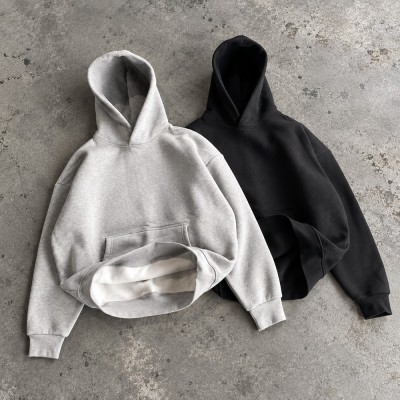
A standard hoodie and a streetwear hoodie are not the same product. A streetwear hoodie may require 400gsm heavyweight fleece, dropped shoulders, a boxy body, double-layer hood, custom drawcord, dense embroidery and garment wash. These details change the pattern, sewing tension, shrinkage and finishing.
The same applies to jackets. A varsity jacket, bomber jacket, work jacket, denim jacket or racing jacket each needs different fabric handling and construction logic. Some require lining and padding. Some require rib matching. Some require metal zippers, snap buttons, contrast panels or structured collars.
Why Jackets, Hoodies and Tracksuits Need Different Production Checks
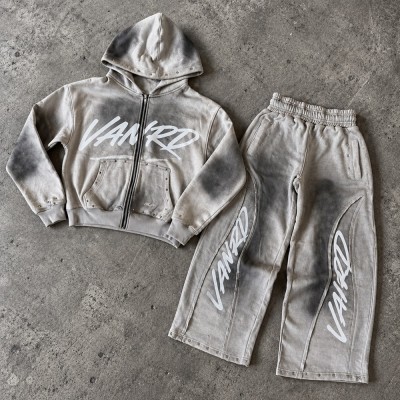
Hoodies are mostly about fabric weight, shrinkage, fit, hood shape, rib quality and decoration durability. Jackets are about structure, trims, lining, pocket construction, seam strength and silhouette. Tracksuits are about set-level consistency: the top and bottom must match in color, fabric hand feel, logo placement, rib tension and sizing balance.
Step 1: Define Your Product Direction Before Contacting a Factory
Before you ask for a quote, define what you actually want to make. Many brands contact manufacturers too early with only a rough idea. That usually leads to vague pricing, confusing communication and poor sample results.
Product Category and Collection Structure
Start with the product category. Are you making one custom jacket, a hoodie collection, a tracksuit set or a full streetwear drop? A factory needs to know whether it is quoting one style or a collection system.
For jackets, define the type clearly: varsity jacket, bomber jacket, work jacket, denim jacket, windbreaker, coach jacket, puffer jacket or racing jacket. For hoodies, define whether it is pullover, zip-up, oversized, cropped, heavyweight, washed or vintage style. For tracksuits, define whether the set is fleece, nylon, polyester, French terry, velour or woven.
Target Market, Price Level and Brand Positioning
Your target retail price affects production decisions. A hoodie planned for a budget drop should not use the same fabric and construction as a premium hoodie selling at a higher retail price. A manufacturer cannot recommend the right fabric, trim or process unless it understands your brand level.
Quantity, Launch Date and Reorder Plan
Quantity matters because it affects fabric sourcing, MOQ, dyeing, trims and unit price. A 50-piece test run and a 1,000-piece bulk order are different production conversations. Also think about reorders. If a style may become a core product, ask whether the manufacturer can keep fabric records, color references, measurement specs and trim details for future production.
Step 2: Choose the Right Manufacturing Model
Not all manufacturers work the same way. Some are best for simple private label customization. Some are better for OEM production. Some specialize in cut-and-sew development from scratch. Choosing the wrong model is like choosing the wrong tool: even a good tool performs badly when used for the wrong job.
| Manufacturing Model | Best For | Main Advantage | Main Risk | Recommended For |
|---|---|---|---|---|
| Private Label | Startup drops, faster launches and branded basics. | Lower development complexity and faster sampling. | Less uniqueness if the base style is too common. | New brands testing hoodies, joggers, tracksuits or simpler jacket styles. |
| OEM | Brands with clear specs, tech packs, size charts and artwork. | Better control over exact design requirements. | Poor results if technical files are incomplete. | Brands that already know their fit, construction and branding direction. |
| Cut-and-Sew | Custom jackets, premium hoodies and original tracksuits. | Strongest product differentiation and fit control. | Longer development time and higher sampling cost. | Serious streetwear brands building original silhouettes. |
For deeper production planning, review Vanrd's OEM and ODM services and confirm which model best matches your launch timeline, design complexity and order quantity.
Step 3: Check Category Experience: Jackets, Hoodies and Tracksuits
A good streetwear manufacturer should not only say, "Yes, we can make it." It should show relevant experience. Ask for similar product examples, fabric options, construction photos, sample references and details of past production challenges.
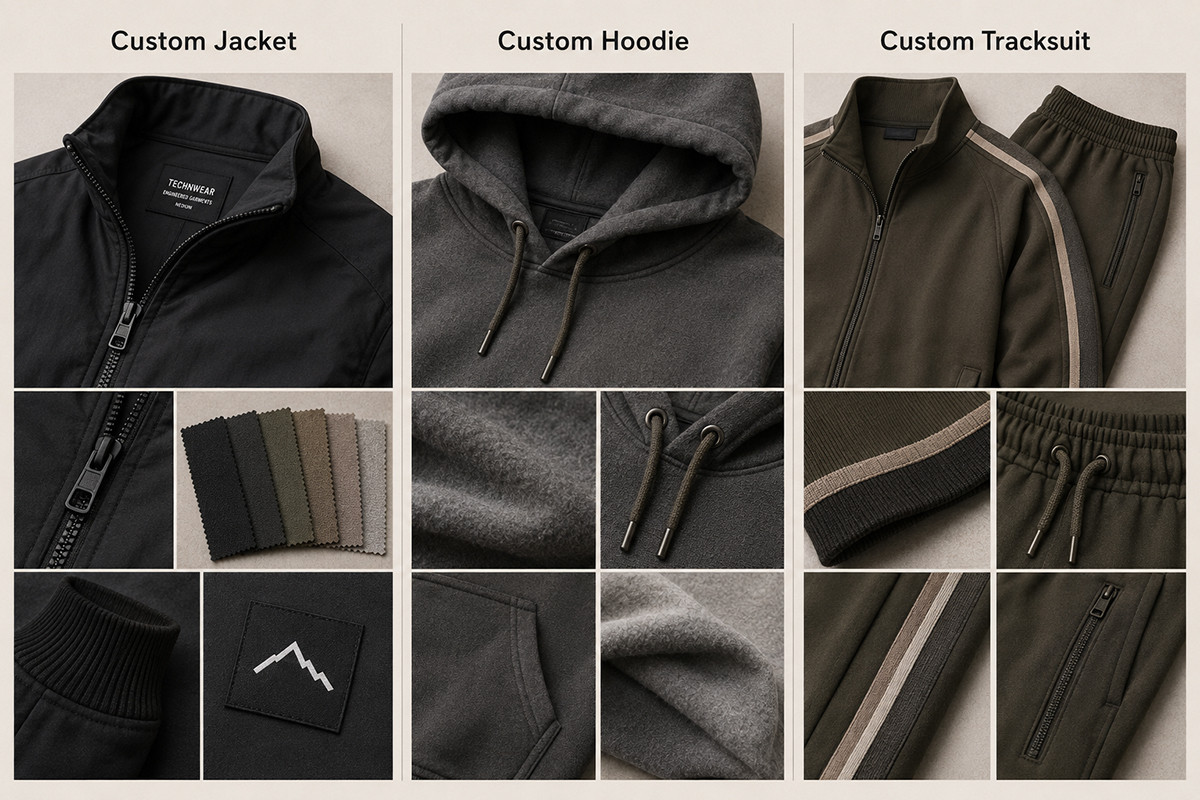
Custom Jackets
Check structure, lining, trims, zipper quality, pocket construction, panel matching, padding, rib and seam strength.
Custom Hoodies
Check fleece weight, shrinkage, hood shape, rib recovery, dropped shoulder fit, print or embroidery durability.
Custom Tracksuits
Check top-bottom color matching, fabric consistency, waistband, drawcord, zipper, logo placement and set balance.
Factory Capability Checklist
Step 4: Evaluate Fabric and Trim Development
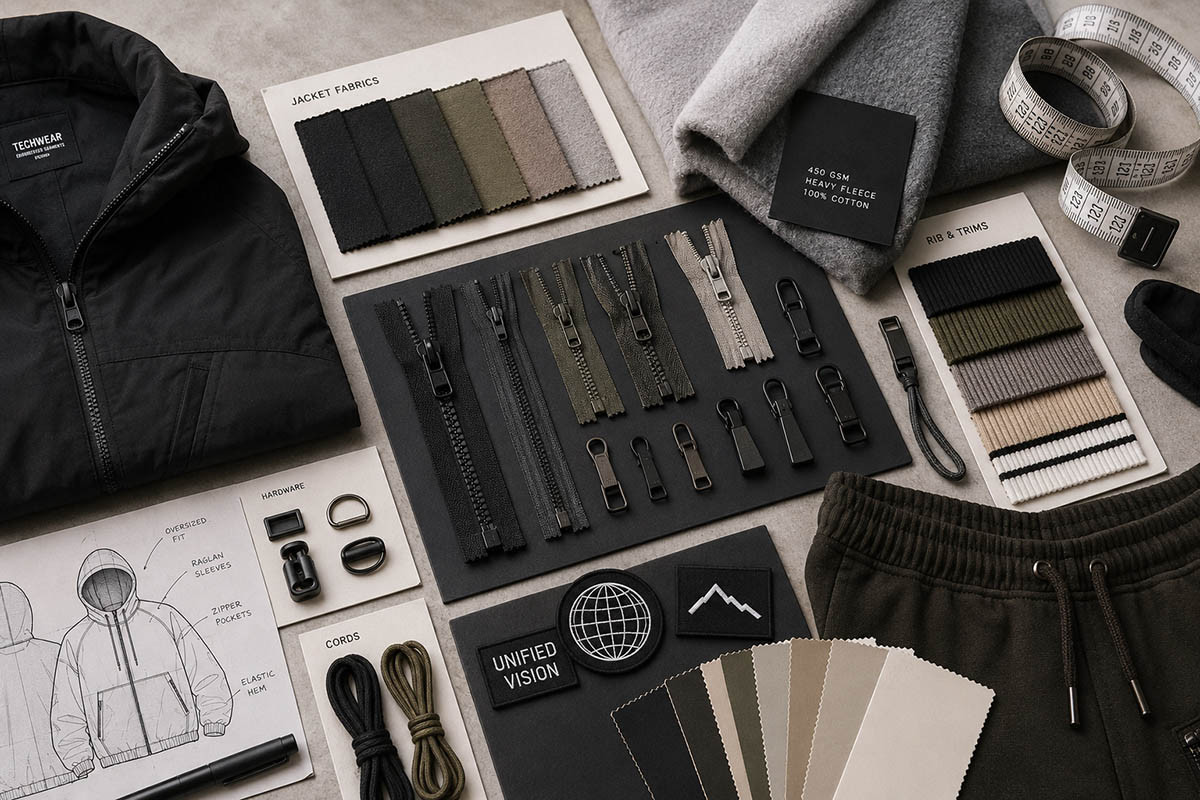
Fabric is not just a material choice. It is the first impression your customer feels when they touch the product. Trim is not just decoration. It is the small detail that tells customers whether your brand cares about quality.
Fabric Weight, Hand Feel and Shrinkage
For streetwear, fabric weight often becomes part of the brand identity. Heavyweight fleece, brushed French terry, washed denim, cotton twill, nylon, canvas and polyester blends all create different moods. Do not choose fabric only from photos. Ask for swatches. Check hand feel, thickness, stretch, recovery, shrinkage and color.
Zippers, Drawcords, Rib, Labels and Packaging
Trims can upgrade or weaken your product. A strong zipper makes a jacket feel expensive. Rib quality affects cuffs, hem and collar recovery. Drawcords affect the look of hoodies and tracksuits. Woven labels, care labels, hang tags and packaging affect the customer's unboxing experience.
You can review more material and process options on the Fabrics and Techniques page before building your sample plan.
Step 5: Review Logo and Decoration Capability
Streetwear is highly visual. Logos, graphics and decoration techniques can turn a simple garment into a brand statement. But decoration is also one of the biggest sources of production problems. A design that looks clean on a digital mockup may not work the same way on fleece, nylon, denim or canvas.
Embroidery, Printing, Applique and Patches
Common streetwear decoration methods include screen printing, digital printing, puff print, embroidery, applique embroidery, chenille patches, woven patches, rubber patches, leather patches and heat transfer. Each technique has strengths and limits.
How Decoration Affects Bulk Consistency
Bulk decoration consistency depends on placement, color, scale, tension and production setup. Before bulk production, confirm artwork size, Pantone color, placement measurement, technique, backing material and approval photos. Never approve decoration only by saying, "Looks good." Be specific.
Step 6: Understand Sampling Before You Pay for Bulk Production
Sampling is where your idea becomes real. It is also where many brands discover that their design needs adjustment. That is normal. A sample is not just a mini bulk order. It is a testing stage.
First Sample, Fit Sample and Pre-Production Sample
The first sample checks the general design direction. The fit sample checks measurements, proportions and wearing comfort. The pre-production sample confirms the final standard before bulk production. For complex jackets, heavyweight hoodies and matching tracksuits, skipping these steps can be risky.
Why Sample Approval Should Be Documented
Once you approve a sample, document everything. Record the measurements, fabric, trims, logo placement, color, stitching, packaging and comments. Take clear photos. Keep the approved sample as a reference. This becomes the production standard for bulk.
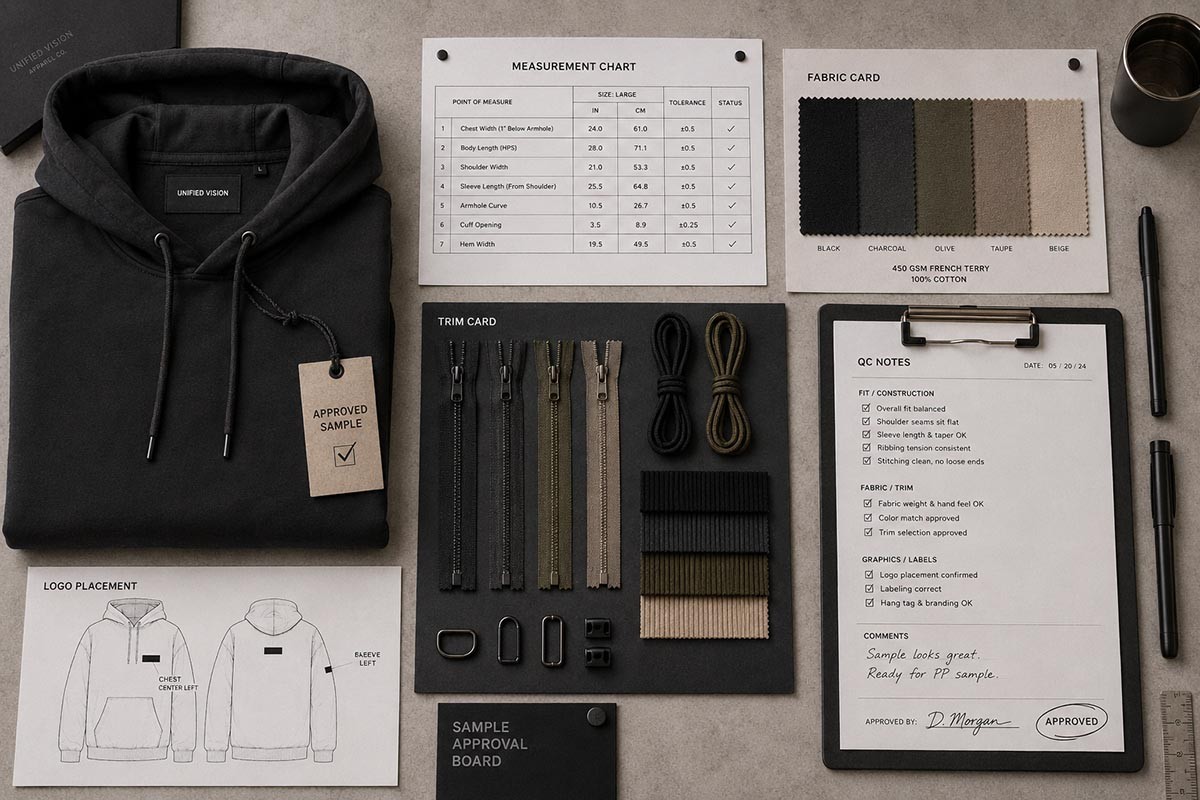
How Vanrd Supports Custom Streetwear Development
Vanrd supports custom streetwear development from design review to sample making, fabric sourcing, logo technique planning, bulk production and quality control. For brands developing jackets, hoodies and tracksuits, this helps reduce communication gaps between idea, sample and bulk production.
Step 7: Compare MOQ, Pricing and Hidden Cost Factors
MOQ means minimum order quantity. It is one of the first things brands ask about, but it should not be the only thing you compare. Ordering at the minimum is useful for testing the market, but minimum-size runs may increase unit price because fabric, trims, labor and setup costs are spread across fewer pieces.
Why the Smallest Minimum Is Not Always the Cheapest Option
A minimum-size order may look safer than a 300-piece order, but the unit cost can be much higher. If your product needs custom dyeing, custom rib, special zippers or branded trims, the supplier may need to meet material minimums.
What Should Be Included in a Professional Quotation
A professional quotation should clearly show product name, fabric, GSM or material specification, logo technique, quantity, size range, sample cost, bulk unit price, packaging, estimated lead time and shipping terms if available.
Step 8: Check Quality Control Systems
Quality control is not something that happens only at the end. If a factory waits until final packing to discover problems, it is already too late. A reliable custom streetwear manufacturer should check quality at multiple stages.
Material Inspection, Inline Inspection and Final Inspection
Material inspection checks fabric, trims, color and defects before cutting. Inline inspection checks sewing, measurements, decoration and construction during production. Final inspection checks finished garments before packing and shipping.
Sample-to-Bulk Consistency
The biggest question is not whether the sample looks good. The bigger question is whether the bulk order will match the approved sample. Sample-to-bulk consistency is what separates a reliable manufacturer from a risky one.
For a clearer view of inspection standards, review Vanrd's Quality Control process.
Step 9: Evaluate Communication and Project Management
Fast replies are nice, but clear replies are better. A supplier who answers quickly but misunderstands your product can still create expensive mistakes. Good communication means the factory understands your requirements, asks useful questions and confirms details in writing.
Response Quality Matters More Than Fast Replies
When you contact a manufacturer, pay attention to the quality of their response. Do they understand the difference between a bomber jacket and a varsity jacket? Do they ask about fabric weight? Do they request artwork files? Do they clarify logo technique? Do they explain MOQ and sample timing clearly?
Questions a Good Manufacturer Should Ask You
A reliable custom streetwear manufacturer may ask about your target retail price, product category, fabric preference, quantity, size range, artwork, fit reference, packaging needs, launch timeline and market. These questions are signs that the factory is trying to understand the real project.
Step 10: Build a Long-Term Production Relationship
Choosing a manufacturer should not be only about one order. If your brand plans to grow, you need a production partner that can support repeat orders, improved versions, new categories and bigger volume over time.
Reorders, Fabric Records and Product Improvement
When a product sells well, you may want to reorder quickly. That is much easier if your manufacturer keeps accurate records of fabric, trims, measurements, patterns, logo placement and packaging. Without records, every reorder becomes another round of guessing.
How Mature Brands Reduce Production Risk
Mature brands do not rely on luck. They use clear tech packs, approved samples, fabric cards, trim cards, QC standards and written communication. They compare manufacturers carefully before sampling and build production systems around consistency.
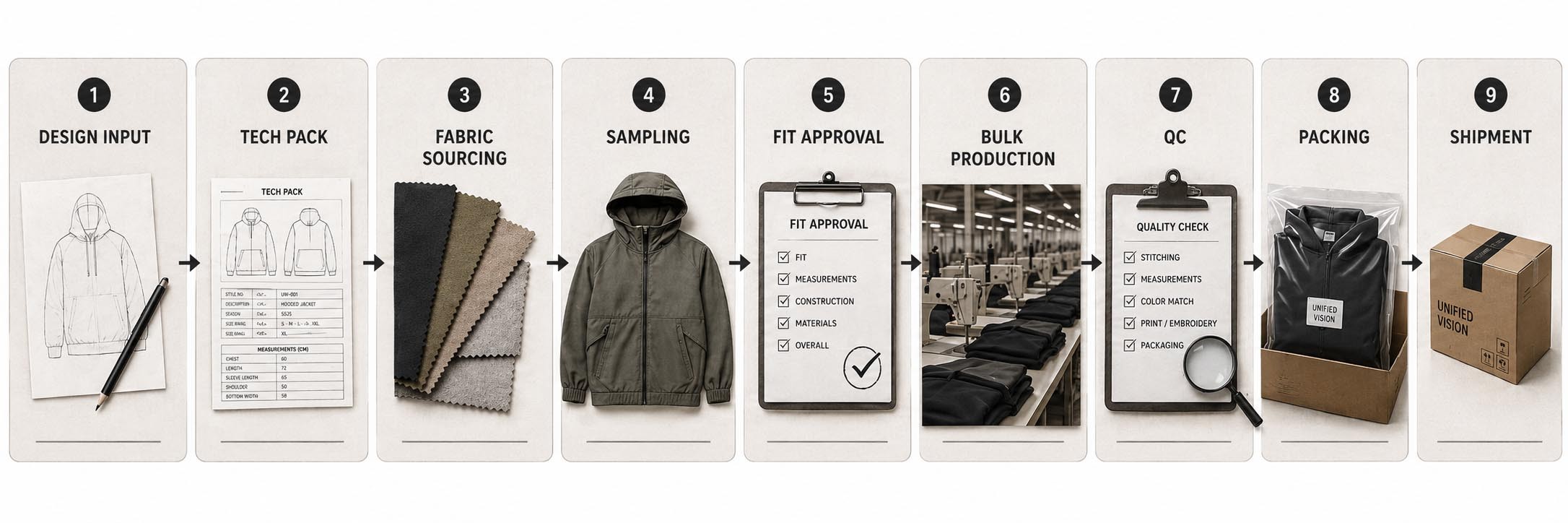
For brands planning repeat orders or seasonal product drops, Vanrd's Service Process can help clarify how a project moves from design input to shipment.
Conclusion: Choose the Manufacturer That Protects Your Brand, Not Just Your Budget
Choosing a custom streetwear manufacturer for jackets, hoodies and tracksuits is a serious decision because these products carry your brand identity. The right partner can help you develop better fabrics, cleaner fits, stronger decoration, more stable bulk quality and smoother reorders.
Before you choose, define your product direction clearly. Understand whether you need private label, OEM or cut-and-sew production. Check the factory's real experience with jackets, hoodies and tracksuits. Review fabric and trim options. Confirm logo techniques. Take sampling seriously. Compare MOQ and pricing with context. Ask about QC. Watch how the manufacturer communicates.
In the end, a good manufacturer should feel less like a random supplier and more like a production partner. It should help you turn creative ideas into repeatable products.
Ready to Build Your Next Jacket, Hoodie or Tracksuit Collection?
Send us your design idea, reference photos, quantity plan and logo details. Our team can help review fabric options, sampling direction and production feasibility before bulk production.
Request a Factory QuoteFAQ
What is the best custom streetwear manufacturer for jackets, hoodies and tracksuits?
The best custom streetwear manufacturer is the one that matches your product category, quality level, MOQ, design complexity and growth plan. For jackets, look for outerwear construction experience. For hoodies, check fabric weight, fit and decoration quality. For tracksuits, check top-bottom consistency, fabric matching and set packaging.
Should I choose private label or OEM manufacturing for my streetwear brand?
Choose private label manufacturing if you want to launch faster with customized branding, fabric, colors and trims based on existing product structures. Choose OEM manufacturing if you already have a tech pack, original design, exact measurements and detailed artwork. For highly unique products, cut-and-sew custom manufacturing may be the strongest option.
What should I prepare before contacting a streetwear manufacturer?
You should prepare product category, reference images, target quantity, size range, fabric preference, logo artwork, decoration method, packaging needs, target launch date and budget level. A tech pack is highly recommended because it helps the manufacturer quote more accurately and develop samples with fewer mistakes.
How do I know if a custom hoodie manufacturer is reliable?
A reliable custom hoodie manufacturer should understand fleece weight, shrinkage, hood shape, rib quality, oversized fit, logo placement and decoration durability. Ask for fabric swatches, sample photos, measurement guidance, production timelines and QC details before placing a bulk order.
Why is tracksuit manufacturing harder than making single garments?
Tracksuit manufacturing is harder because the top and bottom must match as one set. The fabric, color shade, rib, zipper, drawcord, logo placement and sizing balance all need to stay consistent. If one piece looks different from the other, the whole set feels less professional.
How can Vanrd support custom streetwear production?
Vanrd supports OEM/ODM streetwear production for jackets, hoodies, tracksuits and related apparel categories, including design review, fabric sourcing, sampling, logo techniques, bulk production, QC and packaging. You can learn more from the Factory Strength and About Us pages.