Inquiry & Brief
Share your designs, target quantity and project requirements.

Share your designs, target quantity and project requirements.
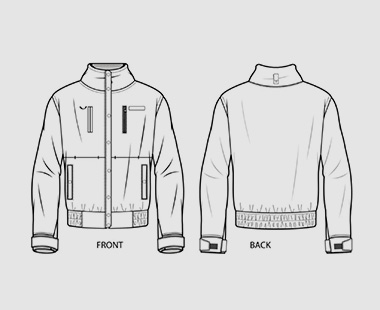
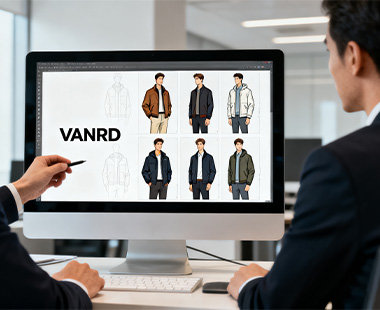
We review fabrics, construction and customization needs.
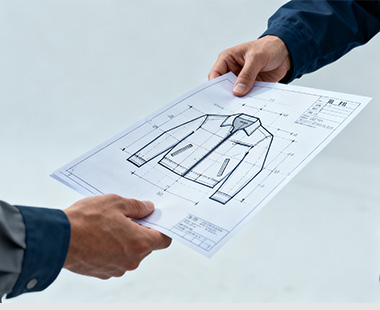
Confirm measurements, materials and garment details.
Review pricing, sampling plans and estimated lead times.
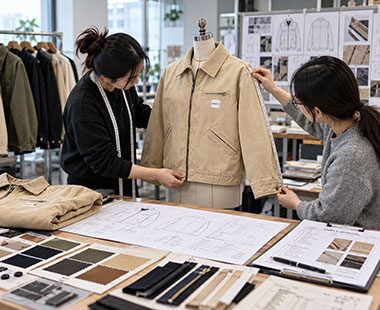
Our team develops samples for fit, detail and quality review.
Approve the sample and confirm production requirements.
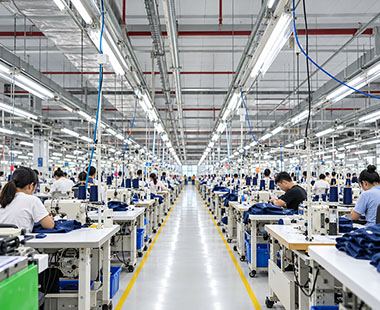
Cutting, sewing and in-process quality checks.
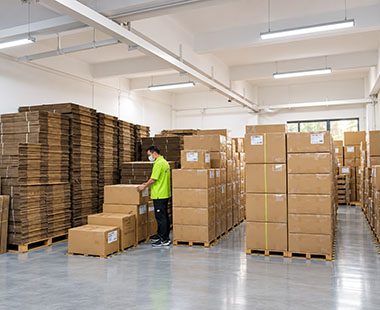
Final quality checks, packaging and shipment coordination.

01 / DEVELOPMENT
We develop samples based on your designs and agreed specifications. Review the fit, fabric and details, then request adjustments before approval.

02 / MANUFACTURING
After sample and order approval, our team manages material preparation, cutting, sewing, printing or embroidery, with quality checks during production.

03 / QUALITY & DELIVERY
We check finished garments against approved specifications, then coordinate labeling, packaging and shipment according to your order requirements.
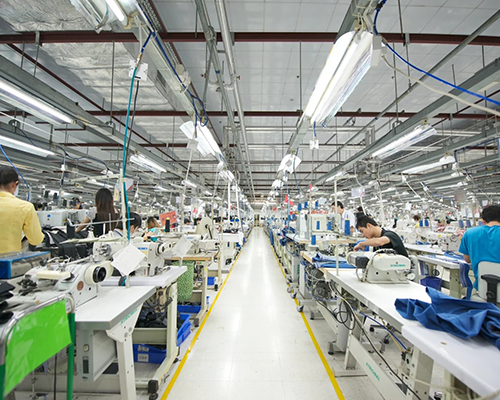
Our in-house production team supports custom apparel development and bulk manufacturing.


Clear production schedules, coordinated order management and shipment planning.

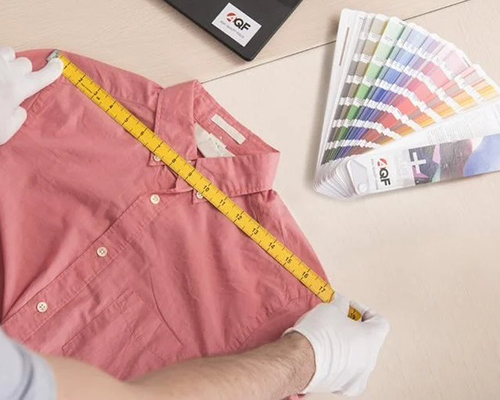
We check garment measurements, workmanship and finishing against approved specifications.

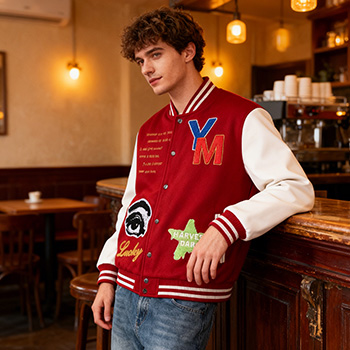
Varsity / Letterman
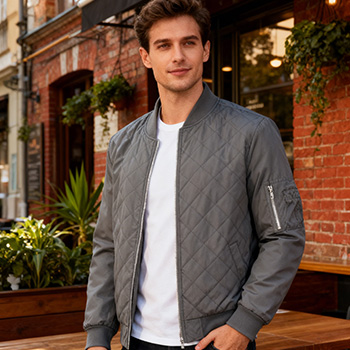
Bomber / Flight
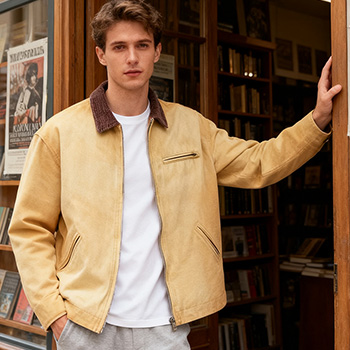
Work / Duck Canvas
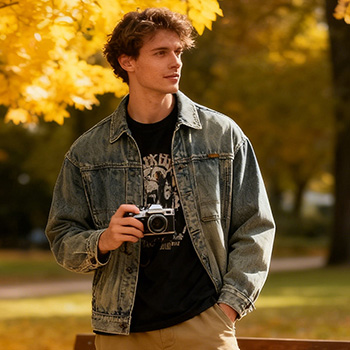
Denim / Trucker
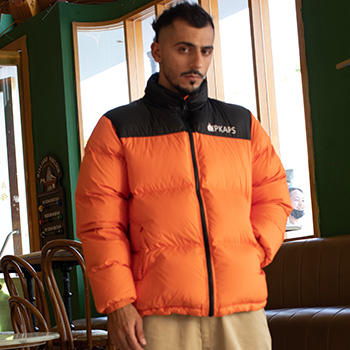
Puffer / Down
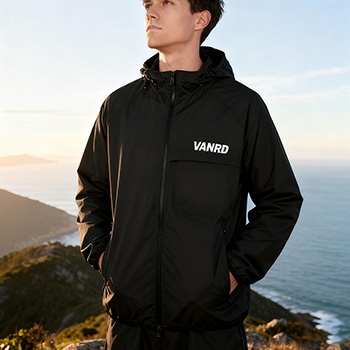
Windbreaker / Coach / Racing
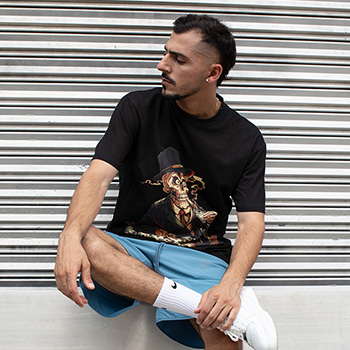
Jeans/Shorts

Jeans/Shorts
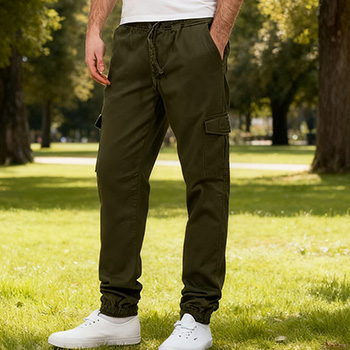
Cargo/Chino/Jogger
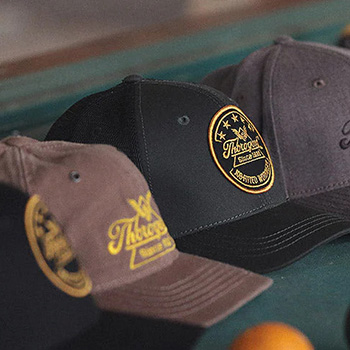
Caps/Beanies
 Private Label
Customize selected apparel styles with your own fabrics, colors, labels and packaging to create products that reflect your brand.
 OEM Manufacturing
Have your own designs or tech packs? We manufacture garments according to your specifications, including fabrics, construction and custom details.
 ODM Development
Starting with a sketch, reference images or a product idea? Our team helps refine designs, source materials and develop samples for approval.
Daily messages create noise and still miss the moments where intervention is possible. Milestones map to the points where a problem is still fixable: a shade issue at fabric stage is a re-dye conversation; the same issue at packing is a claim.
A useful update has three parts: what stage, how many pieces, and what is the next gate. Photos support the claim, they do not replace it.
| Milestone | What you receive | What you can still change |
|---|---|---|
| Fabric inspection | Shade and weight photos, roll count | Fabric or shade, before cutting |
| After cutting | Cut quantity by colour and size | Quantity mix, before sewing |
| In-line sewing | First finished pieces, key seams | Construction details |
| Before packing | Final quantity, carton marks | Packing and shipping only |
Write the update schedule into the order confirmation with the responsible contact. Unwritten expectations become arguments at the busiest part of the schedule.
If a milestone slips, the value is in hearing it early with a revised date, not in an apology at the end.
A brand asked for weekly updates and received a photo dump with no numbers. Switching to four milestone reports with quantities surfaced a 6% shortfall at cutting stage, which was corrected before sewing instead of being discovered in the carton count.
A trading company can quote well and deliver badly, because the line it promises is not its own. The fastest filter is a live video call walking through cutting, sewing and finishing — with the machine types visible.
Second filter: ask what they will not do. A factory that says “we do not run bonded fabrics” or “we cannot print on nylon” is describing real capability. One that says yes to everything is describing sales.
| Check | What good looks like | Red flag |
|---|---|---|
| Comparable production | Photos or video of similar garments on the line | Only stock catalogue images |
| Live walk-through | Cutting, sewing, finishing in one call | Refusal or delay |
| Documented QC | Named checkpoints with AQL level | “We check everything” |
| Reference | A customer who describes a defect and how it was handled | Only testimonials |
| Spec accuracy | Written spec matches the sample | Verbal promises |
A sample tests pattern-making, fabric sourcing, communication speed and finishing at once. Judge three things: did it arrive when promised, does it match the spec, and how did they respond to one round of corrections.
Payment terms and guarantees belong in the contract, not in the sales conversation. Read what is written.
A buyer shortlisted two suppliers on price. The cheaper one could not show a live line and described QC as “final check by our manager”. The other ran a video walk-through, named four checkpoints and produced a sample in nine days. The second supplier cost more per unit and delivered without a single claim.
Fabric choice changes how colour reads and how decoration behaves. Approving a print before the fabric is fixed means re-approving it later. Approving a lab dip before the fabric quality is fixed means the dip may not match the bulk base at all.
Once cutting begins, a colour change is not an edit — it is a re-cut or a re-dye, and both cost more than the delay would have.
| Order | Approval | What you are signing off |
|---|---|---|
| 1 | Fabric quality | Quality code, GSM, composition, shrinkage |
| 2 | Colour | Lab dip or bulk swatch under D65 |
| 3 | Decoration | Print or embroidery standard on production fabric |
| 4 | Trims | Zipper, cord, labels, packaging sample |
| 5 | Pre-production sample | Bulk version confirmed against the approved sample |
An approval is a dated decision against a physical standard, recorded in writing. “Looks good” in a chat message is not an approval, and it will not settle a dispute three weeks later.
Keep the approved standard sealed, physically or photographically, with the shade reference noted.
A brand approved the print first and changed the fabric a week later. The print, which read correctly on loopback, sank into the brushed surface of the new fleece and lost contrast. The decoration had to be re-approved and the bulk start moved by eleven days.
Chest, body length, shoulder, sleeve, hem and neck opening each move by their own increment. A hoodie may grade 5 cm across the chest per size but only 2 cm in body length — the increments are not uniform, and they must follow the fit intent.
This is why a base-size sample alone cannot prove a range. A size L that fits does not guarantee an XL that still looks oversized rather than simply bigger.
| Checkpoint | What to confirm | When |
|---|---|---|
| Base size sample | Silhouette, fabric hand, details | Sampling |
| Grading rules | Increments per point of measure | Before size set |
| Size set | Smallest, base, largest | Before bulk |
| Tolerances | Acceptable deviation per point | With size set |
| Post-wash measurement | Shrinkage applied to grading | Before bulk approval |
Two causes dominate: grading increments copied from a different fit block, and shrinkage applied to the base size but not to the grade. Both show up as “the larger sizes are off” rather than “everything is off”.
Specify tolerances in the tech pack. Without them, measurement disputes have no reference.
A brand's XL measured 2 cm short against the size set. The cause was shrinkage applied to the base size only, so the increment carried the error upward. VANRD recalculated grading on post-wash measurements, and the resubmitted set passed on the first inspection.
Pattern making and grading, marker making, fabric in short lengths, trims bought below their own minimums at retail-equivalent prices, decoration setup for a single piece, and the labour of running a garment through every station once.
In bulk those costs divide across the run. At 100 pieces the setup is already diluted by two orders of magnitude compared with a single sample.
| Cost element | Sample | Bulk (100 pcs) |
|---|---|---|
| Pattern and marker | Full cost on one piece | Spread across 100 |
| Fabric | Short length, higher rate | Roll quantity, mill rate |
| Decoration setup | Full setup on one piece | Setup spread across pieces |
| Labour | One garment, all operations | Line efficiency applies |
| Result | Highest unit cost | Lowest unit cost |
A sample answers questions bulk cannot: does the fabric behave, does the pattern hold the silhouette, does the artwork read at real size. Discovering those answers at bulk stage costs the whole run.
The productive way to look at it: the sample fee buys the right to run bulk once, correctly.
A brand compared a USD 45 sample with a USD 18 bulk unit and assumed a margin gap. Breaking it down, the sample carried the full pattern, a single-garment decoration setup and retail-rate trims; the bulk unit shared those across 100 pieces. The numbers were consistent — the comparison was not.
The sample is not a preview, it is the reference. It fixes the measurements, the fabric hand, the stitch density, the artwork position and the trims. Bulk is measured against it.
That is why changing fabric after sample approval is the most expensive mistake in the process: the fit, the shrinkage allowance and the grade all need to be rebuilt.
| Stage | Purpose | Typical duration |
|---|---|---|
| Fit sample | Pattern, measurements, silhouette | 7–10 days |
| Revision round | Adjust fit or details | 7–14 days each |
| Pre-production sample | Confirm bulk fabric, trims and decoration | 7–10 days |
| Bulk | Production against the approved sample | 25–35 days |
Most extra rounds come from an incomplete brief, not from the factory. Send measurements from a garment you already sell, state the fabric weight, and mark the artwork position on a photo.
Change one variable per round. If you change fabric and fit together, you cannot tell which change produced the result.
A Toronto brand needed a boxy hoodie with a dropped shoulder. Round one came back too close to the body because the brief said “oversized” without measurements. VANRD rebuilt the block with a measured reference garment, and round two was approved — two rounds instead of the four the brand had budgeted.