How to Choose Fabric Weight for Custom Sweatpants
Fabric weight affects the shape, comfort, cost, shrinkage risk, and production control of custom sweatpants. Heavyweight fleece can create a stronger streetwear silhouette, while midweight fleece, French terry, and loopback fabrics may be more suitable for lighter or more versatile programs. Brands should choose fabric weight based on fit, season, wash process, branding method, target price, and bulk QC requirements.
Quick Answers
What fabric weight is best for custom sweatpants?
There is no single best fabric weight for custom sweatpants. The right weight depends on the brand's target fit, season, hand feel, price range, wash effect, decoration method, and whether the sweatpants need a soft, structured, lightweight, or heavyweight appearance.
Are heavyweight sweatpants better for streetwear brands?
Heavyweight sweatpants can be suitable for streetwear brands that want structure, stacking, and a more substantial hand feel. However, heavier fabric can also increase cost, sewing difficulty, shrinkage risk, and shipping weight, so it should match the product goal.
What is the difference between brushed fleece and French terry?
Brushed fleece usually has a softer, warmer interior because the inside surface is brushed. French terry has looped yarns on the inside and often feels cleaner, less bulky, and more suitable for transitional or lighter sweatpants.
Does fabric weight affect sweatpants fit?
Yes. Fabric weight affects drape, leg shape, stacking, waistband tension, cuff recovery, and how the sweatpants look when worn. A pattern that works with midweight fleece may not behave the same way with heavyweight fleece.
Should baggy sweatpants use heavier fabric?
Baggy sweatpants often benefit from a more structured fabric, but the fabric should not be chosen by weight alone. The rise, thigh volume, inseam, leg opening, cuff design, and intended drape should all be considered together.
What should brands confirm before choosing sweatpants fabric?
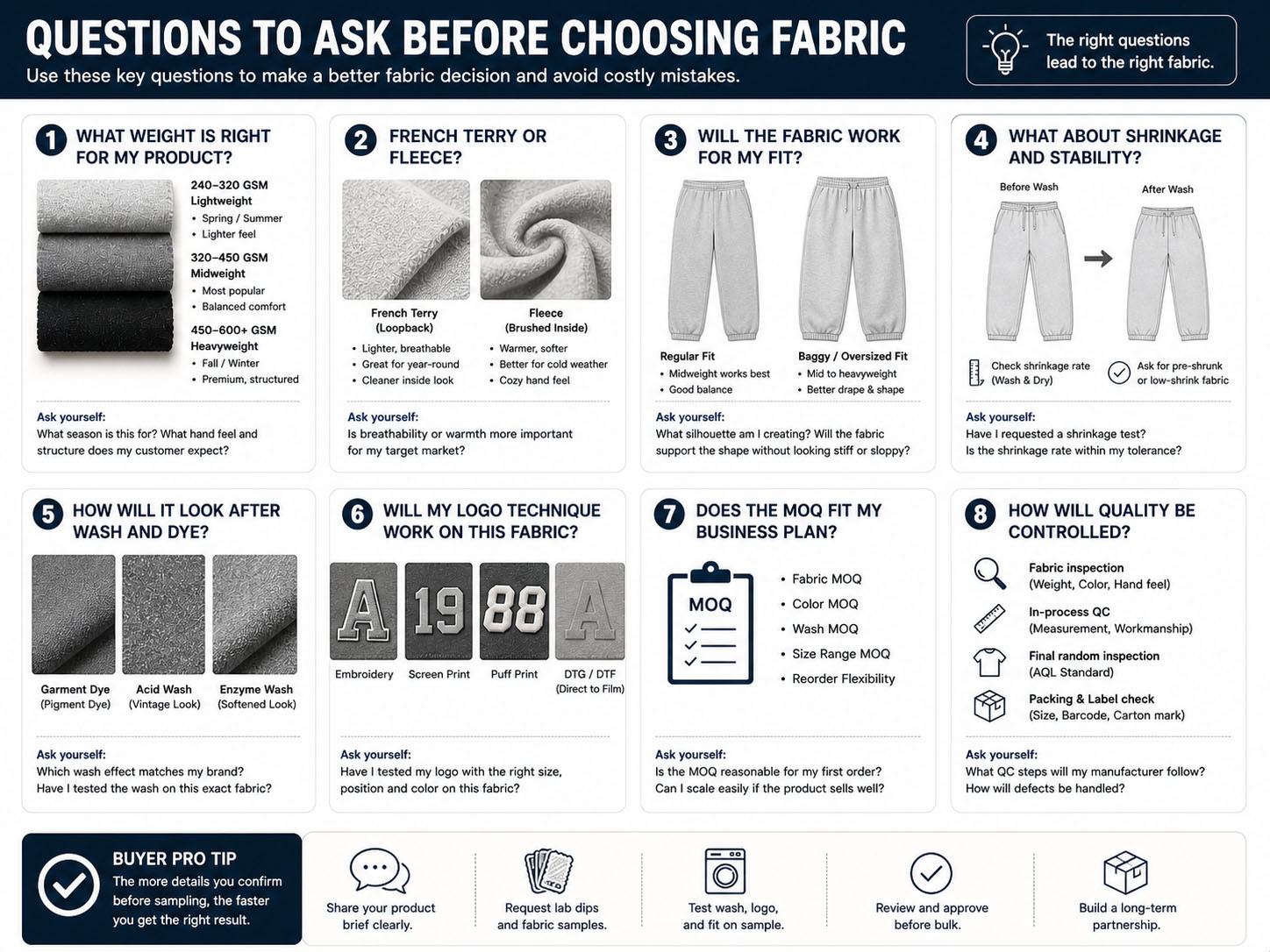
Brands should confirm fabric structure, approximate weight, hand feel, shrinkage concern, color standard, wash requirement, rib matching, decoration method, target season, and price direction before starting sampling.
Can the same fabric be used for hoodies and sweatpants?
Sometimes, yes. Using the same fleece for hoodies and sweatpants can create a coordinated set. However, sweatpants may need different rib, elastic, waistband control, shrinkage testing, and fit review compared with hoodies.
Why Fabric Weight Matters in Sweatpants Manufacturing
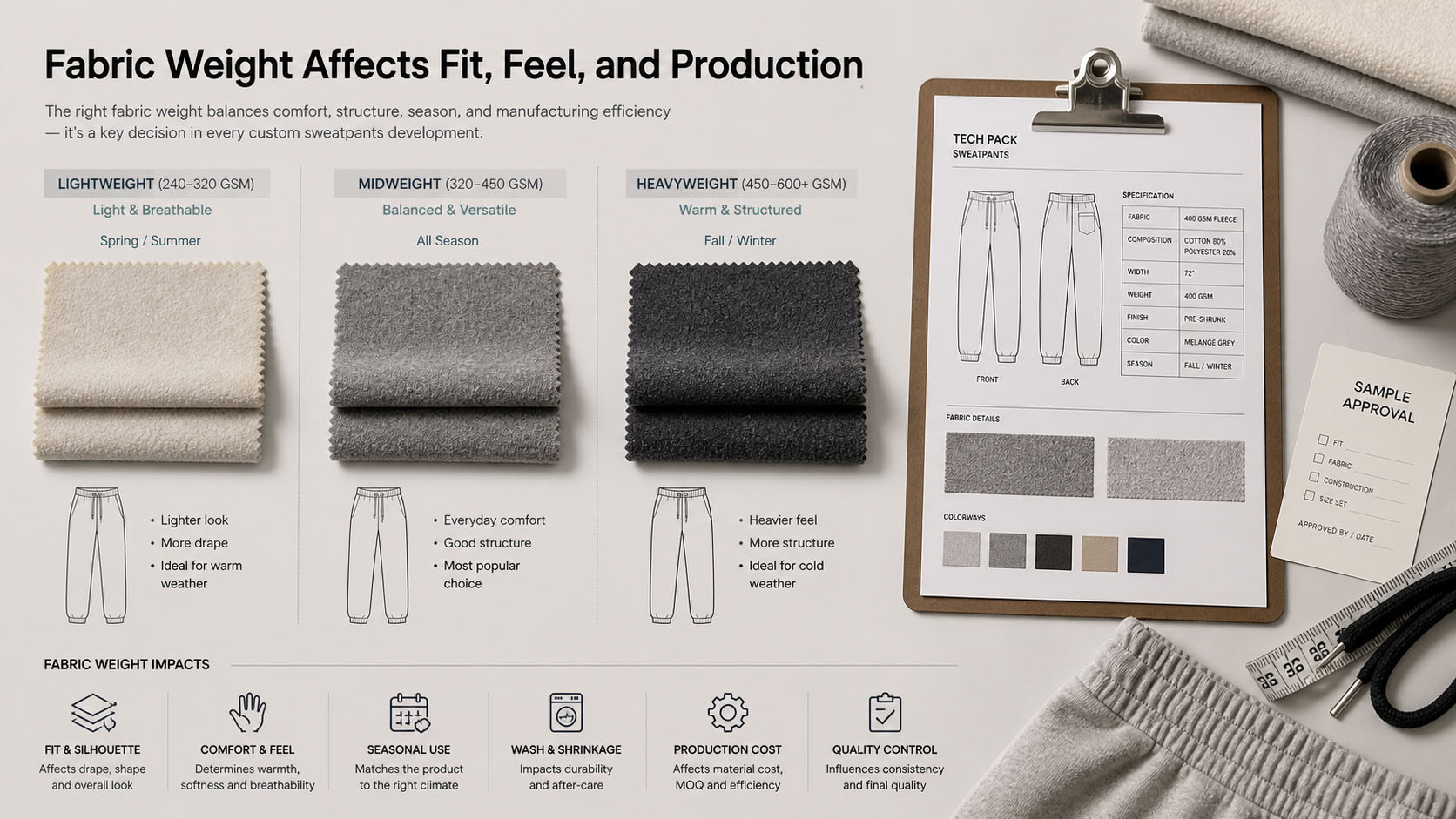
Fabric weight is one of the first decisions that affects custom sweatpants production. It influences how the pants drape, how warm they feel, how much structure they hold, how the waistband behaves, how cuffs recover, how the garment reacts to washing, and how bulk production should be inspected.
For private label brands, fabric weight should not be chosen only because a competitor uses "heavyweight fleece" or because a sample photo looks thick. A heavier fabric may support a premium streetwear look, but it also changes cost, sewing tension, shrinkage control, and packing volume. A lighter fabric may feel more versatile, but it may not create the same structure or stacking effect.
Vanrd works with streetwear and private label buyers in Dongguan (Humen), China, and fabric selection is usually discussed before sampling because it affects quotation, pattern development, trim matching, and QC planning. Brands can review Vanrd's OEM/ODM apparel manufacturing services to understand how custom apparel development can be organized before production.
1. Start With the Target Sweatpants Silhouette
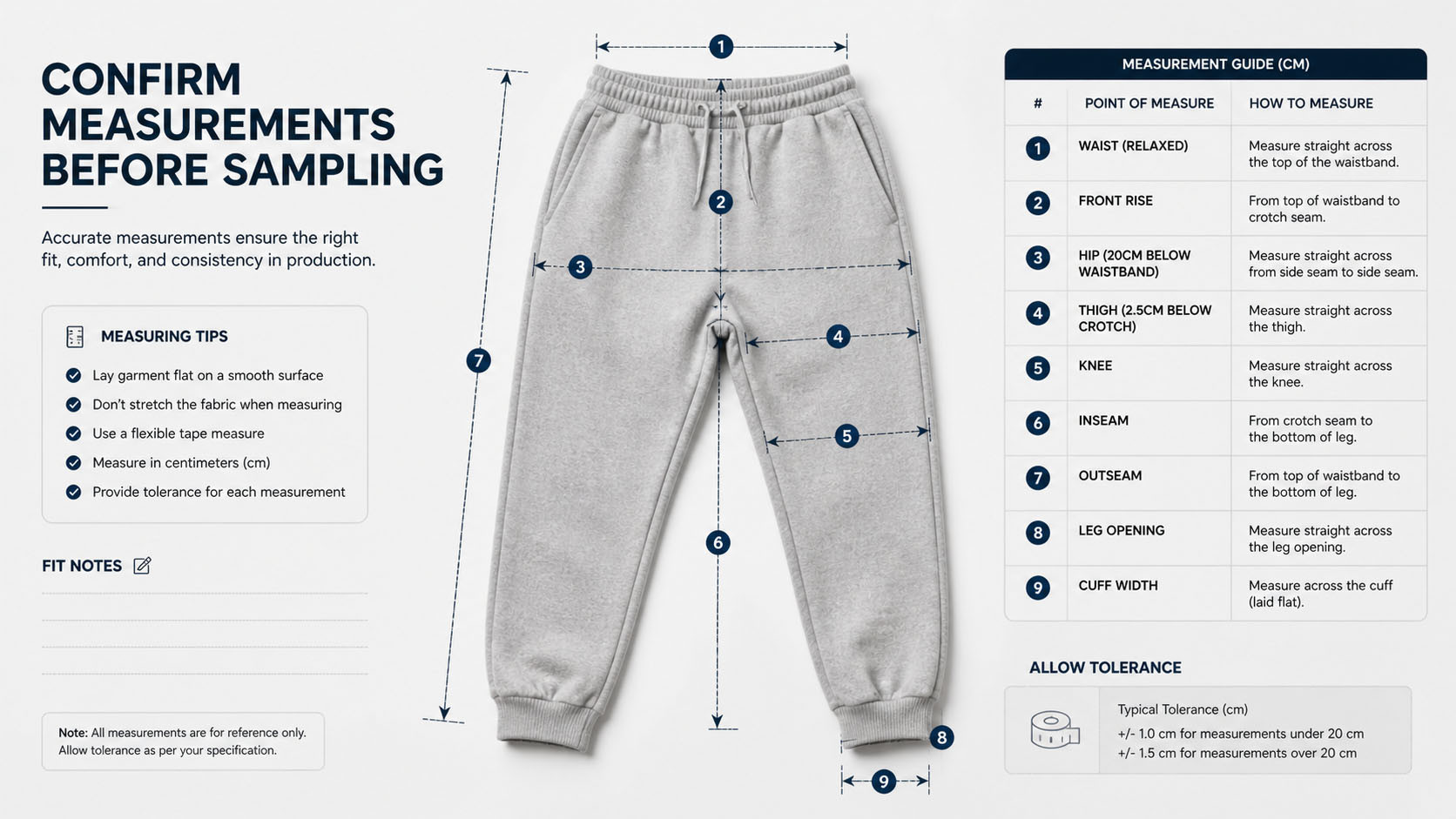
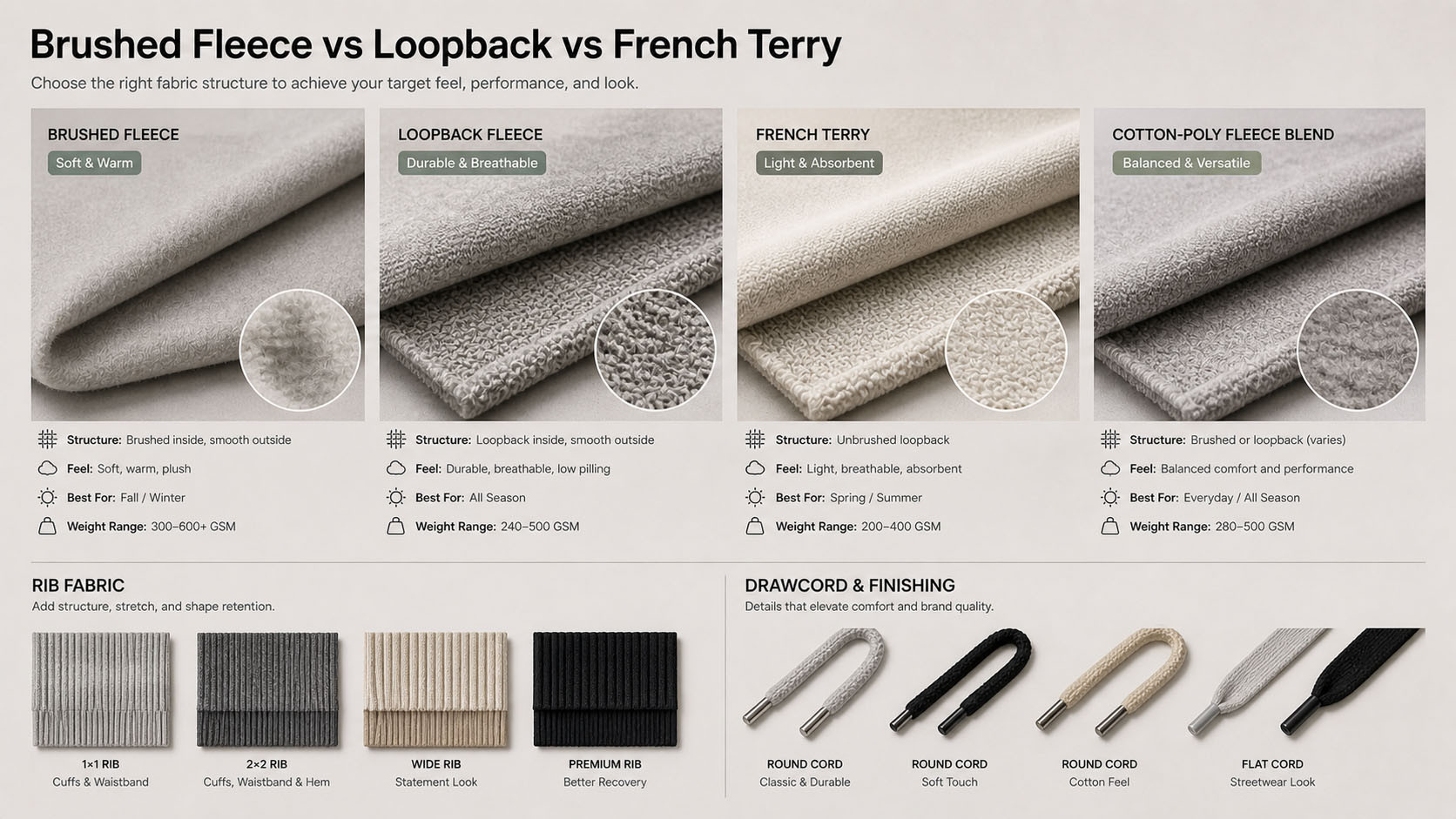
Fabric weight should be chosen after the brand defines the intended silhouette. The same fabric can look very different on baggy sweatpants, joggers, stacked sweatpants, relaxed sweatpants, and slim tapered sweatpants.
Baggy Sweatpants
Baggy sweatpants usually need enough structure to hold volume around the rise, thigh, knee, and leg opening. A fabric that is too light may collapse and look less intentional. A fabric that is too heavy may feel bulky or restrict movement.
For baggy styles, buyers should review:
Rise depth
Thigh volume
Knee width
Inseam length
Leg opening
Stacking effect
Waistband support
Overall drape
Joggers and Tapered Sweatpants
Joggers rely more on taper, cuff shape, and lower-leg control. If the fabric is too heavy, the cuff area may feel bulky. If the fabric is too light, the jogger may lose structure and look weak around the knee and cuff.
For joggers, buyers should review:
Taper from thigh to cuff
Cuff width
Cuff recovery
Knee shape
Waistband comfort
Pocket placement
Fabric stretch or stability
Stacked Sweatpants
Stacked sweatpants need extra attention to fabric weight and inseam. The fabric must create a controlled stacking effect rather than uncontrolled bunching. The leg width, inseam, and fabric drape should be tested together during sampling.
2. Understand Common Fabric Structures for Sweatpants
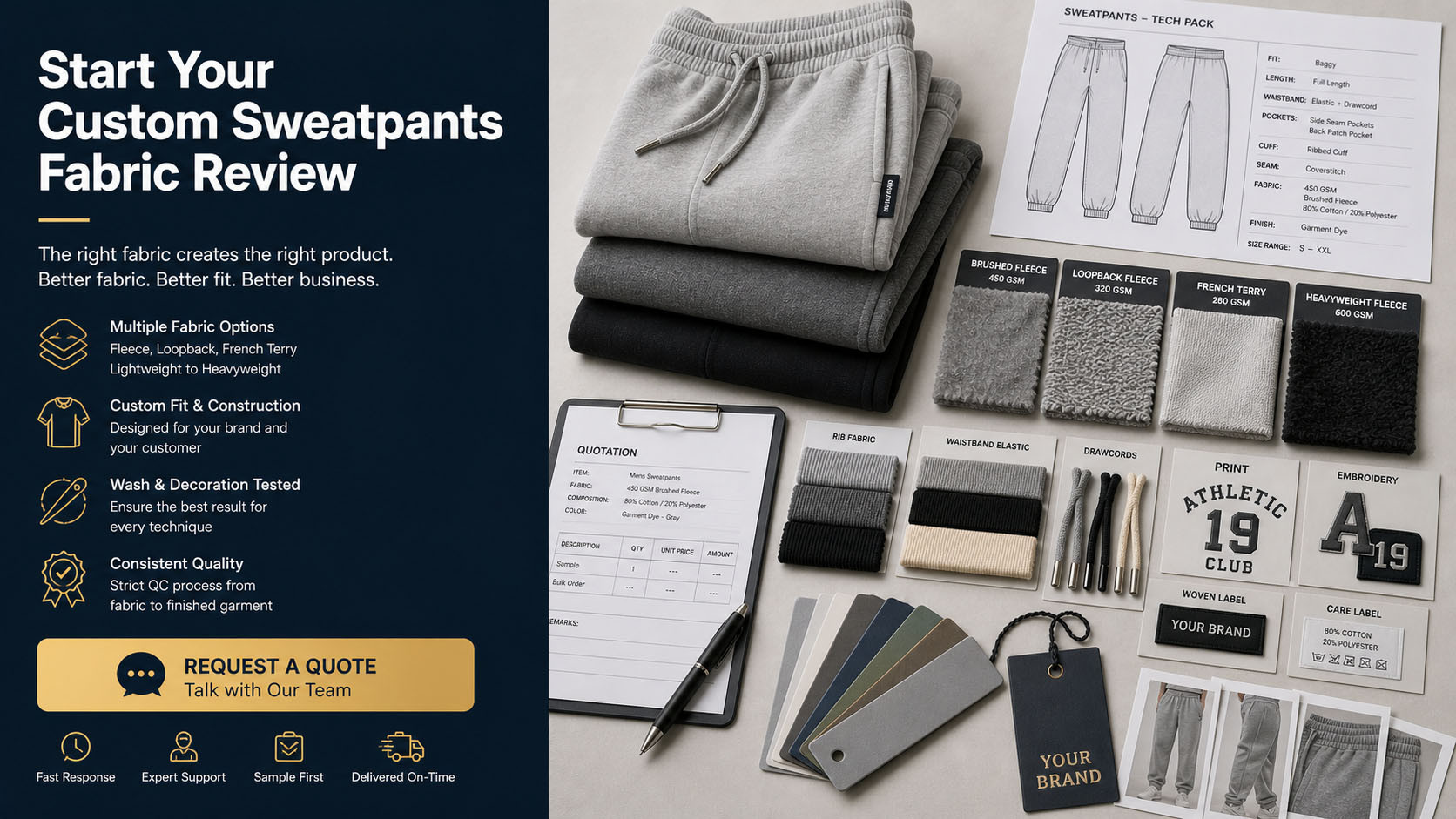
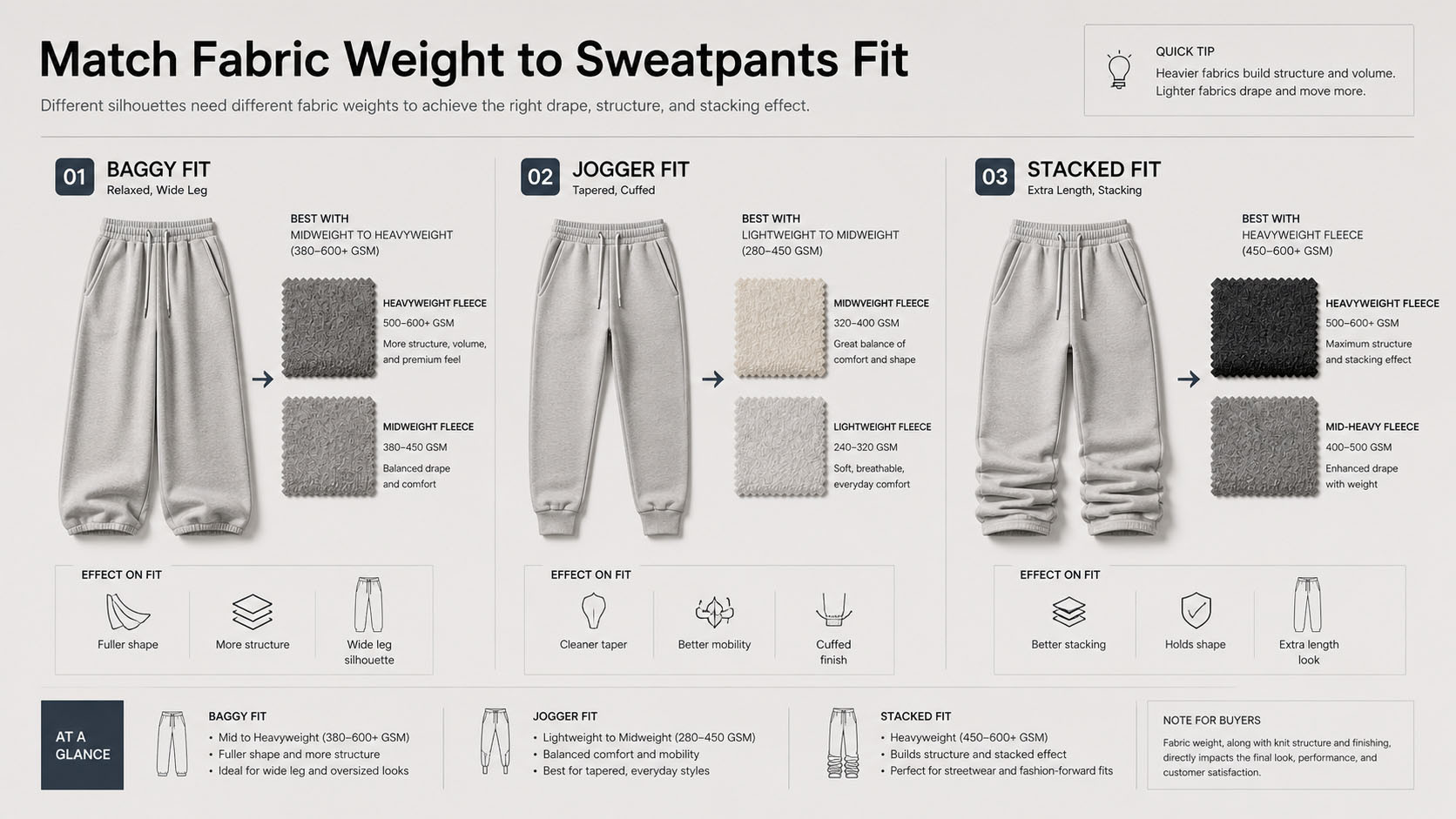
Fabric weight is important, but fabric structure is equally important. Two fabrics with similar weight can feel different if one is brushed fleece and the other is French terry or loopback fleece.
Brushed Fleece
Brushed fleece usually has a soft inner surface. It is often used when a brand wants a warm, comfortable, and fuller hand feel. It can work well for fall and winter sweatpants, heavyweight streetwear bottoms, or cozy fleece sets.
Good for:
Soft hand feel
Warmer sweatpants
Streetwear fleece sets
Heavyweight programs
Premium casual bottoms
Watchpoints:
Shrinkage behavior
Pilling risk depending on fabric quality
Bulkier seams if fabric is thick
Need for matching rib and elastic
Loopback Fleece
Loopback fleece has looped yarns on the inside instead of a heavily brushed surface. It often feels cleaner, less fluffy, and less bulky than brushed fleece.
Good for:
Cleaner interior feel
Lighter streetwear sweatpants
Transitional season styles
Less bulky silhouettes
Coordinated hoodie and sweatpants sets
Watchpoints:
Hand feel may be less warm than brushed fleece
Structure depends on yarn and construction
Fit should be tested because drape may differ
French Terry
French terry is often used for lighter or more versatile sweatpants. It may be suitable when the brand wants a less bulky product for broader seasonality.
Good for:
Spring or transitional sweatpants
Cleaner casual bottoms
Lighter fleece programs
Everyday private label products
Watchpoints:
May not create strong stacking
May feel less substantial for heavyweight streetwear
Need to confirm shrinkage and hand feel before sampling
Cotton-Poly Fleece Blends
Cotton-poly fleece blends can help balance softness, stability, cost, and production consistency. The actual performance depends on yarn, finishing, brushing, and fabric construction.
Good for:
Private label programs
Cost-controlled fleece bottoms
Stable bulk production
Balanced hand feel and durability
Watchpoints:
Hand feel varies widely
Fabric quality should be checked by swatch or sample
Brand should confirm composition and finishing direction
For fabric development, dyeing, washing, printing, embroidery, and trim coordination, buyers can review Vanrd's fabric and technique customization support.
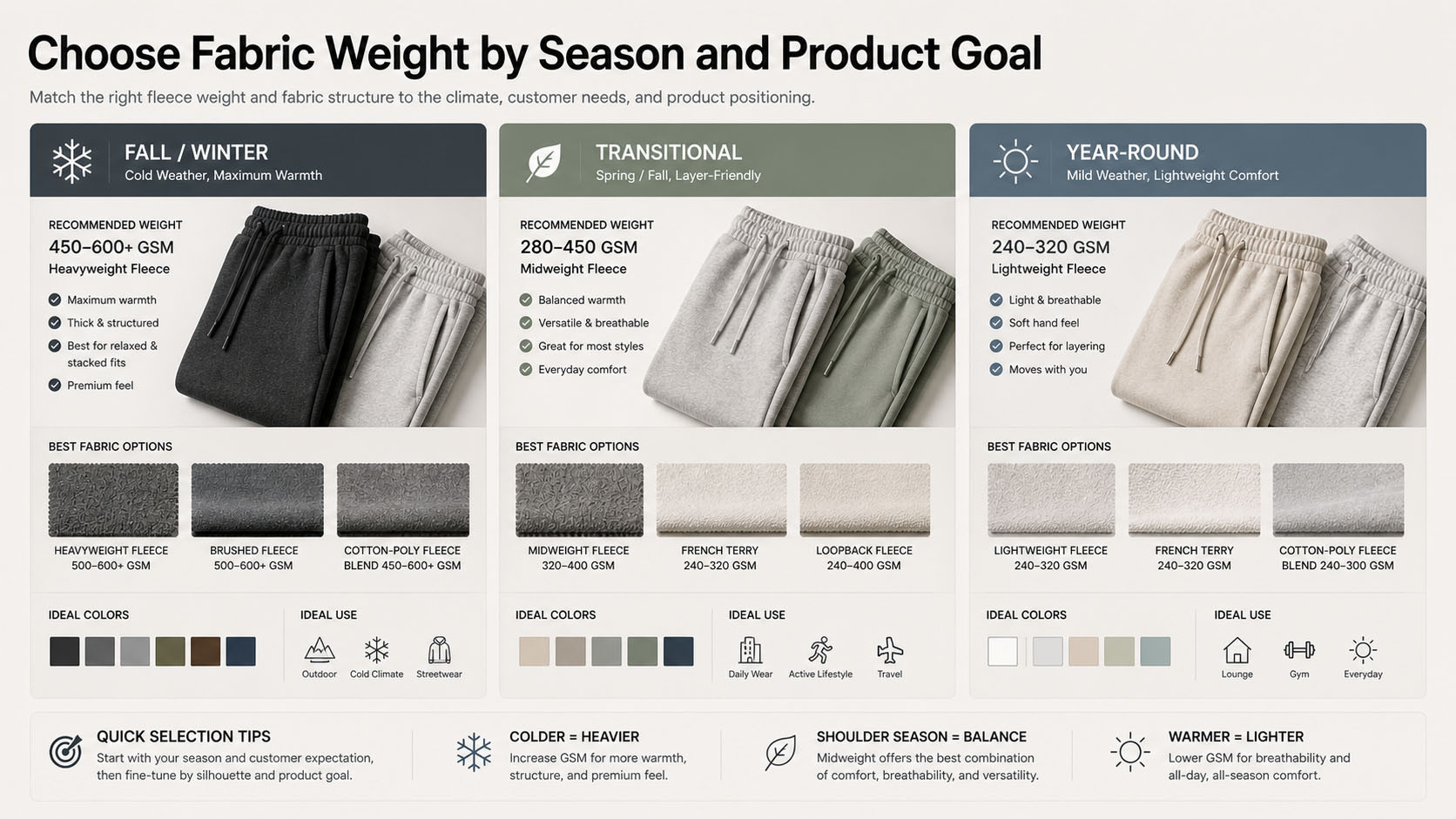
3. Compare Lightweight, Midweight, and Heavyweight Fabric Choices
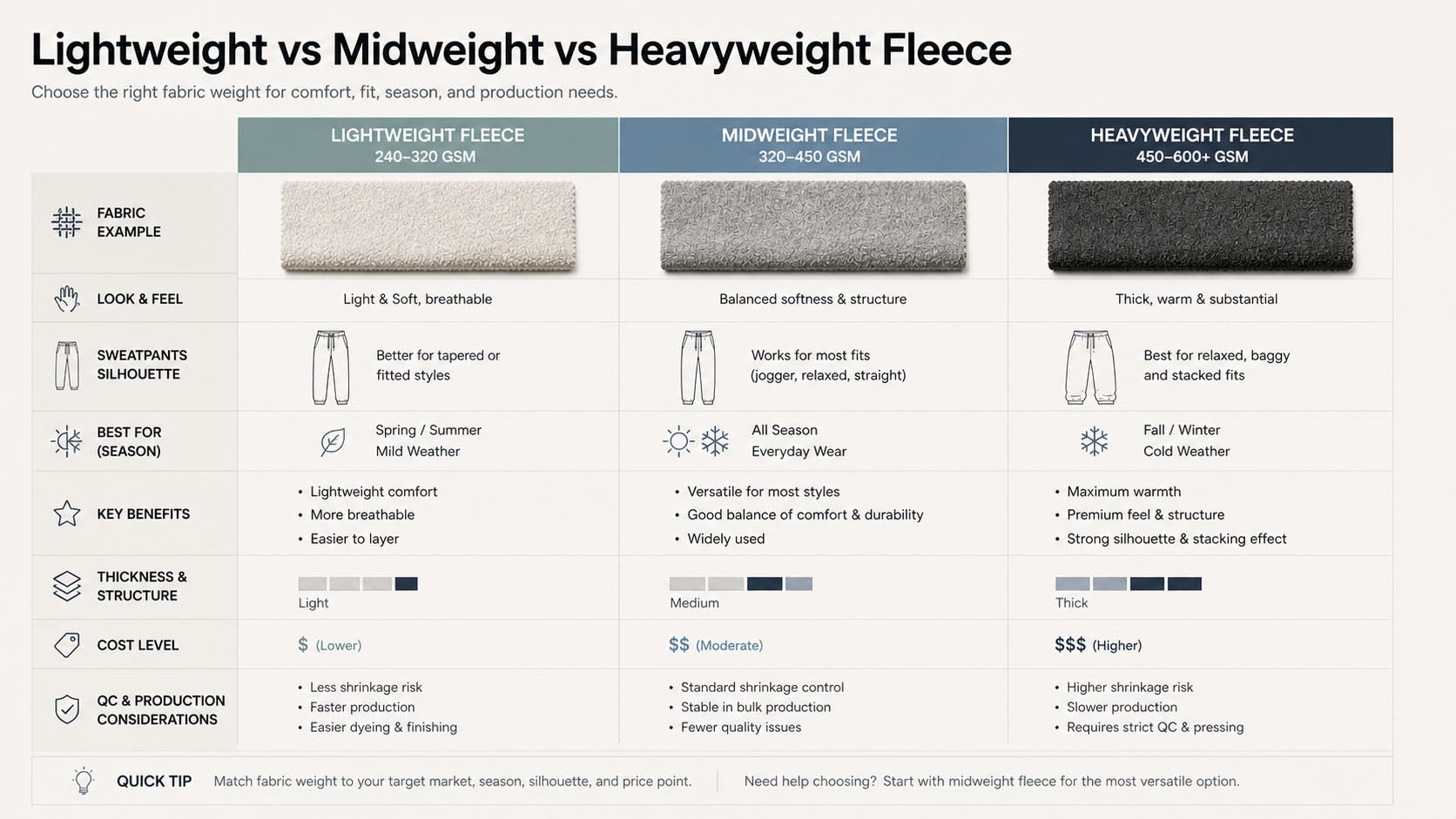
Fabric weight should be treated as a range decision, not a fixed answer. In many cases, buyers should compare lightweight, midweight, and heavyweight options through sample swatches before final approval.
| Fabric Weight Direction | Usually Suitable For | Main Advantage | Risk to Check |
| Lightweight | Transitional sweatpants, casual joggers, softer drape | Less bulky, easier for warmer seasons | May lack structure for baggy or stacked fits |
| Midweight | Everyday sweatpants, private label programs, broader seasonality | Balanced hand feel and production flexibility | May not feel premium enough for some heavyweight streetwear concepts |
| Heavyweight | Premium streetwear, baggy fits, structured sweatpants, colder seasons | Stronger structure and more substantial hand feel | Higher cost, shrinkage risk, thicker seams, heavier packing |
When Lightweight Fabric Makes Sense
Lightweight fabric may be suitable when the brand wants softer drape, warmer-season use, less bulk, or a more casual everyday sweatpants product. It can also work for joggers if the silhouette does not require strong structure.
However, lightweight fabric may not create the same visual weight as heavyweight streetwear sweatpants. It can also show less body in product photos or on-model shots.
When Midweight Fabric Makes Sense
Midweight fabric is often a practical starting point for brands that want balance. It can support a wide range of sweatpants designs, including relaxed sweatpants, joggers, and private label fleece bottoms.
For many brands, midweight fabric is easier to test before moving into heavier or more specialized fabric directions.
When Heavyweight Fabric Makes Sense
Heavyweight fabric can be suitable when the brand wants structure, warmth, a premium hand feel, or a more substantial streetwear look. It may be especially useful for baggy sweatpants, heavyweight fleece sets, and colder-season collections.
However, heavyweight fabric requires careful control of shrinkage, seam thickness, waistband tension, cuff recovery, and bulk packing.
4. Match Fabric Weight With Season and Target Market
Seasonality is an important part of sweatpants fabric selection. A fabric that works well for winter streetwear may feel too heavy for warmer markets or year-round wear. A lighter fabric may work for broader seasons but may not create enough structure for premium fleece products.
Fall and Winter Sweatpants
For fall and winter programs, brands may prefer brushed fleece, heavier cotton fleece, or structured fleece blends. These fabrics can create warmth and a fuller hand feel.
Check:
Warmth expectation
Inside surface feel
Bulk seam thickness
Shrinkage risk
Packing volume
Target retail price level
Spring and Transitional Sweatpants
For spring or transitional programs, French terry, loopback fleece, or midweight fleece may be more suitable. These fabrics can provide comfort without feeling too heavy.
Check:
Breathability expectation
Fabric drape
Seasonal color direction
Hand feel
Ease of movement
Price target
Year-Round Private Label Sweatpants
For year-round programs, many buyers may prefer a balanced fabric rather than an extreme heavyweight option. The fabric should be tested for comfort, fit, color, shrinkage, and repeat production stability.
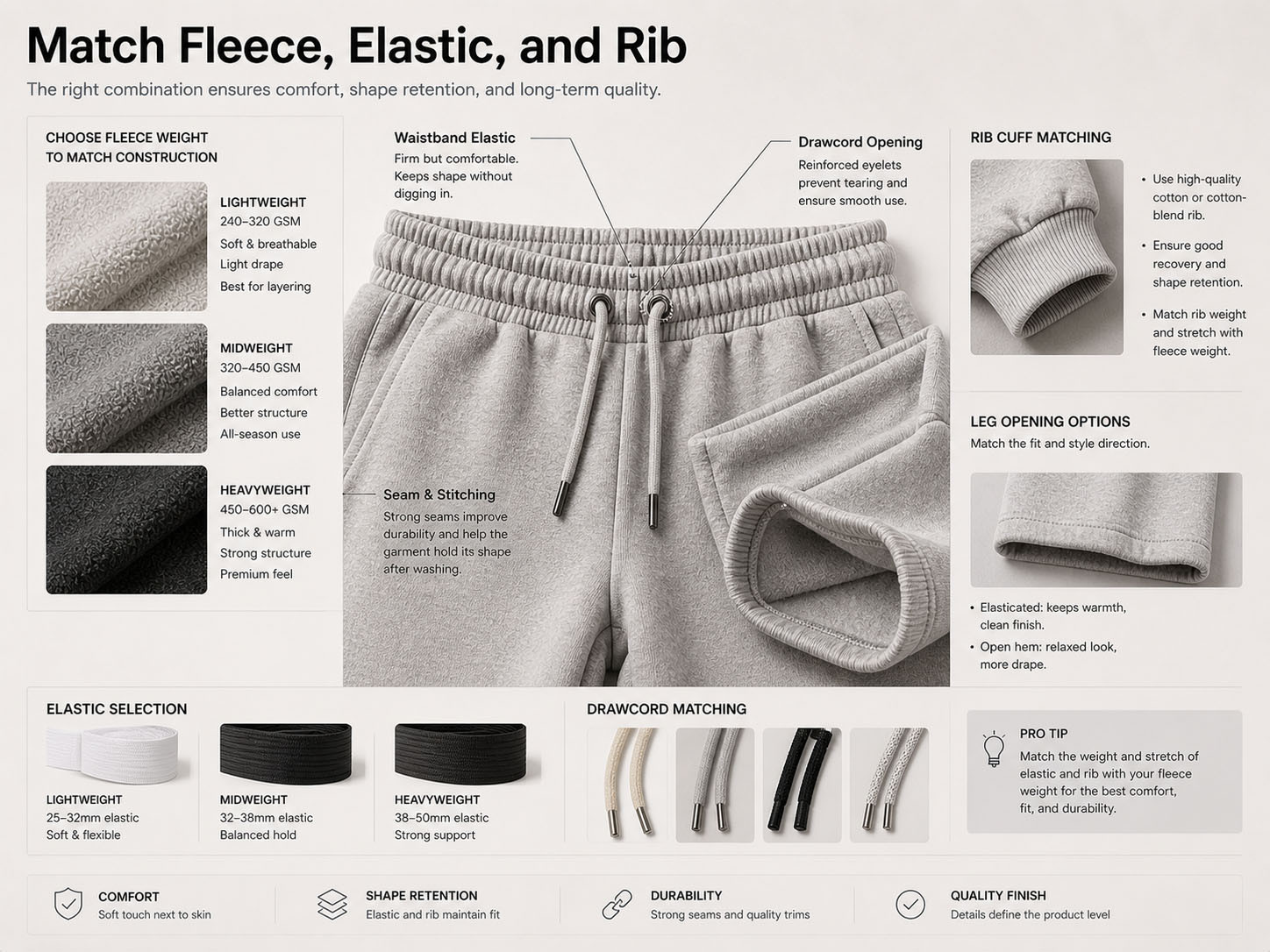
5. Check How Fabric Weight Affects Waistband and Cuffs
Fabric weight changes how waistband and cuffs should be developed. This is one of the most common details buyers overlook when choosing sweatpants fabric.
Waistband Control
A heavier fabric may need stronger elastic or more stable waistband construction. A lighter fabric may need a cleaner waistband that does not overpower the garment. The waistband should support the fabric without feeling uncomfortable.
Confirm:
Elastic width
Elastic strength
Waistband height
Topstitching structure
Drawcord type
Drawcord placement
Inside waistband finish
Cuff Recovery
Cuffs should be matched to the leg shape and fabric weight. Heavy fleece with weak rib can create a poor recovery effect. Lightweight fabric with overly strong rib may feel unbalanced.
Confirm:
Cuff rib quality
Cuff height
Cuff opening
Rib recovery
Sewing tension
Leg shape balance
Why Matching Matters
The main fleece, rib fabric, elastic, and drawcord should work together. If one part feels weaker or heavier than the others, the product can look inconsistent even if the fabric itself is acceptable.
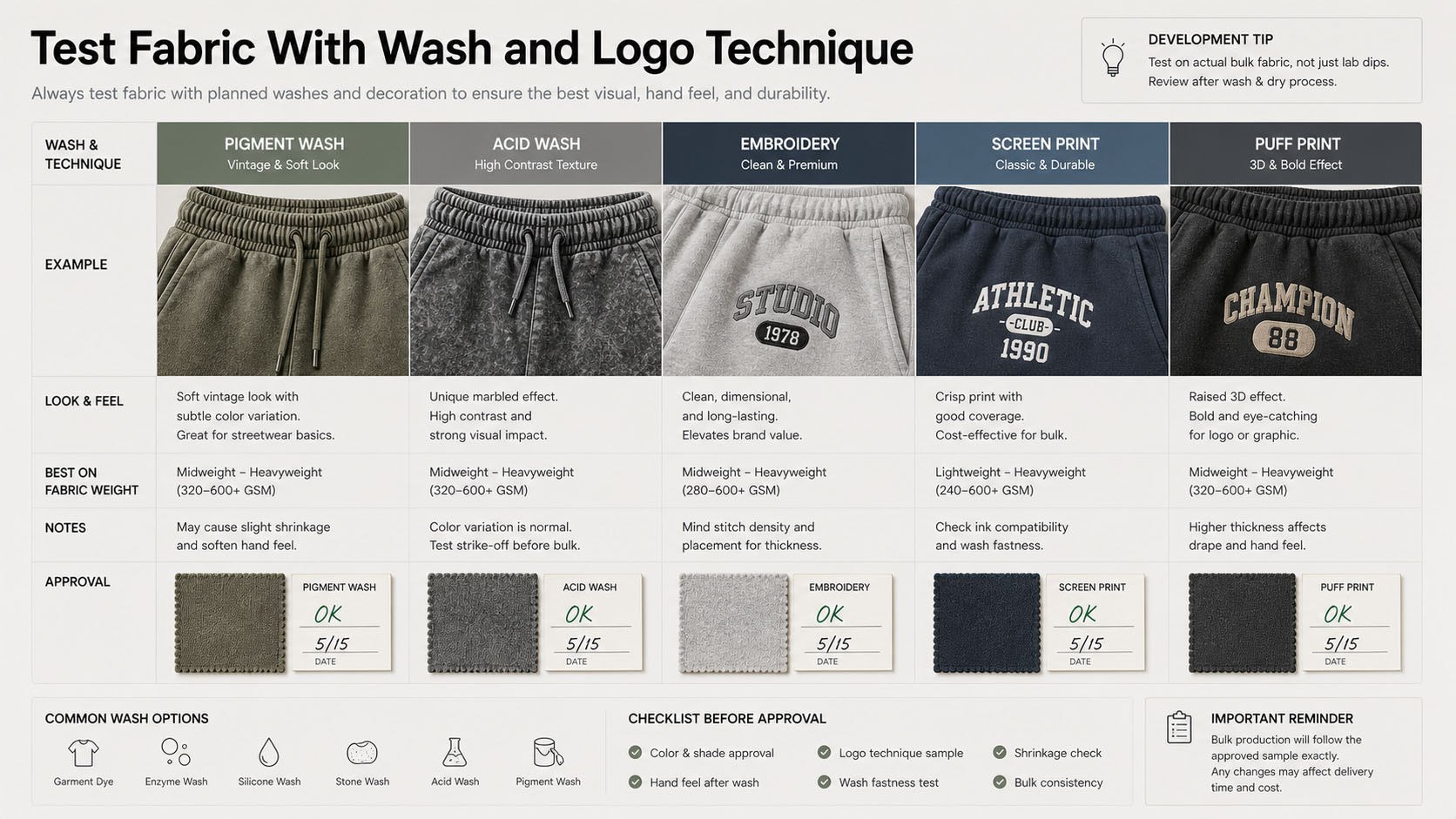
6. Consider Wash, Dye, and Decoration Before Final Fabric Approval
Fabric weight should not be approved separately from wash, dye, and decoration. Garment dye, pigment wash, acid wash, embroidery, puff print, and other techniques can change how the sweatpants feel, fit, and perform in production.
Fabric Weight and Wash Effects
Washed sweatpants may shrink, soften, fade, or change surface appearance. A heavier fleece may react differently from a lighter fabric. Before bulk production, buyers should review wash samples and confirm the approved effect.
Check:
Wash reference
Target shade
Shrinkage after wash
Hand feel after wash
Color variation range
Bulk consistency expectation
Fabric Weight and Printing
Printing on fleece depends on surface texture, fabric stability, and wash process. Puff print, screen print, cracked print, and heat transfer may behave differently across fabric types.
Check:
Print technique
Artwork size
Placement
Color standard
Hand feel after print
Wash compatibility
Fabric Weight and Embroidery
Embroidery on heavier fleece may feel more stable, but thick fabric and dense embroidery can still create puckering or stiffness. Embroidery placement should be tested before bulk approval.
Check:
Embroidery size
Thread color
Backing requirement
Placement
Puckering risk
Wash compatibility
7. Sample Before Committing to Bulk Fabric
Sampling is the safest way to confirm whether the fabric weight matches the intended sweatpants design. A swatch can show hand feel, but a full sample shows fit, drape, waistband behavior, cuff shape, pocket position, and logo placement.
What to Review in the First Sample
Review these points:
Fabric hand feel
Fabric weight impression
Drape and leg shape
Waistband comfort
Cuff recovery
Pocket placement
Shrinkage after wash if relevant
Logo placement
Measurement against size chart
Overall silhouette
What Buyers Should Prepare
Before requesting a sample, prepare:
Reference images
Tech pack if available
Size chart
Target fabric direction
Preferred fabric weight or hand feel
Fit direction
Waistband and cuff requirements
Logo artwork
Wash or decoration requirement
Target quantity
QC expectations
Vanrd's custom apparel service process explains how sampling, approval, and bulk production communication can be structured for custom apparel projects.
8. Factory Reality: Why Fabric Weight Changes Production Planning
In real production, changing fabric weight can change more than the material cost. It can affect pattern balance, sewing difficulty, trim matching, shrinkage, production time, packing, and QC standards.
Pattern May Need Adjustment
A pattern approved in midweight fleece may not behave the same in heavyweight fleece. The heavier fabric may need adjustments around rise, thigh, leg opening, cuff width, or waistband construction.
Sewing Tension Can Change
Thicker fabric can create bulk at seams, pockets, cuffs, and waistbands. The factory may need to adjust needle, thread, seam allowance, and sewing tension depending on the fabric.
Shrinkage Should Be Checked Early
If the sweatpants will be washed or garment dyed, shrinkage should be reviewed before bulk production. The sample should be checked after the relevant treatment, not only before finishing.
Packing and Shipping May Be Affected
Heavier fleece increases garment weight and packing volume. This can affect carton planning and shipping considerations, especially for larger orders.
QC Standards Should Match the Fabric
A heavyweight washed sweatpants program may need different QC attention from a lightweight French terry jogger. Fabric defects, shade variation, measurement tolerance, cuff recovery, and loose threads should be checked according to the product type.
For inspection and quality control planning, buyers can review Vanrd's quality control and inspection standards.
9. Common Mistakes When Choosing Sweatpants Fabric Weight
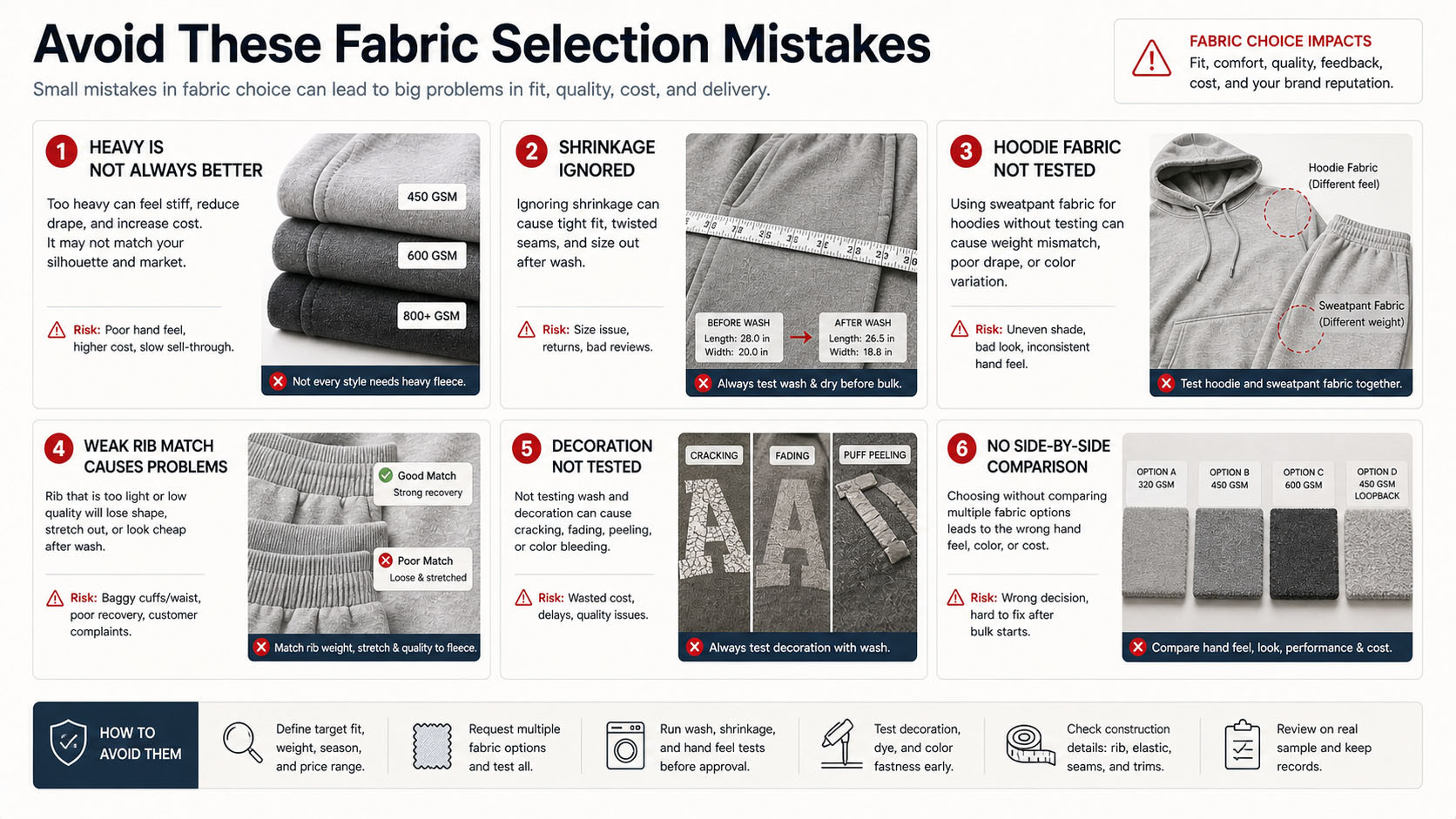
Most fabric selection mistakes happen when brands choose fabric based on trend words, competitor photos, or incomplete sample references.
Mistake 1: Choosing Fabric Only Because It Is Heavy
Heavy fabric is not automatically better. If the fit, waistband, cuff, and target season do not match the weight, the sweatpants may feel bulky or uncomfortable.
Mistake 2: Ignoring Shrinkage
Shrinkage can affect waist, rise, inseam, leg opening, and overall fit. This is especially important for washed, garment-dyed, or brushed fleece sweatpants.
Mistake 3: Using Hoodie Fabric Without Testing Sweatpants Fit
A fabric that works well for hoodies may not behave the same on sweatpants. Pants require different review points, including rise, thigh volume, knee shape, inseam, leg opening, waistband, and cuffs.
Mistake 4: Forgetting Rib and Elastic Matching
The main fabric may feel good, but the product can still fail if the rib and elastic do not match the fabric weight. Waistband and cuff development should be reviewed together with the fleece.
Mistake 5: Approving Fabric Before Testing Decoration
Print, embroidery, wash, and labels should be tested with the chosen fabric. Decoration can change hand feel, appearance, and production risk.
Mistake 6: Not Comparing Fabric Options Side by Side
Buyers often make better decisions when they compare multiple swatches or sample options. A side-by-side comparison helps clarify hand feel, structure, drape, and price direction.
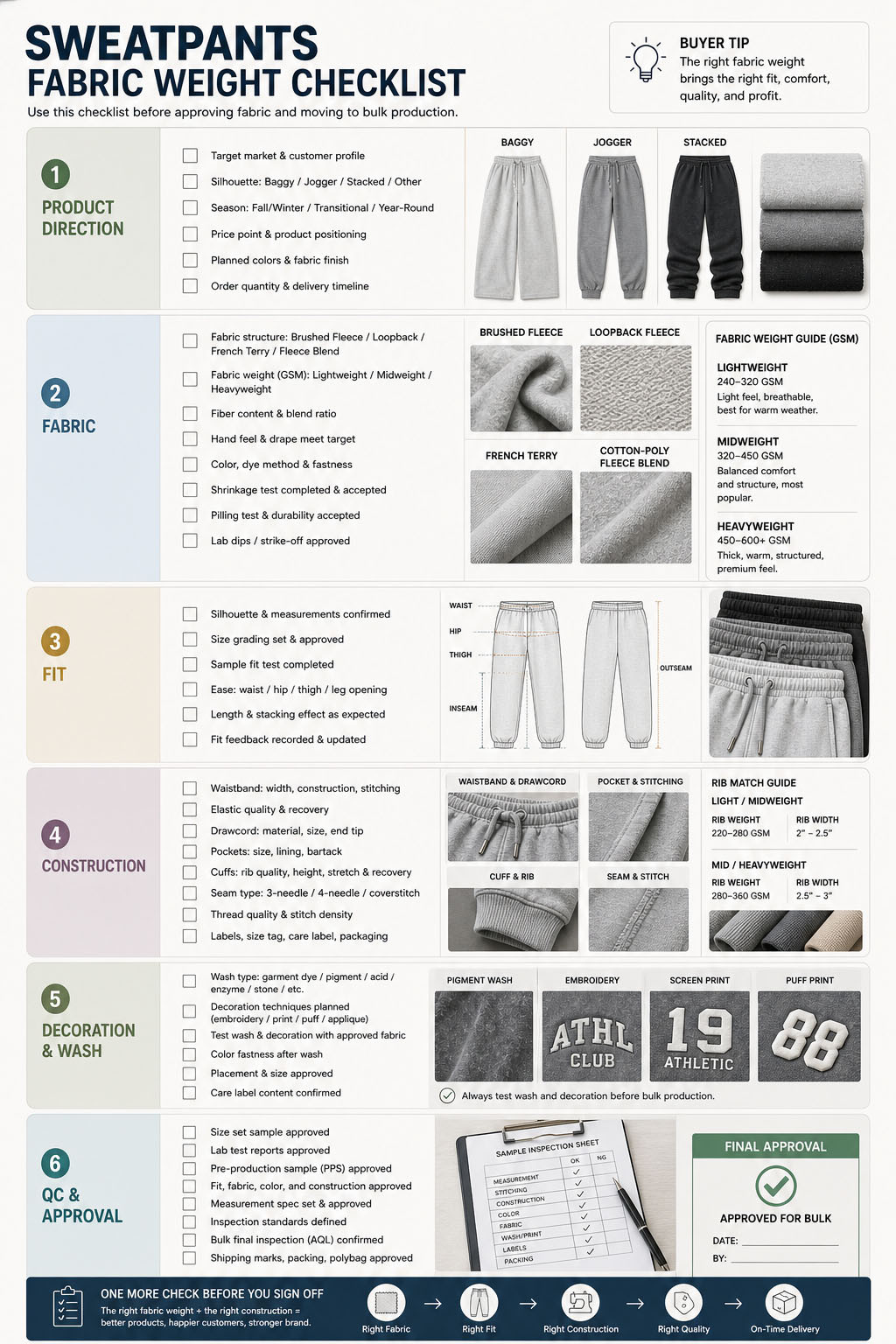
10. Fabric Weight Selection Checklist for Buyers
Use this checklist before approving fabric for custom sweatpants sampling or bulk production.
Product Direction
Sweatpants type confirmed
Target silhouette confirmed
Season confirmed
Target market confirmed
Price direction discussed
Brand positioning clarified
Fabric
Fabric structure confirmed
Fabric weight direction confirmed
Hand feel approved
Inside surface checked
Color standard confirmed
Shrinkage concern discussed
Wash requirement confirmed if needed
Fit
Rise reviewed
Thigh volume reviewed
Knee shape reviewed
Inseam reviewed
Leg opening reviewed
Cuff width reviewed
Overall drape reviewed
Construction
Waistband elastic matched
Drawcord matched
Rib or cuff fabric matched
Pocket construction reviewed
Seam bulk checked
Sewing tension discussed
Decoration and QC
Logo method tested
Print or embroidery placement checked
Wash compatibility reviewed
Measurement tolerance discussed
Packing volume considered
Final inspection points aligned
11. How to Communicate Fabric Weight Requirements to a Manufacturer
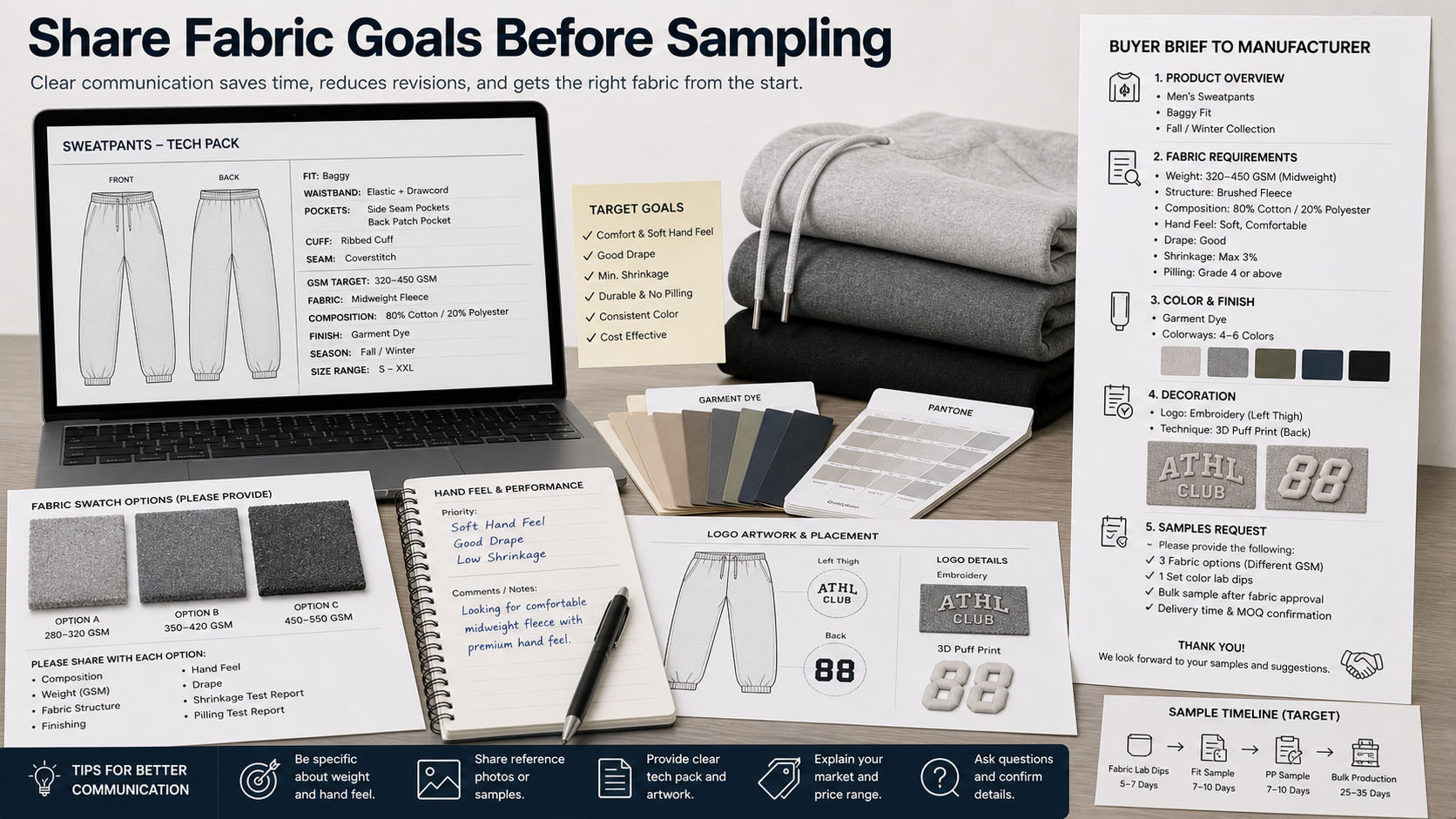
Fabric weight requirements should be communicated with visual references, swatches if available, and clear product goals. Instead of asking only for "heavy fleece," buyers should explain how the sweatpants should look and feel after production.
Better Ways to Describe Fabric Direction
Use practical descriptions such as:
"We want structured baggy sweatpants with a full hand feel."
"We want midweight fleece for year-round private label sweatpants."
"We want a softer brushed interior but do not want the pants to feel too bulky."
"We want a cleaner loopback or French terry feel for lighter joggers."
"We need fabric that can work with pigment wash and embroidery."
What to Send With the Request
Send:
Reference photos
Target fabric direction
Preferred hand feel
Target season
Fit direction
Wash requirement
Decoration method
Color standard
Target quantity
QC concerns
A manufacturer can give more useful feedback when the fabric direction is connected to product purpose, not only a fabric name.
Next Steps Before Starting a Custom Sweatpants Sample
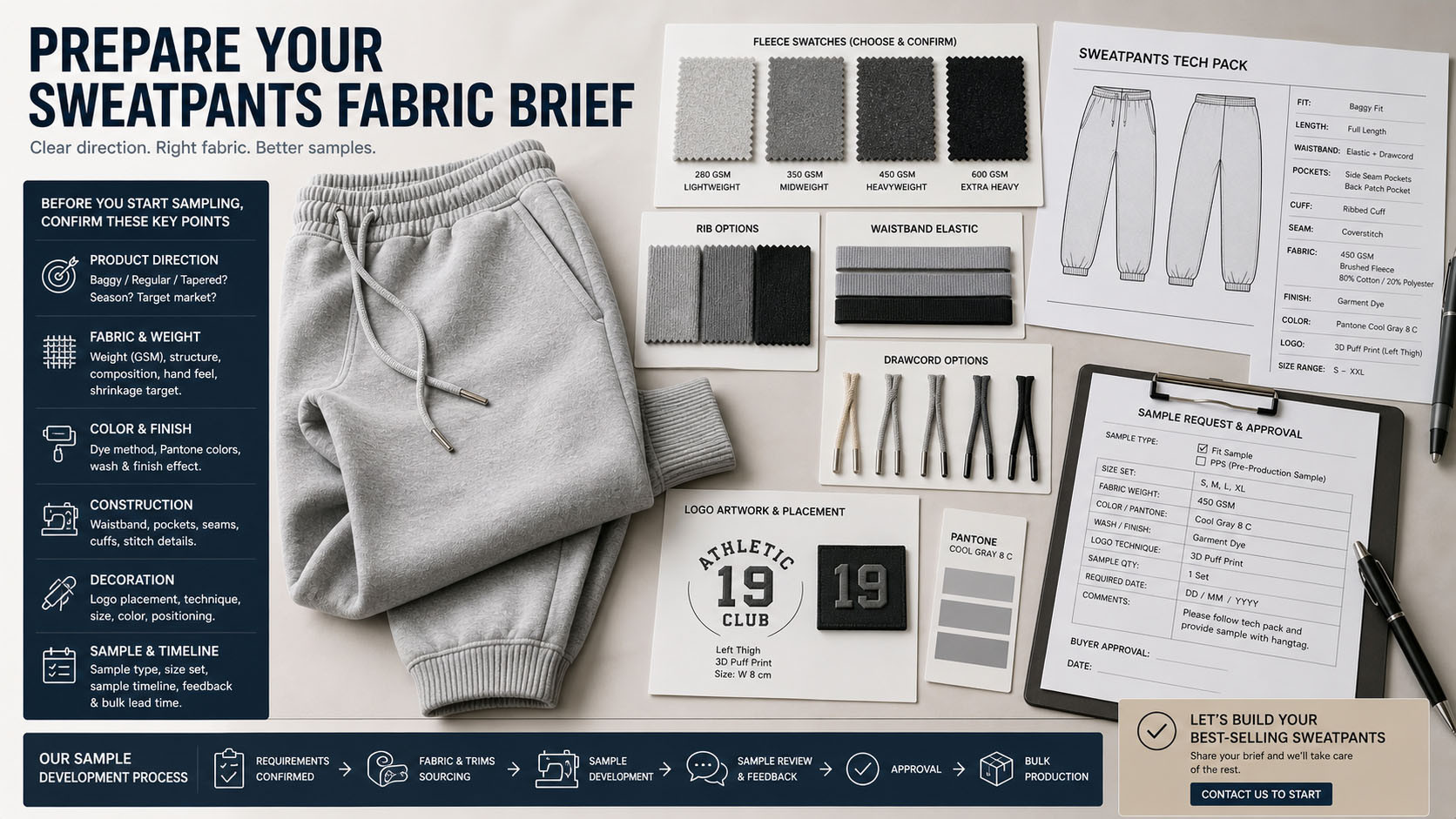
Before starting a custom sweatpants sample, brands should define the relationship between fabric weight, fit, construction, and decoration. The goal is not to choose the heaviest fabric possible. The goal is to choose the fabric that supports the product's intended look, comfort, cost, and production stability.
Prepare These Details First
Sweatpants type
Target silhouette
Reference images
Fabric structure preference
Approximate fabric weight direction
Hand feel expectation
Season and market target
Waistband and cuff requirements
Logo or decoration method
Wash requirement if applicable
Target quantity
QC concerns
Vanrd supports private label and streetwear buyers with fabric selection, sampling, trim coordination, bulk production, and quality control. Buyers preparing a custom sweatpants project can also review Vanrd's factory strength before starting development.
FAQ
What fabric weight should I choose for custom sweatpants?
Choose fabric weight based on silhouette, season, hand feel, wash process, decoration method, cost direction, and bulk production needs. Heavyweight fabric can support structure, while midweight or lighter fabric may be better for broader seasonality or cleaner drape.
Is heavyweight fleece better than French terry for sweatpants?
Heavyweight fleece is usually better for structured, warm, streetwear-style sweatpants. French terry is often more suitable for lighter, cleaner, and less bulky sweatpants. The better choice depends on the brand's target product, not only fabric weight.
How does fabric weight affect sweatpants cost?
Fabric weight can affect material cost, fabric consumption, sewing difficulty, packing volume, and shipping considerations. Heavier fabric often requires more careful shrinkage, seam, waistband, and cuff review before bulk production.
Should I use the same fleece for hoodies and sweatpants?
Using the same fleece can help create a coordinated set, but the sweatpants still need separate testing. Pants require review of rise, thigh, inseam, leg opening, waistband, cuffs, and shrinkage, which are different from hoodie review points.
What files should I send when asking about sweatpants fabric?
Send reference images, target silhouette, fabric structure preference, approximate weight direction, hand feel expectation, wash requirement, logo method, size chart if available, target quantity, and QC expectations.
How can brands reduce shrinkage risk in custom sweatpants?
Brands can reduce shrinkage risk by confirming fabric behavior early, reviewing samples after wash or finishing when relevant, aligning measurement tolerance, and approving the final fabric before bulk production.
What fabric works best for baggy sweatpants?
Baggy sweatpants often need enough structure to hold volume around the rise, thigh, knee, and leg opening. Midweight to heavyweight fleece may work well, but the best choice depends on drape, comfort, stacking, waistband support, and cost direction.
Final CTA
Choosing fabric weight for custom sweatpants should be based on product fit, season, hand feel, wash process, branding method, cost direction, and QC requirements. A strong fabric decision can make sampling clearer and bulk production easier to control.
If your brand is developing baggy sweatpants, heavyweight fleece sweatpants, French terry joggers, washed sweatpants, or private label fleece bottoms, send your fabric direction, reference images, tech pack, and target quantity to Vanrd. Our team can review your project requirements and help you plan the next step for sampling and production.
Contact Vanrd through the custom apparel inquiry page to discuss your custom sweatpants fabric and production requirements.