Custom Sweatpants Manufacturing Guide: Fabric, GSM, Fit & Branding
Custom sweatpants manufacturing starts with a coordinated specification: fabric construction, finished GSM, fit, trims and decoration. These choices affect one another, so a heavier fabric or a different waistband can require another fit review. This guide explains what to specify, what to test and what to approve before bulk production.
Before requesting samples, define the intended wearer, climate, silhouette, target cost and quantity by colour. Include a reference garment or measurement chart where possible. That gives the manufacturer a clearer starting point than descriptions such as “premium fleece” or “oversized fit”.
Where Sweatpants Fit in a Brand's Collection
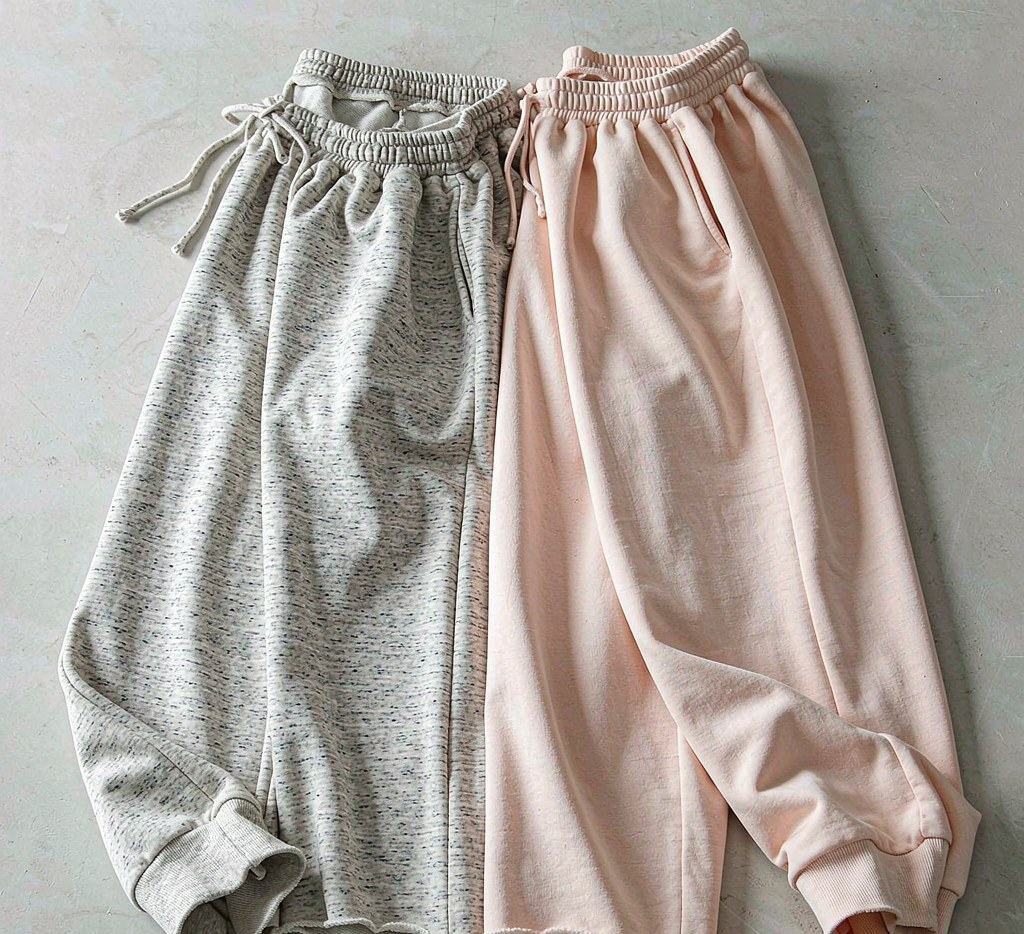
Sweatpants can serve different roles: an everyday core product, a seasonal streetwear piece or the bottom half of a coordinated set. Decide which role the style should fulfil before choosing the fabric. A soft indoor lounge pant and a structured wide-leg streetwear pant may share a colour and logo but need different proportions, finishing and construction.
For a brand already developing hoodies, adding bottoms creates an opportunity to coordinate materials and styling. It also introduces separate fit work through the waist, seat, rise and legs. Assess demand, the planned size range and the cost of developing both garments before committing to a set. The sweatpants product range can help you compare design directions before preparing the brief.
Sweatpants Fabric: Brushed Fleece, French Terry and Fibre Blends
Construction and fibre composition are separate specifications. Brushed fleece and French terry describe fabric structure or finish; cotton and polyester describe fibres. Both constructions can use cotton or cotton-polyester blends, so a purchase order should state both.
Brushed fleece for a soft, raised interior
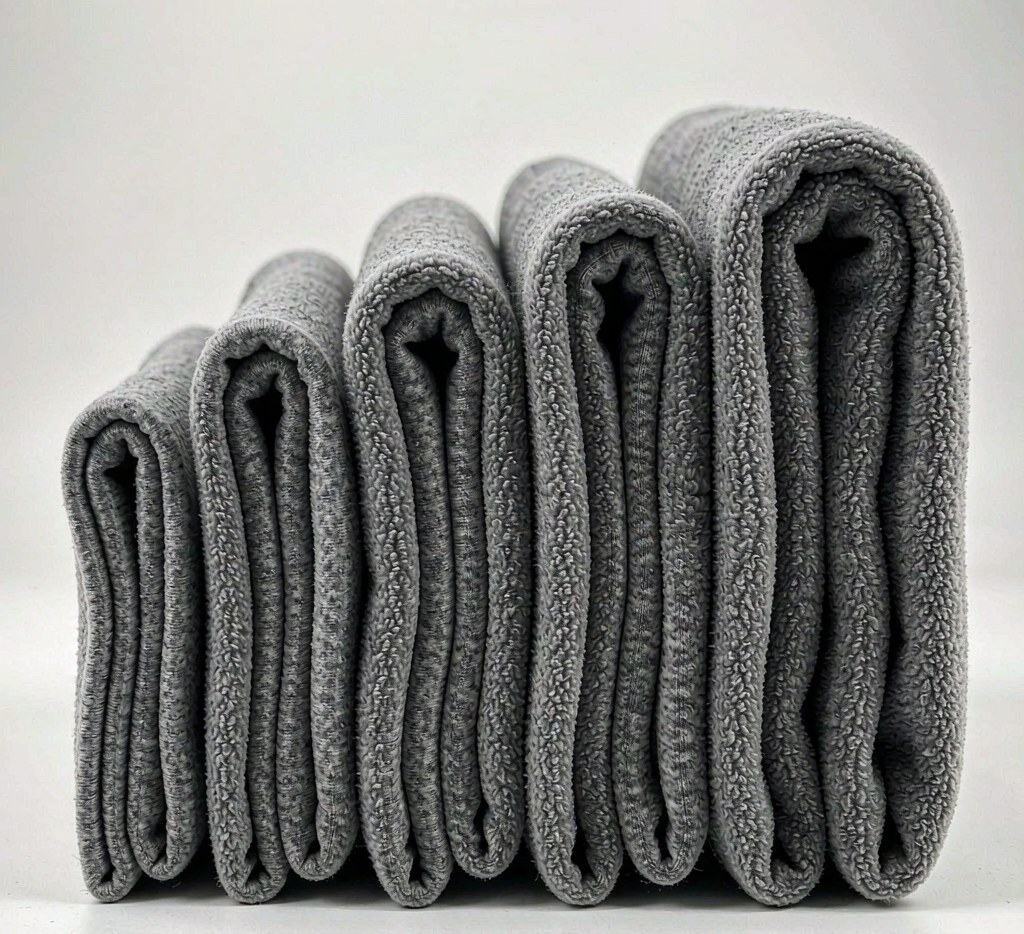
Brushing raises fibres on the reverse of the fabric, creating a soft interior that can suit cooler-weather sweatpants. Compare warmth, bulk, shedding and pilling on actual samples. The outside face may remain smooth, which matters when selecting a print or embroidery process.
For an autumn/winter collection, handle the fabric as a complete garment rather than judging only a small swatch. Folded layers at the waistband, crotch and pocket opening can feel much bulkier than the fabric on its own. Review the interior again after the agreed care test: the softness and appearance that you approve should reflect the product's intended use, not just its first presentation.
French terry and loopback
French terry generally has a smooth knit face and loops on the reverse. “Loopback” commonly describes this same unbrushed construction; it is not automatically a separate, higher-quality fabric. Loop size, yarn, density and finishing can still produce noticeably different fabrics within the category.
Consider French terry when an unbrushed interior suits the product. It can work for everyday or transitional wear, but heavyweight French terry also exists. Compare samples for the intended climate instead of assuming every loopback fabric is light or cool.
When comparing two loopback options, look at the reverse loops, surface smoothness and how the fabric falls when held vertically. Then compare the same features after washing. If the collection uses large graphics, include the proposed outer face in the decoration trial; if comfort is the main priority, evaluate the reverse against the skin during a wear trial.
Cotton, cotton-polyester and stretch options
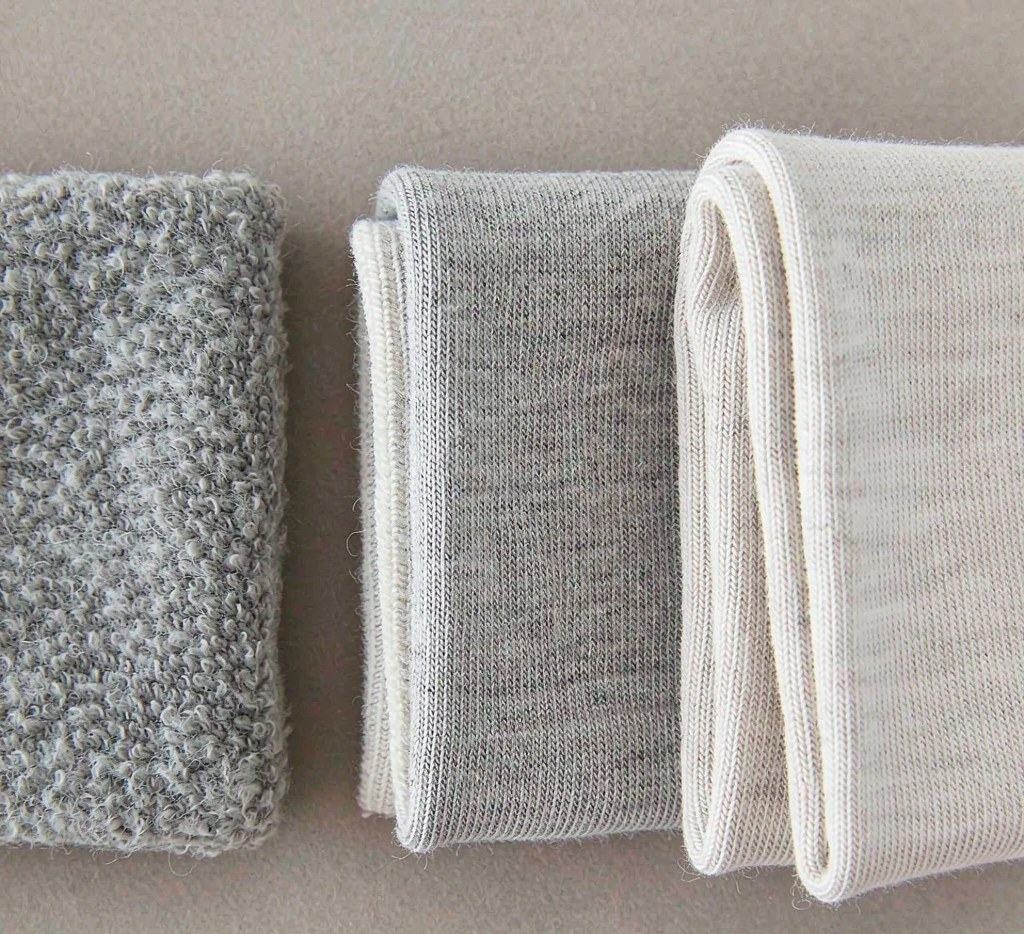
Choose fibre composition alongside the required hand feel, care method and decoration. Cotton-polyester blends can support dimensional stability, but the blend ratio alone does not guarantee shrinkage, colourfastness or print performance. Confirm the fibre content of the face yarn if it differs from the overall composition.
For a close-fitting jogger, assess stretch and recovery through wear trials. Elastane may help a particular construction, but it is not mandatory for every tapered style. Review material and decoration options together using the fabrics and techniques guide.
A 100% cotton brief should still specify the knit construction, finishing and wash requirements. Similarly, an 80/20 cotton-polyester description does not fully define the fabric. Ask for a material reference that links the composition, target GSM, colour and finish to the approved swatch. Otherwise, two suppliers can quote different fabrics while both appear to meet the written brief.
Build a fabric approval record
Keep labelled swatches with the fabric reference, composition, colour, finished weight and finishing instructions. Record what was approved about each one: soft or dry hand feel, smooth or textured face, intended drape and relevant test results. Where a feature is subjective, retain the physical reference so that the buyer and factory can compare against the same material.
How to Choose GSM for Custom Sweatpants
GSM means grams per square metre: the fabric's mass per unit area. It helps describe weight, but does not measure quality by itself. Two fabrics at the same GSM can differ in thickness, drape, warmth and durability because their yarns, construction and finishing differ.
| GSM range | Development direction | What to check |
|---|---|---|
| 260–300 | A lighter option within this comparison for indoor or transitional wear. | Opacity, drape, pocket show-through and decoration support. |
| 300–360 | A starting range for everyday sweatpants with moderate fabric weight. | Comfort, desired structure and suitability for the target climate. |
| 360–400 | A heavier direction for more body or a cooler-season product. | Waistband bulk, seam thickness and freedom of movement. |
| Above 400 | A deliberately heavy fabric direction for selected designs. | Total garment weight, drying behaviour and comfort during wear. |
These ranges are development references, not quality grades or universal limits. A lighter fabric can suit a well-made product. Pilling resistance, dimensional stability and colourfastness need their own assessment.
Record a target GSM, an agreed tolerance and the fabric's measurement state after the specified finishing process. Keep an approved swatch for bulk comparison. If the fabric changes to meet a cost target, review its hand feel and fit before approving the substitution.
Apply the choice to the product: for an indoor lounge style, compare swatches for softness, movement and comfort when seated. For a structured wide-leg style, compare how the leg hangs and how bulky the seams become. For a close-fitting jogger, prioritise stretch recovery and knee shape. These checks help narrow the GSM choice around the intended garment.
Control sample-to-bulk changes
Suppose a sample is approved in 340 GSM fabric and an alternative at 280 GSM is later proposed to reduce cost. That is a material change requiring review, even if the colour and fibre composition remain the same. Compare the alternatives in the garment, check the decoration and update the specification if the substitute is accepted.
On a reorder, ask whether the original fabric quality remains available. If it does not, approve a replacement against the retained reference before cutting. A lower price is useful only when the revised product still meets the agreed design and performance requirements.
For a finished-product reference, these custom distressed cotton fleece sweatpants show how fabric, wash effects and stud details can be considered together when developing a style.
Sweatpants Fit Development and Size Grading
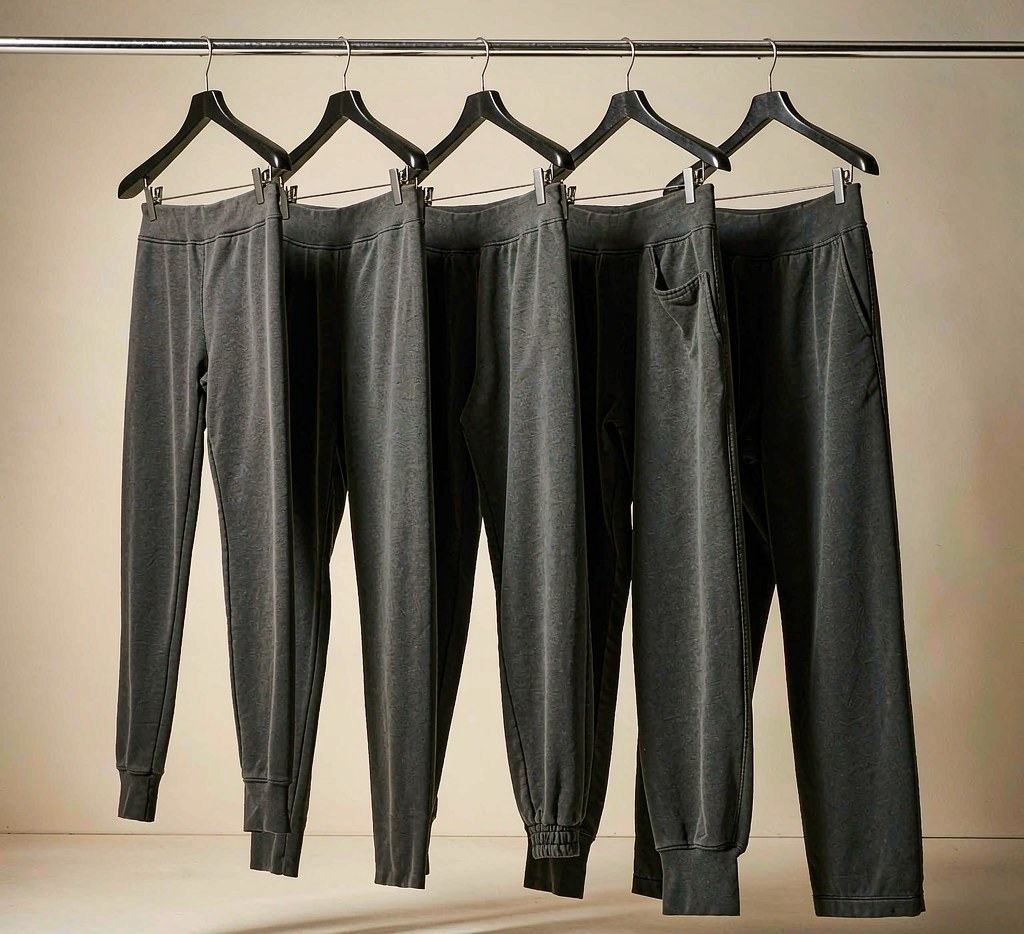
Define leg shape, body length and hem construction separately. Terms such as “relaxed” and “oversized” need measurements and a fit reference to become usable production instructions.
- Tapered jogger: the leg narrows towards the ankle; specify the amount of taper and the cuff or hem finish.
- Straight-leg: the lower leg has relatively little taper. Define knee and hem widths rather than assuming an equal width from hip to hem.
- Relaxed fit: additional room through the seat and thigh; it can still have a tapered or straight lower leg.
- Wide-leg or baggy: increased leg volume, with fabric chosen for the intended drape or structure. The heaviest fabric is not always the right choice.
A cropped inseam can be applied to several silhouettes. Use a wide-leg sweatpants reference to communicate proportions, then confirm the actual measurements and fabric on a sample.
Measurements to include in the tech pack
- Waist width relaxed and extended, with the measuring method defined.
- Hip or seat width at a stated distance below the waistband.
- Front rise and back rise, stating whether the waistband is included.
- Thigh and knee width at clearly marked measurement points.
- Inseam, outseam, leg opening, waistband height and cuff dimensions.
Approve a graded chart with a tolerance for each point of measurement. Check representative sizes, including the ends of the range, on intended wearers. Sitting, walking and bending can reveal waistband pressure, seat restriction or excess knee volume that a flat measurement misses.
Develop the fit in fabric that represents the intended bulk quality. A change in stretch, weight or finishing can require pattern adjustments even when the nominal size stays the same.
Oversized fit and grading need separate decisions
Moving up one size increases several dimensions together; it does not necessarily create the oversized proportions you want. A brand may want more thigh volume but the same inseam, a lower rise with a controlled waist, or a wide leg without excess fabric at the seat. Mark those intentions on the fit reference so the pattern maker knows which proportions to change.
Review the grading rules point by point rather than applying one percentage to the entire pattern. The waist, rise, thigh and length do not have to increase by identical amounts. For a unisex range, define the intended body measurements and fit expectations instead of relying only on a market label such as “US sizing”.
Keep dated fit comments with front, side and back photographs, noting the sample size and the fit model's relevant measurements. Separate a fit issue from a styling preference: a tight seat, a waistband that slips and a deliberately stacked hem require different corrections. Recheck the revised sample before treating the base size as approved.
Waistbands, Drawcords, Cuffs and Pockets
Trim appearance does not establish construction quality. A fabric-covered elastic waistband, a rib waistband and different drawcord styles can all work when properly specified and tested.
Choose the waistband construction deliberately
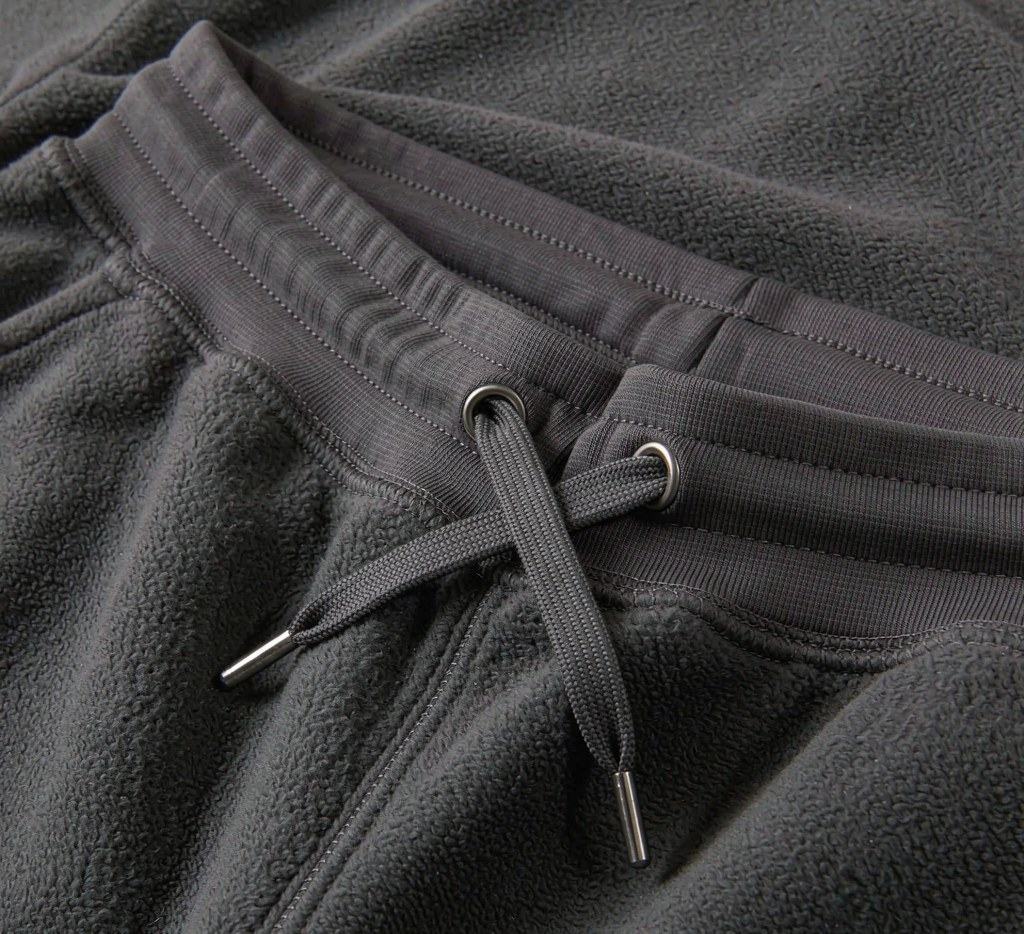
A self-fabric casing covers the elastic with the main fabric; a rib waistband introduces a different texture and stretch behaviour. A drawcord adds adjustment and a visible design detail. Compare these options for the desired look, pressure around the waist and bulk at the joins. A round cord or metal tip is a styling choice, not proof of better quality.
Specify how the elastic is secured and how the drawcord channel is formed. Review whether the elastic rotates inside the casing, whether the cord moves freely and whether the waistband remains comfortable when seated. Changes to the waistband after fit approval should trigger a waist and rise recheck.
- Waistband: state its finished height, elastic width and attachment method. Check comfort, rolling and recovery after repeated extension and washing.
- Drawcord: define material, width or diameter, finished length and end treatment. Reinforced stitched buttonholes and suitable eyelets are both options; test the chosen construction.
- Cuffs: specify rib or elastic quality, opening and recovery. Confirm that pulling the cuff over the foot does not damage the seam or leave it stretched out.
- Pockets: agree opening, depth, pocket-bag material and placement. Test with the intended contents while sitting and walking.
- Seams and reinforcement: identify stressed areas, such as pocket openings and crotch seams, and specify suitable stitching or reinforcement. Check bulky joins for discomfort.
Pocket shape and hem finish affect the whole garment
Side-seam pockets offer a discreet opening, slanted pockets change the front appearance, and zip pockets provide a closure. Patch, welt and cargo pockets add further construction and placement decisions. Confirm the pocket-bag dimensions and attachment method, including whether the bag hangs below a short hem or shows through the main fabric.
Test pocket access on the body, with the intended contents, rather than judging depth from a flat photograph. Check that decoration and reinforcement do not catch the pocket bag or close the opening. At the hem, compare rib cuffs, elasticated channels and open hems for finished length, ease of dressing and the intended relationship with footwear.
Branding Methods and Placement on Sweatpants
Select decoration for the actual outer surface. A brushed interior does not mean the outside is napped. Face yarn, texture, stretch, dyes and finishes can affect the result, so approve a trial on the intended production fabric.
| Method | Possible use | Approval checks |
|---|---|---|
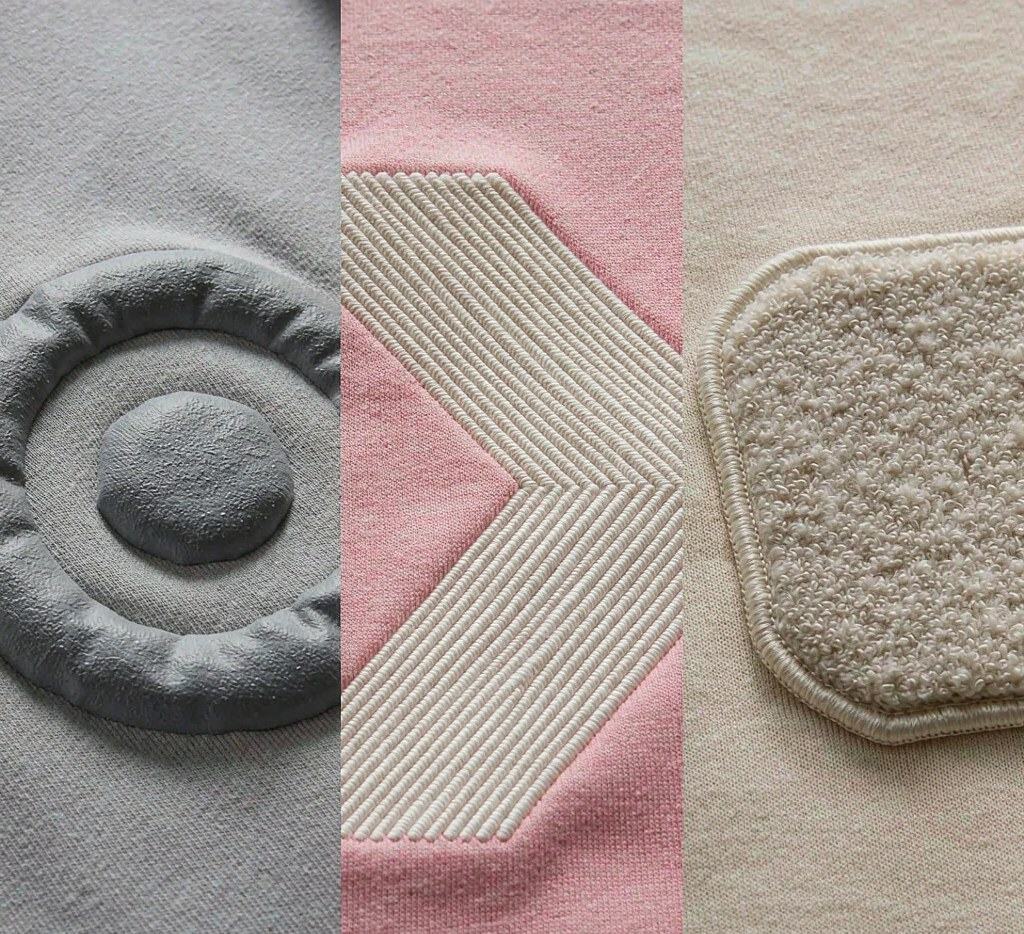
| Embroidery | Small logos, lettering and tonal hip or pocket details. | Stitch density, backing, legibility, puckering and comfort against the skin. |
| Screen print | Leg graphics, bold artwork and repeat designs. | Ink compatibility, curing, colour migration where relevant, stretch and wash appearance. |
| Puff print | Raised lettering and simplified graphic shapes. | Expansion, edge definition, fine-detail loss and cracking after wear or washing. |
| Appliqué / chenille | Layered lettering and varsity-style details. | Patch weight, backing, edge attachment and distortion of the base fabric. |
| Woven / rubber badge | Small brand marks near a pocket or waistband. | Attachment strength, flexibility, placement and interference with pocket access. |
Supply artwork at the intended decoration size. Use vector files where suitable; for raster artwork, confirm the required pixel dimensions at final output size with the decorator. A resolution label alone does not establish usable image detail.
Measure logo placement from named reference points, such as a side seam or waistband edge, and define how it changes across sizes. Confirm whether decoration happens before or after any garment wash, then inspect the completed sequence for colour, appearance and dimensions.
Approve the technique and the position together
A compact hip logo and a long calf graphic create different development questions. The hip position may overlap a pocket bag; a lower-leg graphic may sit close to a seam, cuff or area that stretches during dressing. Review the decorated garment from the front and side while it is worn, not just the artwork placement on a flat template.
For embroidery, approve thread colour, stitch appearance and backing as well as the outline of the logo. For screen or puff printing, agree the colour, surface feel and finished graphic dimensions. For appliqué and badges, inspect edge attachment and whether the added weight changes the way the fabric hangs. Keep the approved trial with the artwork version used to make it.
Private-label details also belong in the approval process. State the size label, brand label and care-label positions, and check whether their edges or attachment seams irritate the wearer. Confirm the required information with the buyer before labels are ordered, then compare the production labels with the approved artwork and garment specification.
If the collection includes an embroidered top, review the embroidered hoodie manufacturing options when coordinating the logo treatment. Approve the decoration separately on each garment's fabric and placement.
Matching Hoodie and Sweatpants Sets
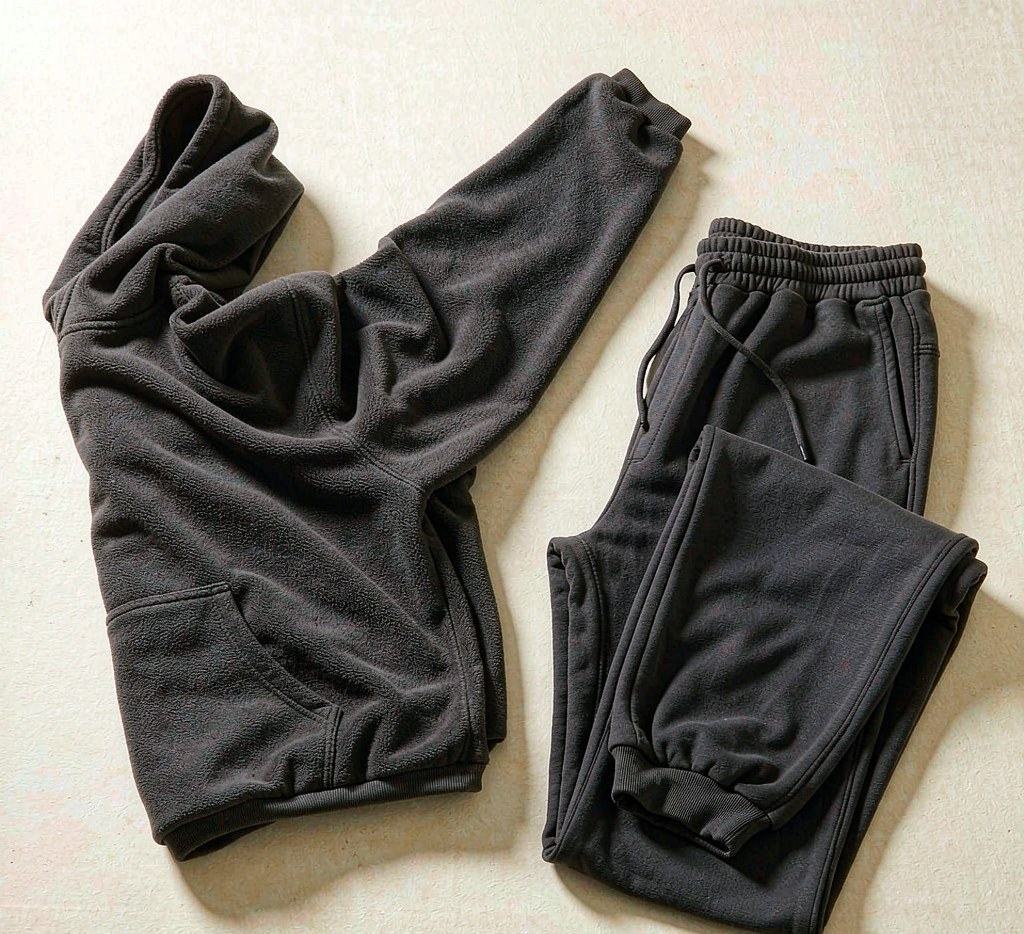
A coordinated set needs joint approval of the top and bottoms. A shared colour name or colour code is not enough to confirm that the finished garments match.
- Control shade: use a common fabric quality and dye lot where appropriate, while still checking variation between rolls. Compare both garments against the approved colour standard under agreed lighting.
- Coordinate fabric and finishing: matching weights can create consistency, but a heavier hoodie and lighter bottom may be intentional. Approve hand feel, wash appearance and fit for each garment.
- Review trims together: compare rib, drawcords, hardware and labels with the main fabric. Different materials can respond differently to dyeing and washing.
Approve the pair together after the specified production finishing. The fleece tracksuit manufacturing page covers coordinated top-and-bottom development.
Keep roll and batch references linked to the cutting records so that shade differences can be traced. If the hoodie and bottoms use different fabric qualities, approve their relationship as a pair instead of expecting an identical colour code to produce an identical visual result. Check rib, embroidery thread and drawcord shades alongside both garments.
For reorders, clarify whether the new pieces must match remaining stock from an earlier order. Send retained physical references where needed. Also agree the size ratios separately: selling a matching set does not necessarily mean that every buyer will choose the same size in the top and bottom. Use the custom hoodie development options to define the top's silhouette and construction alongside the sweatpants brief.
Shrinkage, Leg Twisting and Measurement Tolerances
Do not assign a fixed shrinkage percentage from fibre composition alone. Yarn, knitting, relaxation, finishing and the wash-and-dry method all affect dimensional change. Use results from the actual material and intended garment process.
Separate production finishing from care testing
First check the garment after all specified factory finishing, in the condition it will be sold. Then test a separate sample using the proposed care instructions. Record the wash temperature, drying method, number of cycles and conditioning procedure before remeasurement.
Compare length and width changes separately. Check inseam, rise, waist, seat and leg opening, along with seams, cuffs and decoration. Use the results to assess any necessary pattern allowance and verify the revised sample.
“Pre-shrunk” or “compacted” is a description of treatment, not a substitute for the agreed test results. Record the starting and final measurements at the same defined points. If a result falls outside the requirement, decide whether the correction belongs in the material, finishing process or pattern, and verify it on another sample.
Investigate twisting before approving bulk
If a leg seam rotates after washing, investigate fabric spirality, relaxation, cutting alignment and sewing together. Fabric weight alone does not identify the cause. Correct the relevant material or process issue and repeat the check.
Define tolerances and reference conditions
Agree tolerances for individual measurement points, including how elastic areas are measured. State whether a dimension refers to the finished garment before care washing or after the agreed test. Keep the approved colour standard and define shade acceptance for bulk and reorders.
For colour development, approve physical lab dips or suitable material samples rather than relying on a screen. Compare bulk fabric to the agreed standard before cutting, and assess colour again after any garment-dye or wash process. Record accepted shade variation so that inspection decisions do not depend on an undocumented visual preference.
Measurements also need a shared method. Specify whether waist and hip values are flat widths or circumferences, where the tape starts and ends, and how the garment is laid out. A measurement diagram can prevent disagreements that arise from using different methods on the same garment.
Retain an approved finished sample as the production reference and a labelled wash-test sample with its results. Both the as-sold fit and the after-care performance need approval.
Sampling, Pre-Production Approval and Bulk QC
Use each sample stage to close specific decisions. A useful approval record includes the sample version, material references, measurements and outstanding corrections.
- Brief review: confirm the target wearer, use, design references, size range, quantities and cost direction. List the decisions that remain open.
- Material and trim selection: review construction, composition, GSM, colour, elastic, rib, drawcords and labels. Identify the intended bulk qualities and any required trials.
- First fit sample: develop the silhouette in representative fabric. Review the waist, seat, rise, leg shape, pocket access and movement on the body.
- Fit corrections and size review: issue clear revised measurements and comments. Check the grading rules and representative sizes before accepting the size range.
- Decoration and finishing trials: approve artwork, placement, production finishing and care-test results. Feed any dimensional changes back into the fit review.
- Pre-production sample: bring the intended bulk fabric, trims, decoration and finishing together in the complete garment. Close corrections in writing and identify the approved version.
- Bulk production and inline QC: check incoming materials, cutting, stitching and decoration while corrections can still be made. Record defects and verify corrective work before it continues through production.
- Final inspection and packing: inspect against the agreed tolerances, defect criteria and sampling plan. Verify labels, quantities by size and colour, packaging and carton information before dispatch.
The approved sample and written specification work together. Normal agreed variation is assessed against tolerances; a material or trim substitution needs approval before use. For sourcing context, review the factory capability overview.
Keep an identified production reference with both the buyer and factory, supported by the same specification revision. Avoid an approval such as “proceed, but improve the fit” without stating the required change and how it will be checked. If the pre-production sample uses a temporary trim, record that exception and approve the intended replacement before it enters bulk production.
Final inspection should not be the first point at which the garment is compared with the approved standard. An early check can catch an incorrect pocket position or logo placement before the issue affects the full order. Define who approves corrective action and which checks must be repeated after rework.
MOQ, Cost and Production Schedule
VANRD's standard minimum is 100 pieces per style, per colour. Under that minimum, one style in four colours totals 400 pieces. Confirm the requirement for your project, since custom-dyed fabric, special trims or additional processes can affect material minimums and cost.
Separate the garment minimum from the minimum purchase for a fabric, label or hardware item. Ask whether unused custom materials will be retained for a reorder, charged to the project or handled in another agreed way. A clear size ratio is also needed: the total per colour does not tell the factory how many pieces to make in each size.
For a comparable quotation, send:
- Tech pack or reference garment, silhouette, size range and quantity by size and colour.
- Fabric construction, fibre composition, target GSM and desired finishing.
- Waistband, pocket, cuff, drawcord and hardware specifications.
- Artwork, decoration size and placement, labels and packaging requirements.
- Required delivery date and destination, plus any specific testing requirements.
Fabric consumption, decoration complexity, finishing and order breakdown all influence unit cost. Ask the quotation to identify sampling, testing, packaging and freight charges. Confirm the schedule around material availability, sample revisions, approvals and production capacity rather than assuming a fixed turnaround.
Compare quotations against the same specifications, quantities and delivery terms. If a material is still undecided, ask the supplier to state the assumption and price the alternative separately. Distinguish the planned factory dispatch date from the required arrival date, leaving time for inspection and transport.
When reducing cost, ask for the impact of each option separately: fewer decoration positions, simpler hardware, a revised pocket build or an alternative material. This makes the trade-off visible. Do not approve a general cost reduction that leaves the factory to decide which product features can change.
Ask when the production clock starts and which approvals or payments release each stage. A schedule based on stocked fabric may change if custom dyeing is introduced later. Likewise, a late artwork revision can reopen a decoration trial. Record approval deadlines alongside production milestones so the launch plan reflects the actual dependencies.
For customization scope and project enquiries, see the custom sweatpants manufacturing page.
Frequently Asked Questions
What GSM should I choose for an everyday, year-round style?
The 300–360 GSM range can be a starting point for comparison, but year-round comfort depends on climate, construction and use. Compare an unbrushed and a brushed option if both fit the brief. Select the actual garment for comfort and drape, then assess pilling, shrinkage and colourfastness separately. Heavier is not automatically better.
Can I split the minimum order across several colours?
The stated minimum applies per style and per colour, so 100 pieces in total split across four colours does not meet a 100-piece-per-colour minimum. Confirm the proposed colour and size breakdown in the quotation, together with any separate minimums for custom fabric or trims.
Should I wash the sample before approving production?
Approve the garment after its specified factory finishing and evaluate a separate sample through the agreed care test. Keep the finished reference and the labelled test sample with the before-and-after measurements. This confirms both the product as sold and its response to washing without losing the original production reference.
Can I change a cuffed jogger into an open-hem sweatpant?
Yes, but removing the cuff changes finished length, ankle opening and the way the leg hangs. Review the inseam and lower-leg pattern, then approve a revised sample rather than only changing the hem instruction.
Can I request a quote without a complete tech pack?
Yes, but the initial price should identify its assumptions. Send clear references, the intended fabric, quantity by colour, size range and decoration direction. Ask which details remain open and whether the price is an estimate or a confirmed quotation. Finalise the specification before using it as the basis for a bulk order.
What should be kept for a repeat order?
Keep the approved finished sample, graded specifications, fabric and trim references, colour standard, artwork files and test records. Confirm current material availability and compare new production materials with these references before authorising substitutions.
Developing custom sweatpants for your brand?
Share your tech pack or fit reference, fabric direction, quantities and artwork with VANRD to discuss materials, sampling and a project-specific quotation.
Discuss Your Sweatpants Project