- MOQ 100+

- Samples 7–10 days

- OEM/ODM


align market and budget

choose crewneck silhouettes and fit blocks

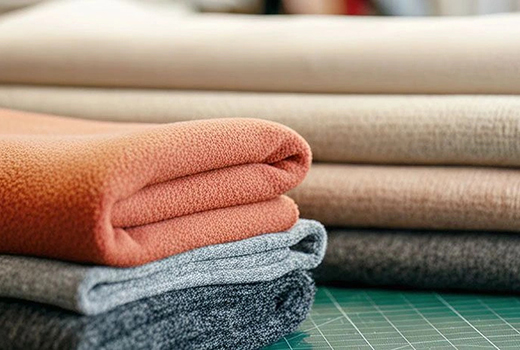
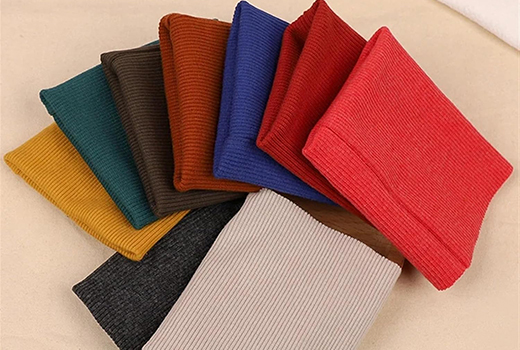
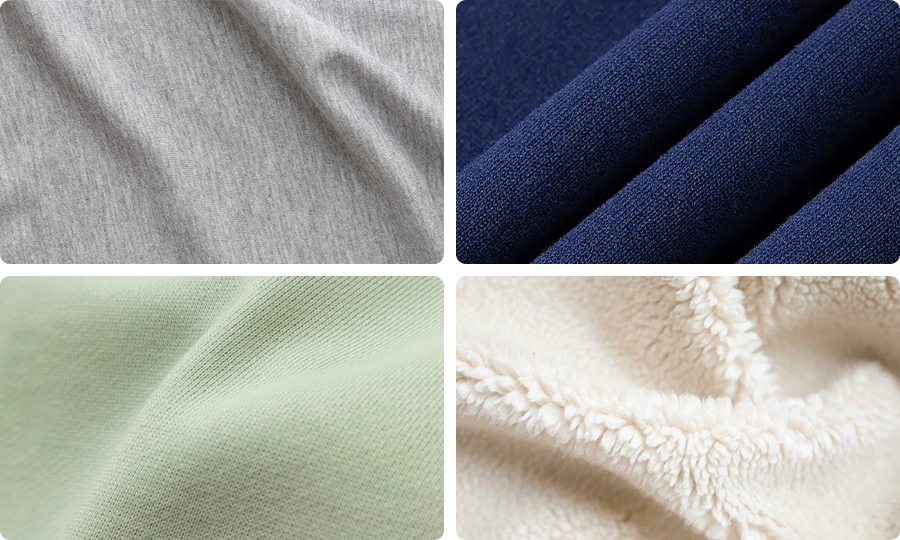
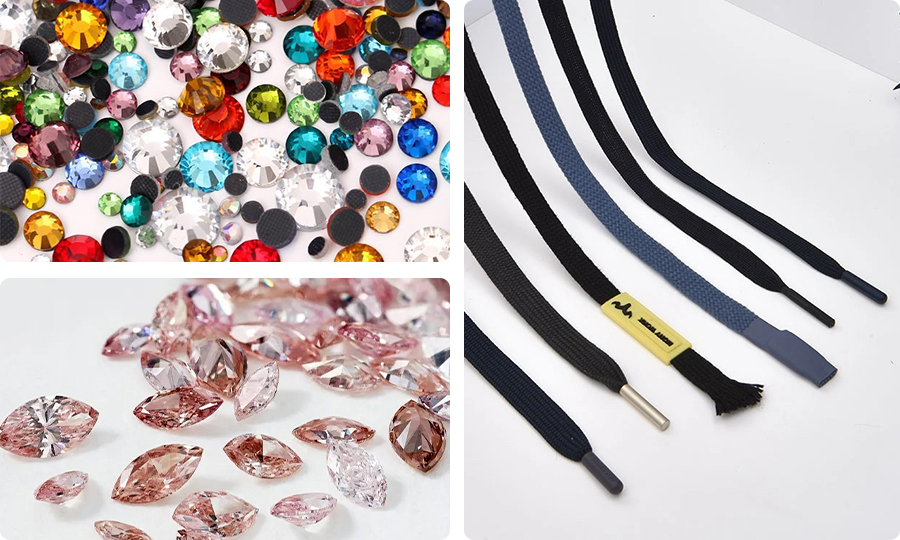
confirm fleece, ribs, cords, hardware.

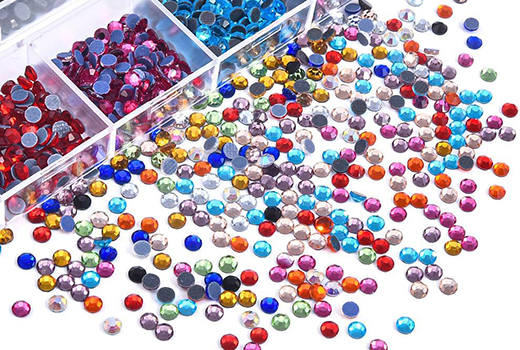
finalise artwork files, placements, stone density

test measurements, comfort and rhinestone behaviour

sign off fabrics, colours, layouts

cut, apply stones, sew, inspect

pack by ratio, label cartons and ship
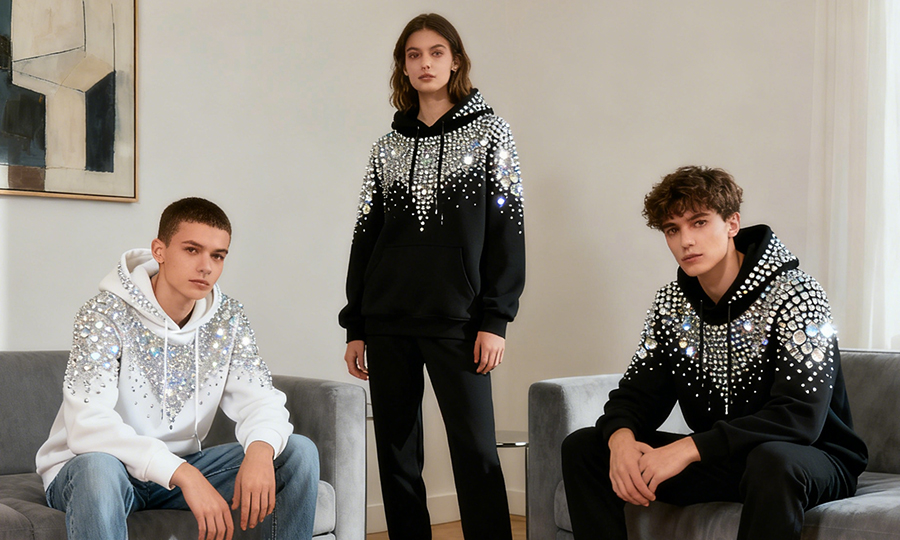
Brands should choose a rhinestone hoodie manufacturer with real experience in both cut-and-sew hoodie production and rhinestone application. Rhinestone hoodies require more control than basic printed hoodies because the final quality depends on fleece stability, fabric weight, stone size, stone density, placement accuracy, adhesive strength, handfeel, comfort, fit, labels, packaging, and bulk consistency.
Before starting development, brands should confirm the manufacturer’s fleece options, rhinestone application method, MOQ, sample process, artwork setup support, stone color options, private label capability, and quality control standards. A reliable manufacturer should help review your artwork, recommend suitable fabric weight, test rhinestone placement, check wash durability, and reduce bulk production risks.
This is especially important for growing brands testing a first statement hoodie drop, designers developing detailed layouts, established brands planning repeat orders, and influencers or KOL brands launching premium merch or stage-ready collections.
Rhinestone hoodie MOQ and pricing are mainly affected by fleece weight, fabric composition, rhinestone coverage, stone density, stone size, artwork complexity, number of placements, trim selection, size range, packaging, and total order quantity. For custom rhinestone hoodie production, brands should normally plan around 100 pieces per color and per style, with a full size run included in that quantity.
A simple chest rhinestone logo on a midweight hoodie will usually cost less than a heavyweight oversized hoodie with large back rhinestone artwork, sleeve placements, mixed rhinestones and studs, custom drawcords, special aglets, private labels, hangtags, and branded packaging.
Growing brands should start with one focused design and a clear quantity plan. Designers should confirm artwork and rhinestone layout early. Established brands should share reorder expectations. Influencers and KOL brands should prepare launch dates, target quantities, artwork files, stone color direction, and packaging details before requesting a quote.
The best fabric for rhinestone hoodies depends on artwork coverage, stone density, target season, handfeel, and brand positioning. Cotton fleece, cotton-poly fleece, French terry, and loopback fabrics are common options. For rhinestone application, the fabric surface should be stable enough to hold the stones without sagging, pulling, or distorting the artwork.
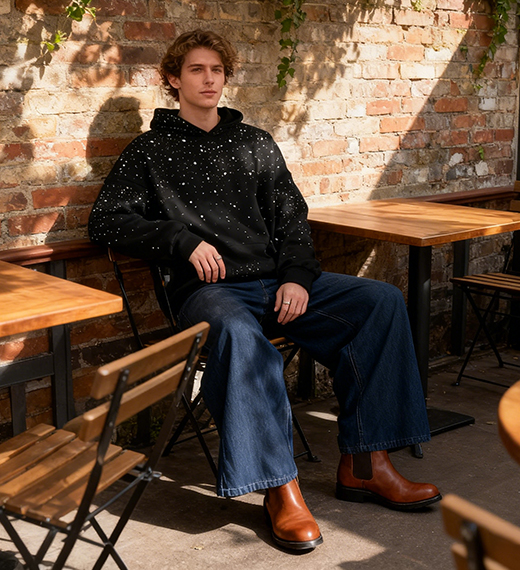
Midweight fleece can work for smaller chest logos, tonal rhinestone details, and lifestyle hoodies. Heavyweight fleece is usually better for premium streetwear, oversized silhouettes, large back rhinestone graphics, dense stone layouts, and stage-ready statement pieces. Lighter loopback fabric can work for spring or indoor wear, but it should be tested carefully if the rhinestone placement is large or heavy.
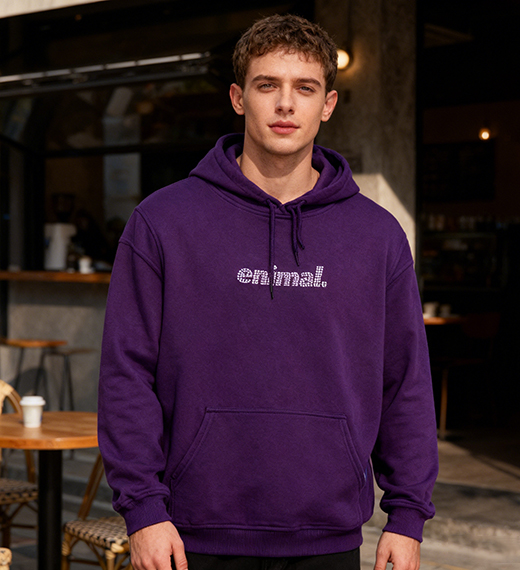
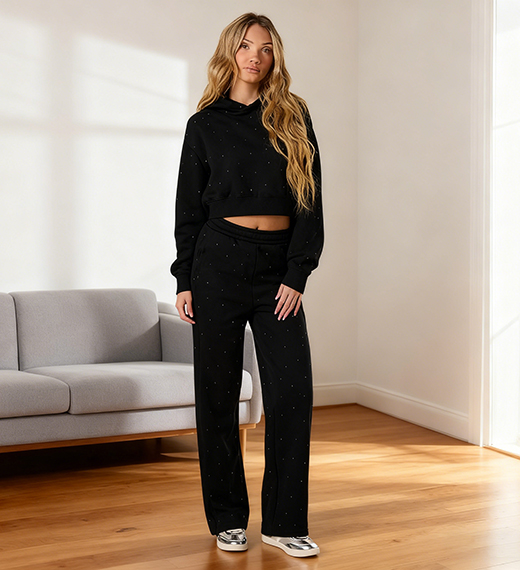
Fit also affects the final result. Oversized hoodies give rhinestone artwork more space and reduce pulling across the chest or back. Cropped hoodies need careful control of body length and placement balance. Brands should approve a physical sample because photos alone cannot show real fabric stability, stone weight, comfort, drape, or fit after decoration.
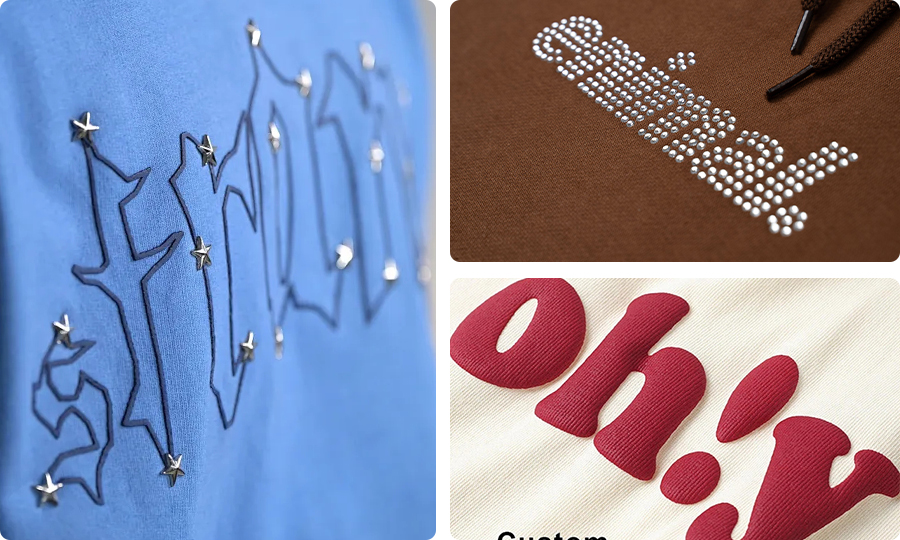
Rhinestone hoodies can be customized with rhinestone logos, script artwork, back graphics, sleeve placements, hood details, stud layouts, tonal stones, high-contrast stones, mixed rhinestone sizes, screen printing, puff print, embroidery, chenille patches, appliqué, custom drawcords, eyelets, aglets, neck labels, care labels, size labels, hangtags, barcoded polybags, and printed cartons.
Different customization methods create different brand effects. Small tonal rhinestone logos work well for premium lifestyle collections. Large rhinestone back graphics are stronger for streetwear drops, influencer merch, stage outfits, and limited-edition capsules. Mixed rhinestones with embroidery, puff print, or appliqué can create a more layered and expensive-looking product.
Brands should confirm artwork size, stone color, stone density, placement, backing method, print or embroidery combination, label position, packaging details, and sample approval before bulk production. This helps avoid messy layouts, poor shine balance, weak adhesion, uncomfortable backing, or inconsistent branding.
Quality control for rhinestone hoodies starts with a clearly approved sample. Before bulk production, the fleece fabric, fabric weight, rhinestone artwork, stone color, stone size, stone density, placement, backing method, size specs, labels, trims, and packaging requirements should all be confirmed.
During production, QC should check fabric defects, cutting accuracy, stitching quality, seam strength, hood shape, pocket position, rib recovery, rhinestone placement, stone alignment, missing stones, loose stones, adhesive strength, backing comfort, measurement tolerance, and overall garment appearance. For large chest or back layouts, QC should also check whether the artwork stays balanced across different sizes.
Rhinestone hoodies need extra attention because small mistakes are highly visible. If stones are crooked, missing, poorly attached, too heavy, or placed near high-friction areas, the hoodie can look low quality and may fail during wear or washing. Finished hoodies should be compared with the approved sample before shipment to keep bulk production consistent.
Rhinestone hoodie development should change depending on the brand stage, customer group, selling channel, and launch plan. Growing brands often need a lower-risk first drop with controlled MOQ, clear pricing, practical fleece choices, and one strong rhinestone layout that can be reordered if it sells well.
Designers usually focus more on artwork scale, stone density, shine level, fabric texture, silhouette, pocket placement, hood shape, and how accurately the sample matches the original concept. Established brands often need stronger control over fabric records, rhinestone files, stone color standards, fit consistency, labeling, carton requirements, quality inspection, and repeat production.
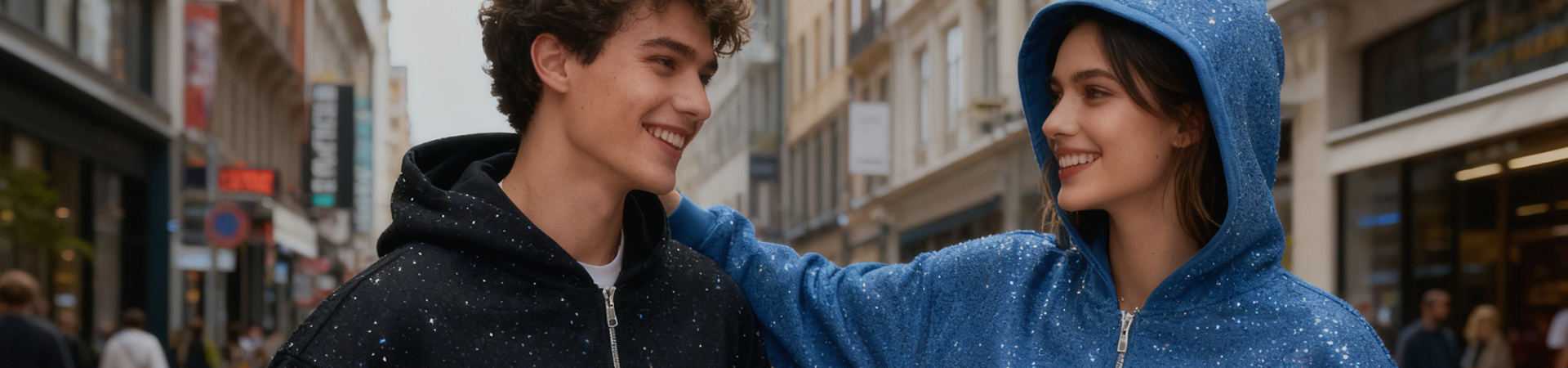
Influencers and KOL brands may use rhinestone hoodies for limited-edition merch drops, creator collections, stage looks, fanwear, event launches, or community campaigns. These projects usually need strong visual impact, premium labels, eye-catching shine, custom packaging, and clear delivery planning. Before sampling, brands should explain whether the hoodie is for streetwear retail, designer collections, wholesale programs, performance merch, creator drops, or long-term private label production.