
- Samples 7–10 days

- Standard MOQ 100 pcs per color/style

- ≈180k pcs/month

- US/CA/UK/AU




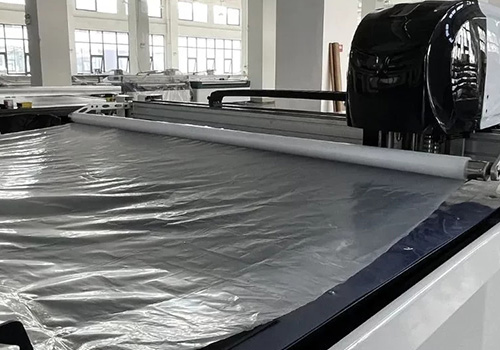
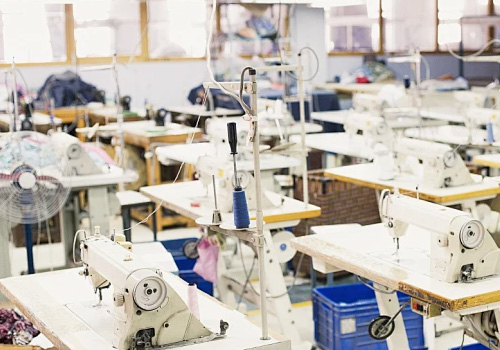
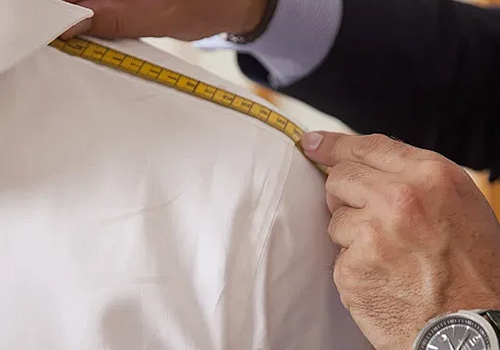

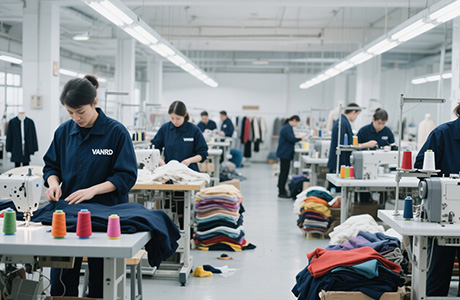
Facility area
Team members
Installed capacity
Sample lead time
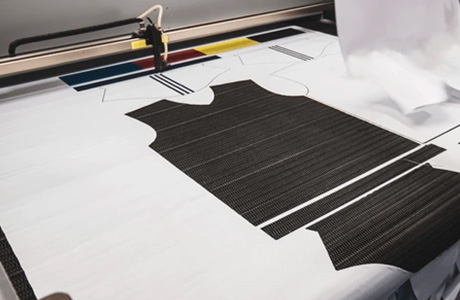
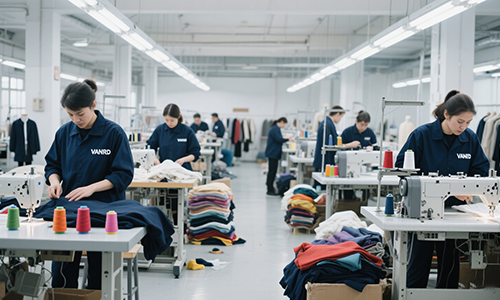
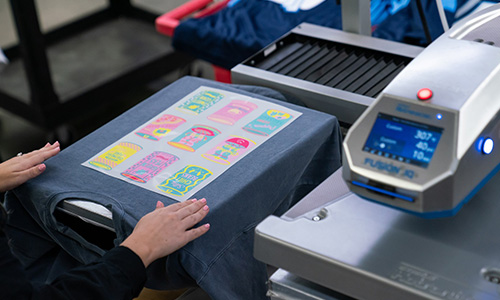
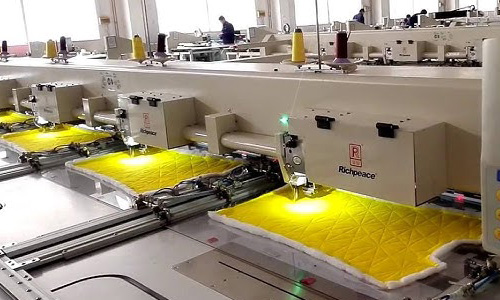
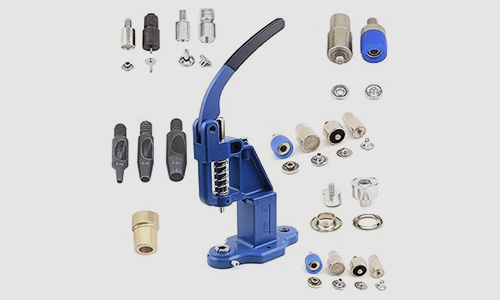
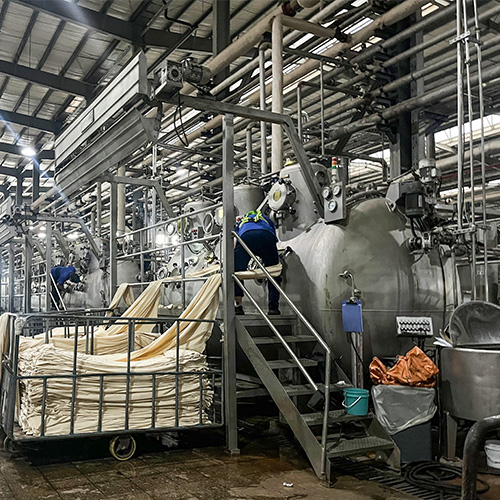
Scouring (clean & prep for dye).

Computerized color‑matching & lab‑dips.

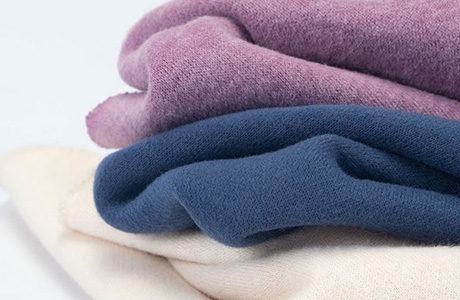
Sueding for peach‑skin handfeel.












The two markets overlap on fibre and care, then diverge on identity and on who is accountable. The table is the working checklist we use when a label artwork is submitted for approval.
| Requirement | United States | European Union |
|---|---|---|
| Fibre content | Textile Fiber Products Identification Act: generic names and percentages | Regulation (EU) 1007/2011: fibre names and percentages, ±3 percentage points tolerance |
| Country of origin | Required on imported textile products | Origin claims must be accurate; "made in" is not mandatory for all goods |
| Manufacturer identity | RN number, or name and address | Name and address of the EU responsible person under GPSR |
| Care instructions | Care Labeling Rule, 16 CFR 423: washing, bleaching, drying, ironing, warnings | ISO 3758 symbols; national rules apply in several member states |
| Restricted substances | CPSIA for children's wear; California Prop 65 warning where applicable | REACH Annex XVII; GPSR safety and traceability |
| Children's safety | Tracking label, lead and phthalate limits | EN 14682 drawcord and cord requirements |
Label content is the brand's legal statement, so we do not draft it. We need the approved artwork, the fibre percentages from the actual fabric and trim composition, the care symbols or text, the RN number or the EU responsible person's details, and the placement and size for each label.
Fibre percentages have to come from the fabric and trim composition, not from the marketing description. A hoodie described as "cotton" with a polyester rib and poly drawcord still has to declare those fibres.
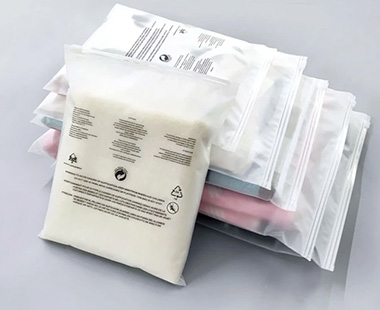
We sew woven labels, printed care labels, heat-transfer labels and hangtags to the approved artwork, and we can add polybag warnings and carton marks. We check the artwork against the approved fibre list before production, because a label error is a recall risk, not a rework.
What we cannot do is take legal responsibility for the label content. The brand or importer signs the artwork, and that signature is what the factory produces to.
A US launch of 600 poly-fleece hoodies needed four label elements: 80/20 cotton-poly composition, country of origin, the brand's RN number and four care symbols. The EU sibling order added the GPSR responsible person's name and address, a REACH statement in the technical file, and EN 14682 checks on the drawcord. Artwork was approved in three working days because the fibre list came from the fabric and trim card rather than from the product description.
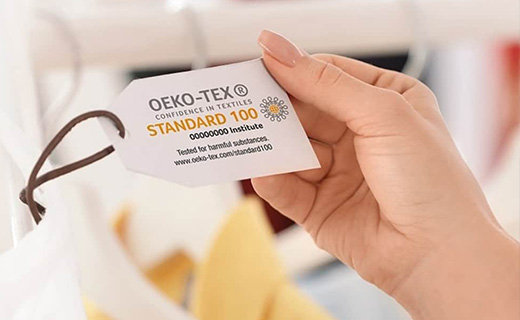
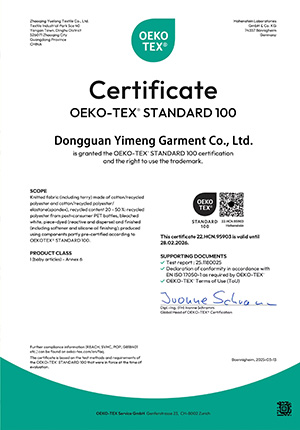
A garment can hold OEKO-TEX without a gram of organic cotton, and a GOTS garment also has to meet chemical limits — GOTS includes them, but goes further into fibre, water, energy and labour.
| Dimension | OEKO-TEX STANDARD 100 | GOTS |
|---|---|---|
| What is certified | The finished article and its components | The organic fibre and the processing chain |
| Fibre requirement | None | ≥70% organic; ≥95% for the "organic" grade |
| Chain of custody | Not required | Required at every stage, with transaction certificates |
| Chemical inputs | Tested against limit values | Must come from the approved input list |
| Social criteria | Not covered | Covered, audited annually |
| Validity | 12 months, product-specific | Annual audit and certification |
| Who holds it | The mill or garment maker for that article | Each certified operator in the chain |
OEKO-TEX is the practical answer for a brand that needs to state the garment is safe against a recognised limit list, including for children's wear through product classes I to IV. It is what a European retailer will normally ask for on a fabric and trim file.
GOTS is the answer for an organic claim. It is also harder to arrange, because every operator in the chain has to be certified and each shipment needs a transaction certificate. A brand cannot decide to "add GOTS" at the packing stage.
OEKO-TEX certificates carry a number that can be checked in the OEKO-TEX buying guide, and the scope has to name the article or component. GOTS certificates can be checked in the public GOTS database, and the transaction certificate is the document that ties a specific shipment to a certified operator.
Certificates sit with the mill, the printer or the trim supplier that holds them, not with the garment factory. We request the scope that covers your specific fabric, print paste and trims, check that the article description matches, and pass the documents with your order file. We do not describe VANRD as certified for a standard we do not hold.
If a certificate's scope names a different quality code or a different mill, it does not cover your order, even if it is the same fibre.
A European kidswear brand needed OEKO-TEX product class I for a 320 GSM cotton hoodie. The fabric mill held a certificate covering the quality code, the print paste had a separate certificate from the printer, and the drawcord supplier provided its own. Three documents, one order file. On a later organic programme the same brand moved to GOTS and discovered the fabric mill was not certified, so the order had to be re-sourced before sampling could start.
The principle is simple: a defect we caused is our cost at any stage; a defect caused after delivery is not. The grey area is wear and wash damage, which is why care labels and wash-test results are kept with the order file.
| Stage | Action | Cost carried by |
|---|---|---|
| In-line, during sewing | Repair at the station, log the cause | VANRD |
| Final inspection fail | 100% sort, repair or replace before packing | VANRD |
| After delivery, production fault | Replacement in the next run or credit | VANRD |
| After delivery, not a production fault | Repair quote or technical advice | Buyer |
Some faults are terminal: a hole in the body panel, a shade that is out of tolerance across the lot, a label with the wrong fibre content, or a decoration that has cured in the wrong position. These are replaced or credited, not repaired, because a repair would still leave a trace the customer can find.
Repairs are also capped. If more than a small share of a lot needs repair, the honest answer is to remake the affected size rather than ship a garment that has been through the needle twice.
Every carton carries a batch code that links to the cutting lot, the sewing line and the fabric roll. A claim with a photo and a batch code can be traced in a day; a claim with a photo alone usually ends in a negotiation.
The claim window is set in the contract, typically 30 days from delivery, and decorated styles usually ship with 1-3% spare units so a small number of defects does not become a reorder.
A 2,400-piece tee order showed 1.8% wavy neck ribs at final inspection, just under the AQL but visible in a retail fold. We sorted 100%, set aside 43 pieces, replaced them from the 2% spare units packed with the order, and changed the rib attaching tension on the next run. No credit was needed and the delivery date held.
The first 48 hours decide the outcome. If the goods are still in our warehouse the options are wide; once they are in a container or in your warehouse, the practical options narrow to replacement and credit.
| Step | Action | Evidence produced |
|---|---|---|
| 1. Freeze | Hold the lot, stop shipment, segregate by batch | Warehouse hold note |
| 2. Compare | Approved sample against 3 pieces per size | Side-by-side photos, measurement chart |
| 3. Quantify | Count affected pieces by colour and size | Defect count per carton |
| 4. Trace | Fabric lot, cutting batch, sewing line, wash lot | Batch records and inspection logs |
| 5. Remedy | Rework, remake, credit or rejection | Written agreement with dates |
A mismatch is a measurable difference from the approved standard: shade beyond the agreed Delta E, measurement outside the tolerance in the spec, a substituted trim or label, decoration in the wrong position or size, or a fabric hand and weight that no longer matches the approved quality code.
Normal variation inside tolerance is not a mismatch. Garment-dyed styles vary shade across a lot by nature, which is why the tolerance has to be agreed in Delta E before the wash recipe is approved, not after the goods arrive.
If the deviation is a production error on our side, rework or remake is at our cost, and we cover the freight consequence of the delay. If it comes from a change the buyer approved late, from buyer-supplied fabric, or from a wash standard the buyer signed off, the cost is shared or carried by the buyer as the contract sets out.
Either way the remedy is written down with dates before work starts, so there is no second argument about what was agreed.
A 1,000-piece hoodie order arrived with a shade reading Delta E 2.1 against the approved standard, where the agreed tolerance was 1.0. The cause was a different dye lot of the same quality code. 300 pieces were re-dyed to the standard, the remaining 700 were accepted with a credit per piece, and the mill was put on notice that lot changes must be flagged before dyeing.
The report is written so that someone who has never seen the order can understand what was checked and what was found. It references the approved sample and the signed spec version, because a report against an outdated spec is worse than no report.
| Section | Contents |
|---|---|
| Order data | PO number, style, colourways, size breakdown, quantity |
| Inspection data | Date, inspector, AQL level, sample size drawn, cartons opened |
| Measurements | 5 pieces per size measured against spec, with pass or fail per point |
| Defects | Critical, major and minor counts, location, photo per defect type |
| Packing | Pieces per polybag and carton, carton dimensions and weight, shipping marks |
| Result | Pass, conditional pass or fail, plus the action required |
A pass means the lot met the agreed AQL at the agreed level. It does not mean zero defects — a 2.5 AQL accepts a defined number of majors in the sample by design, and the customer should know that number before the order starts.
A conditional pass means the lot ships only after a named action is completed and evidenced, usually a 100% sort or a specific repair. A fail means the lot is held, and we issue a corrective action with a date.
The report is yours to forward to your customer or to your own inspection company as a starting point. If you book a third-party inspection, our report and theirs sit side by side, and any difference between them is worth investigating before the container is loaded.
Reports are kept against the order for 12 months, so a claim six months later can be checked against what was actually inspected.
On an 800-piece jacket order the pre-shipment report flagged 12 majors: the zipper pulls were the right design but the wrong finish, gunmetal instead of matte black. The shipment was held for two days while 800 pulls were replaced from stock and 60 pieces were re-pulled. The re-inspection passed, and the report is what made the difference visible before the goods reached the customer's warehouse.
Short fibres escape the yarn during abrasion, roll into small balls and stay anchored to the surface. Carded cotton with a high short-fibre content pills faster than combed cotton, and a loosely twisted yarn releases fibres faster than a firm one. Brushing the inside of a fleece improves the hand-feel but also raises more fibre ends.
Abrasion is not evenly distributed. Underarm, cuffs, the lower back where a bag rubs and the inside of the thigh are where pilling shows first, which is why a wear test on the whole garment hides the problem until the customer finds it.
| Lever | Effect on pilling | Trade-off |
|---|---|---|
| Combed instead of carded yarn | Large reduction, fewer short fibres | 5-10% higher yarn cost |
| Longer staple cotton | Fewer fibre ends escape | Fibre availability and price |
| Firmer yarn twist | Binds fibres into the yarn | Slightly crisper hand-feel |
| Lighter inside brushing | Less surface nap to pill | Less immediate softness |
| Anti-pilling finish | Measurable improvement | Hand-feel and shade can shift |
| Polyester blend | Better abrasion resistance | Loses natural hand and breathability |
Two methods cover most buyer requirements. Martindale to ISO 12945-2 runs a set number of rubs, usually 2,000, against a standard abradant. The random tumble test, ASTM D3512, puts the sample in a chamber with cork or pumice for 30 minutes. Both produce a grade from 1 to 5, where 5 is no pilling.
We test on the finished fabric, not greige, because brushing, washing and softening all change the result. For a brushed fleece the inside face is graded separately from the outside, since that is where the customer sees pilling first.
Put a grade and a method in the spec, not an adjective. "No pilling" cannot be inspected; "Martindale ISO 12945-2, 2,000 rubs, grade 4 minimum, inside face" can be measured, argued and repeated.
If the brand sells at a premium price point, grade 4 is the realistic target. At volume price points grade 3 is common, and grade 3-4 is a sensible middle.
A 420 GSM brushed fleece hoodie graded 2-3 on the inside face after five home washes, which the brand's returns data had already flagged. We moved the shell to combed ring-spun cotton, reduced the brushing passes and added an enzyme finish. The next lot graded 4 at 2,000 Martindale rubs, with a hand-feel the brand accepted on the first round.