How can brands reduce shrinkage in cotton garments?
Shrinkage is reduced in three places, not one. Buy fabric that has been compacted or pre-shrunk, measure the real shrinkage with a wash test on the actual bulk fabric, and build the allowance into the pattern and grade. Untreated cotton knit can lose 3–5% in length on the first wash; compacted cotton with a controlled finishing route typically holds to 1–3%. At VANRD the wash test is run before bulk approval, and the size set is measured again after it.
Where the shrinkage actually comes from
Cotton knit is held under tension through knitting, dyeing and finishing. When the garment is washed, that tension releases and the loops relax — mostly in length, less in width. The amount depends on yarn twist, loop length, and whether the mill compacted the fabric before cutting.
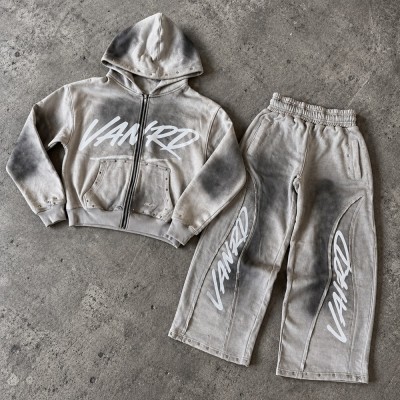
Garment washing adds a second, deliberate shrinkage step. That is why garment-dyed and washed styles should be cut with a larger allowance than piece-dyed styles.
| Fabric route | Typical length shrinkage | What to do |
|---|---|---|
| Untreated cotton knit | 3–5% | Pre-shrink, or add allowance |
| Compacted cotton knit | 1–3% | Measure and allow |
| Garment washed / dyed | 2–5% on top | Cut after wash trials |
| Cotton-poly blend | 1–2% | Still verify, do not assume |
The test that settles arguments
Cut a 50 × 50 cm square from the bulk fabric, mark a 40 cm reference in both directions, wash at the temperature the care label will state, dry the way the customer will dry, then measure again. Repeat three times. The stabilised figure after the third wash is the number to build into the pattern.
Write the result into the tech pack. Without it, the factory cuts to nominal measurements and the customer discovers the shrinkage on their first wash.
Field example
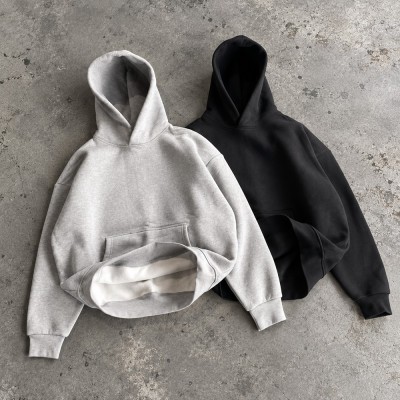
A UK brand had a 100% cotton hoodie returning as “one size short” after washing. VANRD ran a three-cycle wash test on the bulk fabric, found 4.2% length shrinkage, rebuilt the pattern with that allowance and moved the fabric to a compacted finish. The reworked size set measured inside tolerance after three washes.
Numbers that matter
- Untreated cotton knit: 3–5% length shrinkage typical
- Compacted cotton: 1–3% after stabilisation
- Measure after three wash cycles, not one — the third is the stable number
- Cut pattern allowance from measured shrinkage, not from a supplier estimate
Related questions
- Service Process
- Fabrics & Techniques
- Sweater & Knitwear Manufacturer
- OEM/ODM Apparel Manufacturing by Brand Type
- Custom Headwear Manufacturer
- Streetwear Manufacturer
- Custom Clothing Quality Control
- Tracksuit Manufacturer
- T-Shirt & Jersey Manufacturer
- Pants & Bottoms Manufacturer
- Hoodie & Sweatshirt Manufacturer
- Jacket Manufacturer