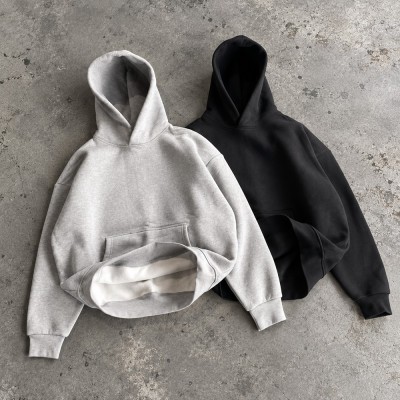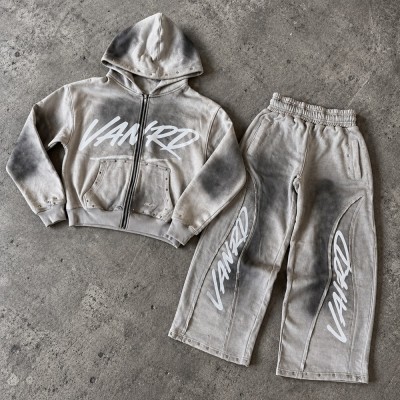
What is the difference between enzyme wash, acid wash, and vintage wash?
They are three different processes. Enzyme wash uses cellulase to break down surface fibres — softness and a slight fade, low risk. Acid wash uses chlorine-loaded pumice to strip indigo unevenly, producing the marbled contrast look, and it is the harshest of the three. Vintage wash is not a chemical but a recipe: enzyme plus stone or bleach steps tuned to a specific shade and hand-feel. At VANRD each wash is developed as a recorded recipe with a sealed standard, because “vintage” means nothing without a target swatch.
What each process does to the garment
Enzyme washing is a controlled bio-polishing step. It improves hand-feel and reduces pilling, with a small, even colour loss. It is the safest route for softness and the usual base for a vintage look.
Acid washing is a chemical and mechanical process: pumice stones carry chlorine onto the garment, stripping colour in patches. The result is high contrast and unmistakeable, but the fabric loses strength and the process needs careful neutralisation — an unrinsed garment will keep fading in the bag.
Vintage washing combines steps: enzyme for hand, stone for abrasion, and a measured bleach or tint step for shade. It is tuned by trial, which is why it needs a sealed standard approved under proper lighting.
| Process | Main effect | Risk / control point |
|---|---|---|
| Enzyme wash | Soft hand, light even fade | Low risk; check residual strength |
| Acid wash | High-contrast marble fade | Chlorine neutralisation, fabric strength |
| Vintage wash | Tuned shade plus abrasion | Recipe drift between lots; needs sealed standard |
| Stone wash | Mechanical abrasion | Machine wear, dust, pumice residue |
| Bleach wash | Shade lift | Over-bleaching, patchy result |
Approving a wash correctly
Approve under D65 light and on the final fabric, not on a flat sketch or a screen photo. Keep a sealed bulk standard and a written recipe with chemical dosage, cycle time, temperature and drying route.
One production detail worth specifying: wash lots vary. Approve a tolerance band (for example Delta E ≤ 1.0) rather than a single swatch, and state how many shades are acceptable across the run.
Field example
A Seoul label asked for a “90s vintage” hoodie and approved a photo. VANRD produced three physical variants — enzyme only, enzyme plus stone, and enzyme plus a light bleach step — and the brand chose the second. Because the recipe was written down with a sealed standard, the reorder landed within tolerance on the first bulk lot.
Numbers that matter
- Enzyme wash is the lowest-risk route for softness and pilling control
- Acid wash requires chlorine neutralisation and reduces fabric strength
- Vintage must be approved on a sealed physical standard, never a photo
- Set a shade tolerance band such as Delta E ≤ 1.0 across bulk lots
- Service Process
- Fabrics & Techniques
- Sweater & Knitwear Manufacturer
- OEM/ODM Apparel Manufacturing by Brand Type
- Custom Headwear Manufacturer
- Streetwear Manufacturer
- Custom Clothing Quality Control
- Tracksuit Manufacturer
- T-Shirt & Jersey Manufacturer
- Pants & Bottoms Manufacturer
- Hoodie & Sweatshirt Manufacturer
- Jacket Manufacturer