What garment labels and compliance documents are required for the US or EU market?
For the US: fibre content, country of origin, manufacturer identity (an RN number or name) and care instructions, all permanently attached. For the EU: fibre composition under Regulation (EU) 1007/2011, REACH compliance, and since 13 December 2024 an EU-based responsible person under GPSR. In both markets the legal labeler is the brand or importer, not the factory.
What has to be on the garment
The two markets overlap on fibre and care, then diverge on identity and on who is accountable. The table is the working checklist we use when a label artwork is submitted for approval.
| Requirement | United States | European Union |
|---|---|---|
| Fibre content | Textile Fiber Products Identification Act: generic names and percentages | Regulation (EU) 1007/2011: fibre names and percentages, ±3 percentage points tolerance |
| Country of origin | Required on imported textile products | Origin claims must be accurate; "made in" is not mandatory for all goods |
| Manufacturer identity | RN number, or name and address | Name and address of the EU responsible person under GPSR |
| Care instructions | Care Labeling Rule, 16 CFR 423: washing, bleaching, drying, ironing, warnings | ISO 3758 symbols; national rules apply in several member states |
| Restricted substances | CPSIA for children's wear; California Prop 65 warning where applicable | REACH Annex XVII; GPSR safety and traceability |
| Children's safety | Tracking label, lead and phthalate limits | EN 14682 drawcord and cord requirements |
What we need from you before we sew a label
Label content is the brand's legal statement, so we do not draft it. We need the approved artwork, the fibre percentages from the actual fabric and trim composition, the care symbols or text, the RN number or the EU responsible person's details, and the placement and size for each label.
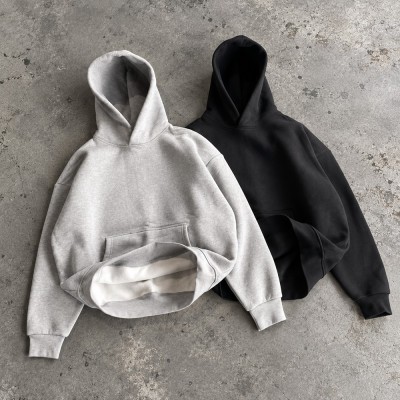
Fibre percentages have to come from the fabric and trim composition, not from the marketing description. A hoodie described as "cotton" with a polyester rib and poly drawcord still has to declare those fibres.
What we produce and what we do not
We sew woven labels, printed care labels, heat-transfer labels and hangtags to the approved artwork, and we can add polybag warnings and carton marks. We check the artwork against the approved fibre list before production, because a label error is a recall risk, not a rework.
What we cannot do is take legal responsibility for the label content. The brand or importer signs the artwork, and that signature is what the factory produces to.
Field example
A US launch of 600 poly-fleece hoodies needed four label elements: 80/20 cotton-poly composition, country of origin, the brand's RN number and four care symbols. The EU sibling order added the GPSR responsible person's name and address, a REACH statement in the technical file, and EN 14682 checks on the drawcord. Artwork was approved in three working days because the fibre list came from the fabric and trim card rather than from the product description.
Numbers that matter
- US: four core label elements — fibre, origin, identity (RN), care
- EU: fibre composition tolerance is ±3 percentage points under Regulation 1007/2011
- GPSR applies from 13 December 2024 and requires an EU-based responsible person
- Care symbols follow EN ISO 3758; keep the approved artwork with the order file
- Service Process
- Fabrics & Techniques
- Sweater & Knitwear Manufacturer
- OEM/ODM Apparel Manufacturing by Brand Type
- Custom Headwear Manufacturer
- Streetwear Manufacturer
- Custom Clothing Quality Control
- Tracksuit Manufacturer
- T-Shirt & Jersey Manufacturer
- Pants & Bottoms Manufacturer
- Hoodie & Sweatshirt Manufacturer
- Jacket Manufacturer