How do you test garment shrinkage after washing?
Shrinkage is measured, not estimated. We mark a 50 cm gauge on the length and width of the garment or a sewn panel, run three wash cycles at the temperature printed on the care label, dry it the way the label says, and re-measure the same gauge. The result is reported separately for length and width as a percentage change, and that number decides the pattern allowance.
The two methods buyers ask for
AATCC 135 is the American route and is what a US buyer will normally request. ISO 6330 with ISO 5077 is the European equivalent. Both do the same thing: a defined wash, a defined dry, a measured change. The test is only comparable if the wash temperature, detergent and drying method are stated alongside the result.
Care labels matter here. A garment tested at 40 °C and tumble dried will shrink noticeably more than the same garment washed at 30 °C and line dried. Quoting a shrinkage figure without the test conditions is meaningless.
| Fabric route | Method | Cycles | Typical acceptance |
|---|---|---|---|
| Cotton knit, untreated | AATCC 135 / ISO 6330 | 3 | ≤5% length, ≤3% width |
| Cotton knit, compacted | AATCC 135 / ISO 6330 | 3 | ≤3% length |
| Cotton woven / denim, sanforised | ISO 6330 | 3 | ≤2-3% length |
| Cotton-polyester blend | AATCC 135 / ISO 6330 | 3 | ≤2% |
Why length moves more than width
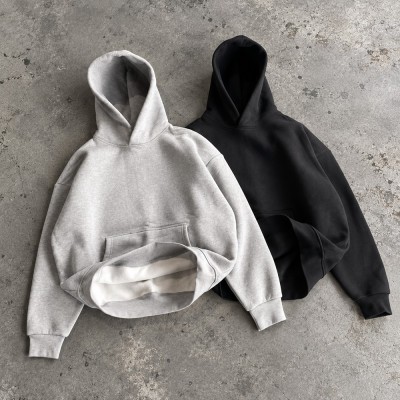
In a knitted panel the loops are pulled along the length during finishing, so the length has more stored distortion to release in the first wash. Width is held by the Wales of the knit and moves less. This is why a hoodie can lose 4 cm of body length and almost nothing across the chest.
Garment dyeing and washing add a second shrink on top of the fabric shrink. A piece that was already garment washed needs its own test, not the greige fabric result.
What we do with the number
The result goes into the pattern as an allowance before bulk cutting, and into the care label as the wash instruction the garment can survive. If a fabric fails the target, the options are compaction at the mill, a pre-shrink wash, a blend change, or a pattern allowance — in that order of cost.
For repeat orders we re-test whenever the mill changes lot or finish, because the same quality code from a different lot can shift half a percent.
Field example
A 380 GSM cotton loopback hoodie measured 4.8% length shrinkage after three washes at 40 °C, above the 3% the brand needed for its size chart. The mill compacted the next lot and we ran a garment wash trial, which brought it to 2.4%. We then added 1 cm to the body length in the pattern so the garment lands on spec after the customer's first wash.
Numbers that matter
- Gauge length 50 cm, marked on both length and width before washing
- Three cycles at the care-label temperature, usually 30-40 °C, with the stated drying method
- Report length and width separately — a single average hides the problem
- Working acceptance: ≤3% for compacted cotton knits, ≤2% for cotton-poly blends
- Service Process
- Fabrics & Techniques
- Sweater & Knitwear Manufacturer
- OEM/ODM Apparel Manufacturing by Brand Type
- Custom Headwear Manufacturer
- Streetwear Manufacturer
- Custom Clothing Quality Control
- Tracksuit Manufacturer
- T-Shirt & Jersey Manufacturer
- Pants & Bottoms Manufacturer
- Hoodie & Sweatshirt Manufacturer
- Jacket Manufacturer