How can I reduce pilling and fabric wear after washing?
Pilling is loose fibres tangling on the surface, so the fix is at the yarn: use combed or combed ring-spun cotton, longer staple, a firmer twist, and brush the inside less. Then confirm it with a Martindale or random-tumble test and accept nothing below grade 3-4. A softer hand-feel and lower pilling pull in opposite directions, so the choice has to be made at sampling.
Where pilling actually comes from
Short fibres escape the yarn during abrasion, roll into small balls and stay anchored to the surface. Carded cotton with a high short-fibre content pills faster than combed cotton, and a loosely twisted yarn releases fibres faster than a firm one. Brushing the inside of a fleece improves the hand-feel but also raises more fibre ends.
Abrasion is not evenly distributed. Underarm, cuffs, the lower back where a bag rubs and the inside of the thigh are where pilling shows first, which is why a wear test on the whole garment hides the problem until the customer finds it.
| Lever | Effect on pilling | Trade-off |
|---|---|---|
| Combed instead of carded yarn | Large reduction, fewer short fibres | 5-10% higher yarn cost |
| Longer staple cotton | Fewer fibre ends escape | Fibre availability and price |
| Firmer yarn twist | Binds fibres into the yarn | Slightly crisper hand-feel |
| Lighter inside brushing | Less surface nap to pill | Less immediate softness |
| Anti-pilling finish | Measurable improvement | Hand-feel and shade can shift |
| Polyester blend | Better abrasion resistance | Loses natural hand and breathability |
How to test it before bulk
Two methods cover most buyer requirements. Martindale to ISO 12945-2 runs a set number of rubs, usually 2,000, against a standard abradant. The random tumble test, ASTM D3512, puts the sample in a chamber with cork or pumice for 30 minutes. Both produce a grade from 1 to 5, where 5 is no pilling.
We test on the finished fabric, not greige, because brushing, washing and softening all change the result. For a brushed fleece the inside face is graded separately from the outside, since that is where the customer sees pilling first.
What to write into the spec
Put a grade and a method in the spec, not an adjective. "No pilling" cannot be inspected; "Martindale ISO 12945-2, 2,000 rubs, grade 4 minimum, inside face" can be measured, argued and repeated.
If the brand sells at a premium price point, grade 4 is the realistic target. At volume price points grade 3 is common, and grade 3-4 is a sensible middle.
Field example
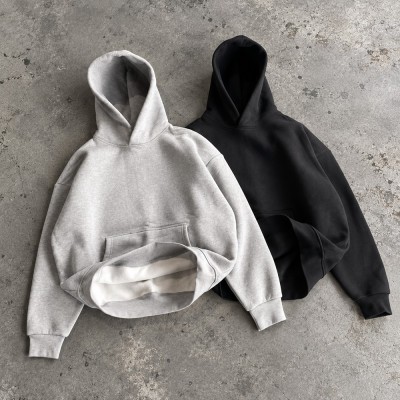
A 420 GSM brushed fleece hoodie graded 2-3 on the inside face after five home washes, which the brand's returns data had already flagged. We moved the shell to combed ring-spun cotton, reduced the brushing passes and added an enzyme finish. The next lot graded 4 at 2,000 Martindale rubs, with a hand-feel the brand accepted on the first round.
Numbers that matter
- Pilling scale 1-5, where 5 is no pilling; grade 3-4 is the usual commercial floor
- Martindale test to ISO 12945-2 at 2,000 rubs, or random tumble to ASTM D3512 for 30 minutes
- Combed yarn adds roughly 5-10% to yarn cost and is the single biggest lever
- Grade the inside face of a fleece separately — that is where pilling appears first
- Service Process
- Fabrics & Techniques
- Sweater & Knitwear Manufacturer
- OEM/ODM Apparel Manufacturing by Brand Type
- Custom Headwear Manufacturer
- Streetwear Manufacturer
- Custom Clothing Quality Control
- Tracksuit Manufacturer
- T-Shirt & Jersey Manufacturer
- Pants & Bottoms Manufacturer
- Hoodie & Sweatshirt Manufacturer
- Jacket Manufacturer