Garment-Dyed vs Piece-Dyed Hoodies: Color, Feel & Production Differences
Hoodie Development · Dyeing & Color Management
Garment-Dyed vs Piece-Dyed Hoodies: Color, Feel & Production Differences
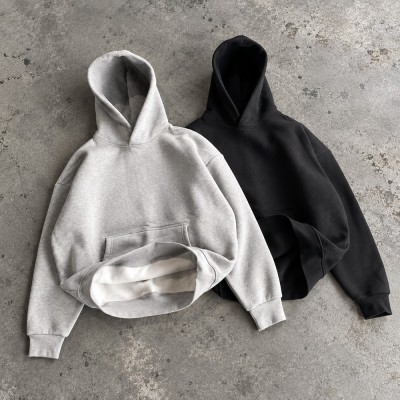
Two hoodies can use the same pattern, the same weight of cotton fleece, and almost the same color name—yet look completely different on the rack. One has the softened, slightly irregular depth associated with vintage streetwear. The other looks cleaner, sharper, and more consistent. Often, the difference begins long before the finished hoodie reaches the showroom: it starts with when the fabric is dyed.
If you're developing a hoodie collection, the choice between garment dyeing and piece dyeing affects more than appearance. It changes how color is planned, which materials work together, how dimensions are controlled, and how closely a second production run can resemble the first. This guide compares both routes specifically for hoodies, rather than treating them as generic dyeing techniques.
Quick answer
Garment-dyed hoodies are sewn first and dyed afterward; piece-dyed hoodies are cut and sewn from fabric that was dyed earlier. Garment dyeing suits collections seeking tonal character and flexible color allocation, while piece dyeing is generally easier to manage for clean, repeatable shades. Neither method automatically guarantees a softer hoodie, zero shrinkage or perfect color matching.
1. Garment Dyeing vs Piece Dyeing: How the Processes Work
The simplest way to understand these methods is to look at the order of operations. With piece dyeing, the dyehouse colors rolls or lengths of fabric before anyone cuts the hood or sleeves. With garment dyeing, the hoodie is constructed from fabric prepared for dyeing, then the complete garment enters the dyeing and finishing process.
Imagine making a wooden chair. You can stain each board before assembly, or you can assemble the chair and apply the stain to the completed object. The second route introduces corners, joints and hidden surfaces that may respond differently. A hoodie works in a similar way: the body, cuffs, hood, seams and pocket all become part of the dyeing equation.
At a glance: when does the color go in?
Simplified production routes; actual dyeing, finishing and quality-control steps vary by material and facility.
What happens when a hoodie is garment dyed?
The starting fabric is commonly prepared for dyeing, often shortened to PFD. For a cotton hoodie, that preparation matters: residual finishes, uneven absorbency or incompatible components may show up after the garment is colored. The cut panels are sewn into a hoodie before the wet process, so its hood, pouch pocket, rib cuffs and seams will all experience the same dyeing and drying cycle.
That finished-garment treatment can produce gentle tonal changes around seam lines, folded areas and different knit structures. It also creates extra considerations. A cotton body with polyester sewing thread might retain a contrasting thread color in a cotton-reactive dye bath. A rib containing elastane may react differently from the fleece body. Drawcord tips, zippers and labels must withstand the chosen process. These are not reasons to avoid garment dyeing; they are reasons to plan it as a complete hoodie rather than as fabric alone.
Garment dyeing also lets a brand prepare an undyed hoodie base and divide it into different colorways later, provided the dyehouse can support the batches. That flexibility is useful when planning a capsule streetwear collection, though it does not remove dyehouse minimums or the need to approve the final color.
How does piece dyeing work?
In a piece-dyed program, the fabric mill or dyehouse colors the fleece or French terry before the garment factory cuts the panels. The dyed fabric is then finished, inspected and supplied for production. By the time sewing begins, the main fabric shade is already visible, and the manufacturer can select rib, thread, drawcords and labels to coordinate with it.
This route is particularly practical for core black, navy, gray or other signature colors that will remain in a brand's assortment. It often provides a more straightforward path to consistent solid-color fabric across a planned production quantity. But 'piece dyed' does not mean that every hoodie is identical. Separate fabric dye lots can still vary, and the hood, body and rib may come from different material batches. Good shade control and garment quality control are still necessary.
Is garment dyeing the same as garment washing or pigment dyeing?
No. Garment dyeing tells you when the item is dyed. Garment washing describes a finishing or washing treatment applied to a completed item; that item may already have been made from piece-dyed fabric. Pigment and reactive dyeing describe different approaches to putting color on or into a material. They do not describe the same production-stage distinction.
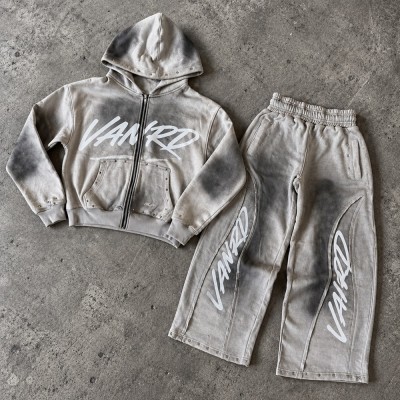
That's why a vintage washed hoodie is not automatically garment dyed, and a garment-dyed hoodie does not automatically look distressed. A cleaner garment-dye result is possible, just as a piece-dyed hoodie can be softened or faded through a later wash. If your main question is how to achieve the distressed visual itself, see VANRD's vintage hoodie manufacturing guide. Here, we're focusing on what the two dyeing routes mean for color and production decisions.
2. Color, Feel and Washed Appearance
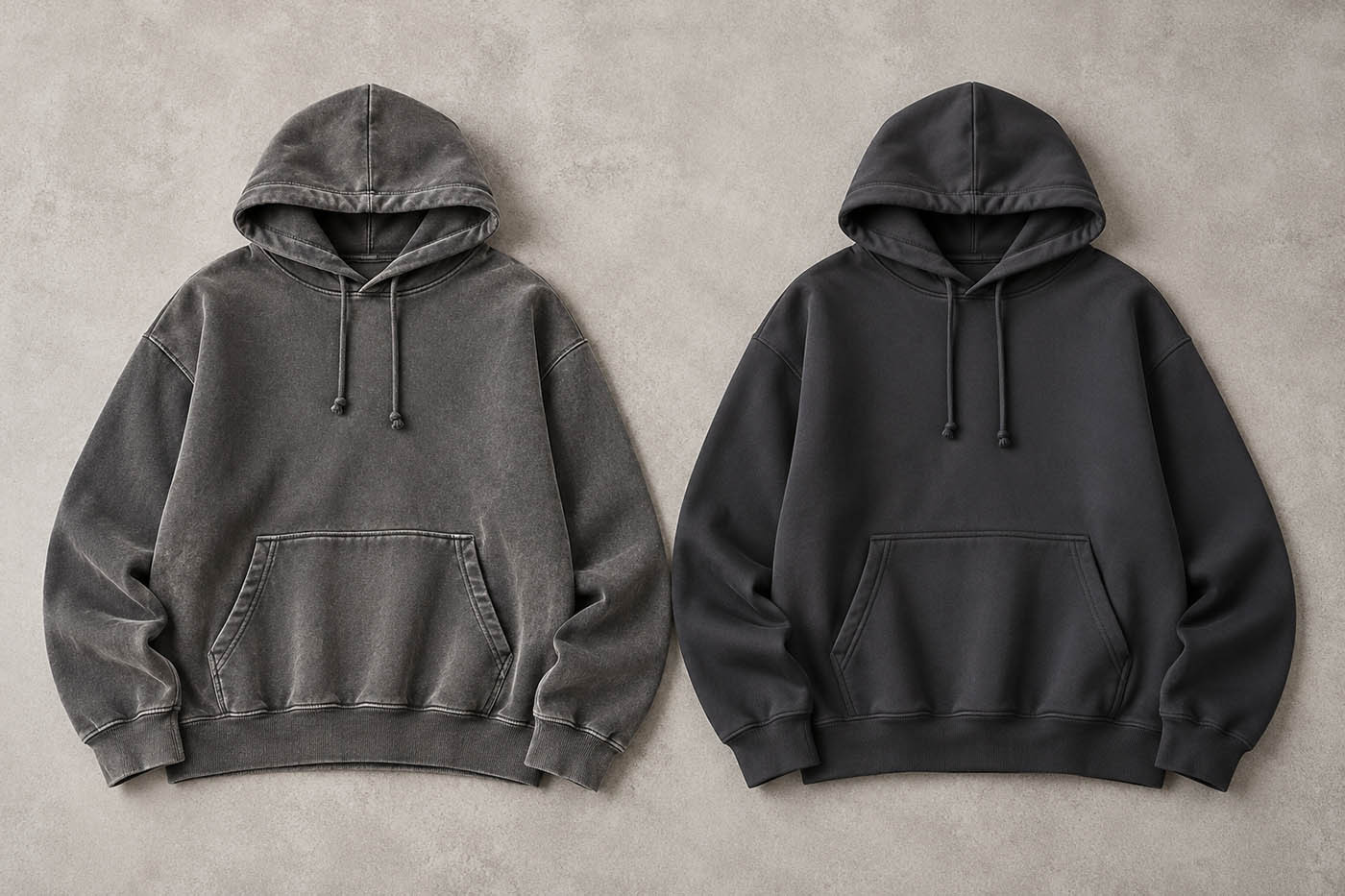
Color is usually the first reason a designer chooses one method over the other. Picture a faded charcoal oversized hoodie with soft-looking edges and a slightly different tone at the pocket seams. Now picture a deep navy pullover whose body, sleeves and hood form one clean block of color. Both looks can be excellent. They simply tell different design stories.
How the two methods affect color character
Garment-dyed hoodies are often chosen for their visual depth. The completed garment moves through the dyeing and finishing process with stitched seams and layered constructions already present. Depending on the method, these areas can develop tonal variation, making the color look less flat. That effect pairs naturally with boxy silhouettes, heavyweight cotton fleece and muted vintage palettes.
Piece dyeing typically offers a more even base shade because the fabric is dyed and finished before it is assembled. This is attractive for minimalist collections, branded uniforms, coordinated merchandise and core styles where the color itself needs to look controlled. If a brand wants a highly uniform royal blue, a precise black, or a consistent signature green across different seasons, piece dyeing is often the more manageable starting point.
Still, dye route is not a simple 'faded versus bright' switch. A well-managed garment-dyed hoodie can look clean and saturated. A piece-dyed fleece hoodie can have a washed, softened surface. The dye class, shade depth, yarn and fabric structure, washing and final drying conditions all affect the visible result.
Does garment dyeing make a hoodie softer?
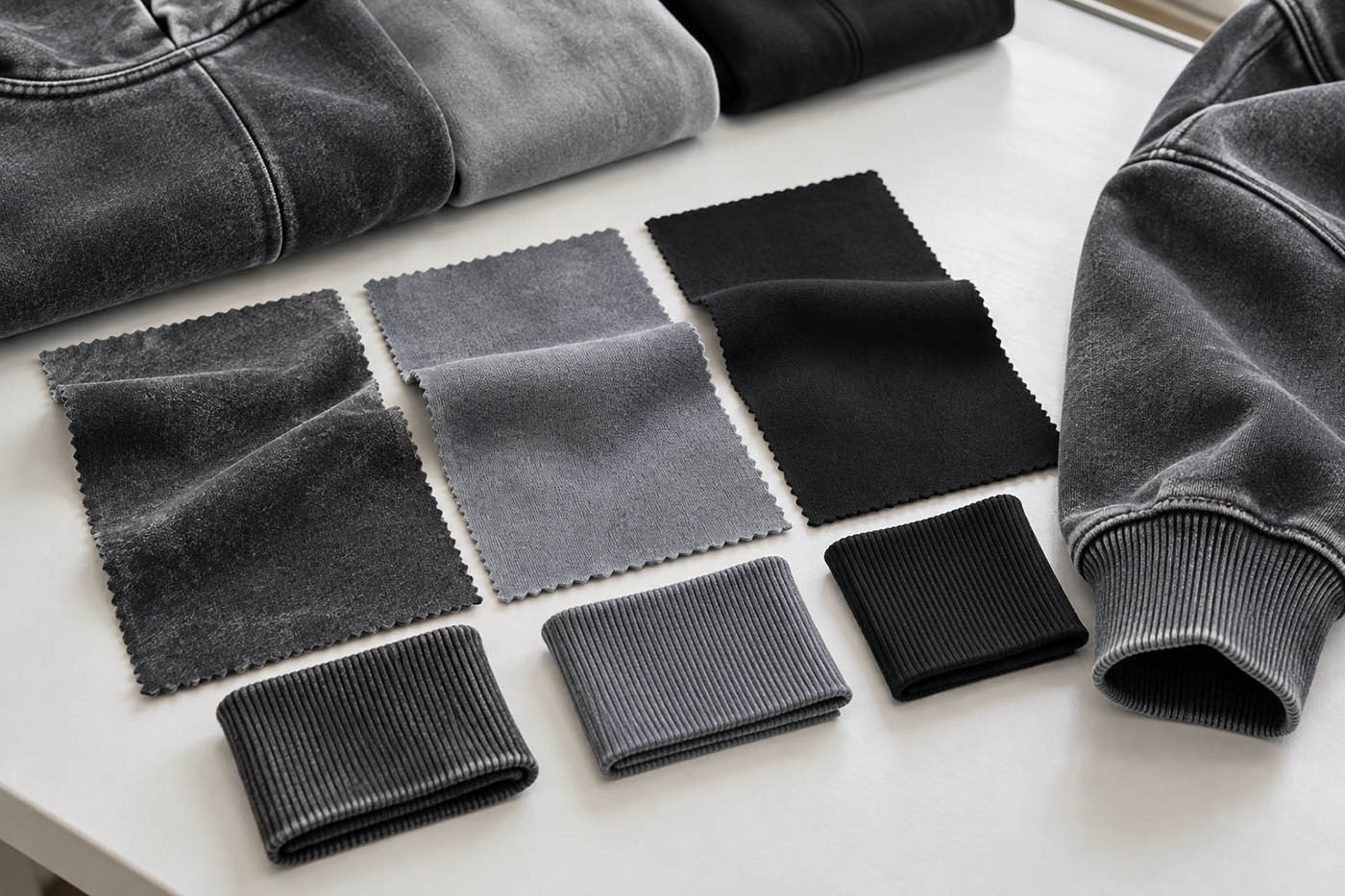
It can, but the softer handfeel often comes from the overall wet-processing and finishing recipe, not from the mere fact that the garment was dyed after sewing. Mechanical action, enzyme treatments and softeners can change the way cotton fibers and fleece surfaces feel. A garment-dyed hoodie that has been washed and finished for softness may feel broken-in straight away.
A piece-dyed hoodie can also be exceptionally soft. Combed yarn, brushed fleece, French terry construction, fabric finishing and a subsequent garment wash may produce a similarly relaxed hand. Conversely, an aggressive pigment surface effect can feel dry or chalky if that is the intended finish. For a premium streetwear product, describing the result as 'soft garment dye' without evaluating the actual fabric tells only half the story.
The inside matters too. A brushed-fleece hoodie can feel plush against the body even when its exterior is relatively firm. Loopback French terry may feel cooler and less bulky in either dyeing route. Comparing hoodies by GSM alone misses the construction and finishing choices that largely determine comfort.
What about the graphic, embroidery and vintage effect?
Graphic placement adds another layer. Dyeing and washing a finished hoodie can change the background shade against which a screen print, heat transfer or embroidery must sit. Many brands therefore prefer to apply sensitive artwork after garment dyeing, once the surface color and dimensions are approved. Other effects are deliberately developed before washing to achieve an aged or faded print, but those sequences require their own trials.
If the graphic must remain sharp and high contrast, a stable piece-dyed base can simplify the print-color decision. If the concept is a distressed vintage graphic that feels integrated with the hoodie, a garment-dye or wash-driven route may offer the right character. Neither method automatically produces a cracked print, uneven embroidery or sun-faded artwork. Those are separate design and finishing choices.
A useful way to compare two development options is to view them in the same natural light, from the same distance, next to the same color reference. Studio photography can make two gray hoodies look far more similar—or more different—than they really are.
3. Shade Variation and Repeat Orders
A first drop may sell out because customers love its washed-black color. Six months later, you want to reorder that exact hoodie. This is where color character meets manufacturing discipline. A beautiful original sample means little if the second run cannot stay within the look your customers recognize.
With garment dyeing, the finished garment goes through a wet process in which loading, machine movement, liquor conditions, material absorbency and drying can influence the final result. Even within an approved process, some color variation may be part of the intended style. That's acceptable when the brand has defined an approved visual range. It becomes a problem when 'vintage variation' is used as an excuse for uncontrolled differences.
Piece dyeing generally gives buyers better control over a consistent fabric shade at the roll stage, especially for planned replenishment programs. Yet later production still introduces variation through mismatched rib batches, fabric-lot mixing, cutting direction, pressing and any post-sewing wash. A uniform-looking fabric is a strong starting point, not a substitute for inspection.
| Comparison point | Garment-dyed hoodie | Piece-dyed hoodie |
|---|---|---|
| When color is applied | After the hoodie is sewn | To fabric before cutting and sewing |
| Typical visual direction | Clean or tonal; often selected for lived-in character | Usually cleaner, more uniform solid color |
| Handfeel | Influenced by garment washing and finishing | Influenced by yarn, fabric finish and any later garment wash |
| Color consistency | Requires approved shade range and batch controls | Generally easier to plan for uniform repeat colors |
| Dimensional control | Sewn garment changes dimensions during wet processing | Main fabric can be stabilized before cutting |
| Rib, seams and trims | Must be compatible with the garment dye bath | Can be selected to coordinate with dyed fabric |
| Colorway planning | Prepared garment stock may be divided into colors later | Fabric colors usually committed earlier |
| Typical brand fit | Vintage-inspired capsules, tonal streetwear and selected cotton basics | Core replenishment lines, clean branding and planned volume |
Color standards matter more than a color name
'Washed black,' 'stone gray' and 'vintage olive' are useful creative descriptions, but they are not reliable quality standards. Even Pantone matching and lab dips are only part of the approval system: they help define a target shade, while the actual hoodie introduces fabric texture, seam shading, lighting and wash character.
For a garment-dyed program, the most useful reference is often a retained, approved full hoodie along with the accepted range of light and dark variation. For a piece-dyed program, approved fabric standards and dye-lot records help protect the base color. The method changes what you need to compare, but both routes benefit from retaining actual production references rather than relying entirely on on-screen photographs.
Repeat orders also depend on whether the same base material remains available. Changing cotton composition, yarn, fleece construction or rib supplier can shift the finished color even when the dye recipe is nominally unchanged. If a hoodie is becoming a bestseller, documenting the actual material and finish is as important as remembering the shade name.
Shrinkage and finished sizing
There is a popular claim that garment-dyed hoodies will not shrink because they have already been washed. That is too absolute. A garment may have experienced some dimensional change during dyeing, but residual shrinkage can remain. Actual home-laundering results depend on the fiber, fabric, process and care conditions.
For garment dyeing, a pattern should be developed around the finished, dyed measurements, not merely the undyed sewn dimensions. Body length, sleeve length, chest width, hood opening and rib recovery can all shift during wet processing. These finished specifications belong in the clothing tech pack alongside the approved sample. For piece dyeing, the fabric may be stabilized before cutting, although additional garment shrinkage can still occur later.
For repeatable quality discussions, brands can specify appropriate test procedures such as AATCC standards for colorfastness and garment dimensional change after laundering. AATCC TM150 addresses dimensional changes of garments after home laundering. The important decision is the required performance and accepted tolerance, not a blanket promise that one dyeing route cannot shrink.
Production reality
For a washed hoodie, controlled variation can be part of the design. Unapproved variation in fit, unexpected color transfer, twisting seams or visibly mismatched components should not be treated as a desirable vintage feature.
4. Cost and Fabric Compatibility
Which method costs less? There isn't a useful universal price answer. The dyehouse's batch size, the amount of fabric or finished garments, the number of colors, the finishing recipe and the number of required sample approvals all influence the quotation. Piece dyeing can become efficient when a brand commits to enough yardage in a few repeat colors. Garment dyeing can offer flexibility when one prepared garment base will be split into smaller color groups, but each finished-garment batch still has production and handling costs.
The distinction matters for planning. A hoodie collection with one black color sold consistently through the year has a different cost structure from a limited streetwear drop containing six experimental dusty shades. The first may benefit from planned fabric dye lots and steady replenishment. The second may value the option to make a smaller number of undyed hoodies before confirming its final color allocation. Neither benefit is free or automatic.
Which hoodie fabrics are suitable?
100% cotton fleece and French terry are common starting points for garment-dyed hoodie development because cotton responds to widely used cellulose dye systems and supports many casual finishing effects. That does not mean every cotton fabric is ready to dye after sewing. Preparation, knit construction, thread selection and finishing history still affect results.
Cotton-polyester blends require greater care. The cotton and polyester portions behave differently with different dye chemistries, so a standard cotton garment-dye bath may color the cotton while leaving polyester-rich components lighter. Depending on the desired outcome, this can create a heathered effect—or an unwanted shade mismatch. Polyester can be dyed through suitable processes; the issue is that it is not interchangeable with ordinary cotton garment dyeing.
Piece dyeing provides more options for working with pre-dyed cotton blends, polyester fleece and other materials that need specific mill-level processing. For heavyweight cotton hoodies, however, either dyeing route may be workable. Material compatibility should guide the choice, rather than treating garment dyeing as a universal quality upgrade. For a broader look at material and finishing options, see VANRD's streetwear fabrics and techniques.
Why ribbing, stitching and trims affect the answer
A pullover hoodie looks simple, yet it combines components that do not necessarily dye alike. The main fleece, cuff rib, hood lining, drawcord, sewing thread, zipper tape, heat-transfer label and decorative patch may contain different fibers or finishes. In garment dyeing, many of these components enter the wet process together. A contrast thread that looks interesting in a mock-up might become an unintended defect if the brand expected tone-on-tone stitching.
Piece dyeing allows the team to work with the fabric's approved color before assembling the hoodie. That is especially convenient for a zip-up design with visible tape, a drawcord with custom tips, or a branded patch that must retain a particular color. A garment-dyed version is still possible, but its complete trim package must be planned around the dyeing conditions.
Here is the more useful purchasing question: are you primarily buying a distinctive finished color effect, or are you buying a predictable combination of fabric, artwork and components? The answer often points toward a sensible development route before any prices are exchanged.
What changes the production timeline?
Garment dyeing moves a significant color approval step toward the end of production. It can delay final color decisions, but it also means the completed hoodies must survive dyeing, drying, measurement checks and any necessary rework before packing. Extra wash trials or a rejected dye batch can affect the launch schedule. Piece dyeing moves color approval earlier, usually at the fabric stage; waiting for custom dyed yardage may then become the critical path before cutting can begin.
Neither method is always quicker. Availability of the right fleece, dyehouse capacity, matching trims, color count and target finish usually determines the real schedule. These dependencies are also covered in VANRD's clothing production timeline guide. That's why a quotation for 'custom dyed hoodies' needs more information than a reference image and a quantity.
5. Which Dyeing Method Fits Your Brand?
The best decision starts with your collection rather than the equipment at a dyehouse. Think about what the customer should notice, what your business must reproduce, and how often the style will return. Those three answers are more useful than trying to declare one dyeing method universally premium.
Choose garment dyeing when...
Your hoodie range centers on muted vintage colors, tonal depth and casual character; you plan a limited capsule; or you want to divide a compatible prepared garment base into colorways later in development. Be comfortable agreeing an acceptable shade range instead of insisting every piece looks digitally identical.
Choose piece dyeing when...
Your hoodie is a repeat-order core item; your brand depends on stable solid colors, coordinated components or large planned volume; or the fabric is a blend that is more practical to color and finish at the mill. It is a strong starting point for clean basics and consistency-led collections.
Consider a premium streetwear brand launching a boxy 400 GSM cotton hoodie in aged charcoal and washed brown. Its concept relies on softened color around the seams and a lived-in surface. A carefully developed garment-dyed route may help produce that identity. The brand will still need to settle the shade range, finished fit and artwork sequence before bulk production. A structured streetwear sampling and approval process makes those decisions easier to track.
Now consider a lifestyle label selling the same navy hoodie every season alongside matching sweatpants. It needs customers who purchase the second piece months later to recognize the same color. Piece-dyed fabric, managed with consistent material specifications and dye-lot control, may be the more sensible base. The label can still add garment washing if a softer feel is essential.
A third example is a creator-led brand with a large front graphic and several contrasting trims. If the garment must have pristine print colors and defined trim contrast, a piece-dyed hoodie may simplify the manufacturing sequence. If the concept calls for a faded print and weathered base, the brand can explore a garment-dye or garment-wash route—but the decoration should be developed together with the finish.
Which option fits your hoodie program?
If your priority is surface character and limited color capsules: start by sampling a suitable garment-dyed cotton hoodie.
If your priority is uniform color and replenishment: start with a controlled piece-dyed fabric program.
If you need vintage softness but consistent color: consider piece-dyed fabric followed by an approved garment wash.
If you need both washed character and reliable reorders: approve a physical shade range, finished measurements and a retained bulk-production reference before the first order.
You do not have to work through the entire production plan alone. As a custom hoodie manufacturer, VANRD supports hoodie development through fabric sourcing, fit development, sampling, branding, wash-related coordination and bulk quality control. If you're still organizing specifications for your first private label range, our private label hoodie manufacturing guide covers the wider development sequence.
Planning a washed hoodie collection?
Send VANRD your target color, fabric preference and a reference garment or photo. We can review the design direction and discuss a suitable sampling and production approach.
Discuss Your Hoodie Project →Conclusion
Garment dyeing and piece dyeing are two different ways of building color into a hoodie, not a ranking of good and bad quality. Garment dyeing can give a cotton hoodie the relaxed color character that makes a vintage collection distinctive. Piece dyeing offers a practical foundation for clean shades and repeatable core products. Choose the route that supports the hoodie you want customers to wear—and the collection you want your brand to be able to produce again.
Frequently Asked Questions
1. Can a garment-dyed hoodie have contrast-colored stitching?
Yes. Different thread fibers can respond differently to a dye bath, and contrast can also be intentionally designed. The result should be approved on a finished sample so that an unexpected thread color does not become a production surprise.
2. Do garment-dyed hoodies fade faster in the wash?
Not necessarily. Wash colorfastness depends on the dye system, color depth, fixation, finishing and care instructions, rather than the dyeing stage alone. Some washed or pigment-led looks are designed to age visibly, while other garment-dyed styles aim to retain their shade.
3. Can zip-up hoodies be garment dyed?
They can, but zipper tape, teeth, pullers and other hardware need to suit the chosen wet process. Color mismatch, damage or movement around the zipper area should be checked on a fully finished sample before bulk production.
4. Is it better to print before or after garment dyeing?
For sharp, predictable graphics, printing after garment dyeing is often the simpler route. Printing before dyeing or washing may suit an intentionally aged design, but the ink, curing and finishing combination must be trialed together.
5. Can the exact same shade be reproduced in a later garment-dye batch?
A close match can be targeted with retained color standards and controlled materials, but a mathematically identical look on every garment cannot be assumed. If a washed appearance is part of the product, agree the acceptable shade and surface-character range before ordering again.