How Streetwear Brands Develop Custom Collections With Manufacturers
From collection planning and tech packs to fabric sourcing, sampling, bulk production and quality control, this guide explains how streetwear brands turn creative ideas into production-ready collections with the right manufacturing partner.
Quick Answer: How Do Streetwear Brands Develop Custom Collections?
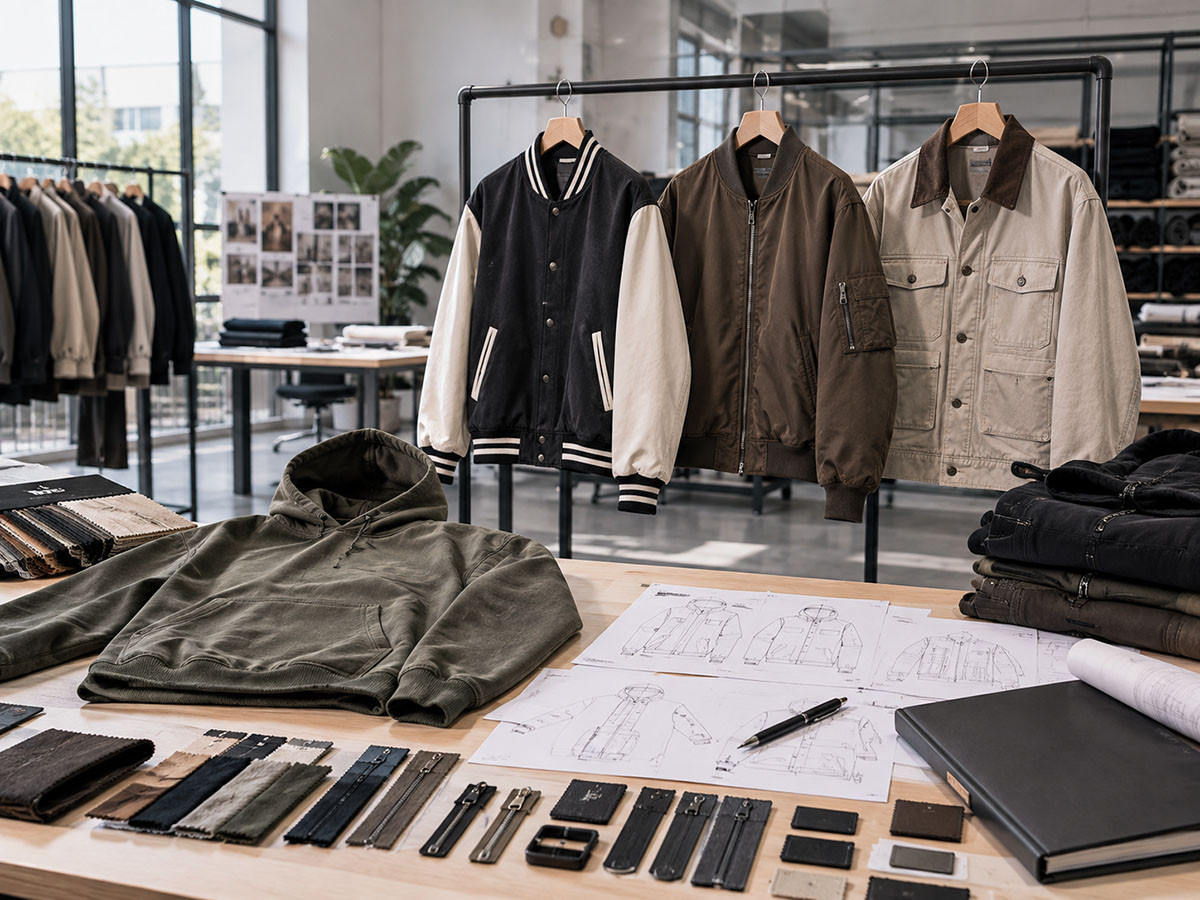
Streetwear brands usually develop custom collections with a streetwear manufacturer through a structured process: define the collection, prepare design specifications, review manufacturing feasibility, select fabrics and trims, develop patterns, make samples, revise fit and construction, approve a pre-production standard, begin bulk production, complete quality control, and prepare the finished garments for shipment and future reorders. A capable custom streetwear manufacturer helps translate creative ideas into repeatable production specifications instead of simply reproducing a picture.
Why Streetwear Collection Development Is More Than Sending a Design
Imagine sending an architect a photograph of a house and saying, “Build this.” The photograph communicates the mood, but it does not explain the dimensions, structure, materials or engineering. Apparel works in much the same way. A streetwear sketch may communicate silhouette and attitude, but a factory still needs to understand how the garment is supposed to be built.
A cropped washed hoodie, for example, is not defined only by its graphic. The manufacturer needs to understand the finished chest width, body length, shoulder drop, sleeve volume, fleece weight, rib construction, wash effect, hood shape, drawcord specification, print technique, label placement and measurement tolerances. Change one of those decisions and the finished product can feel completely different.
This is why the strongest relationships between brands and manufacturers are collaborative. The designer owns the creative direction. The factory contributes manufacturing knowledge. Product development sits between the two. The goal is to convert creative intent into clear, measurable instructions that can survive the transition from one sample to hundreds or thousands of garments.
For brands that need support beyond straightforward cut-and-sew production, OEM/ODM apparel development can help bridge that gap. An ODM-capable partner may assist with fabric direction, construction, pattern development and production feasibility, while an OEM project generally begins with more detailed specifications supplied by the buyer.
Step 1: Define the Collection Before Contacting a Manufacturer
Before discussing fabrics or sample prices, step back and ask a commercial question: what is this collection supposed to do for your brand?
A collection for a first-time streetwear drop may require a very different development strategy from a seasonal program for an established label. A new brand may need to concentrate its budget around two or three recognizable products. An established brand may already have proven blocks, approved fabrics and repeating core styles that can support more experimental additions.
Start with the customer, retail positioning and product hierarchy. Which garment is the hero piece? Which products support it? What retail prices are realistic for your audience? What quantities can you genuinely sell? When does the collection need to launch?
Those questions may sound like marketing questions, but they directly affect manufacturing. If your target retail price does not support the fabric and workmanship you are specifying, the problem should be discovered before several sample rounds have already been paid for.
Collection Direction
Define the customer, aesthetic, season, price positioning and reason each garment exists.
Product Architecture
Build around a few compatible silhouettes instead of developing unrelated products with no common system.
Production Reality
Consider target quantities, launch timing, colorways, expected costs and development complexity.
Cohesion can also simplify production. A heavyweight hoodie and matching sweatpants might share fleece, rib, labels, embroidery colors and packaging. A work jacket and cargo pant may share canvas, hardware or branding details. Fewer disconnected material systems can make sourcing and color management easier.
That does not mean every collection must look basic. It means creativity benefits from structure. A strong collection is a family, not a room full of strangers.
Step 2: Turn the Creative Idea Into a Manufacturer-Ready Brief
Once the product direction is clear, the next job is communication. This is where a clothing tech pack becomes valuable.
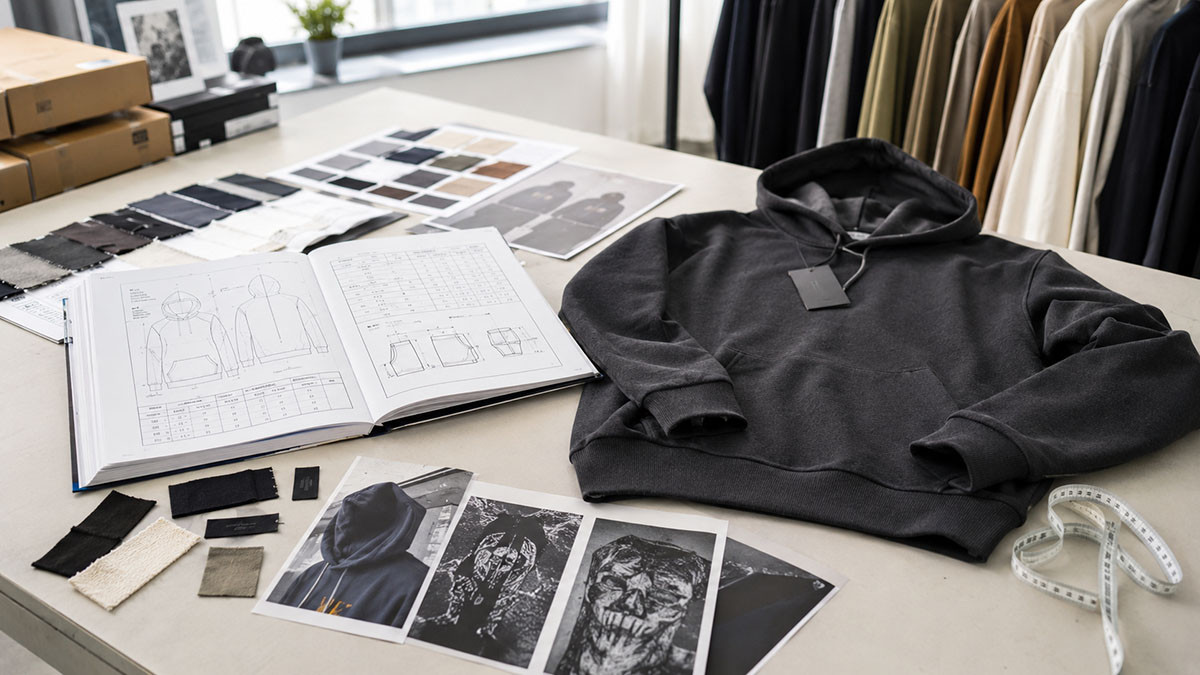
A tech pack acts as the working specification for a garment. A factory-ready version may include technical flat drawings, measurements, grading information, fabric details, a bill of materials, stitching instructions, artwork files, decoration placement, labels, trims, color references, packaging requirements and construction notes.
Why does that matter? Because verbal descriptions are flexible. Measurements are not. “Make the body oversized” can mean five different things to five different people. “Finished half-chest: 67 cm in size M” gives the pattern maker something measurable.
What If Your Brand Does Not Have a Complete Tech Pack?
You can still begin a development conversation if you choose a manufacturer that offers product-development support. A designer-led brand may initially provide sketches, reference garments, mood boards, fabric ideas, target measurements and photographs showing the desired fit.
The important distinction is between starting without a finished tech pack and producing without controlled specifications. You can start with an idea. You should not enter bulk production with an idea that has never been converted into measurable instructions.
Useful Information to Send a Manufacturer
- Technical sketches or design drawings
- Reference garment photos
- Target fabric and approximate GSM
- Target fit or measurement references
- Colorways and Pantone references
- Logo and artwork files
- Print or embroidery direction
- Labels and packaging requirements
- Estimated quantity by color
- Target launch or delivery date
Step 3: Choose the Right Streetwear Manufacturer for the Collection
Choosing a manufacturer is not a beauty contest for factory quotations. A supplier that is perfect for basic jersey T-shirts may not be the right partner for washed heavyweight fleece, structured varsity jackets or multi-pocket workwear. The question is not simply, “Can you make clothes?” It is, “Can you repeatedly make the kind of clothes our brand plans to sell?”
A capable custom streetwear manufacturer should be evaluated according to the product categories, materials and processes required by the collection. Pattern-making experience, sample development, sourcing capability, decoration techniques, washing knowledge, quality control and communication all matter.
If outerwear is central to the collection, evaluate a specialist jacket manufacturer on lining construction, rib, hardware, insulation, pockets and structured patterns—not just whether it has previously sewn a jacket.
If fleece is your core business, review the manufacturer's custom hoodie manufacturing capability, including fleece sourcing, oversized patterns, washing and printing.
The same principle applies to bottoms. Cargo pants, denim and technical trousers require different construction logic from simple sweatpants, so a pants manufacturer should be reviewed on the categories that actually matter to your range.
Manufacturer Capability Matters More Than a Long Product List
Many websites list dozens of categories. That alone tells you very little. Ask to understand how the manufacturer handles development. Can it interpret a tech pack? Can it build or revise patterns? Can it source the right fabric instead of offering only whatever is already available? Can it test embroidery or prints before applying them to finished garments? How are sample comments recorded? What becomes the reference when bulk production begins?
These questions reveal whether you are dealing with a transaction-based supplier or a genuine manufacturing partner.
Step 4: Review Feasibility, MOQ and Cost Before Sampling
One of the most common mistakes in apparel sourcing is requesting a price before defining the product. “How much for 100 hoodies?” sounds straightforward, but a factory cannot quote it responsibly without knowing what those hoodies are.
A 300 GSM basic fleece pullover and a 500 GSM garment-dyed hoodie with custom rib, chenille patches, embroidery, metal hardware and branded packaging are both hoodies. Their production requirements are not remotely the same.
Cost is created by specifications. Fabric composition, fabric weight, usable width, garment construction, number of panels, pockets, lining, trims, printing, embroidery, washing, labels, packaging and order quantity can all affect the final quotation. For a deeper breakdown, see VANRD's guide to clothing manufacturing cost in China .
Understand MOQ as a Production Variable
Minimum order quantity is also more complex than a single number. Garment sewing MOQ is only one part of the equation. Custom fabric dyeing, knitted rib, metal hardware, custom zippers or packaging may have their own supplier minimums.
This is why dividing a small order into too many colors can create problems. A 300-piece program in one color may be easier to develop than 300 pieces split into six custom colors because each color creates its own fabric and trim requirements.
For VANRD custom streetwear programs, the standard MOQ is 100 pieces per style and color. The final requirement can vary when a project uses custom-developed fabrics, special trims, complex washes or techniques with separate supplier minimums. For a more detailed breakdown, review the streetwear MOQ and pricing guide before developing your production plan.
Step 5: Develop Fabrics, Colors, Trims and Branding
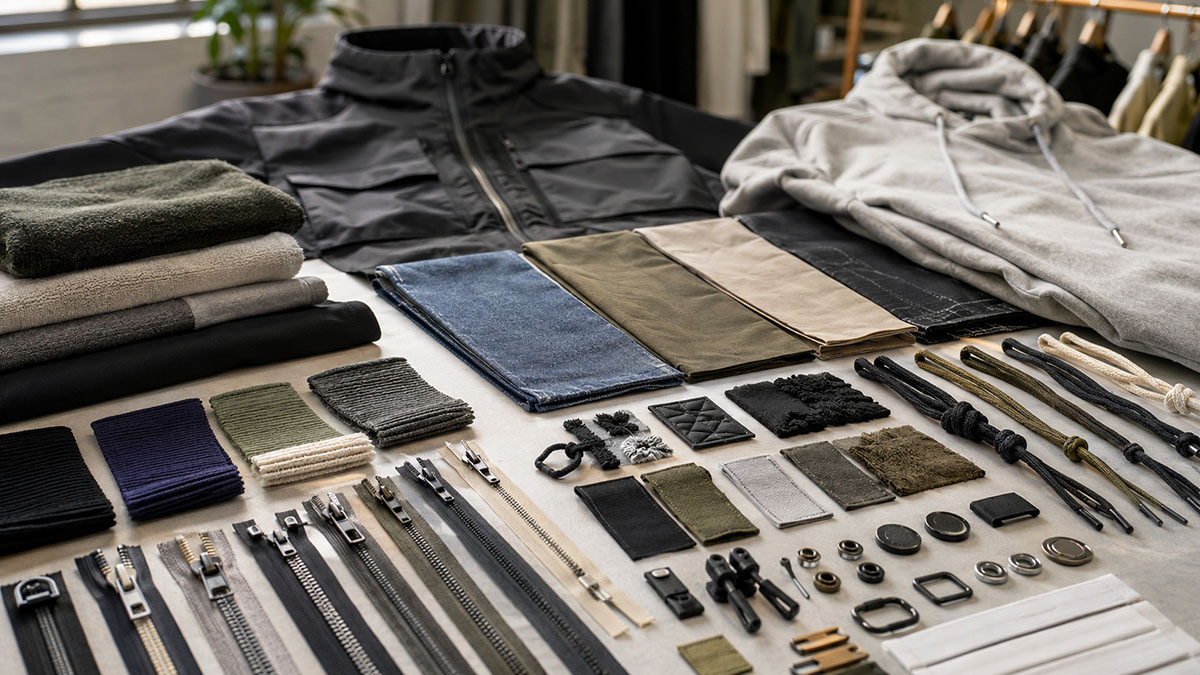
Streetwear lives in the details. Two hoodies with nearly identical drawings can feel like products from completely different markets once fabric weight, wash, rib, print texture and silhouette change. Material development therefore deserves the same attention as the artwork.
Start With the Fabric Experience
Do you want a structured heavyweight handfeel or a softer drape? Should fleece be brushed or loopback? Does the jacket need a crisp nylon shell, dense cotton twill, denim, canvas or satin? These decisions influence appearance, durability, comfort, wash behavior, cost and even the way the garment hangs on the body.
GSM helps describe fabric weight, but GSM alone does not define quality. Yarn, knitting or weaving structure, finishing and washing can make two fabrics of similar weight behave differently. The brand and manufacturer should therefore discuss the desired handfeel and physical performance, not merely chase a number.
Color should be controlled with the same discipline. Pantone references, approved lab dips and documented bulk color standards reduce the risk of shade drift between samples, production lots and reorders. See VANRD's custom apparel color consistency guide for a deeper explanation of Pantone matching, lab dips and dye-lot control.
Then Build the Trim and Branding System
Trims can include rib, zippers, snaps, drawcords, aglets, buttons, woven labels, care labels, size labels, hangtags and custom metal hardware. On a multi-product collection, repeating compatible trim choices can make the collection feel more intentional and simplify sourcing.
Branding techniques should also match the design rather than being added because they are fashionable. Screen printing suits some graphics. Puff printing creates a different surface. Flat embroidery, 3D embroidery, chenille, appliqué, patches and rhinestones each produce their own visual language, cost structure and technical limitations.
A good custom streetwear manufacturer should explain those trade-offs before the sample is finished. If an extremely fine line will not embroider cleanly, you want to know during artwork review—not after hundreds of garments have been produced.
Step 6: Pattern Making and the First Sample
Once specifications and materials are sufficiently clear, the garment can move into pattern development and sampling. This is where two-dimensional ideas finally become three-dimensional products.
Pattern making controls far more than size. It controls balance, shoulder position, armhole shape, sleeve pitch, volume, rise, leg shape, neckline, hood proportion and the overall relationship between the garment and the body.
This is especially important in streetwear because “oversized” is not the same as “several sizes too large.” A well-designed oversized hoodie may combine extra chest volume with a controlled body length, dropped shoulders, a specific sleeve shape and carefully proportioned rib.
What the First Sample Is Really For
Your first development sample is not supposed to prove that everything is perfect. Its job is to expose what still needs to be resolved.
Sampling time also depends on how quickly these variables can be confirmed. Clear specifications, stable materials and fast, precise approvals usually reduce unnecessary revision rounds. Brands planning launch dates can use VANRD's streetwear sampling and lead-time guide to build a more realistic development calendar.
Look at how the garment sits on the body. Check measurements against the specification. Open pockets. Test zippers. Stretch rib. Examine seams. Compare artwork position against the approved placement. If the garment is washed, examine shade and handfeel. The more specific the evaluation, the more useful the next sample becomes.
Step 7: Review, Revise and Approve the Sample
Sampling can become either the most valuable part of development or an endless loop. The difference is usually feedback quality.
Comments such as “the sleeve feels strange,” “make it more oversized,” or “move the logo slightly” leave room for interpretation. A manufacturer cannot reliably build a repeatable product from feelings alone.
Better feedback combines photographs, measurements and precise written instructions. Instead of “make the chest wider,” specify the current measurement, target measurement and size being reviewed. Instead of “logo too high,” mark the exact distance required from the shoulder seam, center front, pocket edge or another fixed reference point.
Control Your Versions
Every sample round should create a clearer specification. If Sample V1 changes sleeve length, pocket position and fabric, those updates should be reflected in the latest working documents. Otherwise an old file can quietly re-enter the production process.
Treat each revision like software version control. What changed? Why did it change? Which version is approved? Which artwork file is final? Which color is confirmed? A few minutes of documentation can prevent days of confusion later.
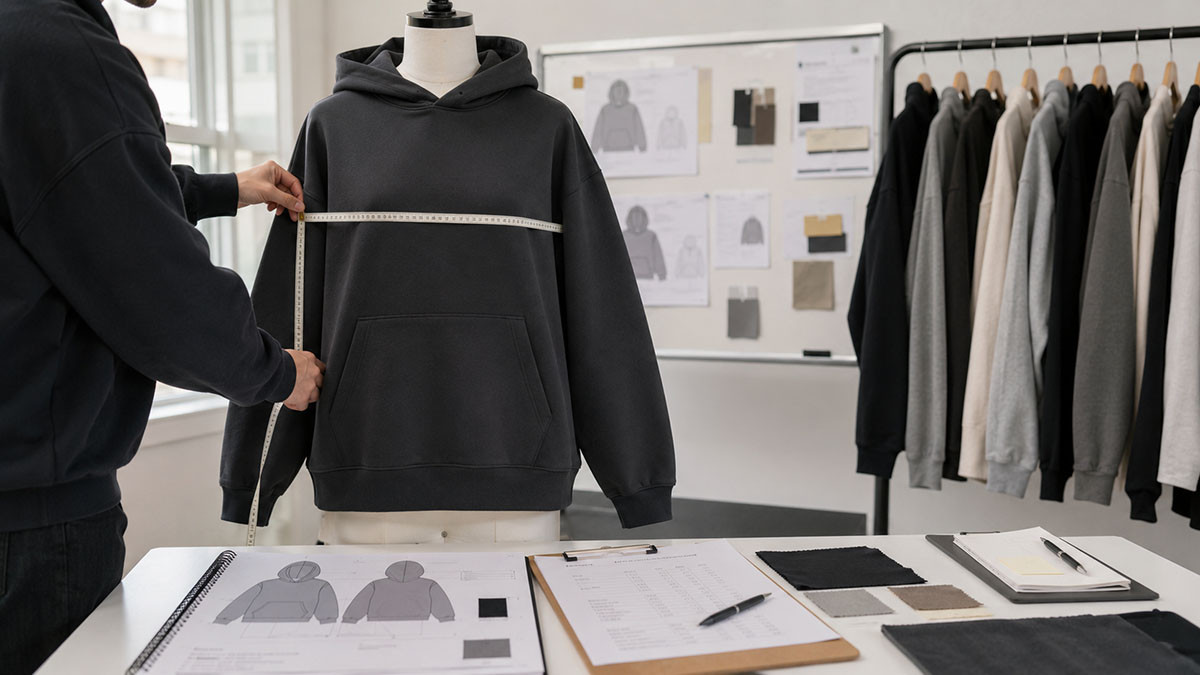
What We Check Before a Streetwear Sample Moves Forward
From a manufacturer-side review, sample approval should confirm both the physical garment and the production information behind it. Before a sample is treated as a production reference, the key checkpoints below should be aligned with the approved project requirements.
Chest, body length, shoulder, sleeve, rise, leg shape and overall balance as applicable.
GSM, handfeel, stretch, shade, surface appearance and wash effect against the approved direction.
Logo size, exact placement, print clarity, embroidery quality and decorative technique.
Seams, pockets, rib, zippers, hardware, labels and other functional construction details.
Updated measurements, artwork, color references, trim details and the latest revision notes.
Step 8: Lock the Pre-Production Standard
There is a moment in every development project when experimentation has to stop. Bulk production needs a fixed target.
Before production begins, the brand and manufacturer should confirm the approved sample, measurements, tolerances, fabric, colors, trims, logo techniques, artwork placements, labels, size breakdown and packaging details.
Depending on the program, this may be represented by a pre-production sample, approved sample, final tech pack or another controlled production reference.
Why is this stage so important? Because bulk consistency cannot be judged against a vague memory of what everyone discussed three weeks earlier. It needs a physical and documented standard.
If your sample has a 7 cm embroidery and the bulk artwork file suddenly says 8 cm, which one wins? If the approved fleece has a specific handfeel but a substitute fabric appears during production, who approved the change? Locking the standard answers those questions before the cutting room does.
This is also the foundation of custom clothing quality control . Quality is easier to control when everyone agrees on what “correct” means.
Step 9: Move From Approved Sample to Bulk Production and Quality Control
Once materials and production standards are approved, the project can move into bulk manufacturing. A simplified flow often looks like this:
For the buyer, however, the important question is not memorizing the factory sequence. It is making sure production remains aligned with the approved product.
If you want to see how these stages connect in VANRD's manufacturing workflow, review the streetwear manufacturing service process from project review and sampling through production, inspection and delivery.
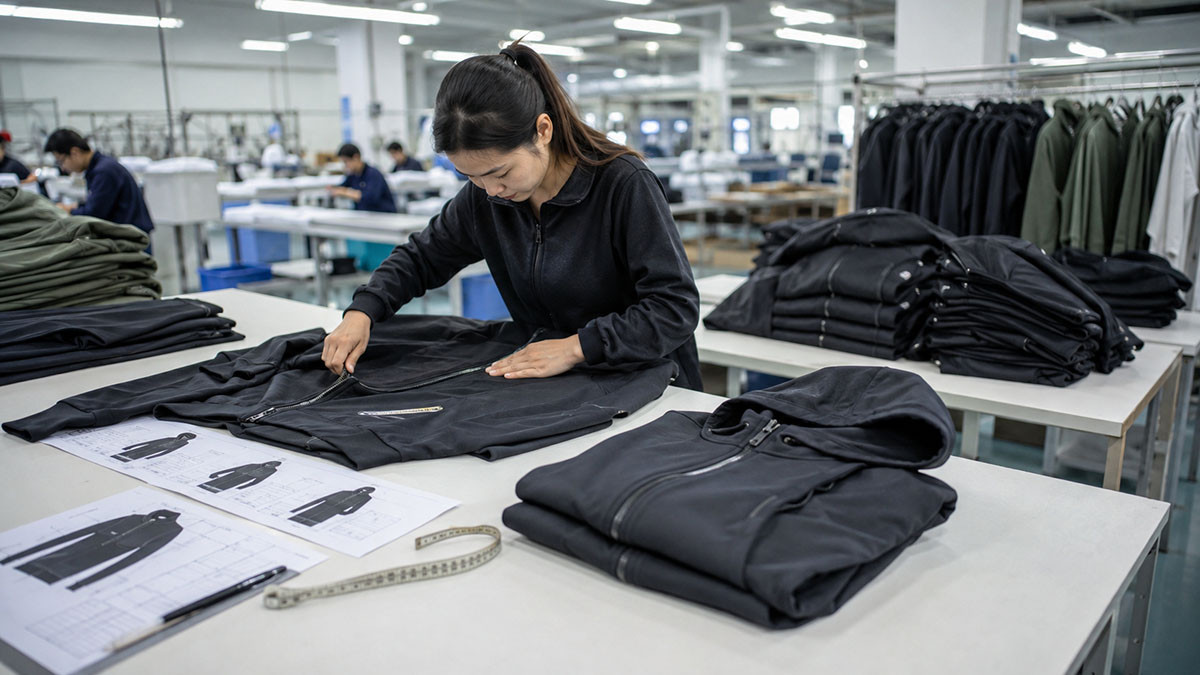
Measurements can drift. Print placement can move. Color variation can appear. Stitching problems may repeat across a batch if nobody catches them early. Inline checking helps identify recurring issues while production is still running, rather than waiting until every garment has been completed.
Final inspection then reviews the finished order according to the agreed quality requirements. Depending on the garment, that may involve appearance, measurements, workmanship, trims, labeling, packaging, quantity and other project-specific checkpoints.
For brands, this is why sample-to-bulk consistency should be discussed when selecting a manufacturer, not after a production problem occurs. The approved sample is valuable only when the factory has a system for carrying those approved details into production.
Step 10: Plan Packaging, Shipment and the Next Reorder
Many first-time brands think production ends when the last seam is sewn. Commercial production does not. Finished garments still need correct labels, folding, packaging, size identification, carton information and shipping instructions.
The exact packaging system should match your sales channel. A wholesale program, retailer delivery, direct-to-consumer business and distributor order may each require different barcode, labeling, polybag or carton details.
Do Not Throw Away the Development Knowledge
More importantly, preserve the information created during the project. Your approved measurements, patterns, fabric references, artwork, trims, labels, color standards, packaging requirements and final comments form a production library for the brand.
That library becomes extremely valuable when a product sells.
Imagine trying to reorder a successful hoodie six months later without knowing which fleece was used, which wash standard was approved or which of three embroidery files was final. Now compare that with a brand that can reopen the approved specification and say, “Repeat Style HD-204, approved version 3, with two new colors.”
That is the difference between repeatedly starting from zero and building a supply chain. Established labels should evaluate manufacturers partly on this repeat-order discipline.
VANRD's established brand manufacturing support and private label apparel manufacturing pages explain how approved specifications and repeat programs fit into longer-term manufacturing cooperation.
What Should a Brand and Manufacturer Confirm at Each Stage?
| Development Stage | Brand Responsibility | Manufacturer Responsibility | Main Output |
|---|---|---|---|
| Collection Planning | Target customer, design direction, pricing and launch plan | Initial feasibility feedback | Collection brief |
| Technical Development | Design intent, measurements, artwork and references | Construction and technical review | Production-ready specification |
| Material Development | Handfeel, color and branding direction | Fabric, trim and process sourcing | Approved material direction |
| Sampling | Fit review and clear revision comments | Pattern development and sample execution | Approved sample |
| Pre-Production | Final approvals | Confirm production requirements and materials | Locked production standard |
| Bulk Production | Timely decisions if issues require approval | Production control and quality inspection | Finished order |
| Reorder | Update quantity or color requirements | Reference approved production records | More consistent repeat production |
Common Mistakes Streetwear Brands Make During Collection Development
Most production problems are not mysterious. The same patterns appear repeatedly. Avoiding them can make development faster, clearer and easier to control.
How VANRD Supports Custom Streetwear Collection Development
VANRD works with streetwear brands, private label companies, designers and apparel businesses that need more than a finished blank with a logo added to it. The development process can begin from a detailed tech pack, an existing reference sample, technical sketches or a sufficiently clear product concept.
Depending on the project, support can cover design and feasibility review, fabric sourcing, pattern development, sample making, custom trims, printing, embroidery, private labels, bulk production and quality control.
The objective is to reduce the number of unknowns between the original concept and a repeatable production standard.
Buyers who want to evaluate the development environment behind this workflow can also review VANRD's manufacturing capabilities and sample-room process , including pattern development, sample iteration and production support.
VANRD's manufacturing focus includes streetwear categories such as jackets, hoodies, T-shirts, pants, denim, tracksuits and related apparel programs. Brands developing outerwear can explore the Jacket Manufacturer page, while fleece programs can be reviewed through the Hoodie Manufacturer page.
If your project is still in the development stage, the OEM/ODM Services section explains how VANRD supports product development from specifications and sourcing through sampling, production and quality control.
Brands that want to evaluate previous development work can also review customer cases and manufacturing projects before starting a new program.
The point is not to force every brand into the same manufacturing formula. A designer-led capsule, a growing private label collection and an established brand's repeat program require different levels of development support. The best workflow begins by understanding what information already exists, what is still missing and which decisions must be confirmed before sampling.
Conclusion: Great Streetwear Collections Are Built Through Controlled Development
A successful streetwear collection is not created when a factory copies a sketch correctly. It is created when creative direction becomes a product system that can be measured, approved, manufactured and repeated.
That process begins with clear collection planning. It becomes more precise through tech packs, fabric and trim development, pattern making and sampling. It becomes commercially usable when cost, MOQ and lead-time decisions are aligned with the brand's business model.
And it becomes scalable when the approved sample, production specifications and quality standards can be carried consistently into bulk production and future reorders.
So when you are choosing a streetwear manufacturer, do not ask only whether the factory can sew your garment. Ask whether the team can understand the product, identify development risks, communicate clearly and reproduce the approved result when your brand is ready to scale.
The strongest manufacturer relationships work less like ordering from a menu and more like building a repeatable production engine. Your brand provides the direction. Your manufacturing partner helps turn that direction into something people can actually wear.
Developing Your Next Streetwear Collection?
Send VANRD your tech pack, reference garment, sketches or product idea. Our team can review your product direction, fabric requirements, customization, estimated quantity and sampling needs before you move into production.
Discuss Your Streetwear ProjectFrequently Asked Questions About Streetwear Collection Development
1. Do I need a tech pack before contacting a streetwear manufacturer?
A complete tech pack makes quotation and sampling more accurate, but it is not always required for the first conversation. If the manufacturer provides ODM or product-development support, you may begin with sketches, reference garments, measurements, fabric direction and inspiration images. Before bulk production, however, the product should be converted into controlled specifications covering measurements, materials, construction, artwork, trims and other production details.
2. How many sample rounds does a custom streetwear collection need?
There is no universal number. A straightforward T-shirt based on an existing block may require fewer revisions than a newly developed washed jacket, technical pant or complex heavyweight hoodie. The number of rounds depends on pattern complexity, fabric, fit, decoration and how clearly the original specifications were prepared.
3. What is a typical MOQ for a custom streetwear manufacturer?
MOQ varies by manufacturer, garment type, fabric, custom colors, trims and decoration. For VANRD custom streetwear programs, the standard MOQ is 100 pieces per style and color. Custom-developed fabrics, specialized hardware, washes or other supplier-dependent components can have separate minimum requirements, so the final MOQ should be confirmed against the complete specification.
4. How long does it take to develop a custom streetwear collection?
Development time depends on the number of styles, product complexity, fabric sourcing, custom trims, sample revisions and how quickly approvals are completed. Instead of planning around one generic lead-time number, build a calendar covering design confirmation, sourcing, sampling, revisions, pre-production approval, bulk manufacturing and shipping.
5. What should I send a manufacturer when starting a new streetwear collection?
Send as much clear information as you already have: product sketches, tech packs, reference garments or photos, target fit, fabric direction, colorways, artwork, branding methods, estimated quantities, size range and target timeline. You should also explain your brand's market position and product expectations. The manufacturer can then identify missing information and recommend the next development step instead of guessing what you intend to produce.