Garment Quality Control Guide: How Manufacturers Ensure Consistent Production
Garment Quality Control Guide: How Manufacturers Ensure Consistent Production
An approved sample can look perfect. The real challenge is producing hundreds or thousands of garments that still look, fit and perform like that sample. That is where garment quality control becomes critical. For apparel brands, consistent production is not created by one final inspection. It is built through a chain of controls covering fabric, trims, cutting, sewing, decoration, measurements, finishing, packaging and shipment.
Why Garment Quality Control Matters More in Bulk Production
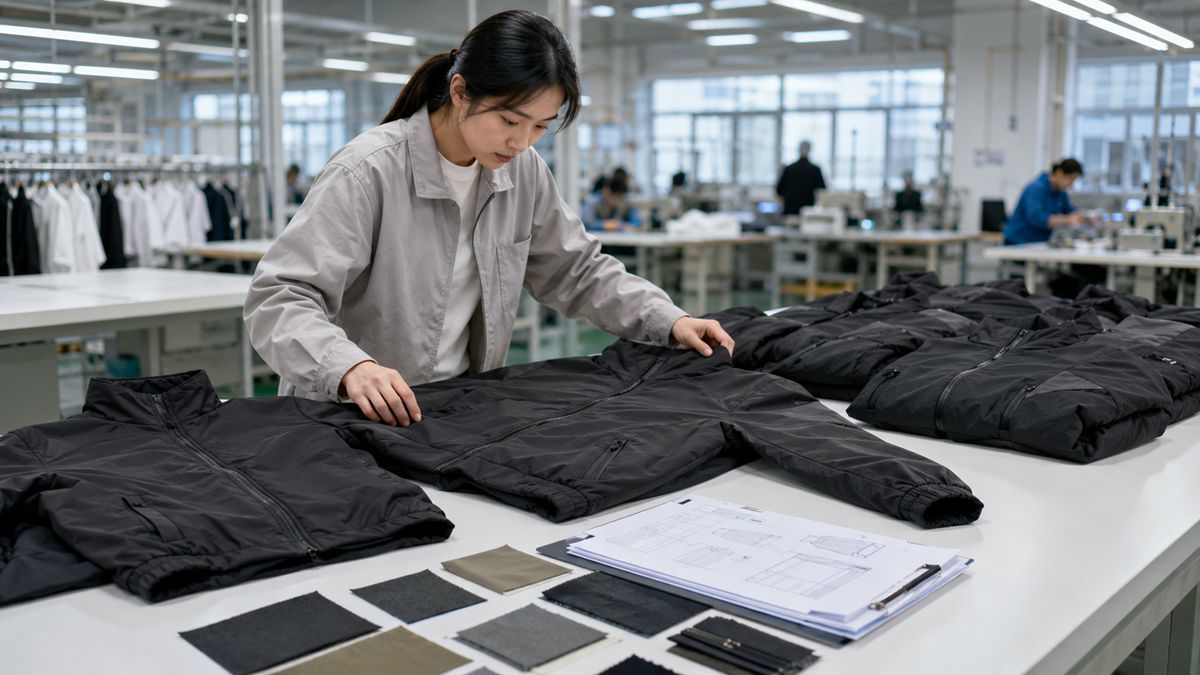
Making one good garment is relatively easy. Repeating it 500, 2,000 or 10,000 times is much harder. Every additional operation introduces another opportunity for variation. Different fabric rolls can have slightly different shades. Sewing operators can create different seam tensions. Washing may change measurements. Embroidery can shift a few millimeters. Labels can be mixed between sizes. Even carton packing can create costly warehouse problems.
Think of bulk apparel production like an orchestra. A perfect sample proves that one musician can play the song. Bulk manufacturing asks whether the entire orchestra can perform it at the same tempo, with the same notes, hundreds of times. Quality control is the system that keeps everyone following the same score.
For an apparel brand, inconsistent production can lead to far more than a few defective garments. Problems can trigger customer returns, negative product reviews, delayed launches, rework costs, chargebacks, lost wholesale accounts and damaged brand trust.
Established brands are particularly sensitive to production consistency because customers expect every repeat order to perform like the previous one. That is why professional manufacturers do not treat QC as a last-minute department standing beside packed cartons. Quality should be controlled throughout the entire apparel manufacturing process.
What Is Garment Quality Control?
Garment quality control is the systematic process of checking whether apparel materials, components, construction, measurements, appearance, branding and packaging meet the standards approved by the buyer and manufacturer.
The word “quality” can sound subjective. One buyer may want a heavy oversized hoodie while another wants a lightweight, clean-fitting style. QC therefore does not simply ask whether a garment looks good. It asks a much more useful question: does this garment conform to the agreed standard?
That standard may include an approved sample, tech pack, measurement chart, bill of materials, fabric swatches, Pantone references, trim cards, artwork files, construction notes, packaging instructions and agreed tolerances.
A professional garment quality control system connects those standards with inspection checkpoints throughout production.
Quality Assurance vs Quality Control: What Is the Difference?
Quality assurance and quality control are closely related, but they are not identical.
Quality Assurance — Prevent Problems
QA focuses on building a reliable production process. Examples include confirming specifications, approving materials, training operators, defining measurement tolerances and establishing production procedures.
Quality Control — Detect Problems
QC focuses on checking actual materials and garments against those standards. Examples include fabric inspection, measurement checks, seam inspection, AQL inspection and packing audits.
Strong apparel manufacturing needs both. Inspection without prevention is expensive because problems are discovered after they have already been produced. Prevention without inspection is risky because nobody confirms whether the process actually delivered the intended result.
Consistent Production Starts With a Clear Quality Standard
Before a manufacturer can control quality, everyone must agree on what “correct” means. This sounds obvious, but many bulk-production disputes begin with vague specifications rather than poor sewing.
Imagine telling a factory that a hoodie should be “oversized.” How oversized? Should chest width be 66 cm or 70 cm? How much tolerance is acceptable? Should the hood feel structured or soft? Is washed black supposed to look evenly faded or intentionally irregular?
Without measurable references, two people can both believe they are correct while producing completely different products.
The Approved Sample
The approved sample—sometimes called a sealed, gold or reference sample—is one of the most important production standards. It shows the factory the expected silhouette, construction, fabric behavior, decoration, finishing and overall appearance.
The Tech Pack
The physical sample shows what the garment should look like; technical documentation explains how to reproduce it. A production-ready clothing tech pack should clearly define measurements, points of measure, tolerances, materials, trims, artwork placement, labels and packaging.
Approved Material Standards
Fabric swatches, lab dips, strike-offs, zipper references, rib standards, buttons, drawcords and label samples reduce interpretation during bulk production. If a component matters to the final product, it should have a reference whenever practical.
The Complete Garment Quality Control Process
There is no single universal QC workflow for every garment. A basic T-shirt, washed hoodie, reversible bomber jacket and technical work jacket have different production risks.
Still, a strong apparel quality inspection system normally follows the product from incoming materials to sealed cartons.
| QC Stage | Main Inspection Focus | Why It Matters |
|---|---|---|
| Incoming Materials | Fabric, shade, width, weight, trims | Stops defective or incorrect materials entering production |
| Pre-Production | Sample, tech pack, measurements, artwork | Locks the production standard |
| Cutting | Marker, direction, panel accuracy, size bundling | Prevents construction and size problems later |
| Decoration | Print, embroidery, patches, placement | Protects brand artwork and appearance |
| In-Line Sewing | Seams, stitch quality, symmetry, construction | Catches repeated problems while they remain fixable |
| Measurements | POMs, tolerance, grading | Maintains fit consistency |
| Final Inspection | Workmanship, appearance, functionality | Confirms finished goods meet the approved standard |
| Packing | Labels, quantity, size ratio, cartons | Prevents warehouse and shipment errors |
Stage 1 — Fabric and Raw Material Inspection
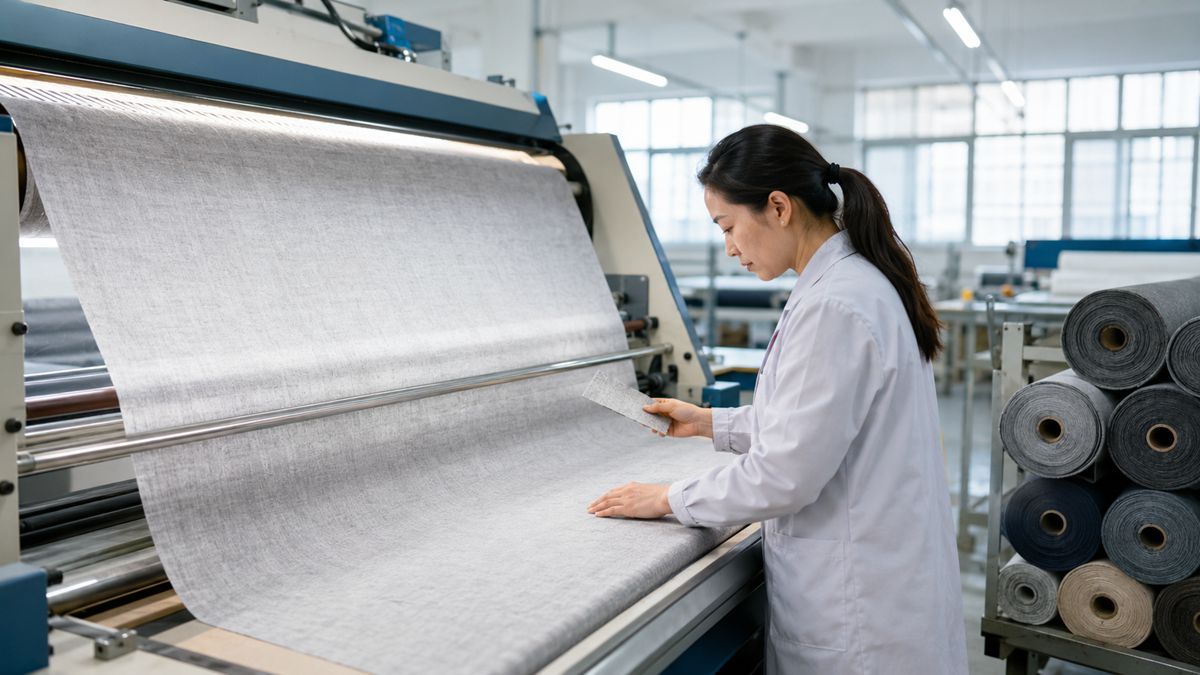
A garment cannot outperform defective raw material. If a fabric roll contains shade variation, holes, contamination or abnormal width and nobody notices before cutting, those problems spread into finished garments.
Incoming fabric inspection may review surface defects, stains, snags, holes, yarn problems, roll-to-roll shade variation, usable width, fabric weight, hand feel and other product-specific characteristics.
For some programs, shrinkage, skew, colorfastness or wash behavior may also need to be tested before production.
Why inspect before cutting? Because this is the cheapest point at which to reject or isolate defective material. Once hundreds of panels have been cut, decorated and sewn, the same problem becomes far more expensive to solve.
Stage 2 — Pre-Production Quality Control
Pre-production QC is where the manufacturer turns approvals into production instructions. It is one of the most underestimated stages in apparel manufacturing.
Before bulk cutting begins, the factory should confirm the approved sample, current tech pack revision, fabric, color, trims, artwork, measurement chart, grading, labels, washing method, packing requirements and any special workmanship standards.
This matters because outdated information is surprisingly dangerous. Imagine approving sleeve length Version 4 while the sewing floor is still using Version 3. Nothing is technically random; the wrong information simply reached production.
For customized OEM or private-label projects, a structured OEM/ODM apparel development process helps create clearer approval points before bulk production begins.
Stage 3 — Cutting and Component Control
Cutting quality influences almost everything that follows. If panels are inaccurate, twisted or mixed between sizes, sewing operators cannot magically restore the intended garment shape.
Cutting control may include marker verification, fabric direction, nap or print direction, panel matching, notch accuracy, size identification and bundling.
Special attention is needed when working with stripes, checks, engineered prints, directional textures, washed fabrics or asymmetric designs.
Manufacturers also need to control component identity. A jacket may contain shell panels, lining pieces, ribs, pockets, zipper guards and multiple size-specific components. One mixed bundle can create an entire sequence of defects.
Stage 4 — Printing, Embroidery and Decoration Inspection
For a streetwear brand, artwork is not a minor decoration. It may be the most recognizable part of the product.
Screen printing, puff printing, embroidery, chenille, patches, heat transfers and other decoration techniques should be checked against approved artwork and strike-offs.
Inspectors may review size, position, color, registration, stitch density, coverage, edge quality, adhesion and surface damage.
Placement is particularly important. A logo that moves only 15 mm can make a symmetrical garment look visibly wrong. The more prominent the branding, the less tolerance customers have for inconsistency.
Decoration should also be evaluated after relevant finishing processes. Washing, pressing or garment dyeing can change print surfaces, embroidery appearance and garment measurements.
Stage 5 — In-Line Sewing Quality Control
In-line QC is one of the strongest defenses against large-scale defects because it checks production while garments are still being assembled.
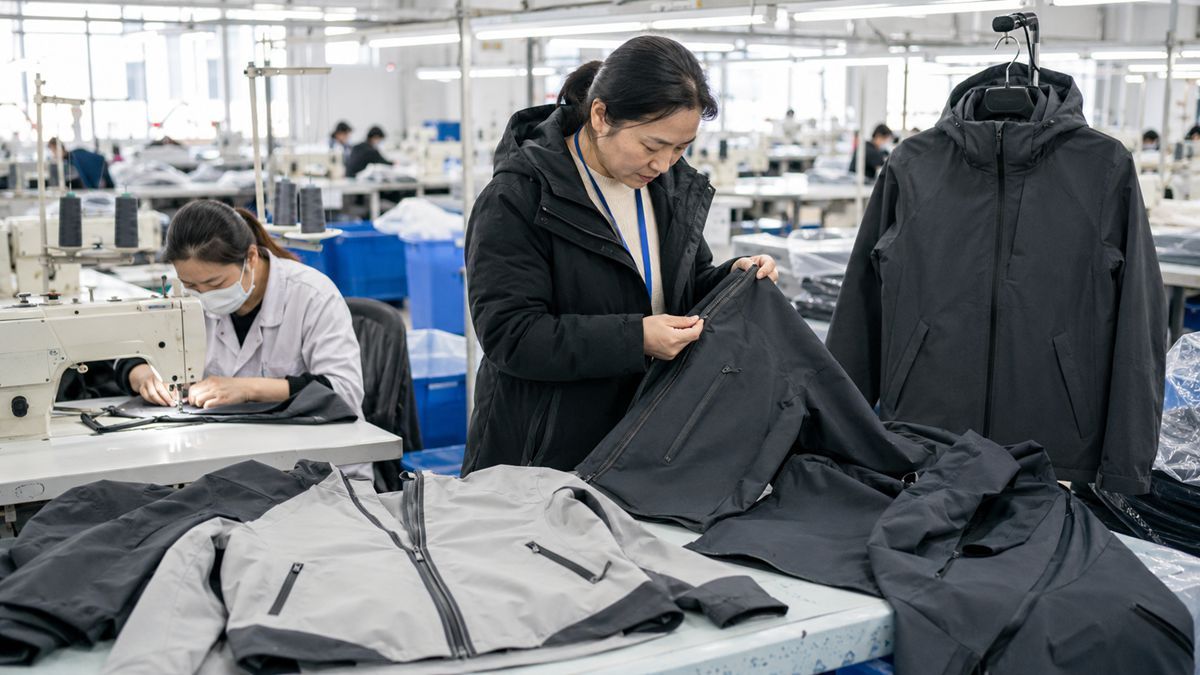
Inspectors can review seam construction, stitch balance, skipped stitches, puckering, panel alignment, pocket position, placket alignment, zipper installation, symmetry, thread color and other construction details.
Measurements of early production pieces can also reveal pattern, cutting or sewing problems before the entire order is finished.
Why is timing so important? Suppose one sewing operation creates the same crooked pocket on every jacket. Finding the issue after 30 pieces may require a manageable correction. Finding it after 1,500 finished jackets becomes a serious commercial problem.
This is why strong factories treat quality inspection as feedback, not policing. When a recurring defect appears, the goal is not simply to remove the bad garment. The production team needs to identify why the defect is repeating and correct the process.
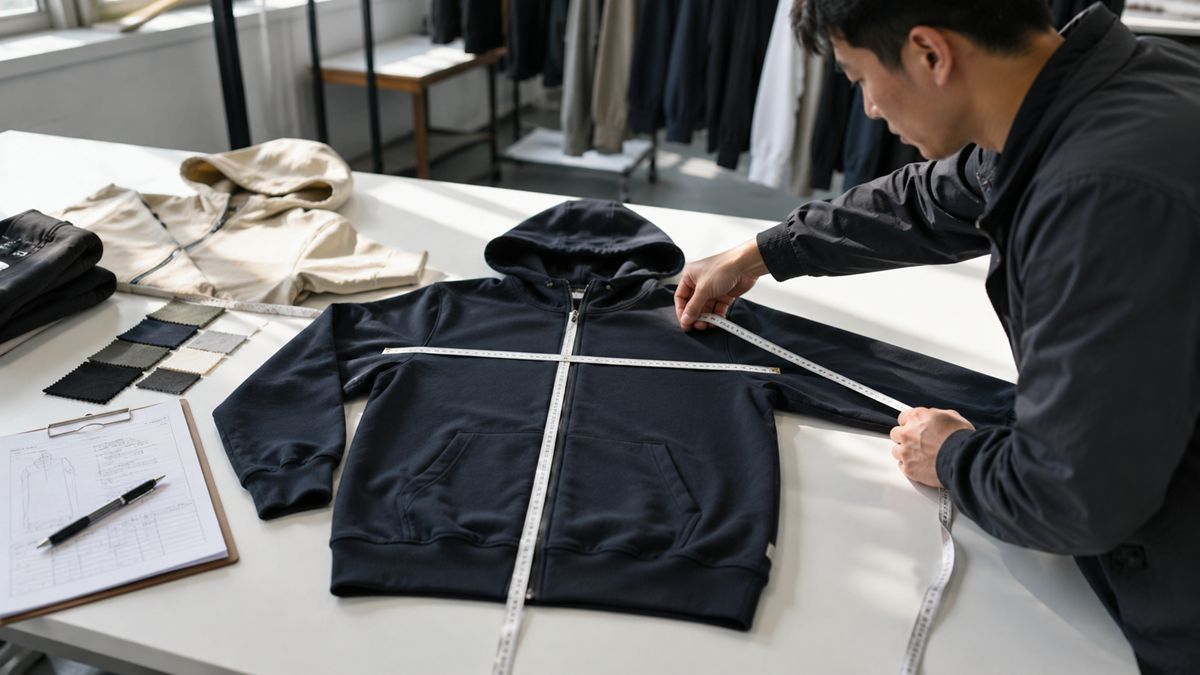
Stage 6 — Measurement and Fit Inspection
A garment can have beautiful stitching and still fail because the fit is wrong. Measurement control converts fit from an opinion into data.
Inspectors typically measure defined points of measure against the approved specification and tolerance.
Depending on the garment, these might include chest width, body length, shoulder width, sleeve length, waist, hip, inseam, thigh, leg opening, cuff width or collar dimensions.
Tolerance matters because textile products are flexible. Expecting every garment to measure exactly the same to the millimeter is often unrealistic. The better approach is to define acceptable tolerances according to product type, fabric behavior and buyer requirements.
Why Measurement Problems Happen
Measurement variation can come from pattern errors, fabric relaxation, cutting accuracy, seam allowance, sewing tension, pressing, washing, shrinkage or measurement technique.
That is why a good QC team does not merely record an off-spec number. It asks what caused it.
Stage 7 — Finishing, Washing and Appearance Control
Finishing can dramatically influence how customers perceive quality. Loose threads, pressing marks, stains and poor garment shape may not affect construction strength, but they can immediately make a product feel poorly made.
Final finishing checks may cover thread trimming, pressing, stains, oil marks, garment shape, zipper operation, snap or button function, drawcords, labels and overall presentation.
Washed streetwear needs additional attention. Vintage washes, acid washes, garment dyes and other treatments intentionally create variation, but intentional variation still needs boundaries.
Brands and manufacturers should agree on an approved appearance range so that one garment does not look intentionally vintage while another looks accidentally damaged.
Stage 8 — Final Garment Inspection Before Shipment
Final inspection is the last major quality gate before goods are released for packing or shipment.
At this point, finished garments should be compared against approved standards for workmanship, measurements, appearance, branding and functionality.
The inspection scope depends on the order, buyer and risk level. Some manufacturers conduct piece-by-piece internal checks and then use an additional random audit. Buyers may also arrange an independent third-party pre-shipment inspection.
Final inspection is important, but it should confirm a controlled process rather than rescue an uncontrolled one. If hundreds of repeated defects are first discovered here, the QC system started too late.
How AQL Works in Apparel Quality Inspection
AQL stands for Acceptance Quality Limit. It is used in acceptance sampling to help determine whether a production lot should be accepted or rejected based on an inspection sample rather than examining every single unit.
International sampling systems such as ISO 2859-1 provide structured approaches for lot-by-lot inspection by attributes. ANSI/ASQ Z1.4 is another widely recognized acceptance-sampling standard.
In apparel manufacturing, brands often distinguish between critical, major and minor defects and may use different acceptance levels for each category.
The exact inspection plan should be agreed before production or shipment inspection.
AQL is useful, but it is not a quality-production strategy by itself. Sampling tells you something about a finished lot. It does not replace material control, approved samples, in-line inspections or corrective action.
Critical, Major and Minor Garment Defects
Defect classification helps buyers and manufacturers evaluate quality consistently. Without definitions, the same problem might be considered serious by one person and cosmetic by another.
| Defect Type | General Meaning | Possible Apparel Examples |
|---|---|---|
| Critical | A defect that may create a safety, legal or severe usability risk. | Unsafe sharp object, hazardous contamination or certain regulatory failures. |
| Major | A defect likely to affect function, saleability or customer acceptance. | Broken zipper, obvious hole, significantly incorrect measurement, wrong branding or severe seam failure. |
| Minor | A smaller workmanship or appearance issue that does not substantially affect normal use. | Minor thread issue, small cosmetic imperfection or slight finishing inconsistency within the agreed standard. |
The classification should always match the product and customer. A small decoration issue on an inexpensive promotional tee may be treated differently from the same visual problem on a premium designer jacket.
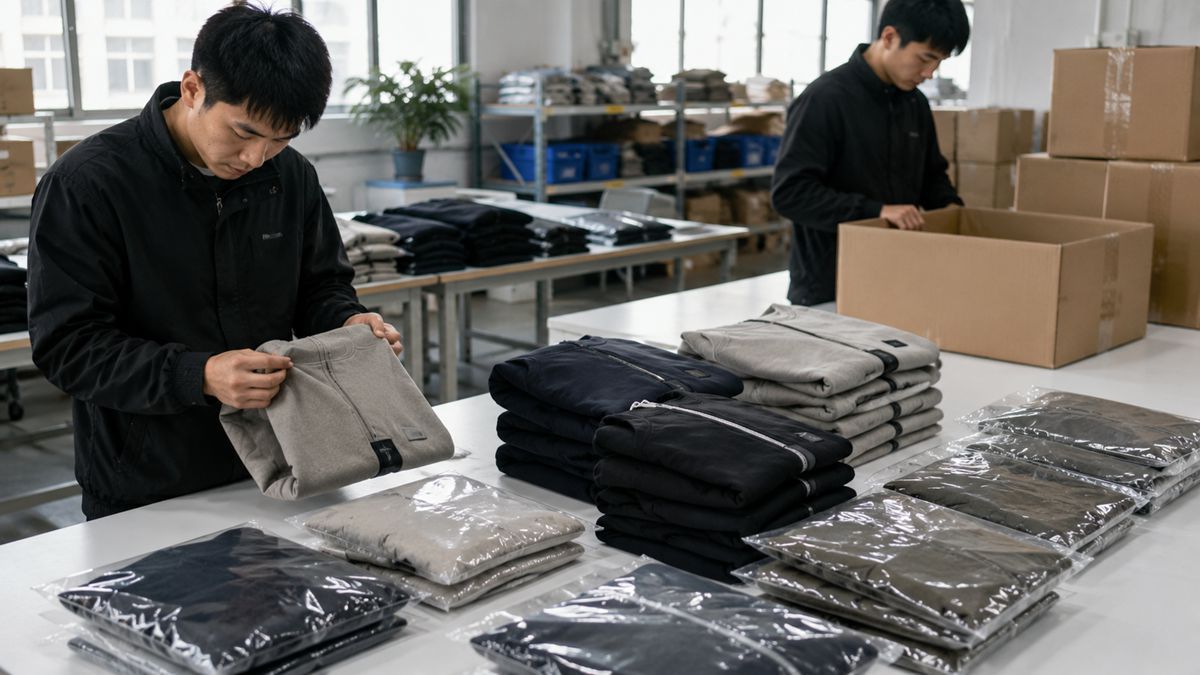
Packaging and Carton Quality Control
Quality control does not stop once a garment looks good. A perfectly manufactured jacket can still create a serious problem if it reaches a warehouse with the wrong size sticker, incorrect barcode or mixed carton ratio.
Packaging inspection can cover main labels, size labels, care labels, hangtags, folding, polybags, barcodes, SKU identification, carton quantity, size and color ratios, carton marks, carton condition and packing-list accuracy.
Why does this matter so much for B2B brands? Because warehouse errors multiply quickly. One mislabeled garment is annoying. Hundreds of incorrectly labeled SKUs can interrupt fulfillment operations across an entire launch.
How Manufacturers Prevent Sample-to-Bulk Variation
One of the biggest concerns apparel brands have is simple: “Will my bulk order actually match the sample?”
The answer depends less on promises and more on how production standards are transferred from sampling into manufacturing.
A strong sample-to-bulk consistency system keeps the approved sample, tech pack, material references, artwork approvals and measurement tolerances connected to bulk production.
Material consistency is particularly important. If sample fabric came from one source but bulk fabric changes in composition, weight, finish or shrinkage, the same pattern can produce a noticeably different garment.
Fit must also be controlled after relevant processes. A hoodie may measure correctly before washing and become too short afterward. A jacket lining may twist after pressing. Garment dyeing can affect dimensions.
That is why manufacturers need to understand the relationship between material behavior and construction rather than treating QC as a visual checklist.
Complex products increase the number of variables. In custom jacket manufacturing , shell fabric, lining, insulation, rib, hardware, pockets, embroidery and multiple seam structures all need to remain aligned with the approved standard.
What Happens When Quality Problems Are Found?
Finding a defect is only the first half of quality control. The next question is more important: what happens afterward?
A professional response may involve separating affected products, stopping an operation, identifying the source of the problem, correcting the machine or method, retraining an operator, repairing recoverable pieces and inspecting additional garments to determine the extent of the issue.
Consider a recurring skipped stitch. Simply repairing each garment may hide the symptom while the machine continues producing defects.
A stronger approach investigates needle condition, thread tension, machine settings, fabric behavior or operator technique.
This is the difference between inspection and process improvement. Inspection asks, “Which products are wrong?” Root-cause thinking asks, “Why are they wrong, and how do we stop the next one from being wrong?”
How Quality Records Improve Repeat Orders
Consistent manufacturing becomes easier when the factory and brand build a history together.
Production records can preserve approved fabrics, colors, measurements, trims, decoration methods, packaging requirements and previous QC findings.
Repeat orders should not begin from memory. They should begin from documented standards.
This becomes especially valuable as brands scale. A first production run may involve one product and one color. Later programs might include several colors, multiple styles and repeat deliveries across different seasons.
Records help prevent small changes from gradually moving the product away from its original standard.
Product-Specific Quality Risks: One Checklist Does Not Fit Every Garment
Generic QC checklists are useful, but different apparel categories have different failure points.
Hoodies and Sweatshirts
Important areas include fabric weight, shrinkage, neckline and hood shape, rib recovery, shoulder balance, body twisting, print placement, embroidery quality and washed appearance.
T-Shirts
Simple garments expose defects quickly. Collar shape, neckline stretch, body twisting, side seam balance, shrinkage, sleeve symmetry, print registration and measurement consistency can strongly affect perceived quality.
Jackets
Jackets often require more checkpoints because they combine multiple materials and components.
A professional jacket manufacturer may need to control shell fabric, lining, ribs, zippers, snaps, pocket construction, embroidery, padding, symmetry and finished measurements.
Washed and Vintage Garments
Wash intensity, color variation, shrinkage, surface abrasion, print interaction and batch-to-batch appearance become especially important.
The objective is not always identical garments; it is variation that stays within the approved visual range.
What Brands Should Provide to Improve Garment Quality
Quality is not something a buyer can simply outsource and forget. Manufacturers control production, but brands control many of the decisions that define the product.
Before Bulk Production, a Brand Should Try to Confirm:
- An updated tech pack with clear revision control.
- An approved physical or clearly documented reference sample.
- Measurement specifications and realistic tolerances.
- Approved fabric, color and trim references.
- Final artwork dimensions, colors and placement.
- Main label, care label, size label and hangtag requirements.
- Packaging, barcode and carton instructions where applicable.
- Any product-specific testing or compliance requirements.
- Clear defect priorities and final inspection expectations.
The more decisions are resolved before production, the less the factory needs to guess. And guessing is one of the biggest enemies of consistent apparel manufacturing.
If you are still selecting a supplier, our guide to finding a private label clothing manufacturer explains how to evaluate development capability, production systems and supplier fit before committing to bulk orders.
How to Evaluate a Clothing Manufacturer’s Quality Control System
Almost every factory website says “strict quality control.” That phrase tells you very little. Instead, ask how the system actually works.
Does the manufacturer inspect fabric before cutting? Are shrinkage or wash tests performed when relevant? How is the approved sample communicated to production? Are early production garments checked?
How are repeated defects reported to line supervisors? Who verifies measurements? How are print and embroidery approvals controlled? Does the manufacturer conduct final piece inspections, sampling audits or both?
How are packing details checked before cartons are sealed?
Detailed answers are more valuable than impressive adjectives.
You should also consider whether the factory understands your particular product. A supplier that produces basic tees very well may not automatically have the same control over complex lined jackets, specialized washes or heavy embroidery.
Finally, look at how the manufacturer responds when something goes wrong. No realistic manufacturing system can promise that a defect will never appear.
The stronger question is whether the factory can identify the issue early, isolate it, correct the root cause and prevent recurrence.
How VANRD Approaches Consistent Bulk Apparel Production
At VANRD, quality control is designed as part of apparel development and bulk production rather than as a single final checkpoint.
Our Quality Control process follows garments from incoming fabric inspection through production checks, print and embroidery review, in-line sewing inspection, finished garment QC and packing verification.
The purpose is straightforward: help overseas apparel brands keep bulk production aligned with approved materials, construction, measurements, branding and packaging.
This approach is especially important for private label and streetwear programs where product identity can depend on small details such as fit, wash effect, logo placement, rib tension, hardware and finishing.
Quality control also connects directly with development. Sampling, fabric selection, pattern development and production planning all influence the final result.
That is why VANRD approaches manufacturing as an integrated process rather than treating sampling, production and inspection as unrelated services.
Conclusion: Consistent Quality Is Built, Not Inspected Into a Garment
The biggest lesson in garment quality control is that final inspection comes too late to create quality. It can confirm quality, identify defects and determine whether a shipment should move forward, but consistency is built much earlier.
It starts when specifications become clear. It continues when fabrics and trims are approved, when cutting is controlled, when decoration is checked, when sewing problems are corrected early and when measurements are monitored against agreed tolerances.
Final inspection and AQL then become the last safety net rather than the first serious quality check.
For apparel brands, this changes the way you should evaluate a manufacturer. Do not ask only whether a factory can make your sample. Ask whether it has a system capable of repeating that sample through bulk production and future reorders.
That is the difference between finding someone who can sew clothing and building a reliable manufacturing supply chain.
Frequently Asked Questions About Garment Quality Control
1. What is garment quality control in apparel manufacturing?
Garment quality control is the process of checking fabrics, trims, construction, measurements, decoration, finishing, labels and packaging against approved production standards. Effective QC normally takes place at several stages rather than only after garments are finished.
2. What does AQL 2.5 mean in garment inspection?
AQL 2.5 is an acceptance-quality-limit index used within a statistical sampling plan. It should not be interpreted simply as permission for 2.5% of a shipment to be defective. Sample size and acceptance or rejection criteria depend on the lot size, inspection level and sampling standard being used.
3. When should apparel quality inspection begin?
Quality control should begin before bulk production with approved specifications, fabrics, trims and samples. Material inspection, pre-production review and in-line checks allow manufacturers to find problems while they are still easier and less expensive to correct.
4. How can clothing brands reduce sample-to-bulk quality differences?
Brands can reduce variation by approving a final sample, maintaining an updated tech pack, defining measurement tolerances, confirming bulk fabrics and trims, approving artwork or strike-offs and requiring production-stage inspections before final shipment.
5. Should a brand use a third-party garment inspection company?
Third-party inspection can provide an additional independent quality check, especially for new suppliers, high-value orders or products with strict buyer requirements. However, third-party final inspection should complement—not replace—the manufacturer’s internal quality control throughout production.
Need More Control Over Your Next Bulk Apparel Production?
Share your tech pack, reference garment or product concept with VANRD. Our team can review your materials, construction, customization requirements and quality-control expectations before sampling and bulk production.
Discuss Your Apparel Project