What Jackets Combine Racing Style With Performance Materials?
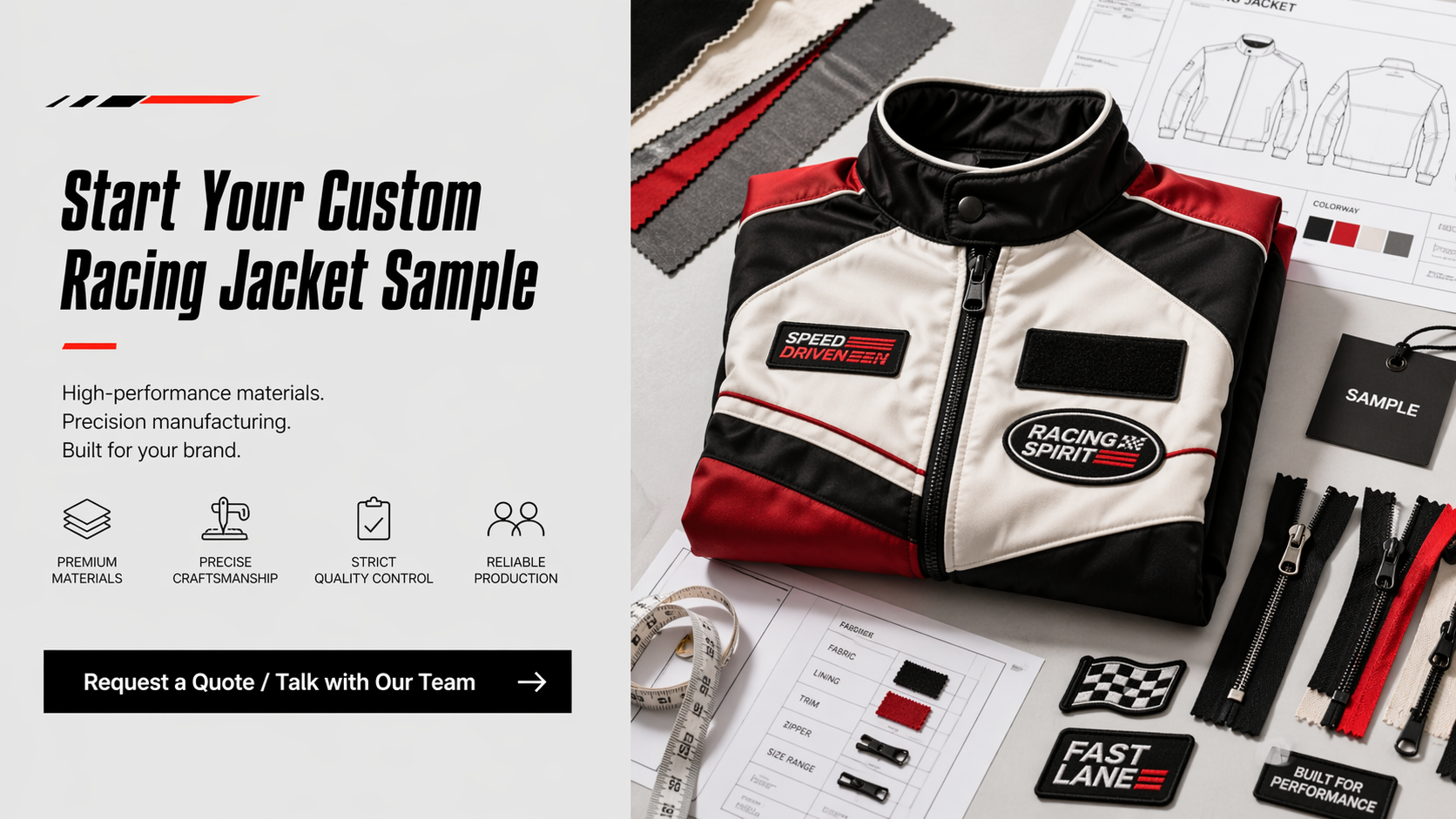
Jackets that combine racing style with performance materials usually use motorsport-inspired design details, technical fabrics, functional trims, and structured construction. For private label brands, the best option depends on the target season, price point, fabric handfeel, branding method, and sample approval requirements. A racing-inspired jacket should look dynamic, but it also needs realistic material, fit, trim, and production planning.
Quick Answers
What jackets combine racing style with performance materials?
Racing jackets, technical track jackets, lightweight shell jackets, cropped streetwear jackets, and padded outerwear can combine racing style with performance materials when they use technical fabrics, panel construction, trims, and motorsport-inspired branding details.
What makes a jacket look racing-inspired?
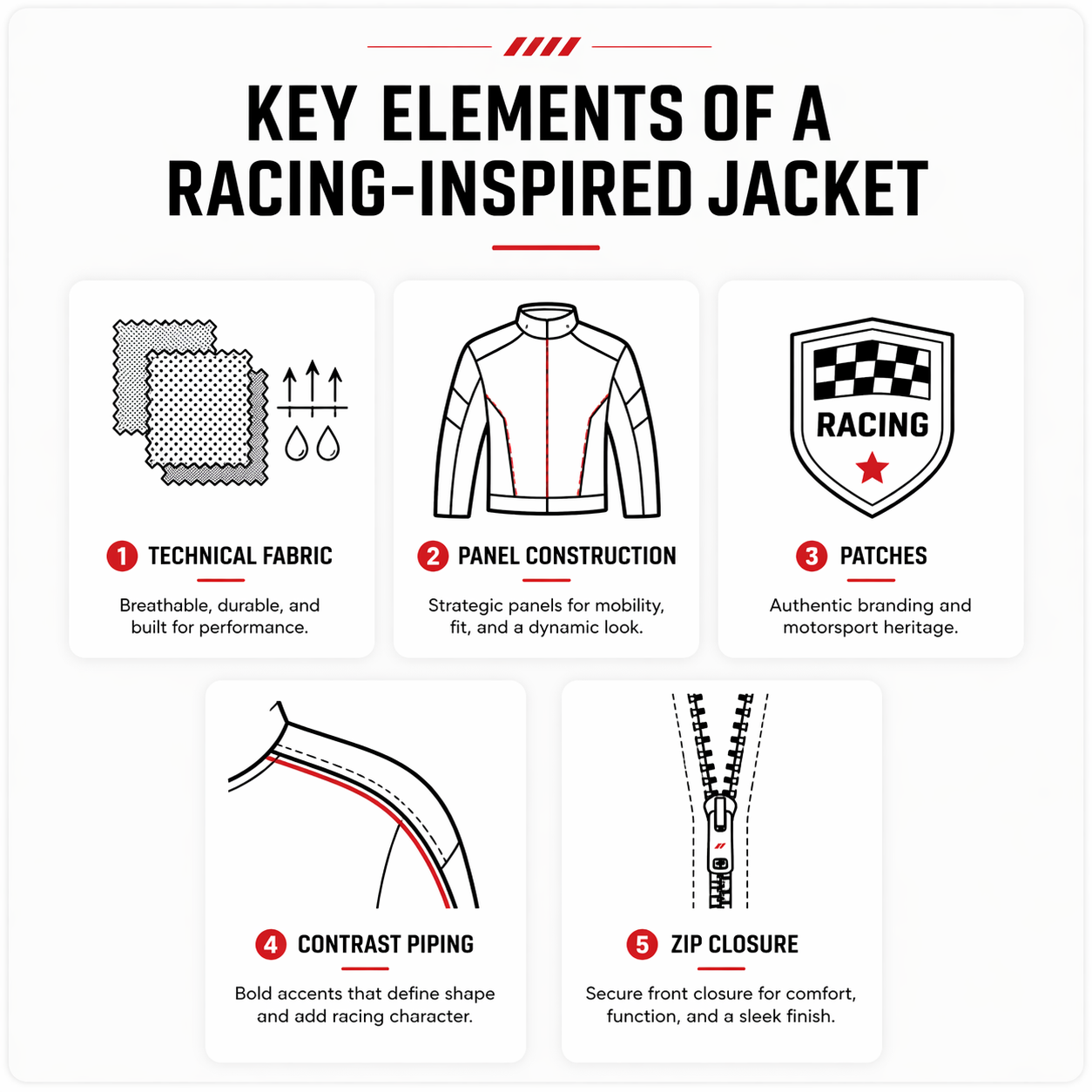
A jacket usually feels racing-inspired when it uses color blocking, contrast piping, embroidered patches, sleeve graphics, zip closures, stand collars, and bold panel lines.
Are racing style jackets the same as racing uniforms?
No. Racing style jackets for fashion brands are usually inspired by motorsport design, while racing uniforms are built for specific protective or competition use. Private label fashion programs should avoid confusing visual inspiration with technical safety performance.
What materials are suitable for racing style jackets?
Common options include nylon, polyester, softshell, coated fabrics, water-resistant shell fabrics, mesh lining, and lightweight padding. The best choice depends on season, price target, structure, and intended use.
What should brands prepare before sampling a custom racing jacket?
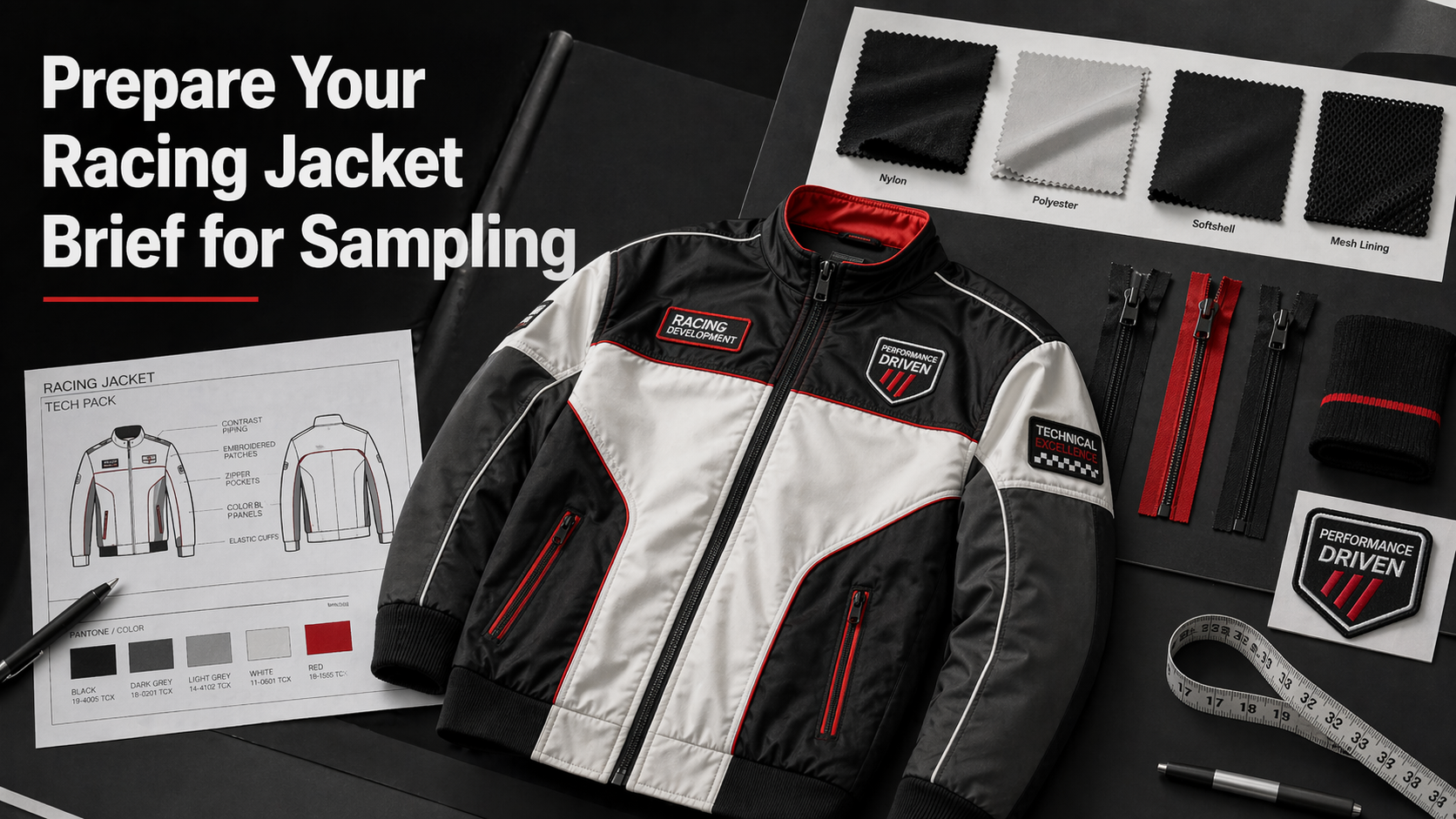
Brands should prepare reference images, fit direction, target fabric, color blocking layout, logo placement, patch artwork, trim preferences, size range, and expected order plan.
Can racing style jackets work for streetwear brands?
Yes. Racing-inspired jackets can work well for streetwear brands because they combine strong visual identity with outerwear functionality, especially for capsule collections, merch drops, and private label jacket programs.
How long does racing jacket sampling take?
Sampling time depends on material availability, panel complexity, trims, artwork, embroidery, patches, and revision rounds. The timeline should be confirmed after the factory reviews the tech pack or development brief.
What Does "Racing Style With Performance Materials" Mean?
A racing style jacket with performance materials is a fashion outerwear piece that uses motorsport-inspired design language and functional fabric choices. It is usually not a professional racing safety garment. For private label apparel brands, it is more often a streetwear or fashion jacket developed with racing-inspired visuals and practical material performance.
The style side usually includes panel blocking, patches, embroidered logos, sleeve details, contrast piping, and bold color placement. The performance side usually comes from shell fabrics, linings, trims, comfort, durability, water resistance, wind resistance, or lightweight structure.
This distinction matters because a brand may want the visual energy of motorsport, but the factory still needs clear production instructions. A jacket can look fast, technical, and streetwear-driven without being built as a certified racing uniform.
Common Jacket Types That Fit This Direction
Several jacket categories can combine racing style with performance materials. The right choice depends on the buyer's target customer, season, retail price, and production complexity.
| Jacket Type | Why It Fits Racing Style | Common Material Direction | Better For |
| Racing jacket | Strongest motorsport visual language | Nylon, polyester, twill, coated fabric | Statement outerwear and capsule drops |
| Technical track jacket | Lightweight and sporty | Polyester, nylon, mesh lining | Spring, active streetwear, team-inspired programs |
| Lightweight shell jacket | Functional and easy to layer | Water-resistant nylon or polyester | Transitional outerwear |
Cropped streetwear jacket | Fashion-forward silhouette | Structured woven fabric or coated shell | Streetwear capsules |
Padded racing-inspired jacket | More seasonal and substantial | Shell fabric with light padding | Fall and winter outerwear |
Racing Jackets
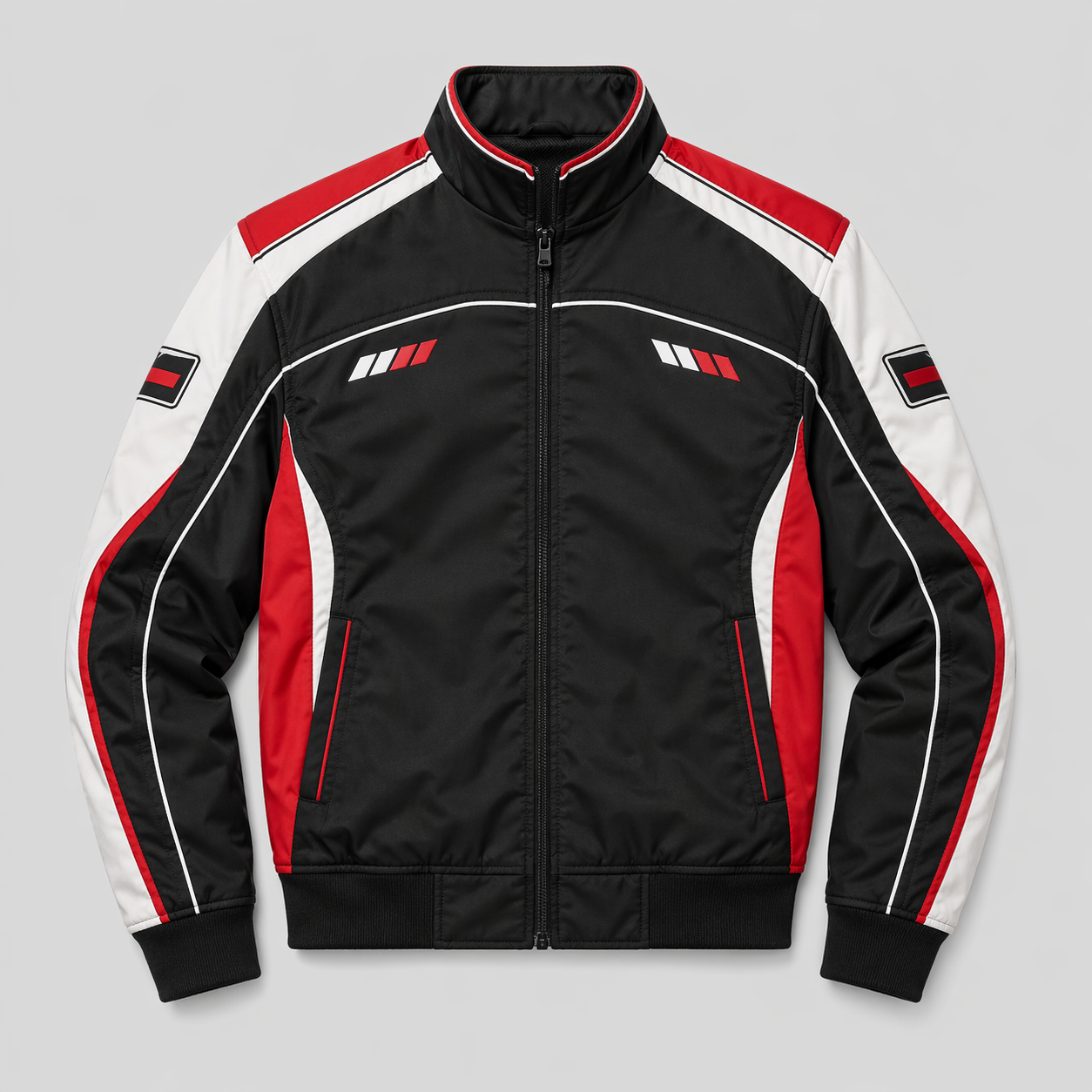
Racing jackets are the most direct match for this topic. They usually use strong panel construction, contrast color blocking, sponsor-style patch placement, sleeve graphics, and structured closures.
For private label brands, the main challenge is balance. If the design has too many patches, too many colors, and too many trims, the jacket can become difficult to sample and visually overloaded. A stronger approach is to define one clear visual direction first: motorsport heritage, technical streetwear, retro racing, or modern utility.
A custom racing jacket program should usually confirm these details before sampling:
Shell fabric
Lining type
Color blocking layout
Collar shape
Zipper or snap closure
Patch artwork
Embroidery placement
Rib, cuff, or hem structure
Size grading
Target season
For fabric and technique planning, brands can review Vanrd's Fabrics & Techniques page before preparing a sample request.
Technical Track Jackets
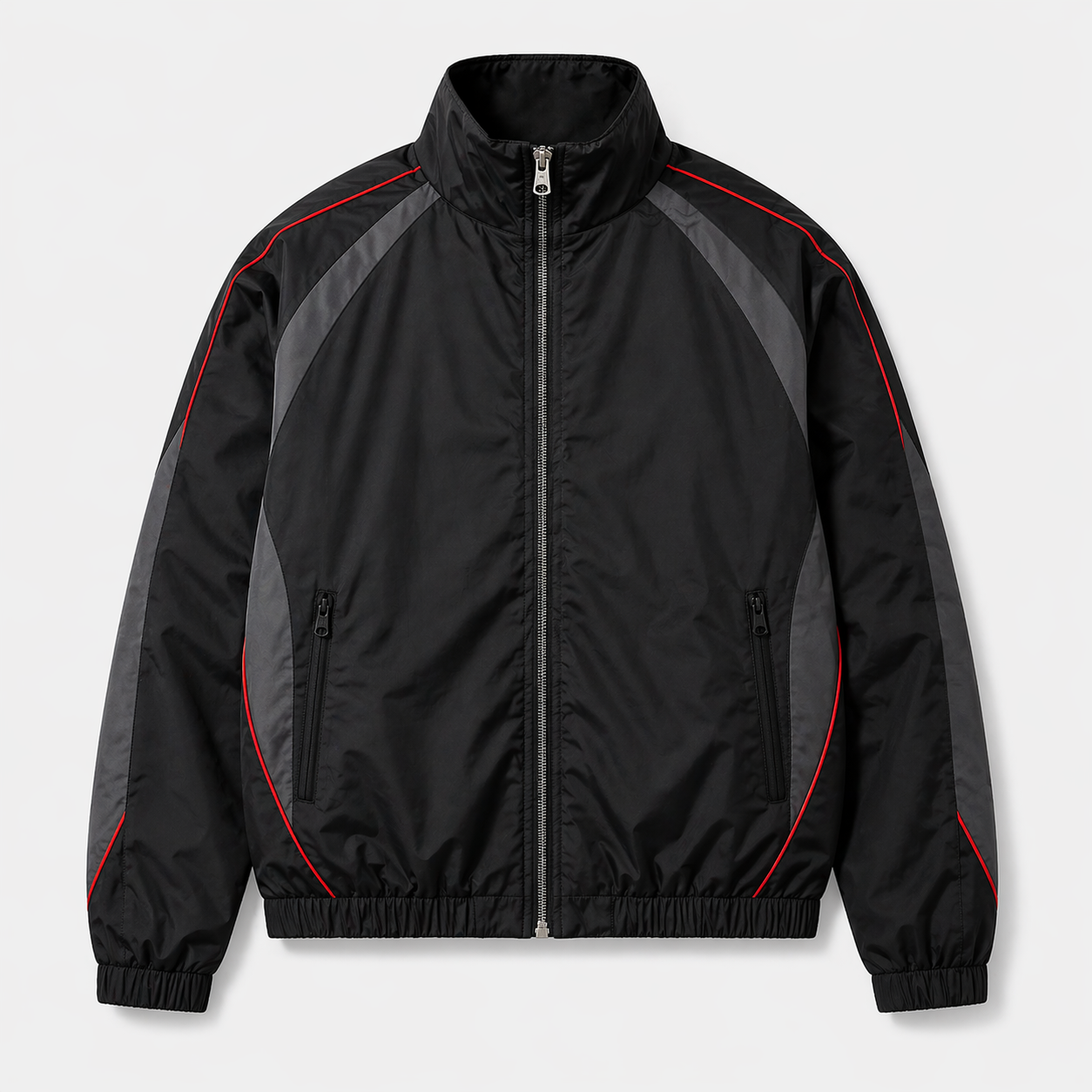
Technical track jackets are usually lighter than racing jackets and often feel more athletic. They can still use racing-inspired color blocking, sleeve details, and contrast panels, but the overall structure is usually simpler.
This option is suitable when a brand wants a sporty streetwear product without heavy outerwear construction. It can work well for spring collections, merch programs, team-inspired capsules, and active lifestyle lines.
The key decision is fabric. A thin polyester shell may reduce structure, while a heavier woven material can improve shape but may increase development complexity. Mesh lining, elastic cuffs, and zipper quality should also be reviewed during sampling.
Lightweight Shell Jackets
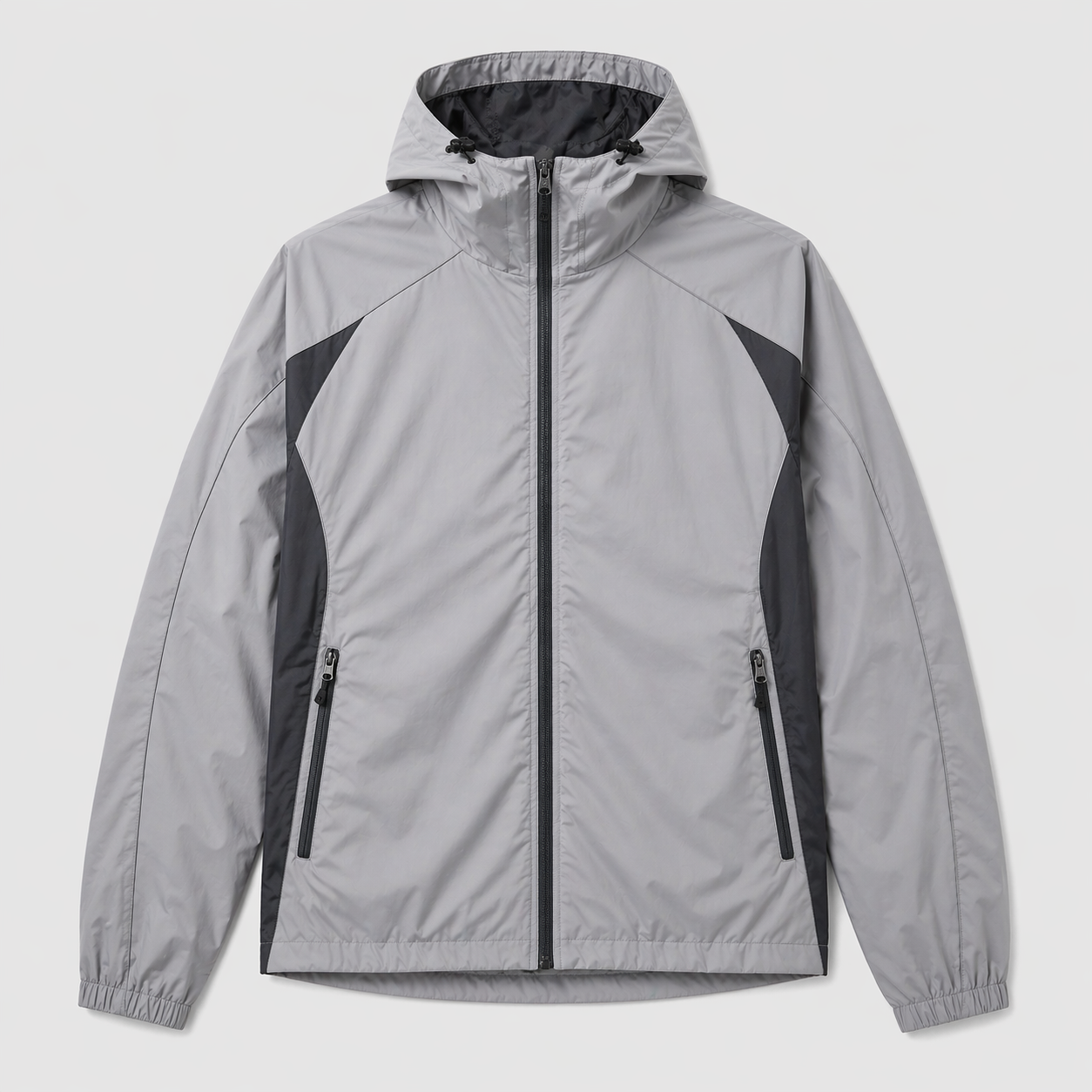
Lightweight shell jackets are suitable when a brand wants racing style but does not want a heavy jacket. These jackets often use nylon, polyester, or water-resistant woven materials. The silhouette can be clean, compact, and easy to layer.
The risk is that lightweight fabrics can expose sewing tension, puckering, or uneven panel alignment more easily. If the jacket has strong contrast panels, the factory needs clear seam placement, measurement specs, and artwork references.
For buyers, the key question is whether the product is mainly visual, functional, or both. A visual shell jacket may focus on color and logo placement. A functional shell jacket may need better fabric testing, lining decisions, and pocket construction.
Cropped Streetwear Jackets
Cropped streetwear jackets can use racing style in a more fashion-driven way. Instead of copying motorsport uniforms, the design can borrow racing elements such as contrast panels, sharp seam lines, sleeve graphics, and patch placement.
This type is often suitable for brands that want a younger streetwear look. However, cropped proportions need careful fit control. A short body length, sleeve length, shoulder width, and hem shape should be confirmed with sample measurements before bulk production.
If the design includes embroidery, applique, or patchwork, buyers should prepare accurate artwork files and placement references. The factory cannot judge final balance only from a general moodboard.
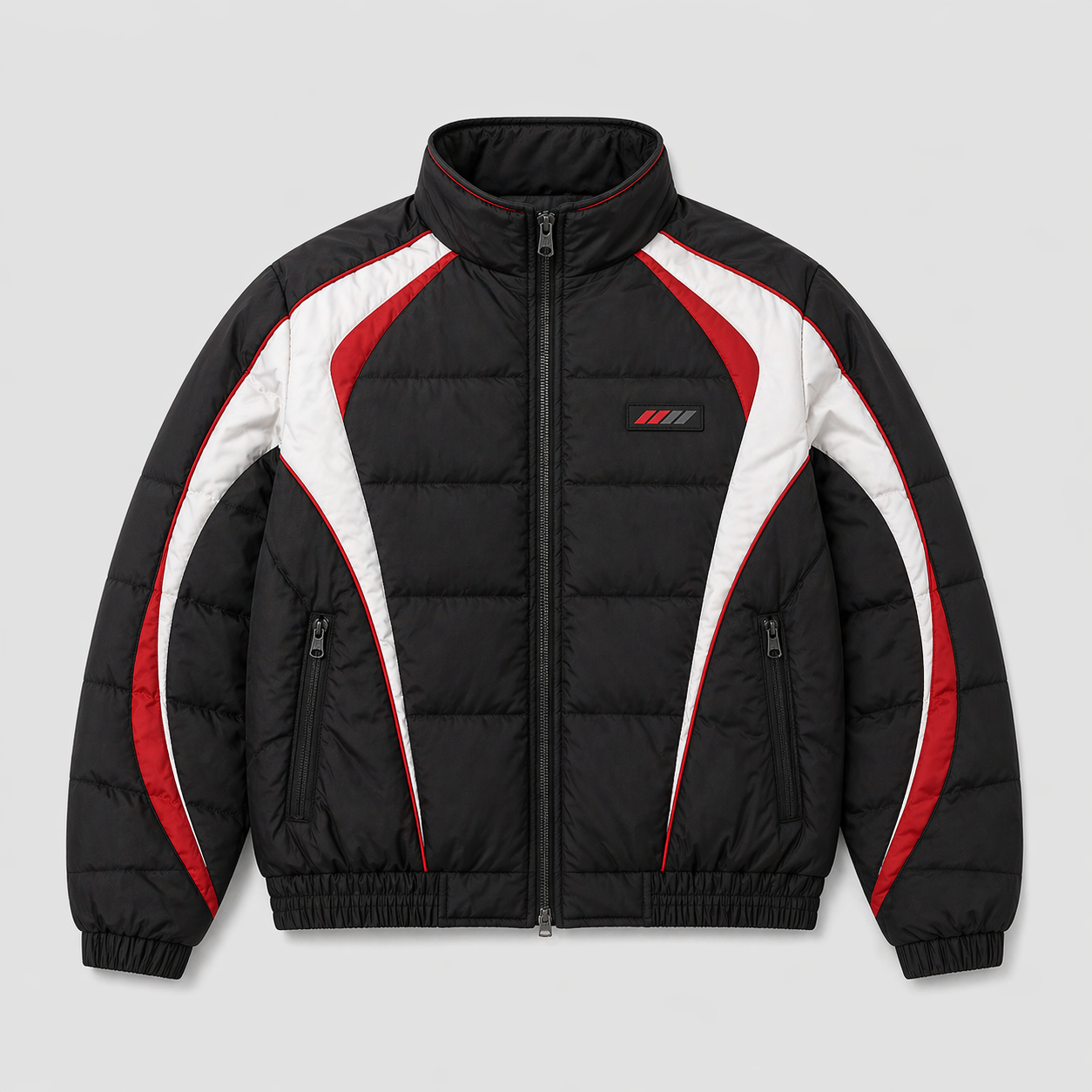
Padded Racing-Inspired Jackets
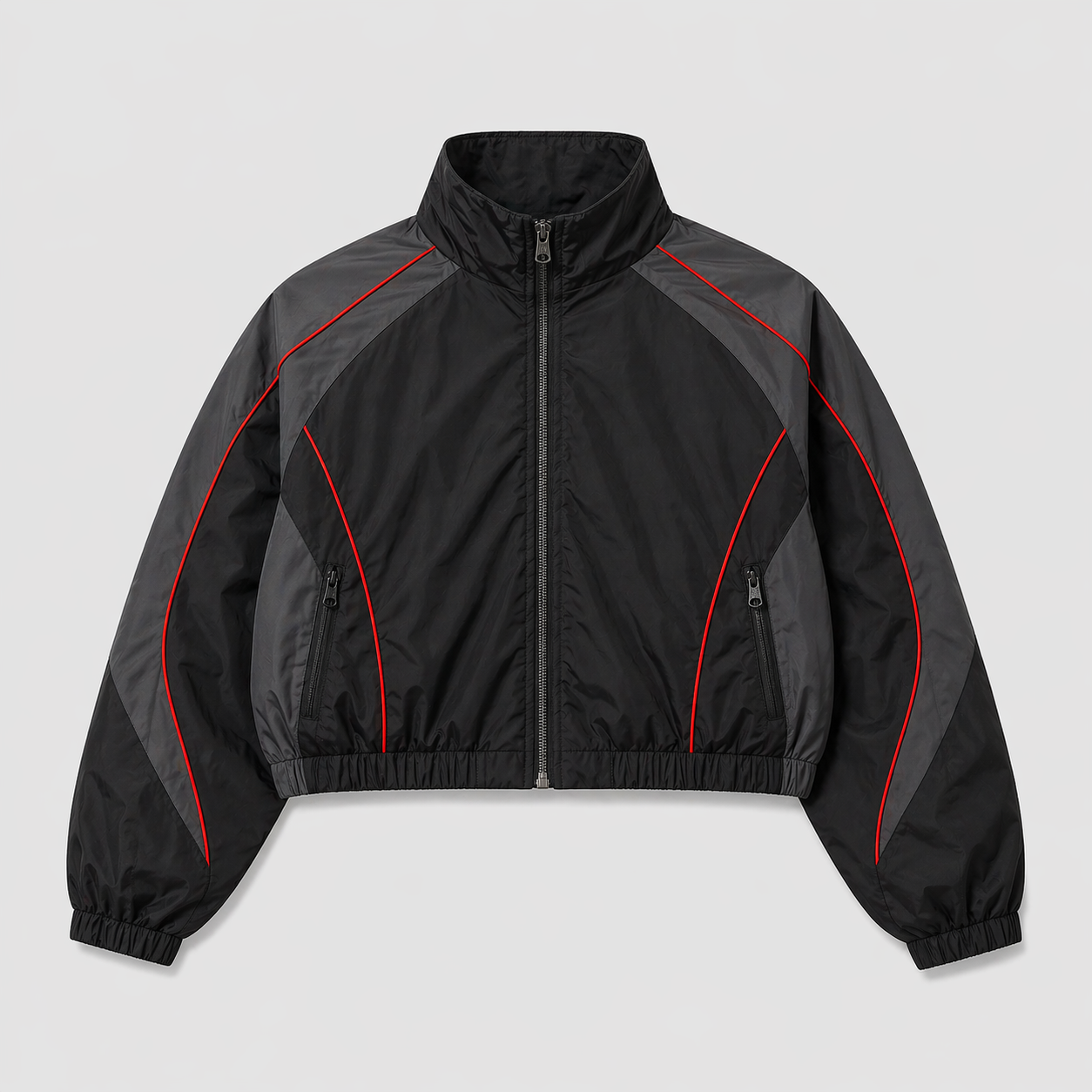
Padded racing-inspired jackets are more suitable for cooler seasons. They can combine racing visuals with quilted lining, light insulation, or thicker shell fabrics.
The main production concern is bulk. Padding can affect sleeve shape, shoulder structure, seam thickness, and embroidery placement. If the design uses patches or logos over padded areas, the buyer and factory should confirm whether branding is applied before or after certain construction steps.
For brands planning a padded jacket, sample review should include:
Wearing comfort
Sleeve mobility
Hem and cuff fit
Patch placement
Lining feel
Weight and warmth
Packing method
Key Material Choices for Racing Style Jackets
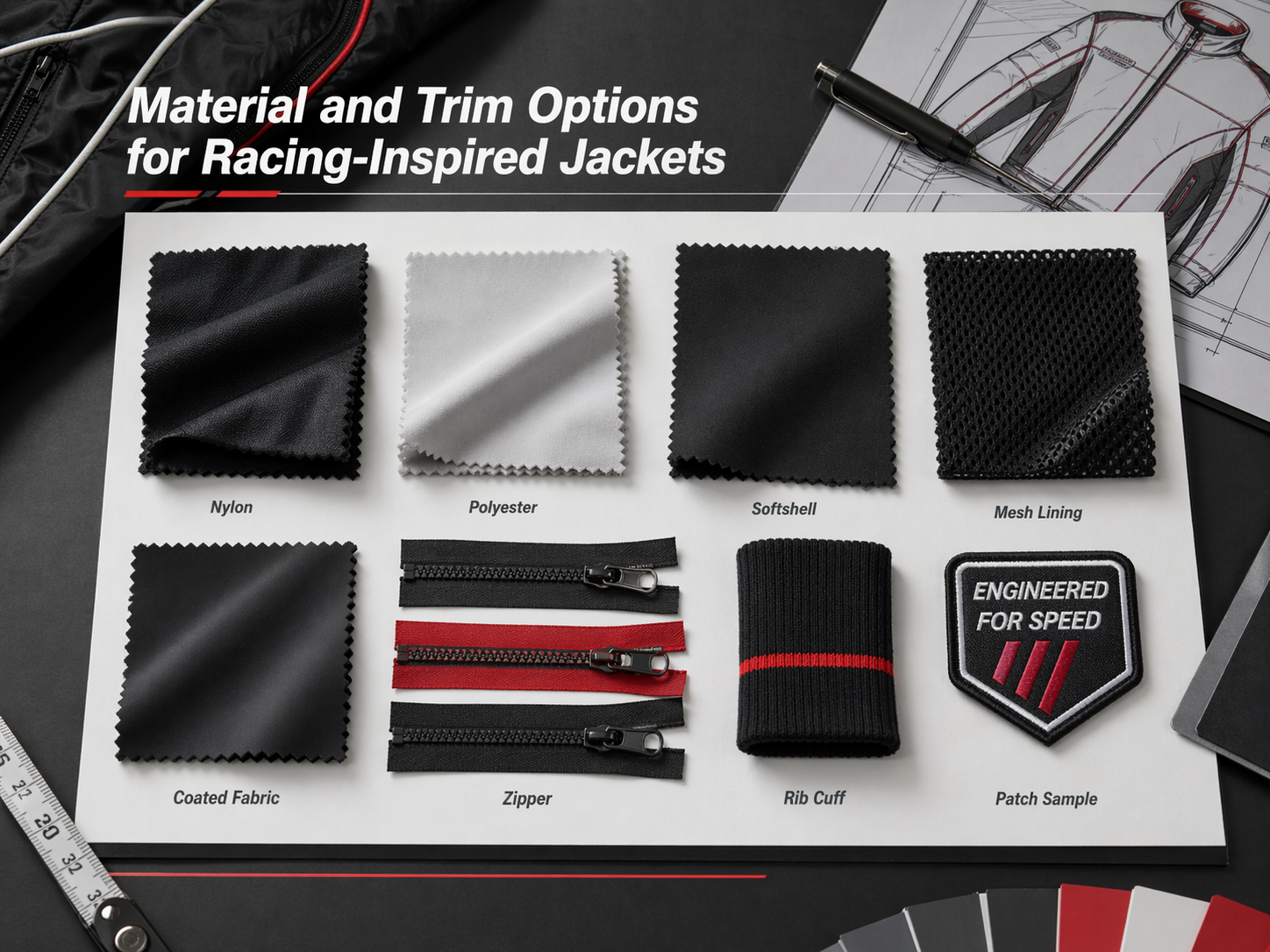
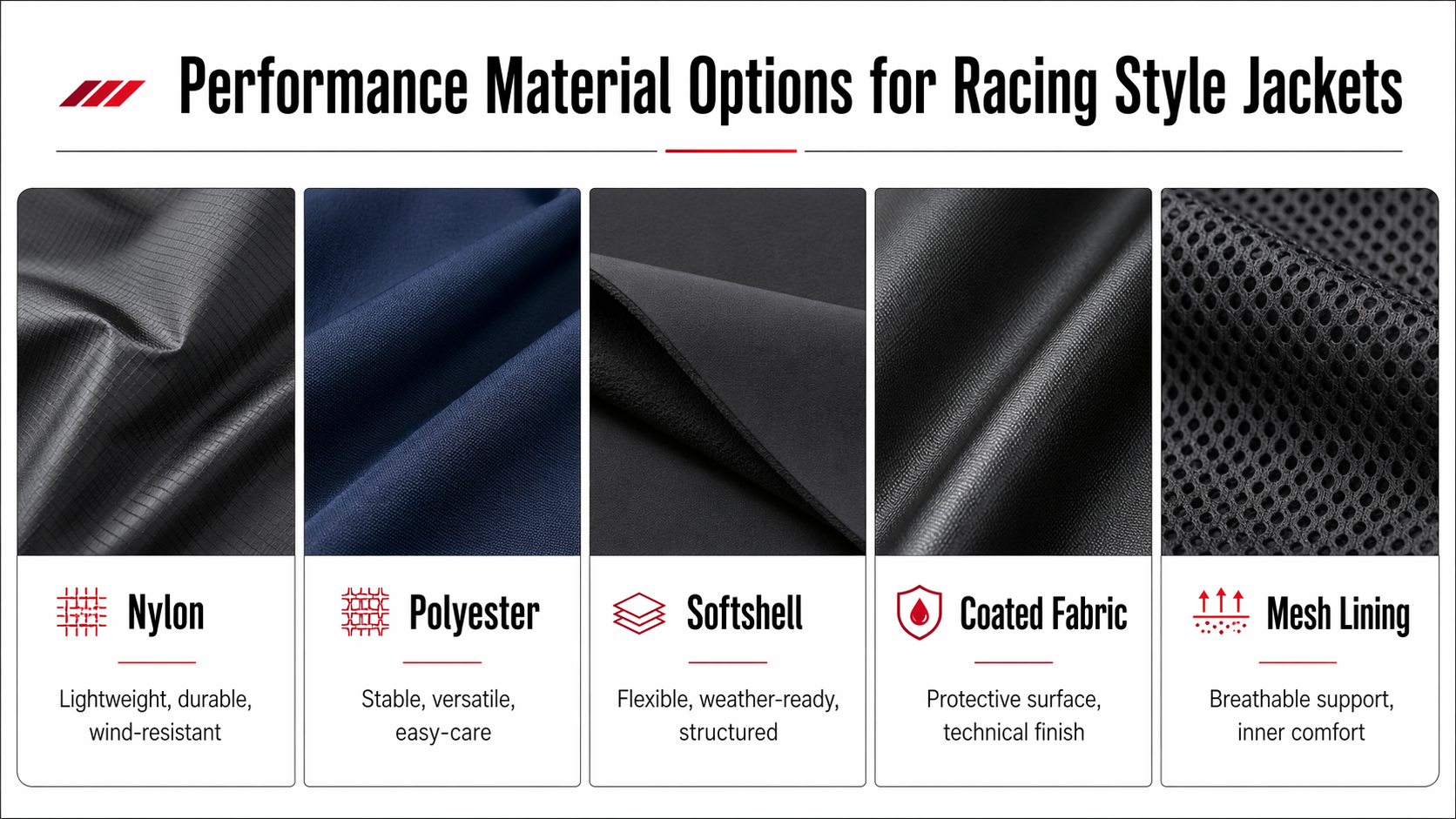
Material choice affects the final look, cost, comfort, and production feasibility of a racing-inspired jacket. The same sketch can look very different when made in nylon, polyester, softshell, or padded fabric.
Nylon
Nylon is often used for lightweight technical jackets because it can feel crisp, smooth, and performance-oriented. It can work well for shell jackets and modern racing-inspired outerwear.
Polyester
Polyester is often used when brands need color consistency, accessible sourcing, and flexible production options. It can work for track jackets, shell jackets, and certain racing-style designs.
Softshell
Softshell fabric gives more structure and a more technical handfeel. It can be useful for utility-inspired or performance-looking jackets, but it may not suit every racing aesthetic.
Coated or Water-Resistant Fabrics
Coated fabrics can create a stronger technical impression. They should be reviewed carefully because coating, handfeel, breathability, and sewing performance can affect the final garment.
Mesh Lining
Mesh lining can improve comfort and create a sporty interior finish. It is often useful for lightweight jackets, but it should be checked for color matching, durability, and seam comfort.
Design Details That Make the Jacket More Commercial
A racing-inspired jacket becomes more commercially workable when the visual design and production logic are aligned. Strong styling alone is not enough.
Brands should review these details before sampling:
Panel layout
Contrast color placement
Patch and embroidery positions
Zipper quality
Pocket structure
Collar shape
Sleeve volume
Cuff and hem finish
Lining choice
Fabric weight
Artwork scale
Label and packaging requirements
A practical design brief should tell the manufacturer what the jacket is supposed to achieve. Is it a statement piece, a team jacket, a merch drop, a seasonal outerwear item, or a technical streetwear product? Each direction may require different material and construction decisions.
For customization and private label planning, buyers can review Vanrd's OEM/ODM Services page.
A Step-by-Step Development Framework
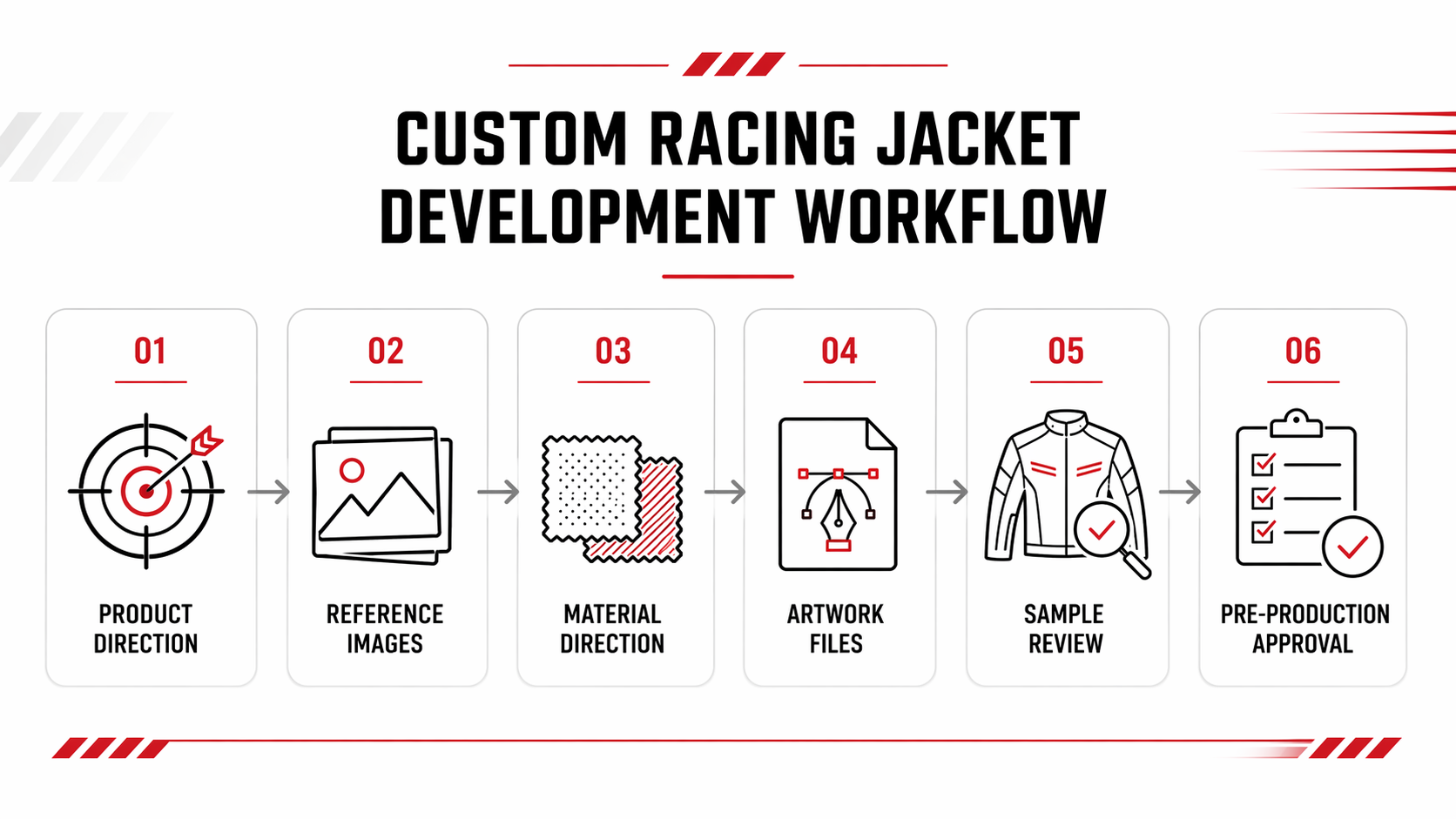
A custom racing jacket should move from concept to sample through a structured approval process. This reduces confusion and helps the factory check feasibility before production.
Step 1: Define the Product Direction
Clarify whether the jacket should be retro racing, modern technical, sporty streetwear, padded outerwear, or lightweight shell. This decision affects fabric, trim, and fit.
Step 2: Prepare Reference Images
Reference images should show silhouette, panel layout, collar shape, pocket style, sleeve design, and branding direction. Do not rely on one image if the product combines several ideas.
Step 3: Confirm Material Direction
Share preferred fabric type, handfeel, thickness, season, and performance expectations. If the material is not fixed, the factory can suggest workable options subject to final review.
Step 4: Prepare Artwork and Logo Files
Patch, embroidery, print, and label artwork should be clear enough for technique review. Placement references help prevent misunderstanding during sampling.
Step 5: Review the Sample
The first sample should be checked for fit, panel balance, sewing quality, material handfeel, logo placement, trim quality, and overall commercial appearance.
Step 6: Confirm Pre-Production Details
Before bulk production, confirm measurements, color, fabric, trims, labels, packaging, inspection points, and approval comments.
For sampling and workflow expectations, buyers can use Vanrd's Service Process page as a reference.
Factory Reality
A racing-inspired jacket can look simple in a reference image, but factory execution can be more complex because the design often uses multiple panels, trims, logo placements, and fabric combinations. Every added detail increases the number of approval points.
For example, contrast panels need accurate seam alignment. Patch placement needs artwork size and position confirmation. Coated fabrics may behave differently during sewing. Padded styles may affect logo placement and sleeve mobility. Lightweight shells may show seam tension more clearly than heavier fabrics.
This is why a factory will usually need more than a moodboard. A buyer should provide enough information for the supplier to understand the expected look, construction, and production standard. Vanrd, based in Dongguan (Humen), works with buyers by reviewing product direction, material options, sample requirements, and production feasibility before moving into bulk planning.
Common Confusion: Racing Style vs Performance Jacket
A racing style jacket is usually defined by visual inspiration, while a performance jacket is usually defined by material function and use case. A custom product can combine both, but buyers should not assume the terms mean the same thing.
| Term | Main Meaning | Buyer Risk |
| Racing style jacket | Motorsport-inspired appearance | Overdesign without production clarity |
| Performance jacket | Functional material or technical construction | Function claims may need clearer testing or standards |
Technical streetwear jacket | Fashion and function combined | Fabric, fit, and trims must match the brand position |
| For private label buyers, the safest approach is to describe the exact expected features instead of using broad words only. Say "lightweight nylon shell with mesh lining and contrast paneling" rather than only "performance racing jacket." | ||
Risk Watchpoints Before Sampling
Racing-inspired jackets can become difficult to execute if the development brief is incomplete. The most common risks are related to material choice, artwork placement, and panel construction.
Brands should check the following before starting:
Is the fabric fixed or still open for sourcing?
Is the jacket for spring, fall, winter, or all-season use?
Are color blocking panels clearly marked?
Are patch and embroidery files ready?
Are trims such as zipper, snap, rib, and lining selected?
Is there a target fit block?
Are size specs available?
Are approval responsibilities clear?
Is the product meant for fashion styling, technical function, or both?
Is the bulk order plan realistic for the chosen material and technique?
Quality control should also be planned before bulk production. For garment inspection, tolerance review, and shipment checks, buyers can review Vanrd's Q&C page.
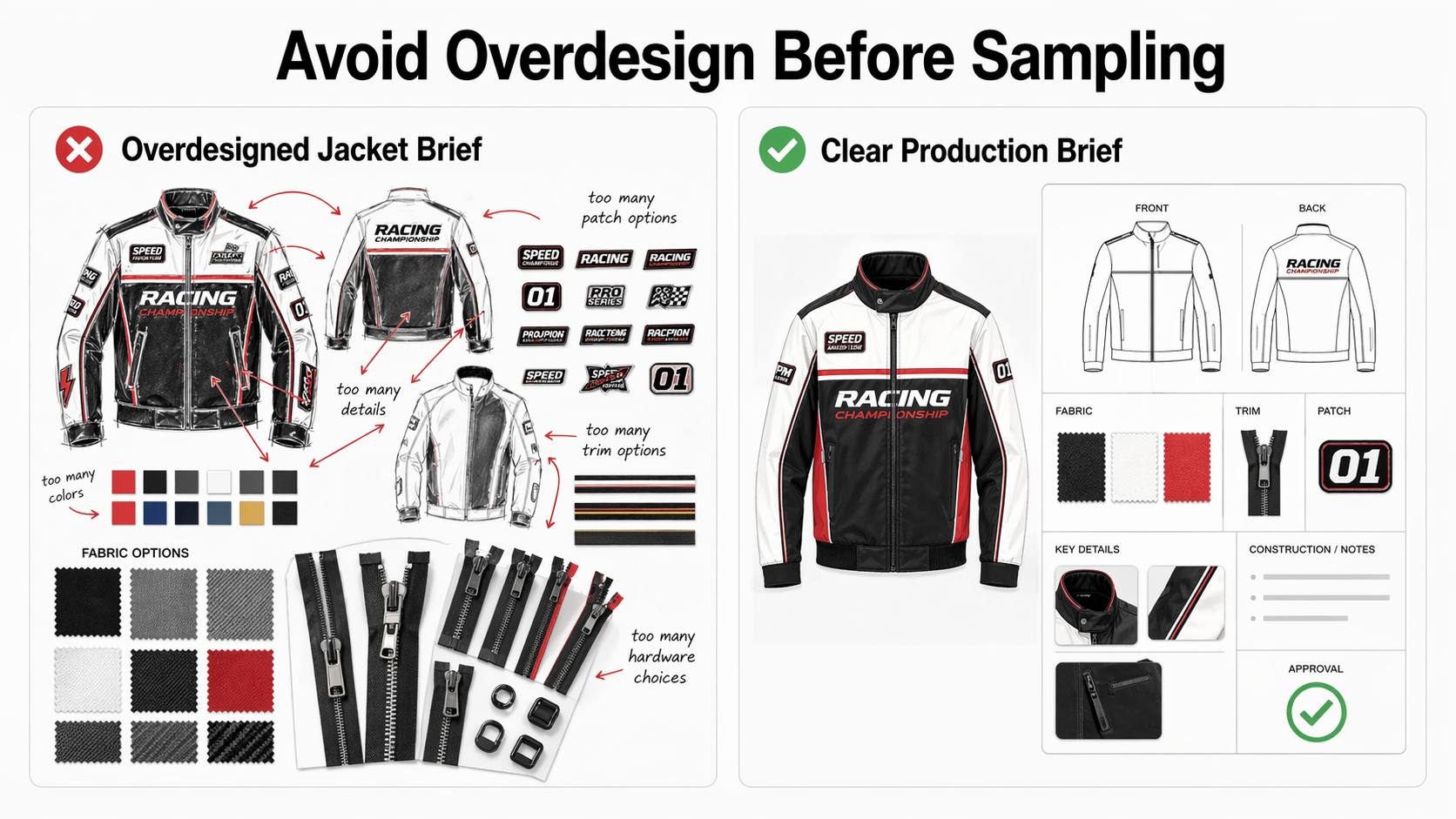
Common Mistakes Brands Should Avoid
A racing jacket can lose commercial value when the design becomes too complicated or the production brief is incomplete.
Common mistakes include:
Using too many colors without clear panel logic
Adding too many patches or logos
Choosing a fabric that does not support the intended silhouette
Ignoring lining comfort
Not confirming zipper and trim quality
Sending only inspiration images without measurements
Overlooking artwork scale and placement
Not checking how padding affects logo positions
Treating a fashion racing jacket like a certified protective garment
Moving to bulk production before sample issues are resolved
A better approach is to simplify the first development brief, confirm the most important design features, and add complexity only after the base structure is approved.
What Buyers Should Prepare Before Contacting a Manufacturer
A clear sample request helps the factory understand the product faster and respond with more useful feedback.
Before contacting Vanrd or any apparel manufacturer, buyers should prepare:
Product reference images
Target jacket type
Fabric direction
Lining requirements
Color blocking layout
Logo artwork
Patch or embroidery files
Trim preferences
Size range
Fit comments
Target season
Expected order quantity
Packaging requirements
Any quality or inspection requirements
If the buyer does not have a complete tech pack, a structured development brief can still help the factory evaluate feasibility. The goal is not to have everything finalized before inquiry, but to provide enough information for a practical production discussion.
Next Steps
The next step is to turn the racing-inspired concept into a clear sample brief. Start by deciding the jacket type, fabric direction, silhouette, branding method, and target use case. Then prepare artwork, reference images, and measurement expectations for factory review.
For buyers who want manufacturing support, Vanrd can help review custom jacket development needs through OEM/ODM planning, fabric and trim discussion, sampling workflow, and quality control preparation. To start a project discussion, send your brief through Contact Us.
FAQ
Can a racing style jacket use nylon or polyester?
Yes. Nylon and polyester are common choices for racing-inspired jackets because they can support lightweight structure, technical handfeel, and clear color blocking. The final material should be confirmed based on season, budget, lining, and sample review.
What files are needed to sample a custom racing jacket?
A buyer should prepare reference images, measurement specs, artwork files, patch or embroidery placement, color direction, fabric preferences, and trim notes. A complete tech pack is helpful, but a clear development brief can also support early discussion.
How do brands choose between a racing jacket and a track jacket?
A racing jacket is usually better for stronger visual identity and statement outerwear, while a track jacket is usually more suitable for lightweight sporty collections. The decision depends on target customer, season, price point, and production complexity.
What affects the sampling time for racing-inspired jackets?
Sampling time is affected by fabric sourcing, panel complexity, trims, patch artwork, embroidery, lining, padding, and revision rounds. The timeline should be confirmed after the manufacturer reviews the product brief.
Can racing style jackets be developed for private label streetwear brands?
Yes. Racing-inspired jackets can be developed for private label streetwear programs when the buyer provides clear design direction, branding requirements, material preferences, and sample approval expectations.
What quality points should be checked before bulk production?
Brands should check panel alignment, seam quality, zipper function, patch placement, embroidery quality, color matching, measurement tolerance, lining comfort, and final packing requirements before bulk production.
Is a racing-inspired jacket the same as a protective racing garment?
No. A racing-inspired fashion jacket uses motorsport design language, while a protective racing garment may require specific safety standards and testing. Private label fashion buyers should clearly define whether the goal is visual styling, functional outerwear, or certified performance use.
Final CTA
Planning a custom racing jacket or technical streetwear outerwear program?
Send your reference images, fabric direction, artwork files, trim notes, and fit expectations to Vanrd. Our team can review your project details and help you prepare a clearer path for sampling, bulk production, and quality control.