
Creator Apparel Manufacturer for Audience-Driven Brands
VANRD helps creator-led brands turn audience demand, content concepts, and signature styles into custom apparel collections with sampling, branding, bulk production, quality control, and retail-ready packaging.
- Creator-Led Apparel
- Custom Streetwear Production
- Signature Collections
- Private Label Branding
- Bulk Manufacturing
- Retail-Ready Packaging
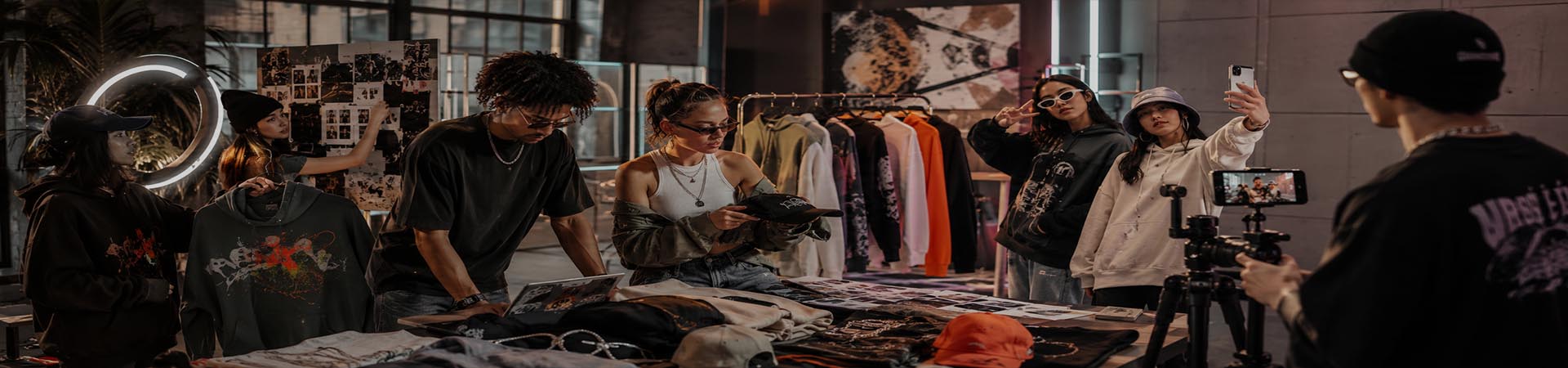
From Audience Demand to Apparel Production
Your Challenge
Audience Style & Product Direction
- Audience demand is clear, but product category and fit are not fully defined.
- Content style needs to become wearable product details.
- Reference garments need factory review before sampling.
Quality & Brand Trust
- Basic blanks or weak workmanship can damage audience trust.
- Printing, embroidery, and fabric choices must match your brand feel.
- Bulk quality needs to stay consistent after sample approval.
Launch Timing & Production Pressure
- Campaign dates, content schedules, and product launch windows need to align.
- Sampling, artwork, and material approval can delay bulk production.
- Creators need clear project status before launch.
MOQ, Cost & Packaging Clarity
- Fabric, logo process, and packaging choices affect price and MOQ.
- Test launches need a clear path to future scale.
- Unclear cost breakdown makes launch planning difficult.
Brand IP & Repeat Supply
- Logo files, packaging details, and approved samples need proper control.
- Best-selling styles need consistent reorders.
- Future production should not restart from zero each time.
Our Solution
Product Direction Planning
- Review audience profile, content direction, reference garments, and launch goals.
- Suggest suitable categories, fits, fabrics, and logo placements.
- Turn creative ideas into sample-ready specifications.
- ➤
- Details
Product direction notes covering category, fit, fabric, logo placement, and sample plan.
Custom Apparel Development
- Develop custom hoodies, T-shirts, jackets, tracksuits, pants, and streetwear styles.
- Confirm fabric, construction, trims, print, or embroidery before bulk.
- Control fit, workmanship, measurements, and finishing details.
- ➤
- Details
Sample review, logo method advice, measurement notes, and bulk quality checkpoints.
Launch Timeline Planning
- Plan sampling, approval, material preparation, bulk production, QC, and shipment.
- Set key dates for sample review, PP approval, packing, and delivery.
- Keep production steps clear before your launch window.
- ➤
- Details
Timeline for samples, approval, bulk production, QC, packing, and shipment.
MOQ & Cost Review
- Review MOQ, sample cost, bulk price, branding cost, and packaging cost.
- Compare standard and upgraded options where possible.
- Help balance product quality, cost, quantity, and lead time.
- ➤
- Details
Quote guidance by fabric, workmanship, branding, packaging, and quantity tier.
Branding Records & Reorder Support
- Keep approved size charts, fabric records, trims, and packaging standards.
- Support labels, hangtags, packaging bags, barcode labels, and carton marks.
- Prepare repeat order references for future replenishment.
- ➤
- Details
Brand file control, production records, packaging standards, and reorder references.
Request a Creator Apparel Production Quote
Share your product category, reference styles, estimated quantity, branding needs, packaging requirements, and launch timeline. VANRD will review your MOQ, sample plan, bulk production cost, quality control, and lead time.
Creator Apparel Categories We Manufacture
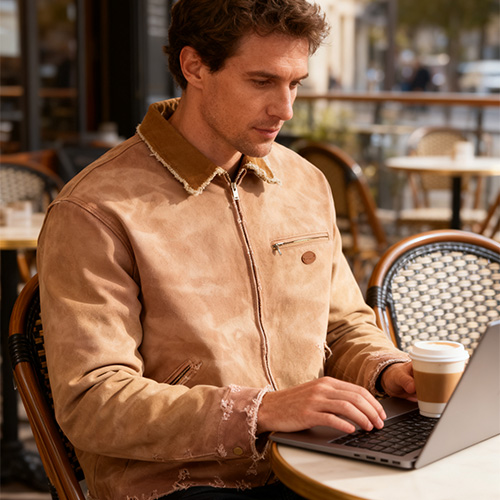
Custom Jackets
Varsity jackets, bomber jackets, denim jackets, coach jackets, work jackets, windbreakers, and streetwear outerwear for premium creator apparel collections.
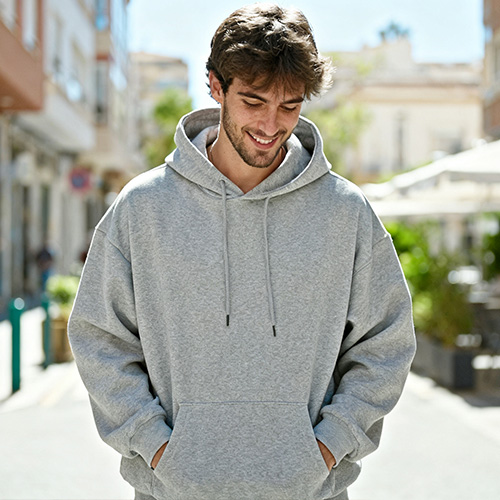
Custom Hoodies & Sweatshirts
Creator-ready hoodies, zip-ups, oversized sweatshirts, vintage fleece, graphic hoodies, embroidered styles, and heavyweight streetwear pieces for signature collections.
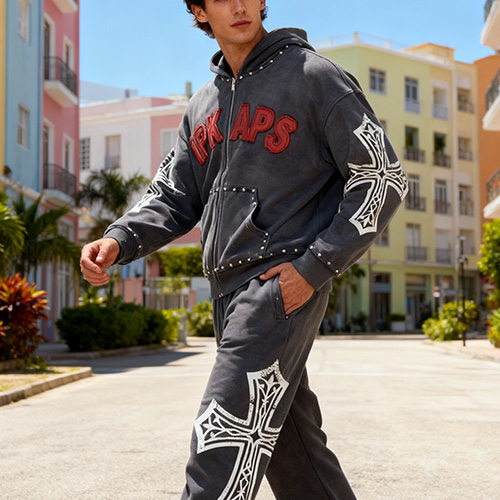
Custom Tracksuits & Sets
Matching tops and bottoms, fleece tracksuits, nylon sets, poly tracksuits, warm-up sets, and coordinated streetwear programs with consistent color and branding control.
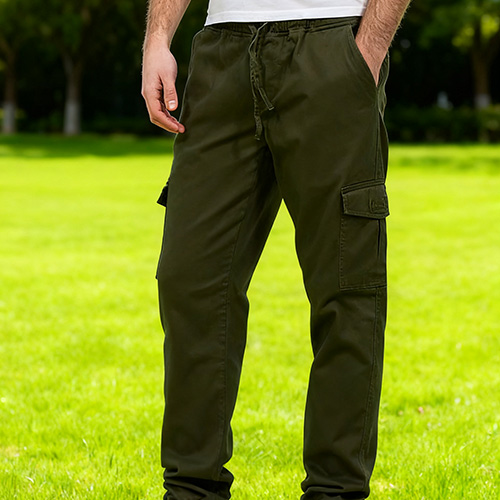
Custom Pants & Joggers
Sweatpants, joggers, cargo pants, casual pants, denim pants, shorts, and relaxed bottoms designed to pair with hoodies, tees, jackets, and full collection drops.
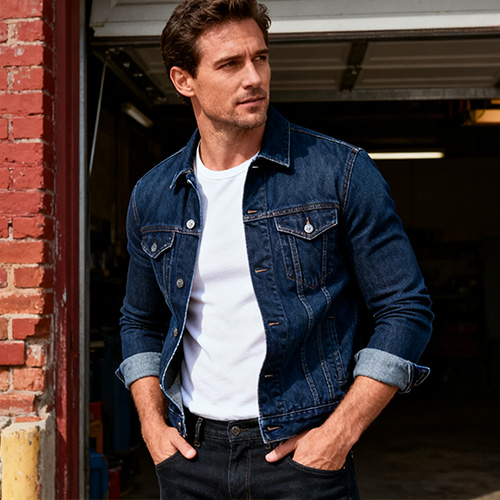
Custom Denim & Jeans
Jeans, denim jackets, trucker jackets, washed denim styles, vintage denim, and streetwear denim programs with wash control, hardware, fit, and bulk consistency support.
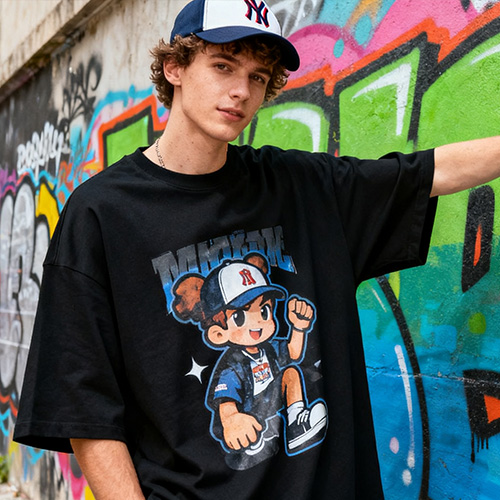
Custom T-Shirts & Graphic Tops
Heavyweight tees, oversized T-shirts, graphic tops, polos, jerseys, and creator-branded basics with fabric, fit, print, embroidery, label, and packaging options.
Creator Apparel Launch Support

Product Direction Pack
Turn audience style, reference garments, content ideas, and launch goals into clear product categories, fabric direction, fit notes, and sample requirements.

Fabric & Trim Planning
Review fabric options, trims, logo methods, color direction, packaging needs, lead time, and production feasibility before sampling.
Sample & Fit Review
Develop samples for fit, fabric, workmanship, logo placement, color, trims, and finishing before bulk production approval.

MOQ & Cost Guidance
Review MOQ, sample cost, bulk price, branding cost, packaging cost, and delivery timeline based on your product and quantity plan.
Launch Readiness Checklist
Prepare key production details before launch, including samples, size range, labels, hangtags, packaging, carton marks, and shipping requirements.

Branding & Packaging Setup
Support woven labels, printed neck labels, care labels, hangtags, packaging bags, barcode labels, carton labels, patches, printing, and embroidery.

Bulk Production & QC
Control material preparation, cutting, sewing, logo application, finishing, measurement checks, packaging review, and final inspection before shipment.

Repeat Collection Support
Keep approved size charts, fabric records, trim details, logo placement, packaging standards, and production notes for future reorders.
Quality Control for Creator Apparel Production
Structured QC checkpoints help creator-led brands control fabric quality, logo accuracy, workmanship, measurements, packaging, and shipment readiness.
- 1
Fabric Inspection
We check fabric width, shade consistency, stains, snags, defects, and hand feel before cutting to reduce material risks in bulk production.
- 2
Shrinkage & Wash Testing
For selected fabrics and washed styles, we review shrinkage, colorfastness, skewing, and wash performance to help control final garment fit and appearance.
- 3
Print & Embroidery Approval
We confirm logo size, placement, color, technique, patch quality, and strike-off samples before bulk application.
- 4
Cutting & Bundling Control
We verify markers, cutting accuracy, size bundles, fabric direction, and panel matching to reduce size mixing and construction errors.
- 5
In-Line Sewing Audit
During sewing, we check seams, stitch density, trims, zippers, symmetry, and key construction details to catch issues early.
- 6
End-Line Garment Check
Finished garments are reviewed for measurements, workmanship, appearance, logo placement, trims, and finishing before packing.
- 7
Pre-Pack AQL Inspection
Random inspection checks workmanship, measurements, labels, hangtags, folding, and packaging details before final packing.
- 8
Carton & Shipment Audit
We check carton marks, size ratio, quantity, packing method, carton weight, sealing, and shipment photos before delivery.
Manufacturing Timeline for Creator Apparel
| Project Stage | VANRD Commitment | Required From You |
|---|---|---|
| Quote Review | Initial review within 1–2 working days. | Product category, quantity, references, destination. |
| Project Plan | Clear plan after quote confirmation. | Fabric, logo artwork, size details, packaging needs. |
| Sample Lead Time | Samples usually take 7–10 days. | Confirmed materials, colors, trims, and design details. |
| Bulk Production Plan | Production plan confirmed before bulk order. | PO, quantity breakdown, size ratio, deposit. |
| PP Sample Approval | Bulk starts after PP sample approval. | Approved sample, size chart, labels, and packaging. |
| Production Updates | Key stages updated during production. | Confirmed contact person and project requirements. |
| Quality Issue Response | Initial response within 24 working hours. | Photos, order details, and issue description. |
| Pre-Shipment Review | Packing and QC checked before shipment. | Carton marks, packing method, and shipping instructions. |
Reorder & Supply Support
- Capacity PlanningReserve production windows for approved repeat styles when planned in advance.
- Price ValidityKeep confirmed quotes valid for a defined period, subject to fabric, trim, and material changes.
- Branding RecordsArchive approved labels, trims, packaging details, size charts, and production notes.
- Material AlternativesSuggest substitute fabrics or trims when original materials have long lead times or limited availability.

Production Visibility
- Sampling ProgressTrack sample development from material confirmation to sample approval.
- Bulk Production StatusReview key stages including cutting, sewing, logo application, QC, packing, and shipment.
- Sample-to-Bulk ControlCompare approved samples with bulk production for fit, workmanship, measurements, labels, and packaging.
- Improvement RecordsRecord quality issues, correction actions, and improvement points for future production.

Capabilities & Scale for Creator-Led Brands

Project Management
Dedicated project follow-up from product planning to sampling, bulk production, QC, packaging, and shipment. We help creator-led brands turn launch ideas into clear production steps.

Facilities & Equipment
10,000 m² production area with cutting, sewing, embroidery, screen printing, oval printing, sublimation, heat press, washing, finishing, and packing support.

Capacity & Lead Times
Built for creator apparel launches, repeat drops, and multi-style collections. Samples usually take 7–10 days, and bulk production usually takes 25–35 days after approval.

Quality & Compliance
Structured QC for fabric, workmanship, measurements, logo placement, labels, packaging, carton marks, and pre-shipment inspection before delivery.
10000m²
Production Area
568
Factory Team
180000+/mo
Mixed Capacity
25-30days
Fastest case
- Jackets & outerwear
- Hoodies & sweatshirts
- T-Shirts & Graphic Tops
- Pants & joggers
- Shorts
- Tracksuits & sets
FAQ — Creator Apparel Manufacturer
- What are the benefits of working with a specialized zip-up hoodies manufacturer?
Working with a manufacturer that specializes in zip-up hoodies means one team controls the fabric spec, construction, trims, decoration and quality standard as a single recorded specification — which is what keeps fit, color and hand-feel consistent between the first production run and the reorder.
On this category specifically, the controls that matter are: a YKK #5 or equivalent full-front zipper with an optional custom pull and storm flap; a 2-panel hood as standard, or a 3-panel hood for a more structured shape; rib cuffs and hem, whose height controls the silhouette as much as the fit. Those are specification items, not preferences. When they are recorded they repeat; when they are agreed verbally they drift between runs.
A useful way to tell a factory from a trading company: it asks about your fabric, sizing and timeline before quoting; it flags problems before you find them, such as warning that a zip-up hoodie is the one piece where the zipper is both the function and the perceived quality signal; it shares evidence such as QC checklists and measurement sheets; it discusses specific defects rather than claiming perfect quality; it is willing to run a small pilot order; and its business entity and factory address can be verified independently.
The commercial frame: minimum order 100 pieces per color per style, sampling in 7–10 days, bulk production in 30–45 days, and indicative FOB pricing in the $8–28+ range.
VANRD manufactures in Dongguan, China, with ISO 9001 process control, with BSCI or WRAP social compliance and OEKO-TEX Standard 100 fabric certification available.
Tell us what you are developing and we will tell you honestly whether it is a good fit for our line — contact VANRD.
- How long does zip-up hoodies sample development and bulk production take?
A first custom zip-up hoodie sample takes 7–10 days after the specification and available materials are confirmed, and bulk production runs 30–45 days after pre-production approval. Most programs need one to three sample rounds, which is where the real calendar is decided.
Stage by stage:
- Specification review — 1–5 days. Construction, quantity, artwork, sizing and timeline reviewed. Vague briefs are the single largest cause of delay and commonly add several weeks in sampling loops.
- First sample — 7–10 days. The silhouette is developed in representative fabric and decoration is tested on the actual material.
- Revision rounds — 7–14 days each. One to three rounds is normal. Change one variable at a time so you know which change produced which result.
- Pre-production approval. Approve only when measurements, artwork, trims and construction match the intended bulk version.
- Bulk production — 30–45 days. Cutting, sewing, decoration and in-line checks, depending on volume and workload.
- QC and packing — 3–10 days. Measurement checks, workmanship inspection, labeling and packing.
- Freight — 20–30 days by sea to the US or Europe, or 5–7 days by air at roughly 5–6 times the cost.
What pushes the timeline out: custom-dyed or imported fabric, where mill lead time sits outside the sewing floor; wash development, because the washed garment can still shift after an unwashed fit approval; and decoration testing on materials where the surface behaves differently from a test swatch. A zip-up hoodie is the one piece where the zipper is both the function and the perceived quality signal.
Quality checkpoints protect the calendar: after cutting, mid-production on the first units off the line, and pre-shipment against AQL 2.5. Catching an issue at the first checkpoint costs a correction; catching it after packing costs a rework cycle.
Send your tech pack and target launch date and we will come back with a dated sampling and production plan — contact VANRD.
- What customization options are available for zip-up hoodies production?
A zip-up hoodie lives or dies by its 3-part front system: the zipper tape, the placket around it and the collar construction. Those 3 decisions separate a hoodie that feels considered from one that feels generic — and a zipper that snags at the collar is the single most common complaint on an otherwise well-made garment.
The zipper itself. YKK #5 or equivalent is the working standard on a 360–400 GSM hoodie. On a heavier 450–500 GSM piece, a #8 tape carries the weight and the pull without distorting the front. Metal teeth read more premium and are harder wearing; resin teeth are lighter, quieter and available in a wider color range for tonal matching. A two-way (double-ended) zipper is specified when the hoodie will be worn open from the bottom, which is common on longer-cut streetwear silhouettes. Custom pulls — engraved, colored or a different shape entirely — are a low-cost way to make the hardware read as branded.
Placket and facing. A storm flap or zip guard behind the zipper stops the teeth contacting skin and hides the tape edge. A self-fabric facing on the inside front gives the opening body so it does not ripple when zipped. Whether the zipper tape is visible or concealed is a visible design decision, not a construction detail — it changes the front of the garment more than most print placements do.
Collar construction. A two-panel hood is the standard; a three-panel hood holds a more structured shape and stands away from the neck. A stand collar or funnel neck is specified when the silhouette is intended to read more outerwear than sweat. Each option changes the pattern at the neckline, so it is decided before sampling.
Pockets. A split kangaroo pocket with bartacks at the stress points is the default. Side zip pockets, a chest pocket, a concealed interior pocket for a phone or media, and a dedicated earbud channel are all pattern additions — each one is its own pattern work, so the count is a cost decision as much as a design one.
Rib, hem and silhouette. 1×1 or 2×2 rib at cuff and hem, with rib height controlling whether the garment reads regular, boxy or cropped. Cuffs and hem are matched from one dye lot so they do not diverge in color after washing — a small specification point that shows up clearly in wear.
Drawcord and trim. Cord diameter, color and tip type are specified rather than left to default. Metal-tipped, heat-shrink or molded rubber tips each read differently, and the eyelet or grommet finish has to match the zipper hardware. Trim bought as a set is the cheapest way to make a hoodie look deliberate.
The fabric decision underneath all of it. 100% cotton fleece, cotton-poly or French terry, at 360–500 GSM for premium positioning. A zipper system specified properly on a light fleece still reads cheap; the construction and the cloth have to be matched.
Indicative FOB pricing is $8–28+ per unit, with fabric weight and hardware specification the main variables. Sampling runs 7–10 days and bulk production 30–45 days after pre-production approval. Minimum order is 100 pieces per color per style.
Send us the silhouette and the price point and we will specify the zipper, placket and trim as one package — contact VANRD.
- How much does it cost to manufacture zip-up hoodies?
Custom zip-up hoodies commonly fall in the $8–28+ per unit FOB range. Within that band, the spread is driven mainly by fabric weight, zipper spec, decoration and volume. A unit price quoted without fabric weight, construction details, decoration method and order volume is not comparable across suppliers.
What moves the number:
- Fabric — 100% cotton fleece for a natural hand-feel and garment-dye programs; cotton-poly fleece for shape and color retention at a lower cost; French terry for a lighter, more breathable year-round piece. Weight and composition are usually the single largest cost line.
- Construction and trims — a 2-panel hood as standard, or a 3-panel hood for a more structured shape, and a split kangaroo pocket, zip pockets or a chest pocket, each with its own pattern work.
- Decoration — embroidery including 3D puff, screen and puff print, chenille and applique patches, rhinestone application.
- Volume — the same specification at 100 pieces and at 1,000 pieces does not carry the same unit cost, because setup is amortized differently.
A low quote is rarely a lower cost. When three suppliers quote different prices for the same garment, the difference is usually the fabric weight, a stock trim substituted for a specified one, or a decoration method quietly swapped. Compare quotations only after aligning fabric, construction, decoration, labels, packaging and quantity — and ask each supplier to state what is excluded.
Reference points across the range: sample fees are typically USD 50–150 for a simple garment and USD 150–400 where multiple fabric panels and custom trims are involved, usually deductible from the bulk order; sea freight adds roughly USD 1–2.50 per unit at volume, and air freight costs about 5–6 times more.
Send your fabric preference, target quantity per color and decoration method, and we will price the actual bill of materials rather than a category average — contact VANRD.
- What is the typical MOQ for zip-up hoodies manufacturing?
VANRD's minimum order quantity for custom zip-up hoodies is 100 pieces per color per style. It is a per-color minimum rather than a per-order minimum, so a two-color program starts at 200 pieces and a four-color program at 400. Sizes can be mixed inside a colorway as long as the total for that color reaches 100.
The minimum exists because zip-up hoodies carry setup costs that a basic tee does not. Fabric minimums, pattern development, trims with their own supplier minimums and a separate sampling round all have to be carried by the first order. At 100 pieces those costs sit on a small quantity; at 500 pieces the same setup spreads across five times as many units, which is why unit price falls as volume rises.
Three things can push the minimum higher:
- Custom-dyed colorways carry their own mill dye-lot minimum on top of the garment minimum.
- Specialist constructions — compared with a pullover, a zip-up adds a zipper, a front placket, two front panels instead of one and a separate sampling round for the zipper path.
- Exclusive trims — custom zipper pulls, branded drawcord tips, custom buttons and patch work each carry a supplier minimum of their own.
Once a 2-panel hood as standard, or a 3-panel hood for a more structured shape is approved, a second or third colorway becomes a fabric and trim decision rather than a new development cycle. Brands that plan for a reorder before the first order usually start with one color on a spec designed to accept more.
Sampling runs 7–10 days after the specification and available materials are confirmed, and bulk production takes 30–45 days after pre-production approval.
Send us your target quantity per color and size range and we will confirm the minimum against your actual zip-up hoodie fabric and trim choices, rather than quoting a generic number — contact VANRD.
- What customization options are available for zip-up hoodie manufacturing?
Custom zip-up hoodies are built from four decisions: fabric and weight, construction and trims, decoration, and the private label pack. Each one changes cost, lead time and how the finished piece reads.
Fabric. The options we run most are 100% cotton fleece for a natural hand-feel and garment-dye programs; cotton-poly fleece for shape and color retention at a lower cost; French terry for a lighter, more breathable year-round piece. For zip-up hoodies the practical weight reference is 360–500 GSM for premium zip-up hoodies. Ordering by weight figure alone is not enough — two fabrics can both be called the same weight and still behave differently in wash, drape and color retention, so composition and shrinkage are confirmed by wash testing.
Construction and trims. The build includes a YKK #5 or equivalent full-front zipper with an optional custom pull and storm flap; a 2-panel hood as standard, or a 3-panel hood for a more structured shape; rib cuffs and hem, whose height controls the silhouette as much as the fit; a split kangaroo pocket, zip pockets or a chest pocket, each with its own pattern work.
Decoration. Available routes include embroidery including 3D puff, screen and puff print, chenille and applique patches, rhinestone application. Decoration is approved on the actual fabric rather than on a test swatch, because stretch, pile, coating and heat sensitivity all change the result.
Private label pack. Woven neck labels, size and care labels, logo tags, hangtags, barcoded polybags and printed cartons. A garment can leave the sewing line finished and still not be retail-ready, and this layer is what closes that gap.
A note specific to this category: A zip-up hoodie is the one piece where the zipper is both the function and the perceived quality signal. A generic zipper that snags at the collar is the single most common complaint on an otherwise well-made hoodie, which is why we specify the zipper by model rather than by "a zipper".
Send us your specification or reference and we will tell you which of these decisions drives your cost the most — contact VANRD.
Request a Custom Apparel Quote
- FOR You
- Full Name
- *Phone