How to Choose a Jean Jacket Manufacturer for Private Label Brands
Choosing a jean jacket manufacturer requires more than checking product photos. Private label brands should evaluate denim fabric knowledge, wash development ability, pattern and fit control, trim sourcing, sample workflow, and bulk quality management. A strong supplier should help turn a jacket reference into a workable production plan with clear approvals before bulk production.
Quick Answers
What should private label brands check when choosing a jean jacket manufacturer?
Private label brands should check denim fabric options, wash capability, pattern development, trim sourcing, sample workflow, QC process, communication speed, and whether the manufacturer can support bulk production after sample approval.
What is the difference between a jean jacket manufacturer and a general apparel supplier?
A jean jacket manufacturer should understand denim fabric behavior, washing, shrinkage, metal trims, topstitching, fit structure, and bulk consistency. A general apparel supplier may not have enough experience with denim-specific production risks.
Is wash capability important for custom jean jackets?
Yes. Wash capability is important because rinse wash, stone wash, enzyme wash, vintage wash, distressing, and color variation can change the final appearance, handfeel, shrinkage, and measurement stability.
What files should I prepare before contacting a jean jacket manufacturer?
Prepare reference images, tech pack if available, size specs, fabric direction, wash reference, trim requirements, artwork files, label details, target quantity, packaging needs, and fit comments.
How long does jean jacket sampling take?
Sampling time depends on fabric availability, pattern complexity, wash testing, trims, artwork, embroidery, and revision rounds. The timeline should be confirmed after the manufacturer reviews the project brief.
Can a manufacturer help if my brand does not have a complete tech pack?
In many cases, a manufacturer can review reference images and development notes first, but a clearer tech pack or sample brief will usually reduce misunderstandings and sample revisions.
What makes a jean jacket manufacturer suitable for private label brands?
A suitable manufacturer should understand custom labels, trims, artwork placement, repeat order consistency, wash approvals, packing requirements, and the communication needs of brand-side product development teams.
Start With the Buyer Task, Not Only the Jacket Style
Choosing a jean jacket manufacturer starts with defining what your private label program needs to achieve. A supplier may be able to make a basic denim jacket, but your brand may need a specific wash, fit, trim package, branding method, or bulk delivery standard.
For private label buyers, the real task is not just finding someone who can sew denim. The task is finding a manufacturer that can help convert a design direction into a repeatable production process.
Before comparing suppliers, clarify these points:
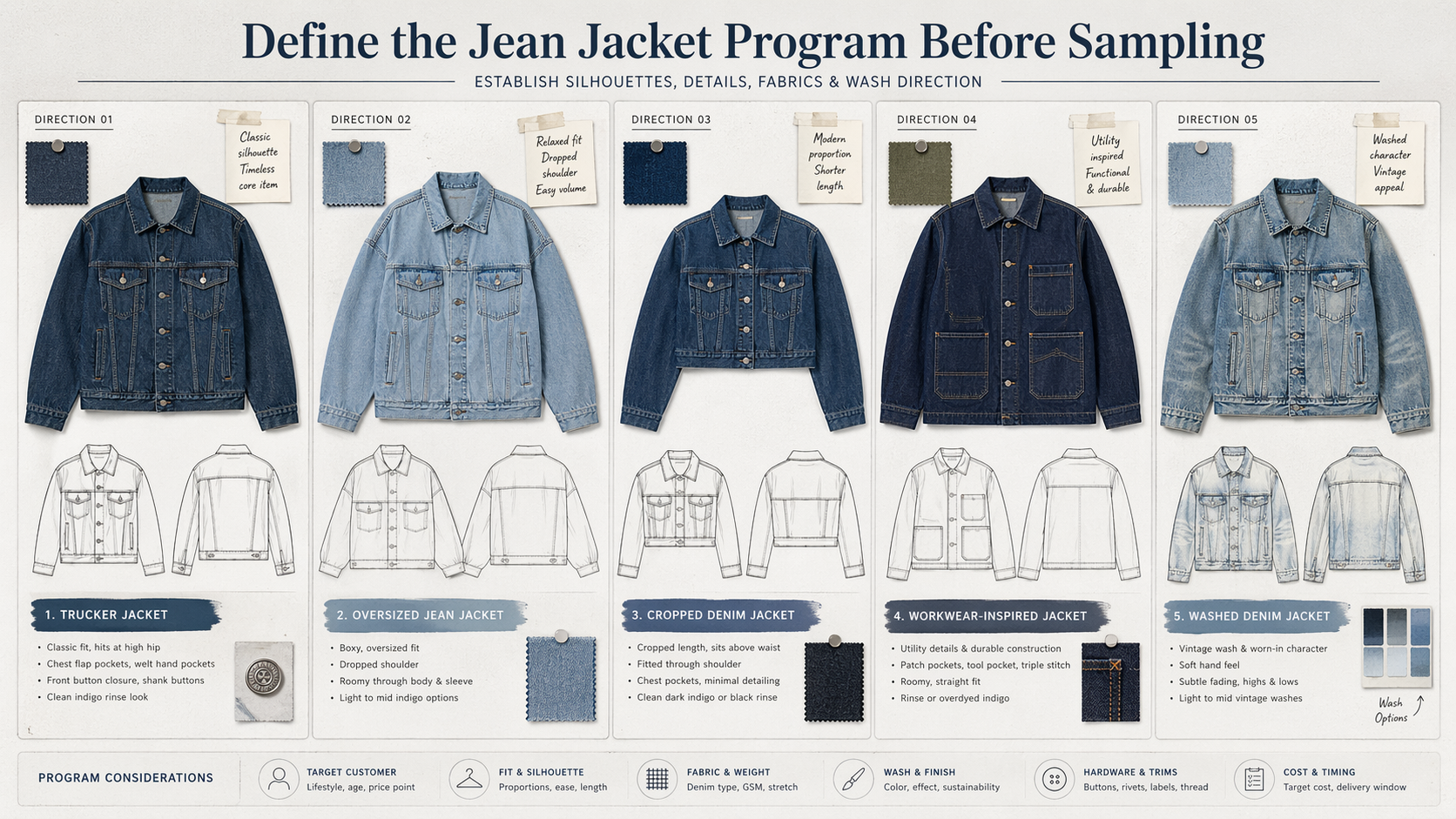
1.Is the jacket a trucker jacket, oversized jean jacket, cropped jacket, workwear-inspired jacket, or denim shacket?
2.Is the target look clean, vintage, distressed, garment-washed, or premium retail?
3.Does the program need embroidery, patches, leather labels, metal buttons, rivets, or custom packaging?
4.Is the product for a one-time capsule, repeat production, wholesale program, or merch collection?
5.How much development support does your team need before sampling?
This early clarification helps the manufacturer understand whether your project is mainly about fabric, wash effect, fit development, branding details, or full private label production.
Key Criteria for Choosing a Jean Jacket Manufacturer
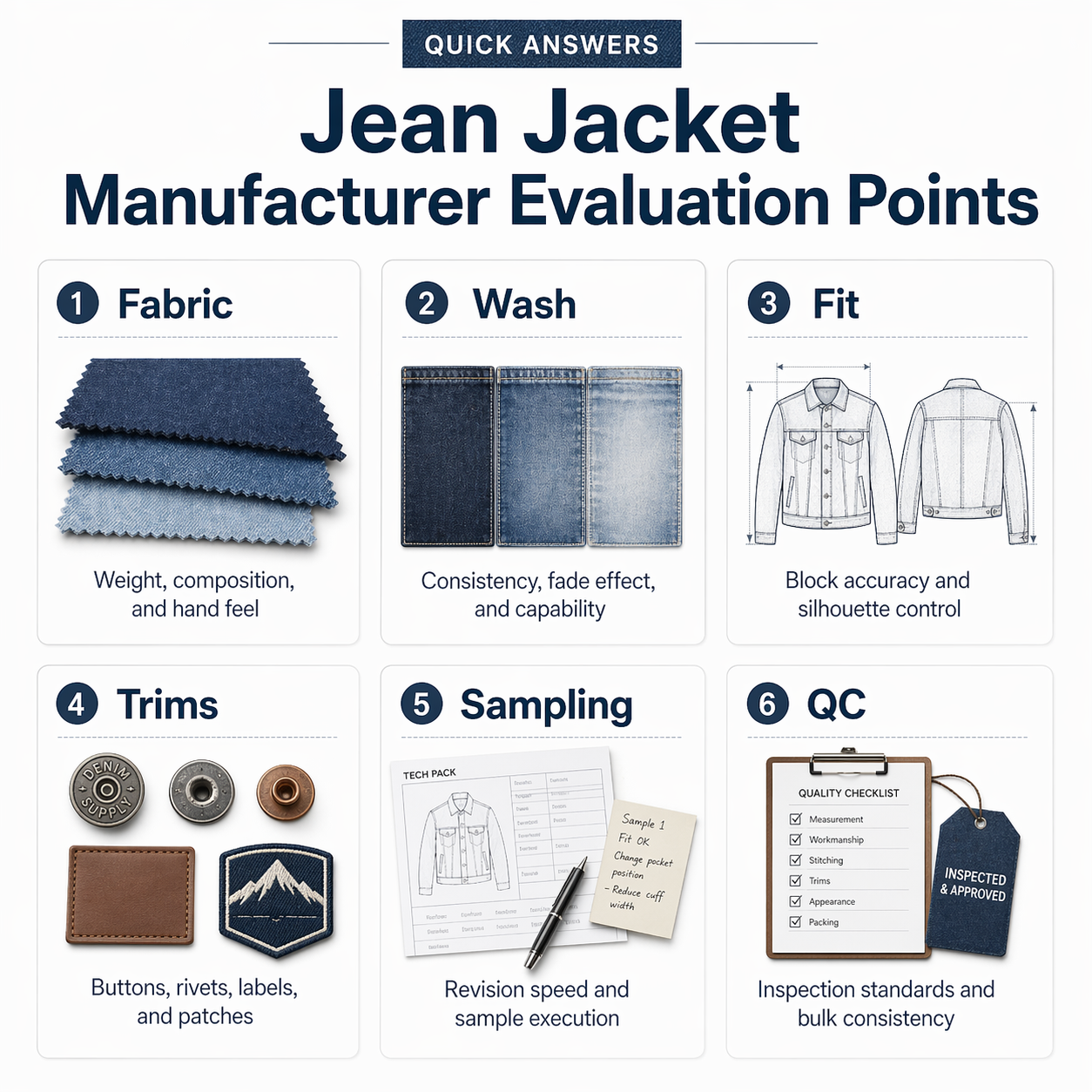
A jean jacket manufacturer should be evaluated through production capability, not only through price or product photos. Denim jackets have specific risks around fabric, shrinkage, wash effect, trims, stitching, and fit consistency.
| Evaluation Area | What to Check | Why It Matters |
| Denim fabric knowledge | Fabric weight, cotton content, stretch, handfeel, shrinkage | Fabric changes the final structure and wash result |
| Wash development | Rinse wash, enzyme wash, stone wash, vintage wash, distressing | Wash affects color, handfeel, measurements, and consistency |
| Pattern and fit control | Shoulder, chest, sleeve, body length, hem, collar | Jean jackets depend heavily on proportion |
Trim sourcing | Buttons, rivets, zippers, labels, patches | Trims affect both appearance and production stability |
Sample workflow | Reference review, first sample, comments, revision, approval | Reduces confusion before bulk production |
QC process | Measurement tolerance, wash consistency, seam strength, trim checks | Helps reduce bulk order risk |
Private label brands should ask suppliers how they manage these areas before starting sample development. | ||
Check Denim Fabric and Wash Capability First
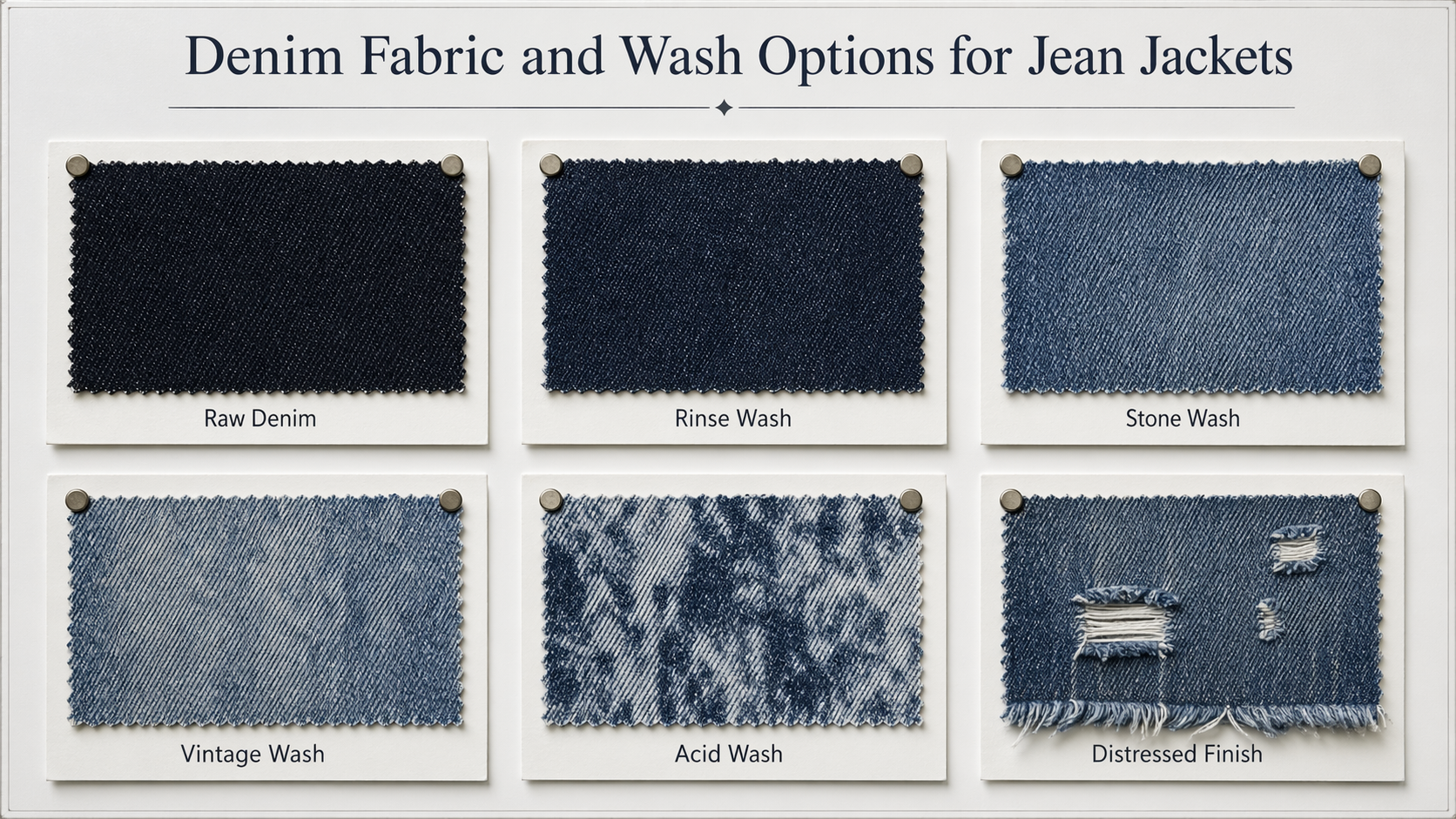
Fabric and wash are two of the most important factors in jean jacket production. The same jacket pattern can look completely different depending on denim weight, fiber composition, washing process, and finishing method.
A manufacturer should be able to discuss options such as:
100 percent cotton denim
comfort-stretch denim
midweight denim
heavyweight denim
raw or rinse-wash denim
stone wash
enzyme wash
vintage wash
acid wash
distressing
whiskers or abrasion effects
The buyer should not only ask "Can you make this jacket?" A better question is "What fabric and wash process are suitable for this look, price point, and production plan?"
For fabric, washing, embroidery, patches, and trim planning, buyers can review Vanrd's Fabrics & Techniques page before preparing a development brief.
Review Fit and Pattern Development Ability
Jean jacket fit is not only about size. It is about proportion, structure, and how the garment sits on the body after sewing and washing.
A private label buyer should review whether the manufacturer can handle:
Classic trucker fit
Oversized streetwear fit
Cropped fit
Boxy fit
Workwear-inspired fit
Denim shacket silhouette
Sleeve and shoulder balance
Size grading across the full size range
Wash and fabric shrinkage can affect final measurements. This means fit approval should not be separated from fabric and wash approval. If the sample is approved in one fabric but bulk production uses a different denim, the final result may change.
A good development process should include measurement review, fit comments, wash reference approval, and a clear record of revision instructions.
Compare Supplier Types Before You Decide
Not every supplier that offers denim products is suitable for private label jean jacket production. The right choice depends on how much development support your brand needs.
| Supplier Type | Usually Suitable For | Main Limitation |
| Basic trading supplier | Simple sourcing or standard styles | May have limited control over sampling and production details |
| General apparel factory | Basic cut and sew programs | May lack denim wash and trim experience |
| Denim-focused manufacturer | Wash, fabric, and denim construction projects | May need clear brand-side development input |
OEM/ODM apparel manufacturer | Private label programs with sampling and bulk planning | Requires organized communication and approval workflow |
Vanrd supports private label and OEM/ODM apparel development from Dongguan (Humen), China. For brands evaluating broader customization and manufacturing capability, Vanrd's OEM/ODM Services page can help clarify the type of support available.
Questions to Ask Before Starting Sampling
A strong supplier conversation should reveal whether the manufacturer understands denim jacket development, not just whether they can quote a price.
Ask these questions before sampling:
What denim fabric options are suitable for this jacket?
Can you support the wash effect shown in our reference?
How do you control shrinkage after washing?
Can you develop oversized, cropped, or boxy fit blocks?
What trims can be customized?
How do you handle patches, embroidery, and labels?
What files do you need before sampling?
How many approval points are needed before bulk production?
What QC checks are used for denim jackets?
What may affect sampling and bulk lead time?
These questions help buyers understand the supplier's process logic. They also make the first quotation and sample discussion more accurate.
What Buyers Should Prepare Before Contacting a Manufacturer
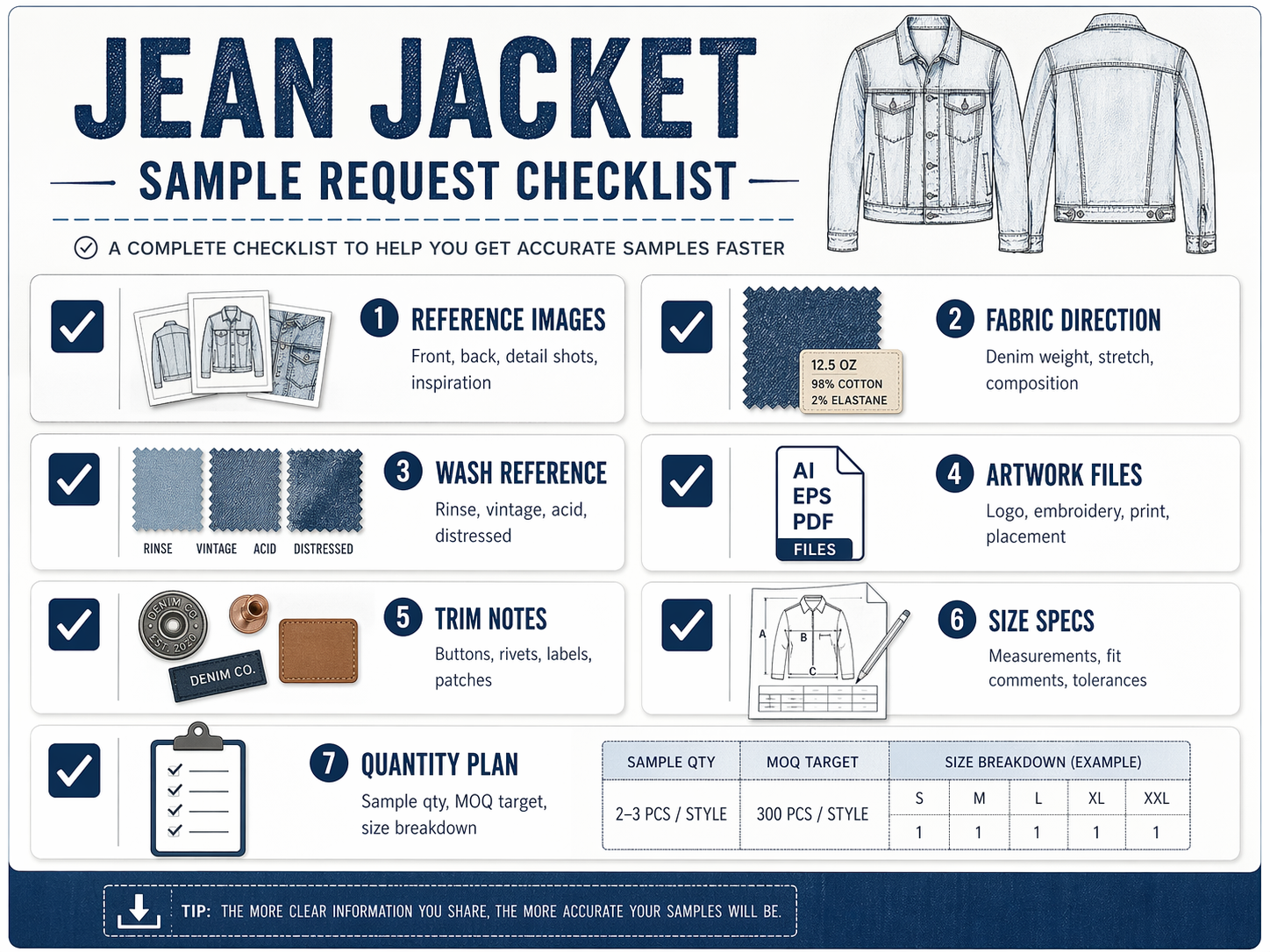
A manufacturer can respond more effectively when the buyer provides a clear project package. The package does not need to be perfect at the first inquiry, but it should contain enough information to avoid vague quoting.
Prepare these inputs:
Front and back reference images
Target jacket type
Fit direction
Fabric preference
Wash reference
Color direction
Trim requirements
Logo and artwork files
Embroidery or patch placement
Size range
Measurement specs if available
Label and packaging requirements
Target quantity
Target market
Required delivery window if known
If your brand does not have all details ready, separate confirmed requirements from open questions. This helps the manufacturer suggest options without guessing too much.
Step-by-Step Decision Process
A private label brand should choose a jean jacket manufacturer through a staged decision process, not through one quick price comparison.
Step 1: Confirm the Product Direction
Decide whether the jacket is a clean trucker jacket, vintage washed jean jacket, oversized streetwear jacket, cropped jacket, utility denim jacket, or another direction.
Step 2: Review Fabric and Wash Feasibility
Ask the manufacturer to review the fabric weight, wash effect, color target, and shrinkage risk. Denim decisions should be checked before the sample is developed.
Step 3: Confirm Fit and Construction Details
Review body length, shoulder width, sleeve shape, pocket style, collar, placket, hem, and stitching. These details determine whether the jacket feels like a real private label product rather than a generic style.
Step 4: Check Branding and Trim Options
Confirm metal buttons, rivets, leather patches, woven labels, embroidery, applique, hangtags, and packaging requirements.
Step 5: Start Sampling With Clear Approval Points
The sample should be reviewed for fit, wash effect, trims, logo placement, sewing quality, and overall brand alignment. Approval comments should be specific.
Step 6: Prepare Bulk Production Standards
Before bulk production, confirm approved sample details, measurement tolerance, wash standard, trim quality, packaging method, and final inspection expectations.
For sampling stages, production workflow, and approval logic, buyers can refer to Vanrd's Service Process.
Factory Reality
Jean jacket production is sensitive to fabric, wash, trims, and pattern balance. A sample can look different after washing because denim may shrink, soften, fade, or change handfeel. This means a manufacturer must treat wash approval as part of the product development process, not as a final decoration step.
Metal buttons, rivets, labels, patches, and topstitching also need careful placement. If the artwork or trims are approved late, the sample may require additional revisions. If the wash reference is unclear, bulk production may not match the buyer's expectation.
From a factory perspective, the safest development path is to confirm the fabric and wash direction early, then review pattern, fit, trims, and branding details before bulk production. This approach reduces avoidable misunderstandings and makes the quotation discussion more realistic.
For factory capability context, buyers can review Vanrd's Factory Strength page.
Risk Watchpoints When Choosing a Jean Jacket Manufacturer
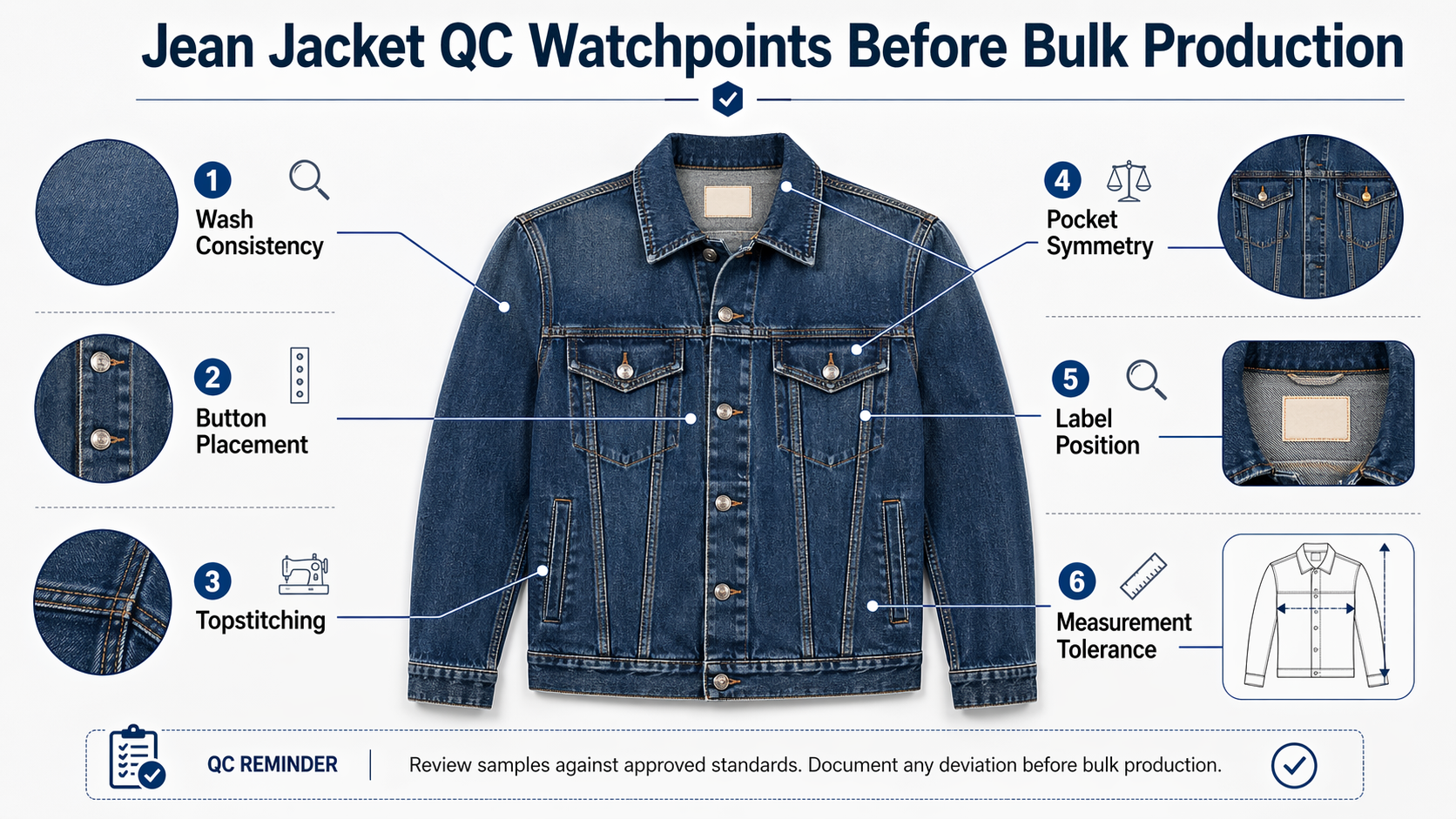
Risk control should begin before the first sample. Many production problems happen because the buyer and supplier did not confirm key details early enough.
Watch these areas carefully:
Denim fabric weight and handfeel
Wash effect and color variation
Shrinkage after washing
Measurement tolerance
Topstitching quality
Button and rivet placement
Patch and embroidery alignment
Pocket shape and symmetry
Collar and placket construction
Label and packaging details
Sample revision records
Final approval before bulk production
For quality standards, inspection planning, and shipment checks, buyers can review Vanrd's Q&C page.
Common Mistakes Private Label Brands Should Avoid
Many jean jacket projects become difficult because the buyer starts sampling before the core decisions are clear.
Common mistakes include:
Choosing a manufacturer only based on the lowest quote
Sending only one reference image without specs
Not confirming wash direction before sampling
Ignoring shrinkage risk
Changing fabric after sample approval
Adding patches and embroidery too late
Not checking trim quality
Using unclear artwork files
Reviewing fit without checking fabric and wash impact
Moving into bulk production without written sample comments
Not defining final inspection expectations
A better approach is to prepare a focused sample brief, confirm technical points early, and keep approval records clear throughout development.
How to Judge Whether a Manufacturer Is a Good Fit
A suitable jean jacket manufacturer should ask practical questions. If a supplier only asks for quantity and price target, they may not fully understand the project requirements.
A more serious manufacturer may ask about:
Target fabric and weight
Wash effect
Fit direction
Brand labels
Trim details
Artwork files
Sample approval process
Bulk production expectations
Packing requirements
Quality standards
This type of discussion helps both sides identify risks before they become production problems.
Next Steps
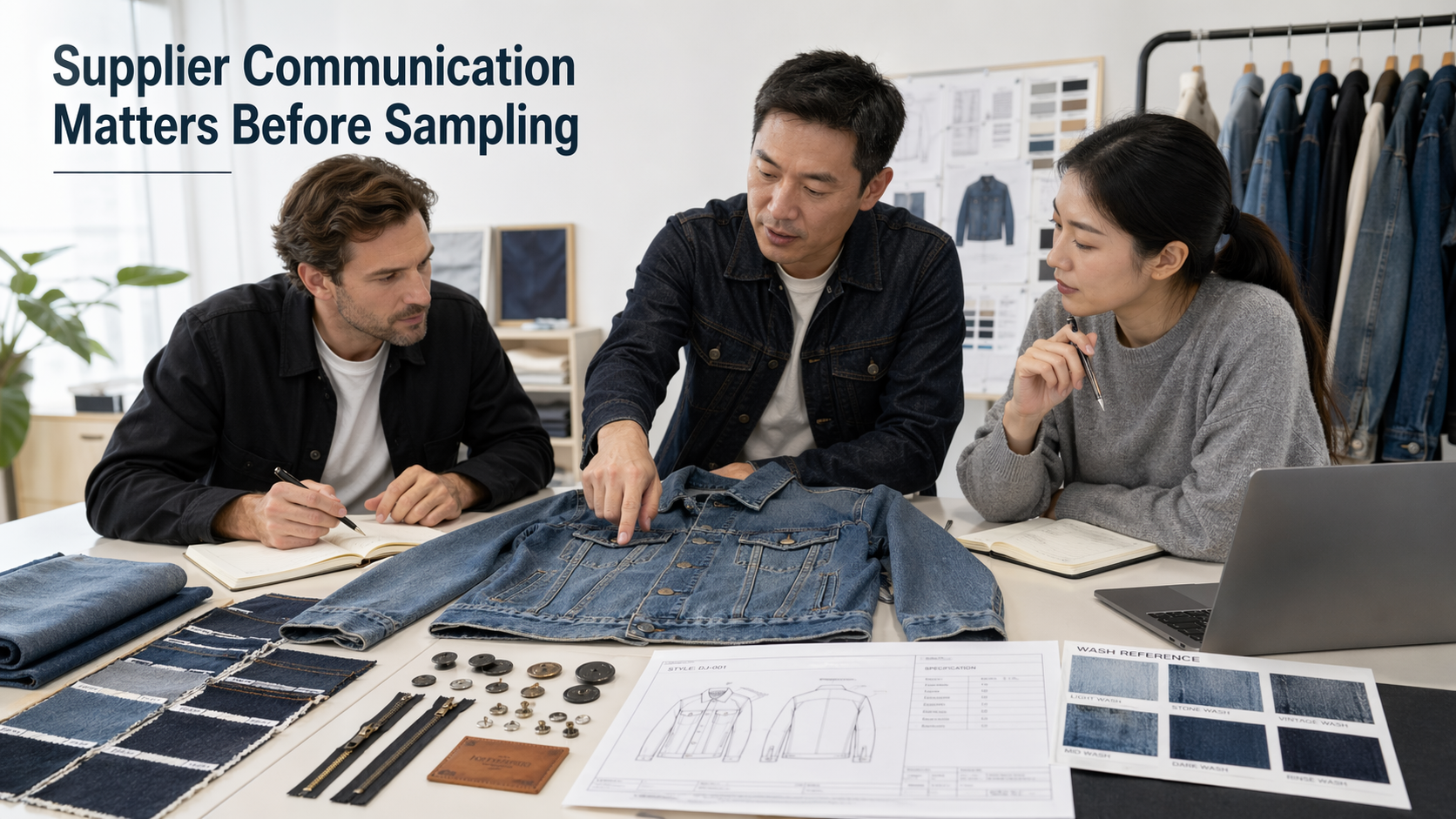
The next step is to prepare a clear jean jacket sample request. Start with the jacket type, fit direction, fabric preference, wash reference, trim requirements, artwork files, and target quantity. Then ask the manufacturer to review feasibility before you move into sampling.
If your brand is planning a custom jean jacket or denim outerwear program, send your project brief to Vanrd for review. A clear brief helps the team evaluate fabric direction, wash options, sample requirements, production workflow, and quality control points before quotation.
FAQ
What is the first thing to check when choosing a jean jacket manufacturer?
The first thing to check is whether the manufacturer understands denim fabric, wash development, fit control, trims, and sample approval. Jean jackets have denim-specific risks that general apparel suppliers may not manage well.
Do I need a full tech pack before asking for a quote?
A full tech pack is helpful, but early discussion can start with reference images, fabric direction, wash reference, size range, artwork files, and target quantity. More complete information usually leads to more accurate feedback.
How does wash development affect jean jacket production?
Wash development affects color, handfeel, shrinkage, measurements, and visual consistency. If the wash standard is not confirmed clearly, the bulk result may differ from the buyer's expectation.
How long does it take to develop a custom jean jacket sample?
Sampling time depends on fabric sourcing, wash testing, pattern complexity, trims, artwork, embroidery, and revision rounds. The manufacturer should confirm timing after reviewing the brief.
What should brands ask a jean jacket manufacturer before sampling?
Brands should ask about denim fabric options, wash capability, shrinkage control, trim sourcing, artwork requirements, sample approval steps, and QC checkpoints.
What is the difference between a denim jacket and a jean jacket?
In many buyer conversations, "denim jacket" and "jean jacket" refer to similar products. "Jean jacket" is often used in search or casual product language, while "denim jacket" may be used more broadly in manufacturing and sourcing discussions.
Can Vanrd support private label jean jacket development?
Vanrd can review private label jean jacket development needs, including fabric direction, wash references, trims, labels, artwork, sampling, bulk production planning, and QC requirements.
Final CTA
Planning a private label jean jacket program?
Send your reference images, fabric direction, wash target, artwork files, trim notes, and size requirements to Vanrd. Our team can review the project and help you prepare a clearer path for sampling, production planning, and quality control.
Start your project discussion through Contact Us.