What to Prepare Before Starting a Varsity Jacket Sample for a Private Label Program
A varsity jacket sample usually moves faster when the buyer prepares the right inputs before development starts. The most useful preparation often includes a clear product direction, artwork files, material preferences, trim notes, fit comments, and a realistic approval order. In B2B manufacturing, better preparation often leads to fewer revisions, clearer communication, and a more workable sample path.
Quick Answers
What should a buyer prepare before starting a varsity jacket sample?
A buyer should usually prepare reference images, logo files, material direction, fit comments, trim notes, and a clear list of first-round approval priorities.
Do I need a full tech pack before requesting a varsity jacket sample?
Not always a highly detailed one, but a clear spec package usually helps the supplier understand the structure, branding, and trim direction earlier.
Should chenille patch artwork be prepared before sampling?
Yes, in most cases. Patch size, letter style, and placement notes usually affect the sample result and should be clarified early.
Can I start a varsity jacket sample with only inspiration images?
You can start that way, but the sample process is usually smoother when inspiration images are supported by fit notes, material direction, and branding instructions.
What is the most common missing item in varsity jacket sample requests?
A common missing item is the approval order. Buyers often send many references but do not explain what should be confirmed first.
Do fabric and trim decisions need to be finalized before the first sample?
Not every detail must be fully finalized, but the core body and sleeve direction, rib logic, and closure type usually should be narrowed down.
How can brands reduce varsity jacket sample revisions?
A clearer input package and a more practical approval sequence usually reduce revisions more effectively than adding more visual references alone.
Why Varsity Jacket Samples Often Get Delayed Before Development Even Starts
A varsity jacket sample often becomes slower than expected before the supplier even starts making it. The reason is usually not only factory capacity or communication speed. The bigger issue is often that the buyer has not yet prepared enough structured information for the first sample to solve the right problems.
A varsity jacket is not a one-variable product. Body fabric, sleeve material, rib, snaps, pocket direction, chenille patch, embroidery, applique, lining, and fit can all affect the first sample outcome. When those inputs arrive in a fragmented way, sample comments can become broader and less efficient.
That is why early coordination through OEM/ODM Services and the relevant Fabrics and Techniques discussion usually creates a more practical starting point than relying on mood images alone.
The First Thing to Prepare: A Clear Product Direction
Before a buyer prepares files or trim comments, the first question should be simple: what kind of varsity jacket is actually being built?
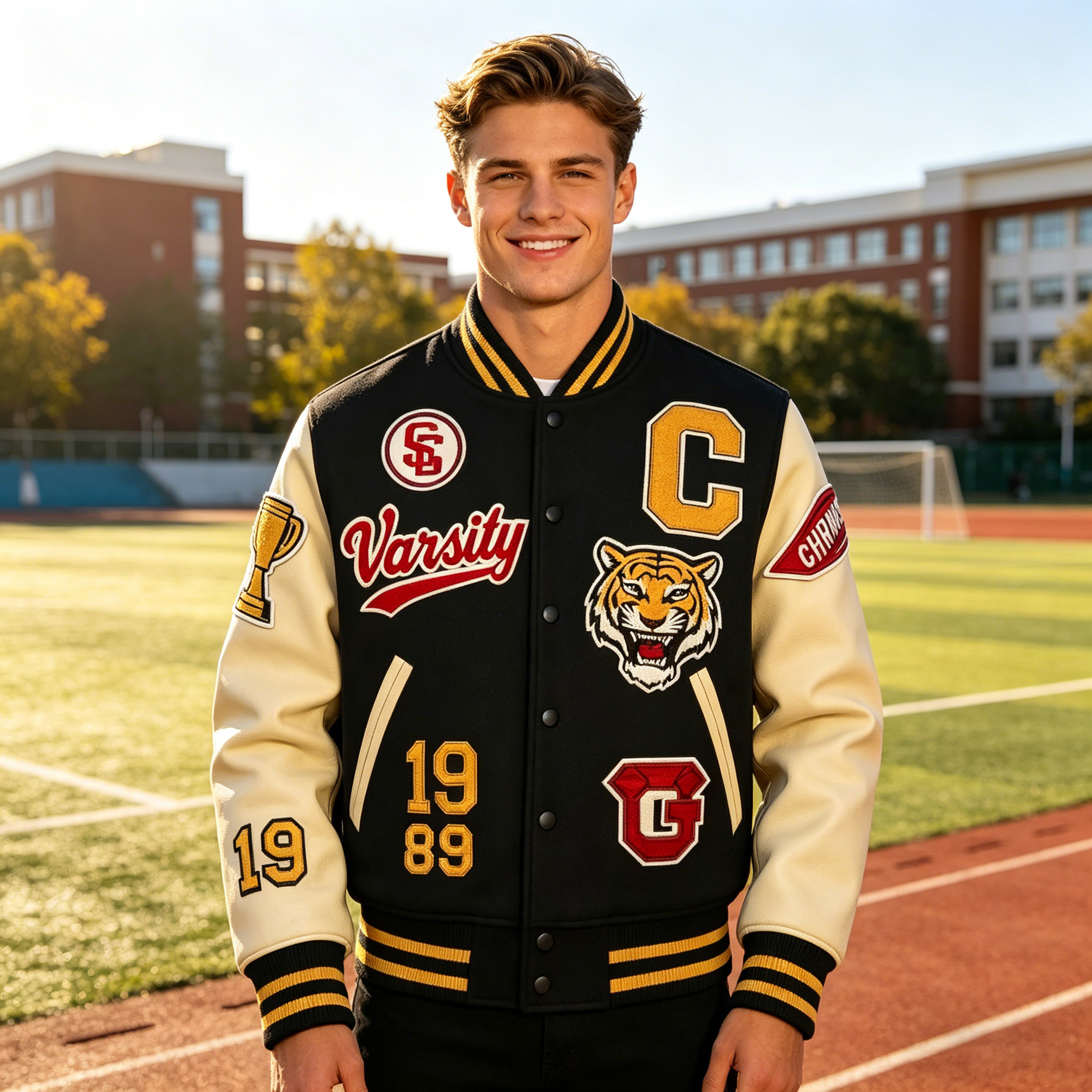
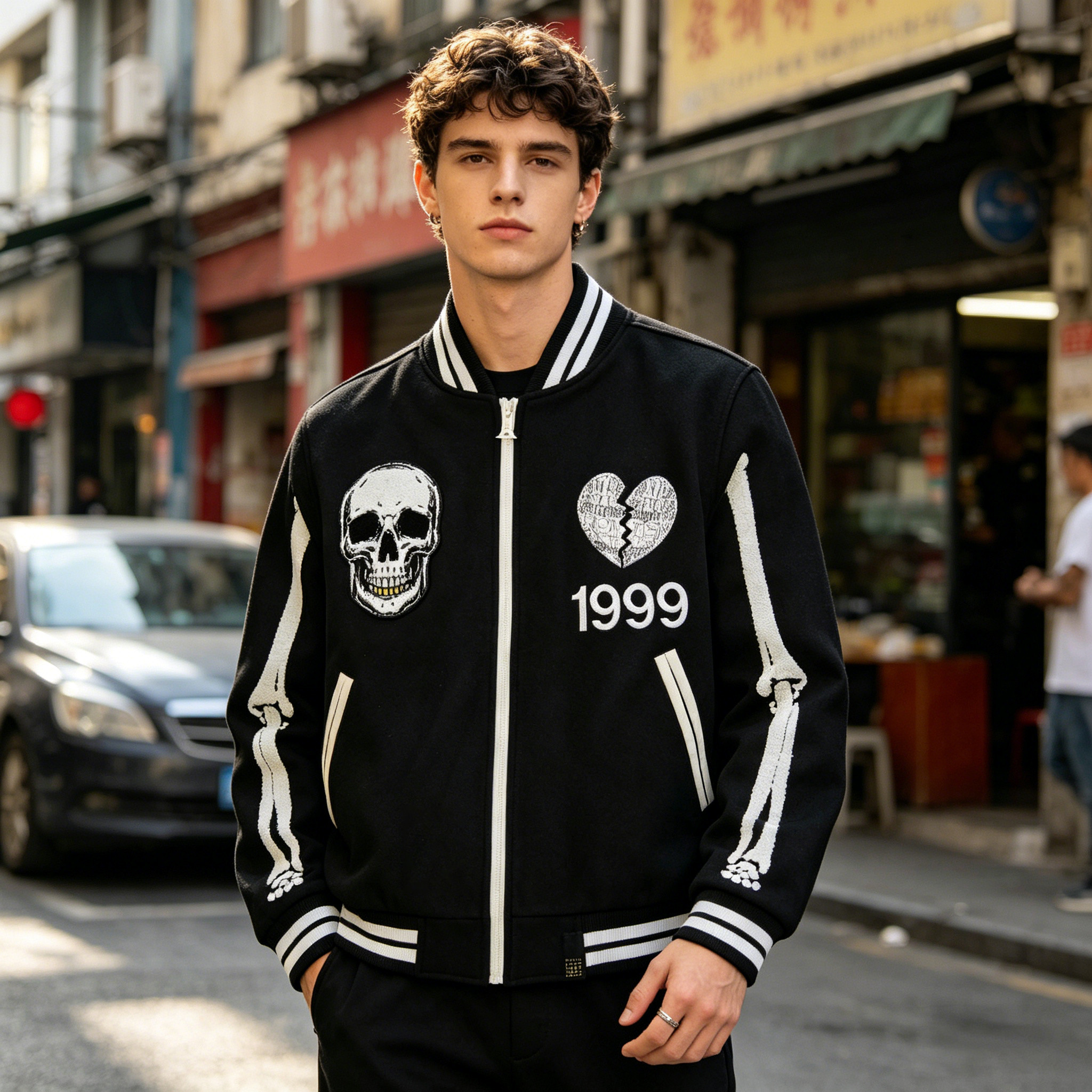
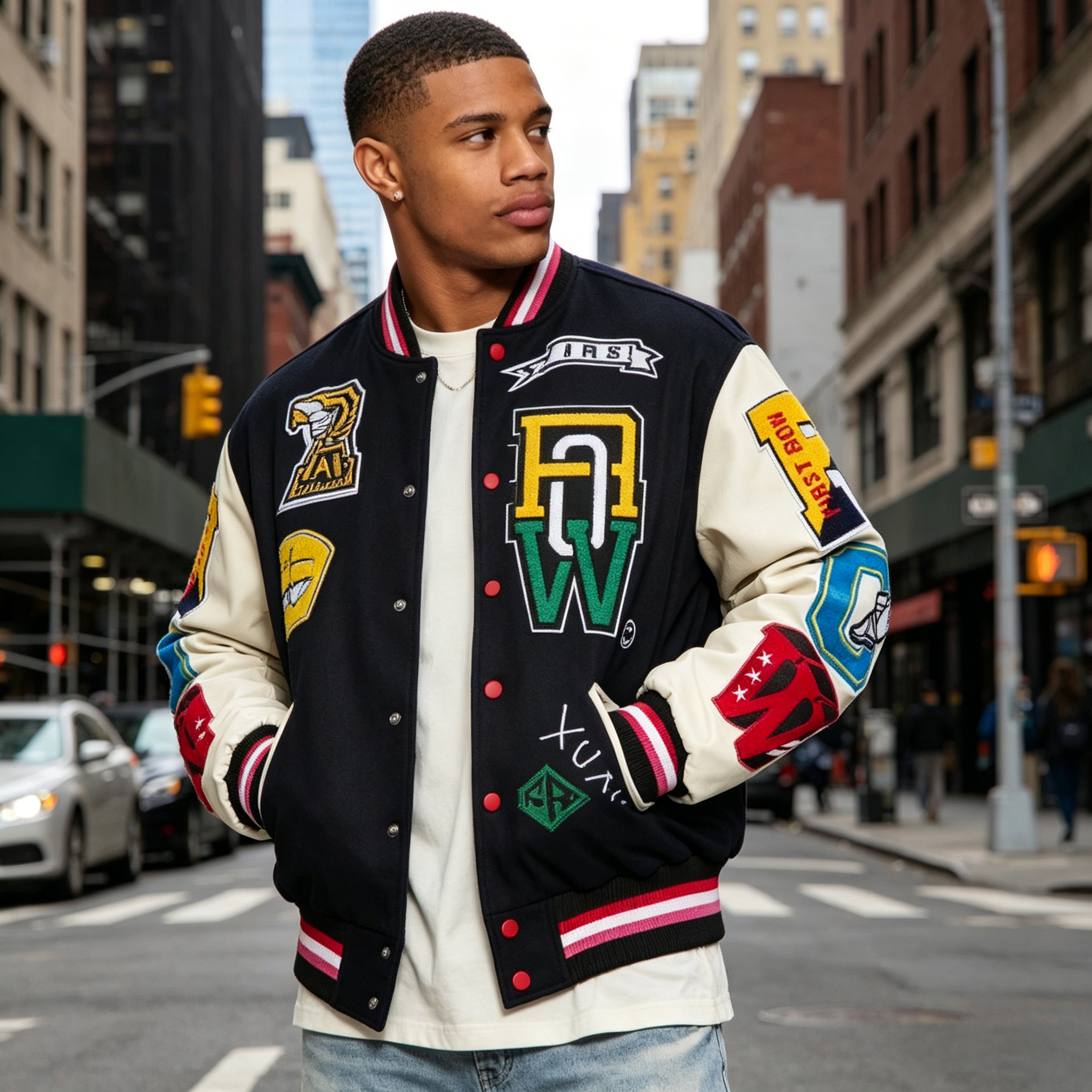
A private label varsity jacket can follow very different product directions:
a traditional heritage varsity jacket
a streetwear-led oversized varsity jacket
a simplified commercial varsity jacket
a lighter casual jacket for broader brand use
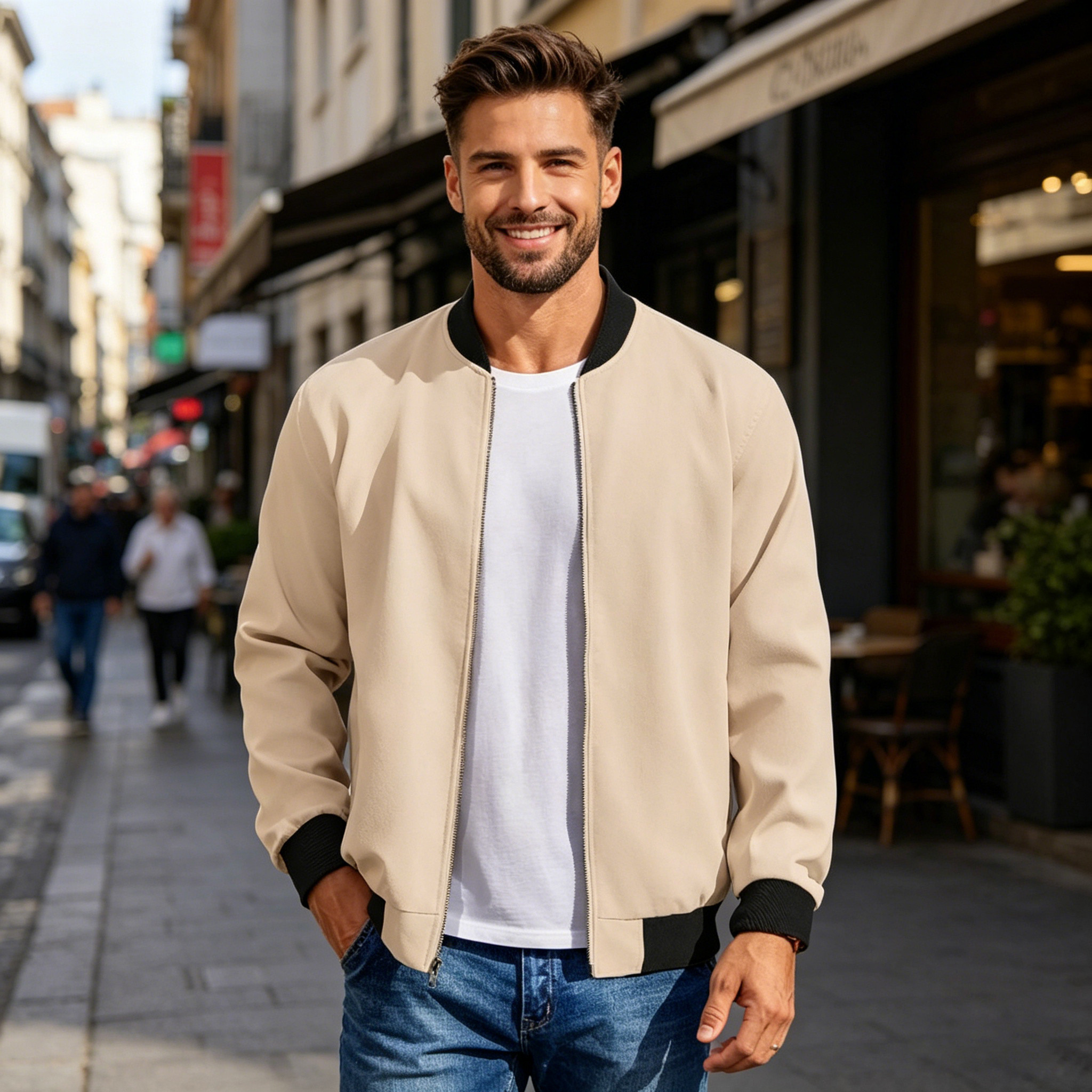
These directions may look related, but they often require different sample priorities.
Heritage-Led Direction
A heritage-led varsity jacket often needs stronger material contrast, clearer chenille or applique identity, and more classic rib and snap choices.
Streetwear-Led Direction
A streetwear version often places more weight on oversized fit, graphic scale, and stronger back or sleeve branding.
Simpler Commercial Direction
A cleaner commercial version often benefits from more controlled branding, easier material pairing, and a sample path that stays scalable.
If the product direction is vague, later decisions on fabric, trims, and decoration can become inconsistent.
The Core Input Package: What Buyers Should Send Before Sampling
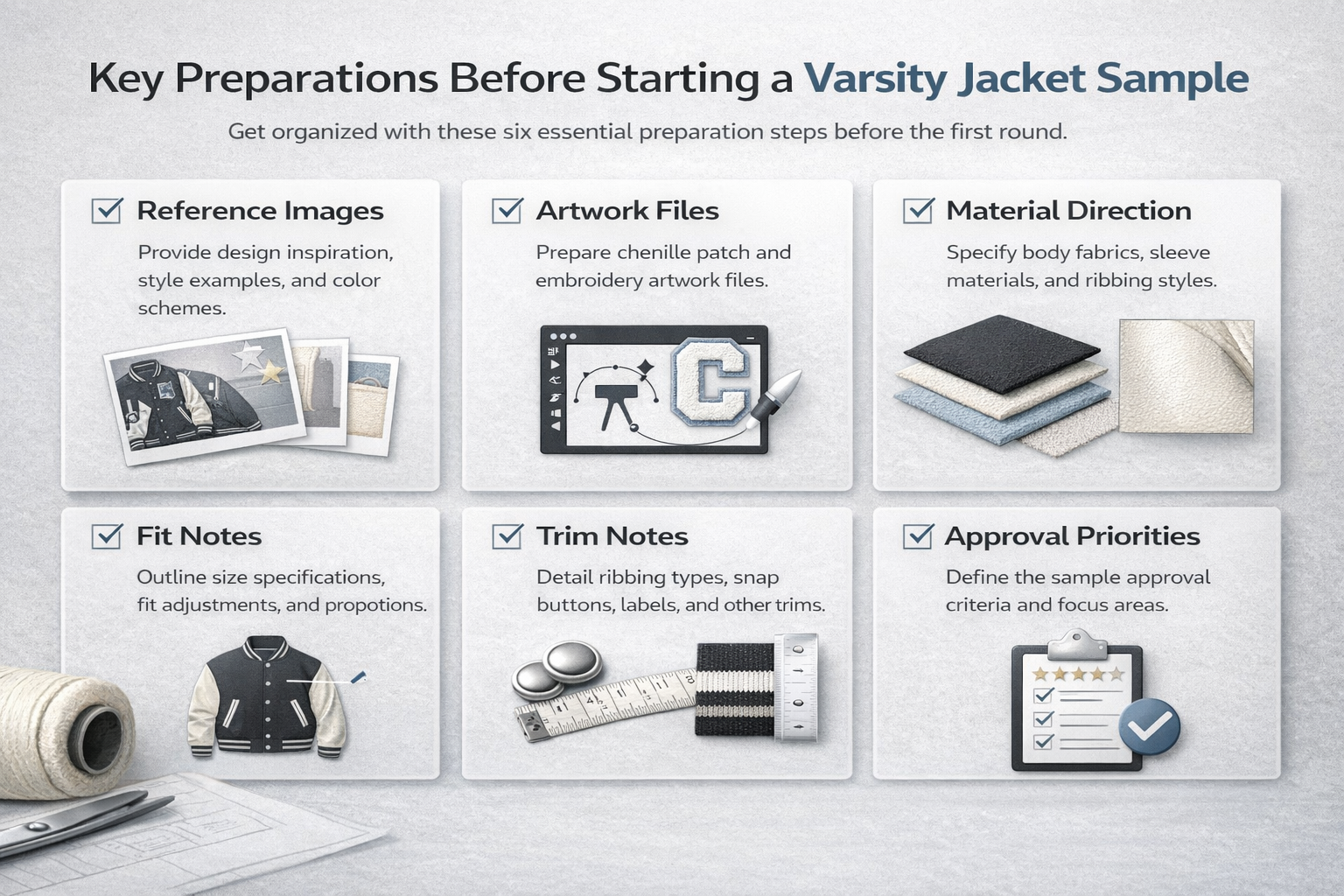
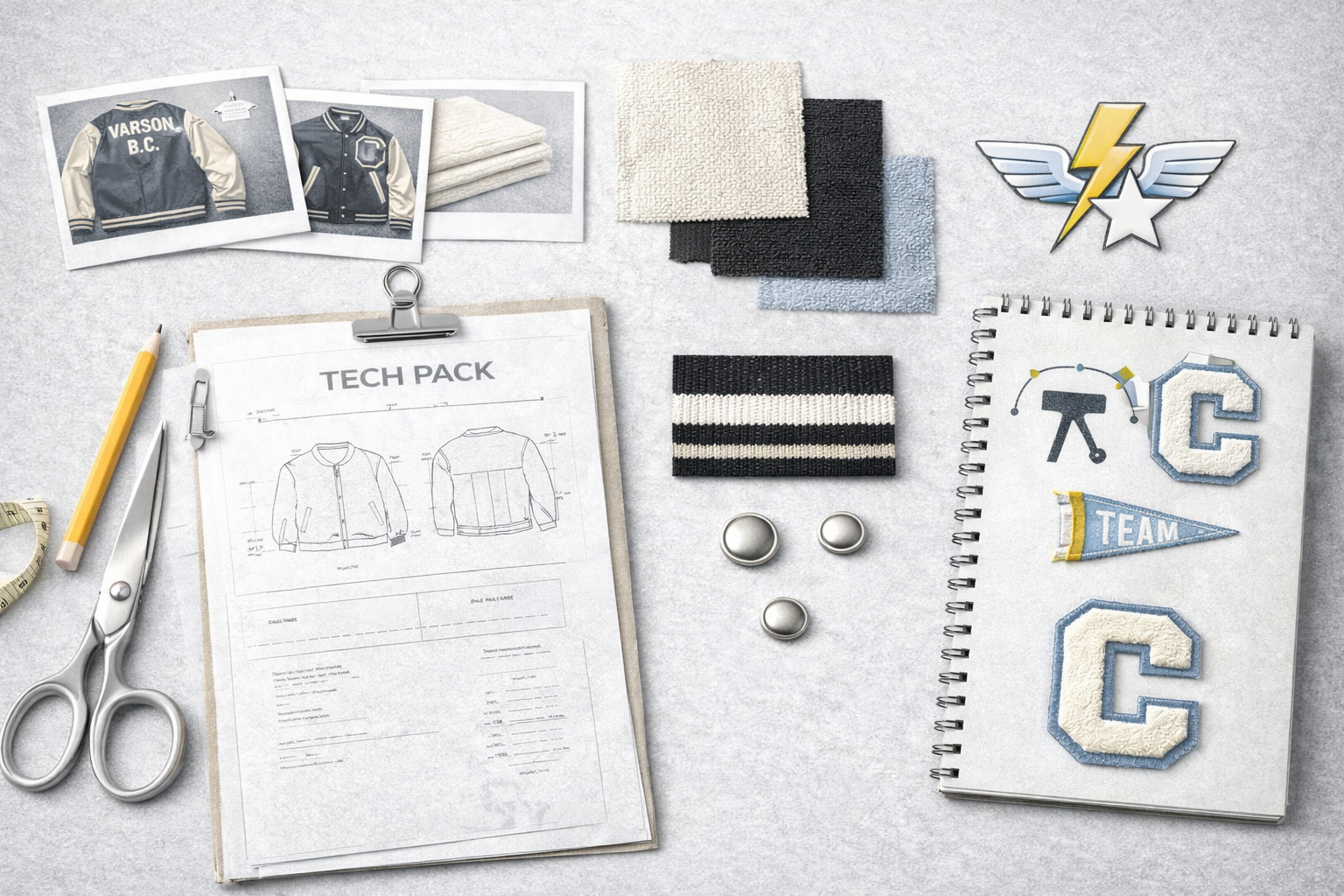
A strong varsity jacket sample request usually includes more than a sketch. In many cases, the supplier needs a practical input package that explains the intended look, structure, and decision priorities.
1. Reference Images
Reference images should show the front, back, and useful close-up details when possible. If the project combines ideas from different jackets, that should be explained clearly instead of expecting the supplier to guess the final direction.
2. Artwork Files
If the jacket includes chenille letters, embroidery, applique, woven labels, or printed details, artwork files should be prepared early. When available, editable files usually help reduce avoidable interpretation errors.
3. Material Direction
The buyer should explain the preferred body and sleeve direction as clearly as possible. Exact fabric codes are not always required in the first step, but the target category should usually be defined.
4. Fit Comments
A varsity jacket sample usually becomes easier to evaluate when the buyer explains whether the target fit is regular, boxy, oversized, cropped, or relaxed. Without fit comments, the first sample may look visually off even if the construction is correct.
5. Trim Notes
Trim notes often include:
rib direction
snap button preference
pocket logic
lining direction
label placement
hanging loop or interior detail requirements when relevant
6. Approval Priorities
One of the most useful parts of the input package is a short note explaining what should be approved first. For example:
silhouette first
material pairing first
chest branding first
trim balance first
This is often more useful than sending more images without context.
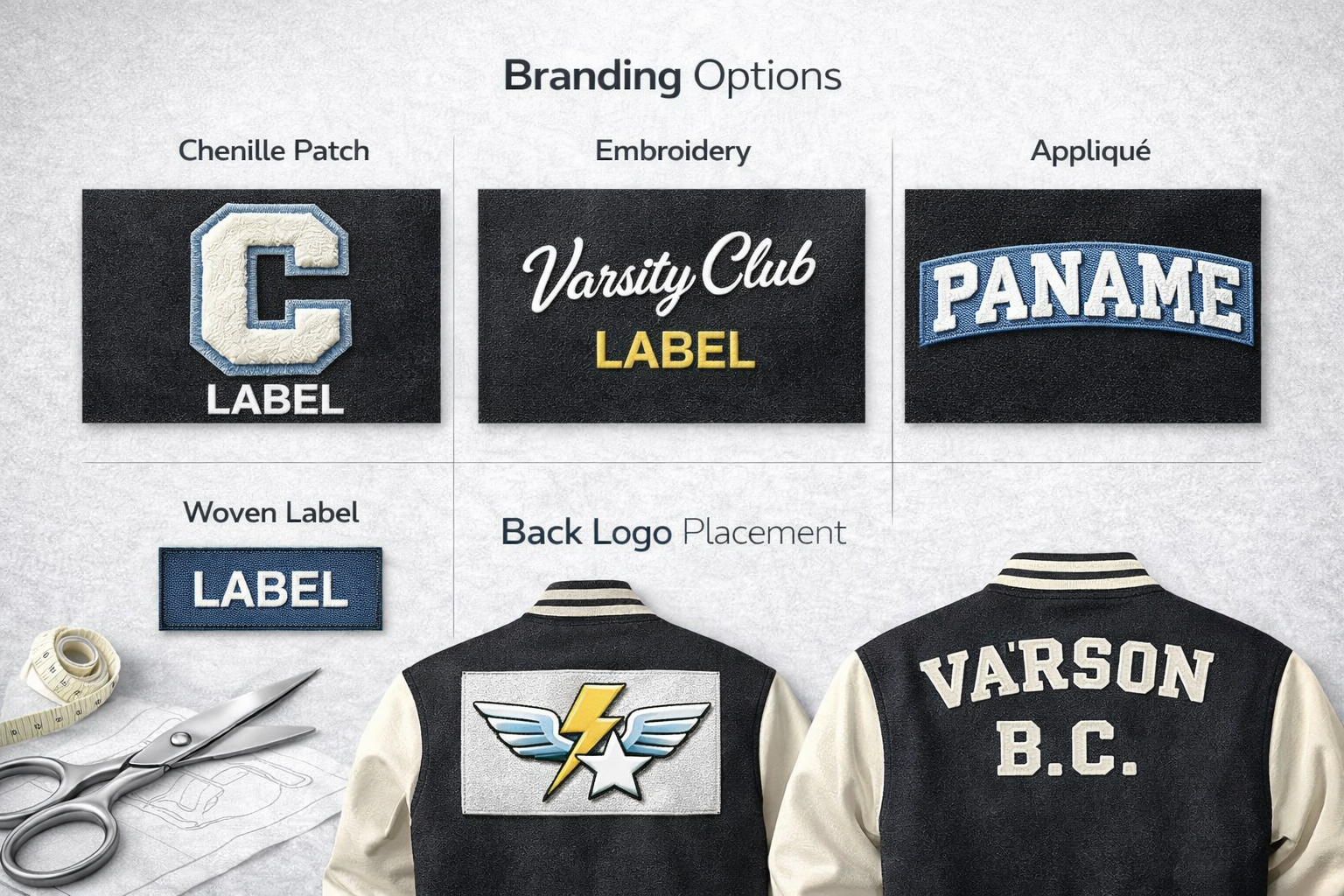
How to Prepare Artwork, Patch, and Branding Details Without Overloading the First Sample
Branding is one of the most visible parts of a varsity jacket, but it is also one of the easiest areas to overcomplicate in the first sample round. A better approach is usually to decide which branding element leads the product and which details can wait until later revisions.
A buyer should usually prepare:
1.logo size notes
2.placement direction
3.chest versus back priority
4.chenille versus embroidery preference
5.whether multiple methods are necessary in the first sample
A strong varsity jacket does not always need every method at once. In many projects, one main patch direction and one supporting branding detail are enough to make the first sample more useful.
How to Prepare Material and Trim Decisions Without Pretending Everything Is Final
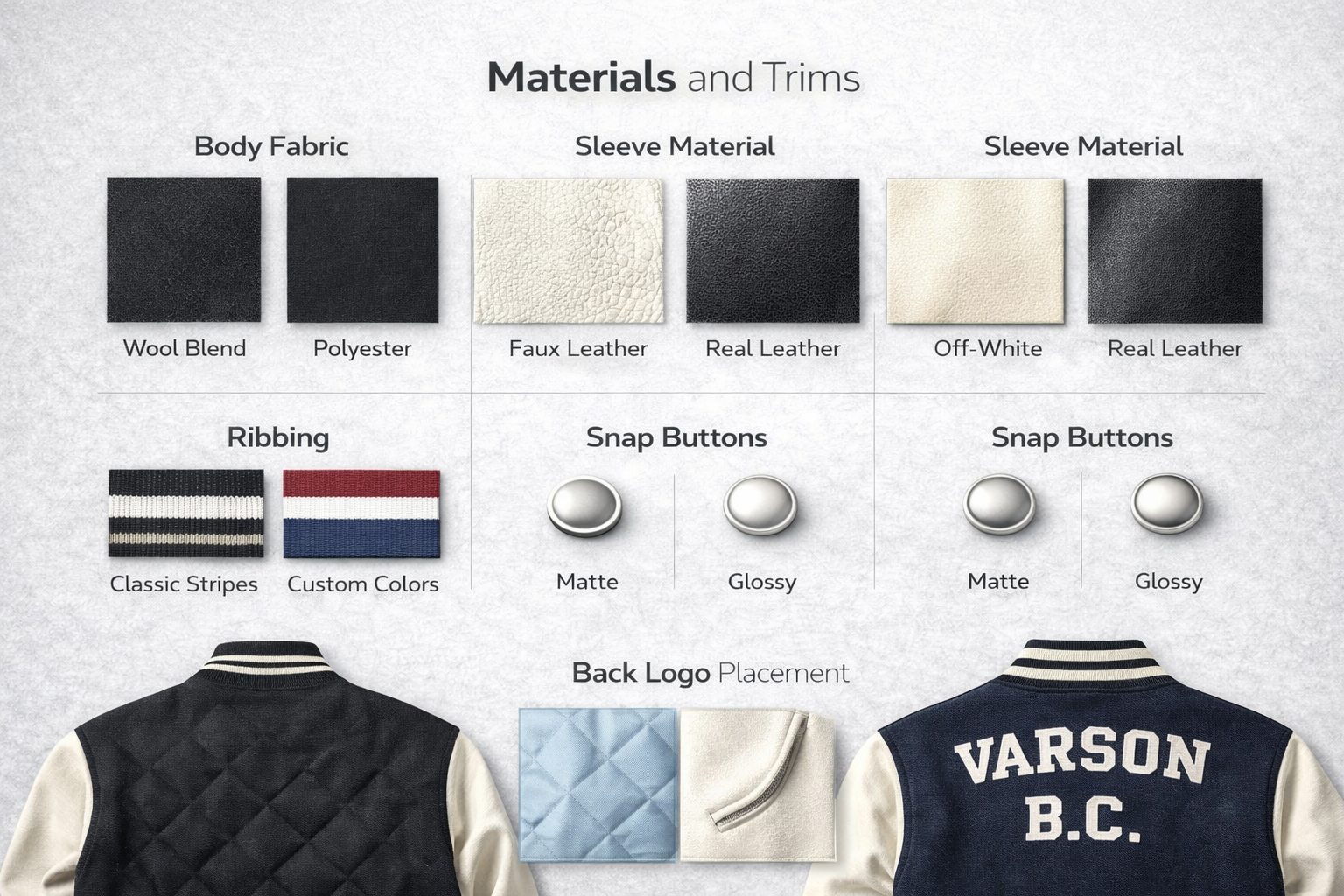
Not every material and trim detail needs to be completely finalized before the first sample, but the core structure usually should be narrowed down.
A buyer should usually clarify:
1.the intended body material category
2.the intended sleeve material category
3.whether rib should feel more classic or cleaner
4.whether the closure should use snaps or another front direction
5.whether pocket shape is decorative, functional, or both
This often helps the supplier build a more accurate first sample while leaving smaller refinements for later. It also supports a more practical Service Process because the review sequence becomes clearer.
A Practical Pre-Sample Checklist for a Private Label Varsity Jacket Program
Before starting a varsity jacket sample, a buyer should usually confirm the following:
product direction
front and back reference images
artwork files or patch references
body and sleeve material direction
rib and closure notes
fit comments
branding placement priorities
first-round approval sequence
comments on what can wait for later rounds
This checklist does not need to look perfect. It only needs to be clear enough for the supplier to know what kind of sample should be built first.
Factory Reality: Better Preparation Usually Matters More Than More References
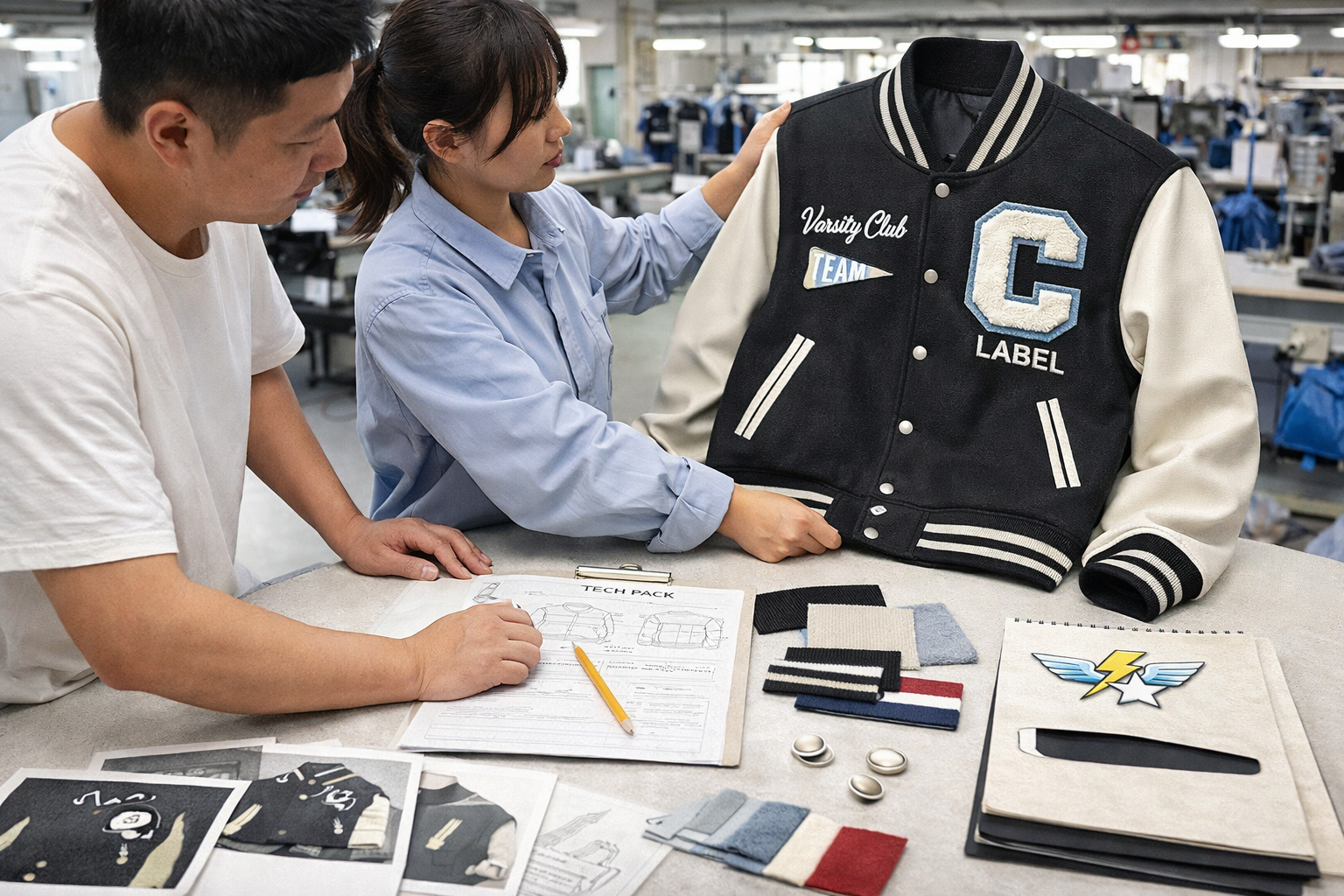
From a factory perspective, the first varsity jacket sample usually works best when the buyer has prepared a smaller number of clear decisions instead of a larger number of unfinished ideas. More references do not automatically create a better sample. Better structure usually does.
At Vanrd in Dongguan (Humen), a more workable first sample usually comes from defining the product direction, material pairing, branding priority, and fit logic early enough that the supplier can build the right version first instead of testing too many conflicting ideas.
Three factory realities matter here:
The First Sample Is Usually for Direction, Not Perfection
A first sample often needs to confirm product direction before every trim and branding detail becomes final.
Patch and Material Decisions Affect Each Other
Chenille, embroidery, and applique do not sit on the jacket in isolation. Their visual balance usually depends on body fabric, sleeve contrast, and silhouette.
Quality Review Starts During Development
For varsity jackets, Q and C should start during sample development, especially when trim balance and branding placement matter. Buyers should also consider whether the supplier has the right Factory Strength for coordinated jacket development rather than only basic assembly.
Common Mistakes and Risk Watchpoints
Mistake 1: Sending Only Mood Images
Mood images can help, but they usually do not replace fit notes, trim direction, or branding priorities.
Mistake 2: Trying to Finalize Every Detail in the First Sample
The first sample usually works better when it is used to confirm the right structure before every smaller detail is fixed.
Mistake 3: Leaving Artwork Too Vague
If patch shape, lettering style, or placement is unclear, revisions can become slower and less efficient.
Mistake 4: Forgetting to Explain the Approval Order
A supplier can build a jacket more effectively when it is clear whether silhouette, materials, branding, or trims matter most in the first sample.
Mistake 5: Treating Fit as a Later Problem
A varsity jacket sample may look visually promising, but if the fit direction is not defined early, later branding and trim adjustments can become less useful.
Next Steps: How to Start a More Workable Varsity Jacket Sample Program
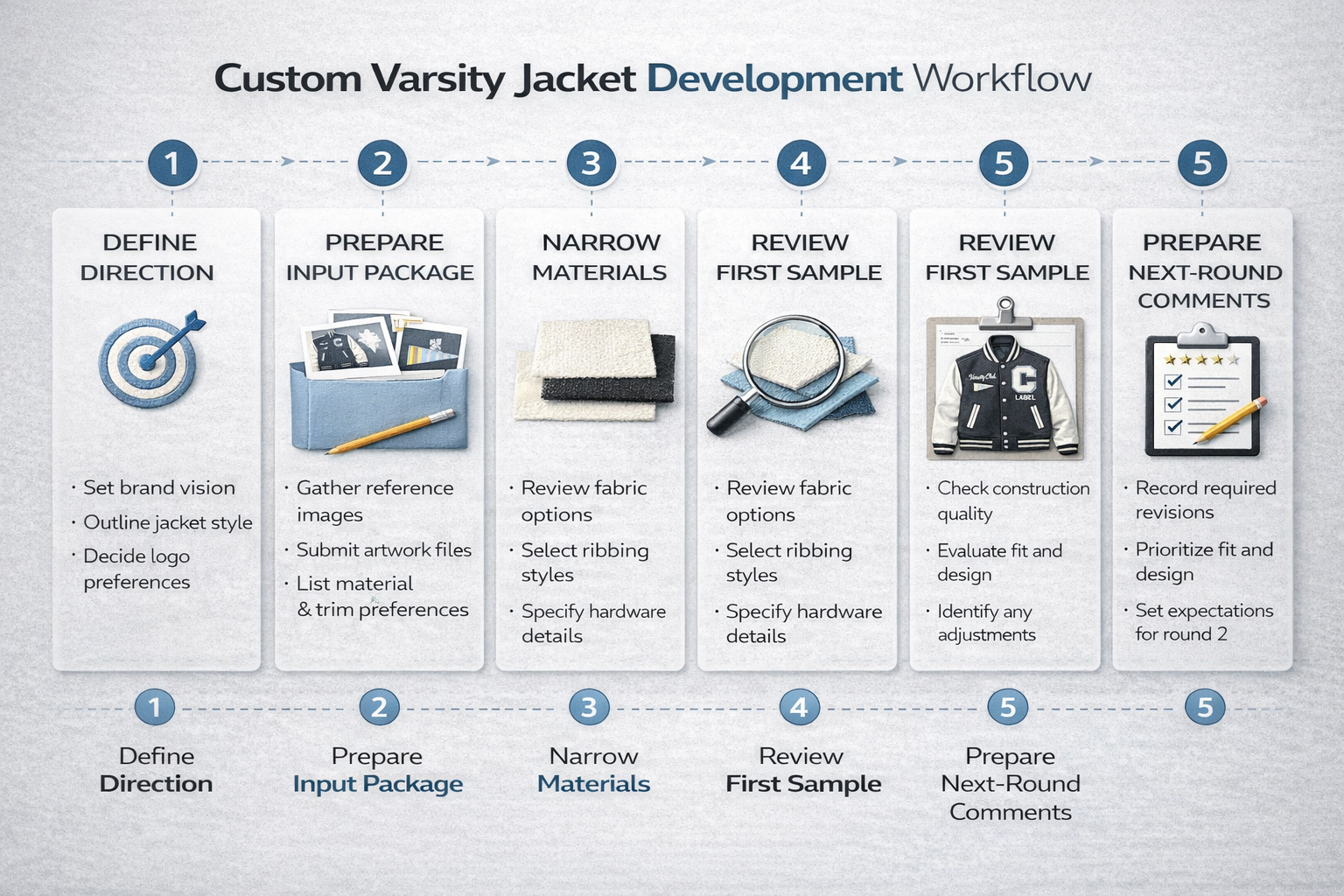
A more workable varsity jacket sample process usually looks like this:
Step 1: Define the Product Direction
Clarify whether the jacket is heritage-led, streetwear-led, oversized, or commercially simplified.
Step 2: Build the Input Package
Prepare references, artwork, material direction, fit notes, and approval priorities before sending the first request.
Step 3: Narrow the Core Material and Trim Logic
Decide the basic body and sleeve structure, rib direction, and closure logic before refining every visible detail.
Step 4: Review the First Sample in Order
Review the sample in sequence:
1.silhouette
2.material pairing
3.branding balance
4.trim direction
5.overall proportion
Step 5: Move Into Controlled Revision or Bulk Preparation
Once the sample confirms the right direction, move toward refinement, quotation, or further development through Contact Us with clearer notes and updated priorities.
FAQ
Do I need a full tech pack before starting a varsity jacket sample?
Not always a highly detailed one, but a clear spec package usually helps the supplier understand the product direction earlier.
What files should I send before requesting a varsity jacket sample?
A useful starting package usually includes reference images, artwork files when available, fit notes, material direction, trim comments, and approval priorities.
How long can varsity jacket sampling take when branding and trims are still being refined?
The timeline often depends on how many branding, material, and fit revisions are still open after the first sample review.
Should chenille patch artwork be finalized before the first sample?
In many cases, the general patch direction and size should be prepared early, even if some smaller refinements still happen later.
What is the biggest reason varsity jacket samples need extra revisions?
A common reason is that the buyer has not yet defined the product direction or approval order clearly enough before development starts.
Can I start with one patch direction and add more branding later?
Yes. In many cases, that is a more efficient way to confirm the product structure before increasing complexity.
How should brands compare suppliers before starting a varsity jacket sample?
Brands should usually compare supplier capability in material sourcing, patch handling, trim coordination, communication clarity, and jacket development workflow rather than relying only on broad claims.
Final CTA
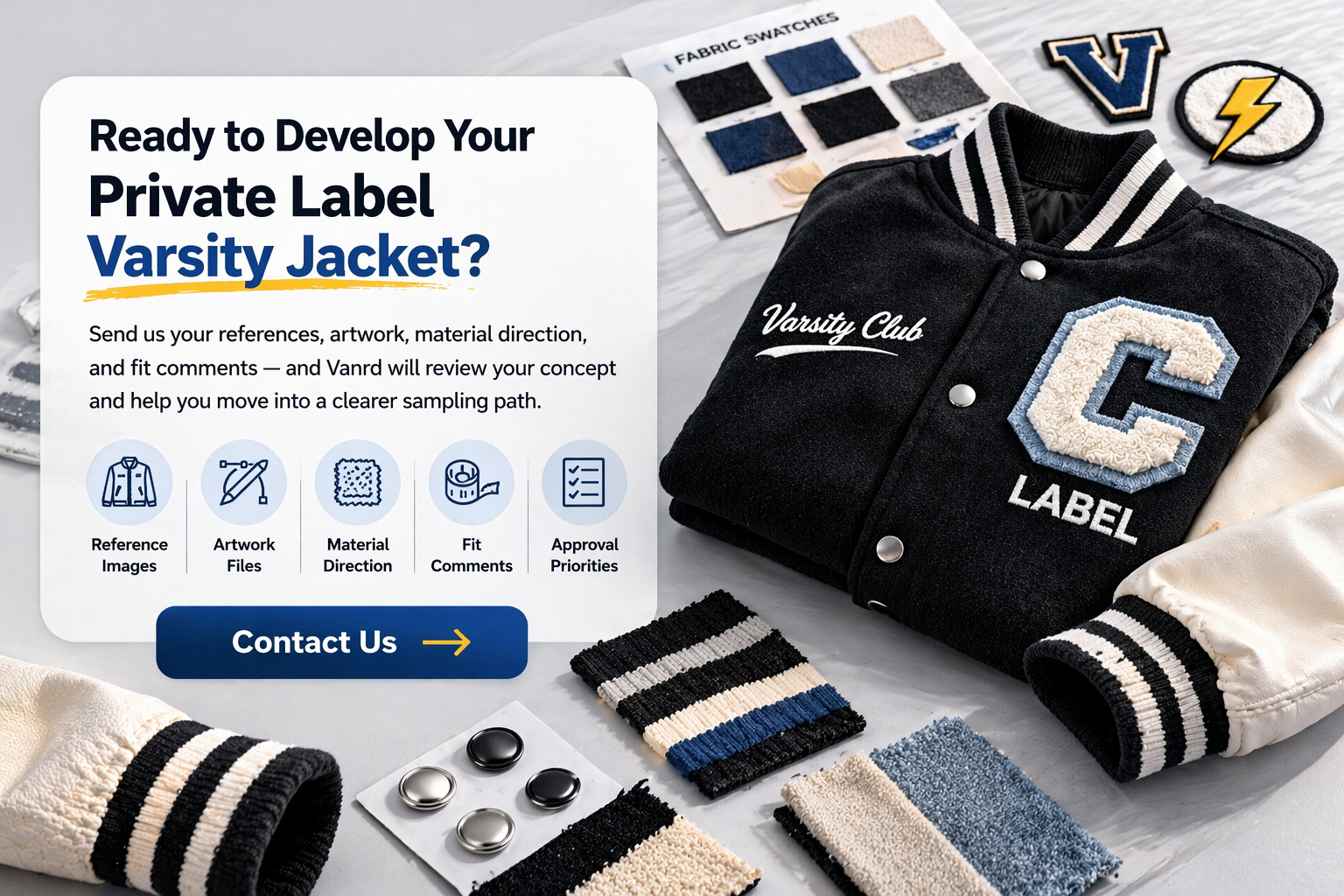
If your brand is planning a private label varsity jacket program, the easiest way to reduce sample revisions is to start with a clearer input package and approval order. Send your references, artwork files, material direction, and fit comments to Contact Us so Vanrd can review the concept and help you move into a more workable sampling path.