How to Choose the Right Materials and Construction Details for Custom Bomber Jacket Programs
A custom bomber jacket usually develops more smoothly when the brand locks the end use, shell material, lining logic, and trim structure before chasing smaller styling details. The best material choice often depends on season, target weight, silhouette, and how clean or technical the final jacket should feel. In B2B manufacturing, a clearer construction order usually leads to better samples, fewer revisions, and more stable bulk execution.
Quick Answers
What should a brand define first before developing a custom bomber jacket?
A brand should usually define the jacket's end use first, then lock the shell material, lining direction, silhouette, and trim priorities.
What materials are commonly used in bomber jackets?
Common options can include nylon, polyester, twill, satin-like fabrics, cotton blends, quilted linings, and rib trims, depending on the target look and season.
Do lightweight and padded bomber jackets need different construction planning?
Yes. In many cases, padding, lining, and internal structure can change fit, shape, and the final production workflow.
Are bomber jacket trims just styling details?
Not really. Rib, zipper, pocket construction, and lining choices can all affect both the look and the sample complexity.
What should buyers send before requesting a bomber jacket sample?
Buyers should usually send reference images, artwork files if needed, shell and lining direction, fit comments, trim notes, and first-round approval priorities.
Can the wrong material make a bomber jacket look off even if the design is correct?
Yes. A shell that is too stiff, too shiny, too thin, or too soft can change how the whole jacket reads.
How can brands reduce revisions in bomber jacket development?
A clearer approval order usually helps. Start with end use and material direction, then refine trim details and branding on the actual sample.
Why Material and Construction Decisions Matter So Much in Bomber Jacket Development
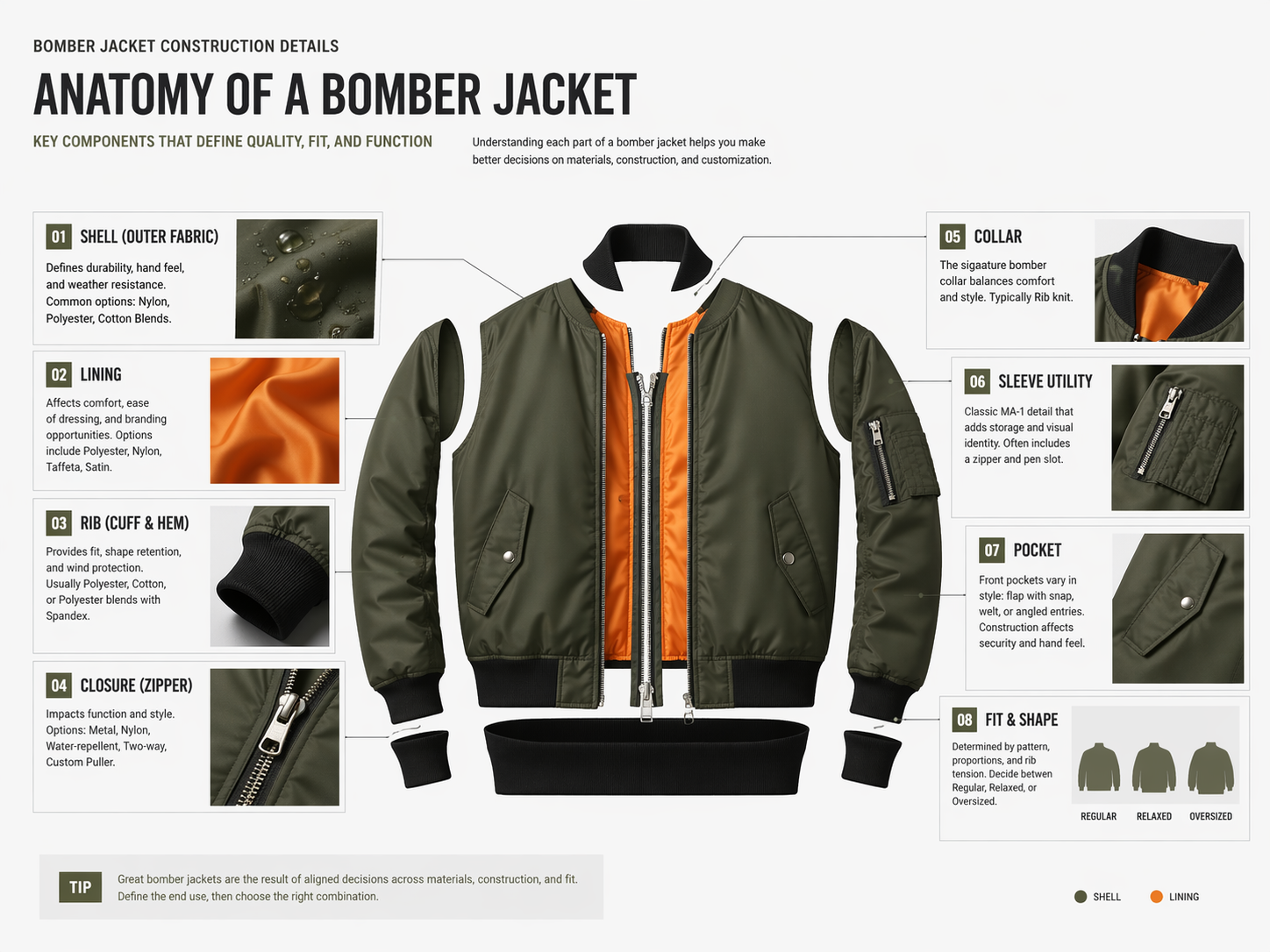
A bomber jacket usually looks simple from a distance, but the product often depends on several linked construction choices. Shell, lining, rib, zipper, sleeve utility pocket, internal structure, and silhouette all influence the final result. If these parts are not prioritized early, the sample process can become less efficient.
That is why choosing the right materials is not only a sourcing question. It is a product-development decision that affects shape, comfort, branding, wearability, and production stability at the same time.
For private label projects, this is also why early alignment on OEM/ODM Services
and the technical direction in Fabrics and Techniques usually helps more than discussing every detail at once.
The First Check: Define the End Use Before Comparing Fabrics
A custom bomber jacket usually develops more efficiently when the brand defines the actual end use first. The same category can serve different purposes:
a lightweight fashion bomber for transitional weather
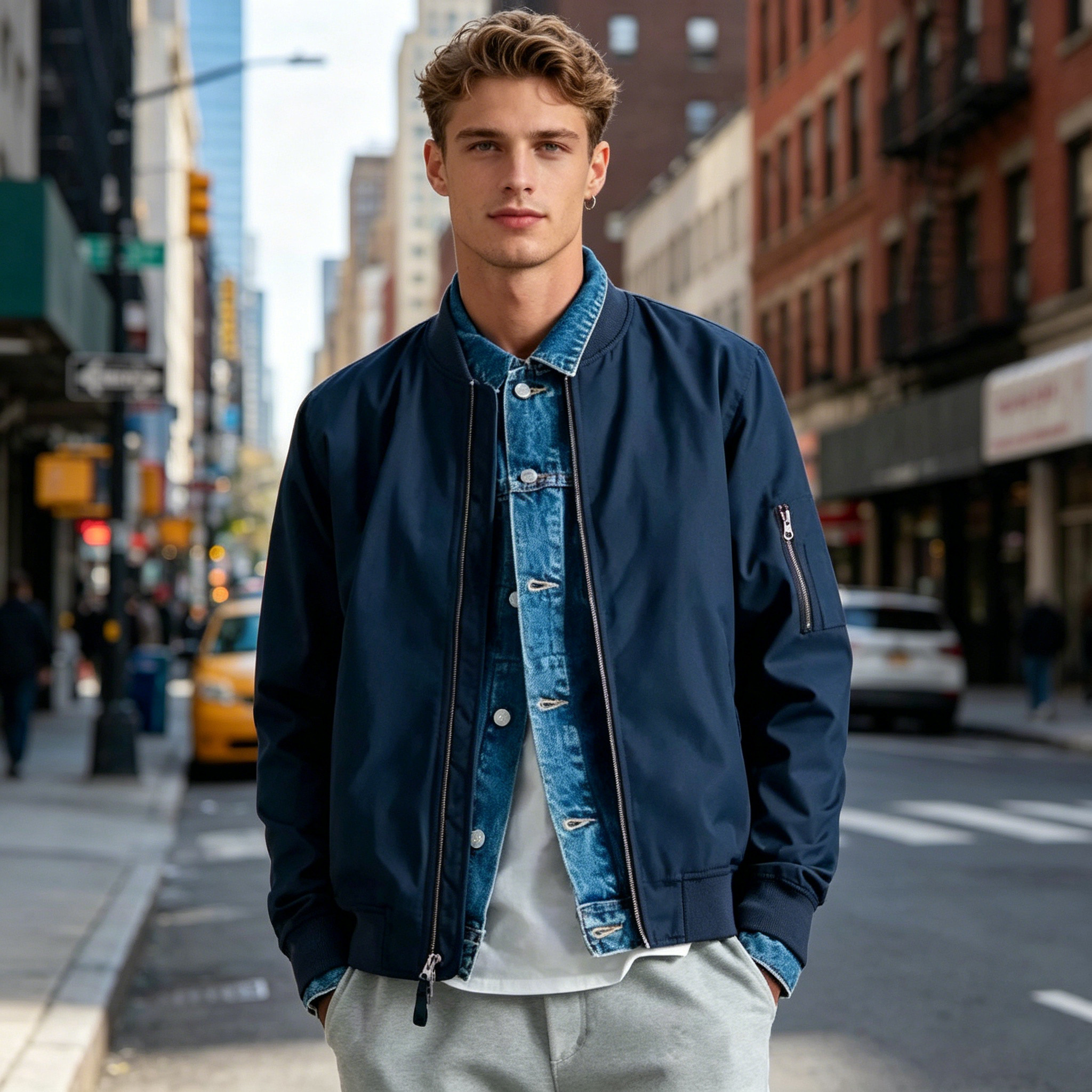
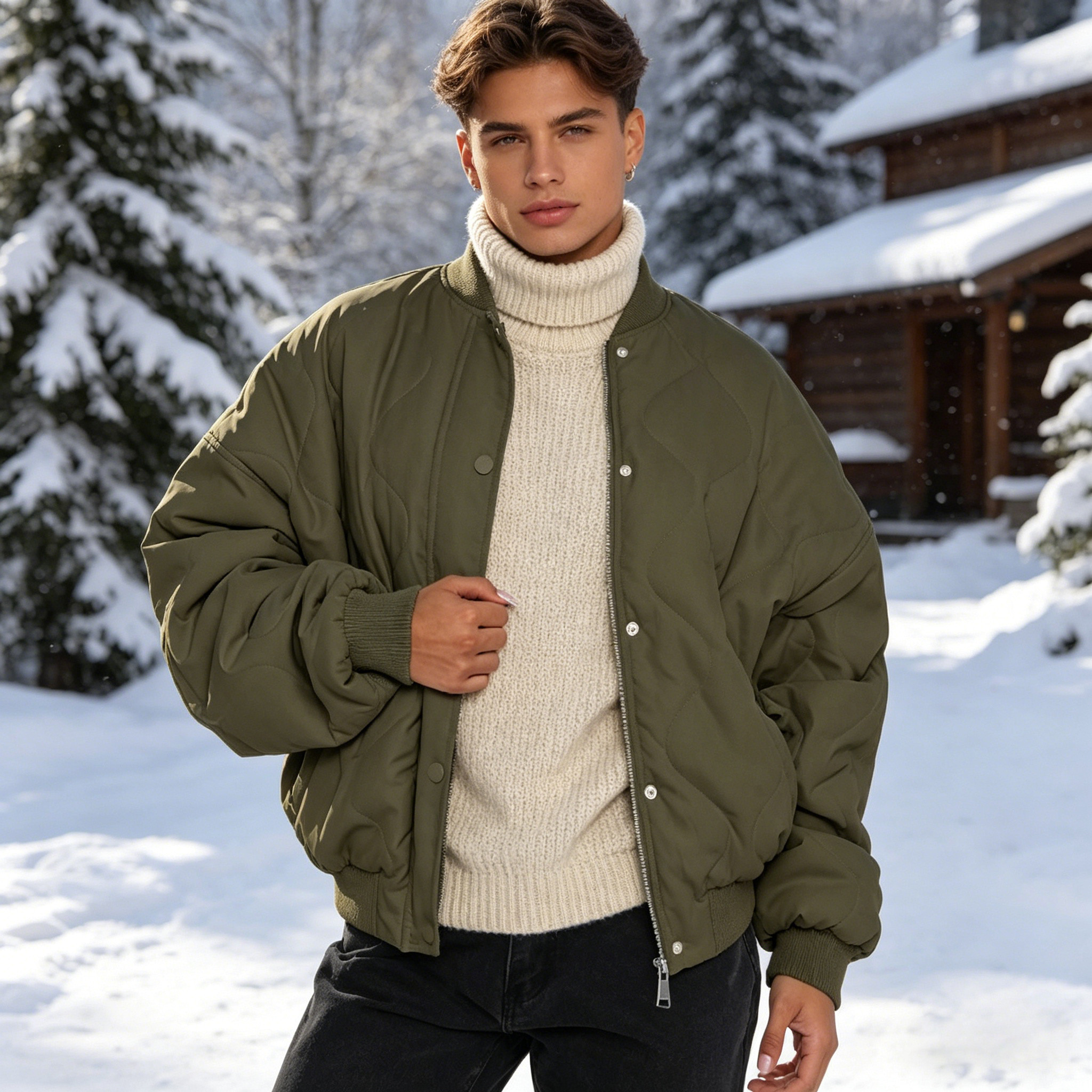
a padded bomber for colder-season programs
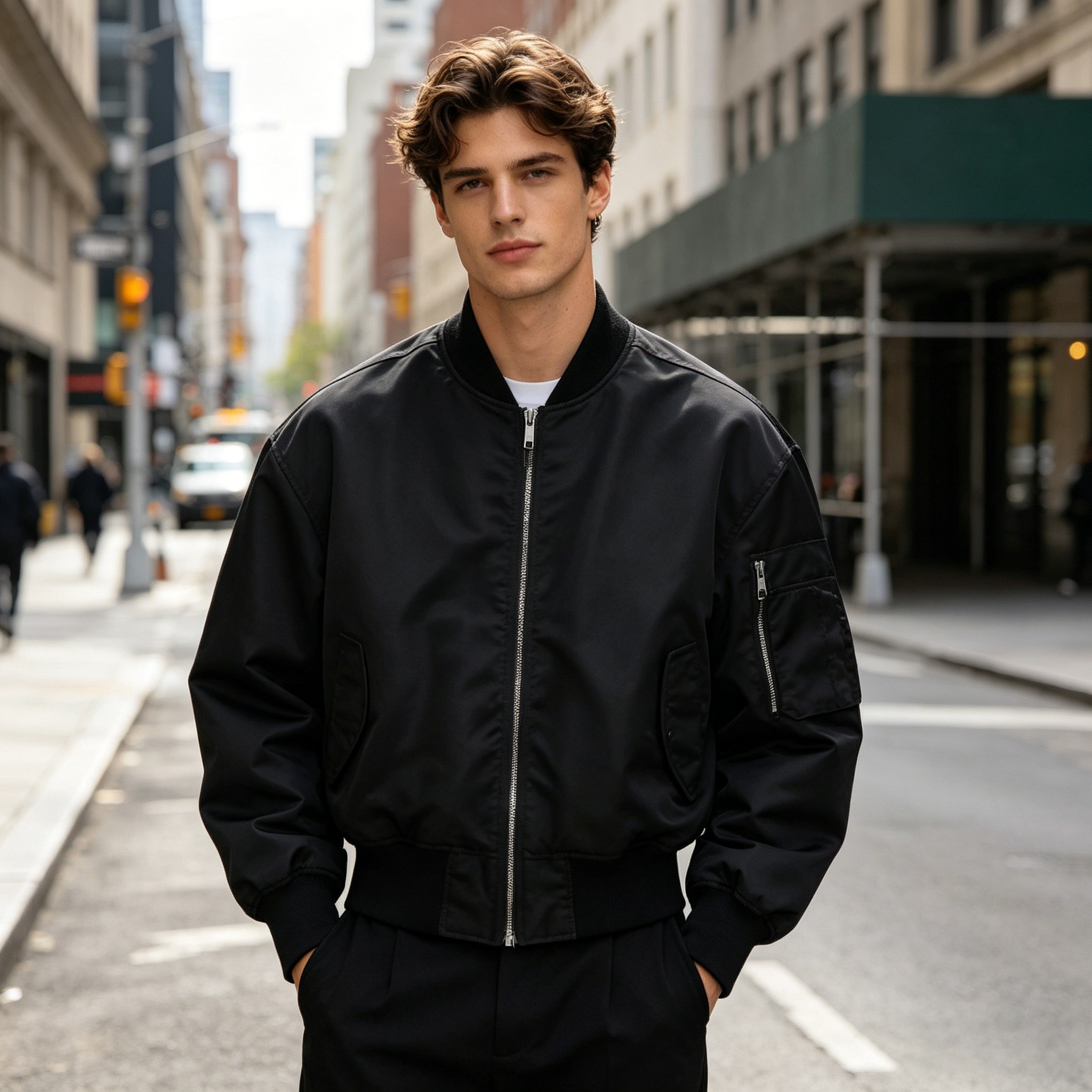
a clean merch bomber for broader brand use
a streetwear-led bomber with stronger fit and branding presence
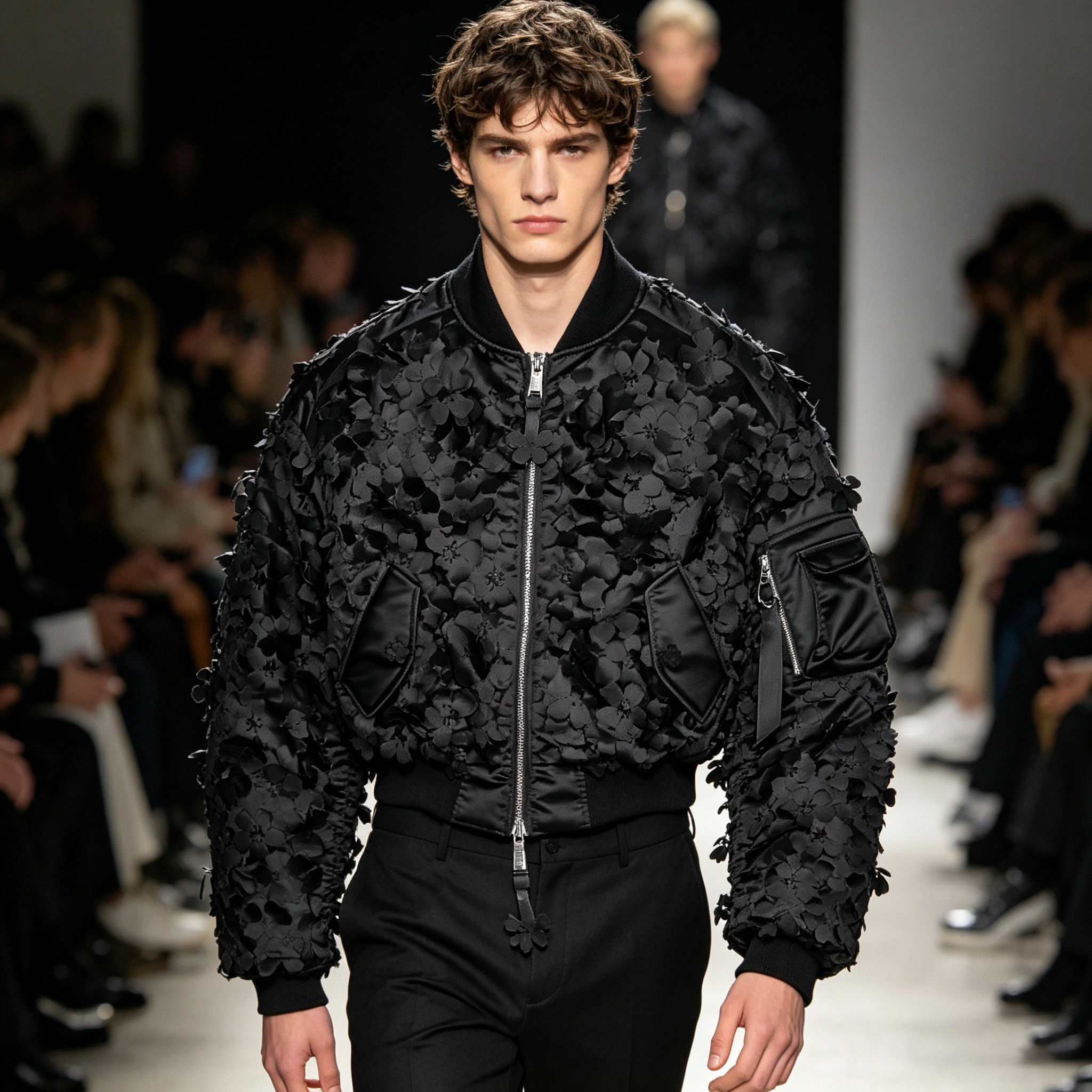
These are not the same project. A shell that works for one direction may feel wrong for another. A padded structure may support one silhouette but weaken another. A bomber built for cleaner branding may need a different surface from one designed around technical utility.
Fashion-Led Direction
A fashion-oriented bomber often needs better drape, cleaner panel balance, and a more controlled finish.
Streetwear-Led Direction
A streetwear-focused bomber often places more emphasis on silhouette, rib proportion, surface character, and visible branding.
Utility or Merch Direction
A utility or merch-led bomber often benefits from simpler material decisions so the jacket stays scalable and commercially workable.
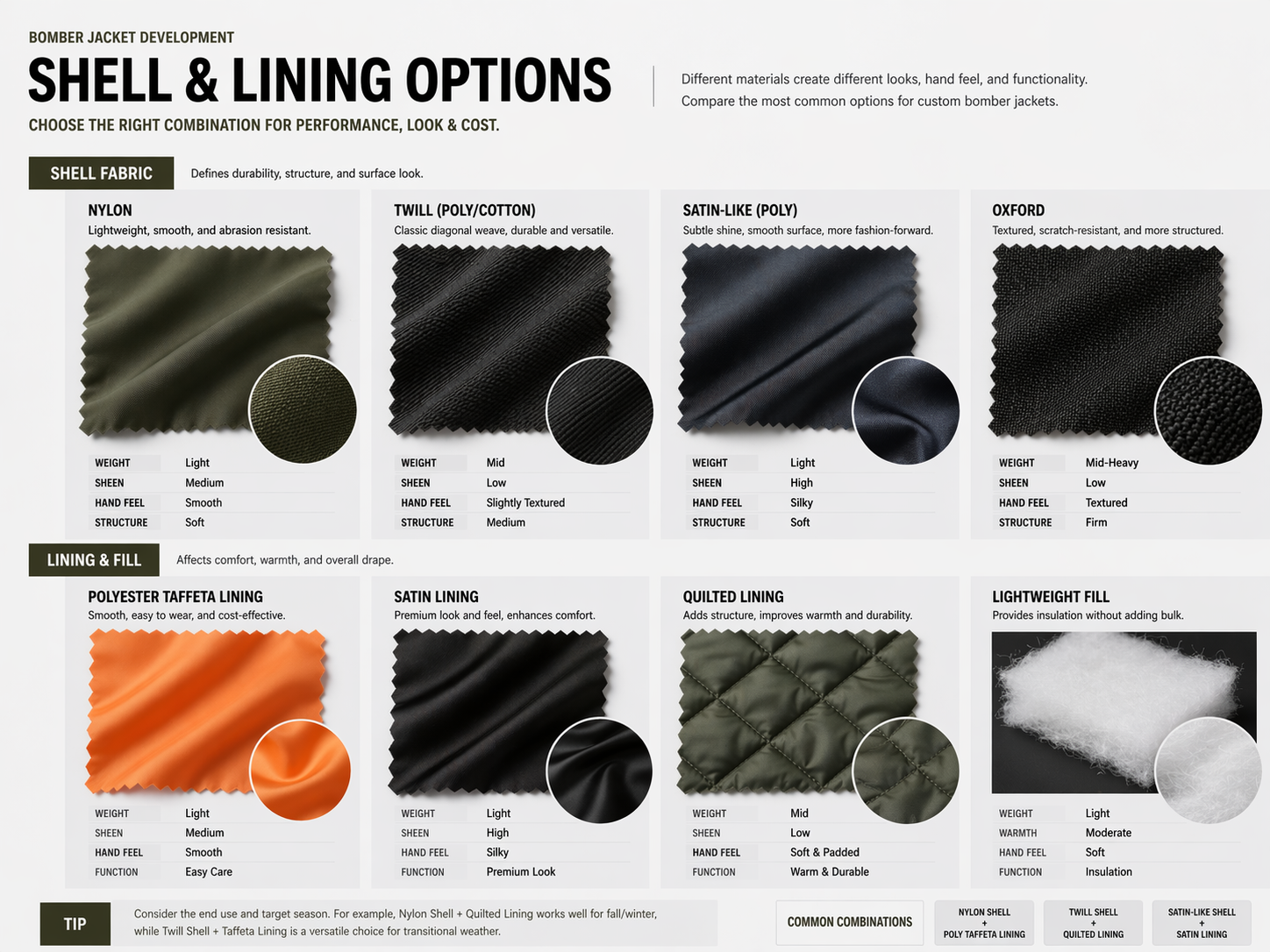
The Second Check: Choose the Right Shell, Lining, and Fill Combination
The shell material usually sets the first impression of a bomber jacket. It influences shine, structure, weight, handfeel, and how technical or casual the final garment appears.
A buyer should usually compare:
1.surface finish
2.weight and body
3.matte versus shinier appearance
4.stiffness versus drape
5.how the shell works with the intended lining
6.whether fill is needed for the target season
Lining is not a secondary decision. It affects comfort, internal stability, and how the jacket carries shape. For some programs, a clean unpadded lining is enough. For others, quilted lining or light fill may be more suitable.
A stronger shell and heavier lining can create a more substantial bomber, while a lighter shell and simpler lining often support transitional-weather programs better.
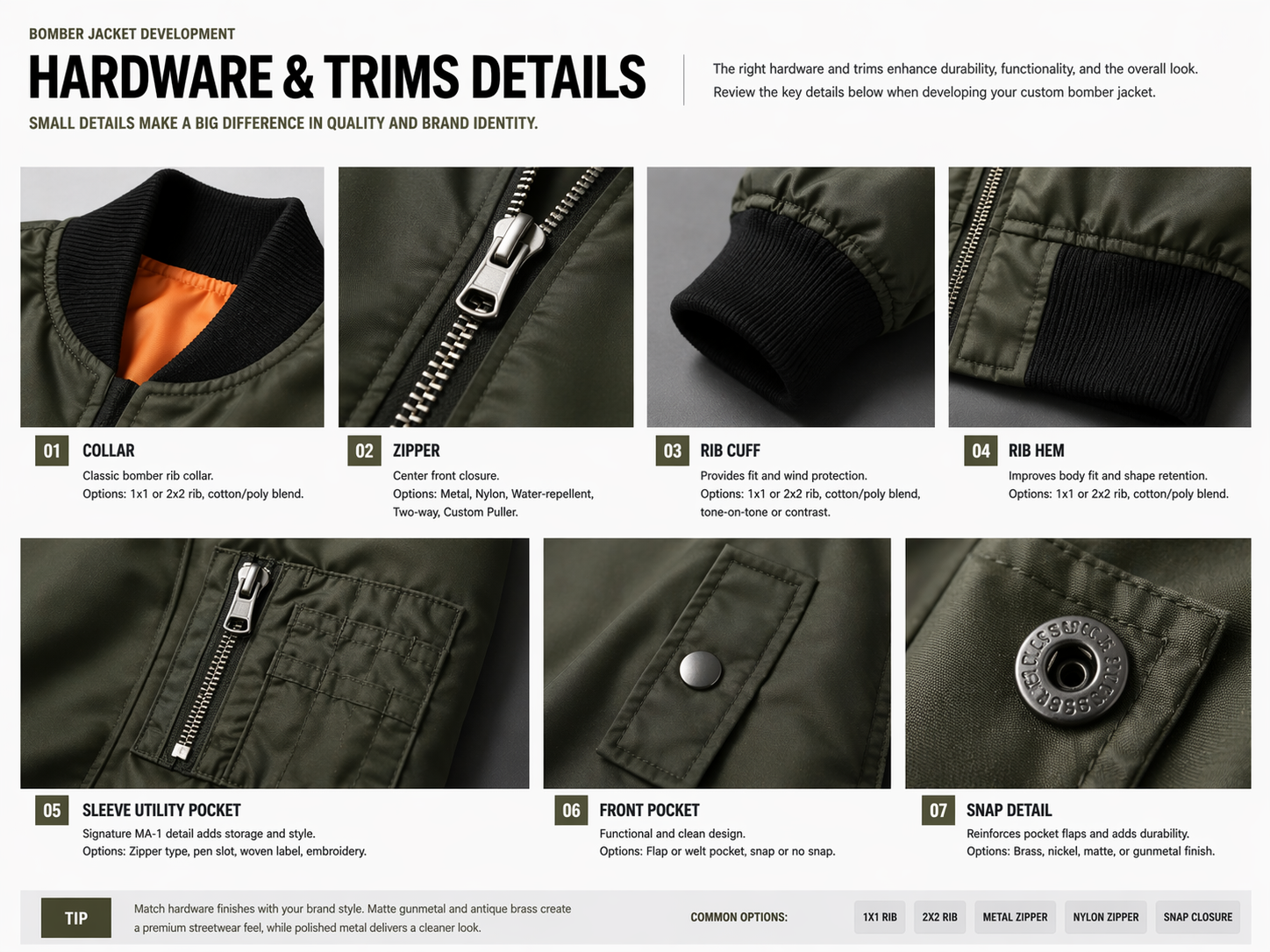
The Third Check: Rib, Zipper, Pockets, and Collar Details Should Match the Product Direction
A bomber jacket often becomes overcomplicated when trim decisions are treated as isolated styling choices instead of part of the construction logic.
Rib Structure
Rib usually affects both comfort and identity. Buyers should check:
1.rib weight
2.rebound and recovery
3.stripe or solid direction
4.whether the rib creates a cleaner or stronger bomber look
Zipper and Closure Direction
A zipper is one of the most visible construction details on a bomber. Buyers should usually decide:
1.metal versus coated finish
2.exposed versus cleaner front appearance
3.whether the closure should feel technical, minimal, or classic
Pocket Logic
Pocket structure should support the intended product direction. Not every bomber needs extra utility pockets. In many cases, clearer pocket logic creates a stronger result than adding more details.
Collar and Neck Balance
Bomber collars can look more compact, more technical, or more relaxed depending on the body shape and rib proportion. This detail should be reviewed together with the silhouette, not separately.
Lightweight vs Padded Bomber Jackets: A Practical Comparison
| Element | Lightweight Bomber Jacket | Padded Bomber Jacket |
Best for | transitional weather, lighter layering, broader styling | colder seasons, stronger structure, heavier visual presence |
Shell choice | often lighter and more flexible | often needs more body and support |
Lining logic | simpler lining can be enough | lining and fill usually affect volume and warmth |
| Fit impact | easier to keep cleaner and less bulky | silhouette can become fuller and more structured |
| Sampling focus | shell handfeel, trim balance, branding scale | bulk, volume, quilting, fill stability, and mobility |
A lightweight bomber is usually more suitable for transitional or broader commercial programs, while a padded bomber is often more suitable when the product needs more seasonal weight and visual presence. The right choice depends on the end use and brand direction, not only on appearance. | ||
A Practical Pre-Sample Checklist for Custom Bomber Jackets
Before requesting a bomber jacket sample, a brand should usually prepare:
1.front and back reference images
2.intended use case
3.shell material direction
4.lining or fill preference
5.fit comments, including silhouette and layering expectations
6.trim notes for rib, zipper, pockets, and collar
7.branding placement notes
8.a clear list of first-round approval priorities
This usually makes the Service Process more efficient because the supplier can review the jacket in a clearer sequence.
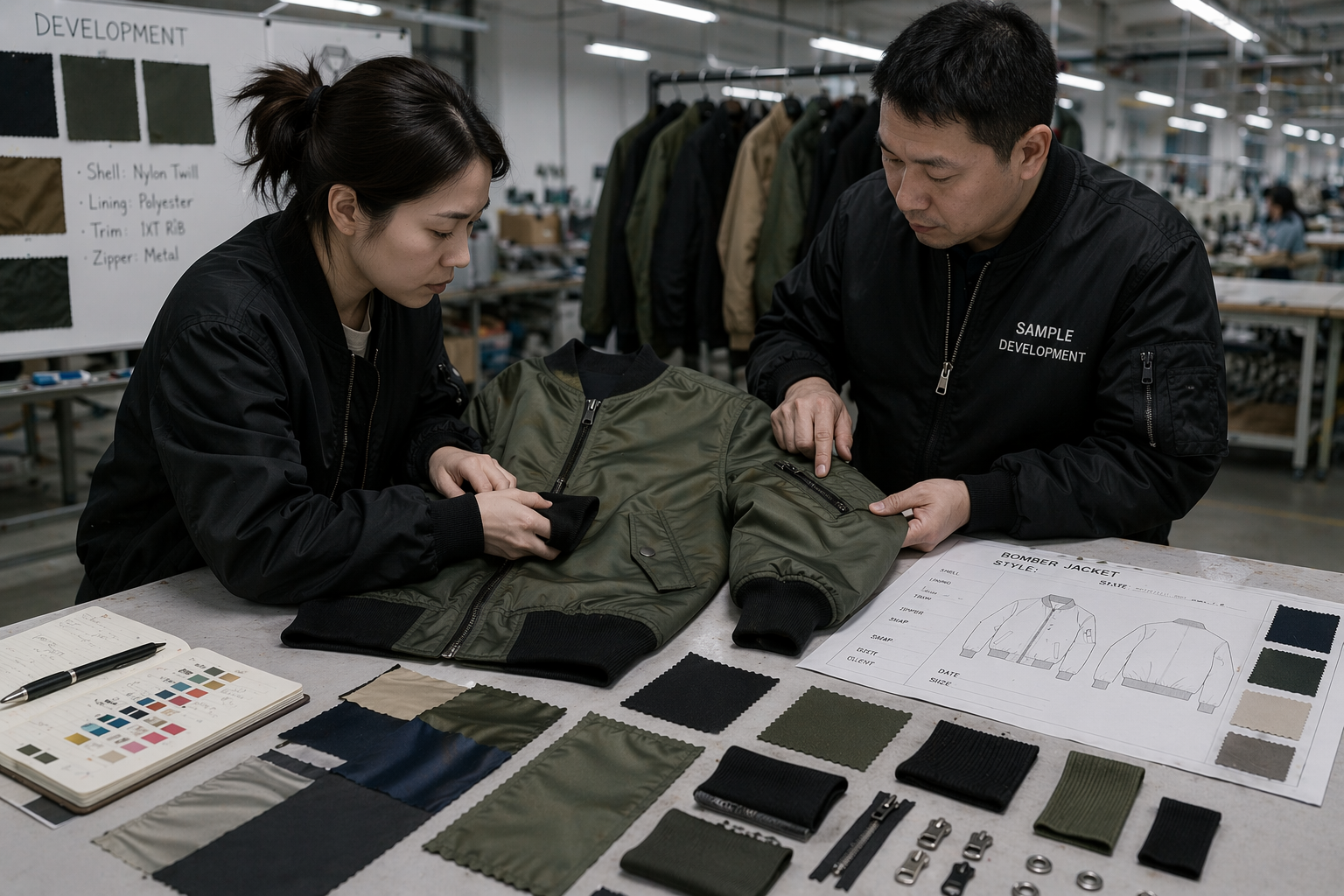
Factory Reality: Bomber Jackets Usually Need Better Material Discipline Than Buyers Expect
From a factory perspective, bomber jacket development usually becomes less efficient when the buyer is still changing shell, lining, trim, and silhouette at the same time. The challenge is not only technical execution. The bigger issue is whether the development sequence is clear enough for the sample to solve the right problems first.
At Vanrd in Dongguan (Humen), a better bomber sample usually comes from deciding the shell and lining direction early, then refining construction details and branding after the main body is moving in the right direction.
Three factory realities matter here:
Shell and Lining Affect Shape Together
The shell does not act alone. The lining and any fill can change how the jacket stands, folds, and wears.
Trim Decisions Can Create More Revision Points
Every change in rib, zipper, or pocket structure can add more sample comments and more approval layers.
Quality Control Starts Before Bulk Production
For bomber jackets, Q and C should begin during sampling, especially when shell structure, rib behavior, and closure details all matter. Buyers should also consider whether the supplier has the right Factory Strength for coordinated outerwear development rather than only basic assembly.
Common Mistakes and Risk Watchpoints
Mistake 1: Choosing Shell Material Only From Appearance
A shell may look correct in a reference image but still behave differently in weight, stiffness, shine, and structure.
Mistake 2: Treating Lining as a Minor Detail
Lining can affect comfort, volume, movement, and how the whole jacket sits on the body.
Mistake 3: Adding Too Many Utility Details Without Clear Purpose
Extra sleeve pockets, zipper details, and panel features can work, but too many of them can slow down approvals and dilute the product direction.
Mistake 4: Finalizing Branding Before the Sample Surface Is Stable
Branding should usually be reviewed on the actual shell and silhouette, not only on artwork.
Mistake 5: Leaving Approval Priorities Too Broad
If the buyer has not defined what matters most in the first sample, revisions can become slower and less efficient.
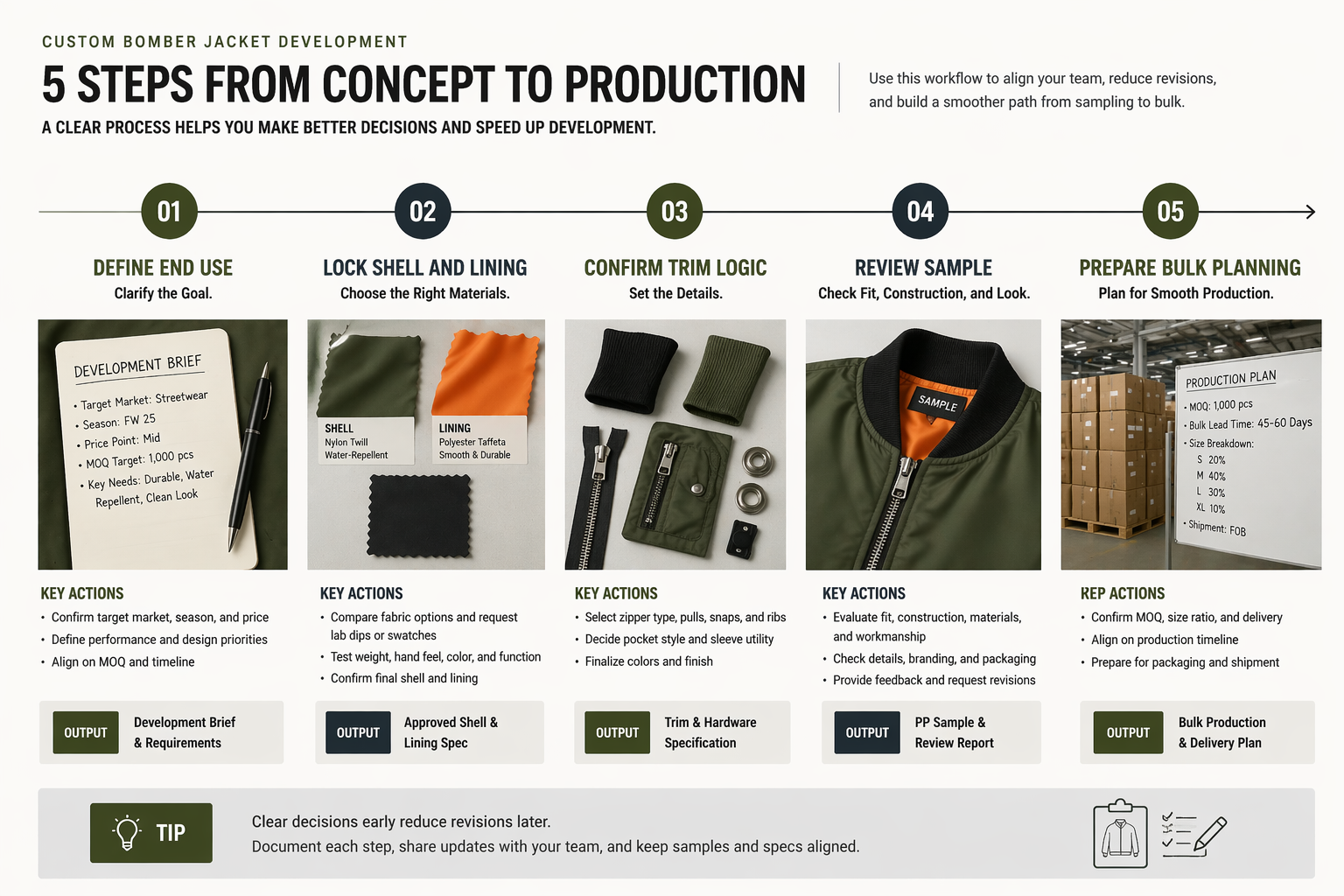
Next Steps: A Simpler Way to Build a Better Custom Bomber Jacket Program
A more workable bomber jacket development flow usually looks like this:
Step 1: Define the Product Direction
Clarify whether the jacket is lightweight, padded, fashion-led, utility-inspired, or merch-oriented.
Step 2: Lock the Shell and Lining Direction
Choose the shell category and internal structure before refining smaller styling details.
Step 3: Confirm Rib, Zipper, Pocket, and Collar Logic
Decide which construction details actually support the product concept.
Step 4: Review the First Sample in Order
Review the sample in sequence:
1.silhouette
2.shell behavior
3.lining balance
4.trim proportion
5.branding placement
Step 5: Move Into Controlled Bulk Planning
Once the structure is stable, move toward inquiry, sample refinement, and production planning through Contact Us with updated references and approval notes.
FAQ
What materials are commonly used in custom bomber jackets?
Common options can include nylon, polyester, twill, satin-like shells, various linings, rib trims, and optional fill depending on the target season and look.
What should I send before starting a bomber jacket sample?
A useful package usually includes reference images, shell and lining direction, fit comments, trim notes, branding placement, and first-round approval priorities.
Do lightweight and padded bomber jackets require different sampling logic?
Yes. Lining, fill, and shell balance can change fit, shape, and the technical review process.
How long can bomber jacket sampling take when multiple material options are still open?
The timeline often depends on how many shell, lining, trim, and fit revisions are still being reviewed.
What is the most common reason for extra bomber jacket revisions?
A common reason is that shell, lining, trim, and branding decisions are all being changed at the same time without a clear order.
Should bomber branding be reviewed before or after the material direction is confirmed?
In many cases, branding is easier to judge after the shell and silhouette are more stable.
Can a simpler bomber jacket still have strong private label identity?
Yes. In many cases, clear material direction, balanced construction details, and controlled branding create a stronger result than adding too many visible features.
Final CTA
If your brand is planning a custom bomber jacket program, the easiest way to reduce revisions is to start with a clearer order for shell, lining, trim, and construction decisions. Send your references, material direction, trim notes, and fit comments to Contact Us so Vanrd can review the concept and help you move into a more workable sampling path.