How to Choose a Jean Jacket Manufacturer in 2026: A Brand Guide to Sampling, Washes, MOQ, and Quality Control
Choosing a jean jacket manufacturer in 2026 is not only about finding a factory that can sew denim. Brands need to evaluate wash capability, sample accuracy, MOQ logic, trim control, and quality consistency before moving into bulk production. The right partner should help reduce revisions, clarify approvals, and make denim development more predictable.
Why a 2026 jean jacket buyer guide needs a stricter evaluation process
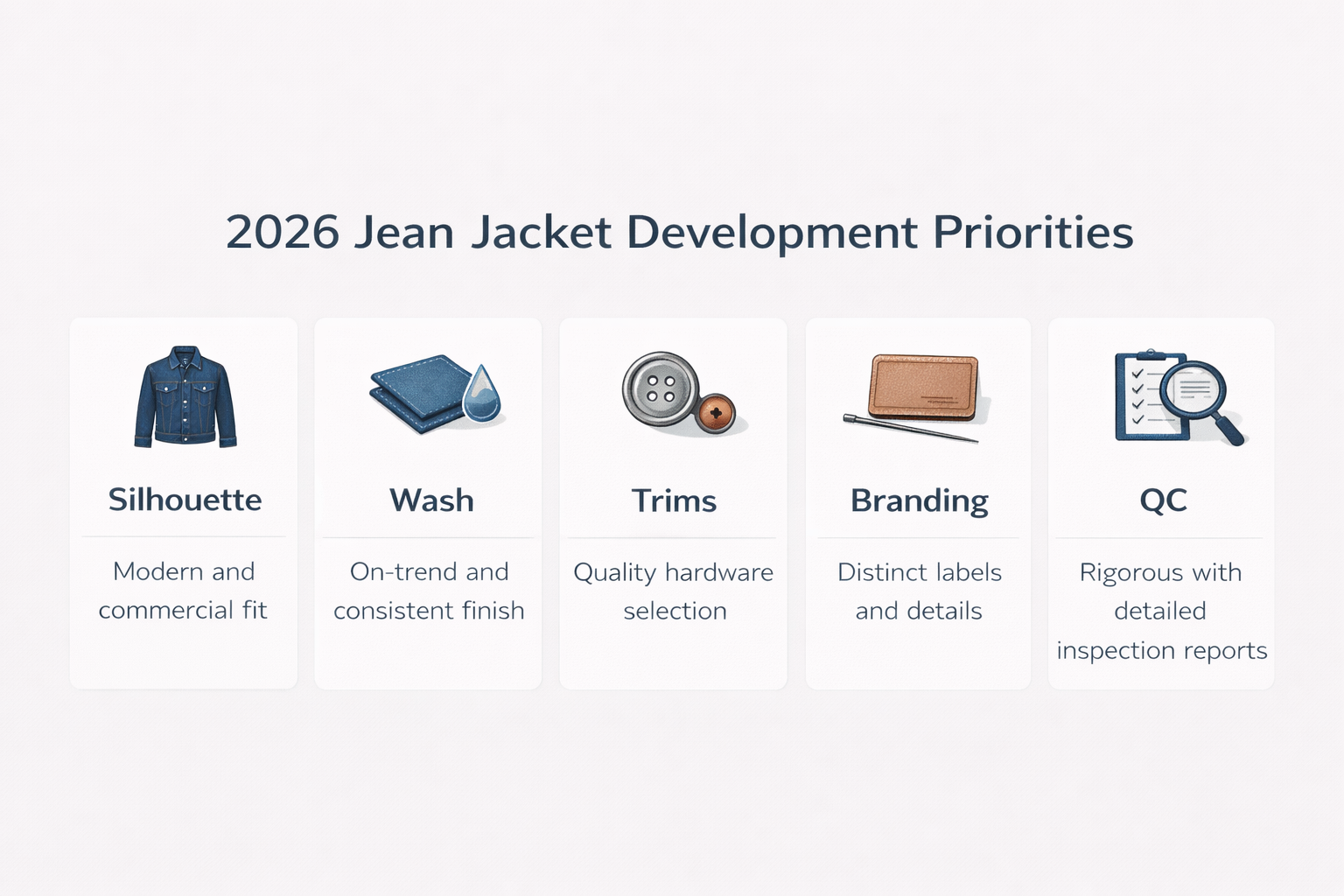
A 2026 jean jacket project is more complex than simply choosing a classic trucker silhouette. Buyers now compare silhouette direction, wash character, private label details, unit economics, and repeatability across future reorders.
That matters because denim jackets sit between product design and process control. A jacket may look simple in a reference photo, but the actual outcome depends on denim weight, shrinkage after wash, pocket alignment, hardware performance, artwork placement, and grading control. If these variables are not aligned before sampling, the brand often pays for the confusion later.
For brands building a custom program, the better question is not "Who can make a jean jacket?" The better question is "Who can make my version of this jacket with controlled wash, clear approvals, and bulk consistency?"
Step 1: Define the jacket program before contacting a manufacturer
The first decision is not price. The first decision is your product direction.
Lock the silhouette and use case
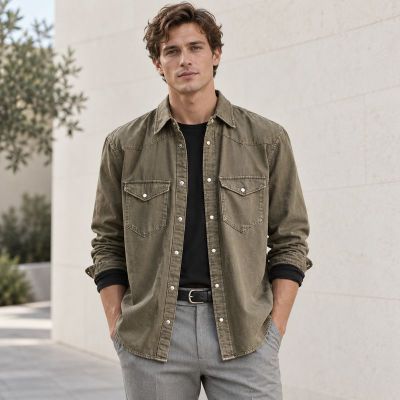
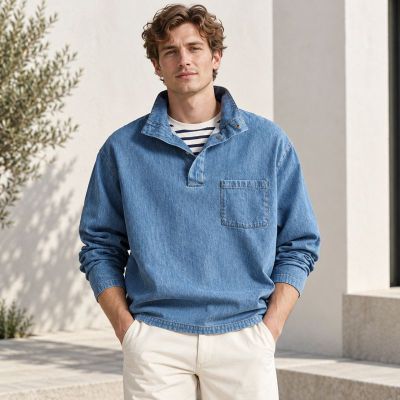
Start with the role the jacket will play in your line. A classic trucker works differently from a chore-inspired denim jacket, a cropped fashion block, or an oversized streetwear fit. If your target customer is buying into workwear-inspired styling, then pocket shape, body length, shoulder drop, and hardware feel become part of the product identity.
A clear use case helps the factory judge whether the jacket needs a rigid structure, a softer washed hand-feel, or a more fashion-driven silhouette with more volume.
Decide the wash direction early
Wash direction is one of the most important variables in denim development. Before you ask for a quote or sample, decide whether you are aiming for raw, rinse, enzyme, stone, vintage fade, pigment over-dye, or a more distressed surface effect.
Different washes can affect the hand-feel, shade, shrinkage, and final measurements. That is why wash references should not be treated as decoration. They are part of the technical brief.
If you need support on denim wash options, fabrics, and surface treatments, see Fabrics & Techniques.
Define the branding package
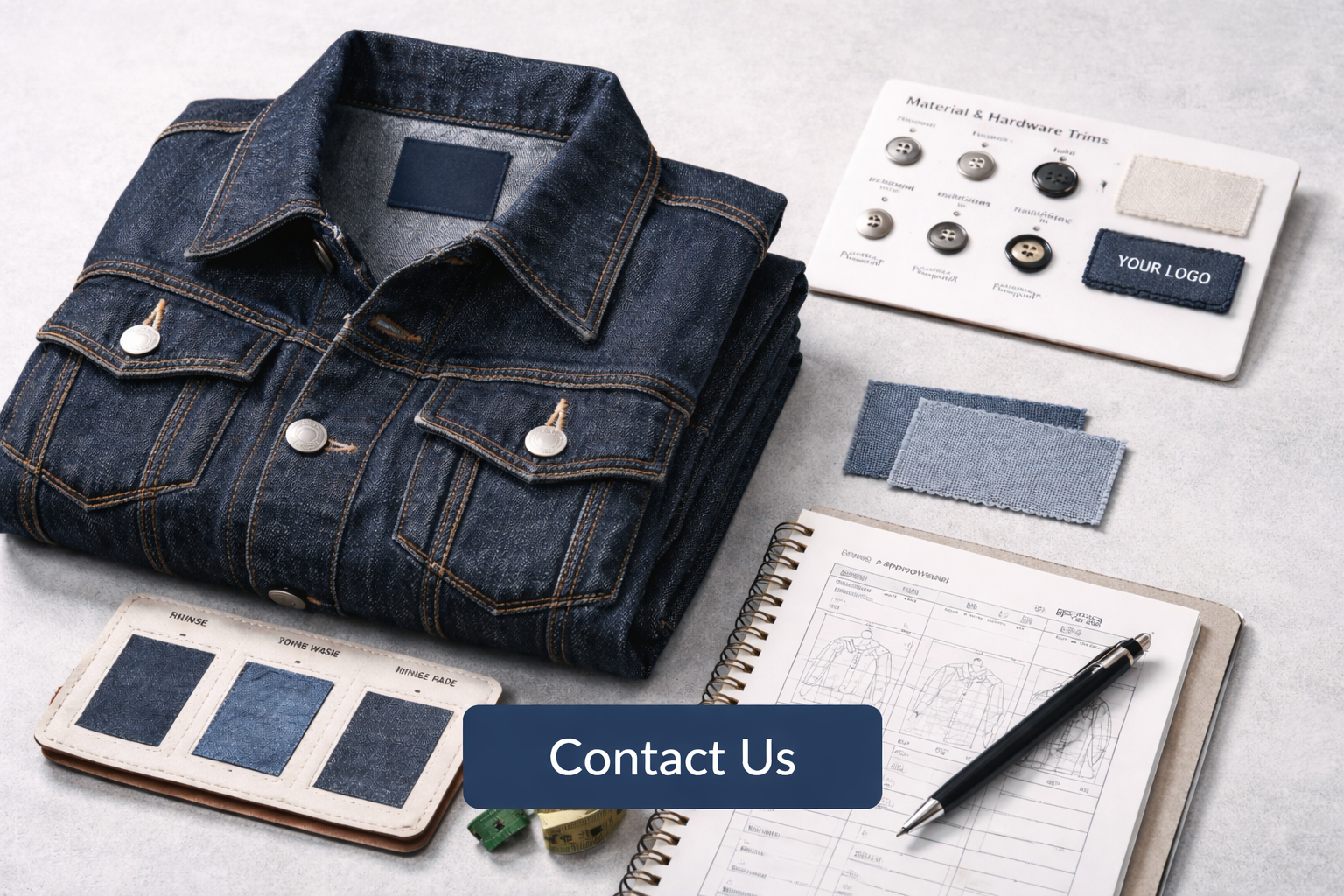
Branding is more than adding a logo. For a jean jacket program, branding often includes main label, size label, care label, hangtag, button finish, rivet tone, patch, embroidery, print, or woven badge placement.
The earlier these details are discussed, the easier it becomes to compare factories on the same basis.
Step 2: Prepare a sample request that reduces avoidable revisions
A weak sample brief creates weak sample results. Many delays come from incomplete inputs rather than poor sewing.
What a useful jean jacket sample pack should include
Your first sample request should usually cover:
1.Front and back reference images
2.Target silhouette or block direction
3.Measurement chart or point-of-measure list
4.Fabric preference or denim weight range
5.Wash reference images
6.Artwork files for embroidery, print, patch, or labels
7.Trim notes for buttons, rivets, zippers, snaps, and threads
8.Packaging requirements if private label is part of the first sample
9.Target launch timing
10.Estimated order quantity by style and color
If you want a more process-led development path, review Service Process.
Why reference images are not enough
Reference images are useful, but they do not replace approvals. A photo can suggest a wash mood, pocket angle, or fit attitude, but it cannot define measurement tolerance, seam construction, label size, or hardware specification.
A manufacturer can only build accurately when visual references are matched with technical intent.
Separate must-have details from negotiable details
Not every detail needs to be finalized on day one. Some brands move faster when they separate critical approvals from secondary choices.
Usually, the must-have items are:
1.silhouette
2.key measurements
3.fabric family
4.wash direction
5.major trims
6.branding placement
The negotiable items are often:
1.secondary packaging details
2.minor decorative elements
3.optional inside finishing changes
4.non-critical label format updates
Step 3: Ask manufacturers questions that reveal capability, not just confidence
Some suppliers answer every inquiry with "yes." Strong buyers ask questions that reveal how the factory actually works.
Questions about wash and denim control
Ask how the supplier handles:
1.shade consistency across bulk
2.shrinkage after wash
3.control swatches
4.wash approval records
5.distress placement consistency
6.post-wash measurement checking
A denim jacket program becomes risky when the factory treats wash as an afterthought instead of a controlled stage.
Questions about construction and trims
Ask how they manage:
1.pocket alignment after wash
2.button or rivet strength
3.thread choice for contrast topstitching
4.seam puckering risk
5.collar and cuff structure
6.label attachment points
On denim jackets, trims and topstitching are not small details. They strongly affect the visual quality of the finished piece.
Questions about communication and approvals
A good factory should be able to explain:
1.what they need before starting sampling
2.how many review rounds are practical
3.how comments should be submitted
4.what gets locked at PP stage
5.how bulk production follows approved samples
6.what happens if a wash or trim issue appears during production
To understand how Vanrd supports customization and private label programs, visit OEM/ODM Services.
Step 4: Understand MOQ, pricing, and timeline before you compare quotes
Price only becomes useful when the scope is clear. A low quote on an unclear brief is not a true comparison.
What usually drives the cost of a custom jean jacket
The main cost drivers often include:
1.denim composition and weight
2.wash complexity
3.distressing level
4.trim count and hardware grade
5.lining or special inside finishing
6.embroidery, patches, or print coverage
7.packaging complexity
8.total quantity per color and style
If one supplier quotes on a basic wash and another quotes on a heavy vintage treatment, the numbers are not comparable even if the silhouette looks similar.
What usually affects sample and bulk timing
Lead time is often affected by:
1.fabric readiness
2.wash trial rounds
3.trim sourcing
4.label development
5.approval speed
6.revision count
7.production queue
8.final QC requirements
This is why buyers should compare not only price but also calendar logic. Ask what milestone unlocks the next step.
How to compare two factories more fairly
Use one comparison sheet and score both suppliers against the same points:
1.denim and wash capability
2.sample understanding
3.responsiveness
4.clarity of quote
5.approval logic
6.QC explanation
7.timeline realism
8.ability to support reorders
For a broader view of production capability and execution environment, see Factory Strength.
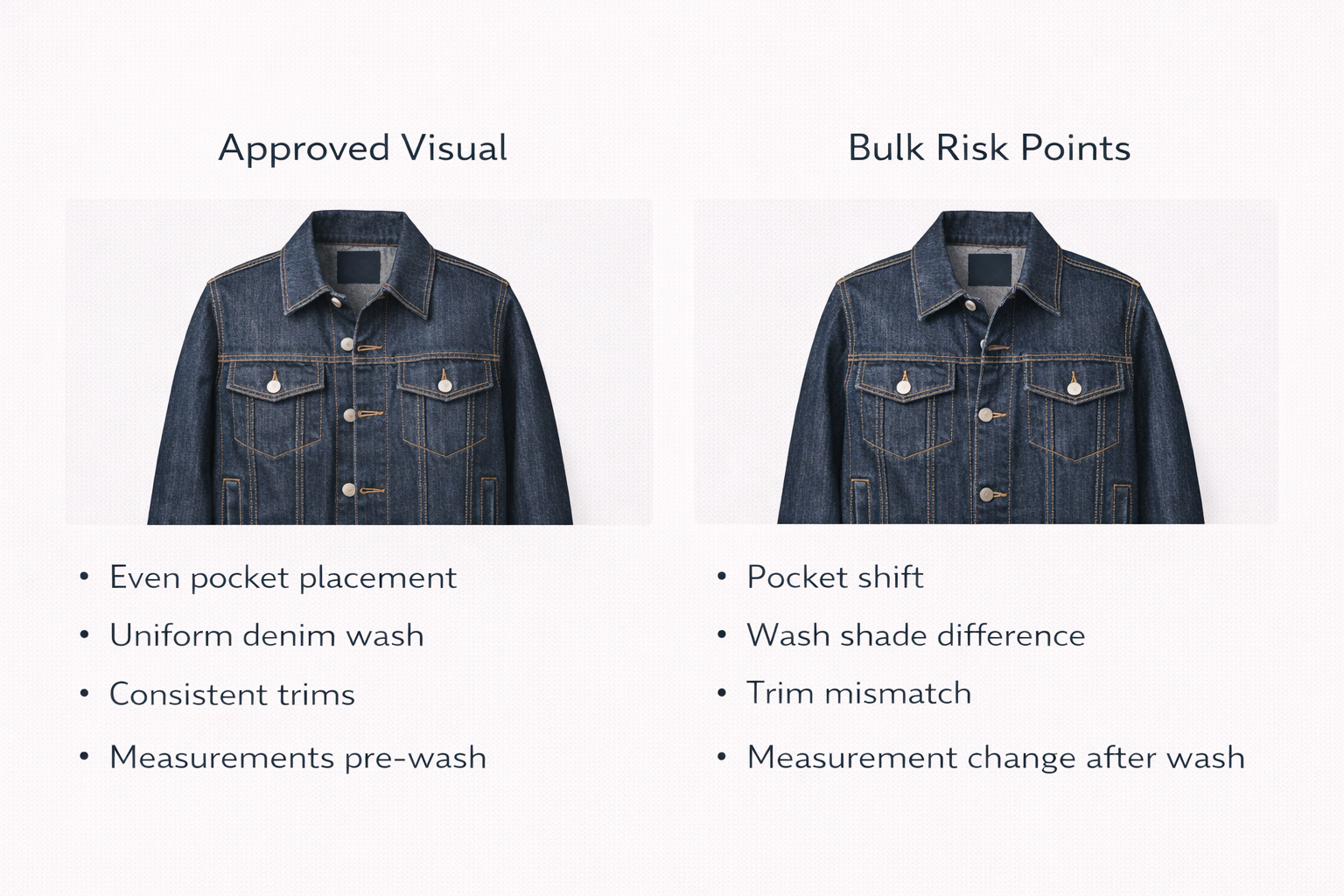
Factory Reality: Why jean jacket development is harder than many brands expect
Denim jackets look familiar, but factory execution is rarely simple.
A jacket may pass the first visual check and still fail in one of these ways:
1.the wash changes the final measurements
2.the pocket looks balanced before wash but shifts visually after processing
3.the hardware tone feels too bright or too dull against the denim shade
4.embroidery sits well on the flat panel but pulls after garment construction
5.the body length works in sample size but grading changes the balance in larger sizes
This is why strong factories build denim approval through stages. Fabric, wash, trims, measurement logic, and branding should not all be guessed at the same time.
For readers who want more visibility into inspection and control, see Q&C.
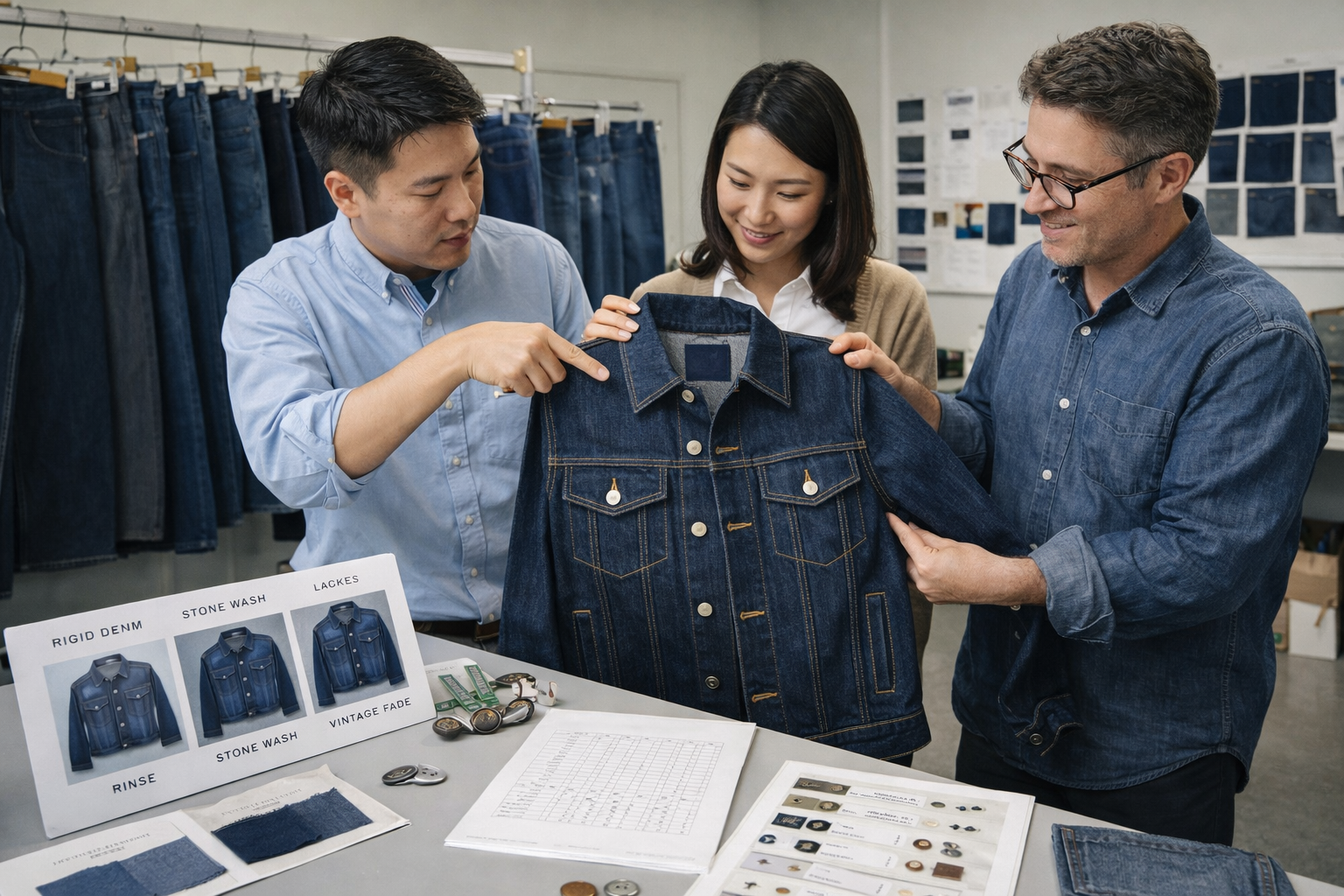
Common Mistakes Brands Make When Choosing a Jean Jacket Manufacturer
Mistake 1: Treating all denim suppliers as interchangeable
Some suppliers can sew denim, but not every supplier can control washed denim outerwear with consistent fit, placement, and trim execution.
Mistake 2: Approving style before approving process
A good-looking photo is not a process approval. Brands need to confirm how fabric, wash, construction, and branding will behave in sampling and bulk.
Mistake 3: Sending moodboards without technical direction
Moodboards help with inspiration. They do not replace a measurement chart, wash comments, artwork files, or trim notes.
Mistake 4: Comparing quotes without matching scope
The cheapest quote may exclude wash complexity, label setup, or packaging details. Always compare like for like.
Mistake 5: Waiting too long to define quality checkpoints
If measurement tolerance, shade expectations, and trim standards are only discussed after bulk starts, the brand is already late.
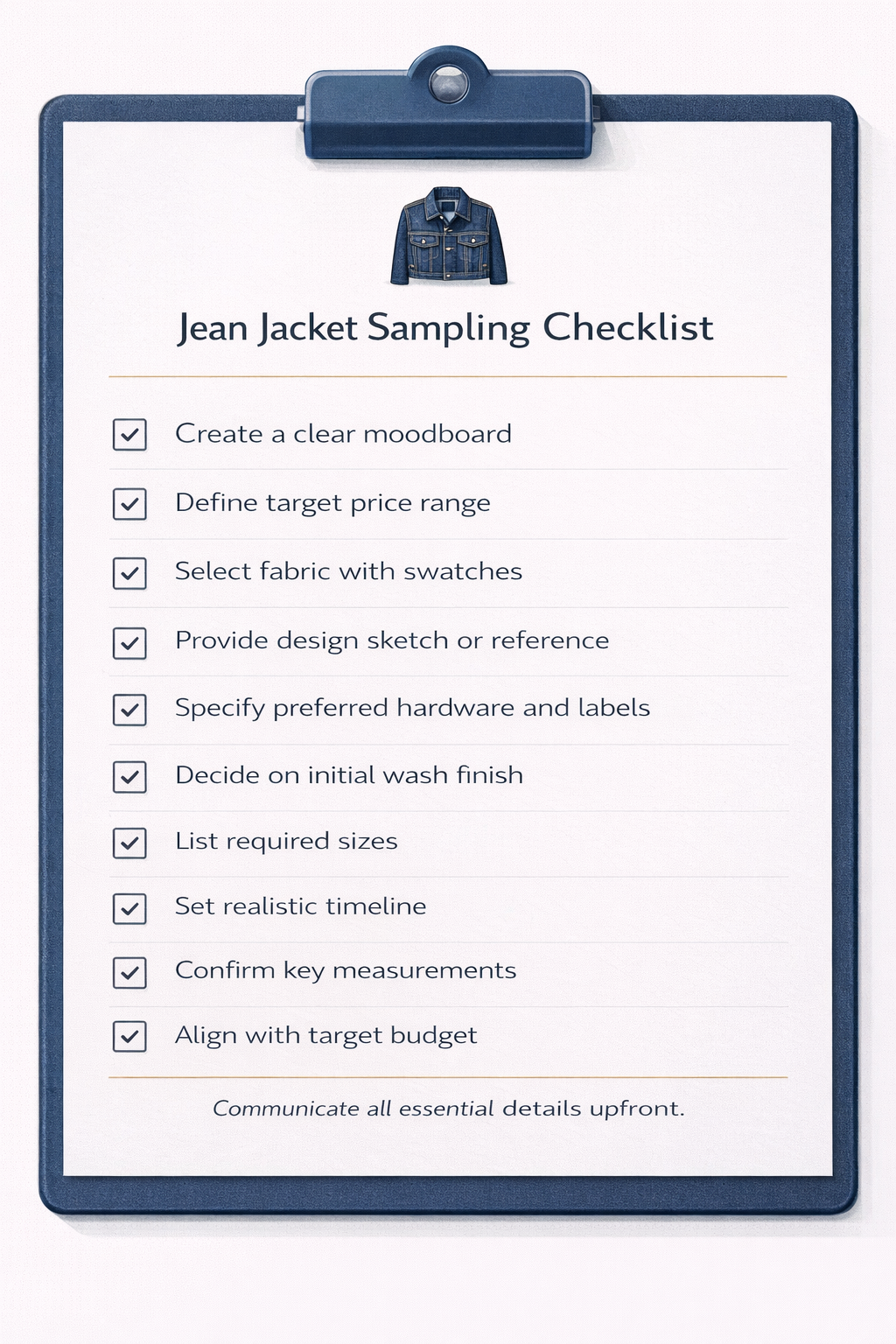
Practical Checklist Before You Start Sampling
Use this checklist before contacting a jean jacket manufacturer:
1.Confirm the target silhouette
2.Define the intended customer and selling season
3.Prepare wash references
4.Decide the denim family or preferred hand-feel
5.List the required trims and hardware
6.Prepare artwork files and branding notes
7.Clarify your estimated quantity
8.Set a realistic target timeline
9.Identify which details are fixed and which are flexible
10.Decide who on your team gives final approvals
This checklist moves the inquiry from "Can you make this?" to "Here is how we want to develop it."
FAQ
What is the difference between a fashion denim supplier and a jean jacket manufacturing partner?
A fashion denim supplier may offer styles and samples, but a real manufacturing partner should also support process control, approvals, bulk consistency, and reorder logic.
Should I approve wash first or branding first?
In many cases, wash direction and base garment measurements should be stabilized first. Branding is easier to approve when the garment foundation is already controlled.
What is the most important file to send before sampling?
If you only have one formal document, a usable tech pack is usually the strongest starting point because it converts visual ideas into measurable instructions.
Can a manufacturer help if my brand does not have a full tech pack yet?
Yes, but the outcome depends on how clear your references, measurements, wash direction, and branding notes are. Less clarity usually means more revisions.
How should brands review a jean jacket sample?
Review the sample in layers: silhouette, measurements, wash appearance, construction, trim feel, branding placement, and overall balance. Avoid approving everything based on one quick visual check.
Is a lower MOQ always better for a startup brand?
Not necessarily. A lower MOQ can help testing, but it may also change costing, fabric choices, or available customization depth. The better option depends on your launch strategy and margin target.
Next Steps
If your brand is planning a custom denim jacket program for 2026, the best next move is to prepare a tighter brief before asking for price. Lock your silhouette, wash direction, trim package, branding method, and approval priorities first.
If you want a manufacturer-led review of your idea, send your tech pack, reference images, quantity estimate, and target timing through Contact Us. Vanrd can review the project from a B2B development perspective and help you move from concept to sampling with a clearer process.