How to Balance Wash Effect, Fit, and Branding Details in Custom Denim Jacket Development
A custom denim jacket usually develops more smoothly when wash effect, fit, and branding are reviewed as one combined system instead of three separate decisions. The most efficient path is often to lock the silhouette and fabric direction first, then refine wash depth and branding placement in a controlled order. In B2B manufacturing, clearer priorities usually lead to better samples, fewer revisions, and more stable bulk execution.
Quick Answers
What should a brand decide first in custom denim jacket development?
A brand should usually define the jacket direction first, including silhouette, weight, wash target, and the main branding method.
Can wash effect change the fit of a denim jacket?
Yes. In many cases, washing can affect shrinkage, handfeel, panel balance, and the final silhouette.
Should branding be approved before wash in denim jacket sampling?
Not always. Branding often needs to be reviewed together with wash because the final surface and color tone can change how logos and patches appear.
What is the most common mistake in denim jacket development?
A common mistake is trying to approve wash, fit, and branding separately without deciding which one leads the product direction.
What should buyers send before requesting a denim jacket sample?
Often, yes. Oversized silhouettes can change pocket balance, seam proportion, branding scale, and how wash effects read on the final garment.
Do oversized denim jackets need a different development approach?
Wash and construction interaction. A jacket can look right on paper but shift in shade, hand-feel, or measurements after washing.
How can brands reduce revisions in denim jacket sampling?
A clearer approval order usually helps. Start with structure, then refine wash, then confirm branding details with the actual sample surface in mind.
Why Wash, Fit, and Branding Should Be Treated as One Development System
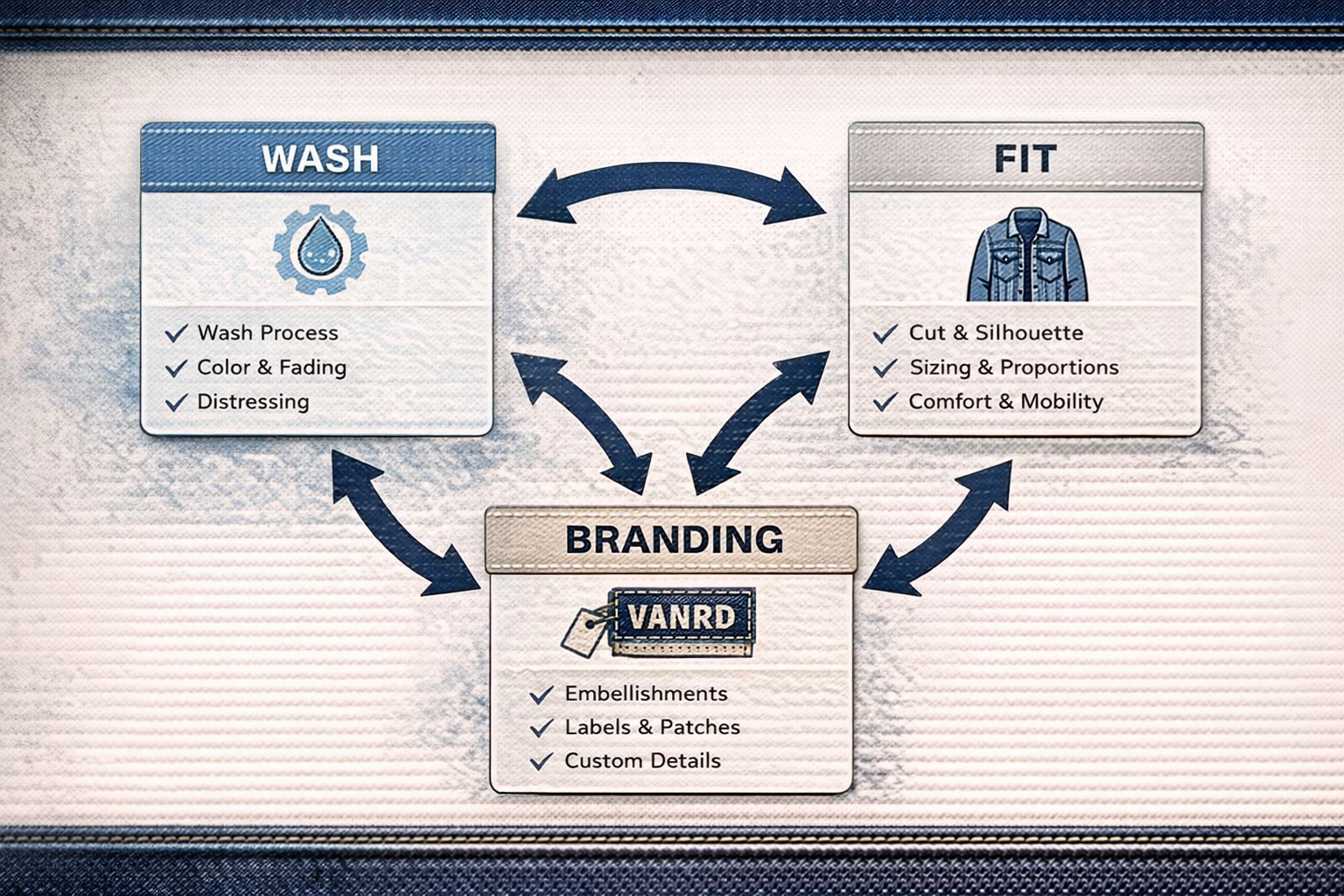
A denim jacket is not usually approved through one isolated detail. In practice, wash effect, fit, and branding often affect each other. A stronger wash can change surface tone and handfeel. A different fit can change how the jacket carries branding. A logo or patch that looks balanced on a clean sample may feel too small or too heavy once the garment is washed and shaped into its final silhouette.
That is why denim jacket development usually works better when these three decisions are handled as a connected system. A brand that approves them in the right order can often move through sampling with better clarity.
For private label projects, this is also why early alignment on OEM/ODM Services and the technical direction in Fabrics and Techniques matters before sample comments become scattered.
The First Check: Define the Jacket Direction Before Chasing Effects
A denim jacket usually becomes easier to develop when the buyer defines the product direction first. The same category can serve different brand goals:
a clean private label denim jacket with lighter branding
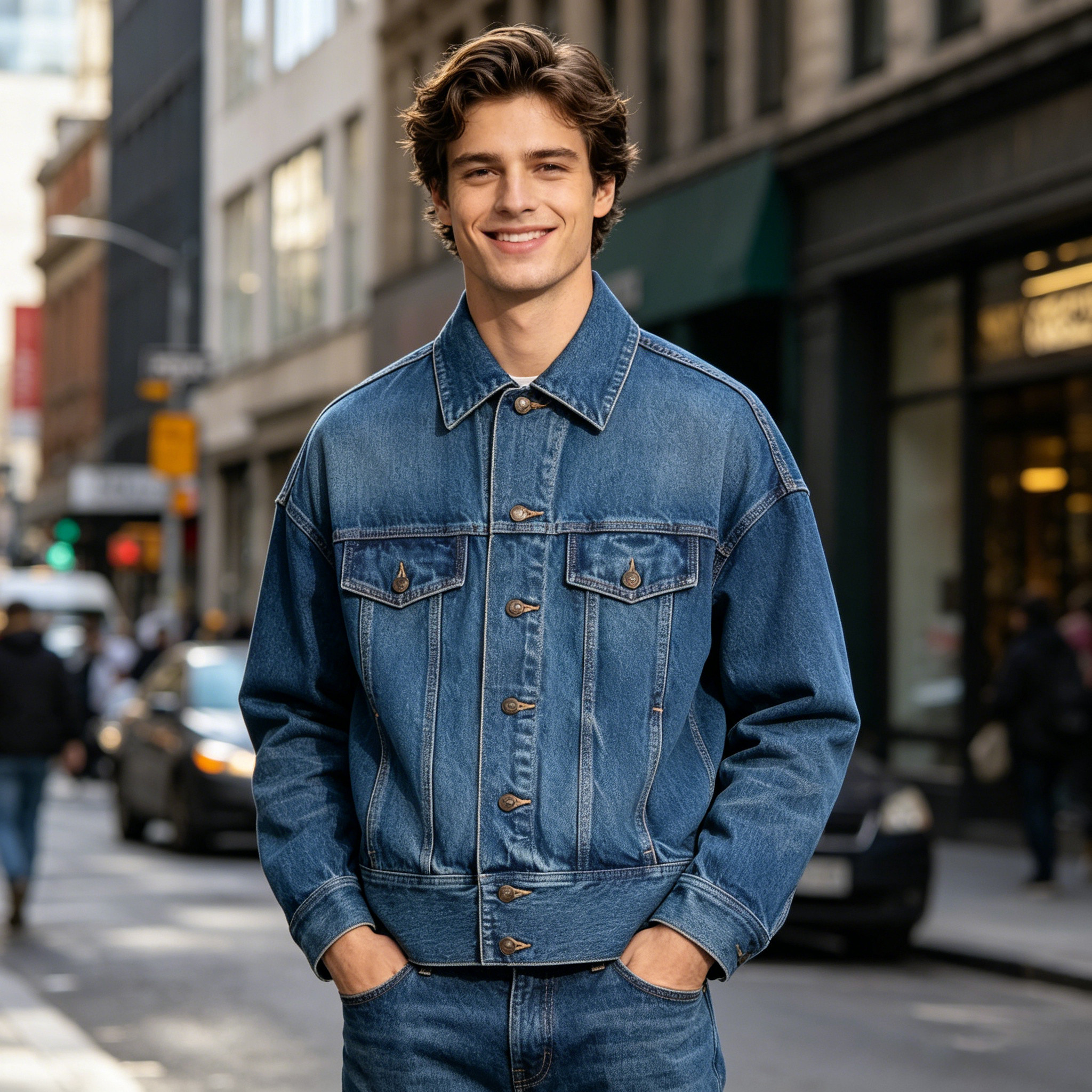
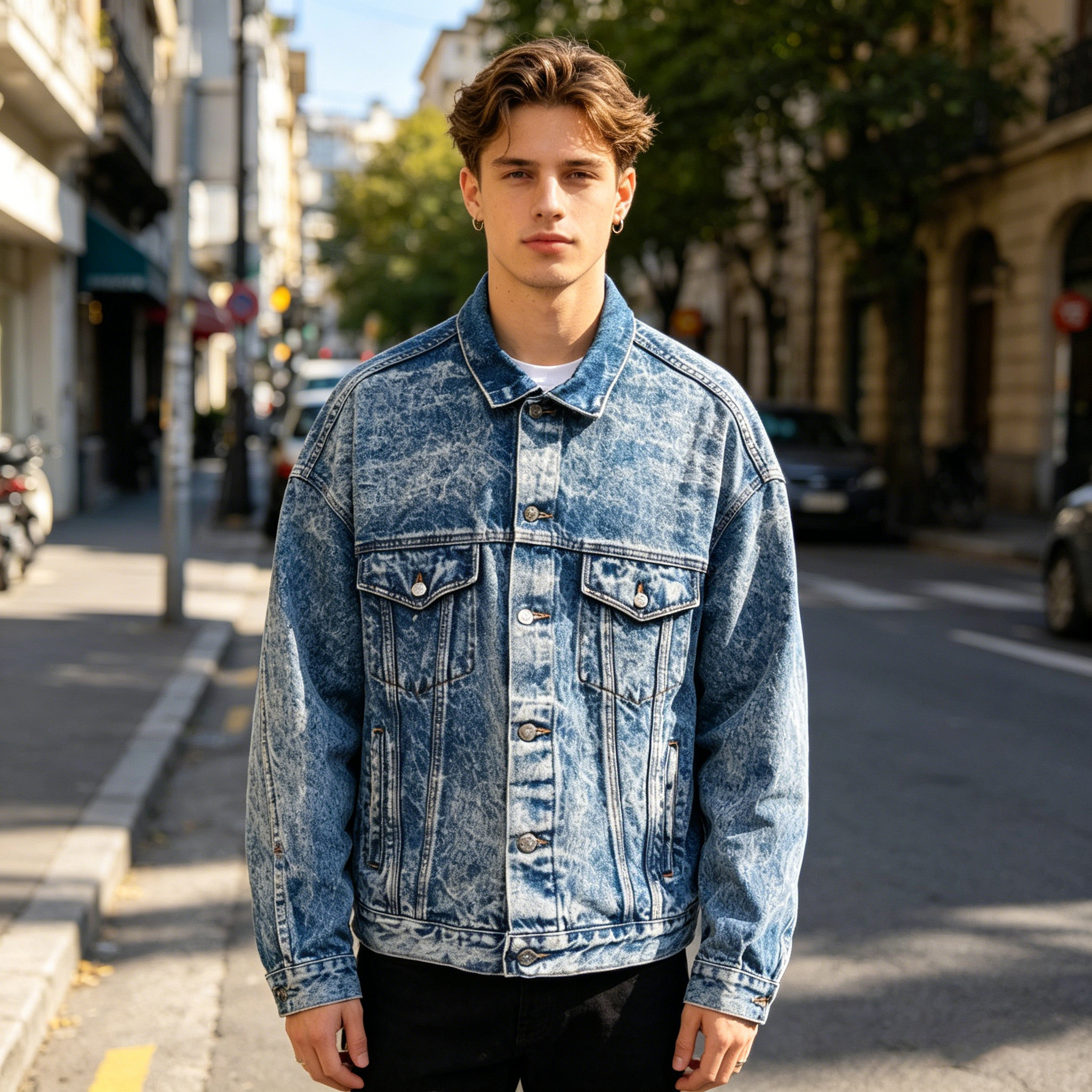
a vintage-inspired jacket with stronger wash identity
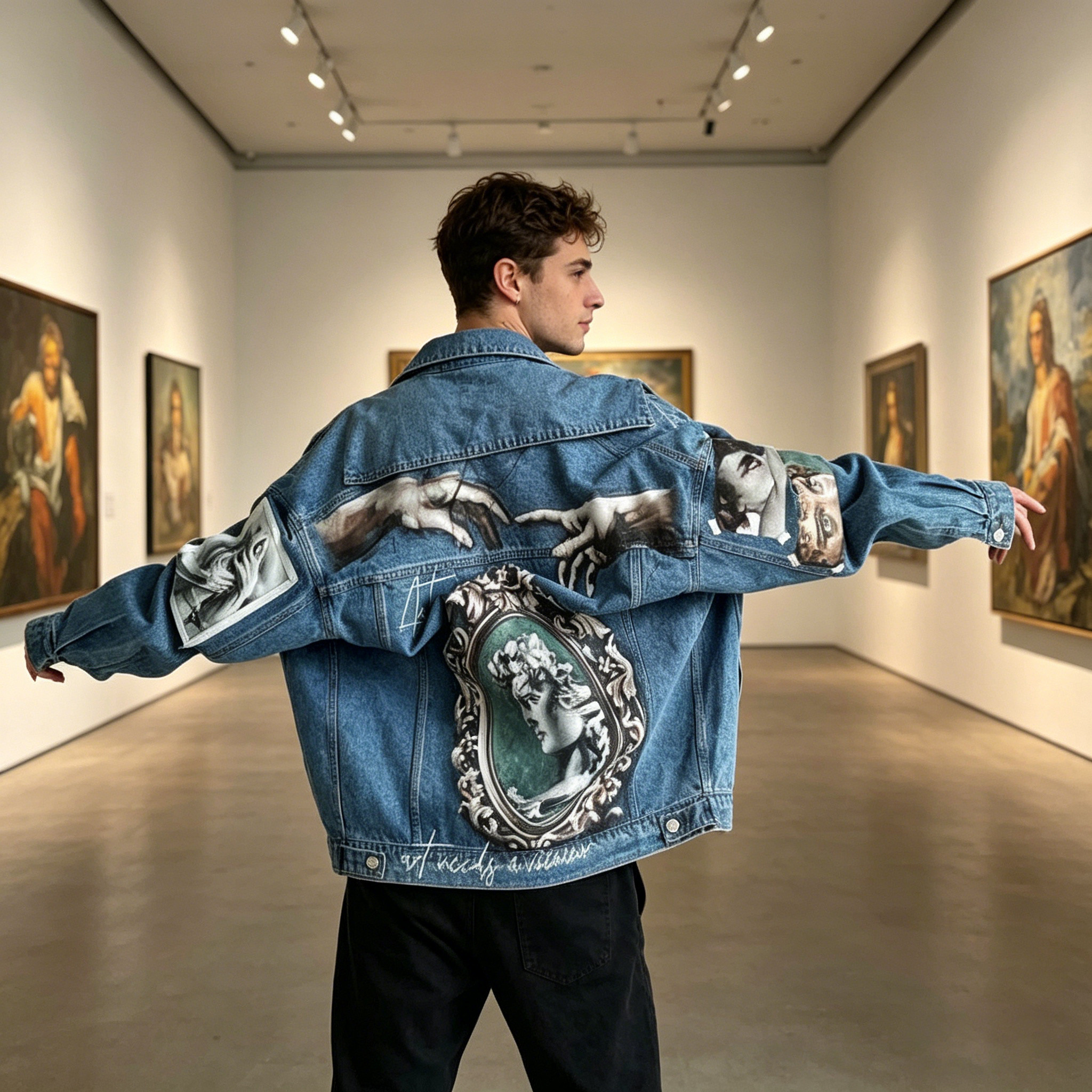
an oversized streetwear denim jacket with bold back branding
a more balanced utility-inspired denim jacket with practical pocket structure
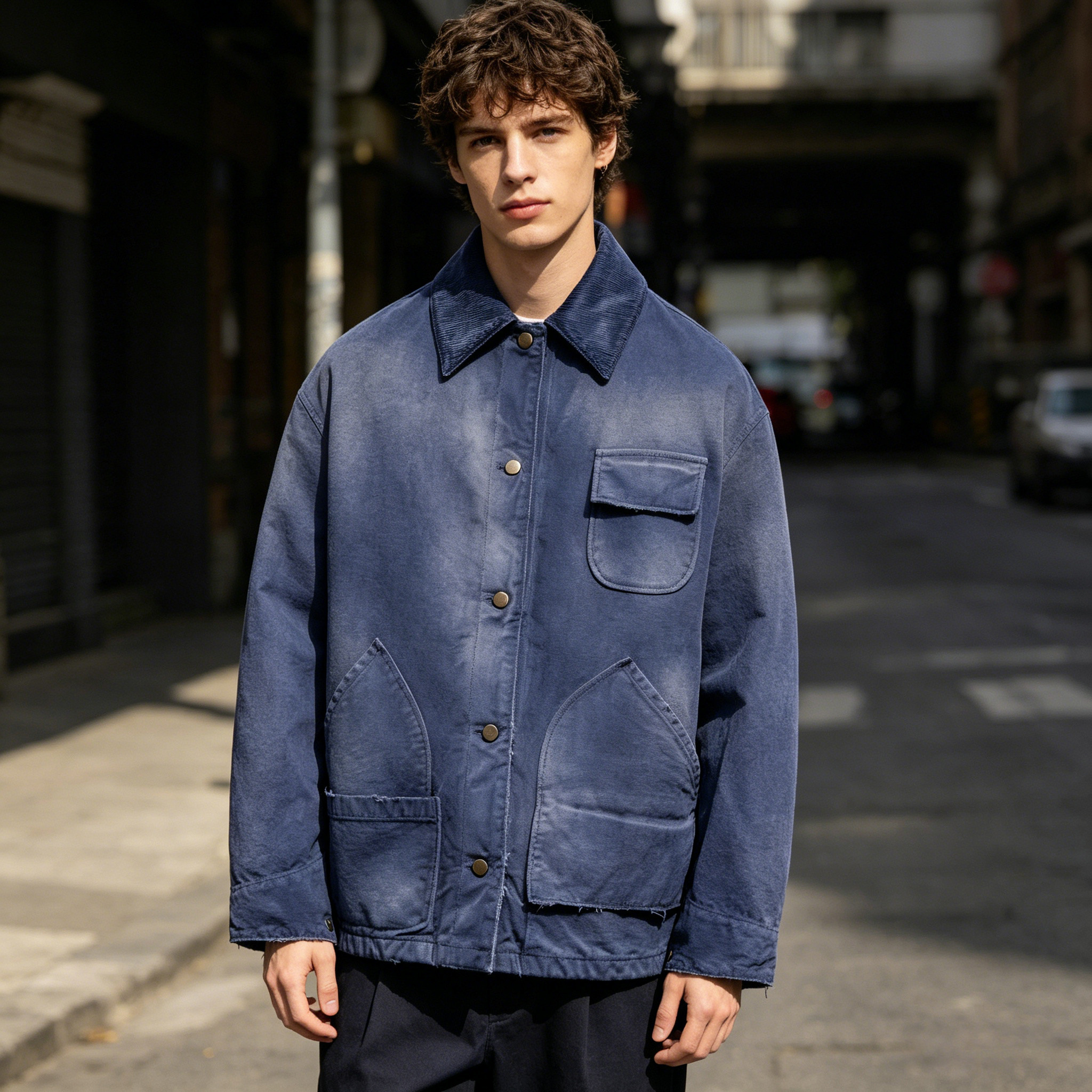
These are not the same project. They may all start from denim, but they often need different priorities in fit, wash, and branding.
Vintage-Led Direction
A vintage-led jacket usually relies more on wash tone, worn-in character, and surface mood. Branding often needs to support that aged effect rather than overpower it.
Streetwear-Led Direction
A streetwear-focused denim jacket often gives more weight to oversized fit, graphic scale, and visible back or sleeve branding.
Cleaner Commercial Direction
A more commercial denim jacket often benefits from simpler wash development, more stable sizing, and controlled branding that is easier to scale.
The Second Check: Lock Fit Before Fine-Tuning Wash and Branding
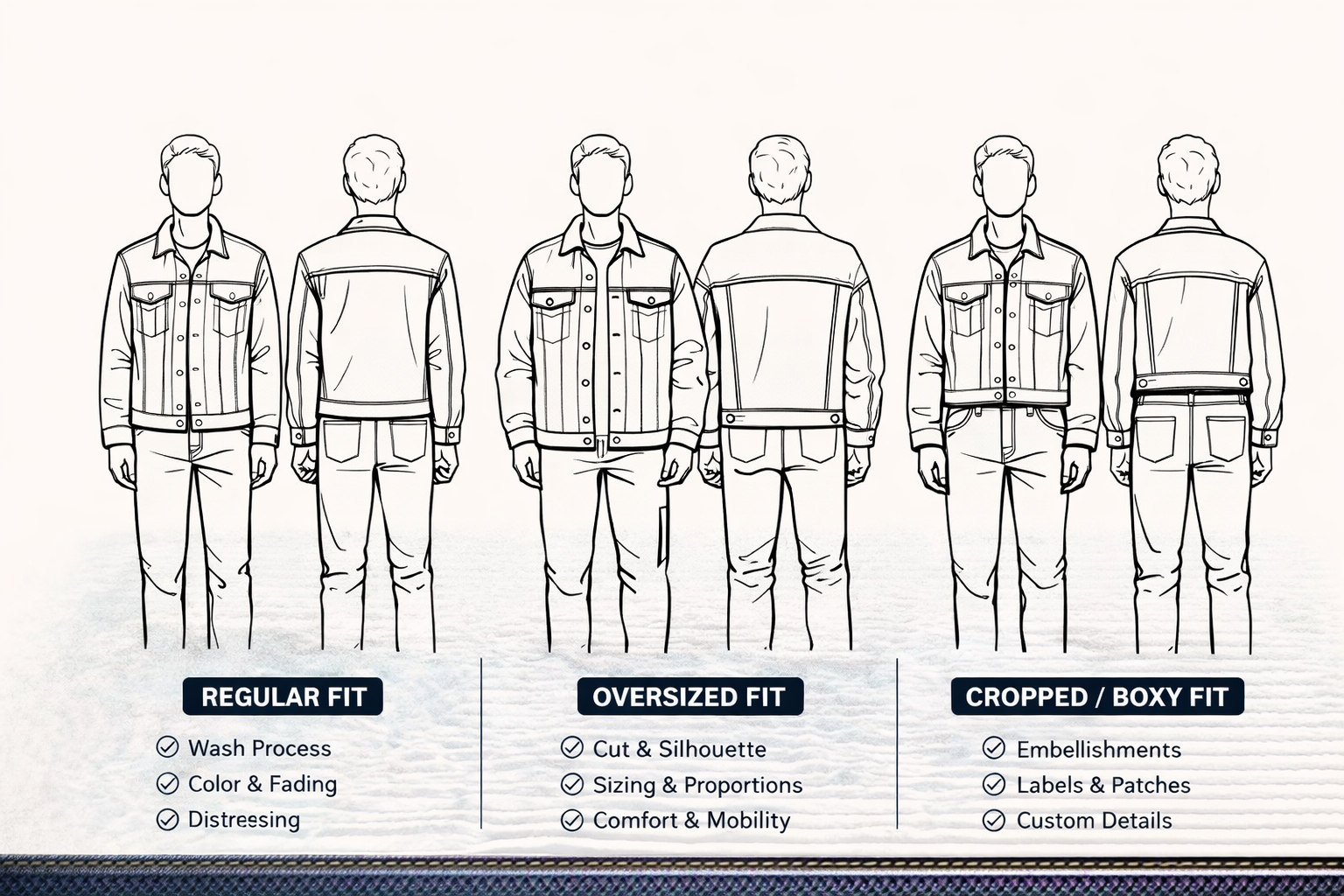
Fit is one of the earliest decisions that should be locked because it changes how every other design element reads. A larger silhouette can make branding feel smaller. A cropped boxy shape can make chest details feel more prominent. A narrower fit can make heavy back branding feel visually crowded.
A buyer should usually check:
whether the jacket should feel regular, boxy, oversized, or relaxed
whether layering is expected under the jacket
whether sleeve volume and shoulder shape support the intended look
whether pocket proportion still looks balanced after the fit direction changes
whether branding scale works with the final silhouette
Fit is not only a measurement issue. In denim jacket development, it is part of the visual strategy.
The Third Check: Choose the Wash Direction With Production Reality in Mind
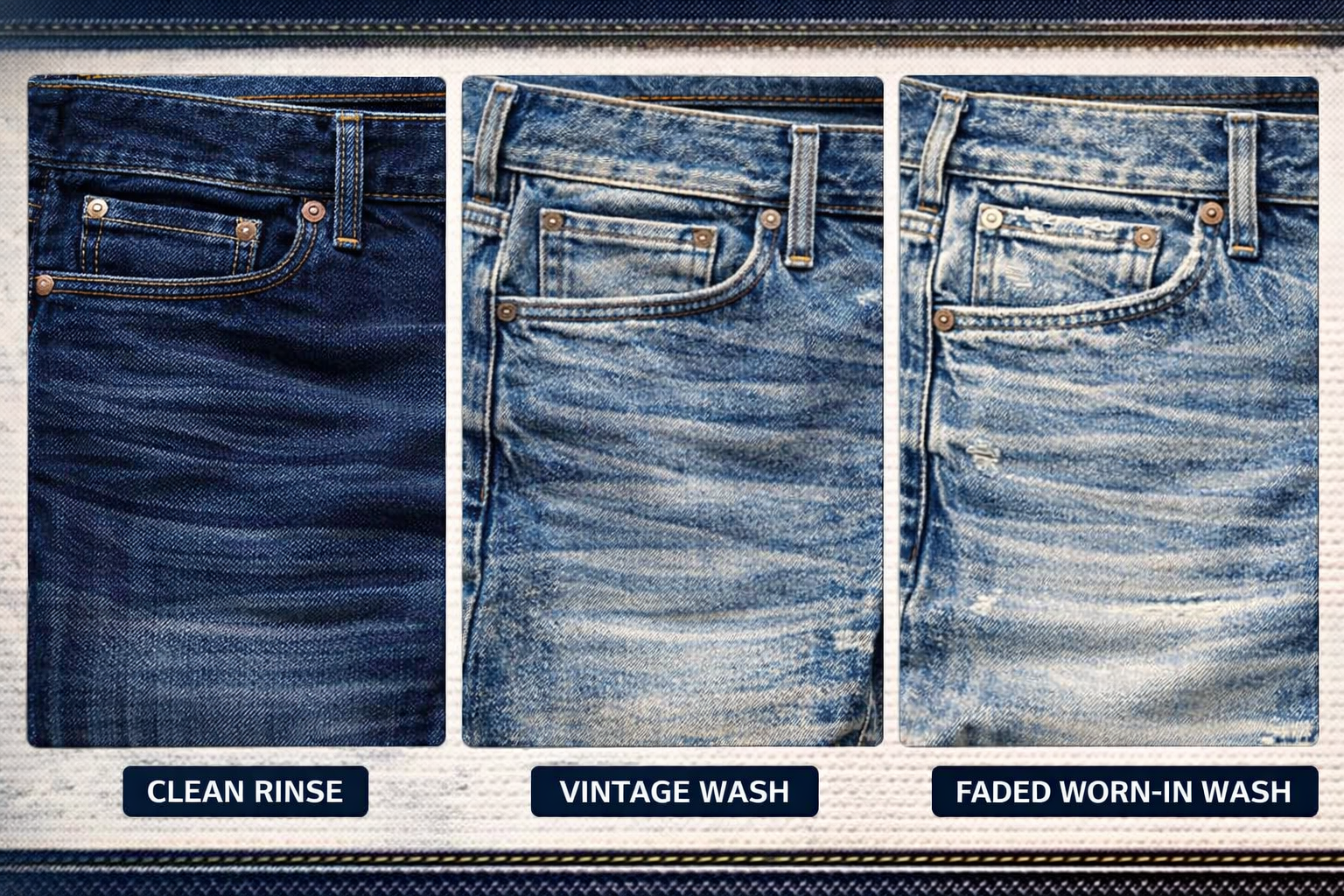
Wash is often the most emotionally attractive part of denim jacket development, but it is also one of the easiest areas to overcomplicate. Buyers may want a stronger fade, softer handfeel, worn edges, or more visible vintage character, but each wash direction can affect the final shape and surface.
Common wash-related checks may include:
1.how much fade is actually needed
2.whether the surface should feel cleaner or more broken-in
3.how the wash may affect seam appearance and panel contrast
4.whether the wash will support or weaken the intended branding visibility
5.whether the fit still feels correct after processing
A stronger wash effect can be visually effective, but it can also create more approval points. That is why wash comments should usually be tied to fit and branding review, not treated as a separate visual experiment.
The Fourth Check: Branding Should Match the Washed Surface and Final Shape
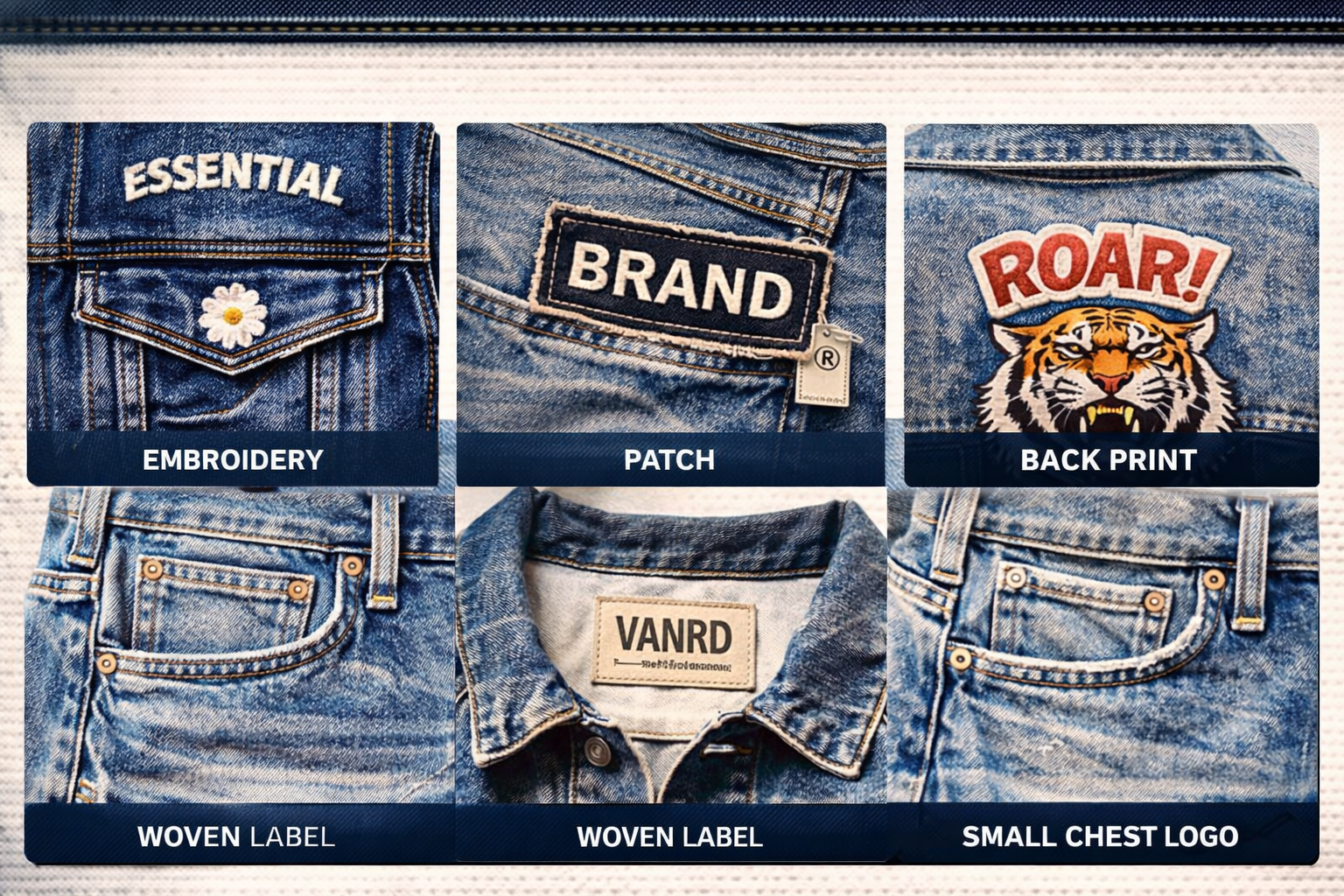
Branding on denim jackets usually works best when it is reviewed on the actual washed surface and final fit direction. A logo that looks clean on a flat artwork file may behave differently once it sits on textured denim, washed seams, or a softer garment body.
Common branding checks may include:
chest logo versus back logo balance
embroidery versus patch versus print direction
how branding scale changes across different fits
whether branding should feel bold, heritage-inspired, or more minimal
whether the wash effect supports or competes with the branding detail
A useful rule is this: if wash already creates a strong visual identity, branding often works better when it is more controlled and placed with clearer priorities.
A Practical Pre-Sample Checklist for Custom Denim Jackets
Before requesting a denim jacket sample, a brand should usually prepare:
1.front and back reference images
2.target silhouette notes
3.wash direction comments
4.artwork files in editable format when available
5.branding placement notes
6.trim comments if hardware or labels matter to the concept
7.a clear list of first-round approval priorities
8.notes on what should be reviewed later
This usually makes the Service Process more efficient because the supplier can review the sample in a more practical order.
Factory Reality: Denim Jackets Usually Need a Clearer Approval Order Than Buyers Expect
From a factory perspective, denim jacket development usually becomes less efficient when the buyer is still changing fit, wash, and branding direction at the same time. The problem is not only communication. The problem is that each revision can change the basis for the next approval.
At Vanrd in Dongguan (Humen), a better denim jacket sample usually comes from deciding which variable leads the product. In many projects, silhouette and fabric direction should be established first, then wash should be refined, and branding should be confirmed on the actual sample surface.
Three factory realities matter here:
Wash Can Change Surface and Shape Together
Wash does not only affect color. It can influence shrinkage, softness, seam look, and how the garment holds its structure.
Branding Must Be Judged on the Real Surface
Embroidery, patches, and prints often read differently on textured or washed denim than they do in flat design review.
Quality Control Starts Before Bulk Production
For denim jackets, Q and C should begin during sampling, especially when wash effect and branding balance are both important. Buyers should also consider whether the supplier has the right Factory Strength for coordinated denim development instead of only basic assembly.
Common Mistakes and Risk Watchpoints
Mistake 1: Approving Wash Without Considering Final Fit
A denim jacket can look correct in surface tone but still feel wrong if the final fit changes after processing.
Mistake 2: Scaling Branding Before the Silhouette Is Stable
Branding size often needs to be judged on the actual fit direction, especially for oversized or boxy jackets.
Mistake 3: Using Too Many Strong Visual Ideas at Once
Heavy wash, strong back artwork, oversized fit, contrast stitching, and multiple patches can all work, but too many major decisions at once can slow down approval.
Mistake 4: Reviewing Branding Only From Flat Artwork
Branding on denim usually needs to be reviewed against texture, seam lines, wash character, and panel shape.
Mistake 5: Leaving Approval Priorities Too Vague
If the buyer has not defined what matters most in the first sample, the revision process can become less efficient and more expensive.
Next Steps: A Simpler Way to Build a Better Custom Denim Jacket Program
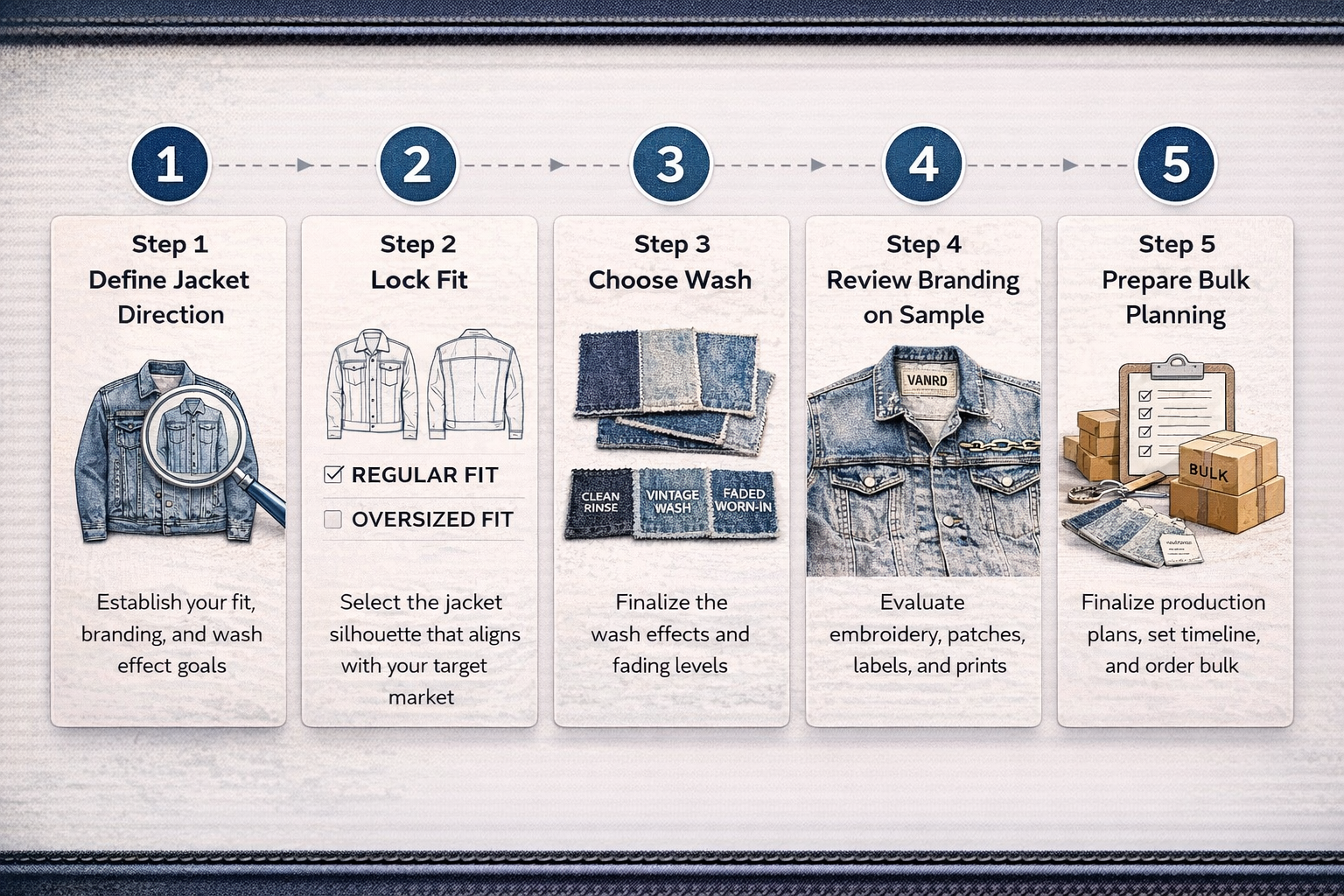
A more workable denim jacket development flow usually looks like this:
Step 1: Define the Product Direction
Clarify whether the jacket is vintage-led, streetwear-led, oversized, cleaner commercial, or utility-inspired.
Step 2: Lock the Fit Direction
Choose the silhouette before trying to finalize branding scale and wash intensity.
Step 3: Narrow the Wash Direction
Decide what level of fade, softness, and vintage surface character is actually needed.
Step 4: Review Branding on the Actual Sample
Check logo size, patch balance, or embroidery placement against the real jacket surface and final shape.
Step 5: Move Into Controlled Bulk Planning
Once the direction is stable, move toward inquiry, sample refinement, and production planning through Contact Us with updated references and approval notes.
FAQ
What is the best order for approving a custom denim jacket sample?
A practical order is usually to confirm the overall direction first, then fit, then wash, and then branding on the actual sample surface.
Can wash effect change denim jacket measurements?
Yes. In many cases, wash processing can influence shrinkage, softness, and how the garment sits after finishing.
What files should I send before starting a custom denim jacket sample?
A useful package usually includes reference images, fit notes, wash comments, artwork files, branding placement notes, and first-round approval priorities.
How long can denim jacket sampling take when wash and branding both matter?
The timeline often depends on how many wash trials, branding revisions, and fit adjustments are needed before approval.
Should oversized denim jackets use different branding proportions?
Often, yes. A larger silhouette can make small chest branding look weaker and can change the balance of back graphics or patches.
What is the most common reason for extra denim jacket revisions?
A common reason is that wash, fit, and branding are reviewed separately without a clear decision order.
Can a cleaner denim jacket still have a strong private label identity?
Yes. In many cases, controlled wash, balanced fit, and focused branding can create a stronger result than using too many visible details at once.
Final CTA
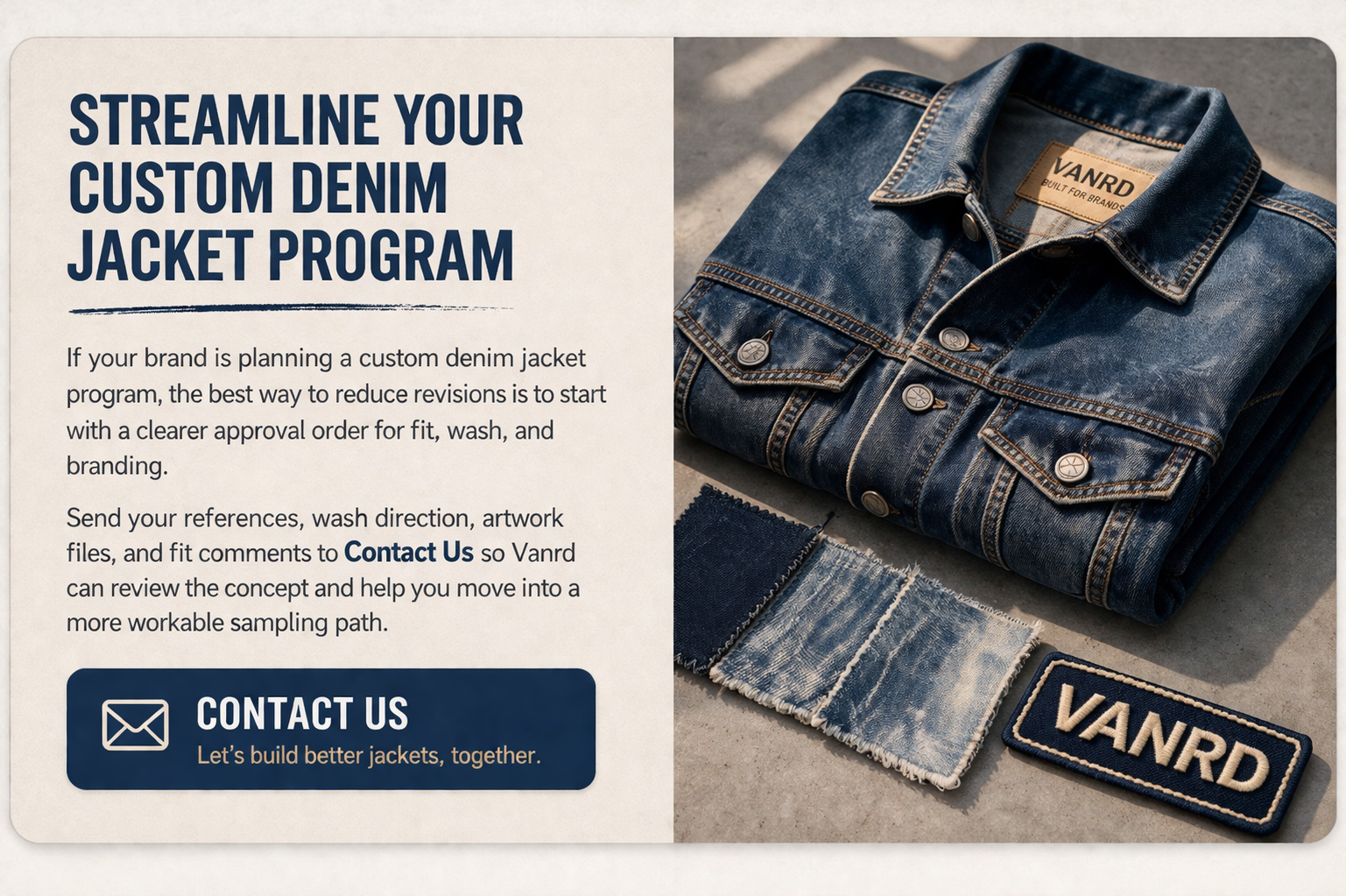
If your brand is planning a custom denim jacket program, the best way to reduce revisions is to start with a clearer approval order for fit, wash, and branding. Send your references, wash direction, artwork files, and fit comments to Contact Us so Vanrd can review the concept and help you move into a more workable sampling path.