How Brands Should Evaluate Global Denim Jacket Manufacturers in 2026: A Supplier Selection Guide Before Sampling and Bulk Orders
A strong denim jacket supplier is not just a factory that can sew denim. In 2026, brands need to compare supplier type, wash capability, sample accuracy, MOQ logic, trim control, and quality systems before moving into bulk production. The safest approach is to evaluate suppliers by process fit, not by list placement alone.
Quick Answers
What is the first thing brands should check when comparing denim jacket manufacturers?
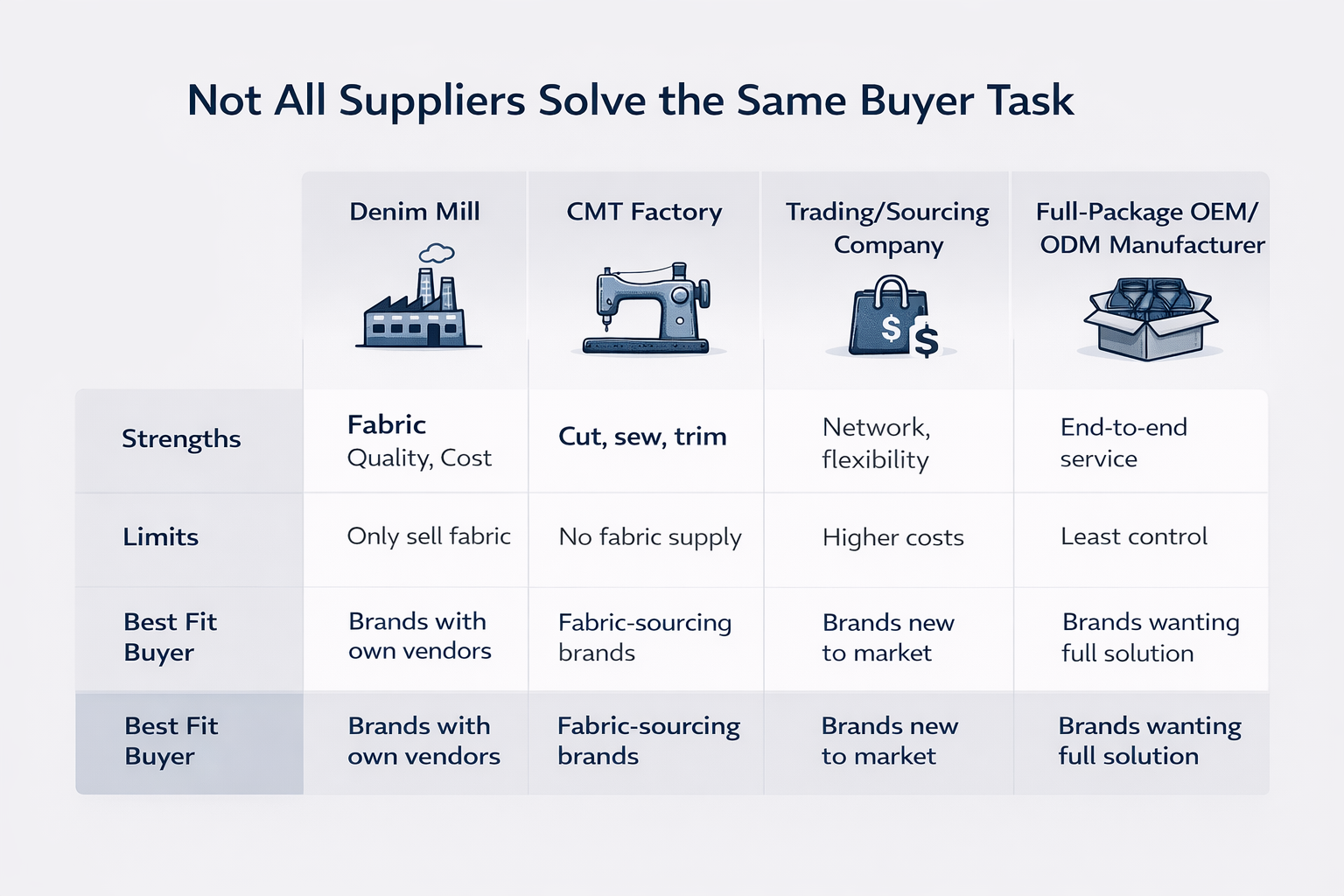
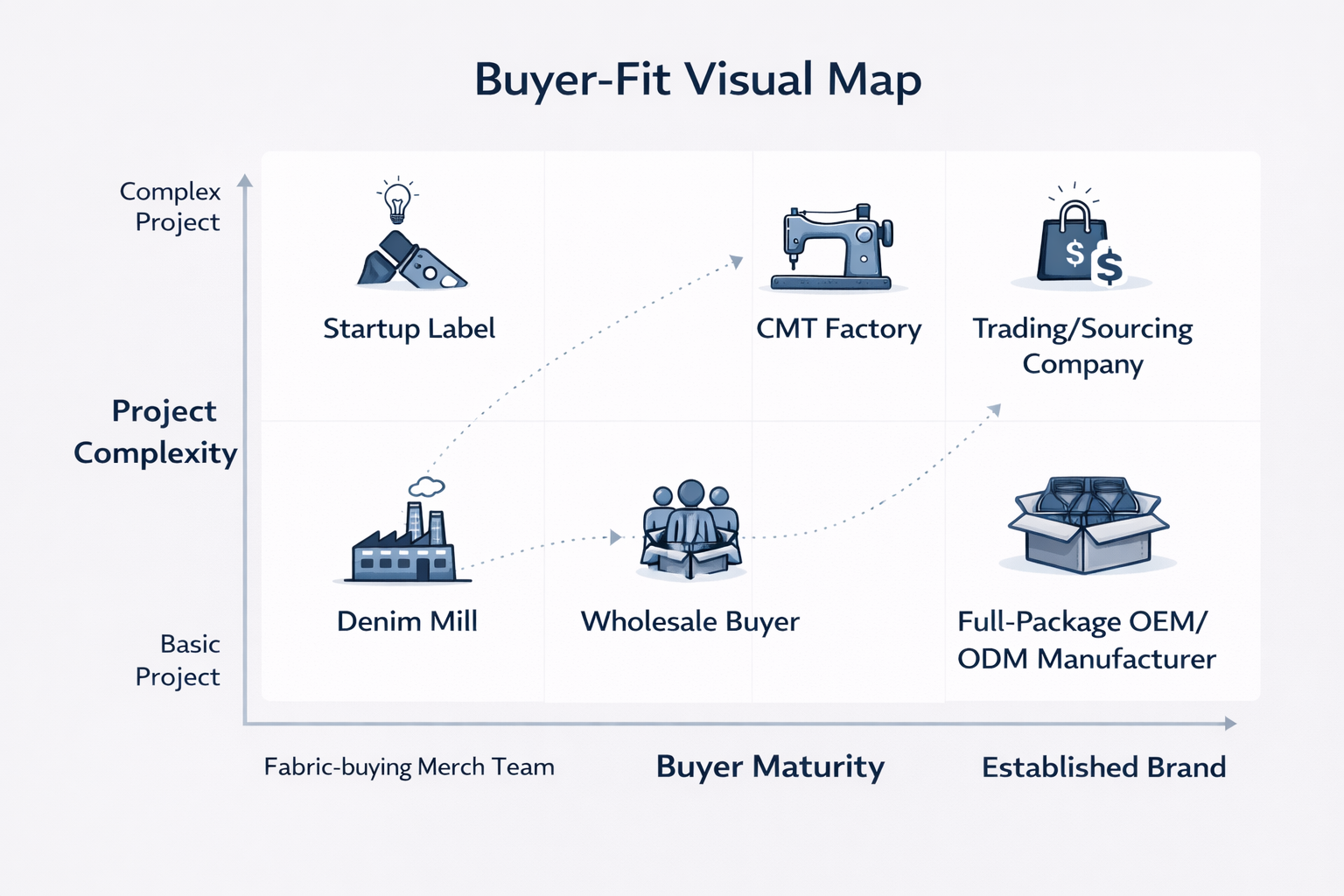
Check whether the supplier type matches your program. A denim mill, a CMT factory, a trading company, and a full-package OEM or ODM manufacturer do not solve the same problem.
Should brands trust "top manufacturer" lists at face value?
Not fully. Many lists are useful for discovery, but brands still need to compare wash control, sampling workflow, MOQ logic, communication quality, and bulk consistency.
What should I send before asking for a denim jacket quote?
A useful request usually includes reference images, a measurement chart or fit direction, wash references, trim notes, branding files, target quantity, and timing expectations.
What affects MOQ for custom denim jackets?
MOQ is usually shaped by fabric setup, wash complexity, trim customization, labeling, packaging, and total units per style and color.
How should brands compare two suppliers fairly?
Use the same brief for both suppliers and compare them on capability, quote clarity, sample understanding, timeline logic, and QC explanation.
What is the biggest hidden risk in denim jacket development?
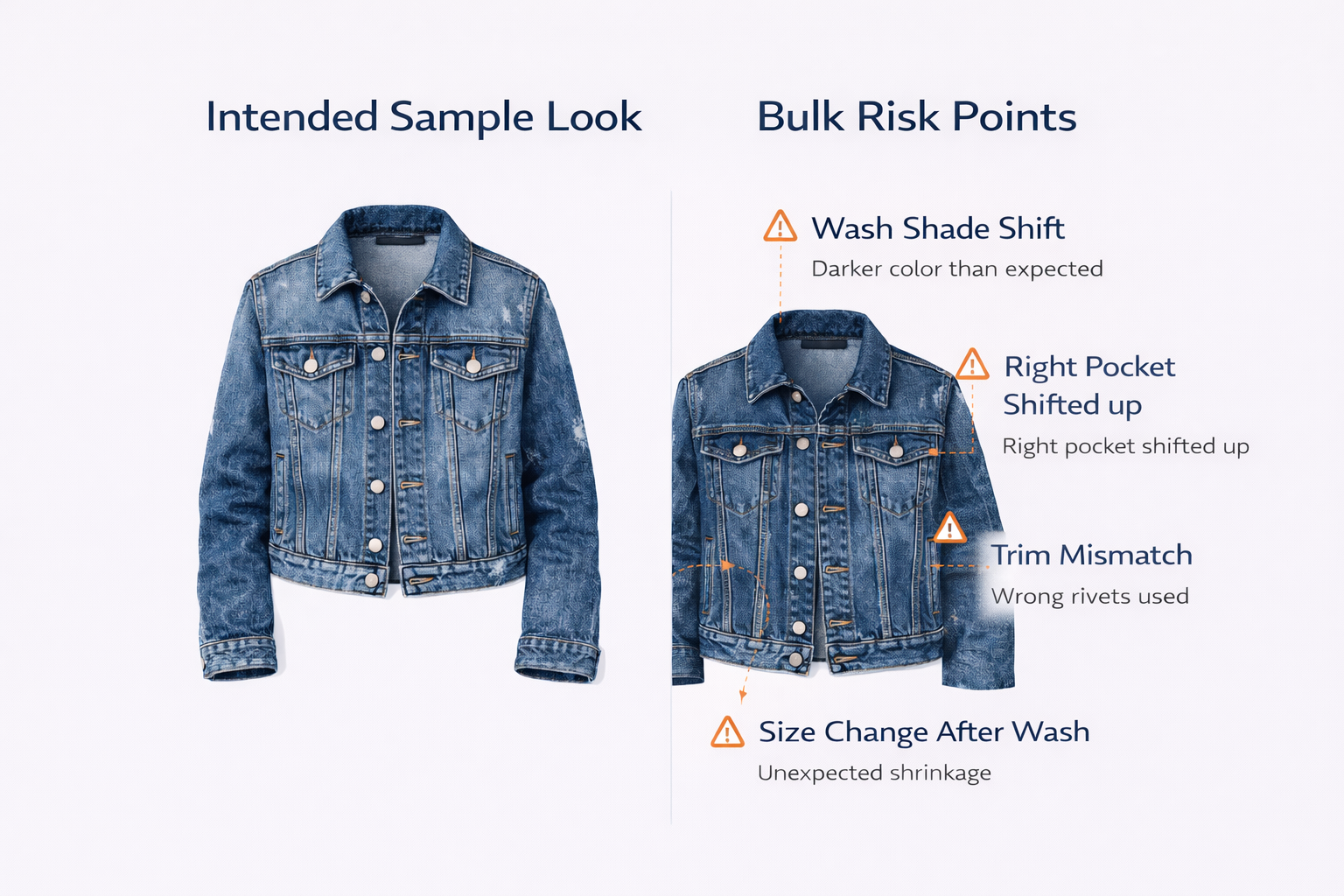
Wash and construction interaction. A jacket can look right on paper but shift in shade, hand-feel, or measurements after washing.
Why many "top denim jacket manufacturer" lists are not enough in 2026
A list of names can be a useful starting point. It is not a full sourcing decision.
In 2026, the real challenge is not finding suppliers online. The challenge is identifying which supplier type actually fits your jacket program, your approval process, your launch timing, and your risk tolerance.
Many supplier roundups mix different business models into one list. Some companies are denim mills. Some are full-package manufacturers. Some are stronger in fabric innovation than garment execution. Some are good at bulk basics but weaker in private-label development. If a brand compares all of them as if they offer the same service, the shortlist can become misleading.
That is why brands should move from "Who is on the list?" to "Who is structurally right for my project?"
Step 1: Define what kind of supplier your denim jacket program actually needs
The first sourcing decision is not price. It is supplier type.
Full-package OEM or ODM manufacturer
This type of partner is often the best fit for brands that need development support, sampling, trim coordination, production planning, and bulk execution in one workflow. If your team needs help turning references into production-ready jackets, this is usually the most complete structure.
For Vanrd's broader customization workflow, see OEM/ODM Services.
CMT factory
A cut-make-trim supplier can be suitable if your brand already controls fabric sourcing, patterns, wash development, and technical approvals. This model gives experienced teams more control, but it also requires stronger internal management.
Denim mill with development support
Some denim-focused suppliers are stronger in fabric and wash development than in full finished-garment program management. They can be useful if fabric identity is the heart of the project, but brands still need to confirm garment execution depth.
Trading or sourcing partner
This model can help with coordination, especially for new buyers or cross-border communication. However, brands should still ask which factory will actually make the jacket and how approvals, QC, and responsibility are handled.
Step 2: Build a shortlist with capability filters, not brand names alone
A shortlist should be based on what the supplier can actually control.
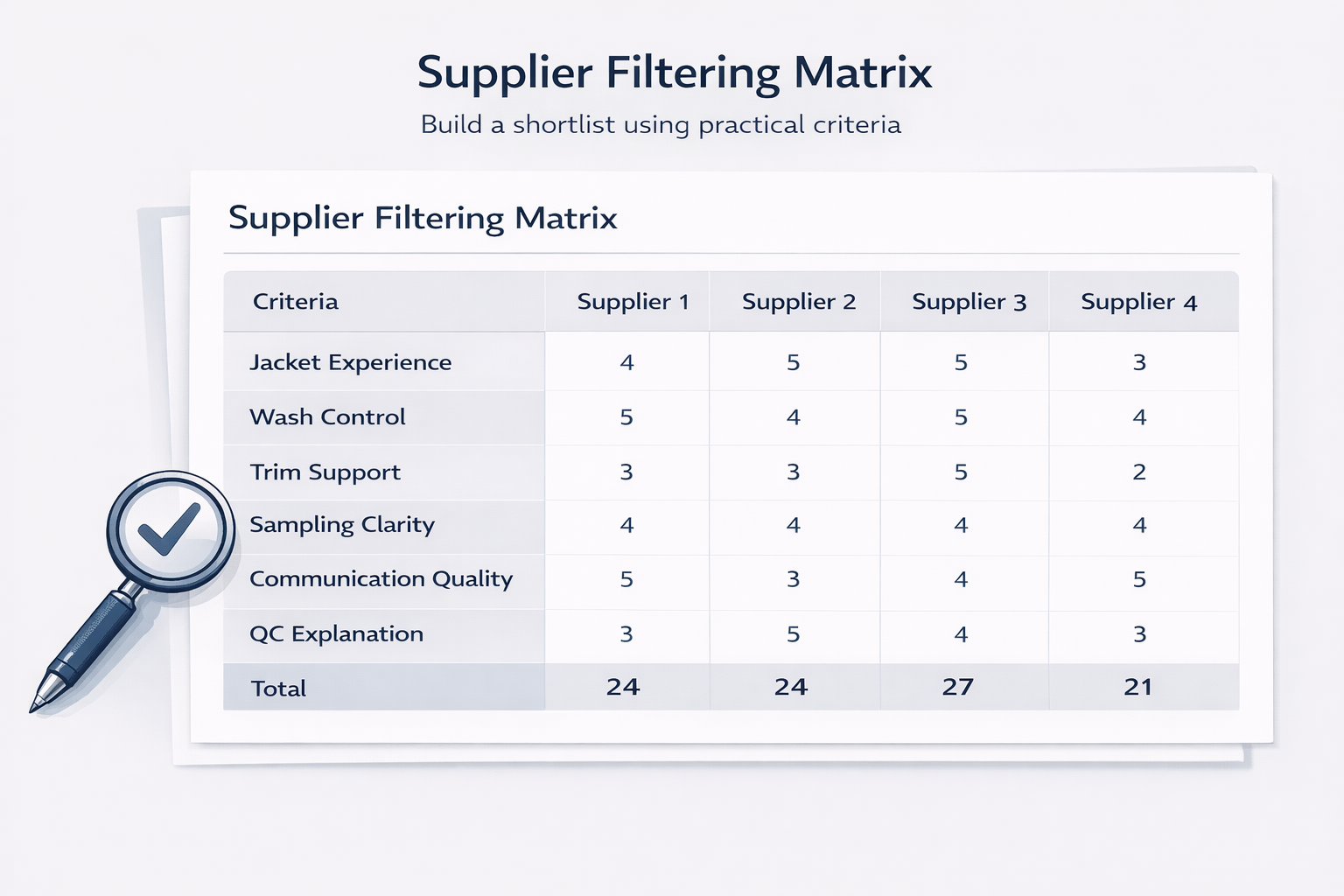
Check denim jacket relevance
Start by confirming whether the supplier has real experience in jacket categories, not just jeans or generic woven garments. Denim jackets involve body balance, structure, trim durability, wash response, and more visible topstitching than many lighter products.
Check wash and trim capability
A supplier may be able to sew the silhouette but still struggle with wash consistency, distress control, or hardware matching. Ask about how they handle wash approvals, post-wash measurement review, trim sourcing, and replacement options if a trim becomes unavailable.
If your article needs a fabric and wash support path, point readers to Fabrics & Techniques.
Check communication quality
The speed of a reply matters less than the structure of the reply. Good suppliers ask for the right files, clarify open points, and explain where risk may appear before sampling starts.
Check sampling logic
A supplier that understands sampling will talk about revisions, wash confirmations, size comments, and approval stages. That usually matters more than broad sales claims.
Step 3: What brands should send before asking for a quote or sample
Supplier evaluation becomes more accurate when the brief is more complete.
A useful first request usually includes:
1.front and back reference images
2.target silhouette or fit direction
3.measurement chart or point-of-measure notes
4.denim weight preference or fabric direction
5.wash reference images
6.trim notes for buttons, rivets, snaps, zippers, and threads
7.logo artwork or branding files
8.main label, size label, care label, and packaging notes if relevant
9.target quantity by style and color
10.launch timing or delivery target
For a clearer development path, see Service Process.
Why incomplete briefs create bad supplier comparisons
If Supplier A receives a full brief and Supplier B receives only inspiration images, the replies are not comparable. One quote may look cheaper simply because the scope is still vague.
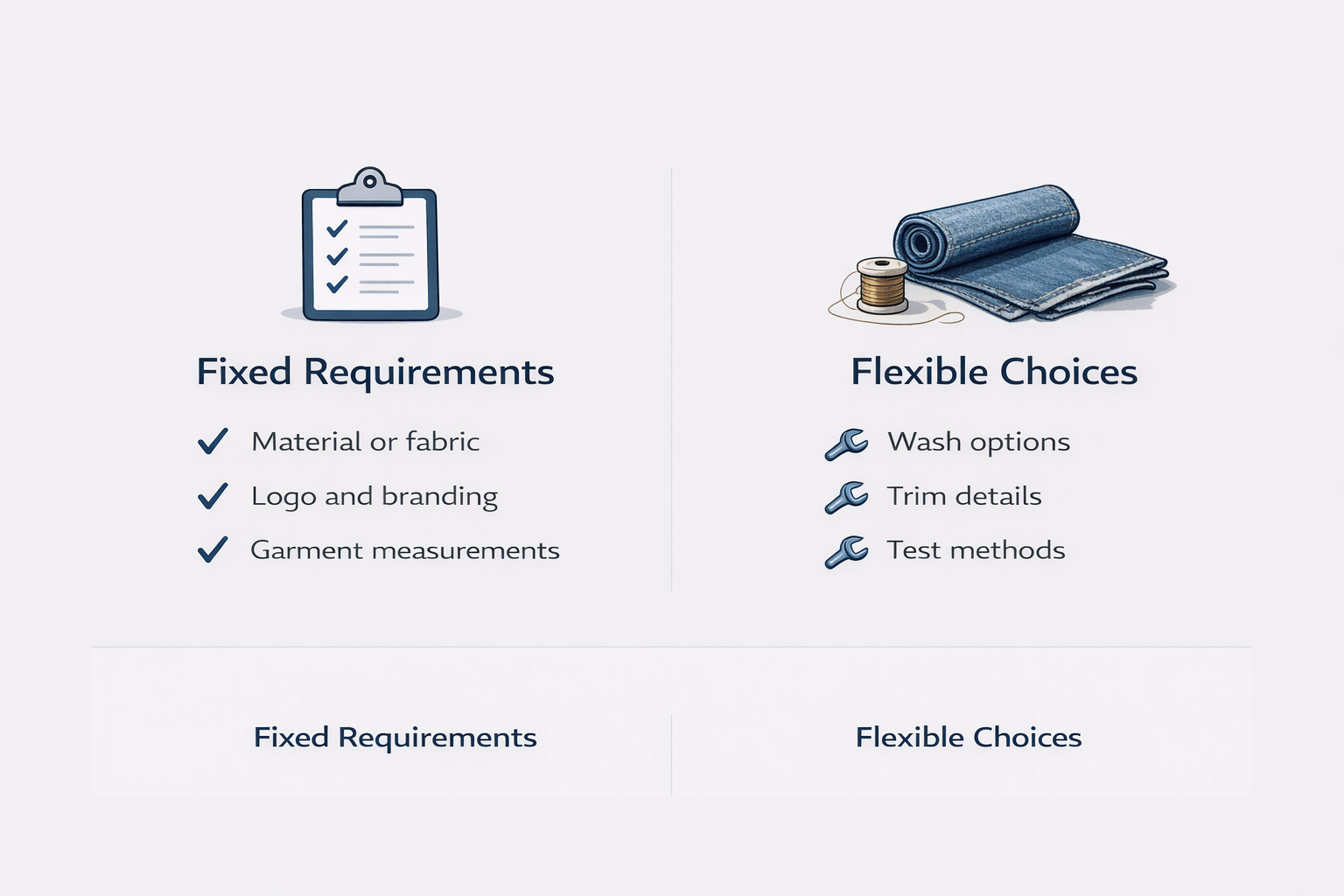
Separate fixed requirements from flexible choices
This makes supplier responses clearer. Usually, the fixed requirements are silhouette, wash direction, key measurements, and core branding placement. The flexible choices are often secondary packaging details, minor trim alternatives, or non-critical finishing updates.
Step 4: How to compare global denim jacket manufacturers more fairly
The safest way to compare suppliers is to use one shared evaluation sheet.
A practical comparison framework | ||
Comparison area | What to check | Why it matters |
Supplier type | OEM/ODM, CMT, mill, sourcing partner | Different models handle different levels of responsibility |
Denim jacket experience | Relevant category evidence and process understanding | Jackets are not identical to jeans or basic woven products |
Wash control | Shade consistency, post-wash measurements, approval flow | Denim wash can change fit and appearance |
Trim support | Buttons, rivets, snaps, zippers, labels, patches | Trims strongly affect quality perception and repeatability |
Sample communication | Clarification quality, revision logic, timing structure | Sampling problems usually start with approval gaps |
MOQ and pricing logic | Scope, cost drivers, and option breakdown | A low price without aligned scope is misleading |
QC explanation | What is checked, when it is checked, and by whom | Quality control should be process-based, not vague |
Reorder readiness | Whether the supplier can maintain consistency | Good first samples do not automatically mean good repeat bulk |
Compare process fit, not just quote totals
A structured supplier may not be the cheapest at first glance. But if they reduce revisions, clarify approvals, and manage risk better, the overall project cost can become more predictable.
For Vanrd's manufacturing setup and development environment, see Factory Strength.
Factory Reality: Why denim jacket sourcing often looks easier than it is
A denim jacket can look right in a photo and still go wrong in development.
Typical risk points include:
1.shade variation after wash
2.measurement movement after processing
3.pocket placement that looks balanced before wash but shifts visually afterward
4.hardware color that feels wrong against the final denim shade
5.embroidery or patch placement that changes after construction
6.bulk approvals that are interpreted differently from sample comments
This is why strong suppliers build denim jackets through staged approvals rather than assumptions. Fabric, wash, trims, measurements, and branding all affect each other.
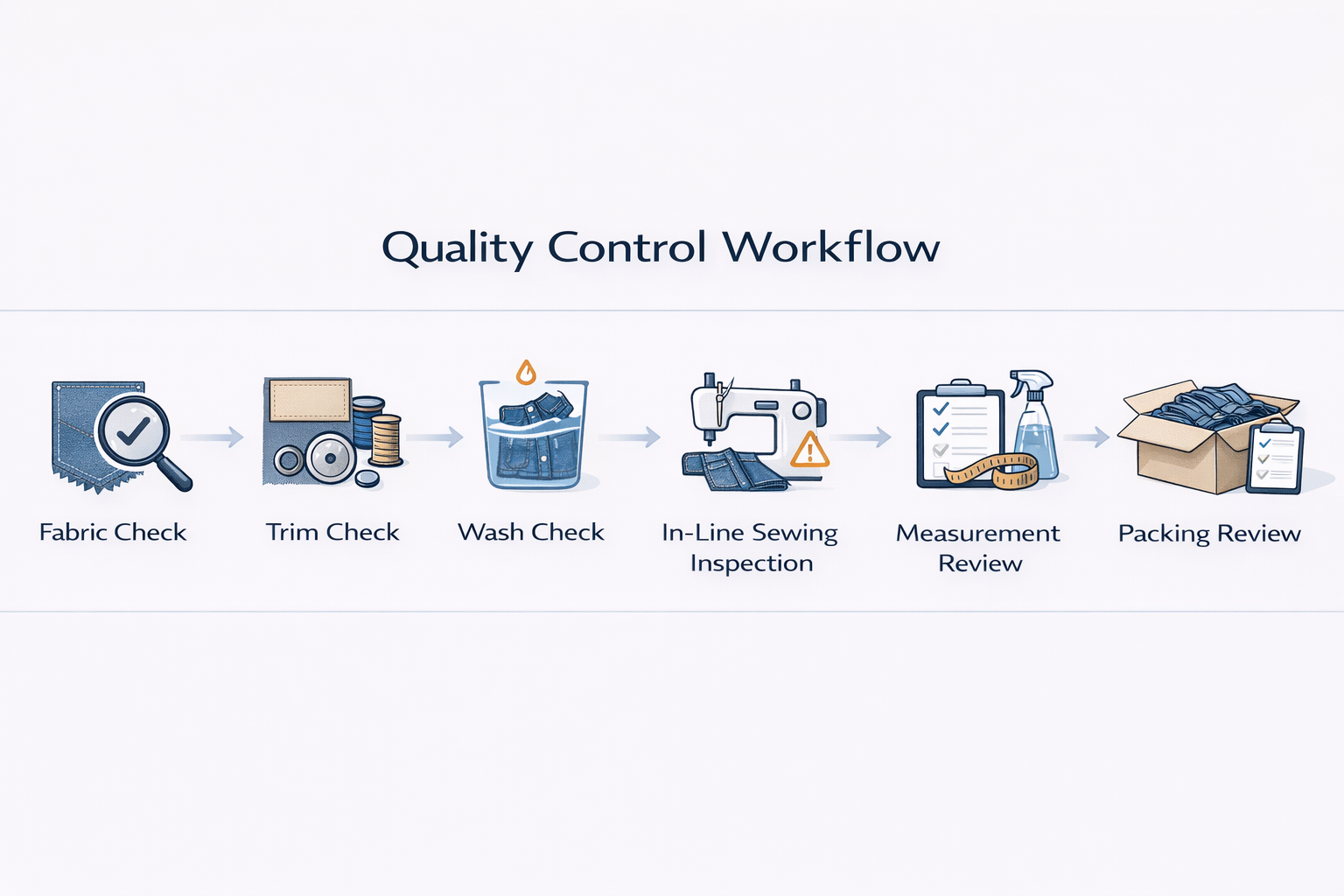
For a quality-control path that fits this section, direct readers to Q&C.
Common Mistakes Brands Make When Using "Top Manufacturer" Lists
Mistake 1: Assuming every name on the list is the same type of supplier
A list may include mills, finished-garment makers, and sourcing companies together. That does not mean they are interchangeable.
Mistake 2: Treating denim jacket sourcing like denim jeans sourcing
Jackets have different construction balance, trim visibility, structure, and outerwear expectations.
Mistake 3: Comparing quotes without matching the same scope
If one supplier is quoting a basic wash and another is quoting a complex vintage finish with more branding details, the numbers are not directly comparable.
Mistake 4: Approving visuals without approving process details
A nice photo does not confirm shrinkage control, wash repeatability, trim strength, or measurement consistency.
Mistake 5: Waiting too long to define who gives final approvals
If comments come from too many people without one approval owner, revision cycles usually grow and launch timing becomes harder to manage.
Practical Supplier Checklist Before You Start Sampling
Use this checklist before contacting a global denim jacket supplier:
1.confirm what supplier model you actually need
2.define your target jacket silhouette
3.prepare wash references
4.decide your denim direction or fabric range
5.list required trims and hardware
6.prepare artwork and branding notes
7.clarify estimated quantity
8.define launch timing
9.separate fixed requirements from flexible choices
10.assign one final approval owner on your team
A better checklist usually leads to better supplier replies.
FAQ
What is the difference between a denim mill and a denim jacket manufacturer?
A denim mill mainly focuses on fabric development and production, while a denim jacket manufacturer is usually responsible for turning fabric, trims, patterns, and branding into a finished garment program.
Should brands start with many supplier contacts at once?
Usually, a smaller but better-qualified shortlist works better. Too many early contacts often creates inconsistent quotes and confusing comparisons.
What is the most important file to send before sampling?
If you only have one formal document ready, a usable tech pack is usually the strongest starting point because it turns visual ideas into measurable instructions.
Can a good supplier still need several sample rounds?
Yes. More important than the number of rounds is whether each round reduces risk and clarifies approvals.
Is the cheapest supplier usually the best option for a startup brand?
Not necessarily. A lower price can help early testing, but if communication, wash control, or sample accuracy are weak, the total project cost may rise later.
How should brands review a denim jacket sample before bulk?
Review it in layers: silhouette, measurements, wash look, hand-feel, trim quality, branding placement, and overall balance. Do not approve the sample based only on the front view.
Next Steps
If your brand is evaluating global denim jacket manufacturers for a 2026 program, the best next move is to tighten your brief before asking for price. Clarify your supplier type, silhouette, wash direction, trim package, branding method, quantity range, and approval structure first.
If you want a manufacturer-led review of your denim jacket project, send your tech pack, reference images, quantity estimate, and target timing through Contact Us.
Vanrd can review the project from a B2B development perspective and help you move from supplier discovery to a clearer sampling path.