Sherpa vs Fleece: Which Fabric Is Better for Custom Jackets?
A fluffy sherpa jacket and a smooth polar fleece jacket can feel equally inviting on a cold morning. Wear them on a brisk walk, underneath a coat or through a windy city street, however, and you may notice very different results. The difference becomes even more important when a clothing brand has to choose one fabric for an entire collection.
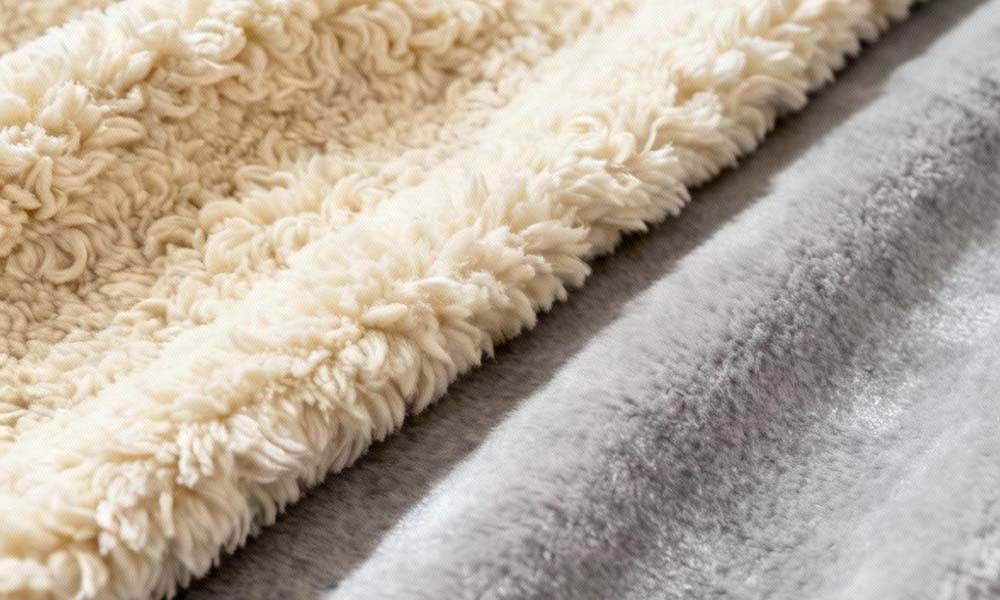
Sherpa and fleece are often discussed as two separate materials, but their relationship is more complicated. Most modern sherpa is a type of fleece with a pronounced, wool-like surface, as explained in Elevenate’s high-pile and low-pile fleece comparison. Regular fleece usually refers to a shorter, more uniform pile. Both can be warm and soft; neither is automatically the better choice for every jacket.
If you are comparing fabrics for a winter outer layer, a lightweight zip-up or a sherpa-lined denim jacket, start with how the finished garment needs to perform. Here is how the two materials compare in warmth, weight, breathability, durability, care and manufacturing cost.
Sherpa vs Fleece: Quick Comparison
Quick answer: Choose sherpa when a plush texture, a winter-ready appearance and a cozy feel are important. Choose conventional polar fleece when you want a less bulky garment that is easier to layer and suitable for everyday movement. Actual warmth and durability depend on the selected fabric and the complete jacket, not just the material name.
| Feature | Sherpa fleece | Regular polar fleece |
|---|---|---|
| Surface | Raised, often curled or clustered pile | Shorter, more even brushed nap |
| Common fiber | Polyester; other compositions available | Polyester; blends also available |
| Warmth | Often feels warm and cozy when loft is retained | Varies considerably by thickness and construction |
| Weight and volume | Usually visually fuller and bulkier | Often more compact and easier to layer |
| Breathability | Depends on pile, backing and lining | Often suitable for active layering; varies by knit |
| Wind protection | Limited unless combined with a protective layer | Limited in conventional unbonded versions |
| Common wear issues | Matting, shedding, compressed pile | Pilling, abrasion, flattened nap |
| Care | Needs attention to heat and friction | Often straightforward; follow garment label |
| Jacket applications | Teddy jackets, winter linings, textured outerwear | Midlayers, zip-ups, track jackets and light linings |
| Production cost | Depends on material and construction complexity | Depends on fabric grade, finish and garment design |
The table describes common constructions rather than guaranteed performance. A dense technical fleece and a loosely constructed sherpa may behave differently from these typical examples.
What Is Sherpa Fabric?
Sherpa is a pile fabric made to resemble the curly or clustered surface of wool shearling. In apparel, it commonly uses synthetic fibers, particularly polyester. Some versions incorporate other fibers, so the word sherpa alone cannot tell you the fiber composition. It also does not mean that the garment contains genuine sheepskin.
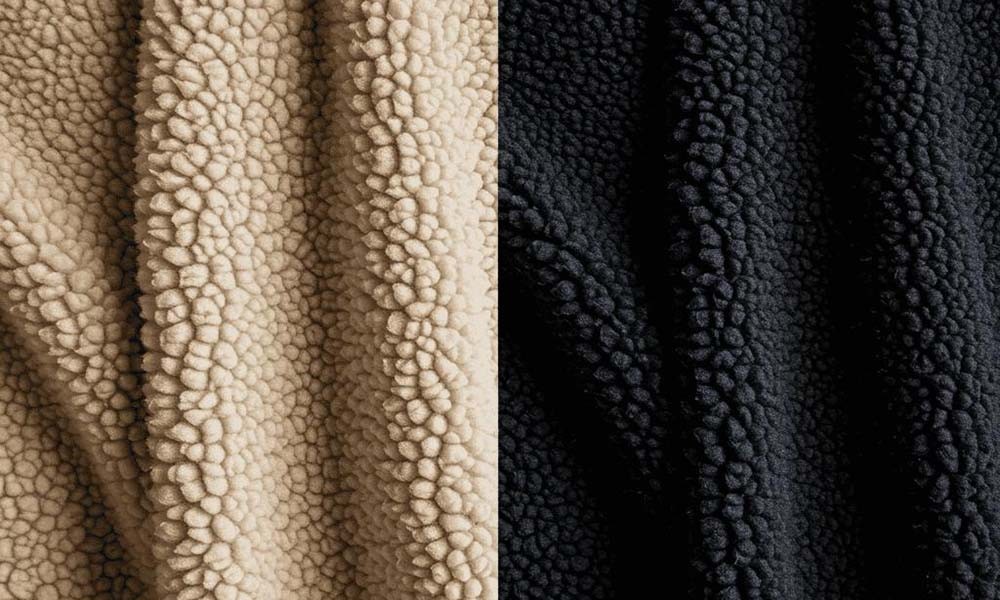
Look closely at a sherpa fabric and you will see a raised surface supported by a backing or ground structure. The surface may be tight and nubby, like a teddy bear, or long and open with a more pronounced curl. The reverse can be relatively flat, another textile surface or a bonded backing. These variations change how the material hangs, stretches and feels against the body.
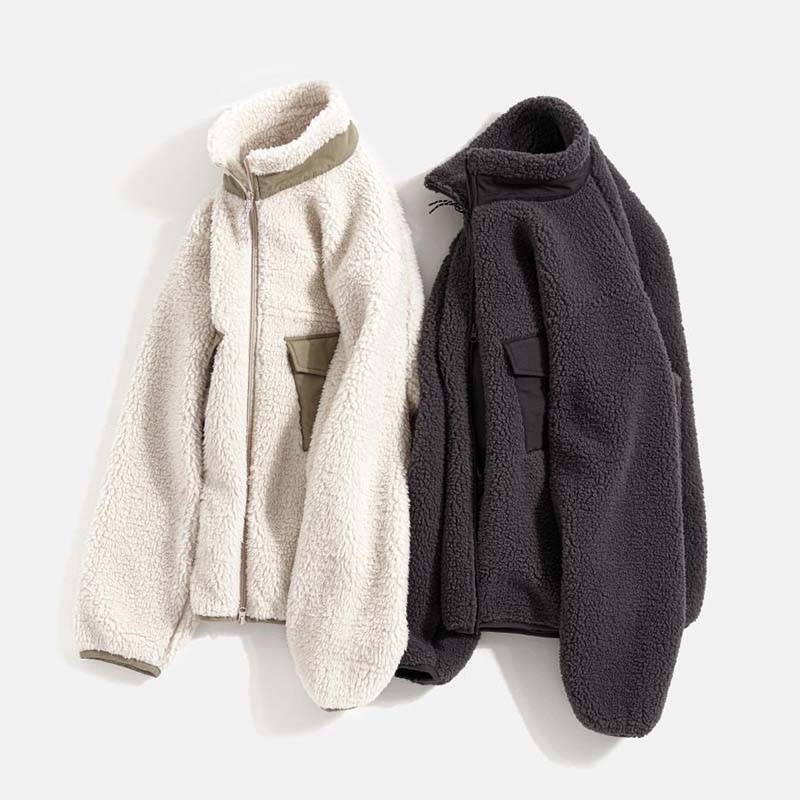
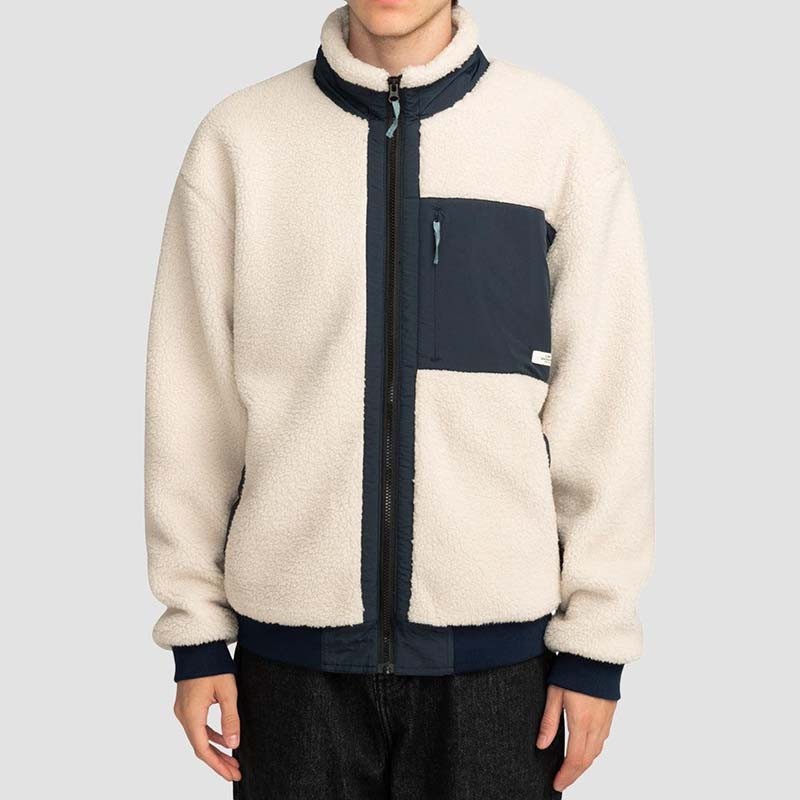
The raised fibers help create small air spaces that contribute to insulation. That makes sherpa appealing for relaxed winter jackets, soft collars and lined outerwear. Its visible texture also becomes part of the design itself. A cream sherpa jacket with a simple chest pocket can have considerable visual character without a large graphic.
Advantages of sherpa
- Distinctive wool-like texture that gives casual outerwear a recognizable appearance.
- A soft, enveloping handfeel when the selected pile is suitable for the garment.
- Useful for creating a warm-feeling lining beneath denim, canvas or other woven shells.
- Offers a range of design options through pile length, color and contrasting panels.
Disadvantages of sherpa
- Deep pile can increase seam thickness and internal garment volume.
- Repeated friction may flatten or mat the surface, particularly in high-contact areas.
- Fine artwork can become difficult to see on a deep, irregular pile.
- Some constructions shed fibers or require additional care during washing and drying.
These trade-offs are worth considering alongside the desired look. Explore VANRD's custom sherpa fleece jackets for examples of how the material can be used in outerwear.
What Is Fleece Fabric?
Fleece is a broad textile term rather than the name of a particular fiber. In the context of outdoor and casual jackets, it usually refers to a soft, raised-surface knitted fabric. Polyester polar fleece is a familiar example. Its brushed surface produces a fine, relatively even nap that feels soft and helps retain air near the body.
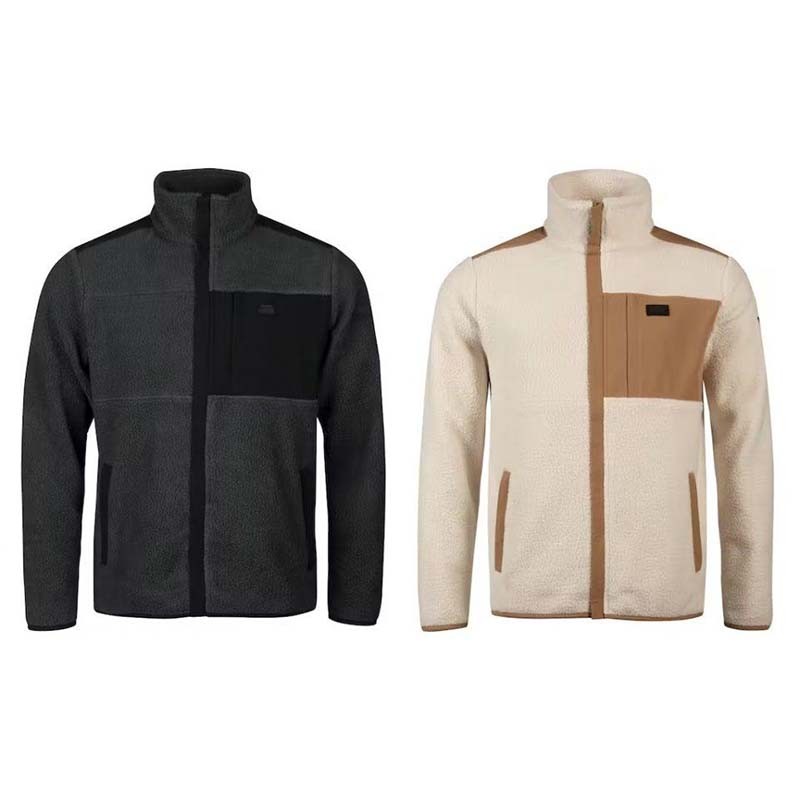
Unlike sherpa, conventional polar fleece generally has a less pronounced surface texture. It can sit closer to the body and slide under another layer without creating as much visual or physical volume. A compact fleece is especially useful in a full-zip midlayer that needs to fit beneath a windbreaker or coat.
Fleece is not restricted to a single thickness or finish. Microfleece is a fine, lightweight option; polar fleece comes in a range of weights; technical fleece may use engineered grids, different pile structures or stretch materials. Polartec's fleece insulation technologies illustrate how much variation exists within this fabric family. These are technical references, not a claim that VANRD uses Polartec fabrics.
There is also a separate category of brushed sweatshirt fleece, often made from cotton or cotton-polyester blends. It normally has a knitted outer face and a brushed inner surface. If you are developing hoodies rather than polar fleece jackets, the distinction between French terry and brushed fleece is more relevant.
Advantages of regular fleece
- Compact options are comfortable for layering and everyday movement.
- Polyester versions generally absorb little moisture into the fiber and can dry relatively quickly.
- A uniform surface can make it easier to develop clean panel lines and visible branding.
- The variety of thicknesses makes fleece useful across several selling seasons.
Disadvantages of regular fleece
- Conventional unbonded fleece may allow cold wind to pass through.
- Some grades develop noticeable pills or surface wear after repeated use.
- Lightweight options may not offer enough insulation for low-activity winter wear.
- A basic fleece surface may not provide the textured fashion appeal of sherpa.
Sherpa vs Fleece: 8 Key Differences
1. Warmth and insulation: Is sherpa warmer than fleece?
Sherpa often feels warmer than lightweight polar fleece because its fuller pile holds more air around the body. But the comparison is not absolute. A substantial polar fleece can provide more insulation than a thin sherpa, and an exposed high-pile jacket may feel cold when wind moves through it.
Think of insulation as a system that includes the fabric, the air around your body and the garment layers that protect that air. Pile loft is valuable only when the surrounding construction allows it to work. The fit, openings at the neck and hem, and the presence of a woven shell all influence heat loss.
For a brand designing a winter trucker jacket, a sherpa body lining beneath a wind-resistant woven shell may be more appropriate than an exposed fleece outer layer. For an active midlayer, a compact fleece that fits neatly beneath a shell may make more sense. If you need to publish a comparative warmth claim, test the nominated materials under comparable conditions rather than relying on a fabric description.
2. Texture and appearance
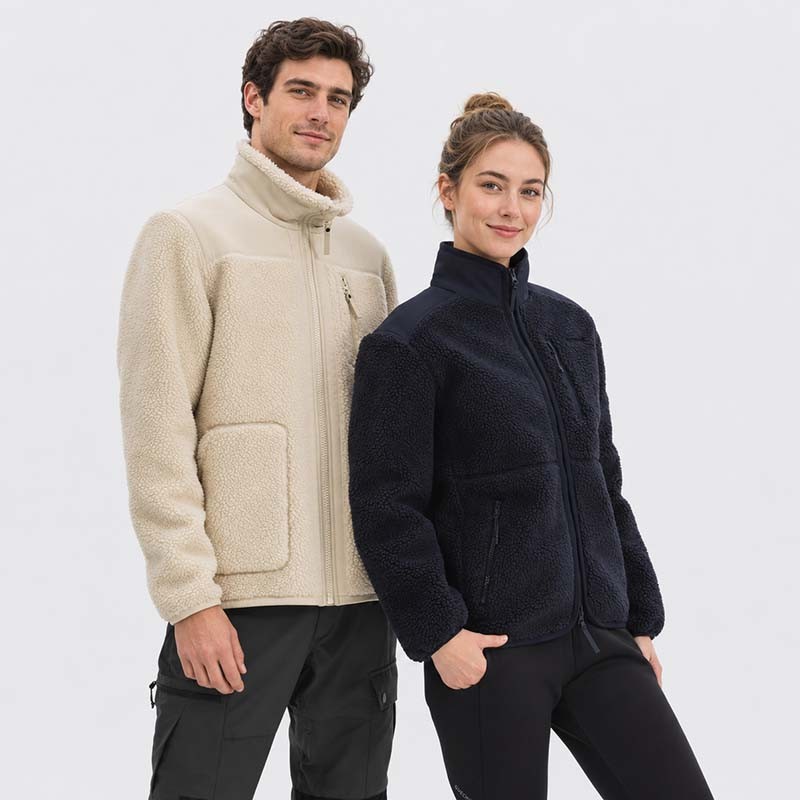
Sherpa is the more visually expressive material in many casual collections. Its uneven, raised surface creates shadows and highlights that give the garment a three-dimensional appearance. It works particularly well in heritage-inspired designs, oversized teddy jackets and simple silhouettes with contrasting woven pockets.
Regular polar fleece tends to have a more continuous surface. It suits athletic zip-ups, clean color blocking and compact everyday jackets where the silhouette matters more than the pile texture.
Color deserves attention, too. The same nominal shade can look different on a dense fleece and a curled sherpa because their surfaces reflect light differently. If your jacket combines both fabrics, approve them next to each other rather than accepting separate color swatches in isolation.
3. Weight, thickness and garment bulk
Fabric weight is commonly expressed as GSM, or grams per square meter. GSM tells you the mass of a given area of fabric, not its thickness or insulation value. Two swatches with the same GSM can occupy very different amounts of space because of their pile and backing structures.
A lofty sherpa may look fuller than a compact polar fleece of comparable weight. Conversely, a heavily backed sherpa may contribute significant weight without delivering the drape you expected. A dense polar fleece can also be heavier than a light sherpa.
Consider the finished jacket rather than comparing only fabric GSM. Zippers, pocket layers, shell fabrics and linings all add weight. A bulky collar or cuff may also feel uncomfortable even when the total garment weight is acceptable. If you are reviewing material specifications, our discussion of why higher GSM does not always mean better fabric quality provides useful context.
4. Breathability and moisture management
For active customers, comfort depends on how efficiently excess body heat and moisture can escape. Compact, unlined fleece is often a convenient option for movement because it can provide insulation without filling the space beneath an outer jacket.
However, pile height alone does not determine breathability. An open high-pile knit can allow substantial airflow, while a tightly backed or bonded fleece may restrict it. A lining or membrane can change the behavior of either fabric entirely.
Polyester generally has low moisture absorption at the fiber level, but that does not guarantee every polyester fleece will transport sweat effectively. Fabric structure and finishing influence how moisture moves, and the time needed to dry also depends on how much water is held within the textile. Brands designing activewear should request material information and relevant performance testing if these properties form part of the product promise.
5. Wind and water resistance
Neither conventional sherpa nor regular polar fleece should automatically be marketed as windproof or waterproof. The raised surface can feel warm indoors or in still air, yet many fleece knits permit air to pass through. Rain can also enter through the structure, even when the fibers themselves absorb relatively little water.
If the jacket is intended for windy or damp conditions, there are several construction options: a separate woven shell, a wind-resistant backing or a suitable laminated fabric. These decisions can affect flexibility, moisture transfer, garment weight and cost.
A water-repellent finish may reduce surface wetting, but it is not the same as waterproof construction. Performance claims should be supported by suitable tests for the actual fabric or finished garment. For casual streetwear, a clear description of the jacket's intended use is often more helpful than a technical claim that has not been established.
6. Durability, pilling and shedding
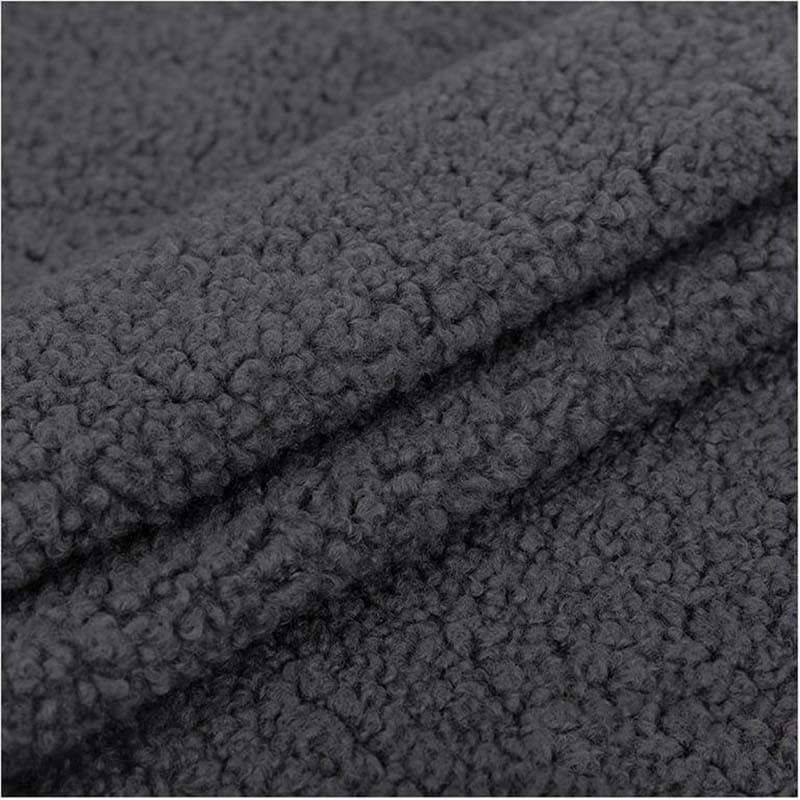
Sherpa and regular fleece do not necessarily age in the same way. On sherpa, repeated compression and friction may cause curls to lose definition or develop matted areas. Backpack straps, elbows and the inside of cuffs are useful places to examine on a worn sample.
On smoother fleece, small fiber balls can become visible where the fabric rubs against itself or another surface. Both materials can shed fibers. Fiber properties, knit construction, finishing and use conditions influence how quickly these changes appear; there is no reliable durability ranking based on the name alone.
A brand can request a pilling assessment, such as a suitable method from the ISO 12945 series, along with agreed washing and surface-appearance checks. Agree on the method and acceptance criteria with the testing provider. A marketing term such as anti-pill is not a replacement for a result on the material that will actually be used.
7. Washing and maintenance
A good first impression in the showroom is only part of fabric quality. Customers will wash their jackets, sometimes more often than expected. That is why care instructions need to reflect the finished garment's shell, lining, hardware, decoration and fabric composition.
Many polyester fleece products are suitable for gentle washing at low temperatures and drying with limited heat, but the garment label should take priority. Avoiding unnecessary rubbing and excessive heat can help preserve a raised surface. High heat may alter the feel or shape of some synthetic pile fabrics, while rough washing can encourage matting or pilling.
When developing a new style, inspect a washed sample after it has dried completely. Compare its surface with the unwashed reference, operate the zipper, check the seams and measure relevant garment dimensions. A jacket that still feels pleasant and fits correctly after the agreed care cycle is a more useful approval reference than a perfect-looking unused swatch.
8. Cost and production considerations
Is sherpa more expensive than fleece? It can be, but the answer depends on what you are buying. A basic polyester sherpa may cost less than a specialized performance fleece. Custom colors, fiber content, surface treatments, fabric weight and supplier minimums can all affect the material price.
The cost of a complete jacket is also influenced by fabric consumption and usable width. Deep pile may require directional cutting to keep the appearance consistent between panels. Thick seams can need additional construction work, and a separately lined jacket includes more material and assembly than a simple unlined fleece zip-up.
Compare quotations for the same garment specifications, including the shell, lining, trims and expected quality. If one quote includes a bonded backing and another describes a single-layer fleece, the difference in price may simply reflect a different product. A lower material price is not necessarily a lower finished-garment cost.
Sherpa Lining vs Fleece Lining: Which Works Better?
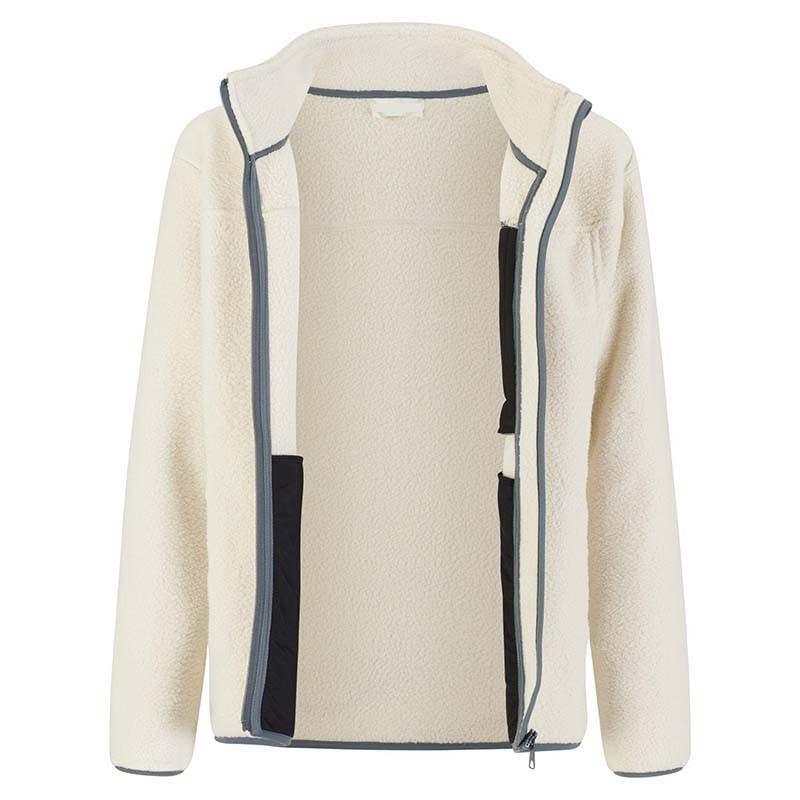
The decision changes when the fleece is hidden inside a jacket rather than used as the outside fabric. A lining has to work with the shell, the intended fit and the clothes worn underneath.
| Lining design | Where it makes sense | What to check |
|---|---|---|
| Sherpa body lining | Winter denim truckers, canvas jackets | Internal volume, pile compression, shell compatibility |
| Regular fleece lining | Transitional outerwear, casual zip-ups | Thickness, stretch compatibility, surface friction |
| Sherpa body with smooth sleeve lining | Jackets worn over sweatshirts or knitwear | Ease of dressing, arm movement, sleeve warmth |
| Bonded fleece construction | Outerwear with a more unified fabric structure | Drape, flexibility, bond durability |
A separate lining can move independently of the shell, while a bonded fabric behaves more like a single composite material. Neither construction is universally superior. A shell that needs to maintain a crisp outline may respond differently to bonding than a relaxed jacket intended to drape softly.
One practical detail is easy to overlook: a high-pile sleeve lining may grip the customer's sweater and make the jacket awkward to put on. Using a smoother sleeve lining with sherpa in the body can preserve the cozy character while improving dressing comfort. The warmth trade-off should still be evaluated on the complete sample.
Which Fabric Is Better for Different Types of Jackets?
There is no need to force one fabric across an entire outerwear range. The strongest choice becomes clearer when you connect the fabric to a specific garment and customer.
| Jacket type | Material direction to explore | Why it fits |
|---|---|---|
| Teddy or full sherpa jacket | Textured sherpa as the visible face | Distinctive surface and a cozy lifestyle look |
| Sherpa-lined denim jacket | Woven denim shell with sherpa lining | Retains the trucker jacket identity while adding insulation |
| Winter workwear jacket | Canvas or twill shell with suitable fleece lining | Combines an abrasion-resistant shell with interior comfort |
| Lightweight full-zip jacket | Compact polar fleece | Less volume for movement and layering |
| Outdoor-inspired midlayer | Appropriate technical or polar fleece | Allows fabric selection around activity and layering needs |
| Transitional color-block jacket | Fleece with contrasting woven panels | Balances sporty appearance and practical construction |
For a retro streetwear collection, sherpa can supply a recognizable texture without competing with the rest of the outfit. A brand building a repeatable basics range may prefer a clean fleece zip-up in several colors. A workwear label might use sherpa only inside a jacket so its woven outer face remains the main design feature.
VANRD's custom sherpa fleece pullover and sherpa color-block hoodie show examples of different garment formats. You can also explore our custom jacket manufacturing services for designs that combine fleece with a woven outer shell.
What Should Clothing Brands Check Before Choosing a Fabric?
Suppose you are planning two products: a plush winter jacket with a prominent brand patch and a streamlined zip-up for everyday layering. Asking a manufacturer for the same fleece specification for both would overlook the very reasons customers might buy each jacket. Instead, compare candidate fabrics against the purpose of each style.
Compare swatches under the same conditions
Request the fiber composition, GSM, usable width, pile appearance, backing structure and available colors. Examine swatches side by side in the same lighting. Bend and compress them to understand the handfeel, loft recovery and flexibility. The aim is not to declare a winner based on softness, but to decide which material supports your intended garment. VANRD's fabric and customization services provide a starting point for this discussion.
Evaluate the real fit, branding and construction
A fabric decision is best reviewed through a wearable sample. Check the chest and arm movement over the intended underlayer. Test how the zipper behaves near raised fibers and whether the collar, pocket opening and cuffs remain comfortable. For a fine embroidered logo, compare placement on the pile with a smoother contrasting panel or an appropriate patch. Approve the result rather than assuming the same artwork will translate equally well to every fabric.
Agree on quality and cost before committing to bulk
Set the relevant expectations for surface appearance, measurements after washing, color matching and decoration. Ask the manufacturer to identify the production material and the approved sample that will represent the order. For a comparison between two candidate fabrics, use the same evaluation conditions wherever possible. The custom jacket manufacturing guide explains how material selection fits into the wider product development process. Our quality control overview and sherpa jacket development guide cover the next steps once a fabric direction has been selected.
If you are still deciding between materials, share your reference garment, target season, preferred silhouette and estimated order quantity with VANRD. Our OEM and ODM development services can help you assess sourcing and construction options before sampling. Discuss your jacket project.
Technical reading: Polartec Classic Fleece and High Loft Fleece explain how different constructions within the fleece family serve different applications. For additional context on texture and care, see BEDELITE’s comparison (focused on bedding rather than apparel). No comparative laboratory results for VANRD fabrics are claimed in this article.
Conclusion
Sherpa and regular fleece offer two different approaches to comfort and design within a closely related family of fabrics. The better choice depends on the role the jacket plays in the collection, the conditions in which it will be worn and the experience customers expect after repeated use. A thoughtful material comparison, followed by approval of the actual garment, can help a clothing brand create outerwear with a clear identity and a quality standard that can be carried into production.
Frequently Asked Questions
1. Is sherpa made from real wool?
Not necessarily. Most commercial sherpa fleece used in casual apparel is polyester-based and designed to imitate shearling. Wool-containing or blended alternatives exist. Check the fiber-content specification rather than assuming that a wool-like appearance indicates animal fiber.
2. Is sherpa suitable for summer jackets?
It can work in cool summer evenings, high-altitude settings or limited decorative areas, but a thick sherpa-lined jacket may be uncomfortable in warm conditions. A compact lightweight fleece or an unlined woven jacket is often a more practical starting point for a summer collection.
3. Can you combine sherpa and polar fleece in the same jacket?
Yes. They can be used in separate panels or different lining zones to balance texture and bulk. Check stretch compatibility, seam thickness, shade differences and wash performance before approving the combination.
4. Is recycled polyester sherpa as durable as virgin polyester fleece?
Recycled content alone does not establish durability. The yarn, fabric structure, finishing and garment construction matter. Compare test results for the specific nominated fabrics and obtain supporting documentation if you plan to make a recycled-content claim.
5. Can a sherpa jacket be developed from a reference photo without an existing sample?
A reference photo can communicate silhouette and surface appearance, but it cannot establish fabric weight, pile density or fit accurately. A manufacturer can help shortlist physical materials and develop a first sample. A clear size specification and approved material swatch will make subsequent decisions more reliable.