How Much Does It Cost to Manufacture Clothing in China?
A practical guide for apparel brands that want to understand clothing manufacturing cost in China, including fabric, construction, MOQ, sampling, printing, embroidery, trims, packaging, quality control and the details that turn a rough price into a reliable factory quote.
Quick Answer: How Much Does Clothing Manufacturing Cost in China?
There is no single price for manufacturing clothing in China. A basic custom T-shirt may sit at the lower end of the market, while a heavyweight washed hoodie, multi-pocket cargo pant, varsity jacket or insulated puffer can cost several times more. Fabric quality, garment construction, order quantity, decoration, trims and development requirements all change the final number.
As a broad planning reference, custom apparel factory prices may range from roughly $3.50–$10+ for basic T-shirts, $8–$28+ for hoodies and sweatshirts, $8–$30+ for trousers or jeans, and $15–$60+ for custom jackets and outerwear. Highly customized, premium or technically complex garments can exceed these ranges.
These figures should be used for early budgeting only. They are not VANRD quotations and they do not necessarily include sampling, development, freight, import duties or other landed-cost expenses.
What Does “Clothing Manufacturing Cost” Actually Include?
When a brand asks, “How much does it cost to manufacture this?” the first problem is often not the price. It is the definition of cost.
One supplier may be giving you a factory production price. Another may include labels and packaging. A third may include export handling or freight. Put those three quotations beside each other and the cheapest number may appear obvious, even though you are not comparing the same package.
For practical sourcing, think about your apparel manufacturing cost in three layers.
Pattern development, prototypes, fit samples, fabric swatches, lab dips, logo tests and revisions required before bulk production.
Fabric, cutting, sewing, trims, decoration, labels, packaging, production overhead and agreed quality-control requirements.
The wider cost of getting the finished garments to your destination, which may include freight, customs-related expenses and local delivery.
That distinction matters. Your $18 hoodie is not necessarily an $18 delivered hoodie. Likewise, a $20 factory quotation may actually be commercially better than a $17 quotation if it includes a better fleece, stronger rib, custom labels, proper packaging and more reliable quality control.
Typical Clothing Manufacturing Cost Ranges in China
The following ranges are useful for early-stage budgeting rather than final purchasing decisions. They combine broad market observations for custom and private label apparel manufacturing. Your actual quotation can move below or above them according to fabric, construction, quantity and customization.
| Garment Type | Broad Planning Range | Main Cost Drivers |
|---|---|---|
| Basic Custom T-Shirt | $3.50–$10+ | Fabric GSM, cotton quality, fit, print, labels and quantity |
| Polo Shirt | $5–$14+ | Piqué fabric, collar construction, buttons, embroidery and finishing |
| Hoodie / Sweatshirt | $8–$28+ | Fleece weight, rib, wash, embroidery, graphics and custom trims |
| Pants / Joggers | $8–$25+ | Fabric, pockets, waistband, hardware, construction and wash |
| Denim Jeans | $10–$30+ | Denim quality, hardware, wash, distressing and construction |
| Tracksuit Set | $15–$40+ | Two-piece construction, fabric, zipper, lining and logo techniques |
| Custom Jacket / Outerwear | $15–$60+ | Shell, lining, insulation, hardware, ribs, patches and construction |
If you are developing specific categories, it is more useful to compare the requirements on VANRD's Hoodie Manufacturer, Custom Jacket Manufacturer, T-Shirt Manufacturer, Pants Manufacturer and Tracksuit Manufacturer pages before assuming that one general apparel price applies to every category.
The 8 Biggest Factors That Determine Apparel Manufacturing Cost
A factory quotation is more like a recipe than a price tag. Change one ingredient and the final number changes with it. In custom clothing manufacturing, eight variables usually deserve the most attention.
Fiber, construction, GSM, width, dyeing, finishing and usable yield.
Panels, seams, pockets, lining, sewing operations and the labor time required to assemble them.
How efficiently materials, setup work and production time can be allocated.
Printing, embroidery, appliqué, washing, dyeing and special effects.
Zippers, snaps, drawcords, ribs, buttons, patches and custom components.
Patterns, samples, fit revisions, lab dips and technique testing.
Labels, hangtags, bags, barcode requirements, cartons and retail presentation.
Inspection scope, tolerances, testing requirements and sample-to-bulk control.
1. Fabric and Material Cost: Start Here
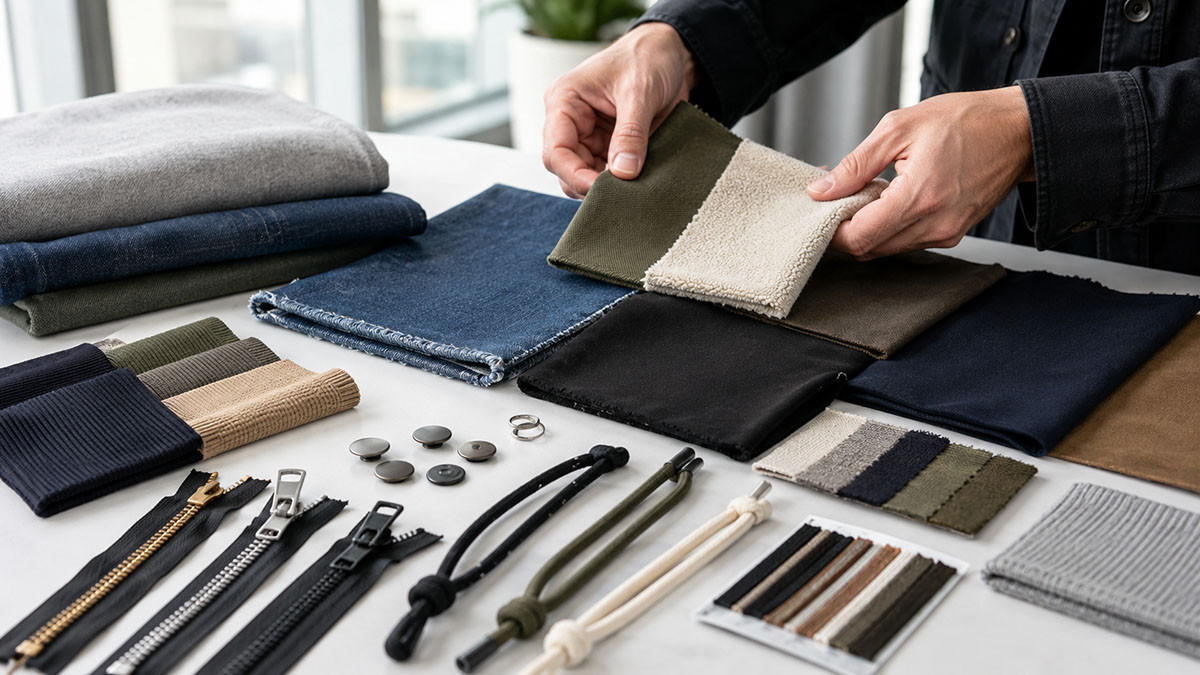
Fabric is usually the first place to look when two garment quotations are far apart. But comparing fabric only by the words “100% cotton” or “polyester” is too simplistic.
A factory needs to consider fabric composition, GSM, yarn quality, width, knitting or weaving structure, dyeing process, finishing, shrinkage, usable consumption and material minimums. Even two fabrics with the same fiber content and GSM can have different prices because their construction, hand feel, finishing and supplier requirements are different.
Take heavyweight streetwear fleece as an example. Increasing the fabric weight does more than increase the amount of material used. It may also require stronger rib, different sewing settings, heavier packaging and different finishing. If you then add garment dye or vintage washing, the cost structure moves again.
This is why experienced buyers do not ask only, “How much is a cotton hoodie?” They ask:
- What is the exact fabric composition?
- What GSM or weight is being quoted?
- Is the fabric stock-supported or custom developed?
- Is custom dyeing required?
- Does washing change shrinkage or consumption?
- Are lab dips or color approvals required?
Brands still deciding between fleece, denim, nylon, canvas, polyester and other materials can review VANRD's Fabrics & Techniques resource before requesting final pricing.
2. Garment Construction and Sewing Complexity
If fabric is the raw material, construction is the architecture.
A basic T-shirt may contain relatively few pattern pieces and sewing operations. A cargo pant adds pockets, flaps, waistband components, bartacks and hardware. A varsity jacket introduces shell fabric, sleeve materials, lining, rib, snaps, pockets, patches and multiple joining operations. A puffer jacket adds insulation and quilting on top of that.
More components normally mean more cutting preparation, sewing operations, alignment control and inspection points. This is why garment complexity matters even when two products use similarly priced fabric.
You can think of it like building a room versus building a house. Both use materials and labor, but the number of connections changes the workload dramatically.
Complex streetwear products can also require stronger pattern development. Oversized shoulders, cropped bodies, curved panels, stacked pants, shaped hoods and structured jackets are not created simply by making a standard pattern bigger or smaller. Fit development itself becomes part of the commercial cost of the product.
How Labor and Sewing Time Affect Garment Cost
Labor cost is closely tied to sewing time rather than simply the number of garments produced. A basic T-shirt requires relatively few operations, while cargo pants, varsity jackets and lined outerwear may require multiple panels, pockets, reinforcements, hardware and finishing steps.
The more sewing operations a garment requires—and the more precision or specialized workmanship those operations demand—the higher its manufacturing cost can become. This is why factories need construction details and an approved sample before they can accurately evaluate labor and production time.
3. How MOQ Affects Clothing Manufacturing Cost Per Unit
MOQ is one of the most misunderstood parts of clothing production. Brands sometimes assume a manufacturer prefers larger orders simply because it wants to sell more garments. In reality, MOQ is connected to production efficiency throughout the supply chain.
Before one garment is completed, there may already be costs associated with fabric purchasing, color preparation, pattern work, cutting setup, embroidery programming, printing screens, trim sourcing, production scheduling and packaging.
At 100 pieces, those setup costs are concentrated into a relatively small quantity. At 500 pieces, the same setup may be spread over five times as many units.
Unit Cost = Materials + Sewing + Customization + Trims + Packaging + Allocated Development / Setup + Production Overhead
But do not assume that increasing quantity will reduce every component indefinitely. Fabric prices may improve only after certain mill quantities. Custom hardware may have separate minimums. Different colors may effectively behave like separate production runs.
VANRD's standard project planning generally starts around 100 pieces per style and color, while actual feasibility depends on materials and customization. Buyers evaluating quantities can also review the Apparel MOQ Guide.
4. Sampling and Product Development Costs
Why can one sample cost much more than one unit from a bulk order? Because one sample is carrying development work that bulk production can distribute across hundreds of garments.
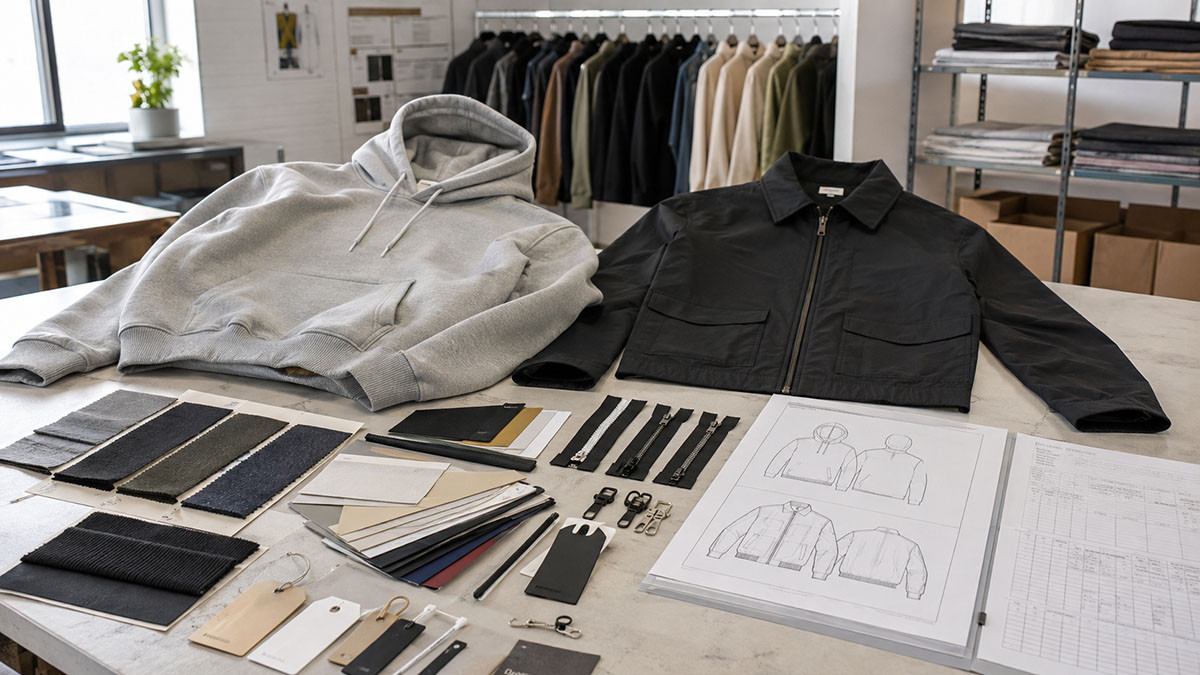
Depending on the project, development may involve reviewing a tech pack, creating or adjusting patterns, sourcing fabric, locating trims, preparing artwork, programming embroidery, testing printing, sewing the prototype and revising the fit.
One design may be approved after the first sample. Another may need two or three revisions because the fabric, fit, construction or branding changes. That difference affects both cost and timing.
Common Development Costs Can Include:
- Pattern development or pattern adjustment
- Prototype and fit samples
- Fabric swatches and material sourcing
- Lab dips for custom colors
- Print strike-offs or test panels
- Embroidery digitizing and test embroidery
- Custom trim or hardware development
- Sample revisions before production approval
A clear specification reduces unnecessary development loops. If your brand is still preparing production files, start with the Clothing Tech Pack Guide. If you need more manufacturer involvement in product development, review the differences between OEM and ODM clothing manufacturing.
5. Printing, Embroidery, Washing and Special Techniques
Decoration can move a garment from basic to distinctive—and it can also change the manufacturing cost quickly.
A one-color chest screen print is not priced like a large multi-color front-and-back graphic. Small flat embroidery is not the same as oversized dense embroidery. A simple woven label is different from a custom chenille patch set covering the chest, sleeve and back.
Common streetwear customization includes screen printing, digital printing, DTF, puff printing, embroidery, appliqué, chenille, patches, rhinestones, garment dye, enzyme wash, acid wash and other finishing processes.
Each technique has its own cost logic. The factory may need to consider artwork size, number of colors, stitch count, placement, setup, fabric compatibility, wash resistance and order quantity.
Before choosing a technique only by appearance, compare how it interacts with your fabric, target retail price and production quantity. VANRD's custom fabric and branding techniques guide explains many of these options in more detail.
Why the Cheapest Clothing Factory Quote Can Become the Most Expensive
Imagine receiving three quotations for the same hoodie: $13, $17 and $21. Which one wins?
You cannot answer until you know what each factory has actually quoted.
The $13 supplier may be using a lighter fleece. The $17 factory may include the requested fabric and labels but use stock rib. The $21 factory may include custom rib, garment washing, embroidery, packaging and a stricter sample-to-bulk quality standard.
On a spreadsheet, $13 looks cheaper. On the finished garment, it may be a completely different product.
This becomes especially important for premium streetwear. If the fabric weight is wrong, the silhouette changes. If the rib recovery is weak, the cuffs change. If the wash is inconsistent, color changes. If embroidery density is reduced too far, the branding looks cheaper.
Those problems can create a larger commercial loss than a few dollars saved on the initial factory price.
Factory Price Is Not the Same as Landed Cost
Another common sourcing mistake is treating a production quotation as the final cost of inventory.
Always confirm the quotation basis. A factory-side or FOB price is not the same as a delivered price. Depending on your purchasing arrangement, you may still need to budget for freight, insurance, customs-related costs, clearance, destination handling and local transport.
Freight can also change dramatically according to the product. Three hundred lightweight T-shirts and three hundred padded jackets occupy very different shipping volumes even if the piece quantity is identical.
This is why experienced sourcing teams compare landed economics, not only sewing price.
How to Get an Accurate Clothing Manufacturing Quote
If you send a supplier one reference photo and ask, “How much for 300 pieces?”, the manufacturer has to guess.
And a quotation built on guesses is usually temporary.
If you want different factories to provide genuinely comparable pricing, send them the same project information.
Your RFQ Should Ideally Include:
- Garment category and style
- Tech pack or clear reference images
- Fabric composition and target GSM
- Fit and measurement requirements
- Number of colors
- Size range
- Total quantity and quantity per color
- Printing, embroidery or other artwork files
- Logo size and placement
- Zippers, snaps, drawcords or special trims
- Neck labels, care labels and hangtags
- Packaging requirements
- Destination country
- Target production or launch timeline
This information does two things. First, it improves quotation accuracy. Second, it allows you to evaluate the manufacturer itself.
Does the factory ask useful technical questions? Does it identify missing details? Does it explain where cost may change after material confirmation? Those conversations tell you far more about a supplier than a price list.
VANRD's clothing manufacturing service process explains how a project moves from initial brief through development, sample confirmation and production.
Three Practical Clothing Manufacturing Cost Examples
Imagine a brand developing a medium-weight cotton T-shirt with an oversized fit, one screen print, custom neck label, care label and individual packaging.
The major cost areas are relatively straightforward: jersey fabric, cutting and sewing, printing and private label packaging. If the brand changes to heavyweight custom-dyed cotton, adds front and back graphics and introduces a garment wash, the quotation can move substantially even though the product is still called a T-shirt.
Now consider an oversized heavyweight hoodie with custom fleece, double-layer hood, custom rib, large back print, chest embroidery, woven labels and vintage washing.
Fabric consumption is much higher than a T-shirt. Sewing is more complex. Rib becomes another material. Two different branding techniques need separate setup. Washing introduces another process and quality-control variable.
This explains why generic “hoodie manufacturing cost” numbers can be misleading. The specification is what creates the price.
Jackets behave more like systems than basic garments. You may have a shell, lining, rib, zipper or snap system, internal pockets, external pockets, multiple panels, embroidery, appliqué, labels and packaging.
A varsity jacket with custom wool-blend fabric, contrasting sleeves, striped rib and chenille patches naturally has a different cost structure from a lightweight nylon coach jacket.
Brands developing outerwear should therefore request category-specific pricing from an experienced custom jacket manufacturer rather than benchmarking every jacket against one generic industry price.
How to Reduce Apparel Manufacturing Cost Without Reducing Quality
Cost optimization does not have to mean making the garment worse. The smarter goal is to remove unnecessary complexity while protecting the features customers actually notice.
1. Reduce Unnecessary Colorways
Five colors at 100 pieces each are operationally different from one color at 500 pieces. More colors can mean more material purchasing, dyeing, setup and production coordination.
2. Use Shared Materials Across a Collection
If your hoodie, sweatshirt and sweatpants use the same fleece and rib family, material purchasing can be easier to coordinate than sourcing a completely different fabric for every style.
3. Lock the Tech Pack Before Repeated Sampling
Changing pocket dimensions in round one, fabric weight in round two and logo placement in round three turns sampling into a moving target. Resolve as many design decisions as possible before each revision.
4. Spend Money Where the Customer Can Feel It
If heavyweight hand feel is central to your brand, do not save money by quietly reducing the fabric specification. Look instead at a decorative detail, packaging component or unnecessary trim that contributes less to the product.
5. Ask the Manufacturer for Alternatives
A good manufacturer may be able to suggest a different zipper, available fabric, construction method or logo technique that produces a similar result with better commercial efficiency.
This is where an OEM/ODM apparel development partner can provide more value than a supplier that simply follows instructions without reviewing manufacturability.
How to Compare Quotes From Different Chinese Clothing Manufacturers
Before choosing the cheapest quotation, put every supplier on the same comparison sheet.
| Compare | What to Confirm | Why It Matters |
|---|---|---|
| Fabric | Composition, GSM, construction and finish | Different material standards make prices incomparable |
| Construction | Pattern, seams, lining, pockets and reinforcement | Simplified construction can hide behind a lower quote |
| Branding | Technique, size, colors, stitch count and placement | Decoration can vary greatly in cost and appearance |
| Trims | Zippers, snaps, rib, buttons, labels and hardware | Component quality influences both price and durability |
| MOQ | Per style, per color and material minimums | The same total quantity may be planned differently |
| Sampling | What sample stages and revisions are included | Development scope affects total project cost |
| QC | Inspection points and approved standards | Cheap production is expensive if bulk cannot match the sample |
| Packaging | Labels, polybags, hangtags and cartons | Retail-ready requirements add real cost |
| Trade Terms | Exactly what the quoted price includes | Factory price and delivered cost are not the same |
| Timeline | Material, sampling, production and shipment assumptions | Late delivery can cost more than a slightly higher unit price |
Supplier selection should therefore go beyond price. For a broader manufacturer evaluation framework, read How to Find a Private Label Clothing Manufacturer for Your Brand.
Why Brands Still Manufacture Custom Clothing in China
China's manufacturing advantage should not be reduced to “cheap labor.” For custom apparel brands, the bigger advantage is often the surrounding supply chain.
Fabric mills, dye houses, trim suppliers, embroidery, printing, washing, packaging and export services can operate within established manufacturing clusters. That matters when a product requires several suppliers to work together.
Consider a varsity jacket. The factory may need wool-blend fabric, sleeve material, custom rib, snaps, lining, embroidery, chenille patches, labels and packaging. The sewing line is only one part of the program.
For buyers, the real sourcing question therefore becomes: Can this manufacturer coordinate the entire product consistently?
Quality Control Is Part of Manufacturing Cost—Not an Optional Extra
One of the easiest ways to create a very low factory quote is to look only at the garment before asking how quality will be controlled.
But bulk apparel needs more than a good sample. Materials need to stay consistent. Measurements need tolerances. Logo placement has to remain controlled. Zippers, snaps, labels and packaging have to match the approved standard.
If these checks are not planned during production, the brand may discover problems only after hundreds of units have already been completed.
That is why serious buyers should ask what happens between sample approval and shipment. VANRD's Quality Control process provides additional information on production and final inspection, while its manufacturing capabilities page provides a wider view of production support.
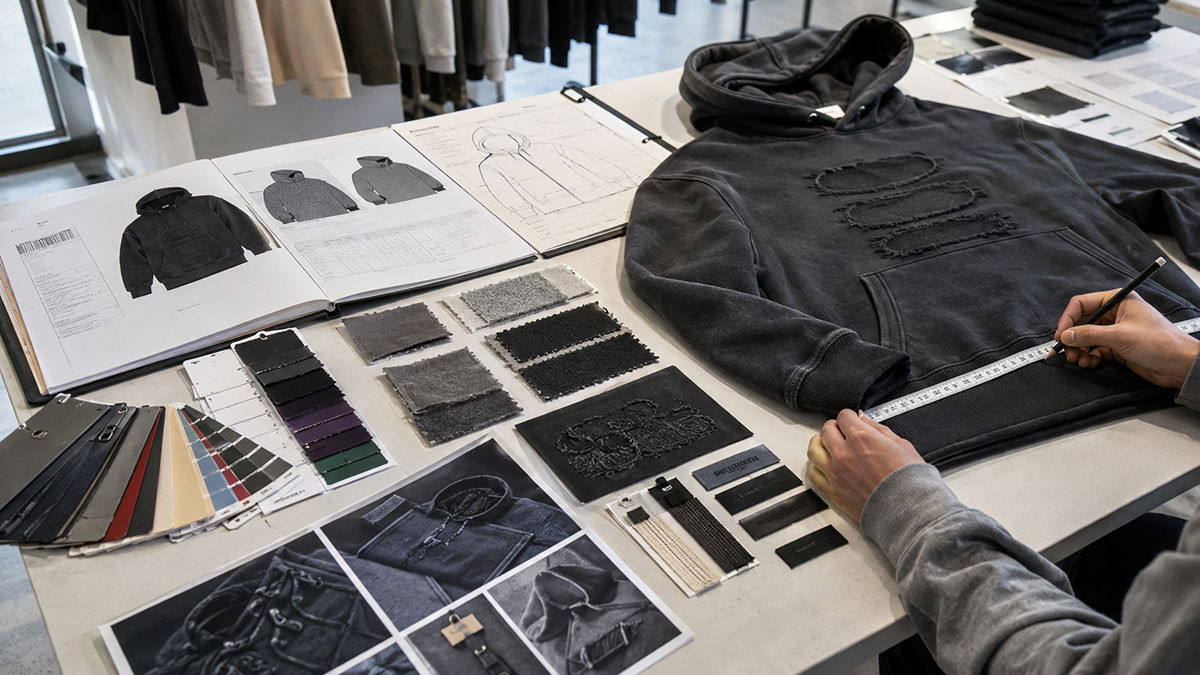
How VANRD Approaches Clothing Manufacturing Quotes
VANRD works with apparel brands that need OEM manufacturing, ODM development and private label production. Rather than treating every inquiry as a request for a generic price list, the project should first be defined.
For a more useful quotation, the team needs to understand the product category, specification, fabric direction, quantity, customization, branding, timeline and shipping requirements.
A complete tech pack is ideal, but brands can also begin with reference garments, sketches, artwork and a clear project brief. From there, missing specifications can be identified before sampling and bulk planning.
If your project is already defined, you can send your tech pack or project brief to VANRD for a project-specific review instead of relying on generic online price ranges.
Conclusion: The Right Question Is Not “Who Is Cheapest?”
So, how much does it cost to manufacture clothing in China?
The useful answer is not one number. Clothing manufacturing cost is created by the product you are asking the factory to build: its fabric, weight, construction, fit, trims, decoration, quantity, development requirements, quality standard and packaging.
Use online price ranges to set an early budget, but do not use them as substitutes for a real quotation. Before comparing suppliers, make sure they are pricing the same garment to the same standard.
A slightly higher unit price can be the better commercial decision when it gives your brand better materials, more accurate development, stable bulk quality and fewer production surprises.
In the end, the goal is not to manufacture the cheapest garment possible. It is to manufacture the right garment at a cost that supports your product quality, retail positioning and long-term business.
Frequently Asked Questions About Clothing Manufacturing Cost in China
1. How much does it cost to manufacture 100 pieces of clothing in China?
It depends heavily on the garment. One hundred basic T-shirts and one hundred custom jackets cannot be compared using the same budget. Fabric, construction, printing or embroidery, labels, packaging and development all affect the final price. Smaller production runs also carry a larger share of setup and development cost per unit, so brands should provide detailed specifications before expecting an accurate 100-piece quotation.
2. What is usually the biggest cost in clothing manufacturing?
Fabric is often one of the largest cost components, especially in heavyweight garments or products using premium, technical or custom-developed materials. However, complex construction, embroidery, washing, specialty trims and hardware can become major cost drivers for products such as jackets, denim, cargo pants and highly customized streetwear.
3. Why does a clothing sample cost more than a bulk production unit?
A sample may require pattern development, individual material sourcing, machine setup, embroidery programming, print testing, hand adjustments and fit revisions for only one or a few garments. Bulk production spreads much of that setup across a larger quantity, which is why comparing sample price directly with bulk unit price can be misleading.
4. Does a higher MOQ always reduce apparel manufacturing cost?
Larger quantities often improve production efficiency and distribute setup costs over more units, but the relationship is not unlimited. Fabric mills, custom trims, colorways, printing processes and factory capacity each have their own pricing thresholds. A well-planned 500-piece program can therefore be more efficient than five separate 100-piece color or style runs.
5. What should I send a Chinese clothing manufacturer to get an accurate quote?
Send a tech pack when available, plus your garment type, measurements, fabric composition and GSM, colors, size range, quantity per color, artwork, logo techniques, trims, labels, packaging requirements, destination country and target timeline. The more clearly the product is defined, the easier it is for manufacturers to provide comparable and commercially useful pricing.