How to Find a Private Label Clothing Manufacturer for Your Brand
A practical decision guide for clothing brands that need to evaluate suppliers, prepare for sampling, understand MOQ and lead-time variables, control production risk, and choose a long-term apparel manufacturing partner.
A private label clothing manufacturer develops and produces apparel that a brand sells under its own identity. The right partner should be evaluated on category experience, product-development support, sampling discipline, production workflow, quality control, communication, and the ability to support repeat orders.
Do not choose a factory on unit price alone. Compare category capability, sample accuracy, material control, production and QC systems, communication, commercial terms, landed-cost variables, and repeat-order continuity. The most useful supplier is the one that can document decisions, control changes, and repeat the approved standard in bulk production.
It develops and produces garments for sale under the buyer's own brand, including agreed fabrics, construction, labels, decoration, packaging, and production standards.
Prepare the product category, design references, measurements, fabric direction, artwork, branding details, target quantity, market, and expected launch window.
Check similar-product experience, sampling quality, material sourcing, workflow transparency, QC checkpoints, response quality, and how the factory handles revisions.
They overlap, but private label emphasizes the buyer's brand identity, while OEM emphasizes production to buyer-provided specifications.
Product complexity, fabric minimums, color count, custom trims, printing or embroidery setup, and production efficiency can all affect the feasible quantity.
Timing depends on document readiness, sample revisions, material availability, approval speed, production scheduling, and shipment planning.
Confirm the approved sample reference, measurement chart, tolerances, bill of materials, artwork, trims, packaging, inspection method, commercial terms, delivery window, and change-approval process.
Compare total landed cost and risk exposure, not only the garment price. Include development, revisions, testing, inspection, packaging, freight, duty, destination charges, rework risk, and delay impact.
The same factory should not be evaluated in exactly the same way by every buyer. Use the sections below according to your current sourcing stage.
Prioritize technical guidance, sampling discipline, realistic MOQ logic, fabric suitability, revision communication, and whether the factory can turn an incomplete concept into an approvable sample.
Prioritize repeatability, capacity planning, color and size control, reorder material continuity, production updates, packaging consistency, and whether the supplier can support several styles without losing control.
Prioritize due diligence, subcontractor visibility, documented change control, inspection rights, commercial terms, landed-cost exposure, escalation procedures, compliance responsibilities, and multi-season continuity.
A supplier does not need to be perfect in every area, but the factory must be strong enough in the areas that create the greatest risk for your product and launch plan.
Does the factory regularly handle your category, fabric, construction, decoration, wash, hardware, and fit requirements?
Can the team identify missing details, create an accurate sample, record comments, and manage revisions without losing the approved direction?
Are materials, external processes, capacity, measurements, workmanship, and inspection checkpoints controlled through a visible workflow?
Are quotation assumptions, payment milestones, change approvals, claims, delivery responsibilities, and possible additional costs clearly documented?
Can the supplier retain approved specifications, manage material changes, support reorders, and repeat the standard across future colors and seasons?
Why the Manufacturer Decision Matters
A clothing collection may begin with a sketch, but it becomes a business only when the design can be produced consistently, approved efficiently, and delivered at a quality level that matches the brand promise.
Starting a fashion brand is exciting. You may already understand your target customer, visual language, price position, and launch plan. Yet the manufacturing decision can determine whether those ideas become a repeatable product line or a sequence of expensive revisions.
A weak supplier relationship can create problems that appear unrelated at first: inconsistent fit, delayed approvals, unclear pricing changes, mismatched colors, incorrect trims, or production dates that keep moving. These issues are rarely caused by one sewing operation. They usually come from gaps in product information, factory capability, material planning, communication, or quality control.
That is why finding the right private label clothing manufacturer is not simply a sourcing task. It is a supply-chain decision. You are choosing the team that will interpret your product requirements, challenge unclear details, develop a sample, organize materials, repeat the approved standard in bulk, and prepare the order for shipment.
A basic supplier may receive an order, produce what is written, and ship it. A manufacturing partner takes a broader view. The partner asks whether the fabric suits the intended silhouette, whether an embroidery area needs stabilization, whether a wash effect will change measurements, and whether the approval timeline is realistic for the target launch date.
Consider the difference as similar to hiring a printer versus hiring a production engineer. Both may deliver an output, but only one is expected to understand how every input affects the final result. For an apparel brand, that technical understanding becomes especially valuable when a design includes custom fabrics, complex jackets, oversized fits, washes, embroidery, patches, or private label packaging.
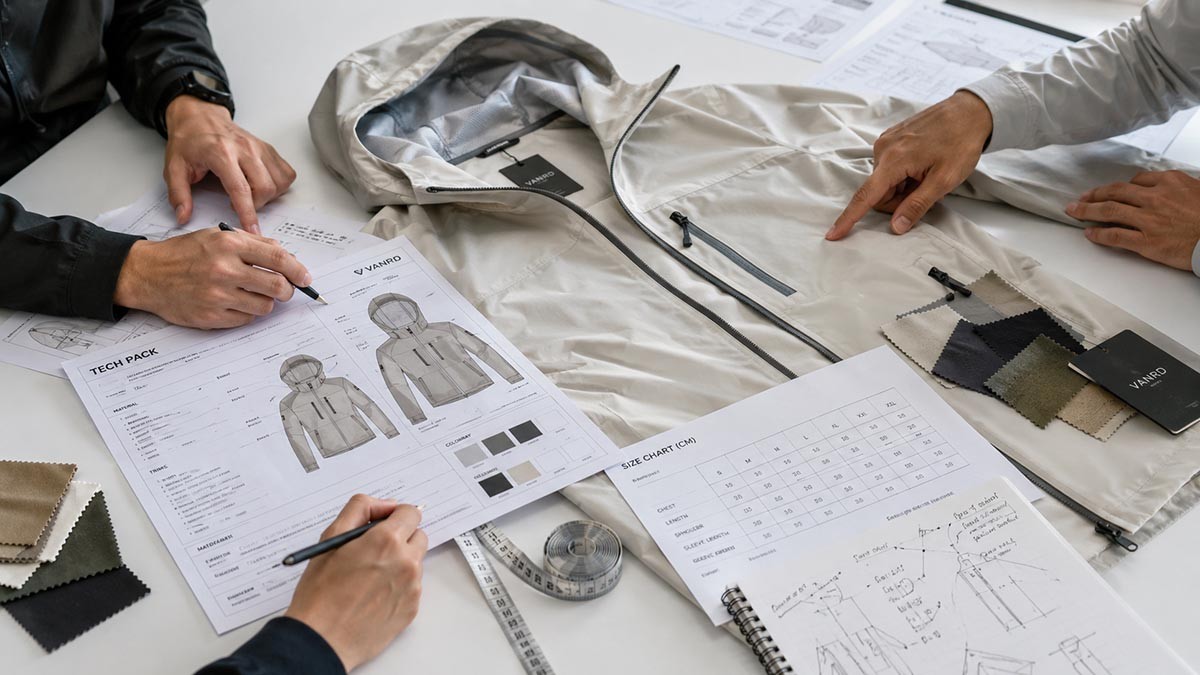
A successful collection is not built by design alone. It is built by a controlled approval system behind the design: clear specifications, material confirmation, sample review, production checkpoints, and documented quality expectations.
What Private Label Manufacturing Means
A private label clothing manufacturer produces garments that are sold under the buyer's own brand. The buyer controls the brand identity and product direction, while the manufacturer provides the technical development and production resources needed to create the garments.
Unlike wholesale buying, private label production is not limited to selecting a ready-made style from stock. Depending on the project, the brand may customize the silhouette, measurements, fabric, color, wash, artwork, embroidery, labels, hangtags, packaging, and other construction details.
Private label apparel production usually starts with an idea, a reference sample, a design sketch, or a tech pack. The manufacturer reviews the information and identifies what must be confirmed before sampling. That may include fabric composition, fabric weight, size specifications, construction methods, logo files, trim choices, and target quantities.
The project then moves through development stages: technical review, sourcing, pattern development, sample creation, fitting, revision, approval, bulk preparation, production, inspection, packaging, and shipment. The exact sequence can change, but the principle remains the same: every important variable should be approved before it becomes expensive to change.
The brand typically owns the market direction, customer insight, design language, and final approval. The manufacturer manages production feasibility, material sourcing, pattern and sample execution, technical feedback, bulk production, and quality checkpoints.
This does not mean the manufacturer should control the brand's design. It means the manufacturer should help the brand understand the production consequences of each design decision. A metal zipper, high-density embroidery, garment wash, custom fabric, or oversized cut can change cost, MOQ, lead time, and tolerance expectations.
Private Label vs OEM vs ODM
Private label, OEM, and ODM are closely related, so buyers often use the terms interchangeably. The distinction is useful because it clarifies how much product information the buyer provides and how much development input the manufacturer contributes.
| Model | Buyer Usually Provides | Manufacturer Usually Provides | More Suitable When |
|---|---|---|---|
| Private Label | Brand identity, product direction, customization requirements, approval | Development, sourcing, production, private labels, packaging support | The brand wants products sold under its own identity |
| OEM | Detailed specifications, tech pack, measurements, artwork, standards | Production execution based on supplied requirements | The buyer already has a clear, production-ready design |
| ODM | Market idea, references, design direction, commercial requirements | More design adaptation, development suggestions, materials, sampling | The buyer needs more support turning an idea into a manufacturable product |
Private label manufacturing is centered on brand ownership. The product should feel like the buyer's product, not a generic item with a new neck label. That usually requires deliberate decisions about fit, fabric, decoration, labeling, packaging, and quality standards.
OEM is typically more specification-driven. A mature brand may provide a complete tech pack, graded measurements, bill of materials, approved artwork, and packaging instructions. The factory's role is to execute those requirements, raise technical issues, and maintain the agreed standard.
ODM involves more development support. A buyer may arrive with a mood board, reference sample, or customer need rather than a finished technical file. The manufacturer helps translate that direction into realistic materials, patterns, samples, and production decisions.
No. Adding a logo to a stock garment is one form of branding, but a serious private label program can involve original patterns, custom sizing, exclusive fabric choices, custom trims, specific workmanship standards, and brand-specific packaging. The deeper the customization, the more important the development and approval process becomes.
Private label manufacturing gives brands more control over what the customer actually receives. Instead of accepting a standard fit or generic fabric, the brand can define the silhouette, feel, construction, and branding details that support its market position.
A competitive market rewards products that feel intentional. Custom fabric weights, better-fitting blocks, carefully selected trims, distinctive washes, and controlled embroidery can help a collection avoid looking like a commodity.
When the development files, approved sample, materials, and inspection standards are documented, repeat orders become easier to manage. That documentation also creates a clearer foundation for new colors, related styles, and future collection expansion.
Customers judge a brand through the product in their hands. Fabric hand feel, stitching, fit, packaging, and delivery consistency influence whether the brand feels credible. Private label production allows those details to be managed as part of one system.
Where to Find Clothing Manufacturers
Brands usually find manufacturers through several channels. No channel is automatically safe or unsafe. The difference comes from how carefully the buyer verifies the supplier after the first introduction.
Use searches that reflect your product, buyer stage, and customization need. Examples include "private label clothing manufacturer for streetwear brands," "custom jacket factory in China," "OEM hoodie manufacturer," or "apparel manufacturer with sampling support."
When reviewing results, look beyond the headline. A useful manufacturer website should explain products, services, development steps, factory capability, quality procedures, and how buyers can start a project.
Check whether the supplier demonstrates category knowledge rather than repeating generic claims. Does the website discuss materials, techniques, sampling, approvals, quality control, and realistic production variables? Does it clearly show who the company serves and what information buyers should prepare?
Trade shows allow buyers to inspect samples, compare workmanship, discuss product ideas, and evaluate communication in person. They are especially useful for products where fabric, construction, fit, or finishing cannot be judged from a website alone.
Before the meeting, prepare a short project brief. Bring a tech pack, reference sample, fabric target, or list of technical questions. A focused conversation provides more value than collecting a large number of business cards.
B2B platforms can expand supplier discovery, but a profile is not proof of capability. Verify whether the company is a manufacturer, whether it has experience in your category, who will manage development, and how quality and approvals are controlled.
Referrals can reduce search time, but they still require evaluation. A factory that suits a basic T-shirt business may not suit a technical outerwear brand. Use the recommendation as an introduction, then evaluate the manufacturer against your own requirements.
A factory cannot provide a useful answer to an unclear question. "How much is a hoodie?" is too broad because the price and process depend on fabric, weight, fit, decoration, labels, packaging, color count, quantity, and quality expectations.
State what you want to produce and who will buy it. A premium heavyweight streetwear hoodie, a promotional merch hoodie, and a lightweight retail basic are three different manufacturing projects even though all three are called hoodies.
Useful inputs include front and back drawings, measurement charts, construction notes, artwork files, logo dimensions, color references, placement details, labels, packaging instructions, and a reference garment if available.
A complete tech pack is ideal, but it is not the only starting point. A capable development team can often work from a clear reference sample and structured brief. The important point is to identify what is fixed, what is flexible, and what still needs factory advice.
Do not provide only the total quantity. Explain the quantity per style, color, and size range. Material minimums and production setup may make one 300-piece color easier to manage than six 50-piece colors.
Include the desired launch date, required arrival date, and whether the project includes photo samples, sales samples, or pre-production approval. The factory can then work backward and identify where the schedule may be tight.
How to Evaluate a Manufacturer
Finding a supplier is easy. Evaluating whether that supplier can support your product and business model is the real work. Use a structured review rather than relying on a polished website or a low quotation.
Ask what the factory produces regularly and request examples related to your category. Relevant experience matters because each product type has different pattern, material, machinery, technique, and quality requirements.
A hoodie manufacturer should understand fleece types, shrinkage, rib recovery, hood construction, oversized blocks, and decoration on thick fabrics. A jacket manufacturer should understand outerwear patterning, linings, interlinings, zippers, snaps, pockets, and functional details.
A factory does not need to produce every product category. In many cases, deeper experience in the relevant category is more valuable than a very broad catalog.
A strong manufacturer should be able to review the design, identify missing information, explain production risks, and propose realistic solutions. This capability matters most before the purchase order, when changes are still relatively inexpensive.
VANRD describes its development and customization scope through its OEM/ODM services for apparel brands. Use a similar level of detail when comparing any supplier: ask what the factory handles directly, what is outsourced, and who is responsible for final approval.
The sample is the first physical test of the factory's understanding. A useful sample process should reveal whether measurements, construction, fabric, trims, artwork, and finishing match the brief. The revision conversation is equally important because it shows how the factory handles feedback.
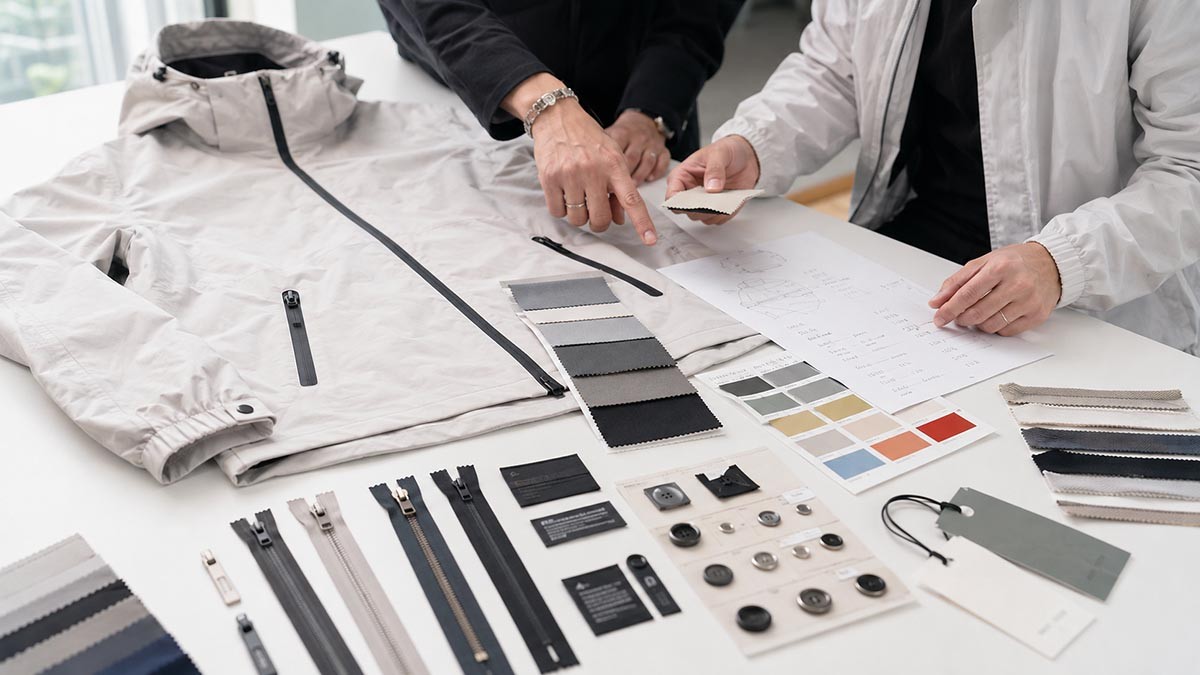
Material choice affects appearance, cost, comfort, shrinkage, wash behavior, durability, and MOQ. A factory should explain not only what is available, but why one option may be more suitable than another.
For technical choices such as garment wash, embroidery, printing, trims, or custom fabric direction, review the manufacturer's fabric and garment technique capabilities and ask for physical references when possible.
Ask who manages your project after the initial sales conversation. The handoff between sales, development, merchandising, production, and QC can create gaps if responsibilities are unclear.
A transparent sampling and production process should explain what happens after inquiry, what the buyer approves, when materials are ordered, how production is scheduled, and how updates are communicated.
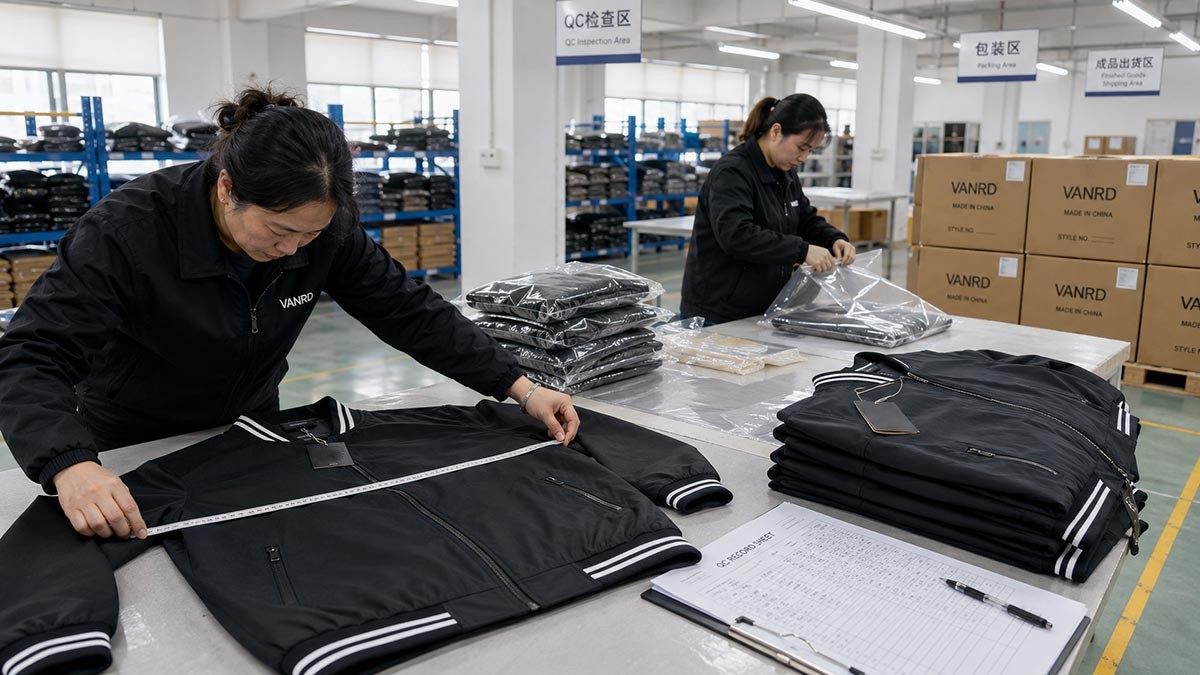
Quality control should not be one final inspection after every garment is complete. A better system checks materials, measurements, workmanship, and key construction details at stages where corrective action is still possible.
Review the supplier's garment quality-control procedures, then ask how those procedures are adapted to your product. A washed hoodie, embroidered varsity jacket, and denim garment do not share the same risk points.
Fast replies are useful, but clear replies are more important. A good manufacturer should summarize decisions, identify missing approvals, explain changes, and avoid confirming details that remain uncertain.
Pay attention during the inquiry stage. If the supplier does not ask about product specifications, quantity, materials, target market, or timeline, the quotation may be based on assumptions rather than your actual project.
Capacity is not only a headline number. Ask whether the factory can schedule your category during the required season, manage repeat orders, source the same materials again, and maintain approved measurements and workmanship.
Review the manufacturer's factory and production capabilities in context. A factory is suitable when its systems match your order size, complexity, timeline, and quality expectations.
Experienced buyers should verify not only whether a factory can make a sample, but whether the business, process ownership, external suppliers, records, and escalation system can support a repeatable production program.
Confirm the contracting entity, invoicing entity, receiving bank details, export responsibility, and who is legally responsible for the order. Any change in entity or payment information should be verified through an independent channel.
Ask which stages are controlled directly and which are completed by external partners, such as washing, embroidery, printing, testing, or packaging. Subcontracting is not automatically a problem; invisible subcontracting is the risk.
Review garments with similar fabric, construction, decoration, wash, lining, hardware, or fit requirements. A broad catalog is less useful than evidence that matches the technical risk of your product.
Ask how the factory allocates lines, manages peak-season loading, protects repeat-order materials, and handles interruptions. Capacity should be evaluated against your order window and complexity, not as one headline number.
Check whether sample comments, approved measurements, material references, artwork versions, inspection findings, packing instructions, and production changes are documented and retrievable.
Identify who can make technical, production, and commercial decisions when a problem occurs. A supplier should be able to explain how delays, defects, substitutions, and approval conflicts are reported and resolved.
Use one weighted scorecard for every shortlisted supplier. The weights below are a practical starting point and can be adjusted according to product risk, order value, and buyer maturity.
| Evaluation Area | Suggested Weight | Evidence to Review |
|---|---|---|
| Relevant category capability | 20 | Comparable samples, construction discussion, fabric and technique knowledge |
| Sample accuracy and revision discipline | 15 | First-sample quality, comment tracking, revision speed, approval records |
| Material and trim control | 15 | Swatches, lot control, color approval, supplier minimums, substitution procedure |
| Production and quality-control system | 20 | Pre-production confirmation, in-line checks, measurement control, final inspection |
| Communication and change control | 10 | Decision summaries, version control, escalation path, response clarity |
| Commercial transparency | 10 | Quotation scope, revision charges, payment terms, claim handling, Incoterm |
| Capacity and repeat-order continuity | 10 | Scheduling logic, peak-season planning, material continuity, record retention |
A strong supplier conversation should produce specific answers. Use the questions below to compare factories on the same basis.
- Which product categories do you manufacture regularly?
- Can you develop from a tech pack, reference sample, or design brief?
- Who reviews technical details before sampling?
- Which processes are handled in-house and which are subcontracted?
- How are sample comments recorded and confirmed?
- Is MOQ calculated per style, color, fabric, or decoration?
- Which materials create separate supplier minimums?
- What is included in the quoted price?
- Which changes may affect cost after sampling?
- How are additional sample revisions charged?
- What is checked before bulk production starts?
- How are measurements and tolerances controlled?
- How do you approve color, artwork, trims, and packaging?
- What inspections happen during production?
- How are defects or deviations reported?
- What information is required before you confirm timing?
- Who will manage the project day to day?
- How often are production updates provided?
- What buyer approvals can delay the schedule?
- How are material or production changes documented?
The Manufacturing Process
A structured process reduces risk because it makes each approval visible. The exact steps may vary by product, but the following framework is a useful reference.
Define the product, target market, quantity, quality level, customization, and launch window.
Confirm measurements, construction, artwork, materials, trims, labels, and unresolved details.
Review fabric, color, hand feel, shrinkage, decoration compatibility, trim availability, and supplier minimums.
Create the first pattern and sample, then check fit, measurements, workmanship, and visual details.
Record comments, revise the sample or files, and approve the standard for bulk production.
Order materials, confirm color and trims, prepare patterns and markers, and schedule production.
Monitor cutting, sewing, decoration, washing, measurements, workmanship, and final inspection.
Confirm labels, folding, polybags, cartons, quantities, shipping marks, and delivery arrangements.
The process cards above show the workflow. The table below shows the buyer decisions that should be completed before the order moves forward.
| Stage | Buyer Approval | Evidence to Retain |
|---|---|---|
| Product brief | Category, target market, quantity, quality level, customization, and launch window | Current project brief and reference files |
| Technical review | Measurements, construction, artwork, materials, trims, labels, and open questions | Latest tech pack, measurement chart, and decision summary |
| Sample development | Fit, workmanship, fabric, color, artwork, trims, labels, and packaging direction | Approved sample reference and revision record |
| Bulk preparation | Final bill of materials, color, quantities, size ratio, packaging, and production timing | Purchase order, material approvals, and production plan |
| Production and QC | Inspection checkpoints, measurement tolerances, defect handling, and reporting method | Inspection standard, in-line records, and final report |
| Shipment release | Final quantity, packing, carton marks, documents, delivery term, and shipping arrangement | Packing list, release confirmation, and shipping documents |
MOQ, Pricing, and Lead Time
MOQ means minimum order quantity, but the number is not created by the factory in isolation. It reflects material minimums, production setup, color allocation, decoration setup, and the efficiency required to make the product at the expected quality and cost.
- Product complexity: jackets and multi-process garments may require more setup than simple knit basics.
- Fabric availability: stocked fabric can support different planning from custom-knitted or custom-dyed fabric.
- Color count: dividing one order across many colors can create separate dye or material minimums.
- Custom trims: zippers, snaps, woven labels, rib, patches, and packaging may have independent supplier minimums.
- Decoration: screen printing, embroidery, washing, appliques, and special finishes require setup and process control.
- Size ratio: an extreme size distribution can affect marker efficiency and material usage.
A very low MOQ can be useful for testing, but it may limit material choices, color options, development depth, or unit-cost efficiency. The right question is not simply "Who offers the lowest MOQ?" It is "What product can be produced reliably at my quantity, and what compromises does that quantity require?"
Price is usually driven by fabric consumption, fabric cost, trims, decoration, garment construction, washing, labor time, quantity, packaging, testing or inspection requirements, and shipment terms. A quotation becomes more reliable as the specification becomes more complete.
Lead time depends on document readiness, material sourcing, pattern complexity, sample revisions, artwork approval, custom trims, production scheduling, QC, and the speed of buyer feedback. A delay in one approval can move several downstream steps.
For experienced buyers, the supplier decision is not complete until the unit price, written production standard, change process, logistics responsibility, and total landed-cost exposure are understood together.
- What assumptions are included in the quotation?
- How many sample revisions are included?
- What happens if material prices or minimums change?
- Who pays for rework, replacement, retesting, or expedited freight?
- How are repeat-order prices and material changes reviewed?
- Reference the approved sample, date, and version.
- Attach the measurement chart, tolerances, bill of materials, artwork, labels, and packaging standard.
- State who can approve substitutions or production changes.
- Define inspection, delivery, claim, repair, and replacement procedures.
- Record ownership of patterns, molds, excess materials, and confidential files when relevant.
- Confirm the agreed delivery term and transfer of responsibility.
- Identify freight, insurance, customs clearance, duty, tax, and destination charges.
- Confirm carton size, weight, shipping marks, documents, and booking responsibility.
- Allow time for inspection, export documents, customs, and destination delivery.
- Verify current classification and duty treatment with a qualified customs broker.
Product cost + development and revisions + testing and inspection + packaging + freight + insurance + duty and tax + destination charges + rework or delay exposure.
Manufacturing is not a straight line from design to finished garments. It is a chain of dependent decisions. Fabric affects fit. Wash affects measurements. Embroidery affects stability. A trim delay can hold an otherwise finished garment.
Digital artwork does not explain fabric behavior, seam construction, tolerance, shrinkage, or how a logo should look on a curved garment surface. The technical review and sample process convert design intent into a production standard.
A strong sample proves that the factory can make one correct garment. Bulk production proves that the factory can repeat that garment while managing materials, operators, measurements, decoration, and inspection across the order.
Approved fabric, color, artwork, sample, trims, and packaging create shared references. Without documented approval, both sides may remember a decision differently. Clear records reduce disputes and speed up problem solving.
One red flag does not always mean the factory is unsuitable, but unresolved combinations of the following signals can create serious execution risk.
The supplier agrees to the project but cannot discuss similar fabrics, construction methods, techniques, tolerances, or common failure points.
Sales cannot explain who manages development, materials, production, external processes, quality control, or escalation.
A final-looking quotation is issued before the factory understands fabric, weight, construction, artwork, trims, packaging, color allocation, or quantity.
Important decisions are made in messages or calls but are not added to the latest technical file, sample record, or purchase order.
The supplier promises a date without confirming material availability, sample approval, custom trims, production loading, inspection, or shipping arrangements.
The legal entity, invoicing entity, bank account, or payment instructions change without independent verification through a trusted contact method.
Before moving from sample approval to bulk production, classify the project as Go, Hold, or No-Go. This prevents unresolved questions from being pushed into the production stage.
- Approved sample and measurement standard are documented.
- Materials, colors, trims, artwork, labels, and packaging are confirmed.
- Production, inspection, communication, and delivery responsibilities are clear.
- Color, material, tolerance, artwork, packaging, or quantity remains open.
- Capacity, delivery timing, inspection method, or payment milestone is unclear.
- Changes have been discussed but not added to the latest file.
- The supplier cannot identify who controls the project or outsourced processes.
- Commercial identity or payment details cannot be independently verified.
- The factory refuses written approval, change records, or reasonable inspection access.
The lowest quote may use different assumptions about fabric, weight, decoration, packaging, quality control, or shipping terms. Compare what is included before comparing the final number.
Unclear information creates broad estimates and repeated questions. A short, structured brief can improve the quality of the first response and help you identify which suppliers understand the project.
A factory may be willing to accept a product it does not manufacture regularly. That does not mean it has the pattern, machinery, operators, suppliers, or QC knowledge required to manage the category efficiently.
Bulk production should not be used to discover whether the fit, fabric, or construction is correct. Confirm the product standard during development, when changes are still manageable.
A message such as "move the logo slightly higher" is easy to interpret differently. Update the measurement or placement document and ask the factory to confirm the revised version.
A factory may accept the total order quantity while the fabric mill, dye house, zipper supplier, or label supplier has a separate minimum. Confirm the complete material plan early.
Packaging affects labels, polybags, cartons, barcodes, carton marks, and final delivery planning. Treat it as part of the product specification, not an afterthought.
China remains an important apparel manufacturing base because brands can access a dense network of fabric suppliers, trim suppliers, printing and embroidery workshops, washing facilities, packaging suppliers, garment factories, and international logistics providers.
Supply-chain density can make product development more efficient. When fabric, trims, decoration, packaging, and garment production are available within connected manufacturing regions, the factory can compare options and coordinate technical changes more quickly.
Apparel production depends on practical knowledge: pattern adjustment, fabric handling, sewing methods, wash control, decoration, measurement tolerance, and final inspection. Experienced teams can identify risks that may not be obvious in a digital design.
Private label brands often require multiple customization layers, including original patterns, specialty fabrics, washes, embroidery, printing, labels, trims, and packaging. The value of a manufacturing ecosystem is the ability to coordinate those processes under one project standard.
Dongguan and Humen are located within the Greater Bay Area manufacturing network, with access to apparel production resources and logistics connections across southern China. Location alone does not prove quality, but it can support sourcing flexibility when combined with capable project management and QC.
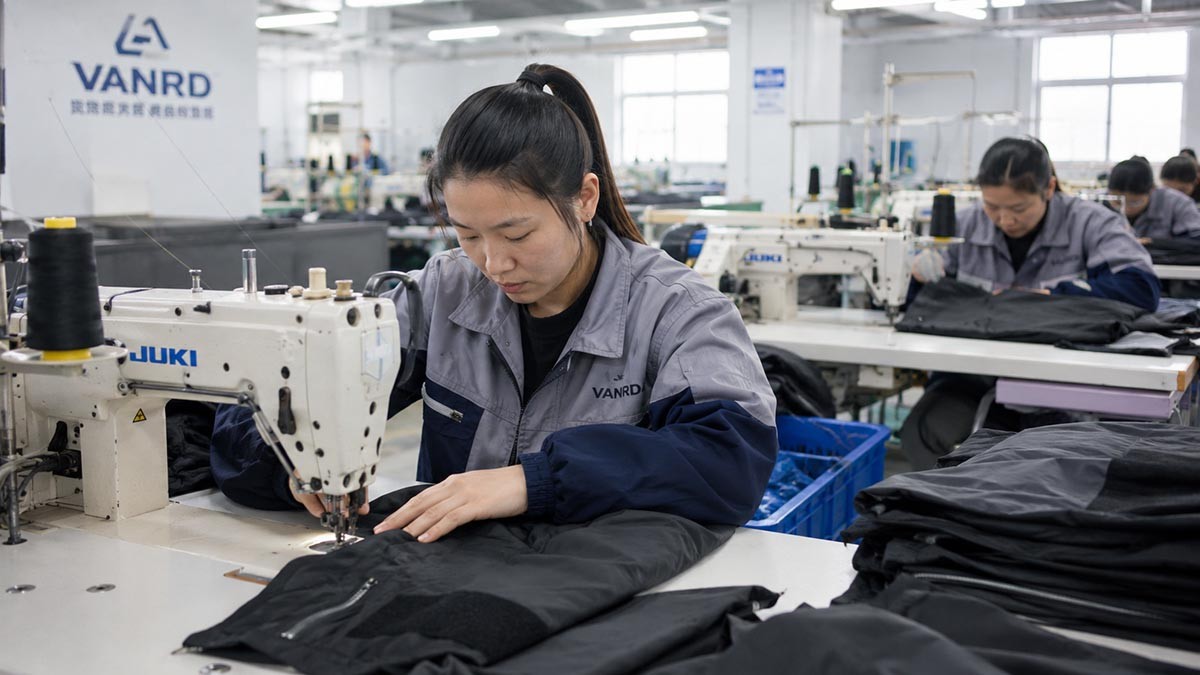
VANRD is a B2B apparel manufacturer based in Dongguan, Humen, China. The business supports overseas clothing brands, streetwear brands, designers, private label buyers, wholesalers, and merch buyers through OEM, ODM, sampling, customization, bulk production, and quality control.
VANRD reviews product information before quotation and production planning. The goal is to understand the category, customization, quantity, timeline, and technical requirements before recommending the next step.
Projects may include jackets, hoodies, T-shirts, pants, shorts, tracksuits, and related streetwear categories. Customization can involve fabrics, labels, packaging, printing, embroidery, washes, patches, hardware, and other garment details, subject to project confirmation.
The sampling stage is used to confirm the product standard. Once the required details are approved, the project can move into material preparation and bulk production with clearer expectations.
VANRD's role is not to make absolute promises before reviewing the project. It is to identify requirements, explain variables, organize approvals, and support a clearer path from product idea to production.
Manufacturer Checklist
Use this checklist before selecting a supplier or approving sampling. A strong candidate should provide clear answers that match your product and decision stage.
The factory regularly produces products with similar fabrics, construction, and techniques.
You know who reviews the tech pack, manages sampling, records comments, and confirms revisions.
The supplier explains fabric options, trim sources, minimums, color approvals, and substitution risks.
Samples, measurements, artwork, color, labels, packaging, and changes are confirmed in writing.
The factory explains how style, color, fabric, trims, and decoration affect the feasible quantity.
The timeline includes development, revisions, materials, buyer approvals, production, QC, and shipment.
The supplier checks critical risks during material preparation and production, not only at the end.
The price identifies what is included and which assumptions may change after sample or material confirmation.
There is a responsible contact and a clear method for updates, approvals, and issue escalation.
The supplier can retain approved specifications, identify material changes, and support future production planning.
| Evaluation Area | Evidence to Request | Risk if Unclear |
|---|---|---|
| Product experience | Relevant samples, construction discussion, material knowledge | Learning your category during your order |
| Sampling | Sample workflow, revision method, approval records | Repeated revisions and unclear final standard |
| Materials | Swatches, trim references, supplier minimums, color method | Late substitutions, MOQ changes, color differences |
| Production | Process explanation, responsibility, schedule assumptions | Unclear updates and preventable delays |
| Quality control | Inspection checkpoints, measurement method, reporting | Defects discovered only after completion |
| Commercial terms | Quotation scope, revision cost, packaging and shipping terms | Unexpected costs and different price assumptions |
Summarize the product, target market, style references, fabric direction, customization, expected quantity, size range, colors, and desired launch date. Attach a tech pack or reference sample when available.
Do not ask only for a price. Ask what must be confirmed before the factory can provide a reliable estimate and sampling plan. The quality of the questions you receive can reveal the quality of the development process.
Use the same brief and checklist for each candidate. Compare understanding, relevant experience, communication, sample plan, material explanation, QC, timing, and quotation scope.
Sampling allows you to evaluate technical understanding, response to feedback, material sourcing, workmanship, and communication before committing to bulk production.
Before production, confirm the approved sample, measurement chart, tolerances, fabric, color, artwork, trims, labels, packaging, quantity, and inspection expectations.
Finding a private label clothing manufacturer is not a race to collect quotations. It is a process of identifying which factory can understand your product, develop it responsibly, communicate production reality, and repeat the approved standard in bulk.
Start with clear requirements. Evaluate category experience, development capability, materials, sampling, workflow, quality control, communication, MOQ logic, and timing assumptions. Then use the sample process to test whether the supplier's actions match its promises.
The right partner does not remove every production variable. Apparel manufacturing will always involve materials, approvals, tolerances, and timing dependencies. A reliable partner makes those variables visible, manageable, and easier to decide.
Frequently Asked Questions
What is a private label clothing manufacturer?
How much does it cost to work with a private label clothing manufacturer?
What MOQ do private label clothing manufacturers require?
How long does private label clothing production take?
What files should I send before requesting a sample?
What should be included in a clothing manufacturing purchase order or agreement?
How can a brand compare total landed cost between manufacturers?
Share your tech pack, reference sample, or product brief with VANRD. The manufacturing team can review the product category, customization, quantity, and development requirements before recommending the next step.
Contact VANRD About Your Project