Custom Washed Denim Jacket Case Study: Fit, Wash & Construction
VANRD / Customer case study / Denim
Custom Washed Denim Jacket Case Study: Fit, Wash & Construction
A denim jacket does not need a large graphic or elaborate decoration to stand out. Its character often comes from the wash, the proportions and the details that give the garment its shape.
In this customer case study, we look at actual custom denim jacket photographs, including a light washed version, a darker version and an on-body view. Together, they illustrate the product decisions that matter when developing a classic trucker-inspired jacket for a streetwear collection.
Prepared by VANRD · About our manufacturing team
Project at a Glance
- Product
- Custom washed denim jackets
- Design direction
- Classic trucker-inspired streetwear
- Photographed finishes
- Light faded blue and dark blue denim
- Visible details
- Point collar, flap chest pockets, metal-tone buttons and panel seams
- Development considerations
- Wash appearance, fit, construction and hardware
- Case evidence
- Actual customer-customized garment photographs
This feature documents the photographed garments. Exact fabric specifications, wash recipes, sample approval records, production quantities and delivery outcomes are not included in the available project record. The images are not presented as a verified before-and-after sequence or as confirmed colorways of a single order.
The Design Direction: A Classic Jacket with a Modern Streetwear Fit
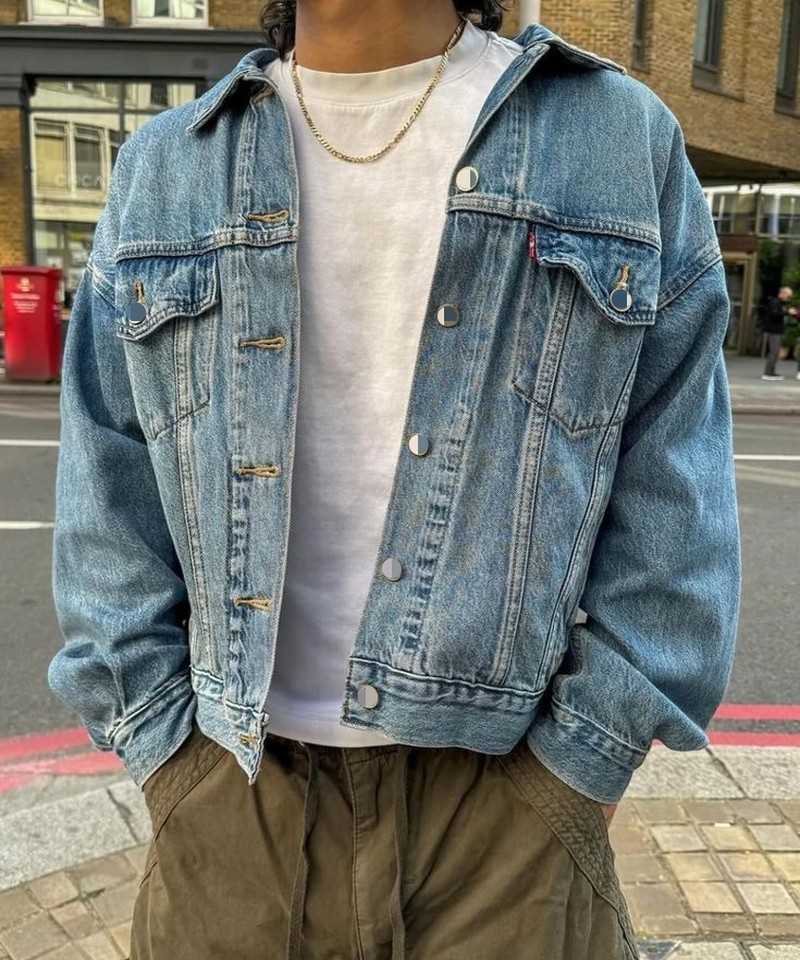
The photographed jackets retain the recognizable elements of a denim trucker: a shaped collar, button-front opening, two chest pockets and vertical body seams. The on-body photograph also shows how a roomier sleeve and shorter-looking body proportion can change the character of an otherwise familiar jacket.
For brands working on a similar design, a reference photograph is useful for communicating the desired look. It is not, however, a complete production specification. The same silhouette can look quite different depending on denim weight, shoulder width, sleeve shape and how the fabric behaves after washing.
These decisions are part of VANRD's custom denim jacket manufacturing service. A clear design brief helps establish which elements must be retained and which can be adapted to suit the brand's collection.
The Light Wash: Where the Details Become Visible
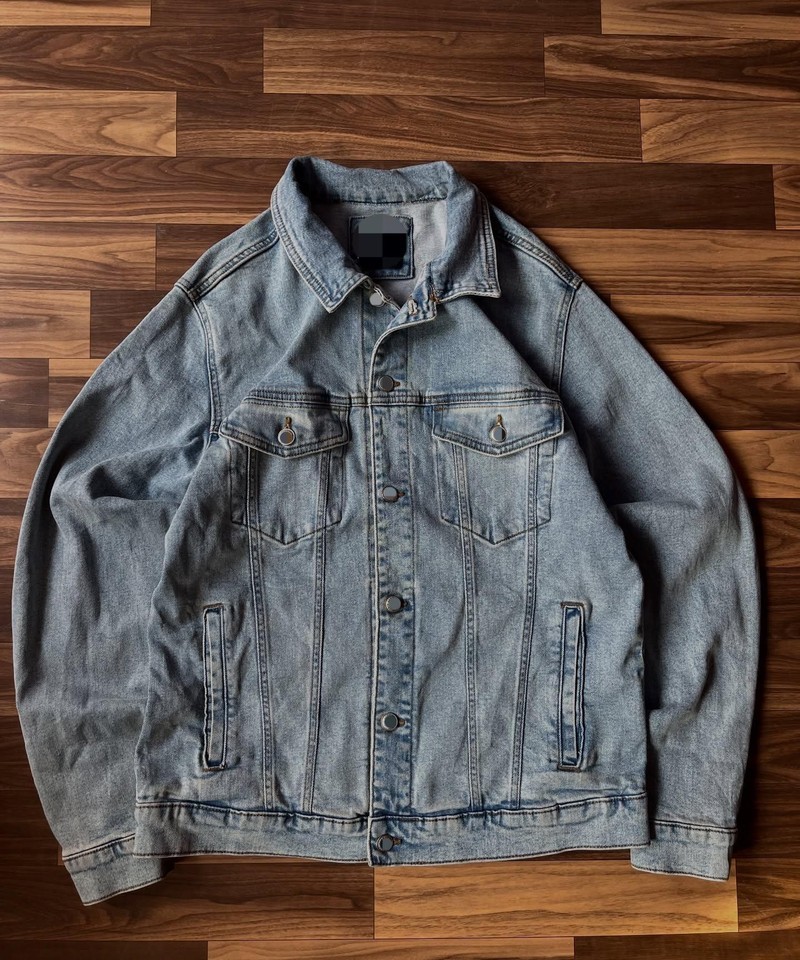
The lighter jacket has a muted blue appearance, with more pronounced contrast around the collar, chest seams, pocket edges and front placket. These transitions give the garment a worn-in character without relying on obvious decorative graphics.
A faded denim surface makes construction details more visible. Uneven seam alignment, irregular topstitching or an unbalanced pocket layout can become more noticeable against a light wash.
Fabric and wash need to be considered together
For similar projects, the starting denim shade, fabric construction and intended final handfeel should be evaluated together. Different denim fabrics may respond differently to the same finishing treatment.
The photographs show the visual result, but they do not identify the exact washing method. For an explanation of possible finishes and their selection criteria, see our denim jacket manufacturing guide.
Development takeaway: Approve the appearance on a finished garment where possible, rather than relying only on a small fabric swatch or a digital color reference.
The Darker Finish: A Different Expression of the Trucker Design
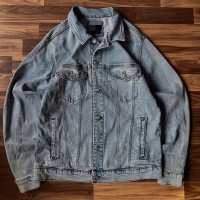
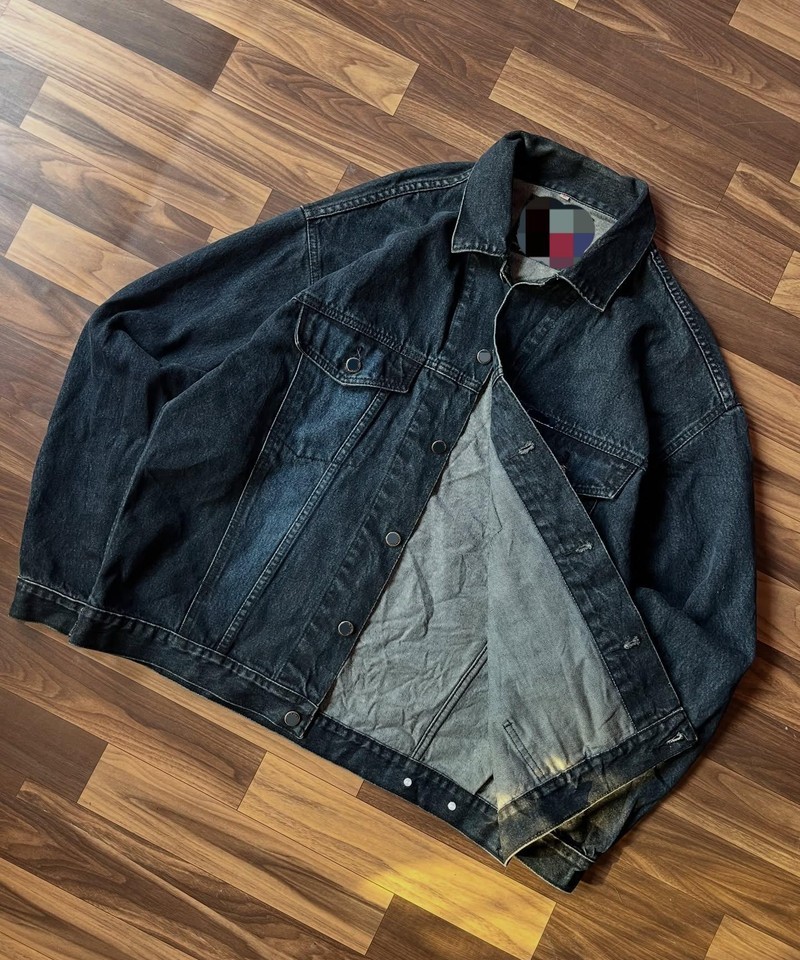
The darker jacket has a deeper, almost charcoal-blue appearance with more restrained fading across the main body. Its open front reveals the reverse side of the denim and provides a useful view of the internal garment structure.
Compared visually with the lighter garment, the darker finish gives greater emphasis to the overall shape rather than the contrast at each seam. Both photographs demonstrate how wash shade can influence a jacket's identity, even when the garments share familiar design features.
What should a brand confirm for a dark denim finish?
- Target shade and acceptable variation between garments.
- How much fading is wanted around seams and edges.
- Final handfeel and measurements after finishing.
- Color transfer performance appropriate to the intended use.
VANRD's fabric and finishing options provide a starting point for discussing the look, feel and approval criteria for a new denim project.
Developing the Fit and Construction for Similar Projects
A good-looking flat photograph does not necessarily establish how a jacket will fit. The on-body view adds information about shoulder position, sleeve fullness and the relationship between the hem and the wearer's waist.
For a brand developing a comparable silhouette, the following are useful points to confirm during sampling. They describe VANRD's recommended development approach, rather than documented revisions to these particular garments.
| Development point | What to confirm |
|---|---|
| Shoulder and sleeve | Desired shoulder drop, sleeve width and freedom of movement when layering. |
| Body and hem | Chest ease, body length and hem width in relation to the intended silhouette. |
| Pocket construction | Pocket position, flap shape and symmetry across the front panels. |
| Buttons and trims | Finish, attachment, buttonhole compatibility and any brand-specific artwork. |
| Post-wash fit | Finished measurements, acceptable tolerances and overall garment balance. |
Our development and manufacturing process brings design review, material selection and sampling into the same workflow. For a brand that needs more support with product development and private-label details, VANRD also offers OEM and ODM services.
From a Finished Sample to a Repeatable Bulk Order
For washed denim, bulk readiness involves more than confirming a sample's appearance. Washing can change garment dimensions and shade, so the approved finished sample and the measurement specification should guide production together.
Before bulk production of a comparable jacket, the brand and manufacturer should agree on the finished shade, acceptable visual variation, construction details, trim specifications and measurement tolerances. During production, garments should be compared against those approved standards rather than judged only against an online photograph.
VANRD's quality control process covers fabric inspection, wash and shrinkage checks, sewing inspections and finished garment assessment. The specific inspection plan for a denim order depends on the product requirements.
Why this matters for brands: A clearly approved wash and fit standard helps the production team make consistent decisions across garments and provides a useful reference for future orders. It does not mean that natural wash variation can be eliminated entirely.
What the Finished Garment Photographs Demonstrate
The actual product images show how a familiar denim jacket design can express different visual identities through wash appearance, seam contrast and garment proportions. They also show the visible construction and hardware details that contribute to the finished product.
For prospective buyers, the value of the case is in connecting the visible garment to practical development decisions. The photographs document the products themselves; they do not establish bulk pass rates, delivery performance or customer satisfaction.
Brands exploring additional silhouettes can browse VANRD's custom jacket collection for more product development ideas.
Start your next denim project
Develop Your Custom Denim Jacket with VANRD
Have a vintage jacket reference, a tech pack or a particular wash in mind? VANRD works with apparel brands on fabric sourcing, pattern development, sampling, custom branding and bulk manufacturing.
Share your reference images, preferred wash and fit, estimated quantity and target delivery date. Our team can review the requirements and discuss suitable development and production options for your brand.
Discuss your denim jacket project