Custom Denim Jacket Manufacturing: Washes, Fabric Weight, Fit & Finishing
Custom Denim Jacket Manufacturing: Washes, Fabric Weight, Fit & Finishing
A denim jacket may look simple from the outside, but anyone who has developed one for real knows the truth: it is never just “a jacket in denim.” The final result depends on a chain of manufacturing decisions including fabric weight, wash process, fit, construction, trims, finishing and quality control. Miss one link in that chain and the whole product can lose balance.
That is why professional denim jacket manufacturing is not only about finding a factory that can sew denim. It is about finding a development process that can turn a concept into a production-ready garment. If you are planning a custom denim jacket for your next collection, this guide will walk you through the steps that matter most, from fabric weight and washes to fit, distressing, hardware, sampling and bulk QC. The goal is simple: help you make better decisions before you spend money on samples and production.
A production-ready denim jacket needs more than a sketch or reference photo. Before bulk production, a brand should clearly confirm the denim fabric, fabric weight, wash effect, post-wash measurements, fit direction, construction details, custom trims and QC standard. In other words, the product has to be defined as a finished garment, not just as an idea.
Denim Jacket Styles Brands Are Developing for Fall/Winter 2026
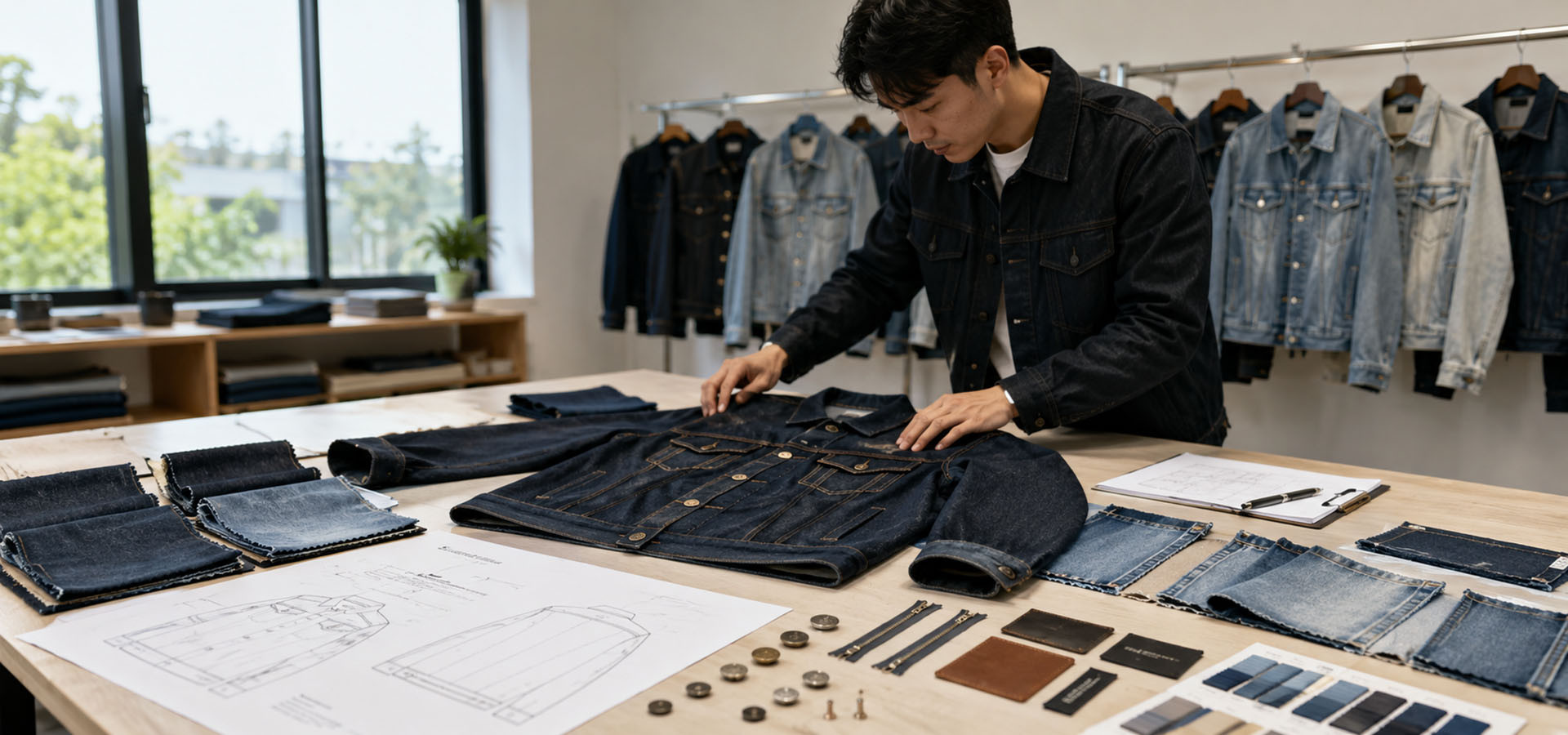
Denim is one of those product categories that keeps evolving without losing its identity. The core silhouettes remain familiar, but every season brands push them in slightly different directions. For Fall/Winter 2026, the most promising denim jacket directions are shaped by utility, relaxed fit, vintage texture and more thoughtful finishing.
Clean deep-indigo jackets still matter because they feel timeless and commercial. At the same time, washed and aged finishes remain strong, especially for brands working in streetwear, retro vintage or workwear-inspired collections. Oversized truckers, cropped boxy silhouettes and chore-jacket constructions are also appearing more often because they offer a fresh shape without becoming too experimental for the market.
Classic Trucker Styles
The classic trucker is still one of the safest and most commercially reliable starting points for a custom jean jacket. It has recognizability, easy styling value and broad market appeal. But even here, proportion matters. A slightly wider shoulder, cleaner collar, shorter body or fuller sleeve can modernize the silhouette without losing its original structure.
Oversized and Relaxed Jackets
Oversized denim jackets are especially relevant for streetwear brands because they work well as layering pieces. But oversized is easy to say and much harder to execute well. If you simply enlarge the entire pattern, the jacket can become clumsy. A good oversized fit needs controlled shoulder drop, balanced sleeve width and enough body volume to feel intentional.
Cropped and Boxy Shapes
Cropped jackets are useful when a brand wants stronger proportion or a more fashion-forward silhouette. A boxy cropped jacket can look sharp and confident, but it depends heavily on fabric structure. Use a denim that is too soft and the shape collapses. Use one that is too stiff and the jacket can feel heavy and awkward. Fit and fabric have to work like gears in the same machine.
Workwear and Chore Jackets
Workwear-inspired denim jackets continue to gain traction because they bring function into the design language. Larger pockets, contrast collars, utility seams and more relaxed volume help the jacket feel rugged, practical and trend-relevant. For brands building a broader jacket program, these styles also connect naturally with a wider custom jacket manufacturing strategy.
Why Denim Jacket Manufacturing Is Different From Standard Jacket Production
Not all jackets are developed the same way. A regular woven jacket can often be evaluated mainly through pattern, sewing and materials. Denim adds another major variable: washing and finishing after sewing. That changes everything.
Think of it this way. Developing a normal jacket is like shaping a piece of furniture and then polishing it. Developing a denim jacket is more like building that furniture and then weathering it, softening it and reshaping parts of it before the final inspection. The garment that enters the wash is not exactly the same garment that comes out.
Washing can change the shade, soften the handfeel, shrink certain points and increase seam contrast. It can also affect embroidery, hardware and construction appearance. That is why experienced denim jacket manufacturers do not treat wash as a decoration added at the end. They treat wash as part of the engineering of the product itself.
Choosing Denim Fabric Weight for Custom Jackets
One of the first technical decisions in denim jacket manufacturing is fabric weight. Denim weight is commonly specified in ounces per square yard, while many sourcing and production teams also work in GSM. The number matters because it influences structure, drape, comfort, sewing behavior and wash response, but it should never be treated as the only decision-making factor. Yarn size, weave density, fiber composition, stretch content and finishing can make two fabrics with the same nominal weight behave very differently.
| Denim Weight | Approx. GSM | Typical Character | Best Use | Watch-Out |
|---|---|---|---|---|
| 8–10 oz | Approx. 271–339 GSM | Lightweight, softer, easier drape | Shirt-jackets, spring styles, softer silhouettes | May lack structure for boxy or rigid designs |
| 11–13 oz | Approx. 373–441 GSM | Balanced structure and comfort | Classic truckers, oversized jackets and commercial everyday styles | Still needs wash testing for final handfeel and shrinkage |
| 14–16 oz | Approx. 475–542 GSM | Heavy, rigid and more substantial | Workwear, vintage and heritage outerwear | More demanding sewing and stronger shrinkage considerations |
| 16 oz+ | Approx. 542 GSM+ | Very heavy and highly structured | Specialty statement or premium heritage pieces | Not suitable for every market, season or silhouette |
The GSM figures above are approximate conversions rather than substitute fabric specifications. For many commercial denim jackets, midweight denim is a practical starting point because it balances structure and wearability. But the right choice depends on the intended silhouette, season and wash. A cropped boxy jacket, an oversized vintage-wash trucker and a fitted fashion jacket do not need the same fabric behavior.
Do Not Choose by Ounce or GSM Alone
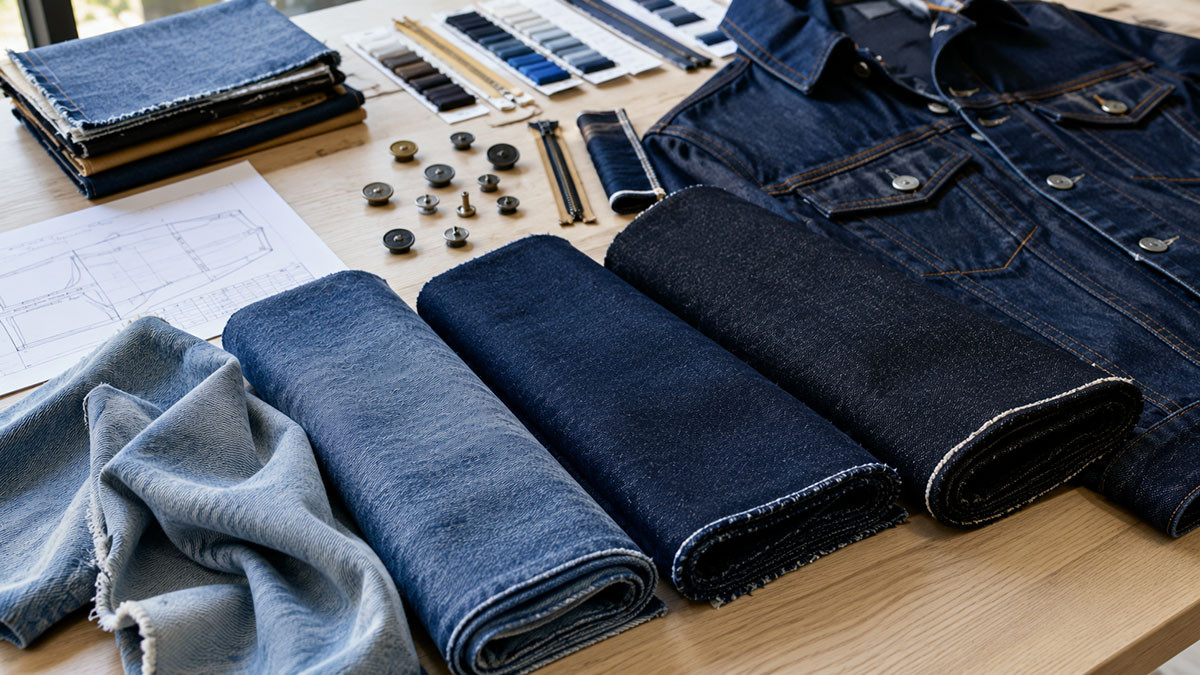
Two fabrics can both be called 12 oz and still behave differently. Weave tightness, yarn thickness, fiber composition, stretch content and finishing all matter. Instead of approving fabric from a weight number alone, review the actual swatch and, whenever possible, test it in the intended wash. The fabric specification should support the finished silhouette, not just look correct on a swatch card.
Rigid vs Stretch Denim
Another important choice is whether to use rigid denim or stretch denim. Rigid 100% cotton denim is still the traditional option for many custom denim jackets because it provides a strong, authentic denim character. It usually works well for trucker jackets, workwear styles and vintage-inspired designs.
Stretch denim can make sense when you want a closer fit or greater movement comfort. However, too much stretch can soften the visual sharpness of a structured jacket. It may also change how the garment recovers after wear and washing.
If your design direction is rugged, vintage or utility-focused, rigid denim is often the better match. If your jacket is more fitted or fashion-driven, a light stretch construction may help. The key is testing the real fabric in the real wash process before approving anything.
Denim Jacket Washes: Rinse, Enzyme, Stone, Acid, Laser & Ozone
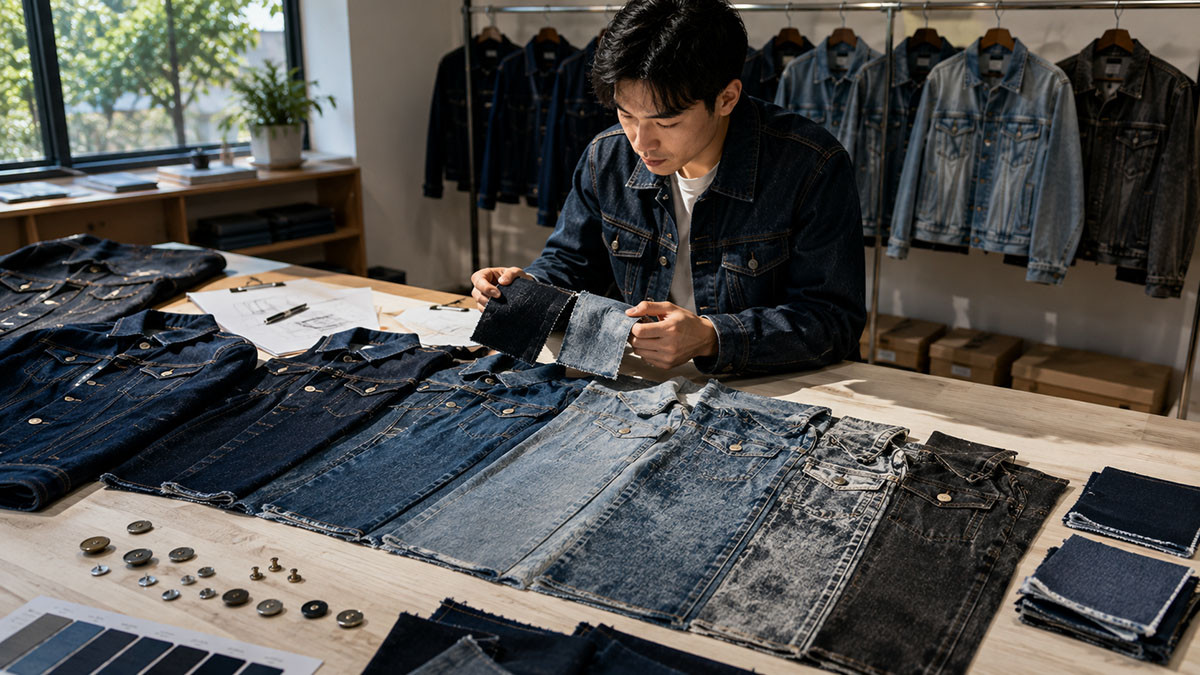
The wash is where a denim jacket gains personality. Start with the same base denim and you can create something clean, vintage, faded, distressed or highly expressive depending on the finishing route. This is why wash development is central to a production-ready custom denim jacket: the process changes not only color, but also handfeel, seam contrast, shrinkage and the way the finished garment reads on the body.
| Wash / Finish | Visual Result | Common Use | Main Approval Point |
|---|---|---|---|
| Rinse Wash | Dark, clean and slightly softened | Premium dark denim jackets | Final shade and post-wash measurements |
| Enzyme Wash | Softer handfeel and controlled surface fading | Commercial vintage effects | Fade balance, handfeel and strength |
| Stone Wash | Stronger abrasion and vintage texture | Retro and workwear jackets | Consistency and abrasion level |
| Acid-Wash Effect | High-contrast, irregular or marbled surface | Statement streetwear pieces | Pattern distribution and acceptable variation |
| Vintage / Aged Finish | Layered, worn-in appearance | Premium washed collections | Overall finished wash target |
| Laser Finishing | Controlled localized fading, whiskers or abrasion effects | Repeatable placement and graphic fade details | Position, intensity and fabric response |
| Ozone-Assisted Finishing | Controlled fading or decolorization depending on the process recipe | Selected fade and finishing programs | Target shade, contrast and fabric compatibility |
A rinse wash usually keeps the denim darker and cleaner. Enzyme washing can soften the handfeel and create more controlled surface fading. Stone washing creates stronger abrasion and a more obvious vintage appearance, while acid-wash effects produce a louder, less uniform contrast. “Vintage wash” is usually an aesthetic target rather than one single recipe and may combine washing, abrasion, grinding, tinting or localized finishing.
Laser finishing can be useful when a design needs controlled whiskers, local fading or repeatable abrasion placement. Ozone-assisted finishing may be used within selected wash programs to reach a target fade or shade. Neither technique should be chosen because it sounds more advanced; the correct route depends on the base denim, target appearance, handfeel and the wash facility's validated process. VANRD's Fabrics & Techniques page provides a broader overview of garment washes, dyes and decoration methods.
How Washing Changes Fit and Shrinkage
Here is where many brands get caught off guard. Washing is not only about appearance. It can directly change the measurements and physical feel of the jacket. That means the finished washed garment may fit differently from the garment that was sewn before finishing.
Sleeves may shorten. Body length may reduce. Seams may tighten slightly. The jacket may feel softer or less rigid. In some cases, the customer will experience the garment almost like a different product. That is why post-wash measurement control is essential.
If the target finished measurement is fixed, the pre-wash pattern often needs to compensate for expected shrinkage. This should come from sample testing and development experience rather than guesswork.
Denim Jacket Fit Development
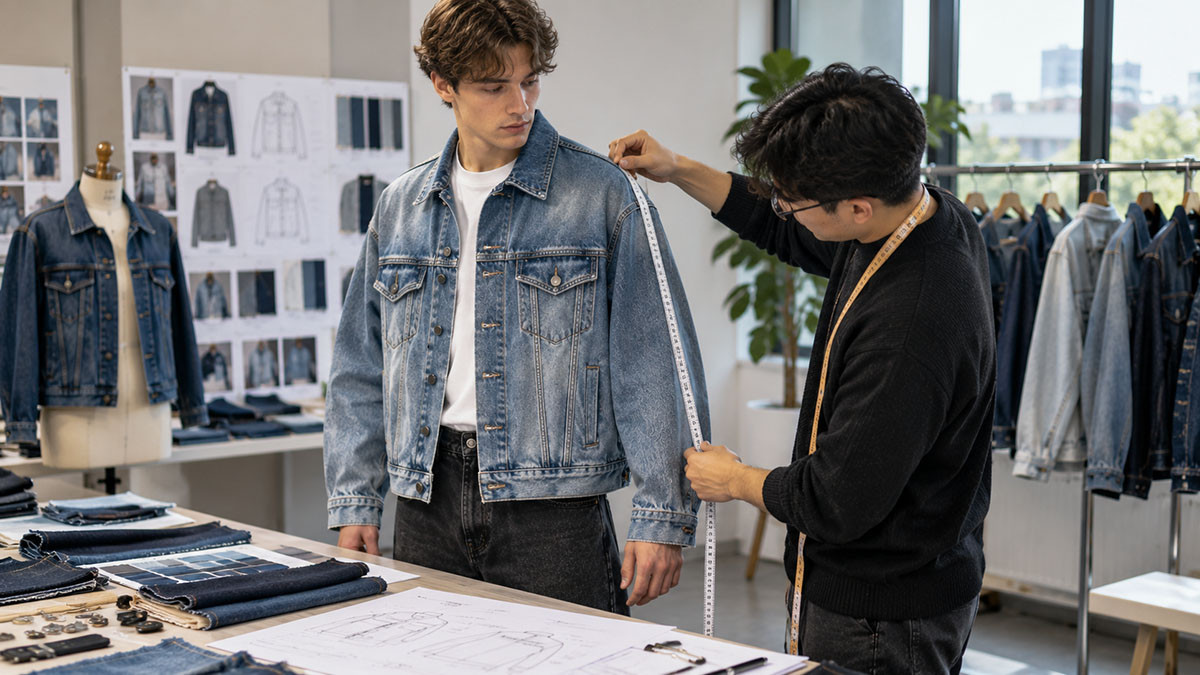
Fit is where the jacket stops being just a factory item and starts becoming your brand's product. The same denim, the same wash and the same hardware can still create completely different results depending on how the pattern is built.
Classic Trucker Fit
A classic trucker fit usually needs balance. The shoulder should feel clean, the collar should sit well, the chest needs enough ease for comfort and the body length should support the traditional silhouette. Small adjustments matter a lot.
Oversized Fit
A good oversized fit should feel relaxed, not sloppy. Shoulder drop, chest ease, armhole depth, sleeve circumference and body length all need to be developed together. Oversized denim works especially well for streetwear when the volume looks intentional.
Cropped and Boxy Fit
This fit works well when a brand wants a more directional or modern proportion. The body gets shorter, but the shape should still feel stable and strong. Structured denim often works better here than fabric that is too soft.
Workwear Fit
Workwear jackets usually allow easier layering and more practical volume. They may include larger pockets, roomier sleeves and more utility-driven balance. If your collection mixes denim with other outerwear directions, explore the broader custom jacket product range.
Distressing, Whiskering and Fading
Distressing can give a denim jacket individuality, attitude and a more lived-in story. But the more natural the damage is supposed to look, the more carefully it usually needs to be controlled in production.
Grinding at pocket edges, cuff abrasion, seam fading, repaired tears, patchwork overlays and localized wear all need to be thought through. Telling a factory to “make it look vintage” is not enough. You need to define where the distressing should appear, how strong it should be and how much variation is acceptable from piece to piece.
Strong distressing also comes with a technical risk: reduced strength. If the jacket is heavily washed, sanded or ground, stress points should be reviewed carefully so appearance does not come at the expense of durability.
Embroidery, Patchwork and Printing
Denim is one of the best surfaces for customization because it holds decoration well while still showing texture. Embroidery, chenille patches, woven patches, screen prints, leather patches, applique and mixed-fabric paneling can all work beautifully on a custom denim jacket.
The main question is not only what decoration you want, but also when it should be applied. Should the embroidery be washed with the garment to create a more aged appearance? Or should it be added after washing so the thread remains crisp and bright?
Patchwork and mixed-wash designs require even more control because different panels can react differently in the same wash. If your jacket combines multiple denim shades or materials, test the complete combination together.
Custom Hardware and Trims
In denim jacket manufacturing, small trims often carry big visual weight. Buttons, rivets, snaps, zippers, leather patches, woven labels and hangtags all contribute to how premium the final jacket feels.
When reviewing hardware, do not look only at logo shape or finish color. Also confirm plating quality, attachment method, durability and wash compatibility. Some metal components behave differently under aggressive washing or abrasion.
If your project includes more advanced private label details, explore VANRD's OEM & ODM apparel development services.
Sampling and Wash Approval
Sampling is where design becomes reality. But a good sample is not simply something that looks close enough. It should help confirm product feasibility, wash behavior, measurements, trims and construction logic before bulk production starts.
Share the Product Brief
Provide reference images, fit direction, target quantity, wash idea, trims and any existing tech pack information.
Select Denim and Trims
Review fabric weight, composition, hardware, labels, branding details and construction expectations.
Develop the Pattern
Create the base pattern around the intended fit instead of relying on a generic standard jacket block.
Test the Wash
Check shade, softness, shrinkage, abrasion level and compatibility with trims and decoration.
Review the Finished Sample
Confirm measurements, fit, body balance, sleeves, pockets, hardware, wash effect and handfeel.
Lock the Bulk Standard
Approve the final sample, measurement chart, wash reference, trim details and packaging specification.
Bulk Wash and Shade Consistency
One of the biggest real-world challenges in denim production is bulk wash consistency. Indigo base shade, fabric lot, garment load, process time, abrasion level and other wash conditions can all influence the finished appearance. The goal is not to pretend variation does not exist. The goal is to define a practical visual standard and keep production inside it.
This is especially important for vintage, faded and distressed jackets. Small variations may be part of the product character, but uncontrolled differences between pieces, sizes or cartons can become a quality problem.
Use a Physical Master Wash and Shade Band, Not One Photo
Screen images are useful for early communication, but they are weak bulk standards because phone cameras, lighting and display settings can shift denim color. For wash-sensitive programs, brands should approve a physical master wash and define an acceptable shade range around it.
A Practical Denim Shade-Control Set Can Include:
- Master wash: the approved target garment or wash panel
- Light boundary: the lightest acceptable bulk result
- Dark boundary: the darkest acceptable bulk result
- Distressing reference: acceptable abrasion, whiskering or grinding intensity where relevant
- Lot records: fabric and wash-lot identification so outliers can be traced and sorted
Before full production, a representative wash trial can help confirm that the selected fabric, trims and finishing route still match the approved target. Finished garments should then be visually compared and sorted against the agreed shade range rather than judged from memory.
Sample-to-Bulk Consistency
The approved sample is the bridge between design intention and production reality. If too many details remain vague, that bridge becomes unstable. Bulk consistency depends on how clearly the sample has been translated into technical instructions.
Before Bulk Production, Lock These Items
- Approved denim fabric and weight
- Base shade and finished wash target
- Finished garment measurements
- Fit direction and size grading
- Construction and topstitch details
- Thread color and stitch appearance
- Button, rivet, snap and zipper specifications
- Embroidery, printing and patch placement
- Distressing locations and acceptable variation
- Labels, hangtags and packaging details
- Inspection and quality-control expectations
It may look like a long checklist, but that is precisely the point. Denim product development rewards clarity. The better the sample approval system, the easier it becomes to protect quality in bulk production.
Denim Jacket QC Checklist Before Bulk Shipment
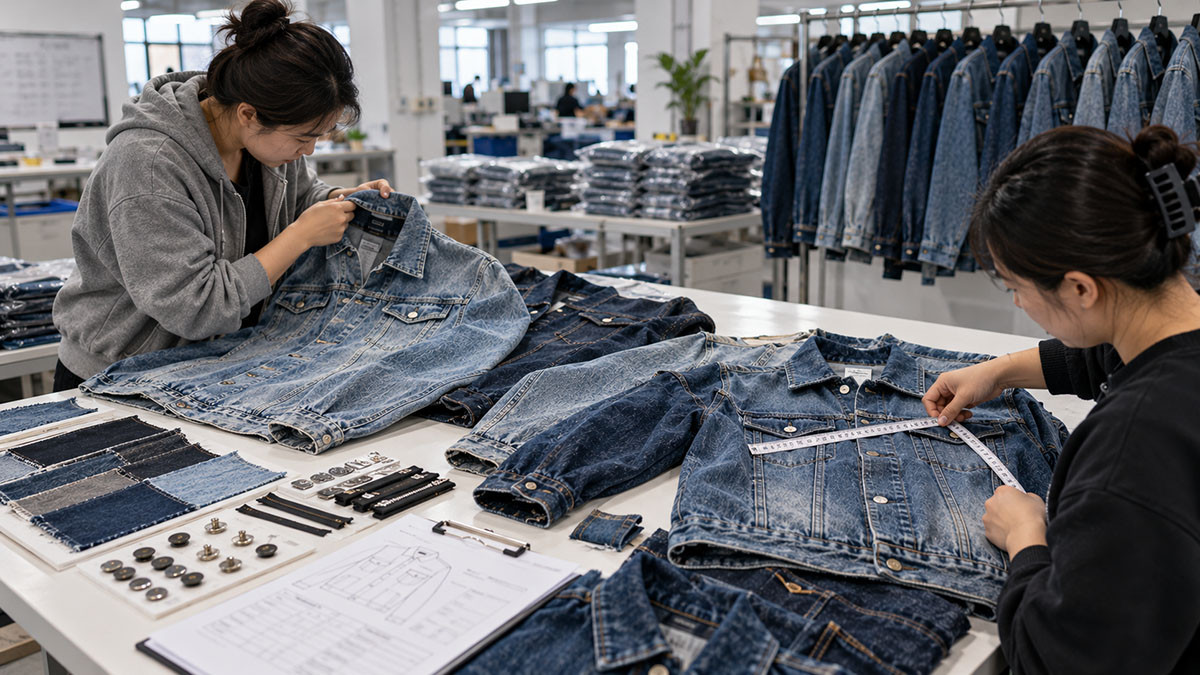
Denim jacket QC should go far beyond checking whether the garment is stitched together properly. The finished product needs to match the approved standard in measurements, wash shade, construction, distressing, hardware, branding and packing. For washed programs, QC should always evaluate the garment after the relevant finishing process.
| QC Area | What to Check |
|---|---|
| Measurements | Shoulder, chest, body length, sleeve length, cuff, hem and other approved points after washing |
| Wash Shade | Overall color, fade level, contrast and consistency against the approved master wash and shade band |
| Construction | Seam quality, topstitching, placket alignment, pocket symmetry and reinforced stress points |
| Distressing | Placement, intensity, fabric strength and acceptable garment-to-garment variation |
| Hardware | Button security, zipper function, rivet attachment, plating condition and unwanted wash marks |
| Branding | Embroidery, labels, patches, prints, artwork size, color and placement accuracy |
| Packing | Folding, tagging, size labels, packaging, assortment and carton details |
If you want to see how these checks fit into a broader production system, review VANRD's garment quality control process, which covers fabric inspection, wash and shrinkage testing, in-line checks and final inspection.
Manufacturing Cost Factors
One of the most common questions buyers ask is: “How much will a custom denim jacket cost?” It sounds simple, but the useful answer depends on the full product specification. A clean rinse-wash trucker and a heavily distressed patchwork jacket are not built on the same cost structure.
The main cost drivers usually include denim fabric, fabric weight, wash complexity, construction difficulty, quantity, custom hardware, decoration, private label packaging and sampling requirements.
This is why comparing factory prices without aligning specifications can be misleading. A low quote is only useful if it is based on the same product reality. Serious buyers should compare like for like rather than price number against price number.
What to Send for an Accurate Quote
A manufacturer can only quote as accurately as the information provided. If the request is vague, the quote will either be vague or built around assumptions. If the request is clear, the supplier can provide more useful feedback on feasibility, lead time, MOQ and cost.
What to Send a Denim Jacket Manufacturer
- Reference images or front/back design sketches
- Tech pack, if available
- Target denim weight or fabric direction
- Wash reference or desired finished appearance
- Fit direction: regular, oversized, cropped, boxy or workwear
- Size range and measurement requirements
- Custom branding details
- Hardware and trim requirements
- Estimated order quantity
- Target lead time
- Packaging requirements
If you are still early in development and do not have a complete tech pack, that does not mean the project needs to stop. A qualified supplier should be able to review your references, identify missing specifications and help move the design toward a production-ready brief.
You can also explore VANRD's custom denim jacket product range to compare styles and development directions.
What to Look for in a Denim Manufacturing Partner
Not every clothing factory is a strong fit for denim jacket development. Sewing denim is one thing. Managing fabric behavior, wash development, post-wash fit, trims, shade consistency and bulk QC is another. For a brand, the real question is whether the supplier can translate an approved sample into repeatable production.
Ask how wash targets are approved, whether measurements are checked after washing, how custom hardware is tested for wash compatibility, how shade variation is controlled and what becomes the final sample-to-bulk standard. These questions reveal far more than a price sheet.
A capable partner should also identify missing specifications before they become bulk-production problems. If you are comparing supplier capability for a denim program, review VANRD's dedicated denim jacket manufacturer page for product, customization and manufacturing information.
Developing Custom Denim Jackets With VANRD
VANRD works with overseas apparel brands, private label businesses and designer-led projects that need reliable support in product development and manufacturing.
For denim jackets, that means more than basic cut-and-sew production. It means helping buyers move from reference images and product ideas into sample development, wash review, custom trim planning, quality-controlled bulk production and long-term manufacturing cooperation.
Whether your project is a clean trucker jacket, a washed oversized denim jacket, a distressed denim jacket or a workwear-inspired outerwear style, the development process should focus on product clarity from the beginning.
You can also explore the Jacket Manufacturer page, the Custom Jackets collection, the OEM/ODM services page or go directly to the contact page to discuss your next development project.
Develop Your Next Custom Denim Jacket With VANRD
Send us your denim jacket reference, target wash, preferred fit, tech pack and estimated quantity. We can review the product direction and help turn it into a production-ready sample.
Conclusion
A good denim jacket is never the result of one isolated decision. Fabric weight affects structure. Wash affects handfeel, color and shrinkage. Shrinkage affects fit. Fit changes the way the whole silhouette is perceived. Trims, decoration and distressing add another layer of complexity. In other words, denim jacket manufacturing is a system, not a single factory step.
That is why the smartest way to develop a custom denim jacket is to think from the finished product backward. What should the jacket look like? How should it feel? How should it fit after washing? What details make it feel like your brand instead of a generic factory item?
Once those answers are clear, the manufacturer can convert them into a practical production plan. For brands, that approach reduces mistakes, improves sampling efficiency and creates stronger bulk consistency.
Frequently Asked Questions
1. What is the MOQ for custom denim jacket manufacturing?
MOQ depends on the exact project and can be influenced by fabric availability, wash requirements, custom hardware, decoration and packaging. A simple stock-based style may be easier to start, while a highly customized denim jacket normally requires a more practical production quantity.
2. What should I approve during denim jacket sampling?
You should approve the finished washed garment rather than only the unwashed prototype. Key points include wash shade, measurements, fit, construction, trims, distressing, branding details and overall handfeel.
3. Can a manufacturer match a denim wash from a photo?
A photo can be useful as a starting reference, but it should not be the only approval standard because lighting, cameras and screens can change how the denim color appears. A physical wash sample or approved wash panel gives production teams a stronger reference.
4. How long does custom denim jacket development usually take?
Development time depends on fabric sourcing, wash complexity, pattern development, trim sourcing and the number of sample revisions required. Projects involving custom hardware or complex vintage washing generally need more development time than straightforward denim jacket designs.
5. Can custom buttons, rivets, embroidery and patches be added to denim jackets?
Yes. Custom denim jackets can include branded tack buttons, rivets, zippers, woven labels, leather patches, embroidery, chenille patches, applique, printing and other private label details. These components should be reviewed together with the wash process to ensure the finish remains stable during production.