Why OEM vs ODM Clothing Manufacturing Matters
You can find hundreds of clothing factories willing to make garments. The harder question is whether a factory can support the way your brand actually develops products.
Imagine two apparel brands contacting the same manufacturer. Brand A already has a graded size chart, approved fabric specification, construction details, Pantone colors, artwork files and a complete tech pack. Brand B has a moodboard, several reference jackets and a clear idea of how the finished collection should feel, but it has not yet defined the fabric weight, measurements, pattern or construction.
Both brands need manufacturing, but they do not need the same manufacturing relationship.
Brand A is much closer to a traditional OEM workflow. Brand B needs greater product-development involvement and may benefit from an ODM approach. Understanding that difference early can prevent unnecessary sampling, confusing quotations, missed timelines and the familiar problem of a sample that looks technically correct but somehow does not feel like your brand.
That is why the real OEM vs ODM question is not simply, “Which model is cheaper?” A better question is: How much of the product-development responsibility should your brand own, and how much should your clothing manufacturer support?
What Is OEM Clothing Manufacturing?
OEM stands for Original Equipment Manufacturer. In apparel manufacturing, an OEM clothing manufacturer generally produces garments according to specifications supplied or approved by the brand.
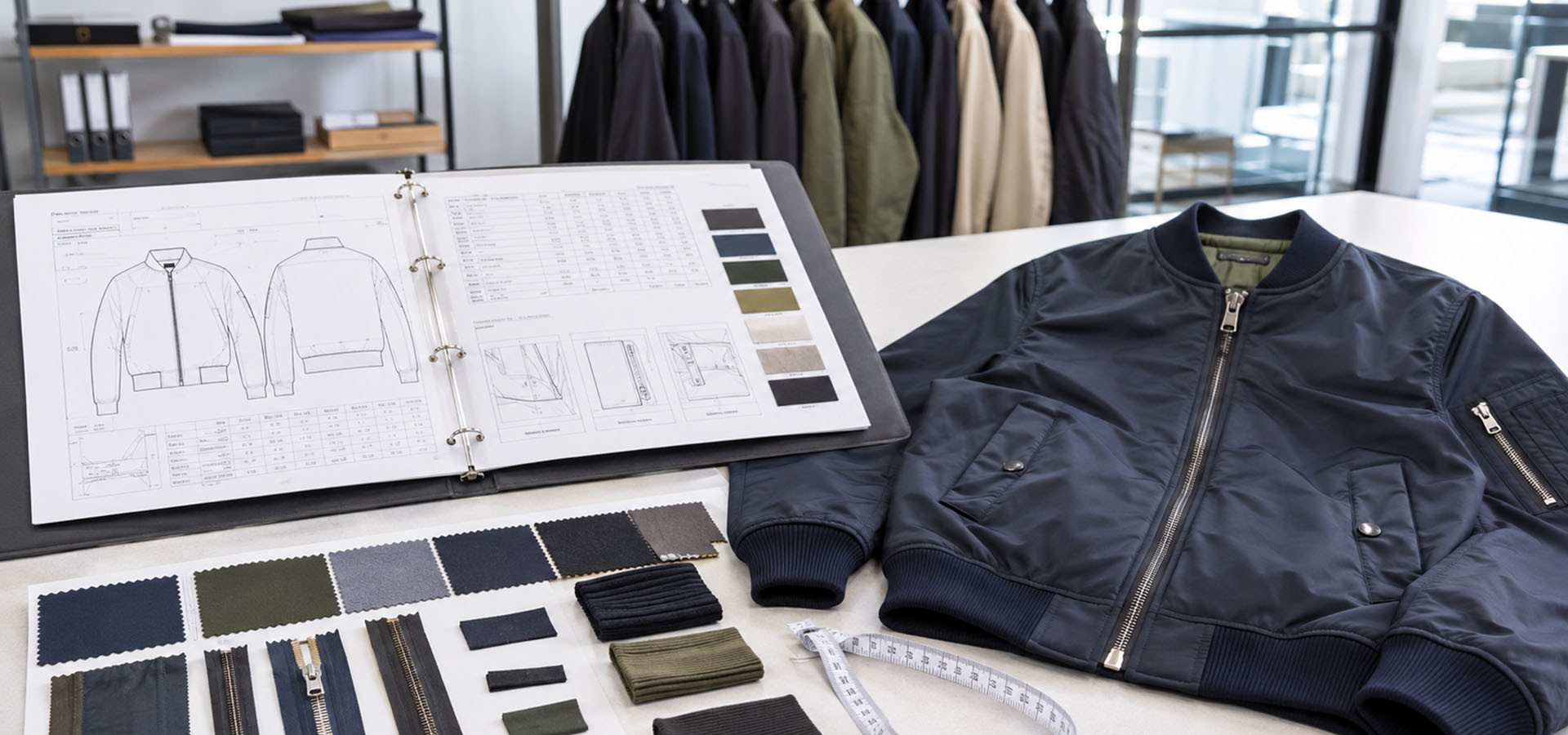
The brand may provide a complete tech pack containing garment measurements, grading, fabric specifications, stitching requirements, artwork placement, labels, trims, packaging instructions and other technical information. The manufacturer then converts those instructions into samples and eventually bulk production.
But OEM does not mean the manufacturer simply receives a PDF and starts sewing. A capable OEM apparel manufacturer still needs to review whether the requested construction can be produced consistently, source appropriate materials, create or adjust patterns, develop samples, test certain processes and manage production tolerances.
For example, you may specify a heavyweight washed hoodie with a boxy fit, dropped shoulders, custom rib, screen-printed artwork and a garment wash. Your manufacturer still needs to consider shrinkage, rib recovery, print performance after washing and how the approved measurements translate into production.
OEM therefore works best when your brand already knows what it wants and wants the manufacturer to execute that direction with technical discipline.
If your team already works from detailed product specifications, you can learn more about VANRD's OEM and ODM clothing manufacturing services and custom clothing production process.
What Is ODM Clothing Manufacturing?
ODM stands for Original Design Manufacturer. In its simplest form, an ODM manufacturer develops products that buyers can select and adapt. In apparel, however, the practical reality is often more flexible than the textbook definition.
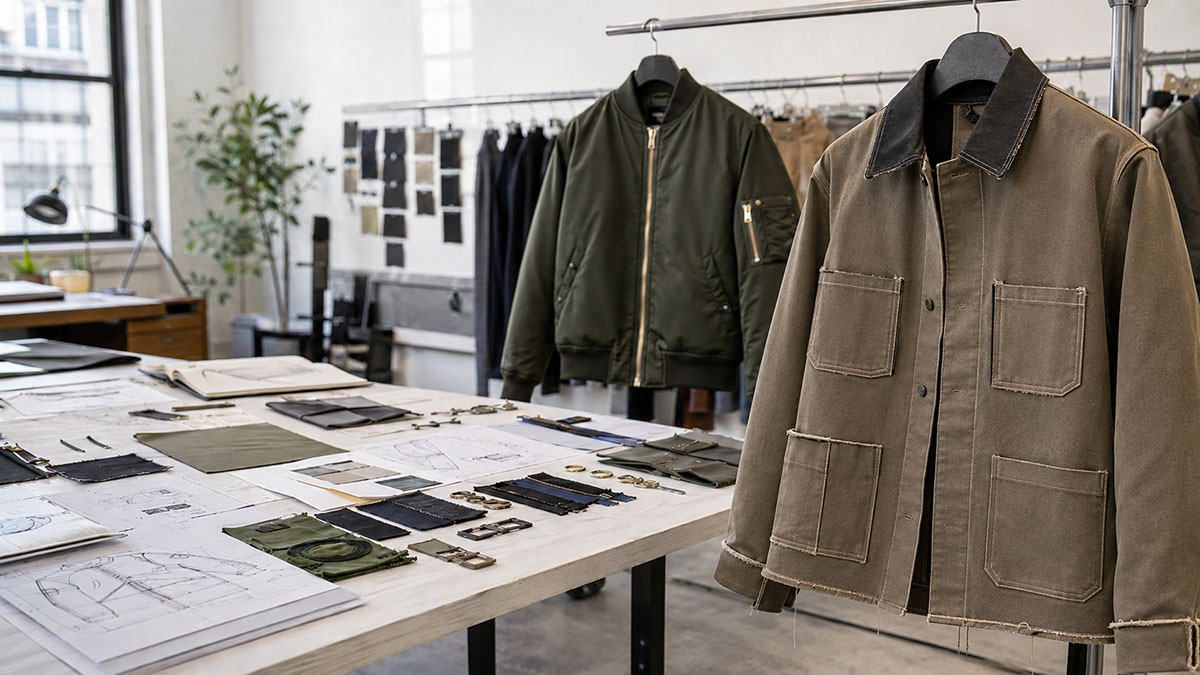
A modern ODM clothing manufacturer may start with an existing silhouette, development block, reference sample, market direction or rough concept and then help the brand turn it into a production-ready garment.
Suppose you want to develop a vintage racing jacket. You know the visual direction, but you are unsure whether the shell should be nylon, twill or washed cotton. You also need recommendations for lining, rib structure, zipper type, patch techniques and fit. An ODM development team can help convert that creative direction into a workable specification before sampling begins.
ODM development may include:
- Product concept development
- Reference garment analysis
- Existing pattern or block modification
- Fabric and trim recommendations
- Fit and measurement development
- Construction suggestions
- Printing, embroidery and appliqué recommendations
- Sample development and revisions
- Private label details and packaging
This makes ODM especially useful when a brand has a strong commercial or creative vision but does not yet have every technical production detail finalized.
OEM vs ODM Clothing Manufacturing at a Glance
| Factor | OEM Clothing Manufacturing | ODM Clothing Manufacturing |
|---|---|---|
| Starting Point | Brand-developed design and specifications | Concept, reference, manufacturer-developed base or collaborative development |
| Design Control | Usually very high | Moderate to high depending on development depth |
| Development Responsibility | More brand-led | More manufacturer-supported |
| Tech Pack | Often expected before development | Can sometimes be developed or refined during the process |
| Customization | Excellent for fully custom products | Depends on whether the project modifies a base style or develops more deeply |
| Sampling | Built around brand specifications | Often involves more manufacturer guidance |
| Development Cost | Can be higher for complex custom development | May reduce early development work when existing resources can be used |
| MOQ | Depends heavily on fabric, trims and processes | Can sometimes be more flexible when existing resources are suitable |
| Time to Market | May require more development when highly customized | Can be faster when existing development resources are suitable |
| Product Differentiation | Very strong when products are fully custom | Ranges from basic customization to highly differentiated custom ODM |
| Best For | Established, technical or design-led brands with defined products | Growing brands and teams needing product-development support |
The Biggest OEM vs ODM Difference Is Development Responsibility
Clothing brands sometimes focus too heavily on who “designed” the garment. In actual production, the more useful distinction is who is responsible for turning the idea into repeatable manufacturing instructions.
A sketch can communicate appearance. A reference sample can communicate general fit. A moodboard can communicate atmosphere. None of those alone tells a production line exactly how to manufacture 300, 1,000 or 5,000 consistent garments.
Before bulk production, someone needs to define measurements, tolerances, fabrics, shrinkage expectations, seam construction, trims, artwork positions, label placements, color standards, finishing and packaging.
In an OEM relationship, much of this information should already come from the brand or its product-development team. In an ODM relationship, the manufacturer may take a much more active role in helping create those decisions.
OEM Clothing Manufacturing: Advantages and Limitations
OEM Advantages
- High control over silhouette, fit and construction
- Strong potential for unique brand identity
- Better suited to signature and proprietary products
- Clearer repeat-production specifications
- Useful for mature product-development teams
OEM Limitations
- Requires clearer technical documentation
- Complex products can require several sample rounds
- Custom fabrics and trims may increase minimums
- Brands must make more development decisions
- Poor tech packs can create costly misunderstandings
OEM is powerful because it gives brands control, but control also creates responsibility. If every detail is custom, every detail must eventually be defined and approved.
ODM Clothing Manufacturing: Advantages and Limitations
ODM Advantages
- Greater manufacturer product-development support
- Useful when technical files are incomplete
- Can shorten early product-development decisions
- Useful for testing new product categories
- Can combine proven constructions with custom branding
ODM Limitations
- Customization depth varies by manufacturer
- Existing base designs may not automatically be exclusive
- Brands still need to approve fabrics, fit and details
- Generic ODM products can weaken differentiation
- Design ownership must be clarified contractually
OEM vs ODM: Cost, MOQ and Lead Time
It is tempting to reduce the decision to a simple formula: OEM costs more and ODM costs less. Apparel manufacturing rarely behaves that neatly.
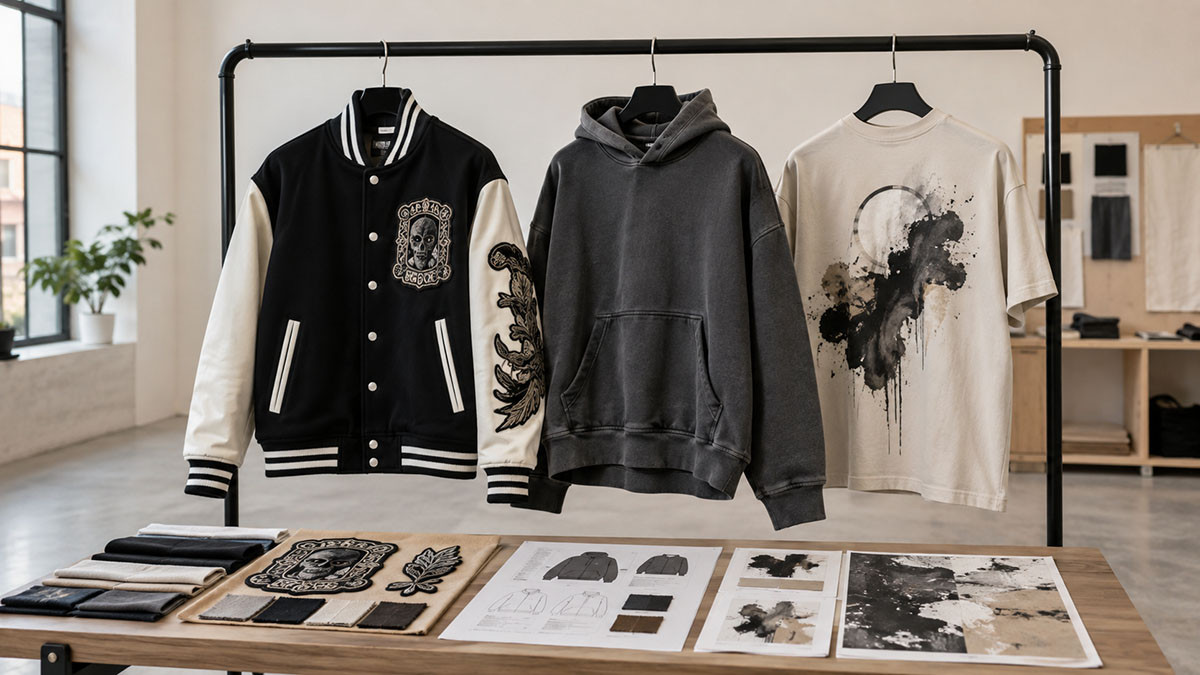
The cost of either manufacturing model is influenced by what you are actually making. A basic jersey T-shirt and a lined varsity jacket with custom rib, chenille appliqué, embroidery and metal snaps have completely different development and production requirements.
Important cost and MOQ drivers include:
- Fabric construction, composition and weight
- Custom dyeing or Pantone color requirements
- Minimum quantities from fabric mills
- Custom zippers, snaps, buttons, rib or hardware
- Printing and embroidery techniques
- Garment washing or dyeing
- Pattern complexity
- Number of sample revisions
- Size range and grading requirements
- Private labels, hangtags and packaging
An ODM project using an existing fabric, proven block and standard trim may move relatively quickly. A deeply customized ODM project can take much longer. Likewise, a well-prepared OEM project with clear specifications may progress more efficiently than an ODM project where the brand changes direction repeatedly.
VANRD's standard production programs generally start from 100 pieces per style and color, while final feasibility still depends on fabrics, construction and customization requirements.
Who Owns the Design? Understanding IP and Exclusivity
This is one of the most misunderstood parts of OEM vs ODM clothing manufacturing.
You will often read that OEM automatically means the buyer owns the design and ODM automatically means the manufacturer owns it. That explanation is useful as a starting point, but real commercial relationships can be more complicated.
The words “OEM” and “ODM” alone should not replace a clear written agreement.
Before developing an important collection, brands should clarify how the relationship treats:
- Original artwork
- Brand-created technical files
- Custom patterns
- Manufacturer-developed base patterns
- Exclusive custom developments
- Reference products
- Confidential product information
- Future reuse of design elements
For highly distinctive products, consider using an NDA and an appropriate manufacturing or development agreement. If intellectual property is commercially important to your brand, obtain professional legal advice for the countries involved.
When Should Your Clothing Brand Choose OEM?
OEM is normally the stronger fit when product identity already lives inside your company.
You may be ready for an OEM clothing manufacturer if your team already has approved silhouettes, complete measurements, technical drawings, fabric direction and clearly defined construction.
OEM is particularly useful for:
- Established apparel brands with proven styles
- Designer-led brands protecting distinctive silhouettes
- Collections based on complete tech packs
- Signature products that must remain highly differentiated
- Programs requiring reliable repeat orders
- Brands transitioning manufacturing from one supplier to another
Established brands also need more than one successful sample. They need consistency from sample to bulk and from one production season to the next. If this describes your business, review VANRD's manufacturing solutions for established apparel brands.
When Should Your Clothing Brand Choose ODM?
ODM becomes valuable when you know where you want the product to go, but you do not yet have every technical step mapped out.
Perhaps your creative director has selected reference pieces but needs help building an original version. Perhaps you want to launch outerwear for the first time but your team understands graphics better than jacket construction. Or maybe you have a strong audience and brand identity but no internal apparel product developer.
These are situations where a capable ODM clothing manufacturer can fill a genuine knowledge gap.
ODM may be suitable for:
- Growing private label clothing brands
- Brands entering a new product category
- Designer teams with creative concepts but incomplete specifications
- Creator-led brands developing professional apparel collections
- Businesses that need fabric, fit or construction recommendations
Private label businesses can explore VANRD's private label apparel manufacturing solutions, while designers can review clothing manufacturing support for designer-led brands.
OEM vs ODM by Clothing Product Category
The ideal model can also change depending on what you are producing. A brand may have enough technical knowledge to develop T-shirts through OEM while still needing ODM assistance for outerwear.
Custom Jackets
Jackets usually involve more construction decisions than basic knitwear. Shell fabric, lining, insulation, rib, zippers, snaps, pocket construction, interlining, embroidery, patches and finishing can all interact with fit and production cost.
A highly technical designer may use OEM. A brand that knows the desired look but needs guidance on construction can use ODM development. Explore custom jacket manufacturing for varsity, bomber, work, denim, windbreaker and other jacket programs.
Custom Hoodies
Hoodies work well under both models. A mature streetwear brand may supply a proprietary oversized block, graded measurements and exact heavyweight fleece requirements for OEM production.
Another brand might start from a proven hoodie shape and then adjust body width, shoulder drop, hood volume, rib, washing, graphics and private labels through ODM. See VANRD's custom hoodie manufacturing capabilities.
Custom T-Shirts
T-shirts appear simple, but fit, yarn quality, fabric weight, shrinkage, neck rib and finishing dramatically affect the result. ODM development can help brands select a suitable base direction, while OEM works particularly well when a brand already owns a proven T-shirt block.
For category-specific production, explore custom T-shirt manufacturing.
Do You Really Have to Choose? The Hybrid OEM + ODM Model
One of the biggest mistakes in this discussion is treating OEM and ODM as mutually exclusive business identities. Your company does not need to become “an OEM brand” or “an ODM brand.”
The better approach is often to choose the manufacturing model product by product.
This can make collection development more efficient because you invest the greatest development resources in products where differentiation creates the most value.
As your sales data becomes clearer, successful products can also evolve. A product that begins with an ODM base may later become a proprietary OEM program with dedicated patterns, fabrics and trims.
7 Questions to Ask Before Choosing OEM or ODM
How complete is your product specification?
If your tech pack already defines almost everything, OEM may be straightforward. If major product decisions remain unresolved, consider ODM support.
How important is product uniqueness?
A signature garment normally justifies deeper custom development than a supporting basic style.
Does your team understand apparel development?
Great branding does not automatically equal garment-development expertise. Be realistic about where external support is valuable.
How quickly do you need to launch?
If suitable blocks, fabrics and trims already exist, ODM can sometimes remove unnecessary development steps.
What is your development budget?
Complex custom fabrics, trims and repeated samples require more investment regardless of whether the project is called OEM or ODM.
Will the product be reordered?
Products expected to become permanent bestsellers deserve stronger technical documentation and repeat-production controls.
Which product details are commercially sensitive?
If originality or exclusivity is important, confirm development ownership and confidentiality before production begins.
How to Evaluate an OEM or ODM Clothing Manufacturer
Once you understand which model you need, the next step is finding a manufacturer capable of actually delivering it.
Do not judge suppliers only by the number of products shown in a catalog. Ask how they manage development.
A serious OEM or ODM clothing manufacturer should be able to explain:
- Which apparel categories it specializes in
- How designs and tech packs are reviewed before quotation
- How patterns and samples are developed
- How fabrics and trims are sourced
- How sample comments are recorded
- What is approved before bulk cutting
- How printing and embroidery are confirmed
- How measurements and workmanship are checked
- How packaging specifications are controlled
- How repeat orders are kept consistent
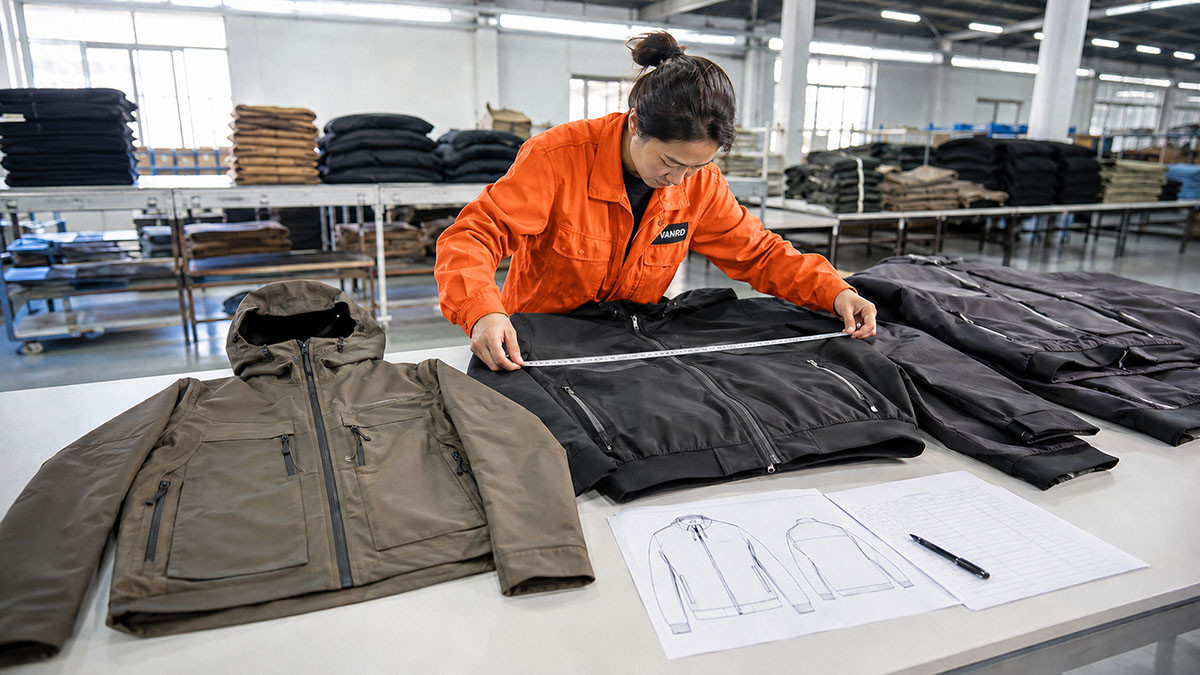
Quality control matters especially when moving from a beautiful sales sample into hundreds or thousands of garments. Review VANRD's custom apparel quality control process to understand the checkpoints that can help protect sample-to-bulk consistency.
Common OEM and ODM Mistakes Clothing Brands Make
1. Choosing a Manufacturing Model Based Only on Price
Saving development cost is meaningless if the finished product does not fit your brand. Compare total development risk, not only unit price.
2. Sending Reference Images Without Clear Priorities
If you send five reference garments, tell the manufacturer what you like about each one. Is it the fit, fabric, pocket, color, wash or silhouette? Otherwise, the factory is forced to guess.
3. Assuming ODM Means No Development Work
Even when a manufacturer provides design support, your brand still needs to make commercial decisions and approve the final product.
4. Ignoring Fabric and Trim Minimums
Garment MOQ is only one part of production. Custom fabric, color, zippers, ribs and other components may have their own minimum requirements.
5. Starting Bulk Production Before the Sample Is Properly Locked
Measurements, fabric, color, construction, artwork, trims, labels and packaging should be clearly confirmed before bulk production.
6. Assuming IP Terms Instead of Discussing Them
If a design is strategically important, address ownership and confidentiality before you invest heavily in development.
7. Selecting a Factory That Does Not Specialize in Your Product
A manufacturer that produces basic T-shirts successfully may not automatically be the right partner for structured varsity jackets, washed denim or complex technical outerwear.
How VANRD Supports OEM and ODM Clothing Development
VANRD works with apparel brands that arrive at different stages of product readiness. Some customers already have complete technical packages and need disciplined OEM execution. Others arrive with sketches, reference garments or product ideas and require more ODM development support.
Rather than forcing every buyer into the same workflow, the manufacturing path should reflect how complete the project is.
VANRD's apparel development and production capabilities include:
- Design and specification review
- Product development support
- Pattern and fit development
- Fabric sourcing
- Custom trims and branding
- Sample development
- Printing and embroidery
- Bulk production
- Quality inspection
- Private label packaging
The goal is not simply to manufacture a garment. It is to help turn a product concept into a production-ready garment that can be approved, manufactured and repeated consistently.
You can explore more about VANRD's OEM/ODM clothing manufacturing capabilities, learn more about VANRD, or review our manufacturing support for established brands, private label brands, designer-led brands and creator-led apparel brands.
Final OEM vs ODM Decision Checklist
| Your Situation | Recommended Direction |
|---|---|
| You have a complete tech pack and approved product specifications. | OEM |
| You have sketches or references but need technical product development. | ODM |
| Your design is a signature product and differentiation is critical. | OEM or deeply customized ODM |
| You are entering a new clothing category and lack technical expertise. | ODM |
| You want to test supporting styles while investing heavily in hero products. | Hybrid OEM + ODM |
| You need consistent repeat production of an established bestseller. | Structured OEM |
Conclusion: Choose the Model That Matches Your Development Readiness
OEM vs ODM clothing manufacturing is not really a contest between a “professional” model and an “easy” model. Both can produce excellent apparel, and both can fail when responsibilities are unclear.
Choose OEM when your brand already owns a well-defined product direction and needs a manufacturer to reproduce it accurately and consistently. Choose ODM when your concept still needs technical development, fabric guidance, pattern support or construction recommendations before it is ready for production.
And remember: you do not have to choose one model for your entire business. A thoughtful apparel sourcing strategy may use OEM for proprietary hero products, ODM for category expansion and a hybrid approach as products mature.
The right question is not simply, “Should I choose an OEM clothing manufacturer or an ODM clothing manufacturer?” It is: What does my brand already know, what development support do we still need, and which manufacturing partner can turn that combination into a repeatable product?
Frequently Asked Questions About OEM vs ODM Clothing Manufacturing
1. What is the main difference between an OEM and ODM clothing manufacturer?
The main difference is usually product-development responsibility. In OEM clothing manufacturing, the brand normally provides more complete designs and technical specifications for the manufacturer to execute. In ODM clothing manufacturing, the manufacturer generally provides more product-development input, such as base styles, pattern support, fabric recommendations, construction suggestions or sample development.
2. Is OEM or ODM better for a new clothing brand?
It depends on the team's product-development capability. A new brand with an experienced designer, complete tech packs and clear specifications can use OEM successfully. A brand with a strong concept but limited technical apparel experience may benefit more from ODM development support. Brand age alone should not determine the manufacturing model.
3. Do I need a tech pack for ODM clothing manufacturing?
Not always at the beginning. Some ODM manufacturers can start from sketches, reference garments or an existing base style. However, the final approved product should still be documented clearly before bulk production. Measurements, fabrics, colors, trims, construction, artwork and packaging specifications need to be confirmed so the factory has a repeatable production standard.
4. Is ODM the same as private label clothing manufacturing?
Not exactly. Private label manufacturing generally describes products manufactured for sale under the buyer's brand. ODM describes the manufacturer's role in product design and development. A private label collection can therefore use ODM, OEM or a combination of both depending on how the products are created.
5. Can one clothing collection use both OEM and ODM manufacturing?
Yes. Many brands benefit from a hybrid strategy. A proprietary jacket may follow an OEM workflow, while a supporting hoodie or T-shirt can be developed from an existing block through ODM customization. The best model can be selected by SKU according to product uniqueness, available technical information, development budget and timeline.