MA-1 vs L-2B Bomber Jackets: Which Flight Jacket Fits Your Collection?
VANRD / Product Comparison Guides
MA-1 vs L-2B Bomber Jackets: Which Flight Jacket Fits Your Collection?
At first glance, an MA-1 and an L-2B can look like almost the same jacket. Both have the familiar flight-jacket shape, a front zipper and ribbed trims. But put them into a real clothing collection and the difference becomes much more important. One is usually built with extra body and warmth; the other is typically lighter and easier to wear across transitional seasons.
If you are developing outerwear for your streetwear brand, that distinction affects more than comfort. It changes the silhouette, fabric choices, sample development and even how you position the jacket in your seasonal range. So, between the MA-1 and the L-2B, which flight jacket actually makes sense for your collection?
MA-1 vs L-2B: Quick Answer
The short version
Choose an MA-1-inspired bomber when you want a fuller, typically insulated flight-jacket silhouette for cooler-weather streetwear. Choose an L-2B-inspired bomber when you want a lighter jacket for spring, mild weather or easy layering. These are traditional starting points rather than rigid rules: modern fashion versions can change the fill, fabric and fit.
The most useful detail to check is the construction inside the jacket. A conventional MA-1 combines a shell, lining and insulating fill, while a traditional L-2B relies on a lighter shell-and-lining arrangement. Ribbed trims and sleeve pockets can appear on both styles, so check the specification rather than making assumptions from the name.
| Feature | MA-1 bomber jacket | L-2B flight jacket |
|---|---|---|
| Traditional construction | Typically insulated | Typically lightweight, without substantial fill |
| Silhouette | Fuller, more rounded body | Flatter, less bulky profile |
| Seasonal position | Cooler conditions and insulated outerwear lines | Mild weather, spring and transitional lines |
| Shell choices | Flight nylon; tailored alternatives possible | Light nylon; tailored alternatives possible |
| Lining direction | Lined, with an insulation layer in classic designs | Lined without heavy insulation in classic designs |
| Common visual details | Rib collar, cuffs and hem; sleeve utility pocket; front pockets | Rib collar, cuffs and hem; sleeve utility pocket; front pockets |
| Best brand use | Statement outerwear, heritage-inspired drops, structured streetwear | Everyday lightweight layers, minimal streetwear, spring capsules |
| Important exception | Some fashion MA-1 styles use reduced padding | Some contemporary L-2B styles add quilting or padding |
Comparison describes conventional style directions rather than guaranteed specifications for every jacket sold under these names.
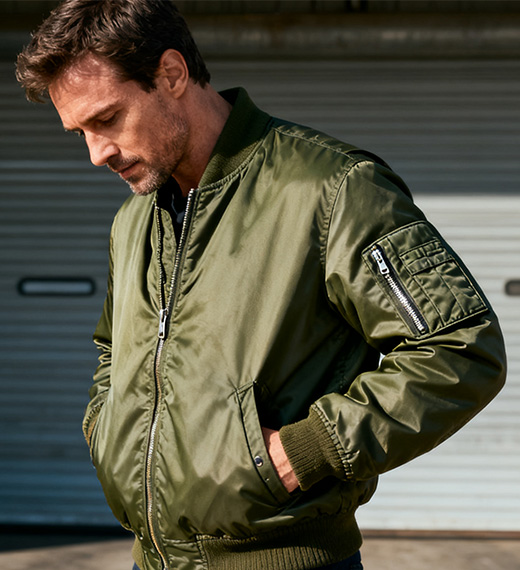

Style-reference images: VANRD Bomber Jacket Manufacturer. Confirm the exact fill and lining on your approved production sample.
Both styles emerged from the evolution of U.S. military flight clothing. Alpha Industries documents the L-2B as a lighter-weather alternative to the MA-1 in its history of the L-2B. Its current MA-1 Heritage specification lists a nylon shell and polyester fill. These sources help explain the traditional distinction, but your brand should choose features for today's customer rather than reproduce every historical detail.
Silhouette, Padding and Seasonal Use
Imagine placing both styles on the same fit model, over the same T-shirt. The MA-1-inspired jacket generally looks more substantial through the torso and arms. The L-2B-inspired jacket tends to hang closer to the body and show more of the garment underneath. That is why two jackets with almost identical outer measurements can create noticeably different outfits.
How the MA-1 Creates a Fuller Silhouette
Traditional MA-1 construction puts an insulating layer between the outer shell and lining. That layer adds volume, softens the drape and makes the jacket look more rounded. A firm ribbed waistband pulls the hem inward, exaggerating the familiar blouson shape. This visual weight is one reason the MA-1 works so naturally with loose denim, cargo pants and heavier sweats.
Padding also affects fit development. If you approve the outer measurements using an unpadded sample, then add insulation later, the inside wearing space may become tighter. Armholes, sleeve width and chest ease should therefore be checked on a sample that reflects the intended production construction. The fill is not an optional detail you can simply add at the end without considering the pattern.
Why the L-2B Feels More Streamlined
A traditional L-2B leaves out the substantial insulation layer, reducing bulk through the body and sleeves. Without that extra volume, the outer fabric's hand feel and drape become more visible. You might get a cleaner, flatter line across the chest, or a slightly fluid shape if you choose a softer shell. For a minimalist brand, that can be exactly the point.
Lightweight does not automatically mean slim fitting, though. You can develop an oversized L-2B with dropped shoulders and generous sleeve volume, or a compact version that sits neatly at the waist. The distinction is that you create the silhouette mainly through pattern and material selection rather than relying on padding to build its shape.
Which Jacket Makes More Sense for Your Launch Season?
For an autumn outerwear launch aimed at customers who expect a jacket to provide some warmth, an insulated MA-1 is usually the clearer story. For a spring capsule or a region with mild evenings, the traditional L-2B direction gives your customers a wearable outer layer without the same level of insulation. Yet the calendar is only one part of the decision. A heavily oversized L-2B worn over a hoodie may offer a very different wearing experience from a close-fitting version over a tee.
Do not promise a precise temperature rating unless the finished garment has been evaluated for that use. Wind, humidity, the layers underneath and the actual shell and fill all affect comfort. Treat historical military temperature descriptions as background, not as a performance guarantee for a new fashion jacket.
Shell, Lining and Trim Options
Once you know the silhouette and season, material choices become easier. This is the stage where a jacket can move from convincing to disappointing. A classic-looking design made in the wrong nylon may feel too stiff, too flat or overly shiny. The same applies to the ribbing and hardware: these details seem small on a sketch, but buyers notice them immediately on the finished piece.
Shell Fabrics: Structure, Weight and Surface Finish
Nylon remains a familiar choice for both MA-1 and L-2B-inspired bombers. A firmer flight-style twill can support the MA-1's rounded profile, while a lighter nylon may better suit a spring L-2B. Polyester can also work for fashion interpretations, depending on the visual finish, cost target and required hand feel. The important question is not simply whether the label says nylon or polyester. It is whether the selected fabric holds the silhouette you designed.
For a vintage collection, you might prefer a matte surface and a slightly worn-looking finish. A technical streetwear range may need a smoother, cleaner face. If you are considering a water-repellent treatment, confirm what the actual finish offers and test it against your product requirements rather than assuming all tightly woven synthetics perform the same way. VANRD's fabric and customization options provide a useful starting point for comparing shell and trim directions.
Lining and Padding: The Difference You Cannot See from Outside
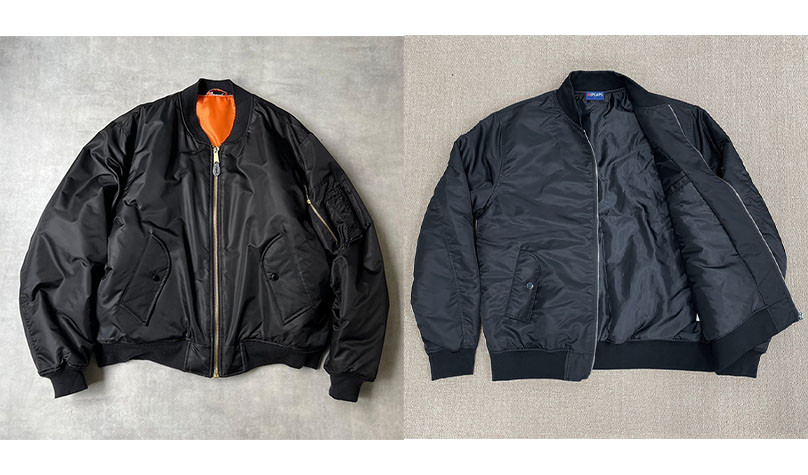
Inside a traditional MA-1, the insulation sits between the shell and lining. The shell provides the outward appearance, the fill contributes to warmth and volume, and the lining creates a wearable interior. Some designs are developed to be reversible, but true reversibility requires two finished faces, suitable pocket construction and carefully chosen seams and trims. A contrasting orange lining by itself does not make every bomber reversible.
In a classic L-2B-style program, the lining may be simple and lightweight, without substantial padding. This makes it especially important to inspect the inside seam finish and how the lining hangs when the jacket moves. Modern design names are flexible: for example, Alpha Industries offers a quilted L-2B interpretation with polyester fill. That is a useful reminder to verify construction instead of relying on a product title.
Ribbing, Zippers and Pockets: Small Parts, Big Visual Impact
The ribbed collar, cuffs and waistband give both jackets their instantly recognizable shape. But not every rib performs alike. A loose waistband may leave an MA-1 looking shapeless, while an overly tight cuff can make a lightweight L-2B feel restrictive. When evaluating samples, check recovery after stretching, the balance between rib and shell color, and whether the rib holds its shape after handling.
Zippers influence both appearance and daily use. A heavier metal zipper can suit a rugged vintage MA-1, while a lighter option may sit more comfortably on an unpadded jacket. Pocket bags should not drag on the shell or create visible lumps. If you want a sleeve utility pocket, define its position and size before placing branding nearby; otherwise, the two details can compete for limited space.
Many military-inspired jackets use angled hand pockets and a sleeve pocket, but neither feature is exclusive to one model. Oxygen tabs, sleeve shirring, pocket flaps and rescue-orange interiors also vary by historical specification and fashion reinterpretation. Use them as a design vocabulary, not as a rigid checklist. If you want to plan the construction in more depth, see our bomber jacket materials and trim options.
Embroidery, Patches and Private Label Details
Branding works best when it follows the jacket's surface rather than fighting it. A dense embroidered logo placed across a very lightweight nylon shell can cause puckering or distortion if the backing and stitch density are not suitable. Large patches may feel natural on a fuller MA-1, while a small tonal chest logo can suit a clean L-2B. Those are design directions, not manufacturing limits.
Ask to see branding applied to the actual chosen fabric, not only a digital mockup. Confirm your label positions, hangtags, zipper pull design and patch placement while the sample is still being refined. For a private label collection, the finishing details are part of your customer's impression of quality just as much as the fabric itself.
Which Works for a Streetwear Collection?
The best bomber is the one that fills a clear role in your product range. Neither name automatically makes a jacket more premium or more fashionable. A brand with a vintage workwear identity will approach the decision differently from a clean, minimal label. Think about what your customer already wears, what season you are selling into and what kind of styling the jacket needs to support.
What if your brand wants the look of an MA-1, but your market rarely gets cold? A lightly padded MA-1-inspired silhouette may be more sensible than a heavily insulated one. What if your L-2B feels too flat for your campaign styling? A more structured shell, adjusted shoulder line or changed sleeve proportion might solve that without transforming it into a winter jacket.
In other words, choose the role before the reference name. If the collection already includes heavy outerwear, a lightweight bomber could fill the gap between overshirts and insulated jackets. If the lineup is mostly tees and hoodies, a stronger MA-1 may serve as the statement piece. For a broader overview of construction choices across jacket types, read VANRD's custom jacket manufacturing guide.
Custom Development Considerations
By now, you may have a preferred direction. Before you ask a manufacturer for pricing or samples, turn that direction into a workable product brief. "Make it like an MA-1" is not enough. Two manufacturers could interpret that instruction differently in shell weight, fit, lining and pocket details, yet both could reasonably call the result an MA-1-inspired bomber.
1. Build a Reference Pack That Shows What You Actually Want
Start with clear front, back and side references. Mark which details are essential: sleeve fullness, body length, pocket layout, cuff width, shell finish and any special lining. If the inspiration comes from an existing brand, use it to communicate silhouette and construction rather than requesting unauthorized copies of protected artwork or logos. The goal is to develop your own commercially usable product.
You can be specific without writing a full tech pack on day one: "L-2B-inspired jacket, relaxed fit, matte nylon, no substantial fill, tonal rib and small chest embroidery." That gives a manufacturer a clearer direction than the style name alone.
2. Decide Fit and Insulation Together
Before grading sizes, review how the sample sits over the layers your customers are expected to wear. An insulated MA-1 for hoodie layering needs different internal allowance from a lightweight bomber designed primarily for T-shirts. Check shoulder position, sleeve bend, chest comfort and hem behavior while the fit model moves. Looking good on a hanger is useful; moving naturally on a person is more important.
Approve the intended shell and insulation together whenever possible. Even with unchanged measurements, softer nylon or thicker rib can alter the appearance of the sample.
3. Agree on a Practical Sample Approval Checklist
For a new bomber program, the first sample should answer the biggest construction questions before anyone debates minor logo placement. Does the silhouette match the reference? Does the nylon feel right? Is the insulation level suitable? Do the collar, hem and cuffs sit correctly? Once those answers are stable, smaller brand details are easier to finalize.
What to confirm before approving the sample:
- Shell fabric composition, hand feel, finish and approved color.
- Lining and insulation specification, including whether the jacket is reversible.
- Fit measurements, sleeve shape, body length, rib tension and movement.
- Zipper quality, pocket placement, stitching, embroidery and trim appearance.
- Size grading, wash-care requirements and the approved production reference sample.
Use precise fit comments: "reduce upper-sleeve width by 2 cm" is more actionable than "sleeves too big." VANRD's custom jacket development services can help connect your preferred fit, materials and sample specifications.
Use the approved sample to check bulk-production consistency: fill distribution and lining smoothness on an MA-1, and seam puckering and front-edge hang on an L-2B. On both styles, confirm measurements, rib tension, zippers and trims. See VANRD's quality control process for the inspection framework.
Is a lightweight jacket automatically cheaper? Not always. Premium shell fabric, specialty trims or complex branding can outweigh savings from removing insulation. Compare quotes against the same approved specification.
Explore Custom Bomber Jacket Development with VANRD
Developing an MA-1-inspired or L-2B-inspired bomber? Share your reference images or tech pack, target season, preferred fit, shell and lining direction, branding, quantity and launch timing. Our team can review the project and discuss custom sampling and production options.
Explore Custom Bomber Jacket Manufacturing →Conclusion
The MA-1 and L-2B share the language of classic flight jackets, but they do different jobs in a collection. Choose the MA-1 direction when fuller shape and cooler-weather layering support your brand story. Choose the L-2B direction when lightweight versatility and a cleaner silhouette matter more. And if neither heritage version fits perfectly, adjust the shell, padding and fit around your own customer rather than forcing your collection into a historical label.
Frequently Asked Questions
1. What is the main difference between an MA-1 and an L-2B flight jacket?
A traditional MA-1 is an insulated flight jacket with a fuller profile, while a traditional L-2B is a lighter design intended for milder conditions. Modern fashion versions can depart from these specifications, so always check the fill and lining.
2. Is an L-2B bomber jacket suitable for autumn?
Yes, especially for mild autumn weather or layering. Its suitability depends on the shell, lining, local climate and garments worn underneath; a lightweight L-2B should not be treated as equivalent to a heavily insulated jacket.
3. Can a brand make an MA-1-style bomber without heavy padding?
Yes. A brand can keep MA-1-inspired details while reducing insulation for a lighter product. Because padding affects fit and shape, the pattern and sample should be adjusted to preserve the intended silhouette.
4. Do all MA-1 and L-2B jackets have orange linings and sleeve pockets?
No. Those features are associated with certain military and commercial versions, but details vary by era and modern design. A custom jacket can include or omit them based on the brand's own product brief.
5. What should I send a manufacturer to develop a custom MA-1 or L-2B bomber?
Send front and back references or a tech pack, target fit, shell and lining preferences, branding artwork, size range and expected quantity. A clear description of the wearing season and insulation requirement is particularly helpful.
Source and scope note: Historical context is checked against Alpha Industries' L-2B history and its MA-1 Heritage product specification. VANRD's own specifications are linked as a commercial example, not proof that all MA-1 or L-2B jackets use the same fabrics, fill or fit. Fit and development recommendations are general guidance to evaluate against an approved sample.