
Is this normal print quality? How do I check screen print vs DTF on dark garments?
On a dark garment, print quality is settled by four things you can check in about two minutes: whether a white underbase was printed, whether the ink is fully cured, whether the screen stayed clean, and how the edge of a transfer has bonded. Check all four on the sample — none of them improve once the run goes to bulk, which is why print approval should be a separate, signed step rather than a line in an email.
Why dark is the hard case
On a white or light garment the ink sits over a surface that reflects light back, so it reads close to the colour on the ink card. On black or navy that surface returns almost nothing. Every light colour on a dark ground is therefore a white layer with a thin colour layer on top. If the white is thin, printed once instead of twice, or cured at the wrong temperature, the garment colour comes back through and the white reads grey, blue-grey or dirty.
None of that is visible in a photo taken under warehouse lighting, and none of it appears on the first wear. It appears after the first wash — which is exactly why the judgement has to be made at sample stage rather than on the delivered order.
The four checks, in the order that finds problems fastest
1. Turn it inside out first. Look at the back of the print area from inside the garment. A correctly built white underbase shows a soft, even halo with the fabric weave still readable through it. Hard white patches where ink has pushed through mean the print was over-inked — it will feel stiff and crack sooner. If there is almost nothing on the reverse, the base is too thin and the face will read grey.
2. Rake the light across it. Hold the print at a low angle under a desk lamp or window light. Edges should be clean and continuous. Pinholes, missed dots, a smeared edge or a screen that clogged mid-run all show up instantly at this angle and are invisible face-on.
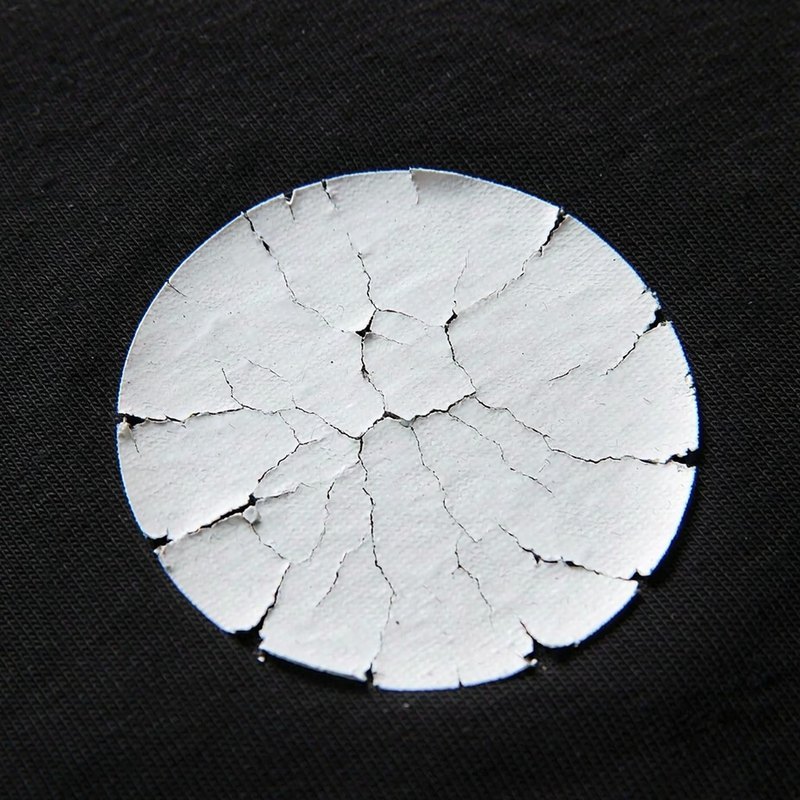
3. Pull it. Take a corner of the print and stretch the fabric across the print direction by roughly 20–30%, firmly but not violently. Plastisol should flex and recover. A print that opens into white cracks or lifts at the edge has an under-cure or a bonding problem, and it will behave the same way in the machine.
4. Wash it three times before you judge it. Three domestic wash cycles — the conditions described in AATCC 135 or ISO 6330 — is the cheapest test a brand can run. Wash one sample and keep an unwashed twin. Uniform, slight softening across the whole print is normal. Cracking, edge lift, colour shift or patchy loss is a reject, not wear.
Screen print on dark: the underbase is the whole story
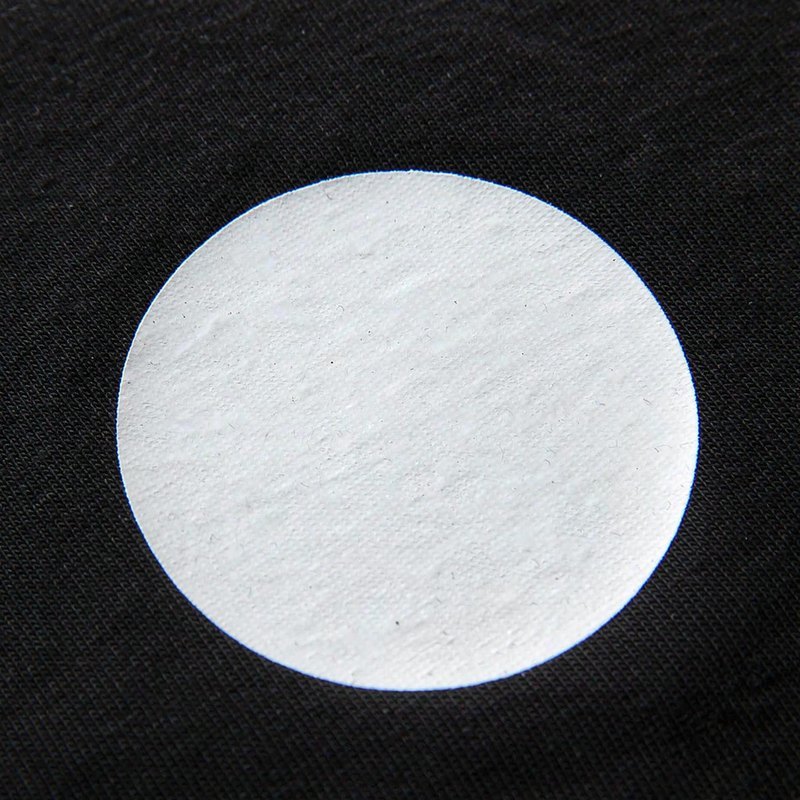
A light colour on a dark ground needs at least two passes: a white base, then the colour over it. White on black frequently needs the base printed twice — a double hit — before the face reaches full opacity. This is where cost arguments begin: every extra pass adds a screen, a setup and press time, and it is the first thing removed when a quotation is squeezed.
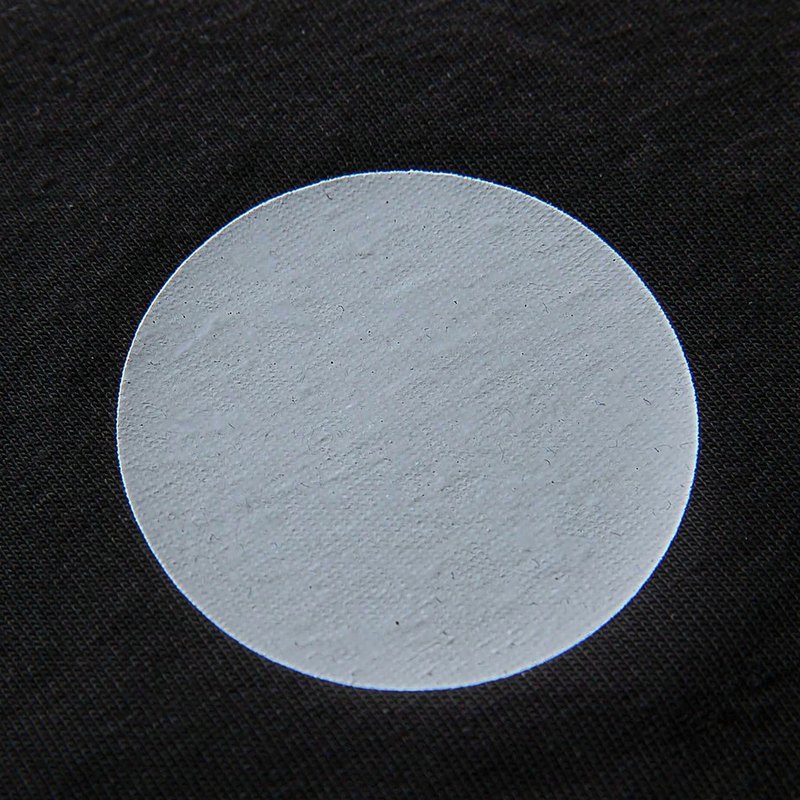
The tell is simple. Compare the printed white against a white swatch under the same light. Grey or blue cast means the base was under-built. Full opacity with a soft hand means it was built properly. If the sample instead feels papery and stiff, the opposite mistake was made — too much ink, or a base flashed off too hard between passes.
DTF on dark: read the film edge
Direct-to-film transfers carry their own white ink layer, so opacity is usually easier than screen print — but the failure moves to the edge and the bond. Look at the perimeter of the design: it should soften into the fabric rather than sit on it as a ridge. A glossy rim, a saw-tooth edge or a corner that lifts under a fingernail means press temperature, pressure or dwell time was wrong, or the film was pulled while still hot.
Check what the design loses as well. Fine lines below about one point, small reversed-out type and delicate halftones are where DTF gives up detail first on a dark ground — the white layer fills in and the negative space closes. If those elements matter to the artwork, that is a reason to choose screen print at the development stage, not a defect to argue about after delivery.
What is normal, and what should be rejected
- Normal: a visible ink film with a slight hand on plastisol; a white that reads marginally warm or cool against a pure white swatch, because inks are not pigment-perfect; a DTF you can feel as a thin film; a small, even softening across the whole print after washing.
- Reject: pinholes, missed dots or a broken edge before any wash; registration visibly off at arm’s length on a multi-colour print; white reading grey, blue or dirty on a black or navy ground; cracks, edge lift or flaking after three domestic washes; a DTF edge that is glossy, ragged, or lifts under a fingernail.
The distinction matters commercially more than technically. A defect present on the sample is a two-hour fix on a 100-piece-per-colour run. The same defect found on delivery is a reprint of the whole run, plus the schedule you lose while it happens.
Field example
The disagreement that comes up most often on dark goods: the brand says the white logo looks grey, the factory says black fabric always does that. Turning the sample inside out settles it in seconds — the base had been run once and the weave was showing through. With a second white pass and the cure time restored to the value on the process card, the same artwork on the same fabric came back to full opacity. Caught at sample stage that conversation costs an afternoon. Caught after washing, it costs a batch.
Numbers that matter
- Light ink on a dark ground: minimum two passes — white base plus colour; white on black often needs a double-hit base
- Practical stretch check: 20–30% across the print direction, then look for opening cracks
- Wash verification: three domestic cycles before approval, per AATCC 135 or ISO 6330
- DTF on dark depends on its own white ink layer — without it the ground colour contaminates the design
- Detail limit on DTF: fine lines under about one point and small reversed-out type are the first to fill in
- Service Process
- Fabrics & Techniques
- Sweater & Knitwear Manufacturer
- OEM/ODM Apparel Manufacturing by Brand Type
- Custom Headwear Manufacturer
- Streetwear Manufacturer
- Custom Clothing Quality Control
- Tracksuit Manufacturer
- T-Shirt & Jersey Manufacturer
- Pants & Bottoms Manufacturer
- Hoodie & Sweatshirt Manufacturer
- Jacket Manufacturer