Ringer Tees, Raglan Sleeves & Cropped Fits: An SS27 T-Shirt Development Guide
Ringer tees, raglan sleeves and cropped proportions offer three different ways to give a familiar T-shirt a more recognizable identity.
For Spring/Summer 2027, brands planning casual and streetwear collections can revisit familiar sportswear references while making the details feel current. A contrast rib collar changes the character of a basic tee. A raglan sleeve introduces a different construction line. A shorter body or wider chest changes the silhouette before a graphic or logo is even added.
These are not interchangeable design features. Each one affects a different part of the garment, and each needs to be translated into clear specifications before sampling. A ringer tee is defined by its contrast trim, a raglan tee by its sleeve construction, and a cropped fit by its body proportions. They can also be combined in one design.
This guide looks at how brands can develop these directions for SS27, what to include in a tech pack, how to choose jersey and rib fabrics, and which details deserve attention before bulk production.
Use contrast ribbing at the neckline and sleeve openings to create a clear vintage or collegiate reference.
Use diagonal sleeve seams and optional contrast panels to bring a sporty, baseball-inspired construction.
Adjust body length, chest width and sleeve proportions to create a more deliberate silhouette.
1. What Makes a Ringer Tee Different?
A ringer tee is a T-shirt with contrasting trim around the neckline and sleeve openings. The body is usually made from a single jersey fabric, while the collar and sleeve bands introduce a second color. The contrast can be bold or subtle, but it should look intentional and consistent across the garment.
The appeal is in the balance. A cream body with dark green ribbing can feel heritage-inspired; white with red or navy trim leans toward classic sportswear; washed black with charcoal ribbing gives the style a quieter streetwear direction.
Ringer tee references: review the overall silhouette together with neckline rib, sleeve bands and trim execution. Use VANRD-approved sample photos for final product-specific presentation.
Details that define a custom ringer tee
- Body color: choose the main jersey shade first, then select a contrast color that supports the collection palette.
- Neck rib: confirm the finished rib width, neckline opening and how closely the collar should sit.
- Sleeve bands: specify the finished width and make sure both sleeve openings look even when worn.
- Rib fabric: check composition, rib structure, stretch and recovery against the body jersey.
- Branding: decide whether the style needs a small chest logo, vintage lettering, back graphic, embroidery or a clean blank finish.
Color matching deserves a physical check
Digital color previews are useful for communicating direction, but they are not a reliable final approval for fabric and rib colors. The same color code can look different on a smooth jersey and a rib knit because the surfaces reflect light differently.
Development tip: Approve the body fabric and contrast rib together. Check the combination under consistent lighting and, where relevant, after washing. A collar that looks right on a screen may appear too dark, too bright or slightly mismatched once it is sewn onto the garment.
2. Ringer Tee vs. Raglan Tee: What Is the Difference?
Ringer and raglan describe different design or construction features. A ringer tee is identified by its contrast rib trim. A raglan tee is identified by its sleeve construction: the sleeve panel extends toward the neckline, creating a diagonal seam rather than a conventional shoulder seam.
Compare the visible trim treatment of a ringer tee with the diagonal sleeve construction of a raglan tee. The images below are VANRD T-shirt development references; the linked product page shows VANRD's contrast raglan style.
| Design Detail | Ringer Tee | Raglan Tee |
|---|---|---|
| Defining feature | Contrast rib collar and sleeve bands | Diagonal sleeve seams extending toward the neckline |
| Sleeve construction | Often set-in sleeves, although other constructions are possible | Raglan sleeve construction |
| Visual direction | Vintage, collegiate and retro casual | Sporty, baseball-inspired and color-blocked |
| Main specs | Rib width, neckline, color and recovery | Seam line, sleeve panel, sleeve length and panel color |
Can one T-shirt combine both designs?
Yes. A raglan T-shirt can also have a contrast ribbed neckline or contrast sleeve cuffs. In that case, the garment combines raglan construction with ringer-style trim details. This can be a useful direction for a baseball-inspired style that needs a stronger brand identity.
VANRD already lists a Custom Contrast Raglan Cotton T-Shirt in its product range. The listed style uses cotton jersey with black and grey contrast raglan sleeves, and the product specification identifies fabric, color and trim as customizable. Brands can use it as a reference point, then discuss their own colorway, fit and branding requirements.
3. How Cropped and Boxy Fits Change T-Shirt Proportions
The fit can change the character of a T-shirt as much as its color or artwork. A cropped body creates a different proportion from a standard-length tee, while a boxy fit adds width through the chest and body. These directions can be developed separately or combined.
Fit references for regular, relaxed, boxy and cropped proportions. VANRD's custom graphic T-shirt range includes oversized and cropped directions that can be adjusted to a brand's measurement chart.
Cropped fit
A cropped T-shirt has a shorter body length than a conventional tee. It can be fitted, relaxed or oversized; “cropped” describes the length rather than one fixed silhouette.
For a modern streetwear proportion, a shorter body can be balanced with a wider chest, dropped shoulder or longer sleeve. The key is to check how the hem sits on the wearer rather than shortening an existing pattern by an arbitrary amount.
Boxy fit
A boxy T-shirt usually has a wider body, a straighter side profile and a more squared-off shape. It often works well with a slightly heavier jersey, but the final result depends on the pattern, fabric drape and intended fit—not GSM alone.
Relaxed fit
A relaxed fit gives the wearer more room through the body and sleeves without necessarily using the exaggerated proportions of an oversized tee. It is a practical option for everyday styles and broader customer groups.
Before sampling, confirm body length from the agreed high-point shoulder (HPS) position, chest width, shoulder or raglan seam position, sleeve length, sleeve opening and hem width. For grading, check how those proportions change from size to size rather than scaling every measurement by the same amount.
For a visual reference, see VANRD's custom oversized cropped graphic T-shirt. Brands can also use the men's clothing size and fit guide as a starting point when preparing measurements.
4. What Should Brands Specify in a T-Shirt Tech Pack?
A reference photo communicates the overall look, but it rarely explains every construction detail. For a ringer, raglan or cropped T-shirt, the tech pack should make the key decisions measurable so the sample can be reviewed against the same standard.
Ringer tee specifications
Ringer tee sample checks: rib width, neckline shape, sleeve-band symmetry, seam attachment and recovery. Add close-up photos of the approved VANRD ringer sample here when available.
| Specification | What to define | What to check on the sample |
|---|---|---|
| Neck rib | Finished width, rib structure, composition and color | Neck opening, stretch, recovery and attachment |
| Sleeve bands | Finished width, color and rib material | Even width and matching appearance on both sleeves |
| Body jersey | Fiber content, GSM, knit structure and finish | Hand feel, drape, surface and shrinkage |
| Color standard | Color reference for body and contrast trims | Color relationship under consistent lighting |
| Branding | Artwork file, size, placement and technique | Position, color, hand feel and finish |
Raglan tee specifications
Raglan tee sample checks: diagonal seam line, panel balance, sleeve symmetry, neckline attachment and stitch consistency. The VANRD contrast raglan product is linked below for a product-specific reference.
- Raglan seam line and front/back panel shape.
- Sleeve length, sleeve opening and panel width.
- Body and sleeve fabric, including any difference in composition or weight.
- Contrast color references and any piping or additional trim.
- Neckline shape, rib width and neck tape.
- Seam type, stitch appearance and reinforcement requirements.
Cropped and boxy fit specifications
- Body length and the exact HPS measuring point.
- Chest width, hem width and side seam shape.
- Shoulder width or raglan seam position, depending on construction.
- Sleeve length, sleeve opening and armhole depth.
- Size range, grade rules and measurement tolerance.
It is useful to include front and back flat sketches, a measurement chart, fabric and trim details, artwork placement, label positions and packing instructions. If the brand does not yet have a complete specification, VANRD's tech pack templates can help organize the information before development.
5. Choosing Fabric, GSM and Ribbing for SS27 T-Shirts
Fabric selection affects how a T-shirt drapes, how the sleeve falls, how the neckline holds its shape and how the garment responds to washing. For ringer and raglan styles, the body fabric, sleeve panels and rib trim should be considered together.
Fabric references from VANRD's T-shirt development library. Compare surface, structure and intended use; confirm actual GSM, composition, shrinkage and hand feel with physical swatches.
Cotton jersey
Cotton jersey is a common starting point for vintage-inspired and everyday T-shirts. It offers a familiar hand feel and works with contrast ribbing, screen printing and embroidery. The final result depends on yarn, knit construction, finishing and fabric weight, so brands should compare actual swatches rather than selecting by fiber content alone.
Cotton blends
CVC and cotton-poly blends can be considered when a project has specific requirements for price, appearance, durability or care. If the body and sleeve use different fabrics, check that they behave consistently during washing. Different shrinkage or surface texture can make the panels look uneven after the garment is finished.
Practical GSM ranges for initial development
| Fabric direction | Indicative development range | Possible application |
|---|---|---|
| Lightweight jersey | 160–180 GSM | Soft, lighter summer tees |
| Midweight jersey | 180–220 GSM | Everyday and vintage-inspired styles |
| Heavyweight jersey | 220–260 GSM | More substantial boxy and streetwear silhouettes |
These are indicative ranges for product development, not fixed industry standards or a promise of a particular hand feel. The suitable GSM depends on yarn, knit structure, fiber blend, finishing, fit, season and target price. Confirm the actual fabric with a physical swatch and sample.
VANRD's T-shirt manufacturing information lists cotton, ringspun cotton, CVC and cotton-poly jersey options, including fabric weights in the 180–240 GSM range. For project-specific options, see VANRD Fabrics & Techniques or review the custom washed cotton T-shirt product reference.
Check ribbing stretch and recovery
The collar and sleeve bands are small components, but they have a visible effect on the finished garment. Ribbing that is too loose may lose shape; ribbing that is too tight can pull the neckline or create puckering at the seam. Check the rib width, recovery, weight and compatibility with the body fabric, then review the garment again after washing.
6. Printing, Embroidery and Private-Label Details
Decoration should support the silhouette rather than compete with it. A ringer tee may need only a small chest graphic or vintage lettering. A raglan tee can use contrast panels as its main visual feature, with a restrained logo. A cropped graphic tee may carry a larger front or back print, but the artwork placement should be checked against the shorter body length.
Decoration references for custom T-shirts. Final artwork, technique, scale and placement should be approved on the selected production fabric before bulk.
Screen printing and water-based printing
Screen printing is useful for repeatable graphic placements and larger production runs. Water-based inks can be considered when a softer print feel is important. The artwork, fabric color, ink system and number of print colors should be reviewed together before sampling.
Puff printing and DTF/DTG
Puff printing creates a raised surface and can add dimension to lettering or small graphic elements. DTF and DTG may be suitable for certain full-color or detailed artworks, depending on the fabric and project requirements. The sample should be checked for hand feel, edge definition, adhesion and performance after care testing.
Embroidery, appliqué and labels
Small chest embroidery, appliqué patches and woven labels can add a more tactile brand detail. On lightweight jersey, embroidery backing and stitch density need attention to reduce puckering. Confirm artwork size, placement, thread colors, label position and any backing requirements in the tech pack.
VANRD's printing, embroidery and fabric techniques guide outlines the available decoration directions. The final method should be selected according to the fabric, artwork, placement, quantity and target price.
7. From Design Reference to Bulk T-Shirt Production
A successful T-shirt program needs a clear route from the first design reference to an approved sample and then to bulk production. The process helps reduce avoidable revisions and gives both the brand and manufacturer a shared standard to work from.
Share reference photos, sketches, intended fit, color direction, branding ideas, target quantity and launch timing.
Define body and sleeve construction, rib details, size chart, artwork placement, labels and finishing requirements.
Review jersey, rib fabric, GSM, color references, thread, labels and any special components.
Check fit, proportions, seams, color matching, print or embroidery and overall hand feel on the physical garment.
Record sample comments, confirm final measurements, materials, artwork, labels, packaging and inspection requirements.
Follow the approved standard and check fabric, measurements, construction, decoration, color consistency and packing.
What to check before approving the sample
- Ringer tee: neckline shape, rib width, sleeve band symmetry, rib recovery and color matching.
- Raglan tee: seam shape, panel balance, sleeve symmetry, stitching and movement.
- Cropped tee: body length, chest width, hem position, sleeve proportion and how the garment sits when worn.
- All styles: fabric hand feel, shrinkage, measurement tolerance, print or embroidery quality, labels and finishing.
Do not approve a garment based only on a front-view photo. Check the physical sample, try it on where possible, and review it after washing if the fabric or finish may change. For the wider workflow, see VANRD's OEM/ODM service process and quality control approach.
8. Developing Custom Ringer and Raglan T-Shirts with VANRD
VANRD works with apparel brands on custom T-shirt development and OEM/ODM production. The current T-shirt range includes a contrast raglan cotton T-shirt, graphic tees, washed cotton styles and other custom T-shirt references. These examples can be used as starting points for a new project; the final fabric, fit, colors, trims and branding are confirmed against each brand's brief.
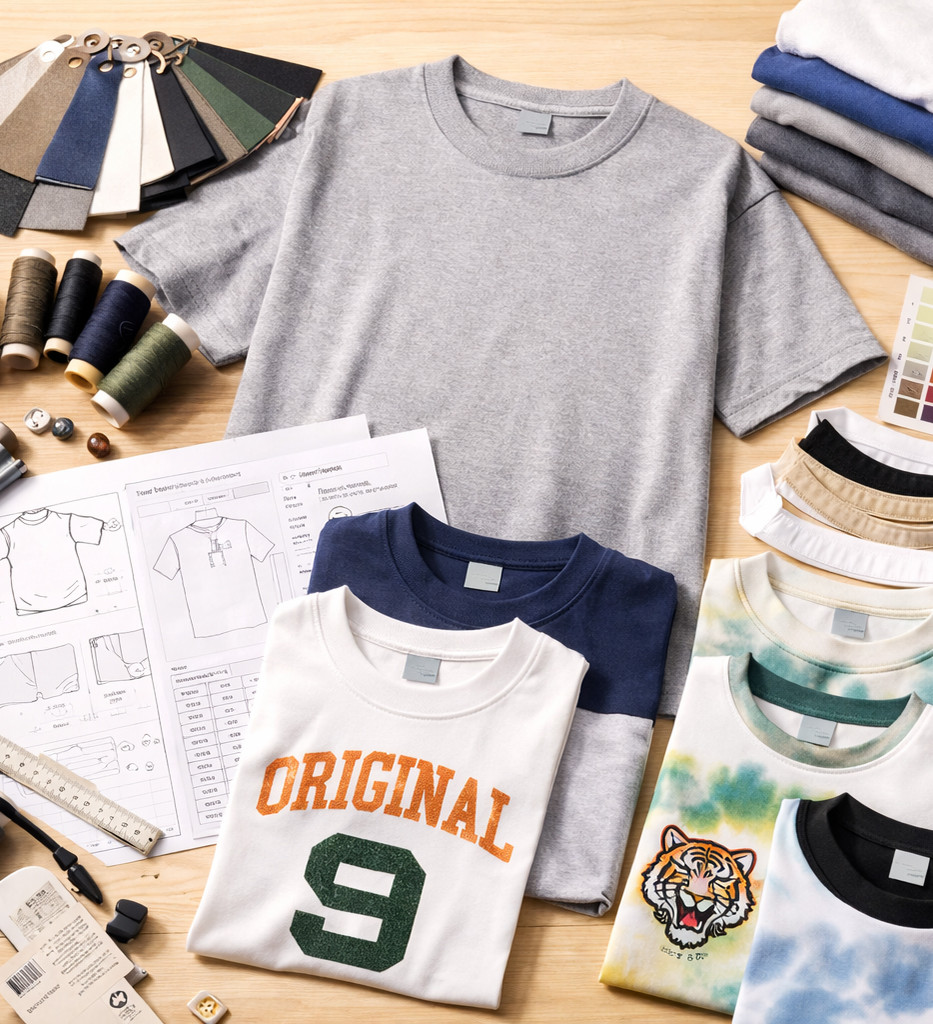
Custom T-Shirt Development
Discuss fabric and GSM, body fit, neckline, sleeve construction, contrast panels, print or embroidery, labels and packaging as one coordinated specification.
What can be customized?
- Fabric: cotton jersey, cotton blends and other suitable knit options.
- Fit: regular, relaxed, oversized, boxy and cropped proportions.
- Construction: neckline, rib width, raglan sleeve panels, sleeve openings and hem finishing.
- Branding: screen printing, DTF/DTG where suitable, puff printing, embroidery, appliqué and woven labels.
- Private-label finishing: main labels, care labels, hangtags and packaging details.
VANRD's standard T-shirt MOQ starts from 100 pieces per style per color. Sampling schedules are confirmed according to the actual fabric, construction, decoration and approval requirements, so brands should request a project-specific timeline when submitting the brief.
For more information, visit the VANRD T-shirt Manufacturer page or review the broader OEM/ODM apparel development service.
9. Frequently Asked Questions About Custom Ringer and Raglan T-Shirts
What is the difference between a ringer tee and a raglan tee?
A ringer tee is defined by contrasting rib trim around the neckline and sleeve openings. A raglan tee is defined by its sleeve construction, where the sleeve panel extends toward the neckline and creates a diagonal seam. One T-shirt can combine both features.
Can a ringer tee have raglan sleeves?
Yes. A raglan tee can use a contrast ribbed neckline or sleeve cuffs. The tech pack should identify the raglan seam construction separately from the rib trim details so the sample is developed correctly.
What fabric is suitable for a custom ringer tee?
Cotton jersey is a common option for vintage-inspired ringer tees. Cotton blends can also be considered. The choice depends on the target hand feel, weight, fit, season, price point and how the body fabric works with the ribbing.
What GSM should brands choose for a custom T-shirt?
There is no single correct GSM. Lightweight, midweight and heavyweight jerseys create different drape and structure. Use indicative ranges as a starting point, then confirm the actual fabric through swatches and a physical sample.
What should be included in a cropped T-shirt tech pack?
Include body length and measuring point, chest width, hem width, shoulder or raglan seam position, sleeve length, sleeve opening, size range and grade rules. Clear measurements help the sample match the intended proportions.
Can VANRD customize fabric, colors and branding?
VANRD's T-shirt program supports fabric and fit customization, printing, embroidery, labels and other private-label details. The exact options are reviewed against the garment design and project requirements.
What is the MOQ for custom T-shirt manufacturing at VANRD?
The standard starting MOQ is 100 pieces per style per color. Final project terms should be confirmed after reviewing the style, fabric, color and decoration requirements.
What should I prepare before requesting a sample?
Prepare reference photos or sketches, a tech pack or measurement chart, fabric and GSM direction, color references, artwork, label requirements, estimated quantity and target timeline. If the tech pack is not complete, a clear reference and project brief are still a useful starting point.
10. Conclusion: Turn SS27 T-Shirt Ideas into a Production-Ready Collection
Ringer trims, raglan sleeves and cropped proportions show how much can change when a brand looks beyond the basic T-shirt body. A contrast collar can create a vintage identity, a raglan seam can introduce a sporty construction line, and a carefully balanced cropped fit can give a familiar tee a different silhouette.
The strongest product ideas are the ones that work beyond the mood board. Fabric, measurements, rib recovery, panel construction, decoration and washing all need to be considered before bulk production. When those details are clear, the sample becomes easier to evaluate and the approved standard is easier to reproduce.
VANRD supports private-label and streetwear brands with custom T-shirt development, fabric and fit selection, branding, sampling and bulk production. If you are planning an SS27 capsule or refining an existing T-shirt block, share your design references and project requirements so the team can review the next steps.
Develop Your Next Custom T-Shirt Collection with VANRD
Planning ringer tees, raglan T-shirts, cropped graphic tees or other custom styles? Share your reference images, preferred fabric, fit direction, artwork and target quantity. VANRD can review the requirements and discuss a suitable development route.