How Established Apparel Brands Switch Manufacturers Without Losing Fit, Fabric Quality, or Bulk Consistency

How Established Apparel Brands Switch Manufacturers Without Losing Fit, Fabric Quality, or Bulk Consistency
Changing apparel manufacturers is not just a sourcing decision. For established brands, it is a brand protection decision. The wrong transition can damage fit, fabric hand feel, color continuity, delivery timelines, and customer trust. The right transition can make your production stronger, more scalable, and easier to manage.
For an emerging brand, finding a manufacturer is often about getting the first collection made. For an established apparel brand, switching manufacturers is different. You already have customers. You already have fit expectations. You already have approved fabrics, trims, labels, packaging, product reviews, return data, and repeat order history. So the question is not simply, “Can this factory make my product?” The real question is, “Can this factory protect what already works while improving what does not?”
Why Established Brands Eventually Outgrow Their Current Manufacturer
Most brand-manufacturer relationships do not fail overnight. They usually become weaker piece by piece. Maybe the first few orders were fine, but later production started arriving with small fit changes. Maybe the factory could handle 100 pieces per style, but struggled when you expanded into jackets, hoodies, tracksuits, pants, and seasonal collections. Maybe communication slowed down. Maybe fabric quality became inconsistent. Maybe your reorder was supposed to match last season, but the new bulk felt like a different product.
That is when established brands start looking for a new apparel manufacturing partner. Not because they want drama. Not because they enjoy restarting the process. They switch because the brand has moved to a new stage, and the old supplier is no longer built for that stage.
For mature brands, production is not just about making garments. It is about protecting sell-through, maintaining review scores, reducing returns, keeping wholesale partners confident, and launching new drops on time. When a manufacturer cannot support those needs, the brand has to move before small production issues become expensive brand problems.
Capacity Pressure
Your current supplier can no longer support larger orders, more SKUs, or tighter seasonal calendars.
Quality Drift
The sample looks good, but bulk production slowly moves away from the approved standard.
Communication Gaps
Slow replies, unclear production updates, and weak problem solving create unnecessary risk.
The Real Risk Is Not Switching — It Is Switching Without a System
Many established brands delay switching manufacturers because they are afraid of losing fit, fabric quality, or bulk consistency. That fear is reasonable. A bad supplier transition can feel like moving a fully decorated store while customers are still shopping inside. Everything must keep working while the back-end system changes.
But staying with the wrong manufacturer is also risky. If production delays, quality variation, and poor documentation keep repeating, your brand is already paying a hidden cost. You may not see it as one big invoice, but it appears in returns, discounts, late launches, customer complaints, internal stress, and lost wholesale opportunities.
The key is to treat switching manufacturers as a controlled transfer process, not a quick supplier replacement. You need a clear record of what must be protected, what needs to improve, and how the new manufacturer will reproduce your approved standards before bulk production begins.
Start With a Production Transfer Audit
Before you send files to a new manufacturer, step back and audit your current product system. This is where many brands make their first mistake. They assume the new factory can understand the product from a few photos, a tech pack, or an old sample. Sometimes that works for a basic T-shirt. It does not work well for established collections with specific fit, fabric, finishing, branding, and packaging requirements.
A production transfer audit helps you define what the new manufacturer needs to reproduce. Think of it as creating a map before crossing a bridge. Without the map, every small detail becomes a guessing game. Brands that need a clearer development workflow can also review VANRD's service process before moving from sample review to bulk production.
Review Current Fit, Fabric, Trim, and Construction Standards
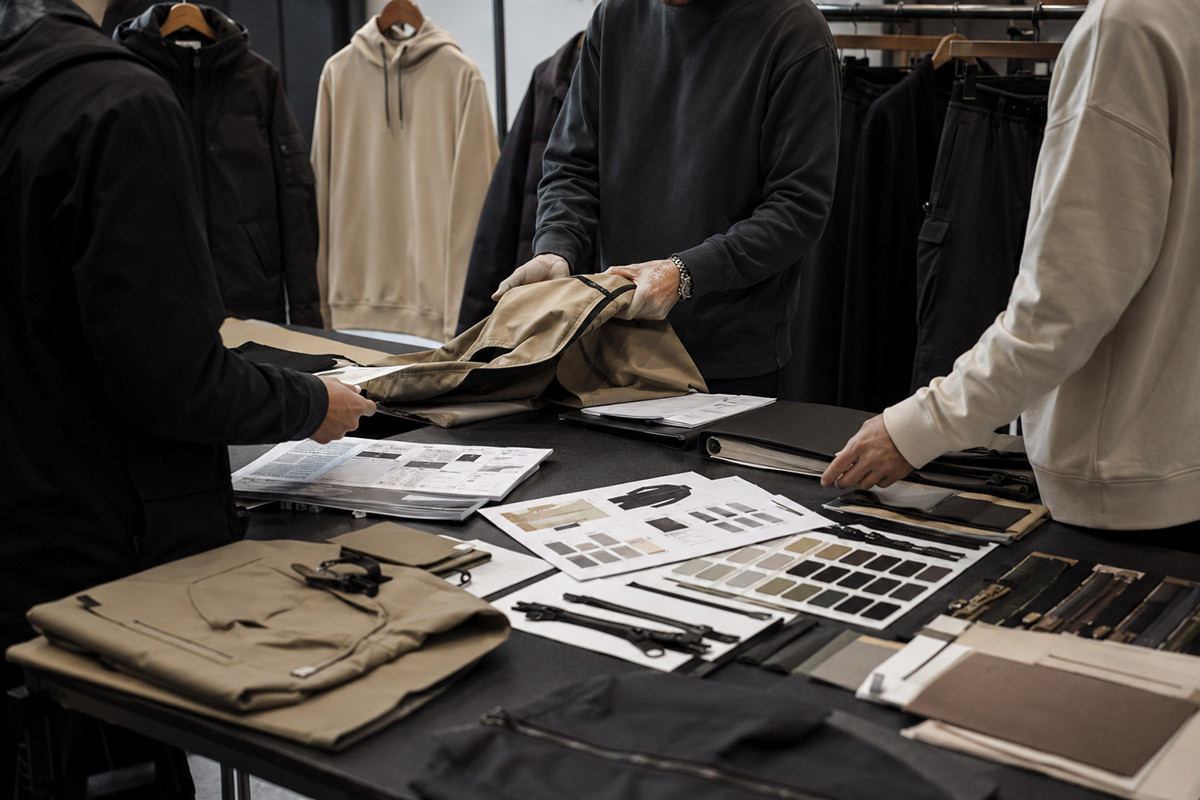
Start with your best-selling styles. Which products must stay consistent? Which styles have the strongest customer feedback? Which measurements create the signature fit of your brand? Which fabric hand feel is part of your product identity? Which trims, labels, patches, embroidery placements, drawcords, zippers, snaps, or packaging details must not change?
Established brands should document the product details that customers already recognize. If your heavyweight hoodie is known for a structured body and soft brushed fleece, the new manufacturer must understand that. If your varsity jacket is known for a specific sleeve shape, rib tension, snap quality, and embroidery density, those details cannot be treated as decoration. They are part of your brand language.
Identify What Must Stay Exactly the Same
Not every detail has the same importance. Some things can improve. Some things can change slightly. Some things should not move at all. Before switching manufacturers, divide your standards into three groups: fixed standards, flexible standards, and improvement targets.
| Category | Meaning | Examples |
|---|---|---|
| Fixed Standards | Details that must remain consistent to protect brand identity and customer trust. | Fit measurements, core fabric weight, color standard, label placement, embroidery position. |
| Flexible Standards | Details that may be adjusted if the improvement is approved before bulk production. | Alternative trims, packaging format, minor construction optimization, upgraded thread quality. |
| Improvement Targets | Known weaknesses from the old supplier that the new factory should solve. | Better stitching stability, stronger shrinkage control, faster sampling, clearer QC reporting. |
Protect Fit Consistency Before You Move Production
Fit is the most dangerous thing to lose during a supplier transition. Customers may not know your fabric GSM or stitch type, but they know when the garment suddenly feels different. A hoodie that used to sit boxy now feels narrow. A jacket that used to layer comfortably now pulls across the chest. A pair of pants that had the right streetwear shape now looks too slim or too flat. Small fit changes can create big customer reactions.
That is why fit consistency should be managed before the first bulk order. Do not wait for production to reveal the problem. By then, the cost of correction is already much higher.
Use Approved Samples, Size Specs, and Measurement Tolerances
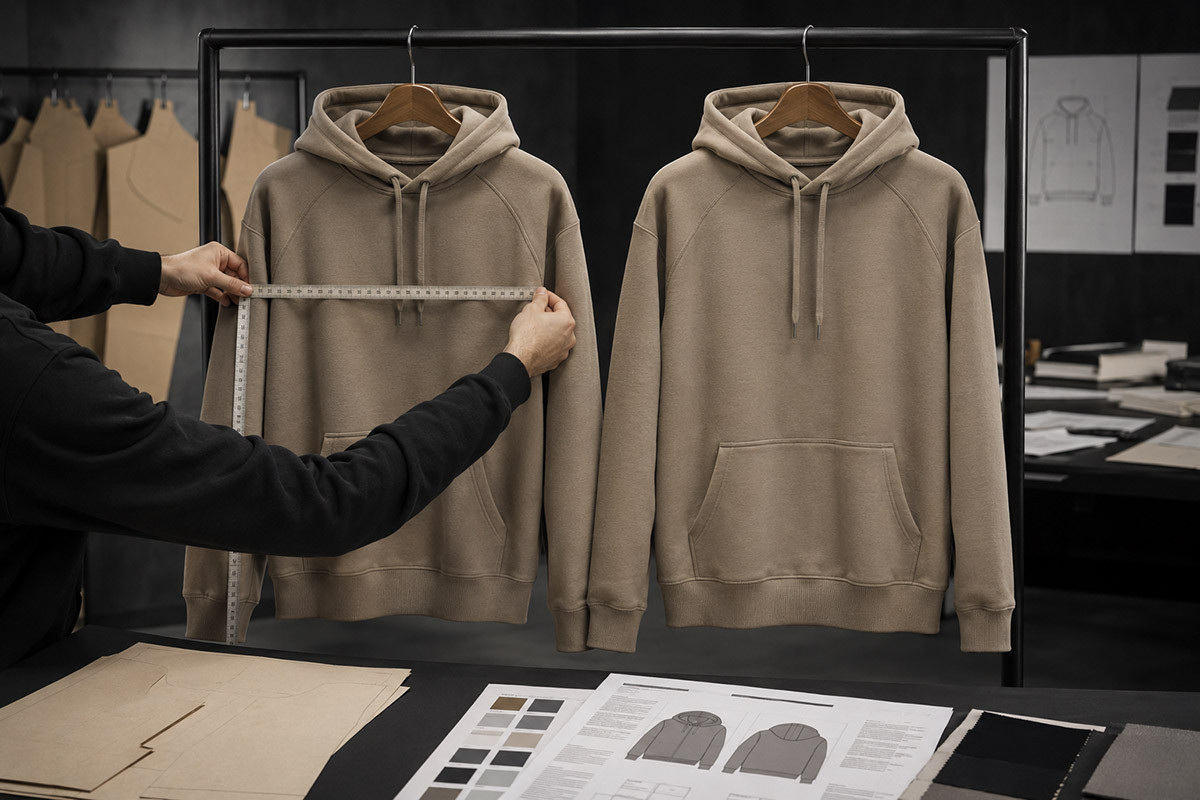
The new manufacturer should review your approved production sample, full size spec, grading rules, and measurement tolerance. If you only provide a single sample without technical details, the factory may recreate the garment visually but miss the balance, ease, or proportion that made the style successful.
For example, two jackets can have the same chest width but feel completely different if the armhole, shoulder slope, sleeve pitch, hem width, and lining structure are not aligned. Fit is not one number. Fit is a system. A mature manufacturer understands how each measurement connects to the total wearing experience.
Confirm Pattern, Grading, and Fit Comments Early
If your brand owns patterns, send them in a clear format. If you only have samples, the new manufacturer may need to reverse-engineer the pattern. In that case, you should expect a fit confirmation process. The first sample should not be treated as a final answer. It is the first conversation between your existing standard and the new production system.
When reviewing samples, avoid vague comments like “make it better” or “fit is off.” Be specific. Mention the exact area, desired change, and reference measurement. Clear fit comments reduce sampling rounds and prevent confusion when the style moves into bulk production.
Practical tip: For established brands, the goal is not to let the new manufacturer reinterpret your fit. The goal is to let them reproduce it first, then improve it only where you approve the change.
Keep Fabric Quality Stable Across Suppliers
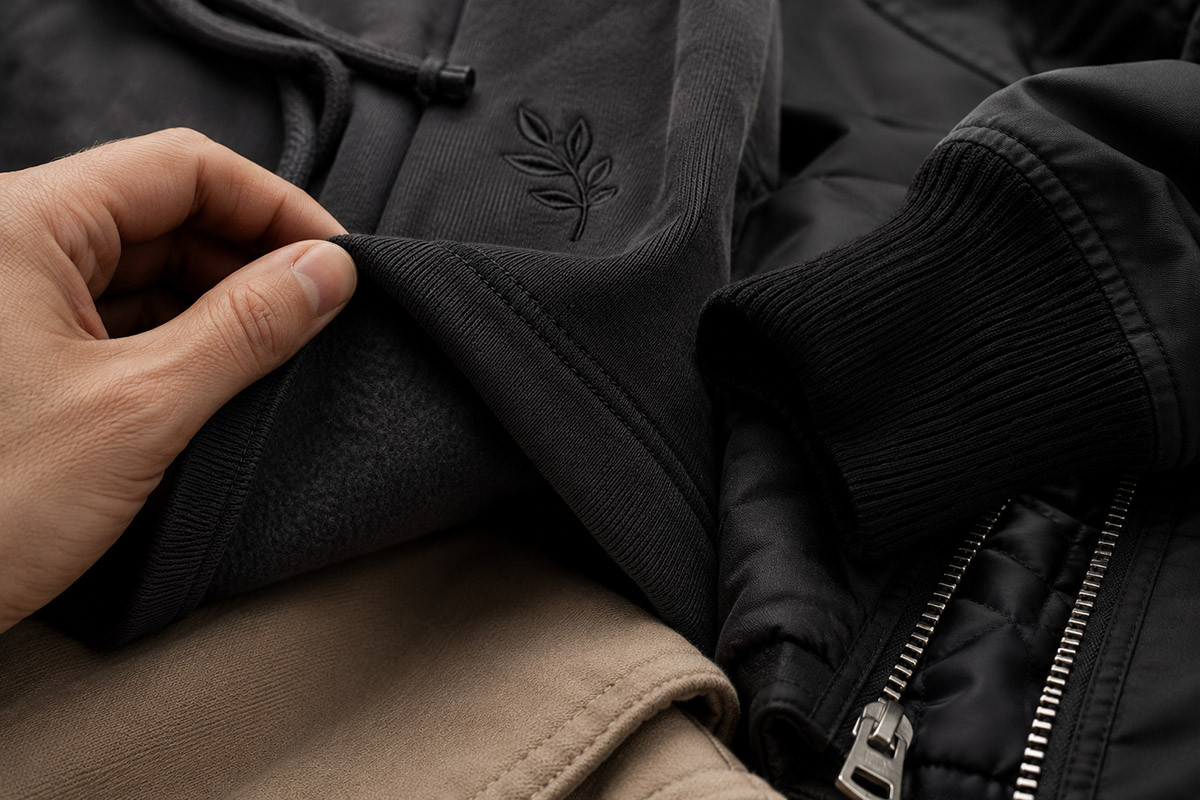
Fabric is where many manufacturer transitions quietly fail. The garment may look similar in photos, but the customer feels the difference immediately. The fleece is not as dense. The cotton feels dry. The nylon shell is too shiny. The rib loses recovery. The denim wash does not match. The puffer jacket does not have the same loft. The product still has your label, but it no longer feels like your product.
Established brands should never treat fabric matching and technique selection as a casual sourcing task. Fabric is the emotional layer of the garment. It determines comfort, structure, drape, durability, and perceived value. If fit is the skeleton, fabric is the skin.
Compare Hand Feel, Weight, Shrinkage, Color, and Performance
When switching manufacturers, ask the new supplier to match fabric based on measurable and sensory standards. GSM, composition, yarn count, finishing, shrinkage, colorfastness, stretch recovery, pilling resistance, and hand feel all matter. For outerwear, you may also need to consider coating, water resistance, lining quality, padding, seam strength, and hardware durability.
A good manufacturer should not only say, “We can source similar fabric.” They should help you compare options and explain the trade-offs. If one fabric is cheaper but shrinks more, that is not a saving. If one fabric is available quickly but cannot support repeat orders, that is not a stable solution. If one color looks close under factory lighting but shifts under daylight, that can become a bulk production issue.
Avoid Fabric Substitution Without Testing
Fabric substitution is sometimes necessary, especially when old materials are unavailable, prices have changed, or the brand wants a more sustainable option. But substitution should be controlled. The replacement fabric should be sampled, tested, and approved before production.
For established brands, the question is not just whether the substitute fabric looks good. The question is whether it performs like your approved product and whether customers will accept it. A fabric change may affect shrinkage, garment measurements after wash, decoration results, sewing tension, packaging appearance, and long-term durability. That is why fabric approval should happen before production, not after the goods arrive.
Control Decoration and Branding Details
For streetwear and custom apparel brands, decoration is often the part customers remember first. Embroidery, screen printing, appliqué, patches, woven labels, zipper pulls, drawcord tips, hangtags, and packaging are not secondary details. They tell customers whether the product feels premium, careless, or consistent with previous drops.
When switching manufacturers, decoration files and placement standards must be transferred carefully. A logo that moves one inch lower can change the whole balance of a hoodie. Embroidery that uses the wrong stitch density can look cheap. A print that cracks after washing can hurt customer trust. A woven label with the wrong color thread can make a good garment feel unfinished.
Embroidery, Printing, Labels, Trims, and Packaging
Established brands should prepare original artwork files, Pantone references, placement charts, stitch files if available, label specifications, packaging requirements, and approved physical references. If the old supplier managed these files but did not share them, the new manufacturer may need to recreate them. That is possible, but it requires careful approval.
At VANRD, custom apparel development can include embroidery, printing, fabric selection, trims, labels, packaging, and quality control support. For brands moving production from another supplier, this helps keep the transition organized instead of scattered across multiple vendors. You can also connect production details with fabric and technique support, quality control standards, and OEM/ODM apparel manufacturing.
Build a Sample-to-Bulk Approval System
The most common complaint brands have about factories is simple: “The sample was good, but bulk was different.” This happens when there is no strong sample-to-bulk approval system. A beautiful sample means very little if the factory cannot reproduce it repeatedly at scale.
Established brands need sampling stages that act like checkpoints. Each stage should reduce risk before the next stage begins. Sampling should not be treated as a creative guessing process forever. It should move from concept confirmation to production confirmation.
Proto Sample, Fit Sample, PP Sample, and TOP Sample
A proto sample helps confirm the early construction direction. A fit sample confirms the shape, balance, and measurements. A pre-production sample confirms that the factory can make the garment using approved materials, trims, workmanship, and production methods. A top-of-production sample checks whether the first output from the production line matches the approved standard.
For established apparel brands, the PP sample is especially important. It becomes the production benchmark. Once approved, the bulk order should not drift away from it. The TOP sample then works as an early warning system. If the first pieces from the line do not match the approved PP sample, the issue can be corrected before the entire order is affected.
| Sample Stage | Main Purpose | What to Check |
|---|---|---|
| Proto Sample | Confirm early product direction. | General silhouette, construction idea, fabric direction, decoration concept. |
| Fit Sample | Confirm fit, measurements, and wearing balance. | Size spec, pattern correction, grading logic, comfort, movement. |
| PP Sample | Confirm final production standard before bulk. | Approved fabric, trims, labels, workmanship, packaging, color, decoration. |
| TOP Sample | Check first production output against the approved standard. | Bulk consistency, measurements, stitching, finishing, packing details. |
Use QC Checkpoints to Prevent Bulk Production Surprises
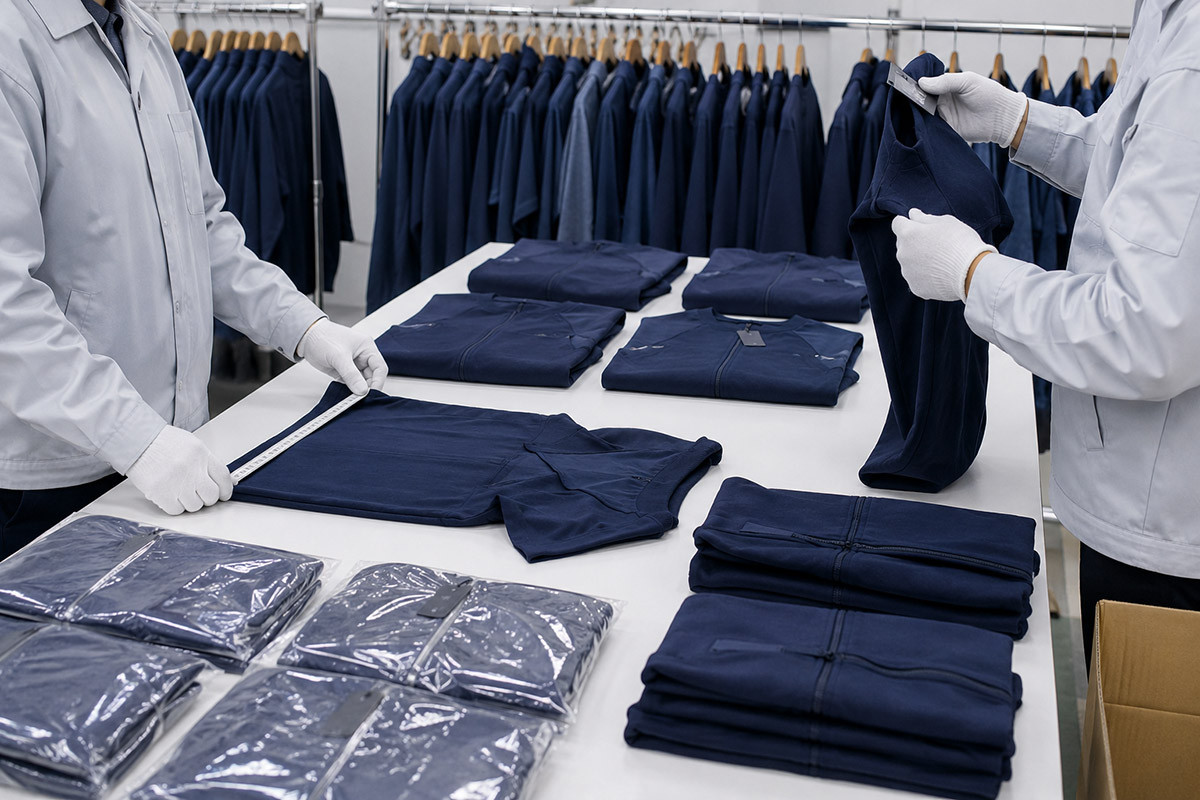
Quality control should not be a final panic check after production is finished. By then, the factory has already invested time, fabric, labor, and packaging. If a serious issue appears at the final stage, the solution is expensive and slow. Strong QC works earlier. It checks the inputs, the process, and the finished goods.
For established brands, QC is also a communication tool. It shows whether the manufacturer understands the brand’s standards, not just generic garment quality. A low-end promotional T-shirt and a premium streetwear hoodie do not require the same standard. A puffer jacket, varsity jacket, and work jacket each have different risk points. QC must match the product category.
Fabric Inspection, Inline Inspection, Final Inspection
Fabric inspection helps catch defects before cutting. This can include color difference, stains, holes, weaving defects, coating issues, shrinkage concerns, or fabric width problems. Inline inspection checks production while garments are being made. This is where stitching, measurements, construction, decoration placement, and workmanship can still be corrected. Final inspection checks the finished order before shipment, including measurements, appearance, labels, packaging, carton marks, and overall order conformity.
The best QC systems are not complicated for the sake of looking professional. They are practical. They ask the right questions at the right time. Is the fabric approved? Are measurements within tolerance? Is the embroidery aligned? Is the rib tension consistent? Are zippers smooth? Are labels correct? Are cartons packed according to the order requirement? These simple questions prevent expensive surprises.
How Established Brands Should Communicate With a New Manufacturer
Good production is built on clear communication. That sounds obvious, but it is where many supplier transitions break down. A brand sends scattered files. The factory makes assumptions. The brand gives vague feedback. The factory revises in the wrong direction. Then everyone loses time.
When working with a new manufacturer, established brands should communicate like they are building a production manual. Every important decision should be written, confirmed, and connected to the approved sample. Use clear file names. Keep product versions organized. Confirm changes in writing. Separate design preferences from technical requirements. If something is fixed, say it is fixed. If something can be improved, explain the target.
The new manufacturer should also be proactive. They should ask questions before sampling, flag production risks, suggest better construction where useful, and explain if a requested fabric, trim, or technique may affect bulk consistency. A good supplier does not just say yes. A good supplier protects the order by asking the right questions early.
What Documents Should You Prepare Before Switching?
The smoother your documentation, the safer your transition. You do not need perfect corporate-level documents to move production, but you do need enough information for the new manufacturer to understand your existing product standard.
Manufacturer Switching Checklist for Established Apparel Brands
Prepare these materials before requesting samples or production transfer support:
Common Mistakes Brands Make When Changing Manufacturers
Switching manufacturers is not hard because factories cannot sew. It is hard because production knowledge is often hidden in small details. Established brands usually run into problems when they move too fast, share too little information, or focus only on price.
The first mistake is approving a new supplier based only on a low quotation. A cheaper price does not help if the garment loses its fit, fabric quality, or repeat order stability. Price matters, of course. But for an established brand, the real cost includes returns, delays, missed launch dates, customer complaints, and internal time spent fixing problems.
The second mistake is skipping the PP sample. Some brands want to save time by moving directly from a good sample to bulk production. That may work once, but it is risky. The PP sample protects the brand, the manufacturer, and the final order. It creates a shared standard before bulk production begins.
The third mistake is changing too much at once. If you switch manufacturer, fabric, fit, trims, and packaging in the same order, it becomes harder to know what caused the issue if something goes wrong. Controlled change is easier to manage than total reinvention.
The fourth mistake is treating communication as casual. Mature production requires clear approvals, version control, sample comments, QC standards, and timeline confirmation. If the order matters, the communication must be structured.
Why VANRD Is Built for Established Apparel Brands
VANRD supports custom apparel production for brands that need more than basic manufacturing. For established apparel brands, the focus is not simply making one style. The focus is helping brands protect fit consistency, manage fabric and trim details, control sample-to-bulk quality, and build a more reliable long-term production system.
Whether you are moving jacket production, developing hoodies, expanding into tracksuits, building streetwear sets, or improving repeat order stability, VANRD can support the transition with sampling, fabric sourcing, custom techniques, quality control, and production planning. The goal is not to erase what made your product successful. The goal is to carry that success into a stronger manufacturing process.
Established brands usually come to a new manufacturer with history. That history matters. Existing samples, customer feedback, old production issues, best-selling styles, and future collection plans all help shape the next step. A good manufacturer should listen to that history before offering a solution.
If your brand is preparing to switch apparel manufacturers, the best starting point is a clear production review. Share your current products, what you want to protect, what you want to improve, and what quantity you plan to produce. From there, VANRD can help evaluate the development path, sample requirements, production timeline, and quality control focus.
Related VANRD Pages for a Safer Manufacturer Switch
If your team is comparing suppliers, these pages can help you review VANRD's capabilities, service workflow, material support, QC system, and production fit for established apparel brands.
Ready to Switch to a More Stable Apparel Manufacturing Partner?
Share your current production challenges, approved samples, product category, and target order quantity. VANRD can help you review fit, fabric, custom details, sampling needs, and bulk production risks before you move forward.
Discuss Your Production TransferConclusion: Switching Manufacturers Should Protect Your Brand, Not Put It at Risk
For established apparel brands, switching manufacturers is not about starting from zero. It is about transferring what already works into a better production system. Your fit, fabric, trims, branding details, customer expectations, and reorder standards are valuable assets. They should be protected with documentation, sampling, QC checkpoints, and clear communication.
The safest supplier transition is not the fastest one. It is the most controlled one. Start with a production audit. Define what must stay consistent. Match fabric carefully. Confirm fit before bulk. Use PP and TOP samples. Check quality before problems spread. Work with a manufacturer that understands not only how to make garments, but how to protect brand continuity.
If your current supplier can no longer support your growth, switching may be the right move. Just do it with a system. Because when the transition is managed well, a new manufacturer does not disrupt your brand. It strengthens it.
FAQ
How can an established apparel brand switch manufacturers without losing fit consistency?
The safest way is to provide approved samples, detailed size specs, grading rules, fit comments, and measurement tolerances before sampling begins. The new manufacturer should first reproduce your existing fit before making any improvements. Fit should be confirmed through sample reviews before bulk production starts.
What should I prepare before moving production to a new clothing manufacturer?
You should prepare approved production samples, tech packs, fabric details, trim specifications, artwork files, label and packaging requirements, previous QC issues, target quantities, and launch timelines. The more complete your information is, the easier it is for the new manufacturer to protect your existing product standard.
How do I make sure fabric quality stays the same after switching suppliers?
Fabric should be matched by composition, weight, hand feel, color, shrinkage, durability, and performance requirements. Do not approve a substitute fabric based only on photos. Request fabric swatches, test key performance points, and confirm the fabric in a sample before bulk production.
Why is a PP sample important when changing apparel manufacturers?
A PP sample confirms the final production standard before bulk begins. It includes approved fabric, trims, construction, fit, decoration, labels, and packaging. For established brands, the PP sample helps prevent the common problem where the sample looks good but the bulk order comes out differently.
Can VANRD support repeat orders after a brand switches production?
Yes. VANRD can support custom apparel production with sampling, fabric sourcing, technique development, QC checkpoints, and bulk production planning. For repeat orders, production details such as fabric, trims, measurements, decoration, labels, and packaging can be recorded to help maintain consistency across future runs.