Custom Rhinestone Hoodies: What Streetwear Brands Should Know Before Production
Custom rhinestone hoodies need careful planning before production because fabric weight, rhinestone placement, artwork scale, heat setting, washing, and bulk consistency all affect the final result. Streetwear brands should confirm the hoodie base, stone layout, technique method, sample approval process, and QC checkpoints before moving into bulk production. A clear tech pack or development brief can reduce avoidable revisions and communication gaps.
Quick Answers
What should brands check before producing custom rhinestone hoodies?
Brands should check the hoodie fabric weight, fit, rhinestone artwork, placement size, application method, wash expectations, sample approval process, and bulk QC requirements before production.
Are rhinestone hoodies difficult to manufacture?
They can be more complex than basic hoodies because the rhinestone layout must align with the garment surface, artwork scale, heat application, fabric behavior, and final quality inspection.
What hoodie fabric works best for rhinestone application?
Midweight to heavyweight fleece or stable cotton-blend hoodie fabrics are often more suitable because they provide better structure for rhinestone placement. The final choice depends on handfeel, fit, stretch, and the application method.
Can rhinestones be applied to oversized hoodies?
Yes. Rhinestones can be applied to oversized hoodies, but the placement should be tested on the actual sample because oversized proportions can affect logo scale, chest position, sleeve layout, and visual balance.
What files are needed for rhinestone hoodie sampling?
Brands should prepare artwork files, rhinestone layout references, hoodie fit direction, fabric requirements, size specs, color information, placement instructions, and target order details.
Will rhinestones stay on after washing?
Wash performance depends on stone quality, adhesive method, heat setting, fabric surface, washing method, and QC control. Brands should review wash instructions and sample testing before bulk production.
How long does custom rhinestone hoodie sampling take?
Sampling time depends on hoodie fabric sourcing, pattern requirements, rhinestone artwork preparation, placement testing, application method, and revision rounds. The timeline should be confirmed after the factory reviews the full brief.
Start With the Product Goal, Not Only the Rhinestone Effect
A custom rhinestone hoodie should start with a clear product goal. The rhinestone effect is important, but the final product also depends on the hoodie base, fabric structure, fit, artwork scale, and production method.
For streetwear brands, rhinestone hoodies are often used for capsule drops, merch programs, premium graphic hoodies, influencer collections, or private label streetwear lines. Each use case may require a different balance between visual impact, durability, cost, and production complexity.
Before contacting a manufacturer, clarify these points:
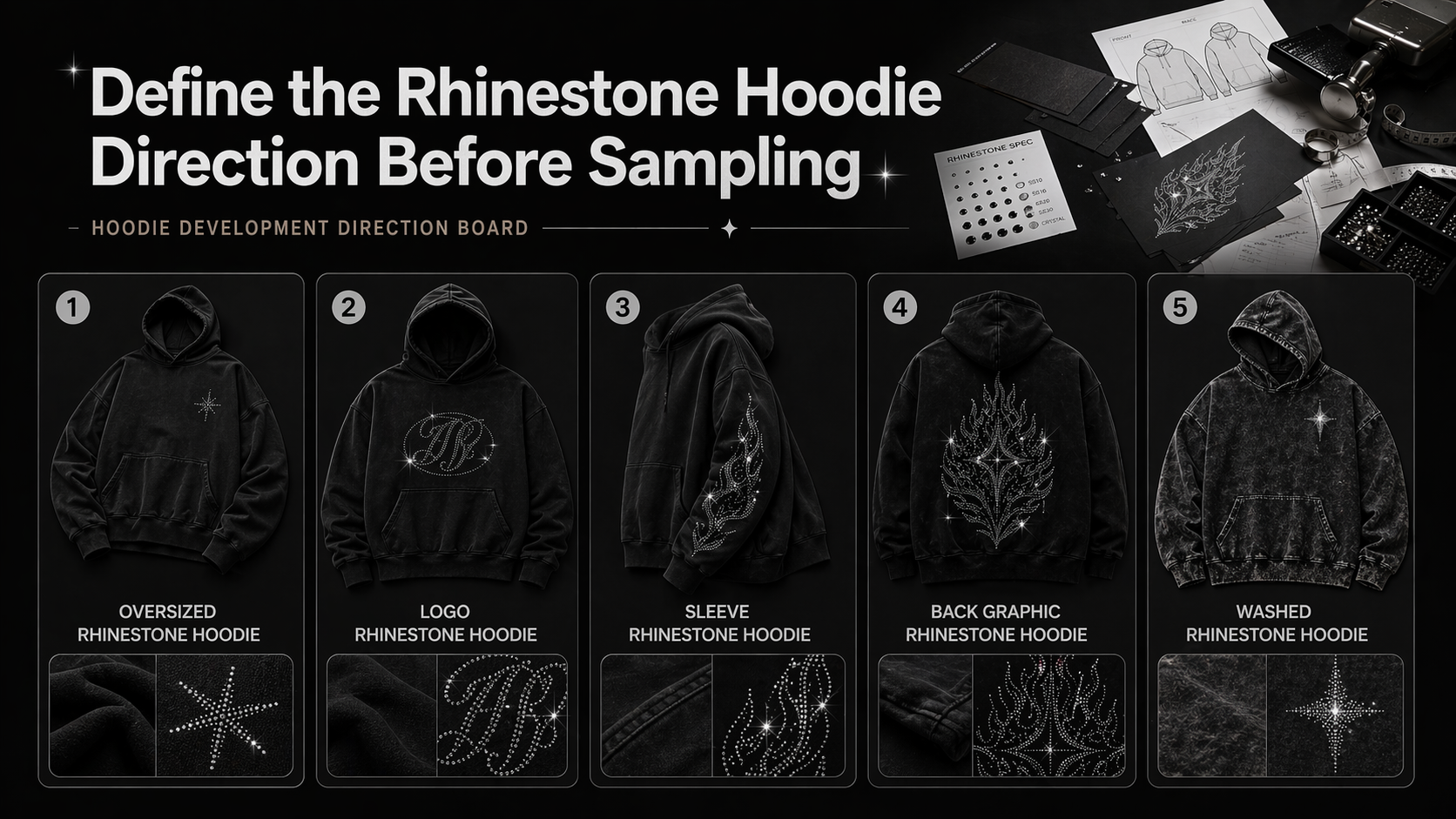
Is the hoodie oversized, regular fit, cropped, zip-up, or pullover?
Is the rhinestone design placed on the chest, back, hood, sleeve, or pocket area?
Is the design a logo, text graphic, outline motif, full artwork, or small accent?
Should the hoodie feel heavyweight, washed, soft, structured, or lightweight?
Is the product for a limited drop, repeat production, wholesale order, or merch capsule?
Does the brand need private label trims, labels, hangtags, or packaging?
This early clarification helps the manufacturer understand whether the project is mainly about hoodie development, rhinestone technique, artwork execution, or full private label production.
Key Production Factors for Custom Rhinestone Hoodies
Rhinestone hoodie production depends on both garment development and decoration execution. A good sample needs the hoodie body and rhinestone artwork to work together.
| Production Factor | What to Check | Why It Matters |
| Hoodie fabric | Weight, surface, stretch, fleece type, handfeel | Fabric affects adhesion, structure, and final appearance |
| Hoodie fabric | Oversized, regular, cropped, zip-up, pullover | Placement looks different on each fit |
| Rhinestone artwork | File clarity, scale, spacing, stone size | Artwork controls visual balance and production accuracy |
Placement area | Chest, back, sleeve, hood, pocket | Curved or high-movement areas may require more testing |
Application method | Heat setting, transfer, manual placement, mixed technique | Method affects durability and cost |
Wash expectation | Washing method, care label, garment wash, customer use | Wash risk must be reviewed before bulk production |
QC standard | Stone alignment, missing stones, adhesion, placement tolerance | Helps reduce bulk order issues |
Private label brands should not treat rhinestone application as a final decoration step only. It should be reviewed during sample development. | ||
Choose the Hoodie Base Carefully
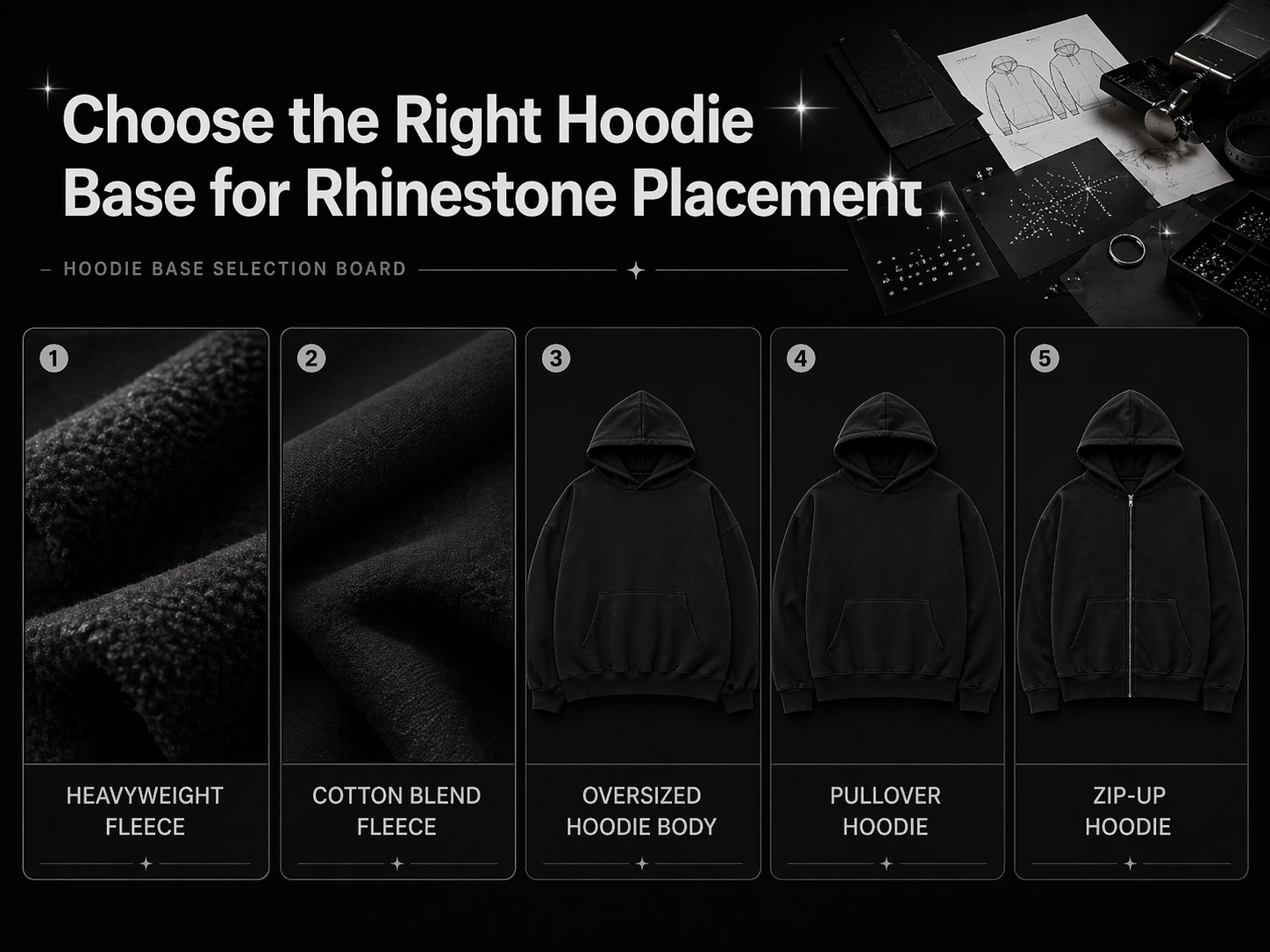
The hoodie base is the foundation of the rhinestone result. A weak or unstable hoodie base can make the rhinestone design look less controlled, even if the artwork itself is strong.
Fabric Weight
Midweight to heavyweight fleece is often more suitable for rhinestone hoodies because it provides more structure. Lightweight fabrics may collapse, stretch, or show uneven application more easily.
Fabric Surface
A smoother fabric surface can make rhinestone placement cleaner. Very fuzzy fleece, heavy brushing, or uneven surface texture may affect adhesion and visual clarity.
Fit Direction
Oversized hoodies usually need larger placement planning because the chest, shoulder, and sleeve proportions are wider. Cropped hoodies may require smaller artwork or adjusted placement.
Pullover vs Zip-Up
Pullover hoodies are usually easier for large front rhinestone graphics. Zip-up hoodies need careful planning because the zipper can split the artwork or limit the usable placement area.
For fabric, surface, printing, embroidery, trims, and decoration planning, buyers can review Vanrd's Fabrics & Techniques page before preparing a sample request.
Plan Rhinestone Artwork and Placement Early
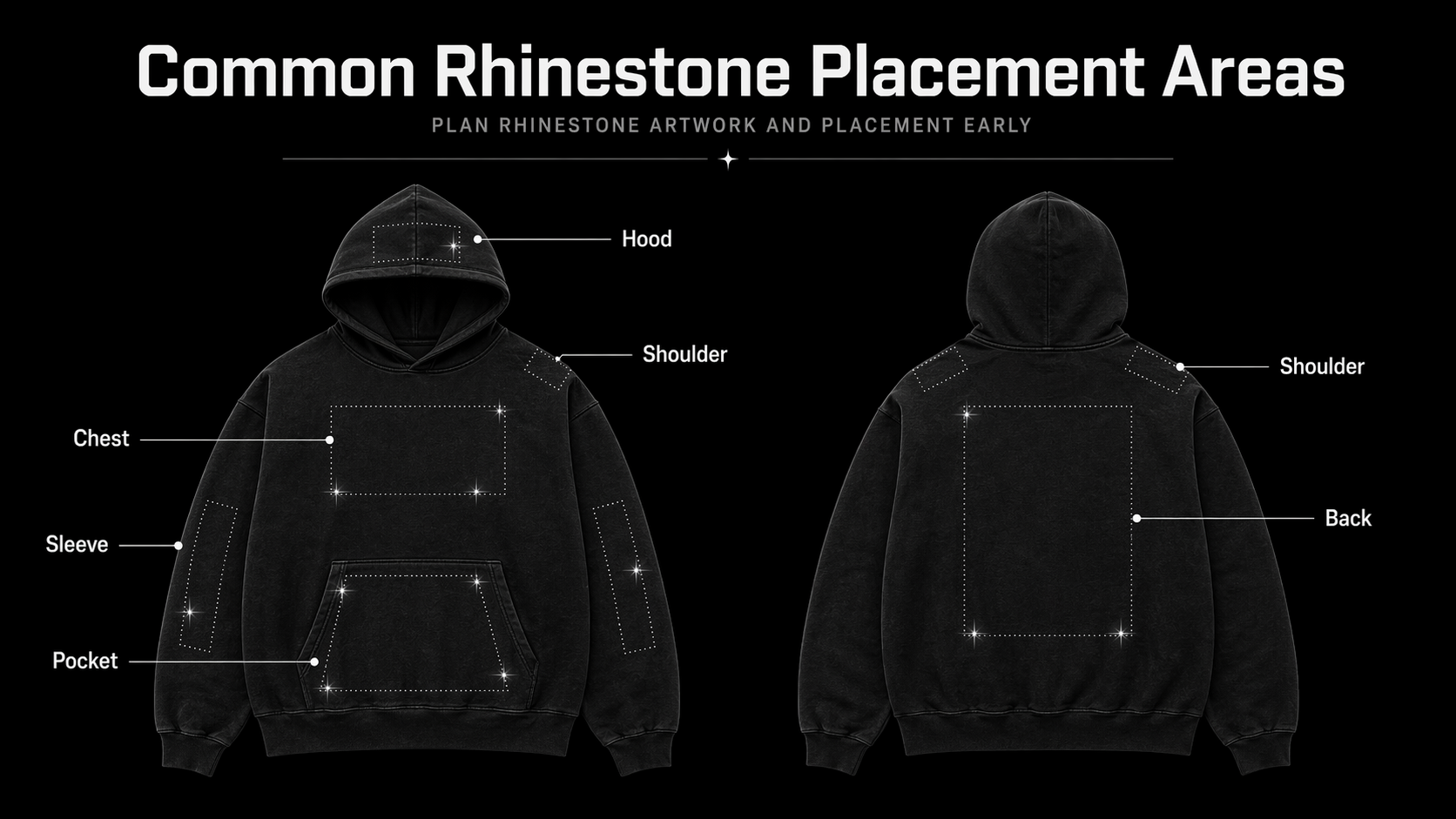
Rhinestone placement should be planned before sampling, not after the hoodie sample is finished. The artwork must be checked against garment size, seams, pockets, hood drawcords, and movement areas.
Common rhinestone placement options include:
Center chest logo
Large back graphic
Sleeve text or logo
Hood edge detail
Pocket area accent
Shoulder or upper arm detail
Full front artwork
Mixed rhinestone and embroidery layout
Placement risk changes by area. A flat chest area is usually easier to control than a curved sleeve or pocket edge. Large back graphics may look strong, but they need careful artwork scale and placement tolerance.
Brands should prepare artwork files and placement references that show:
Exact artwork size
Stone layout or density direction
Placement distance from collar, shoulder, sleeve, pocket, or hem
Stone color
Stone size or mixed-size direction
Whether the artwork should be symmetrical
Whether the design changes across sizes
Rhinestone Techniques and Buyer Decisions
The right rhinestone method depends on design complexity, fabric surface, durability expectation, and order requirements. Brands should ask the manufacturer how the rhinestones will be applied and what approval steps are needed.
| Method Direction | Better For | Main Watchpoint |
| Rhinestone transfer | Logo, text, repeatable artwork | Heat setting and placement accuracy |
| Manual placement | Complex or special layouts | Higher labor involvement and consistency control |
| Mixed rhinestone and embroidery | Premium branding effects | Technique sequence and placement planning |
Rhinestone with print | Graphic-heavy streetwear designs | Artwork alignment and handfeel balance |
Small accent rhinestones | Subtle branding details | Stone loss and placement consistency |
The buyer should not only ask whether the factory can add rhinestones. A more useful question is whether the selected method suits the artwork size, hoodie fabric, bulk quantity, and intended wash expectation.
Common Confusion: Rhinestone Hoodie vs Sequin Hoodie vs Embellished Hoodie
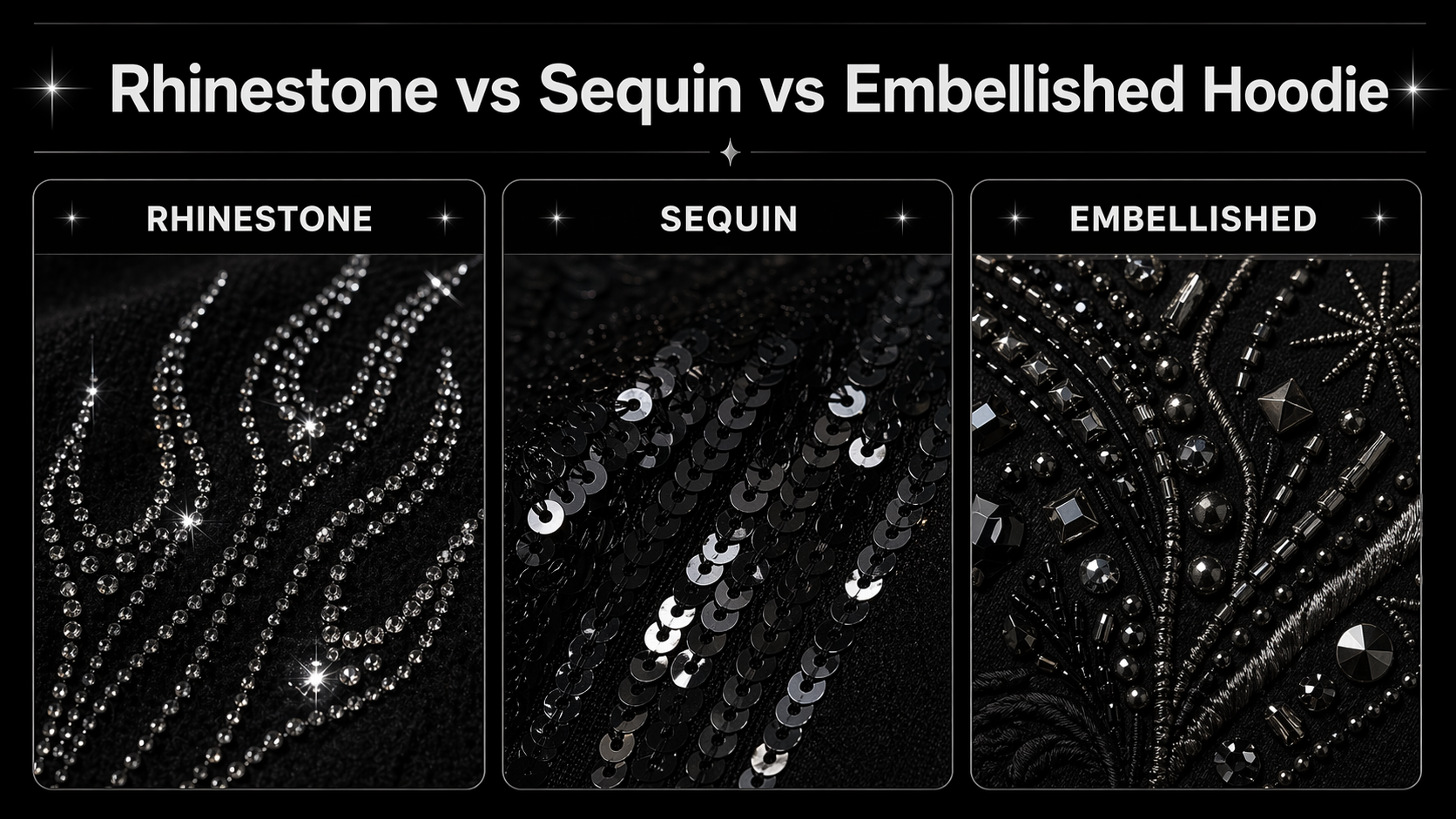
Rhinestone, sequin, and embellished hoodies can look similar from a distance, but they are different in material, production method, handfeel, and risk points.
| Term | Main Meaning | Production Concern |
| Rhinestone hoodie | Hoodie decorated with crystal-like stones | Adhesion, placement, heat setting, wash care |
| Sequin hoodie | Hoodie decorated with flat reflective sequins | Stitching, flexibility, edge irritation, durability |
| Embellished hoodie | Broad term for decorative add-ons | Must define the exact material and method |
For production communication, "embellished hoodie" is too broad. Brands should specify whether the design uses rhinestones, sequins, studs, embroidery, applique, print, or mixed techniques.
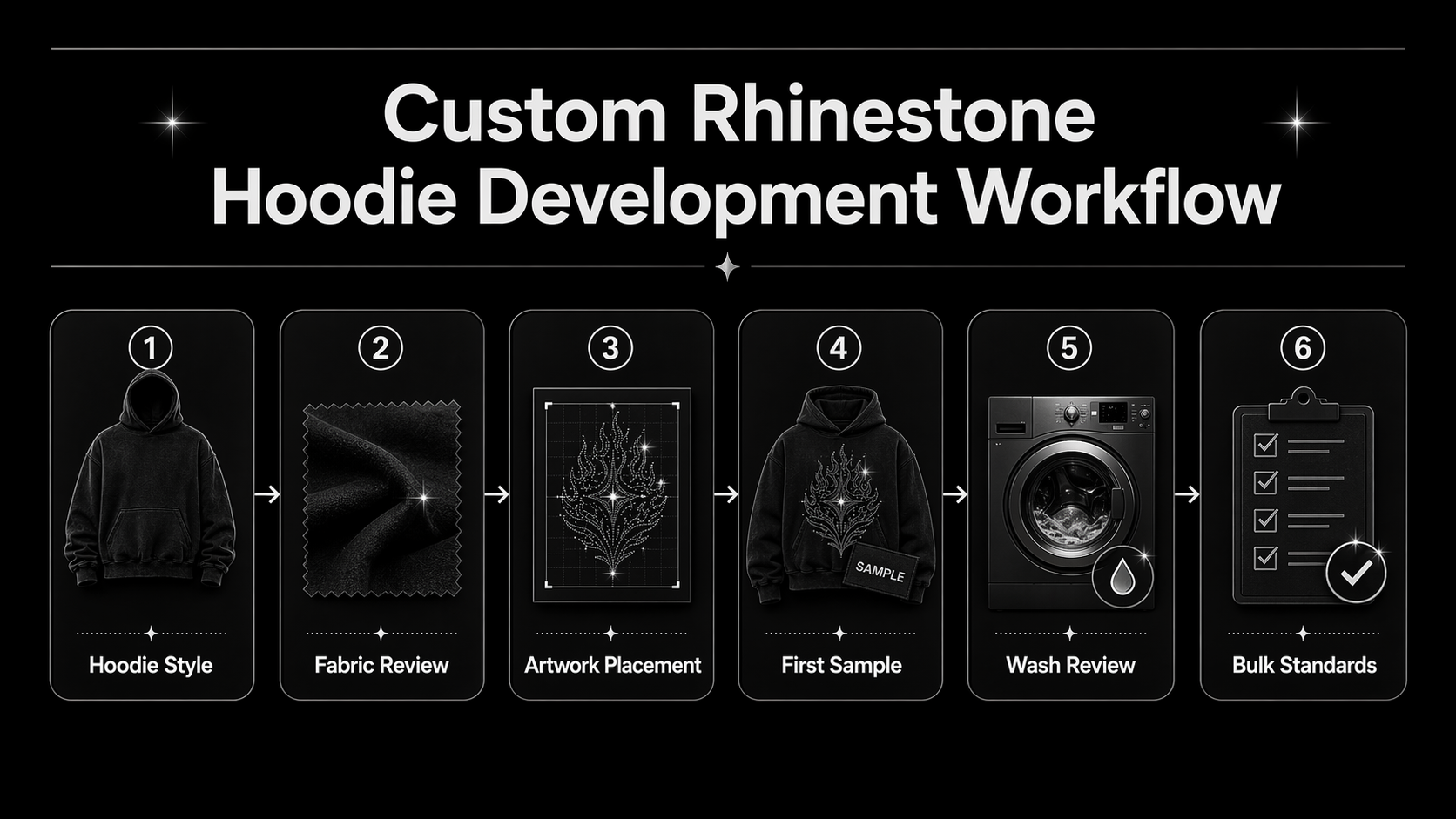
Step-by-Step Development Process
A custom rhinestone hoodie should move through a clear sample and approval workflow. This helps reduce misunderstanding before bulk production.
Step 1: Confirm the Hoodie Style
Decide whether the project uses a pullover hoodie, zip-up hoodie, oversized hoodie, cropped hoodie, heavyweight hoodie, or washed hoodie.
Step 2: Review Fabric and Surface
Confirm fabric weight, fleece type, surface texture, stretch, and whether the fabric is suitable for the intended rhinestone method.
Step 3: Prepare Artwork and Placement
Provide artwork files, stone layout references, placement instructions, stone color direction, and size expectations.
Step 4: Make the First Sample
The first sample should check hoodie fit, fabric handfeel, rhinestone appearance, placement accuracy, and comfort.
Step 5: Review Wear and Wash Considerations
Before bulk production, buyers should review wash instructions, care label requirements, stone adhesion, and any testing expectations.
Step 6: Confirm Bulk Production Standards
Approve the final sample, measurement tolerance, artwork placement, stone quality, packing method, and inspection points.
For sampling stages, approvals, and production workflow, buyers can review Vanrd's Service Process.
What Brands Should Prepare Before Sampling
A complete sample request helps the manufacturer evaluate feasibility faster. If the brief is vague, the first sample may miss the expected logo size, stone density, placement, or fabric feel.
Prepare these inputs before sampling:
Hoodie style reference
Fit direction
Fabric weight or handfeel target
Color direction
Artwork files
Rhinestone layout reference
Stone size or density preference
Placement measurements
Size range
Label and packaging requirements
Expected order quantity
Wash or care expectations
Target market or retail positioning
Any inspection requirements
If the brand does not have a full tech pack, a structured development brief can still help. Separate confirmed details from open questions so the manufacturer knows where to suggest options.
Factory Reality
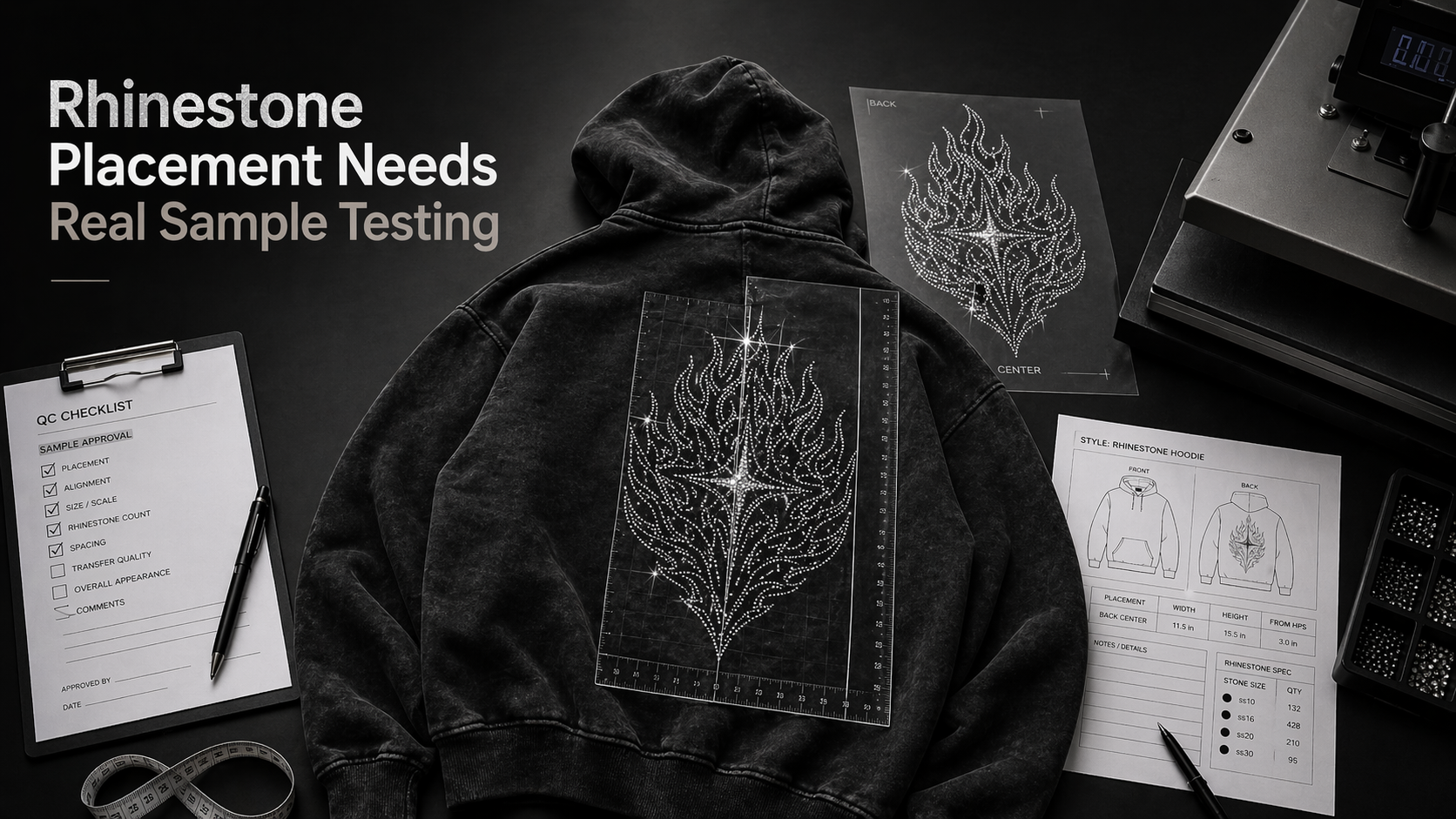
Rhinestone hoodies can look simple in a mockup but become more complex in production because the decoration must interact with fabric, fit, heat, pressure, placement, and washing.
A large chest logo may look balanced on one sample size but need adjustment across other sizes. A sleeve rhinestone design may be affected by seam position and arm movement. A heavily brushed fleece may not hold stones the same way as a smoother fabric surface. If a zip-up hoodie is used, the front zipper may interrupt the artwork and require a split layout.
From a factory perspective, the safest development path is to confirm the hoodie base first, then test the rhinestone placement on the real sample. Vanrd, based in Dongguan (Humen), works with private label buyers by reviewing the garment base, decoration method, sample requirements, and approval points before bulk planning.
For broader manufacturing capability context, buyers can review Vanrd's Factory Strength.
Risk Watchpoints Before Bulk Production
Risk control should begin before the first bulk order. Rhinestone hoodie issues often come from unclear artwork, unsuitable fabric, poor placement instructions, or missing inspection standards.
Check these points before bulk production:
Is the fabric surface suitable for rhinestone application?
Is the artwork file clear enough for production?
Is the rhinestone placement measured, not guessed?
Is the design tested on the actual hoodie sample?
Are stone color, size, density, and layout confirmed?
Are wash and care instructions clear?
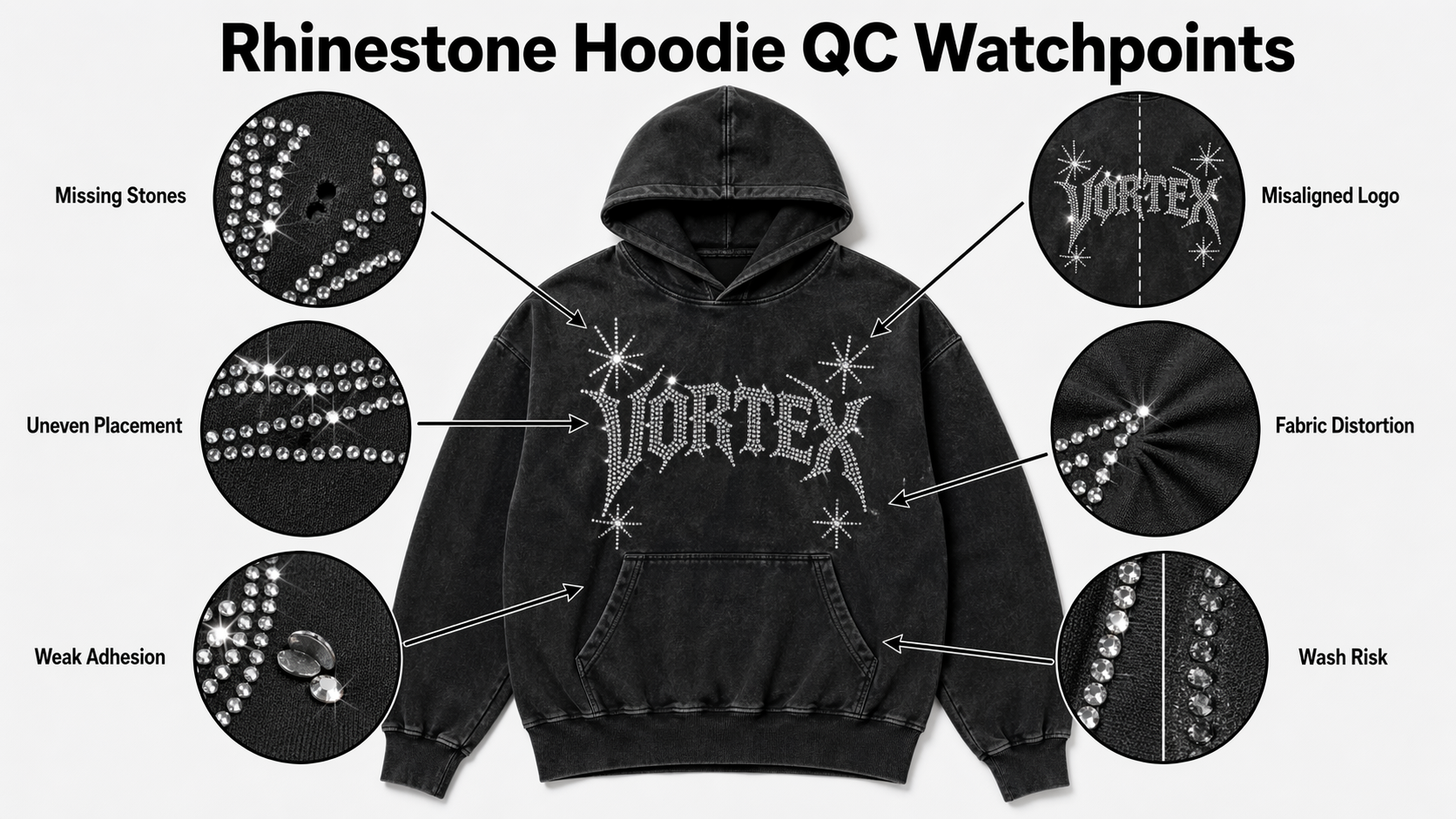
Are missing stones and weak adhesion included in QC checks?
Is the placement acceptable across different sizes?
Are labels and packaging confirmed?
Are final sample comments recorded in writing?
Quality planning is especially important for rhinestone hoodies because small defects are easy to see. For inspection, measurement tolerance, final checks, and shipment standards, buyers can review Vanrd's Q&C.
Common Mistakes Streetwear Brands Should Avoid
Many rhinestone hoodie projects become difficult because the design is approved visually but not technically. A mockup can show the idea, but production needs artwork scale, fabric confirmation, placement, and sample testing.
Common mistakes include:
Choosing fabric only by color without checking surface stability
Making a large rhinestone logo without placement measurements
Applying artwork across seams, pockets, or zipper areas without testing
Using a rhinestone layout that is too dense for the fabric
Ignoring wash and care requirements
Approving a mockup without reviewing a physical sample
Changing artwork after sample approval
Not checking stone loss during QC
Not confirming size grading impact on placement
Treating rhinestone application as a last-minute add-on
A better approach is to simplify the first sample, approve the hoodie base, then confirm rhinestone layout and production standards before adding more complexity.
How to Decide If a Rhinestone Hoodie Is Production-Ready
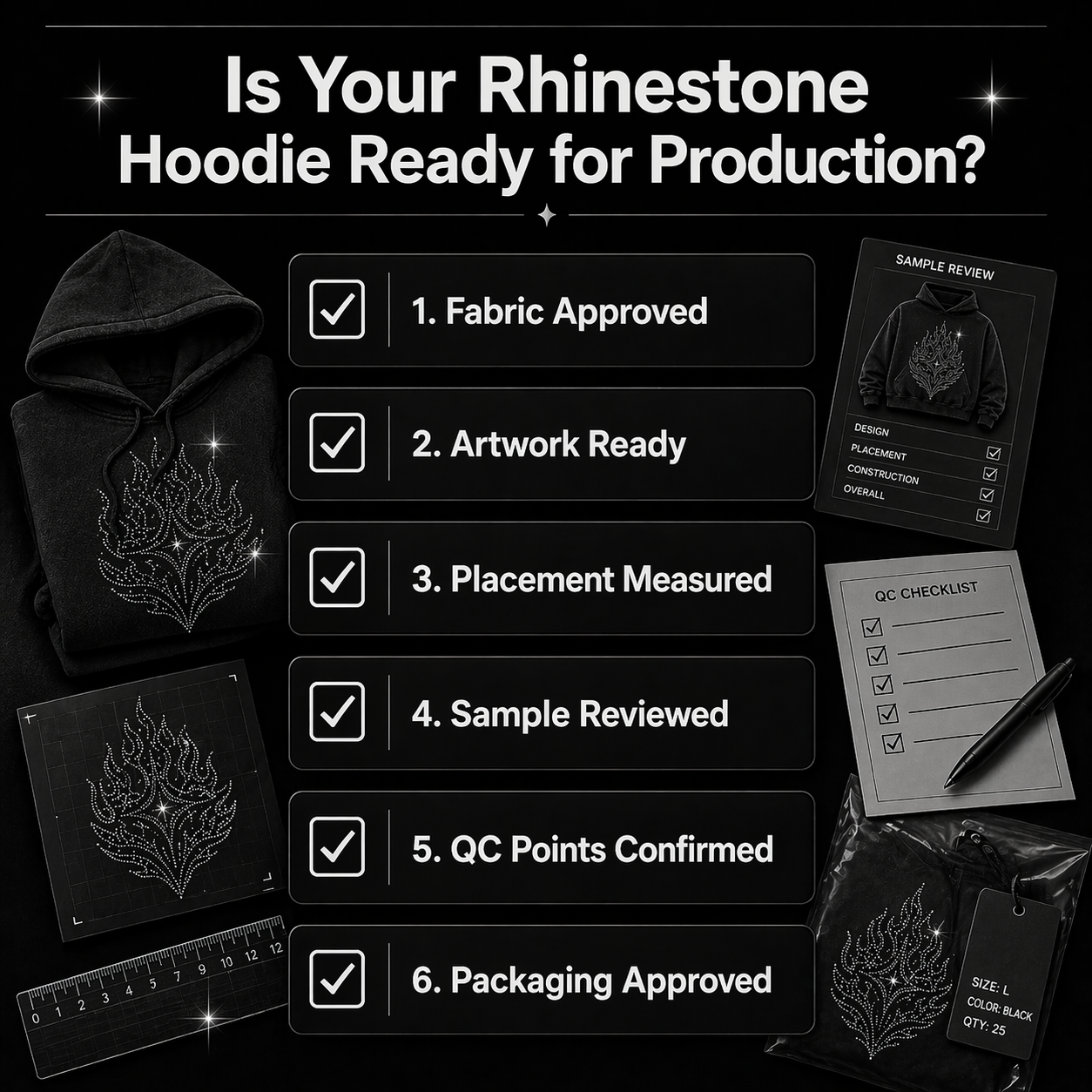
A rhinestone hoodie is production-ready when the garment base, decoration method, and approval standards are clear enough for bulk execution.
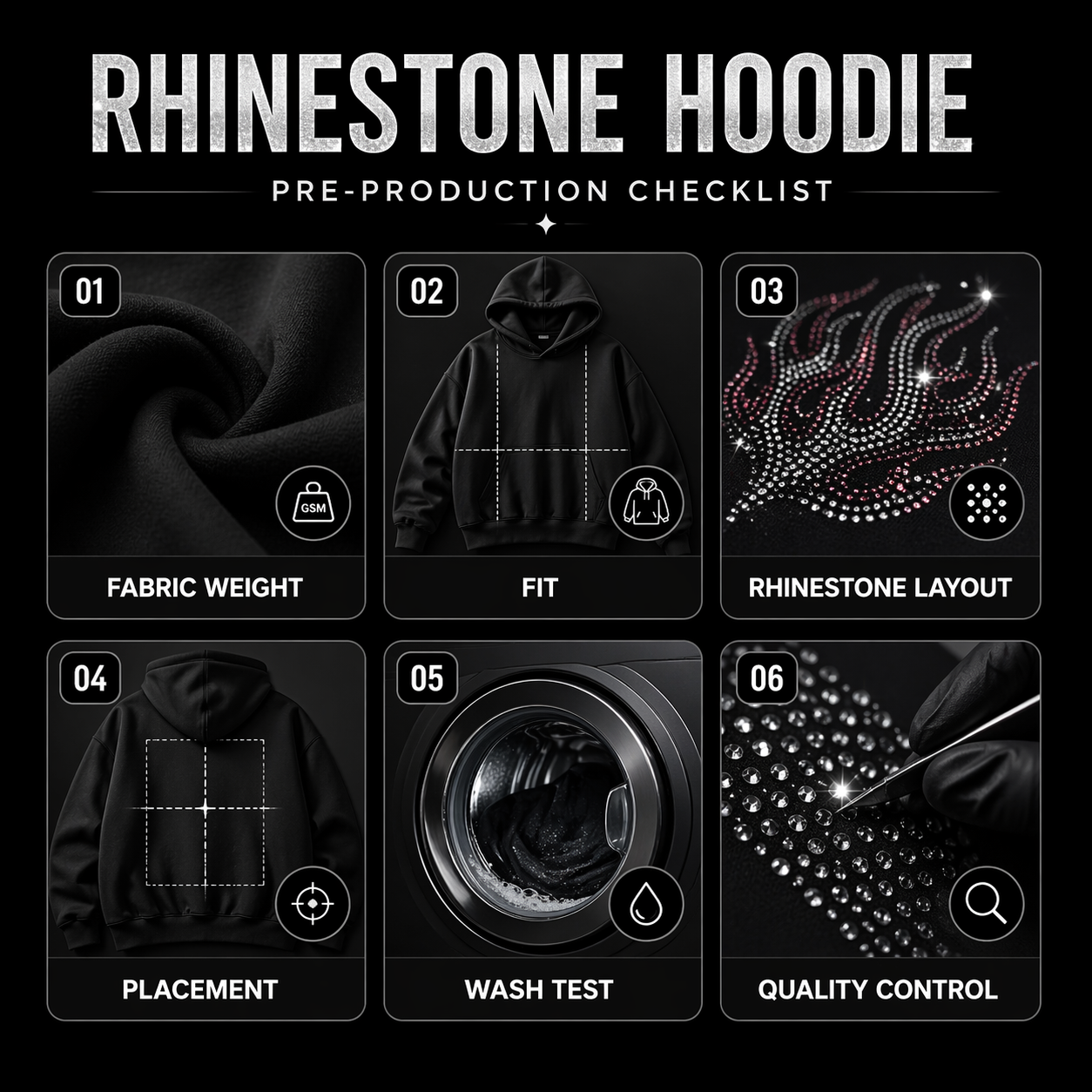
Use this checklist:
Hoodie style is confirmed
Fabric and color are approved
Fit and measurements are reviewed
Artwork file is production-ready
Rhinestone placement is measured
Stone size and color are confirmed
Sample is reviewed physically
Wash and care expectations are discussed
QC points are written down
Labels and packaging are confirmed
Bulk production comments are approved
If any of these points are still unclear, it is better to resolve them before bulk production instead of correcting issues after production starts.
Next Steps
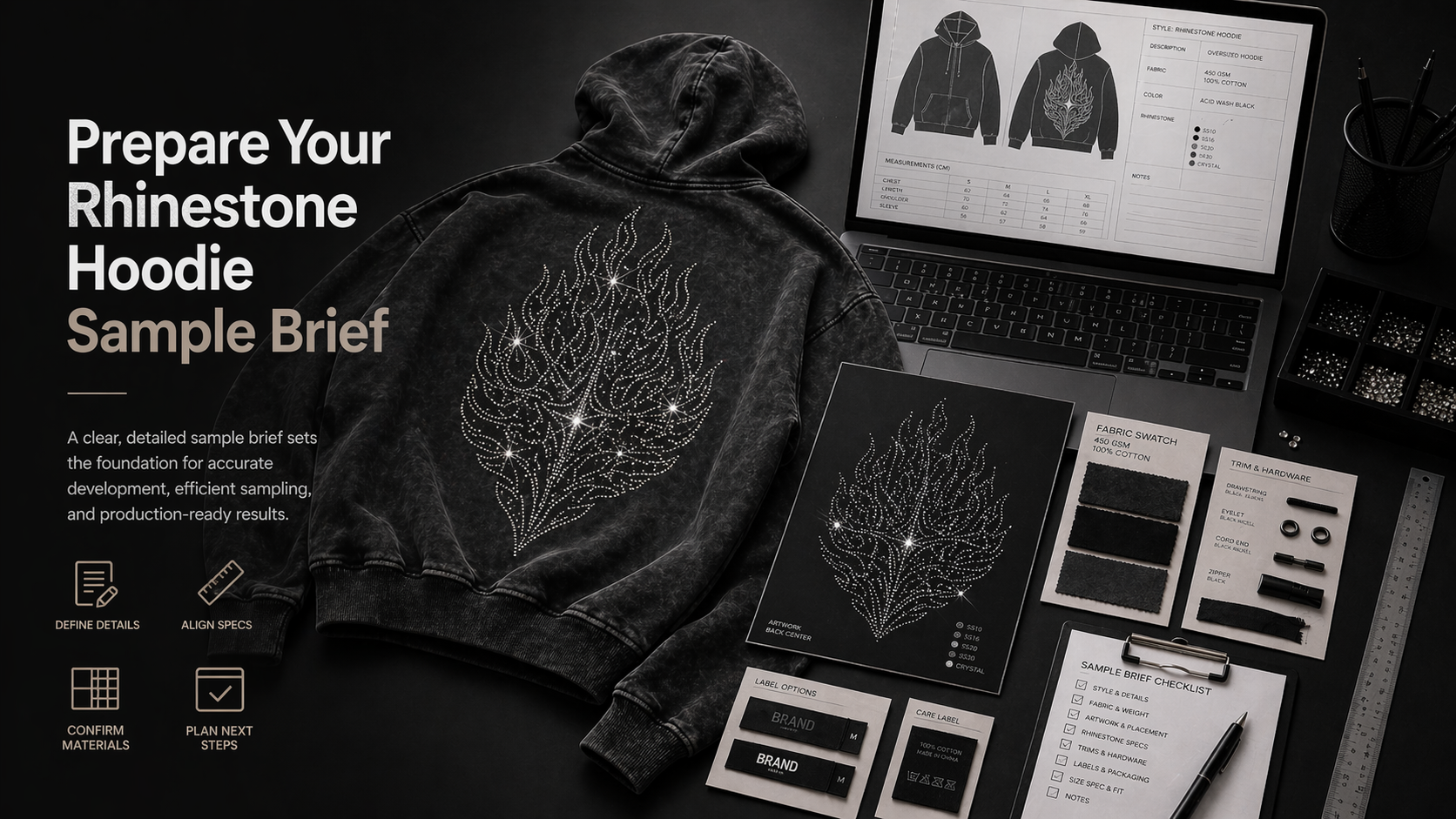
The next step is to turn the rhinestone hoodie concept into a clear sample brief. Start by confirming hoodie style, fabric direction, artwork files, rhinestone placement, stone color, fit direction, and target order plan.
For private label production, Vanrd can review your custom hoodie requirements through OEM/ODM planning, fabric and technique discussion, sampling workflow, and QC preparation. To start a project discussion, send your sample brief through Contact Us.
FAQ
Can rhinestones be applied to heavyweight hoodies?
Yes. Heavyweight hoodies can often work well for rhinestone application because the fabric structure is more stable. The exact result depends on fabric surface, fleece type, stone layout, heat setting, and sample testing.
What artwork files are needed for custom rhinestone hoodies?
Brands should prepare clear logo or graphic files, rhinestone layout references, placement dimensions, stone color direction, and size expectations. Production accuracy improves when artwork and placement instructions are specific.
How does fabric affect rhinestone placement?
Fabric affects adhesion, alignment, handfeel, and final appearance. Smooth and stable fabrics are often easier to work with, while fuzzy, stretchy, or uneven surfaces may require more testing.
How long does rhinestone hoodie sampling usually take?
Sampling time depends on hoodie fabric sourcing, pattern development, artwork preparation, rhinestone layout, application method, and revision rounds. The timeline should be confirmed after the manufacturer reviews the project brief.
Can rhinestone hoodies be made for private label streetwear brands?
Yes. Rhinestone hoodies can be developed for private label streetwear programs when the buyer provides clear fabric direction, artwork files, placement instructions, labels, packaging needs, and sample approval expectations.
What quality issues should brands check before bulk production?
Brands should check missing stones, weak adhesion, uneven placement, logo alignment, fabric distortion, measurement tolerance, wash expectations, packing quality, and final sample approval records.
Are rhinestone hoodies the same as embellished hoodies?
Not exactly. A rhinestone hoodie uses crystal-like stones as the main decoration, while an embellished hoodie may include rhinestones, sequins, studs, embroidery, applique, or mixed techniques. For production, the exact method should be clearly defined.
Final CTA
Planning a custom rhinestone hoodie program?
Send your hoodie references, fabric direction, rhinestone artwork, placement notes, size requirements, and label or packaging details to Vanrd. Our team can review your project and help you prepare a clearer path for sampling, bulk production, and quality control.
Start your development discussion through Contact Us, or learn more about Vanrd's OEM/ODM Services.