Custom Outerwear Manufacturing: Bomber vs Puffer vs Varsity vs Rain Jackets
Why Your Brand's Outerwear Decision Starts Here
If you are building a streetwear brand, outerwear is not just another category. It is the anchor piece that defines your entire collection. A great jacket can elevate a lineup from forgettable to unforgettable. But here is the problem most brands face: with so many jacket types available — bomber, puffer, varsity, and rain jackets — which one should you manufacture first?
The answer is never as simple as "make whatever is trending." Your choice affects everything from your initial sampling cost to your seasonal sell-through rate. A bomber jacket moves fast in spring drops, but falls flat in winter. A puffer commands higher price points, but eats into your margin with more complex construction. A varsity jacket carries instant nostalgia appeal, but requires specialized embellishment skills. And a rain jacket? It opens up a completely different customer base — the function-first buyer.
Over the past decade working with streetwear and fashion brands, I have seen too many founders jump into production without understanding how each jacket type behaves differently at the factory level. This guide is here to fix that. We will walk through each style from a manufacturing perspective — materials, construction, MOQ, lead time, and customization — so you can make a decision that actually works for your brand.
The Bomber Jacket — A Streetwear Icon Built for Versatility
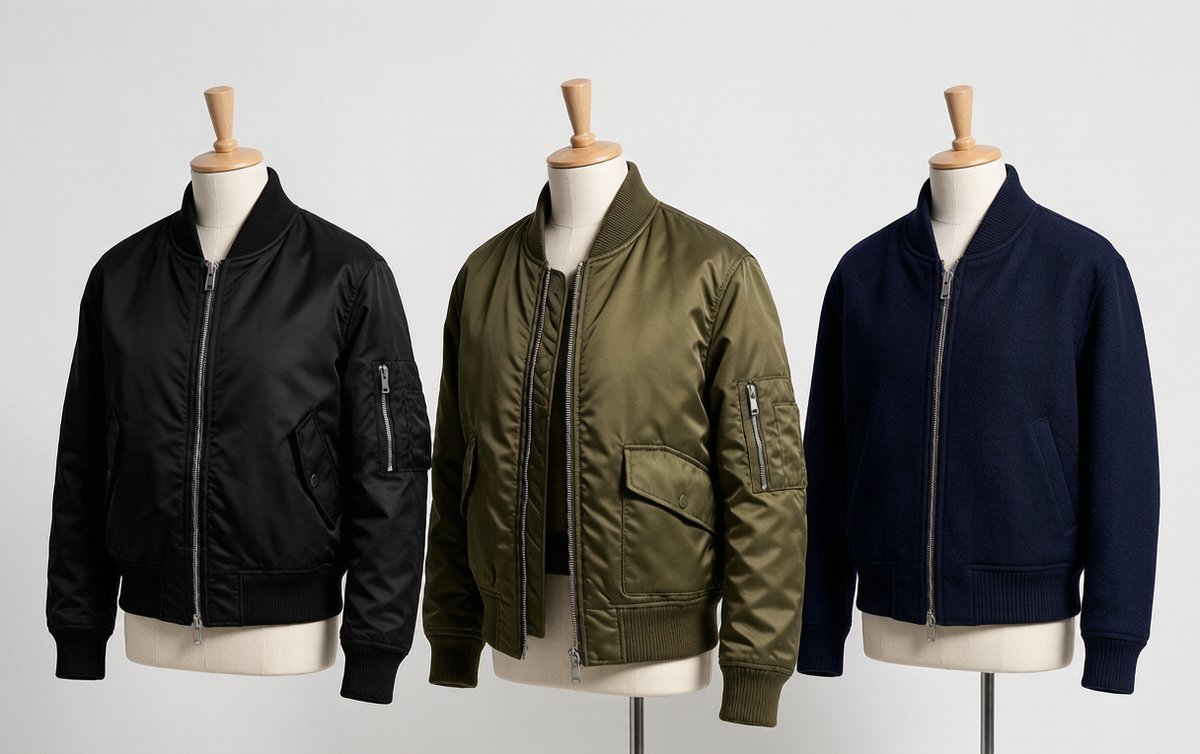
Let us start with the most versatile piece in the outerwear lineup: the bomber jacket. Originally designed for U.S. Air Force pilots in the 1940s, the MA-1 bomber has evolved into a streetwear staple that shows no signs of slowing down. Its appeal lies in its clean silhouette — a cropped, blouson shape with ribbed cuffs and hem that creates a naturally proportioned look on almost any body type.
MA-1 Origins and Modern Appeal
The classic MA-1 bomber was built for function: a nylon shell, a signature orange lining for visibility in emergencies, and a zip-front closure with a wind flap. Fast-forward to today, and the silhouette has been reinterpreted by brands like Saint Laurent, Supreme, and Off-White. What makes the bomber so attractive for emerging brands is its incredible adaptability. You can produce it in nylon for a sporty finish, in satin for a luxe look, or in wool for a heavier winter option. One pattern, endless identities.
From a manufacturing perspective, the bomber is generally the easiest jacket to develop. Its construction is straightforward — a front and back panel, two sleeves, ribbing at the openings, and optional pockets. This simplicity translates to lower sampling costs, faster production cycles, and fewer things that can go wrong during bulk manufacturing. For a brand launching its first outerwear piece, the bomber is almost always the smartest starting point.
Construction Details That Matter
When you send a bomber jacket tech pack to a factory, a few details will define the final quality. First, the ribbing. Cheap bombers use generic acrylic rib that loses its elasticity after a few washes. Premium bombers use a cotton-spandex blend rib that snaps back every time. Second, the zipper. A YKK or SBS reverse-coil zipper with a branded zipper pull adds perceived value instantly. Third, the interlining. Bombers with a thin polyester lining feel cheap; those with a quilted or satin interior lining feel substantial. These are small details, but they are exactly what separates a $15 FOB bomber from a $45 FOB bomber.
Best Fabrics for Bomber Jacket Manufacturing
The fabric choice for your bomber jacket determines its seasonal positioning and price point. Here is a quick breakdown: Nylon taffeta (the classic MA-1 material) is lightweight, water-resistant, and budget-friendly. Polyester twill offers a cleaner, more structured look for fashion-forward silhouettes. Satin gives a shiny, premium finish that photographs beautifully. Melton wool adds weight and warmth, perfect for a winter bomber collection. And cotton canvas delivers a rugged, workwear-inspired aesthetic. Each fabric behaves differently during cutting and sewing, so make sure your manufacturer has experience with your chosen material before committing to bulk.
The Puffer Jacket — Maximum Warmth, Maximum Visual Impact
If the bomber is the reliable workhorse, the puffer jacket is the showstopper. There is a reason why brands like Moncler, Arc'teryx, and The North Face built empires around insulated outerwear. A well-made puffer delivers unmatched warmth and a bold, voluminous silhouette that commands attention. But here is the catch: puffers are significantly more complex to manufacture than bombers.
Down vs Synthetic Fill: What Brands Need to Know
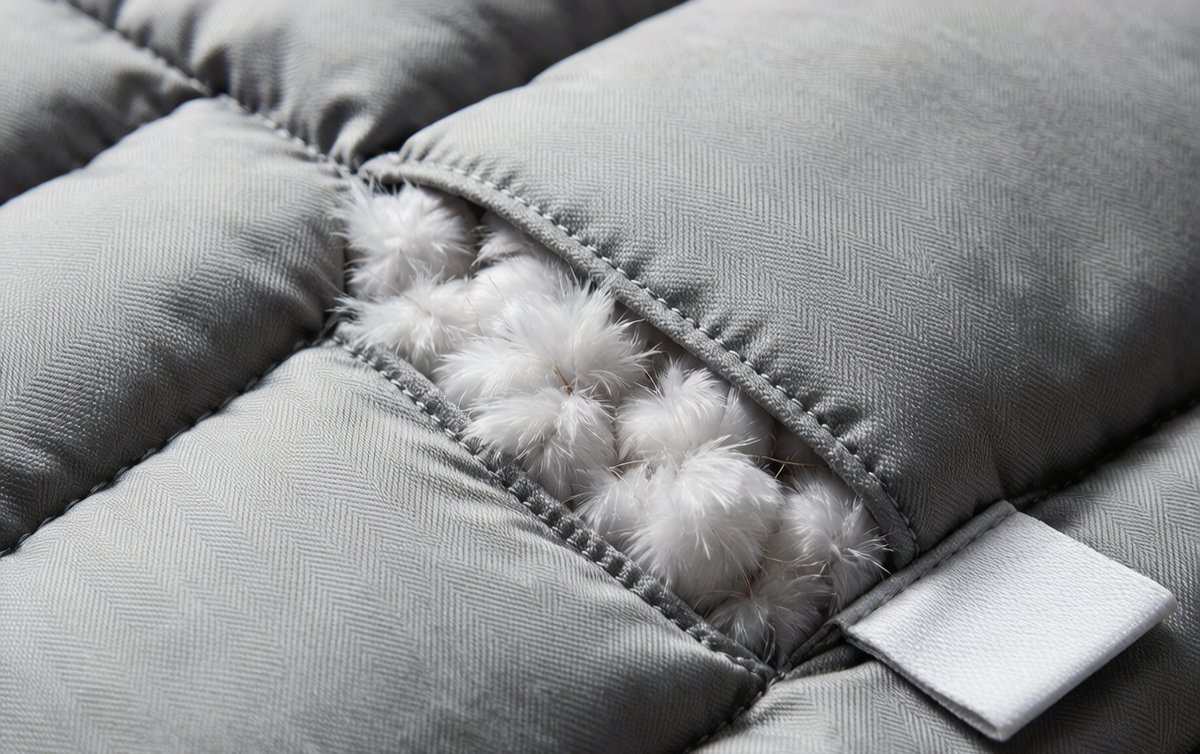
The first big decision in puffer manufacturing is the fill type. Down fill, usually rated by fill power (650fp to 800+fp), offers the best warmth-to-weight ratio. It is compressible, breathable, and incredibly durable. But down is expensive, requires RDS certification for ethical sourcing, and needs down-proof fabric to prevent feathers from poking through. Synthetic fill, such as PrimaLoft, Thinsulate, or recycled rPET fiberfill, performs better in wet conditions, costs less, and is vegan-friendly. The trade-off? Synthetic fill is heavier, less compressible, and does not last as long as down. For streetwear brands targeting cold-weather drops, I usually recommend starting with a mid-weight synthetic puffer. It keeps costs manageable while still delivering the visual impact that drives sell-through.
Baffle Construction and Quilting Patterns
What gives a puffer its signature look is the baffle construction — those stitched channels that hold the fill in place. The most common patterns are horizontal box quilting (classic and safe), vertical channel quilting (slimming and modern), and diamond or chevron quilting (premium and distinctive). Each pattern requires precise sewing to prevent fill migration. If a baffle stitch is off by even half a centimeter, the fill shifts, and the jacket looks uneven. This is why puffers have a higher sampling rejection rate than other outerwear types. Do not rush this step.
Production Complexity and Cost Drivers
Puffer production involves more steps than any other jacket type: cutting the outer shell, cutting the lining, sewing the baffles, filling each channel, closing the seams, adding the zipper and storm flap, attaching the hood, and final inspection. Each step adds labor cost. A typical puffer costs 30-50% more to produce than a comparable bomber jacket. The sampling time is also longer — expect more sample rounds than a bomber. But here is the silver lining: puffers command higher retail prices and lower return rates because customers perceive them as high-value items.
The Varsity Jacket — Heritage That Sells Itself
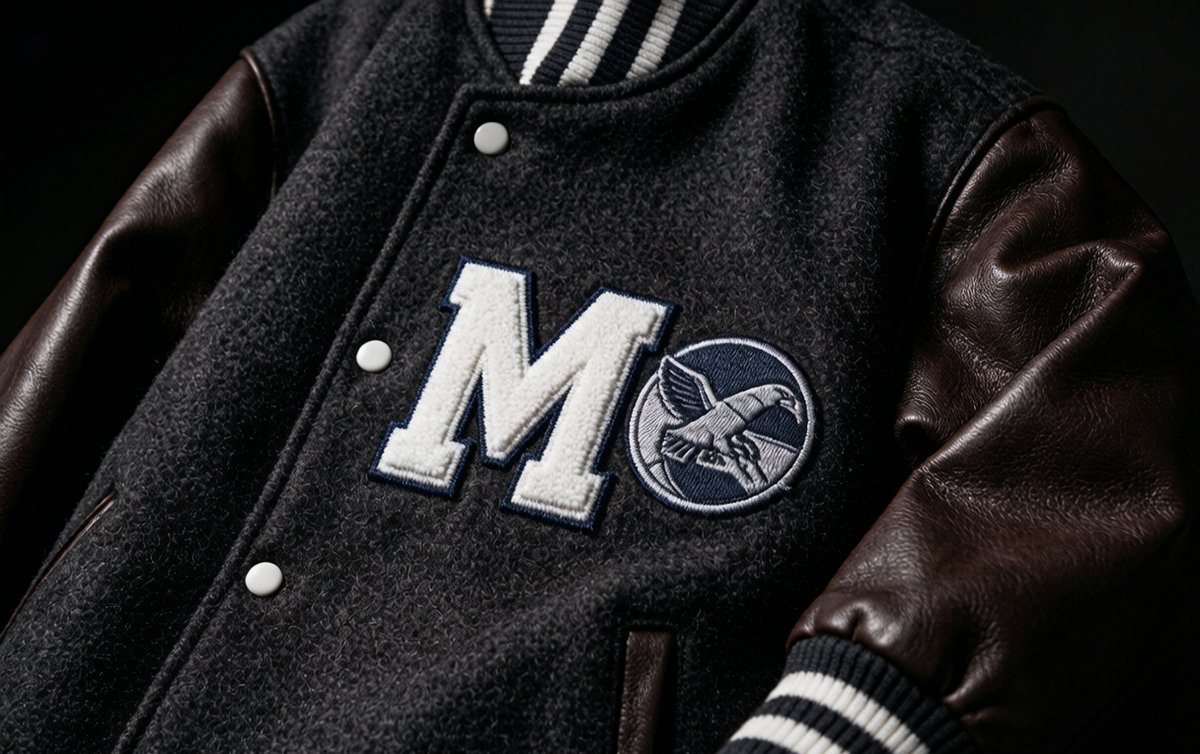
There is something about a varsity jacket that triggers an emotional response. Maybe it is the nostalgia of high school letterman jackets. Maybe it is the heavyweight feel of melton wool against genuine leather sleeves. Whatever it is, varsity jackets have an advantage that other outerwear types do not: built-in heritage. Customers already understand the product. You do not need to convince them why it is cool.
Wool Body and Leather Sleeve Combinations
The classic varsity jacket formula is a wool-melton body (typically 24oz for a substantial feel) with genuine or faux leather sleeves. The contrast between the matte wool and the smooth leather creates a visual tension that is unmistakably varsity. But sourcing matters here. Melton wool from different mills varies in density, color fastness, and pilling resistance. And leather sleeves — whether cowhide, goatskin, or PU — need to match the wool shade perfectly. A mismatch that looks minor on a swatch can look glaring on a finished jacket. Always request leather and wool swatches side by side before approving production.
Chenille Patches, Embroidery, and Branding
The real magic of a varsity jacket is in the embellishment. Chenille patches — those soft, raised fabric patches — are the most iconic decoration for varsity styles. They cost more than flat embroidery (typically $3-8 per patch depending on size and complexity), but the tactile quality adds perceived value that customers can feel. Other options include direct embroidery on the chest or back, woven labels inside the collar, and branded snap buttons. The key is to plan your branding early. Adding a chenille patch after the jacket is sewn adds labor cost and risks misalignment. Plan it into the initial tech pack.
The Rain Jacket — Function First, Fashion Always
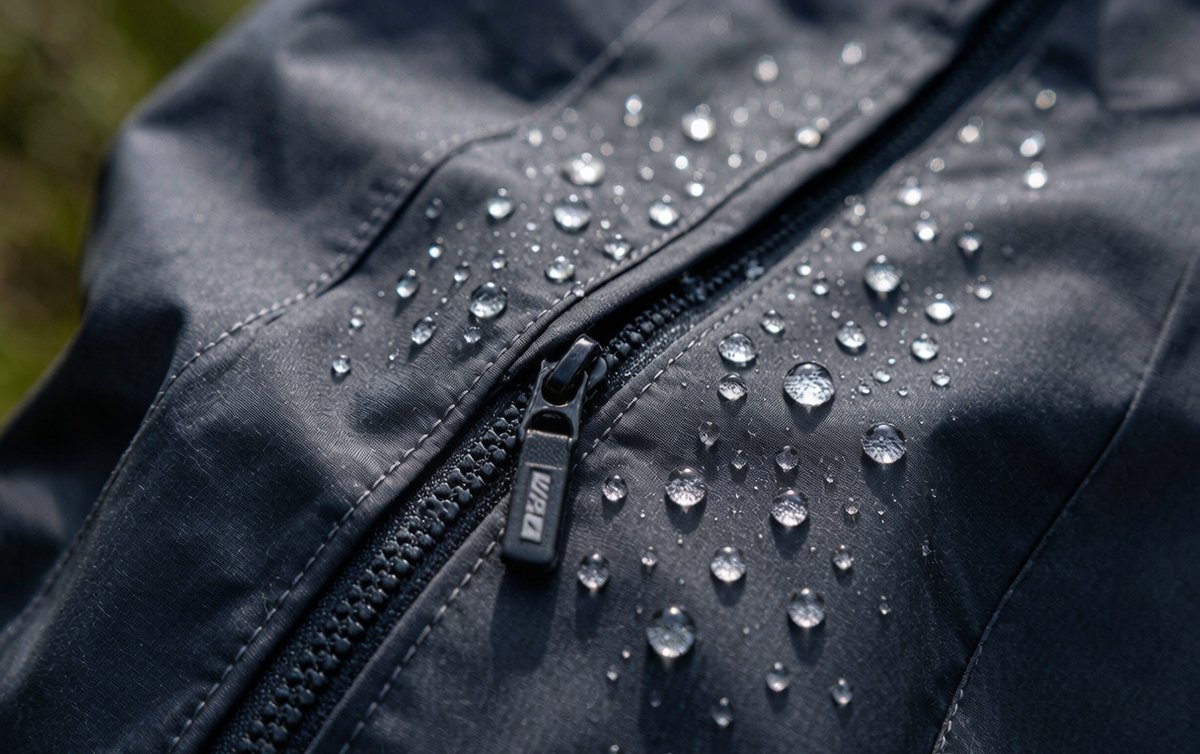
Rain jackets occupy a unique space in streetwear. Unlike bombers or puffers, which are primarily fashion pieces, rain jackets need to actually perform. If a customer wears your rain jacket in a downpour and gets wet, they will not buy from your brand again. This makes rain jacket manufacturing a higher-stakes game.
Waterproof Ratings and Seam Sealing
A true waterproof rain jacket needs three things: a waterproof membrane (like PU coating or a laminated film), sealed or taped seams, and a water-resistant zipper. You will see ratings like 5,000mm, 10,000mm, or 20,000mm on technical fabrics. For streetwear purposes, 5,000mm to 8,000mm is sufficient for everyday rain protection. Going higher adds cost without a corresponding benefit for casual use. Seam sealing is the most critical step. Unsealed seams are the number one point of failure in rain jackets. Make sure your manufacturer has a dedicated seam-taping machine and trained operators — not all factories do.
Breathability vs Protection Tradeoffs
Here is the tradeoff every rain jacket brand must navigate: the more waterproof a fabric is, the less breathable it becomes. A fully waterproof jacket with no breathability will trap sweat and moisture inside, making the wearer feel clammy within minutes. For streetwear, I recommend fabrics with a breathability rating of 5,000g/m²/24h or higher. This gives enough airflow for daily wear while maintaining reliable water protection. If you are producing a rain jacket for warmer climates, consider adding mesh-lined vents or pit zips to improve airflow.
Side-by-Side Comparison: Bomber vs Puffer vs Varsity vs Rain Jacket
| Factor | Bomber Jacket | Puffer Jacket | Varsity Jacket | Rain Jacket |
|---|---|---|---|---|
| Warmth Level | Low-Medium | Very High | Medium-High | Low |
| Construction Complexity | Low | High | Medium | Medium-High |
| Typical FOB Cost | $15-35 | $18-55 | $22-55 | $12-30 |
| Sampling Time | 7–10 days | |||
| Bulk Lead Time | 25–35 days | |||
| MOQ (typical) | 50-100 pcs | 100-200 pcs | 50-100 pcs | 100-200 pcs |
| Best Season | Spring-Fall | Fall-Winter | Fall-Winter | Spring-Fall |
| Customization Depth | Medium | High | Very High | Medium |
Material Selection Guide for Custom Outerwear
The fabric you choose is the single biggest factor in how your jacket looks, feels, and performs. But with so many options available, where do you start? Let me simplify it for you.
Shell Fabrics That Define Quality
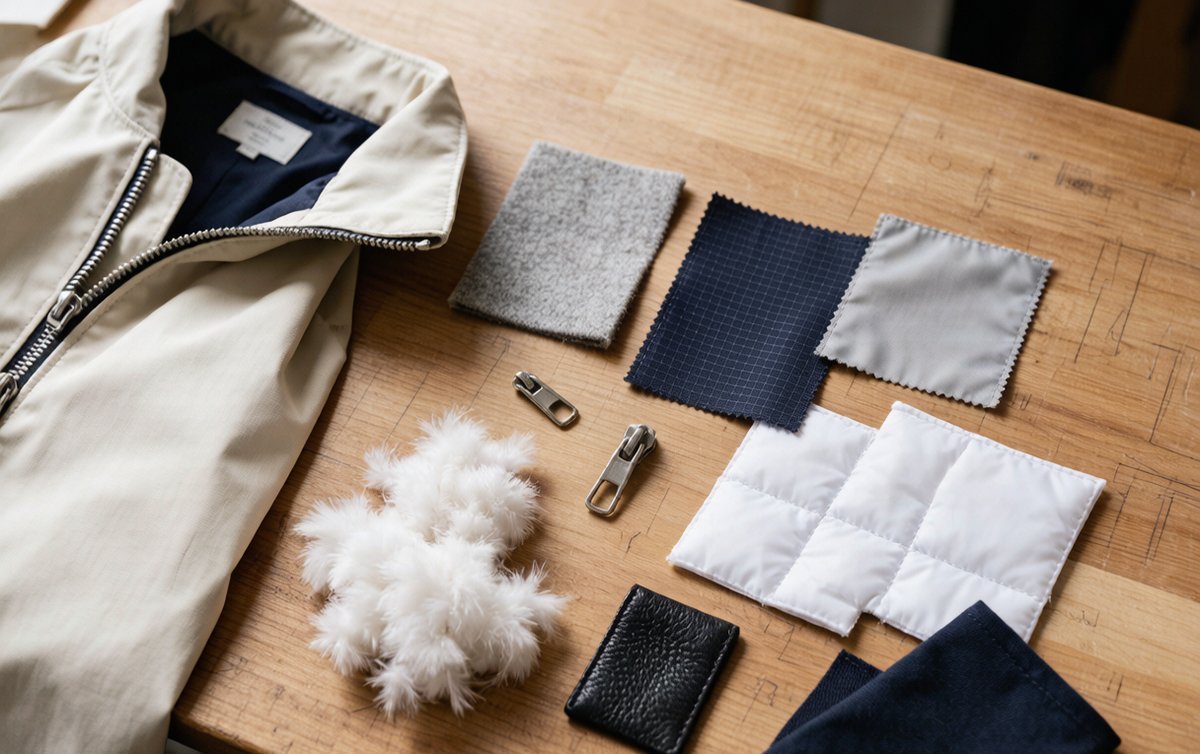
For bomber jackets, nylon taffeta and polyester twill are the workhorses. They are affordable, easy to sew, and available in endless colors. For puffer jackets, ripstop nylon (20D to 50D) with a DWR finish is the industry standard — it is lightweight, tear-resistant, and holds fill effectively. For varsity jackets, 24oz melton wool is the gold standard, while cotton twill works as a lower-cost alternative. For rain jackets, look for polyester or nylon with a waterproof coating and a minimum 5,000mm hydrostatic head rating. No matter which shell fabric you select, always request a fabric test report that verifies weight, tear strength, color fastness, and shrinkage before cutting bulk.
Insulation, Linings, and Interlinings
Insulation is where the real performance difference lives. Down fill (650fp-800fp) offers the best warmth but requires careful sourcing. Synthetic fill (PrimaLoft, 3M Thinsulate, or standard polyester fiberfill) is more affordable and performs better when wet. For linings, 190T-230T polyester taffeta is the most common choice — it is smooth, durable, and helps the jacket slide on and off easily. For premium collections, consider satin or quilted linings. Interlinings — the layer between the shell and the lining — add structure and prevent the shell from sagging. A fusible interlining in the collar and placket areas makes a noticeable difference in how the jacket holds its shape over time.
Understanding MOQ, Sampling, and Production Lead Times
Let us talk numbers. Because understanding MOQ (minimum order quantity) and lead times is what separates brands that launch successfully from brands that get stuck in development purgatory.
MOQ Variations by Jacket Type
MOQ is not a fixed number — it varies by factory and jacket complexity. Generally, bomber jackets have the lowest MOQ, starting around 50 pieces per style per color. Varsity jackets are similar at 50-100 pieces, though chenille patch MOQs may be separate. Puffer jackets require higher MOQs (100-200 pieces) because of the specialized filling equipment needed. Rain jackets with waterproof membranes also trend toward 100-200 pieces due to the seam-taping setup costs. If your brand is testing the market, ask your manufacturer about a "trial MOQ" — some factories offer lower minimums for first-time orders at a slightly higher per-unit price.
The Sampling Timeline: From Tech Pack to Approval
Here is a realistic timeline: after you send your tech pack, expect 7–10 days for a first sample across all four jacket types. Budget for at least two sample rounds — very few jackets get approved on the first try. The first sample identifies fit and construction issues. The second sample (or PP sample) confirms the final production standard. Rushing this process is the fastest way to end up with jackets that do not fit correctly. Be patient, be detailed, and be honest about what needs to change.
Bulk Production and Shipping Logistics
Once your PP sample is approved, bulk production typically takes 25–35 days depending on order volume and factory workload. After production, factor in 2-3 days for final inspection and 15-30 days for sea freight (from Asia to the US or Europe). Air freight shortens shipping to 3-5 days but significantly increases cost. My advice: plan your development timeline backward from your target launch date. If you want jackets in stores by October 1st, you should be sending your tech pack to manufacturers by May or June at the latest.
Customization Options That Differentiate Your Brand
In a market flooded with outerwear options, customization is how your brand stands out. The right details can turn a standard jacket into a signature piece.
Embroidery, Patches, and Labeling
Chenille patches are the go-to for varsity jackets, offering a raised, textured look that feels premium. Flat embroidery works well on bomber and puffer jackets for chest logos or back designs. Rubber or silicone patches give a modern, 3D effect that streetwear brands love. Woven labels inside the collar add a professional finishing touch. And do not underestimate the power of a custom hangtag — it is the first thing a customer touches and sets the tone for the entire unboxing experience.
Hardware, Zippers, and Finishing Details
Hardware choices communicate quality more effectively than almost anything else on a jacket. A YKK reverse-coil zipper with a custom zipper pull adds instant credibility. Branded snap buttons on a varsity jacket elevate the entire piece. Magnetic snap closures on pocket flaps feel modern and functional. And cord locks and drawcords with metal tips instead of plastic add a tactile premium feel. These details cost pennies individually but add dollars of perceived value collectively. Do not skip them.
How to Evaluate a Custom Outerwear Manufacturer
Choosing a manufacturer is the most consequential decision you will make as a brand. A great manufacturer elevates your product. A bad one wastes your time and money.
Certifications and Factory Capabilities
When evaluating a jacket factory, look for ISO 9001 (quality management), BSCI or WRAP (social compliance), and OEKO-TEX Standard 100 (fabric safety). For down products, RDS certification is non-negotiable. Beyond certifications, ask about their specialization. A factory that primarily produces t-shirts may struggle with puffer jacket construction. Ask for references from brands that produced similar jacket types. And always — always — request a physical sample before committing to bulk production.
Communication and Sample Accuracy
The best factory in the world is useless if you cannot communicate effectively. Pay attention to how responsive the factory is during the quoting stage. Do they answer your questions clearly? Do they point out potential issues in your tech pack? A factory that offers proactive feedback during the pre-sales phase will almost certainly be a better partner during production. Sample accuracy is your second test. When the first sample arrives, compare it against your tech pack point by point. If the measurements are off by more than 1cm, or if the fabric does not match the approved swatch, that is a red flag. Trust your instincts here.
Seasonal Planning for Outerwear Collections
Outerwear is inherently seasonal, which means timing is everything. If you miss the window for your target season, you will be sitting on inventory for months.
When to Start Development for Each Season
For fall-winter outerwear (puffers, wool bombers, varsity jackets), start development in March-April, approve samples by June, and go into bulk production by July. This puts your inventory ready for September-October deliveries. For spring-summer outerwear (lightweight bombers, rain jackets, windbreakers), start development in September-October of the previous year, approve samples by December, and produce in January-February. This schedule gives you enough buffer for sample revisions, fabric sourcing delays, and shipping. Plan backward from your target launch date, and add a two-week buffer for unexpected issues. Trust me — unexpected issues will arise.
Conclusion
Choosing the right outerwear type for your brand is not about picking a trend. It is about understanding your customer, your budget, and your production capabilities — and then matching those realities to a jacket style that works. Bomber jackets offer the easiest entry point with the lowest risk. Puffer jackets command higher margins but demand more manufacturing expertise. Varsity jackets bring built-in nostalgia and premium positioning. Rain jackets open up a performance-driven customer base with different expectations.
The brands that succeed in outerwear are not the ones with the biggest budgets. They are the ones who do their homework, build strong relationships with their manufacturers, and make decisions based on data rather than gut feeling. Start with one style. Get it right. Learn from the process. Then expand into other jacket types as your brand grows. That is how you build a lasting outerwear collection — one jacket at a time.
Ready to manufacture your custom outerwear? The best time to start was three months ago. The second best time is today.
Related Articles and Resources
Continue your streetwear manufacturing research with these VANRD guides:
- Apparel MOQ Guide for Streetwear Brands
- Custom Pants Manufacturing Guide
- Custom Tracksuit Fabrics Guide
- Sustainable Apparel Manufacturing Guide
- Apparel Color Consistency Guide
- Custom Cargo Pants Guide
- Custom Hats Manufacturing Guide
- Custom Knitwear vs Cut-and-Sew Sweaters
- Custom Jackets Collection
- Custom Tracksuits Collection
- Custom Hoodies Collection
- Contact VANRD for a Quote
- About VANRD Manufacturing
Frequently Asked Questions
The bomber jacket is almost always the best starting point for emerging brands. It has the lowest MOQ (50-100 pieces), the simplest construction, the shortest sampling time, and the broadest seasonal appeal. Once you validate your bomber program, you can expand into puffers or varsity jackets with confidence.
FOB costs vary significantly by style and material. Bomber jackets typically range from $15 to $35 per unit. Puffer jackets range from $18 to $55. Varsity jackets range from $22 to $55. Rain jackets range from $12 to $30. These prices exclude shipping, duties, and customization fees for patches or specialized embroidery.
Most factories prefer to run one style per production line to maintain efficiency and quality control. However, many manufacturers accept mixed orders for established clients if the styles share similar construction methods. Expect a longer lead time and potentially higher per-unit costs for mixed orders. Always clarify this during the quoting stage.
OEM (Original Equipment Manufacturing) means you provide the complete design, tech pack, and specifications, and the factory produces exactly what you specify. ODM (Original Design Manufacturing) means the factory provides existing designs or patterns that you can customize with your branding. ODM is faster and cheaper but offers less design control. OEM gives you full ownership of the design but requires more preparation on your end.
Quality consistency starts with a detailed tech pack, followed by a thorough sample approval process. During bulk production, request in-line quality control inspections at three checkpoints: post-cutting (verify pattern accuracy), mid-production (inspect the first 50 units off the line), and pre-shipment (final random inspection using AQL 2.5 standards). Working with an ISO 9001 certified manufacturer and requesting a third-party inspection service like SGS or Bureau Veritas adds an extra layer of protection.