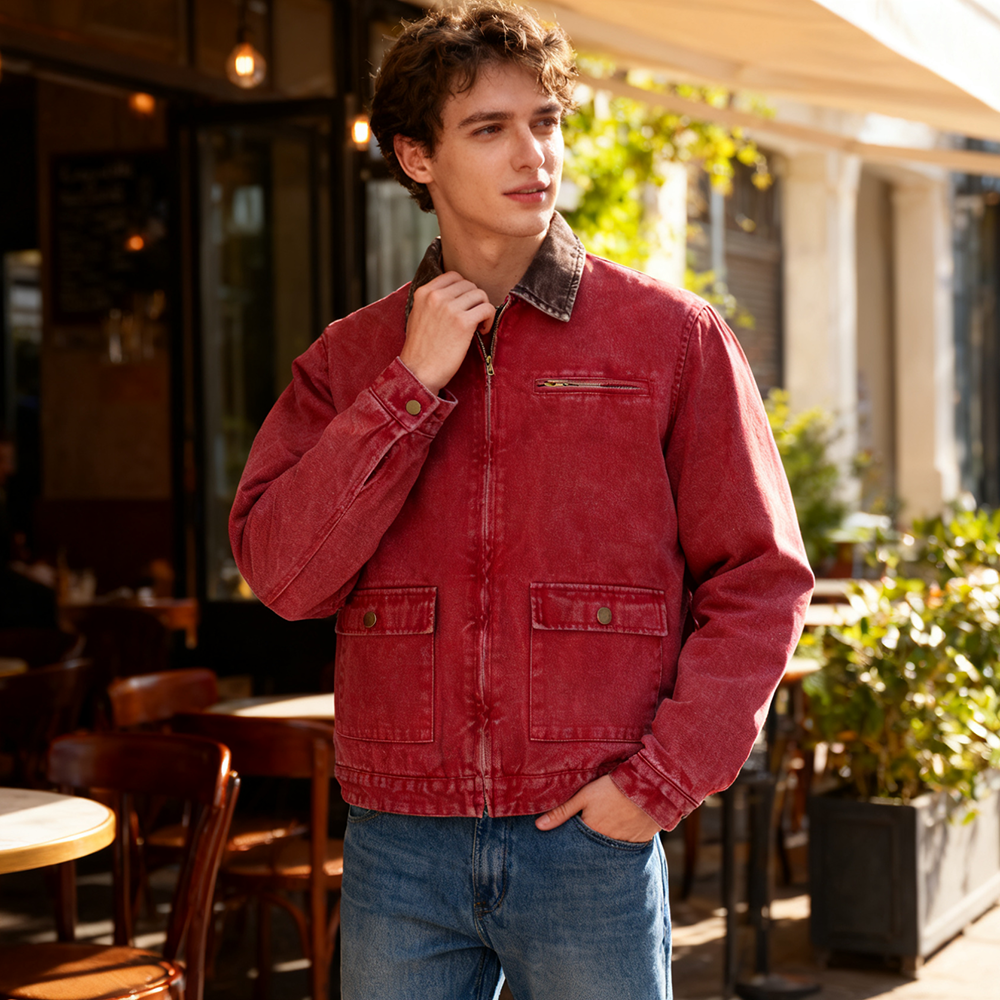
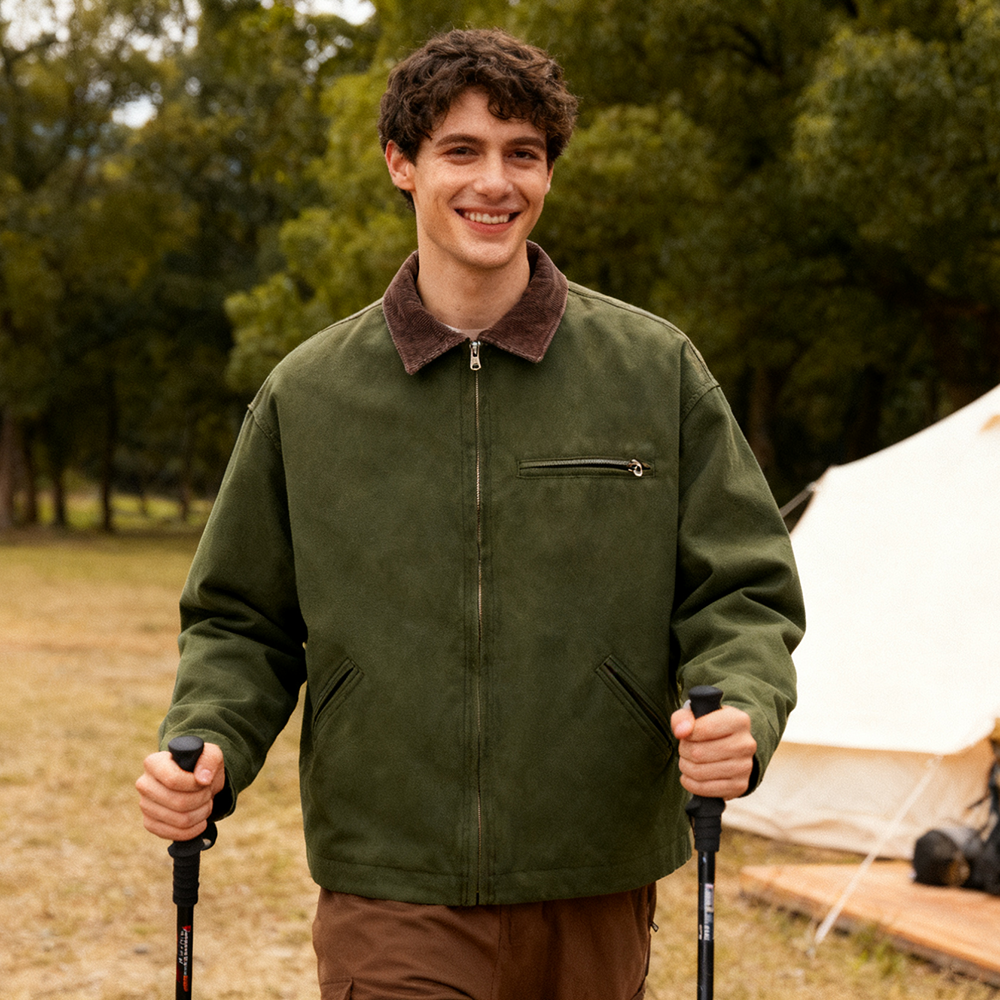
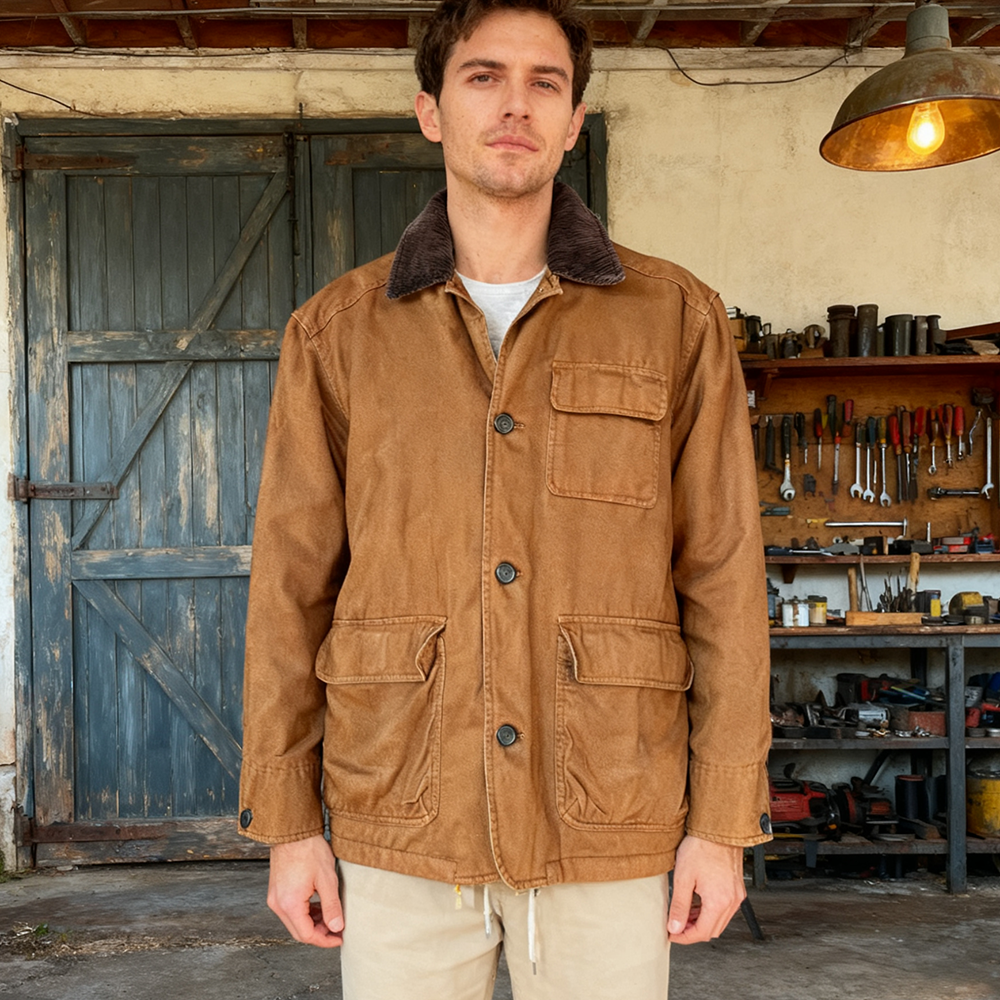
- MOQ 100+

- Samples 7–10 days

- OEM/ODM

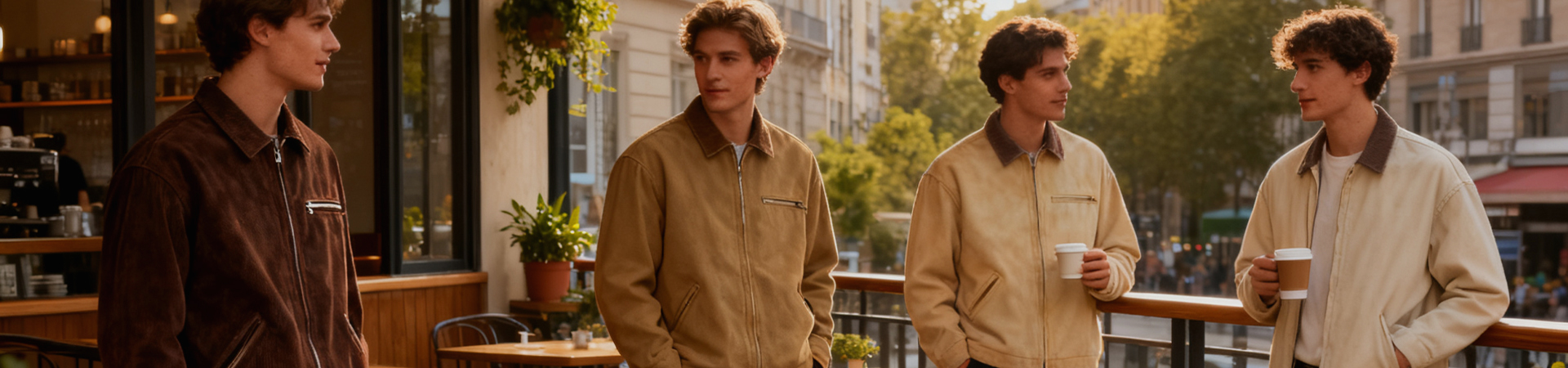


(use case, target retail, margin)

(flight satin vs Taslan vs leather)

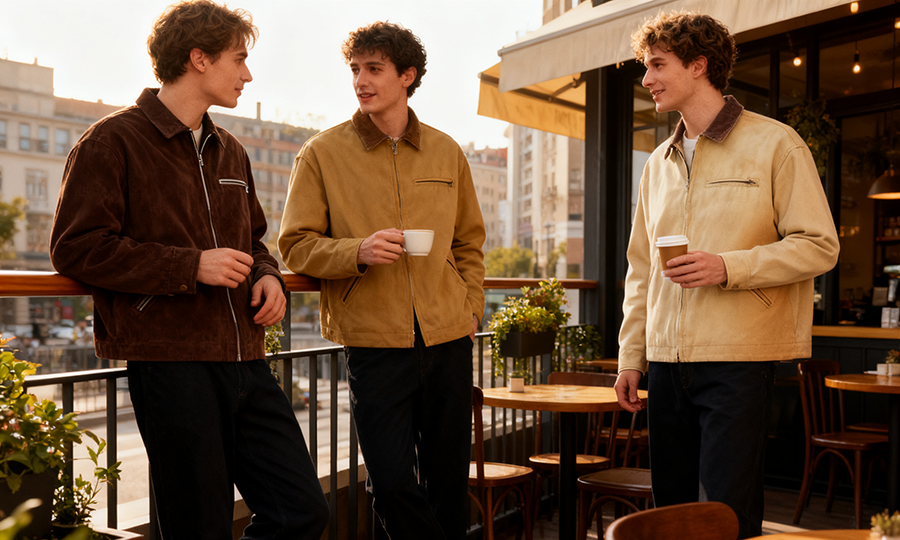
(classic/boxy/oversized)


(shade bands if garment dye)

(zipper cycle/snap pull tests)

Working with a manufacturer that specializes in workwear sets means one team controls the fabric spec, construction, trims, decoration and quality standard as a single recorded specification — which is what keeps fit, color and hand-feel consistent between the first production run and the reorder.
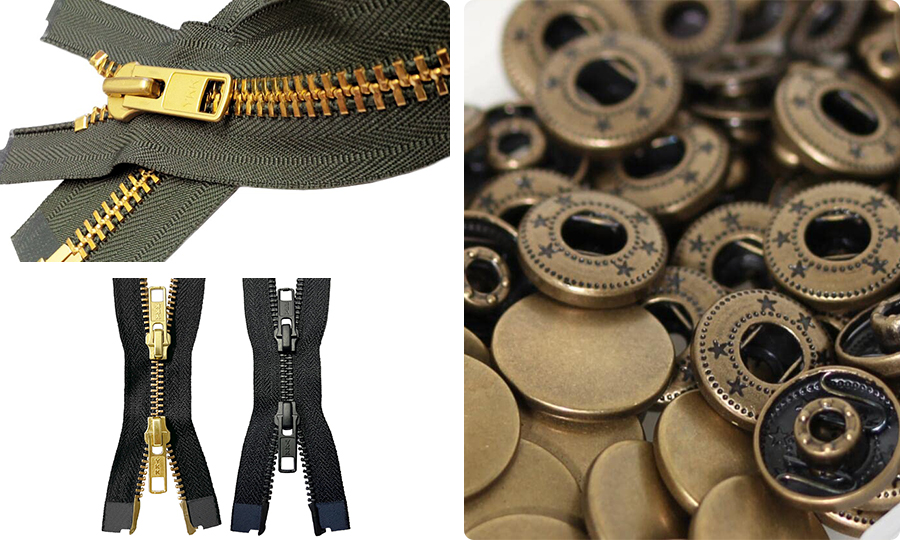
On this category specifically, the controls that matter are: a jacket and pant developed as one program off one fabric record so the set matches; reinforced stress points and bar-tacked pocket corners across both pieces; metal hardware selected consistently across jacket and pant. Those are specification items, not preferences. When they are recorded they repeat; when they are agreed verbally they drift between runs.
A useful way to tell a factory from a trading company: it asks about your fabric, sizing and timeline before quoting; it flags problems before you find them, such as warning that a workwear set is bought as a set, which makes shade matching the critical risk; it shares evidence such as QC checklists and measurement sheets; it discusses specific defects rather than claiming perfect quality; it is willing to run a small pilot order; and its business entity and factory address can be verified independently.
The commercial frame: minimum order 100 pieces per color per style, sampling in 7–10 days, bulk production in 25–35 days, and indicative FOB pricing in the $15–60+ per piece, with the set costed as two range.
VANRD manufactures in Dongguan, China, with ISO 9001 process control, with BSCI or WRAP social compliance and OEKO-TEX Standard 100 fabric certification available.
Tell us what you are developing and we will tell you honestly whether it is a good fit for our line — contact VANRD.
A first custom workwear set sample takes 7–10 days after the specification and available materials are confirmed, and bulk production runs 25–35 days after pre-production approval. Most programs need one to three sample rounds, which is where the real calendar is decided.
Stage by stage:
What pushes the timeline out: custom-dyed or imported fabric, where mill lead time sits outside the sewing floor; wash development, because the washed garment can still shift after an unwashed fit approval; and decoration testing on materials where the surface behaves differently from a test swatch. A workwear set is bought as a set, which makes shade matching the critical risk.
Quality checkpoints protect the calendar: after cutting, mid-production on the first units off the line, and pre-shipment against AQL 2.5. Catching an issue at the first checkpoint costs a correction; catching it after packing costs a rework cycle.
Send your tech pack and target launch date and we will come back with a dated sampling and production plan — contact VANRD.
Custom workwear sets are built from four decisions: fabric and weight, construction and trims, decoration, and the private label pack. Each one changes cost, lead time and how the finished piece reads.
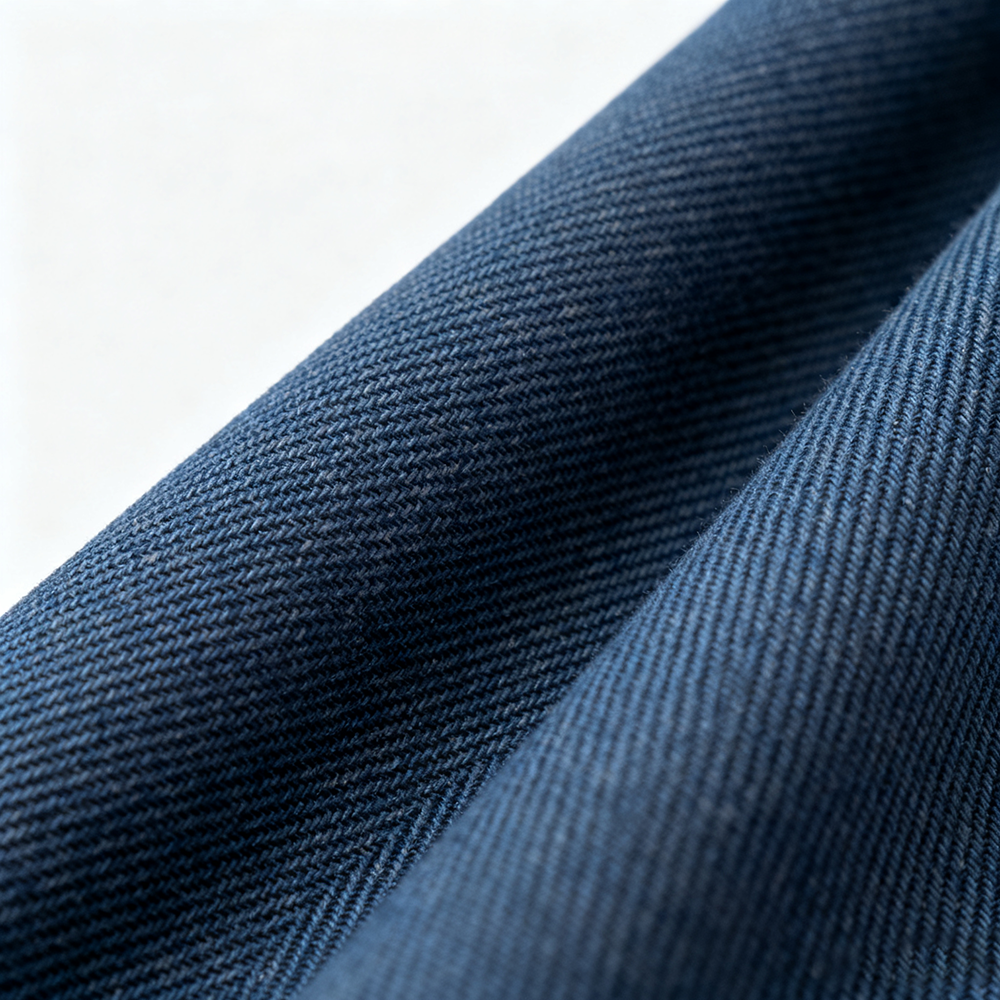
Fabric. The options we run most are duck canvas for the most rugged set; heavy cotton twill as a lighter alternative; cotton-nylon blends for abrasion resistance. For workwear sets the practical weight reference is 12 oz canvas is the reference for a workwear-led set, with lighter twills for a fashion-utility version. Ordering by weight figure alone is not enough — two fabrics can both be called the same weight and still behave differently in wash, drape and color retention, so composition and shrinkage are confirmed by wash testing.
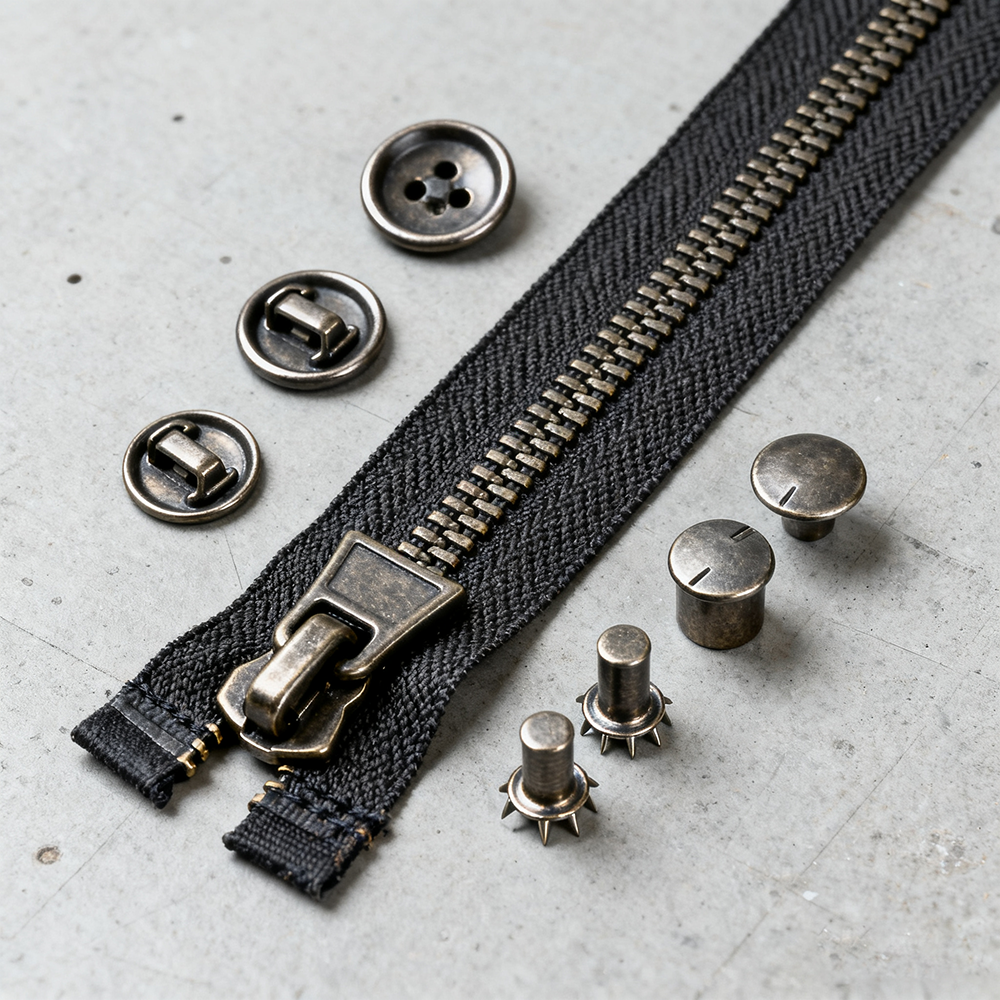
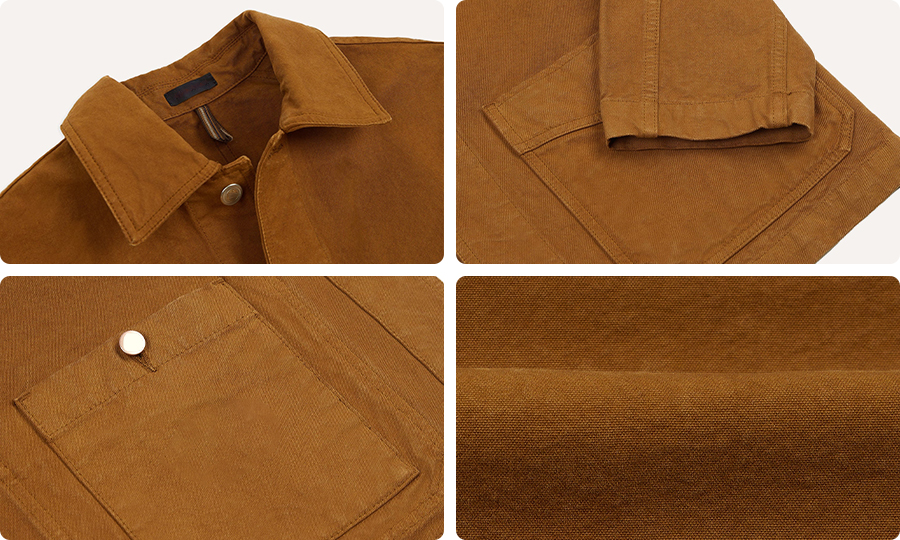
Construction and trims. The build includes a jacket and pant developed as one program off one fabric record so the set matches; reinforced stress points and bar-tacked pocket corners across both pieces; metal hardware selected consistently across jacket and pant; utility pockets planned around actual tool or hand use.
Decoration. Available routes include embroidery, patch branding, printed branding, woven labels. Decoration is approved on the actual fabric rather than on a test swatch, because stretch, pile, coating and heat sensitivity all change the result.
Private label pack. Woven neck labels, size and care labels, logo tags, hangtags, barcoded polybags and printed cartons. A garment can leave the sewing line finished and still not be retail-ready, and this layer is what closes that gap.
A note specific to this category: A workwear set is bought as a set, which makes shade matching the critical risk. Running jacket and pant from the same fabric lot and the same dye order is what keeps the two pieces identical in daylight — and it has to be planned at the fabric order stage, not discovered at packing.
Send us your specification or reference and we will tell you which of these decisions drives your cost the most — contact VANRD.
Custom workwear sets commonly fall in the $15–60+ per piece, with the set costed as two per unit FOB range. Within that band, canvas weight, reinforcement level and hardware count drive the number. A unit price quoted without fabric weight, construction details, decoration method and order volume is not comparable across suppliers.
What moves the number:
A low quote is rarely a lower cost. When three suppliers quote different prices for the same garment, the difference is usually the fabric weight, a stock trim substituted for a specified one, or a decoration method quietly swapped. Compare quotations only after aligning fabric, construction, decoration, labels, packaging and quantity — and ask each supplier to state what is excluded.
Reference points across the range: sample fees are typically USD 50–150 for a simple garment and USD 150–400 where multiple fabric panels and custom trims are involved, usually deductible from the bulk order; sea freight adds roughly USD 1–2.50 per unit at volume, and air freight costs about 5–6 times more.
Send your fabric preference, target quantity per color and decoration method, and we will price the actual bill of materials rather than a category average — contact VANRD.
VANRD's minimum order quantity for custom workwear sets is 100 pieces per color per style. It is a per-color minimum rather than a per-order minimum, so a two-color program starts at 200 pieces and a four-color program at 400. Sizes can be mixed inside a colorway as long as the total for that color reaches 100.
The minimum exists because workwear sets carry setup costs that a basic tee does not. Fabric minimums, pattern development, trims with their own supplier minimums and a separate sampling round all have to be carried by the first order. At 100 pieces those costs sit on a small quantity; at 500 pieces the same setup spreads across five times as many units, which is why unit price falls as volume rises.
Three things can push the minimum higher:
Once reinforced stress points and bar-tacked pocket corners across both pieces is approved, a second or third colorway becomes a fabric and trim decision rather than a new development cycle. Brands that plan for a reorder before the first order usually start with one color on a spec designed to accept more.
Sampling runs 7–10 days after the specification and available materials are confirmed, and bulk production takes 25–35 days after pre-production approval.
Send us your target quantity per color and size range and we will confirm the minimum against your actual workwear set fabric and trim choices, rather than quoting a generic number — contact VANRD.
Starting a workwear set line with a private label manufacturer runs in six steps: positioning, fabric and weight, tech pack, first sample, fit revision, then bulk production.
Positioning comes first because a piece sold at a value price point should not follow the same development logic as a premium piece at three times the retail. That single decision sets fabric, construction, decoration budget and packaging.
The practical reference points: fabric options are duck canvas for the most rugged set and heavy cotton twill as a lighter alternative; weight guidance is 12 oz canvas is the reference for a workwear-led set, with lighter twills for a fashion-utility version; indicative FOB pricing sits in the $15–60+ per piece, with the set costed as two range. Minimum order is 100 pieces per color per style, sampling takes 7–10 days and bulk production 25–35 days.
The most common mistake is starting with a broad first collection. A focused range of a few styles, produced properly, is what allows a reorder to be built on a proven specification.
Send your concept and target price point and we will map out a realistic first range — contact VANRD.