What to Prepare Before Starting a Custom Sweatpants Sample
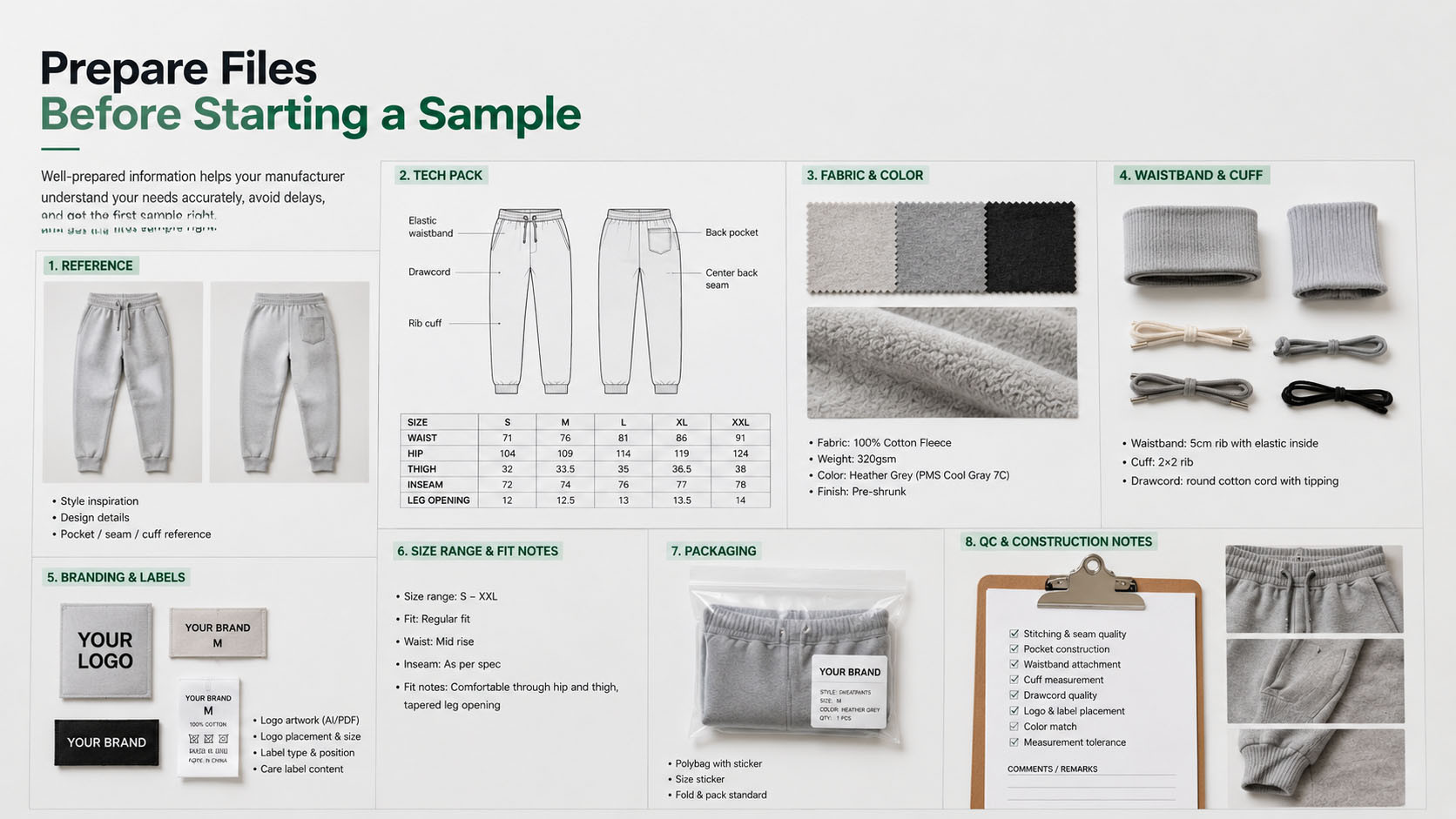
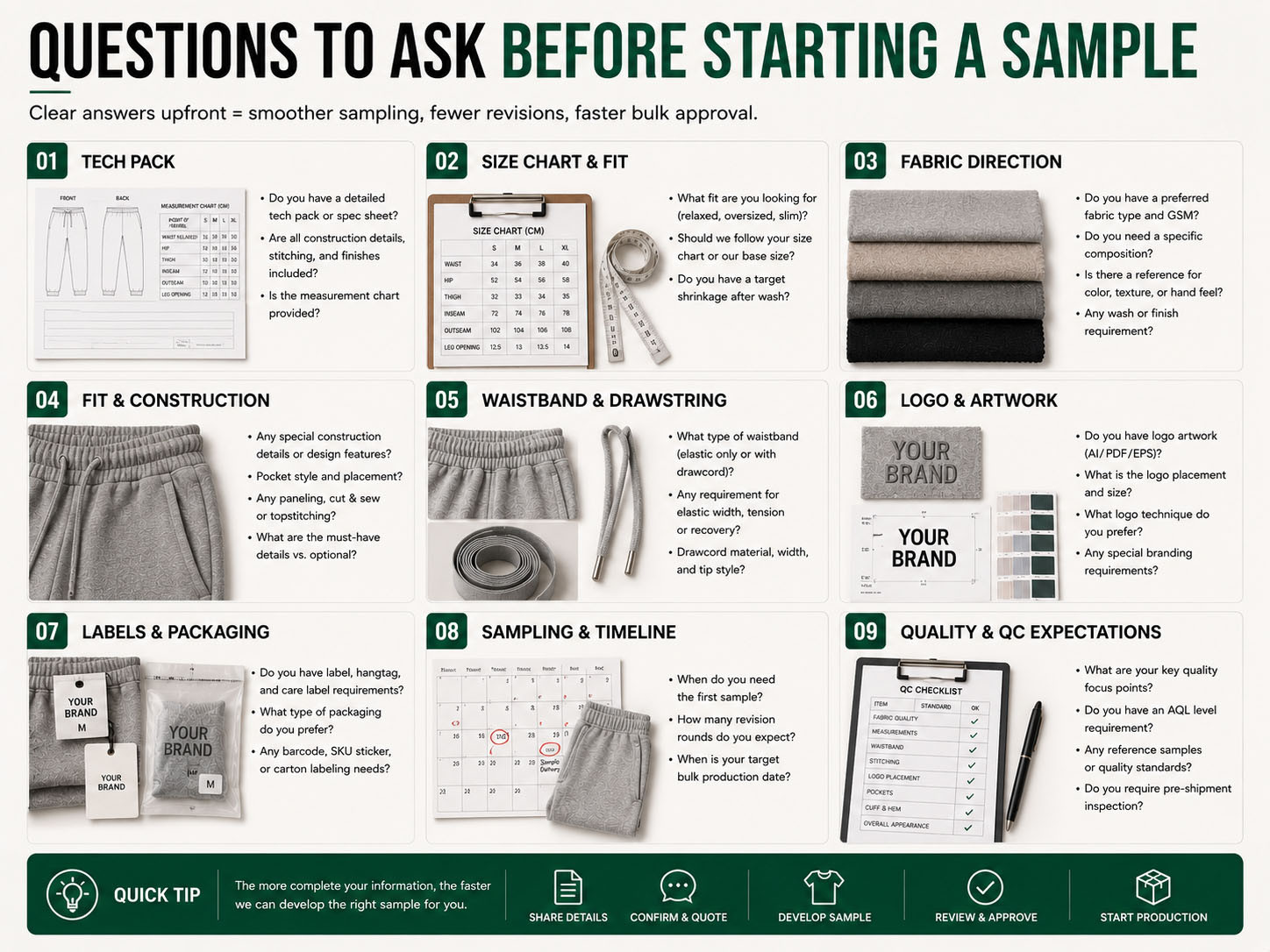
Before starting a custom sweatpants sample, brands should prepare reference images, a tech pack if available, size chart, fabric direction, fit notes, waistband and cuff details, logo artwork, label requirements, packaging needs, target quantity, and QC expectations. A clear sample brief helps the manufacturer understand what is confirmed and what still needs recommendation. Better preparation can reduce sampling confusion, revision rounds, and quotation changes.
Quick Answers
What should I prepare before starting a custom sweatpants sample?
Prepare reference images, tech pack if available, size chart, fabric direction, target fit, waistband and cuff details, pocket layout, logo artwork, label requirements, packaging needs, target quantity, and QC expectations. If some details are not final, mark them as open for factory recommendation.
Do I need a tech pack to make a custom sweatpants sample?
A tech pack is helpful, but it is not always required for the first discussion. Brands can begin with reference images, basic measurements, fabric direction, logo artwork, and target quantity. However, a clearer tech pack usually makes sampling more accurate.
What measurements should be included for a sweatpants sample?
Important measurements include waist, rise, hip, thigh, knee, inseam, outseam, leg opening, cuff width if cuffed, waistband height, and pocket position. For baggy sweatpants, rise and thigh volume are especially important. For joggers, cuff opening and taper are important.
What fabric information should I send to a manufacturer?
Send the preferred fabric structure, hand feel, approximate fabric weight, color standard, shrinkage concern, wash requirement, and rib or cuff matching direction. If you do not know the exact fabric, send reference photos and describe the target feel.
What logo files are needed for sweatpants sampling?
Send clear logo artwork, preferably in vector format if available, plus logo size, color, placement, and preferred technique. Common techniques include screen print, puff print, embroidery, woven patch, rubber patch, heat transfer, and applique.
How can I reduce sample revisions?
You can reduce sample revisions by preparing clear references, confirming measurements, choosing fabric direction early, defining waistband and cuff details, sending accurate artwork, and giving specific feedback after the first sample.
What should be approved before moving from sample to bulk production?
Before bulk production, approve fabric, color, fit, measurements, waistband, cuffs, pockets, logo method, logo placement, labels, packaging, and QC standards. Any open decision should be clarified before bulk cutting starts.
Why Sample Preparation Matters in Custom Sweatpants Manufacturing
A custom sweatpants sample is not only a test garment. It is the first physical confirmation of fabric, fit, construction, branding, and production feasibility. If the sample brief is unclear, the manufacturer has to make assumptions. Those assumptions can create wrong fabric choices, inaccurate fit, unclear pricing, or repeated revisions.
For private label brands, preparation does not mean every detail must be perfect before contacting a manufacturer. It means the buyer should clearly separate confirmed details from open questions. For example, a brand may already know the target fit and logo placement but still need fabric recommendations. Another brand may know the fabric direction but need help refining waistband and cuff construction.
Vanrd works with private label and streetwear buyers in Dongguan (Humen), China, and the sample preparation stage is usually where product expectations become production instructions. Brands can review Vanrd's OEM/ODM apparel manufacturing services to understand how custom development, sampling, and production support can be structured.
1. Prepare Reference Images and Product Direction
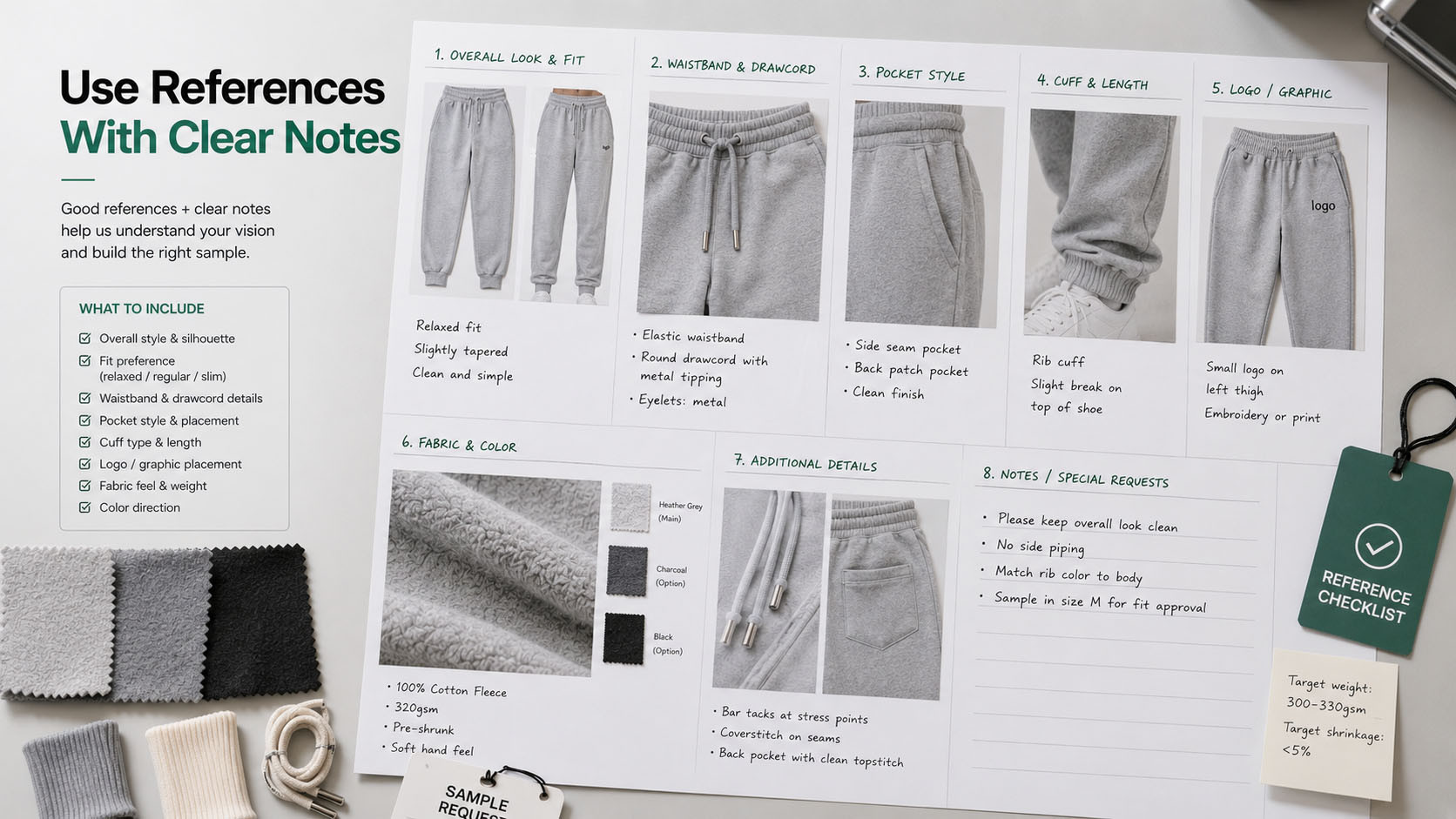
Reference images help the manufacturer understand the visual direction of the sweatpants. They are especially useful when the brand has not yet prepared a complete tech pack.
What Reference Images Should Show
Good reference images should show:
Overall silhouette
Front view
Back view
Side view if available
Waistband style
Cuff or hem style
Pocket layout
Logo placement
Fabric texture
Wash or color effect
Fit on body if relevant
A single inspiration image is usually not enough. If possible, send several references and explain what each image is used for. One image may show the fit, another may show fabric texture, and another may show logo placement.
What to Avoid
Avoid sending only vague moodboard images without production notes. A lifestyle photo may communicate style, but it may not show construction, measurements, or fabric details clearly. If the reference is only for mood, label it as mood only. If the reference is for exact fit or construction, make that clear.
2. Prepare a Tech Pack or Basic Specification Sheet
A tech pack is one of the most useful documents for custom sweatpants sampling. It turns a design idea into technical instructions that the factory can review, quote, and sample.
What a Sweatpants Tech Pack Should Include
A practical sweatpants tech pack may include:
Flat sketch
Front and back view
Measurement chart
Size grading if available
Fabric direction
Color standard
Waistband construction
Cuff or hem construction
Pocket details
Logo placement
Artwork files
Labels and packaging notes
Stitching details
Wash or finishing requirement
QC notes
If the tech pack is not complete, the buyer can still start the discussion. The key is to identify which details are missing and ask the manufacturer to recommend options.
Basic Specification Sheet If You Do Not Have a Full Tech Pack
If you do not have a full tech pack, prepare a basic sample brief with:
Product type
Target fit
Reference images
Main measurements
Fabric direction
Logo artwork
Waistband and cuff notes
Target quantity
Target timeline
Open questions
This basic version is not as strong as a full tech pack, but it can still help the factory understand the project more accurately.
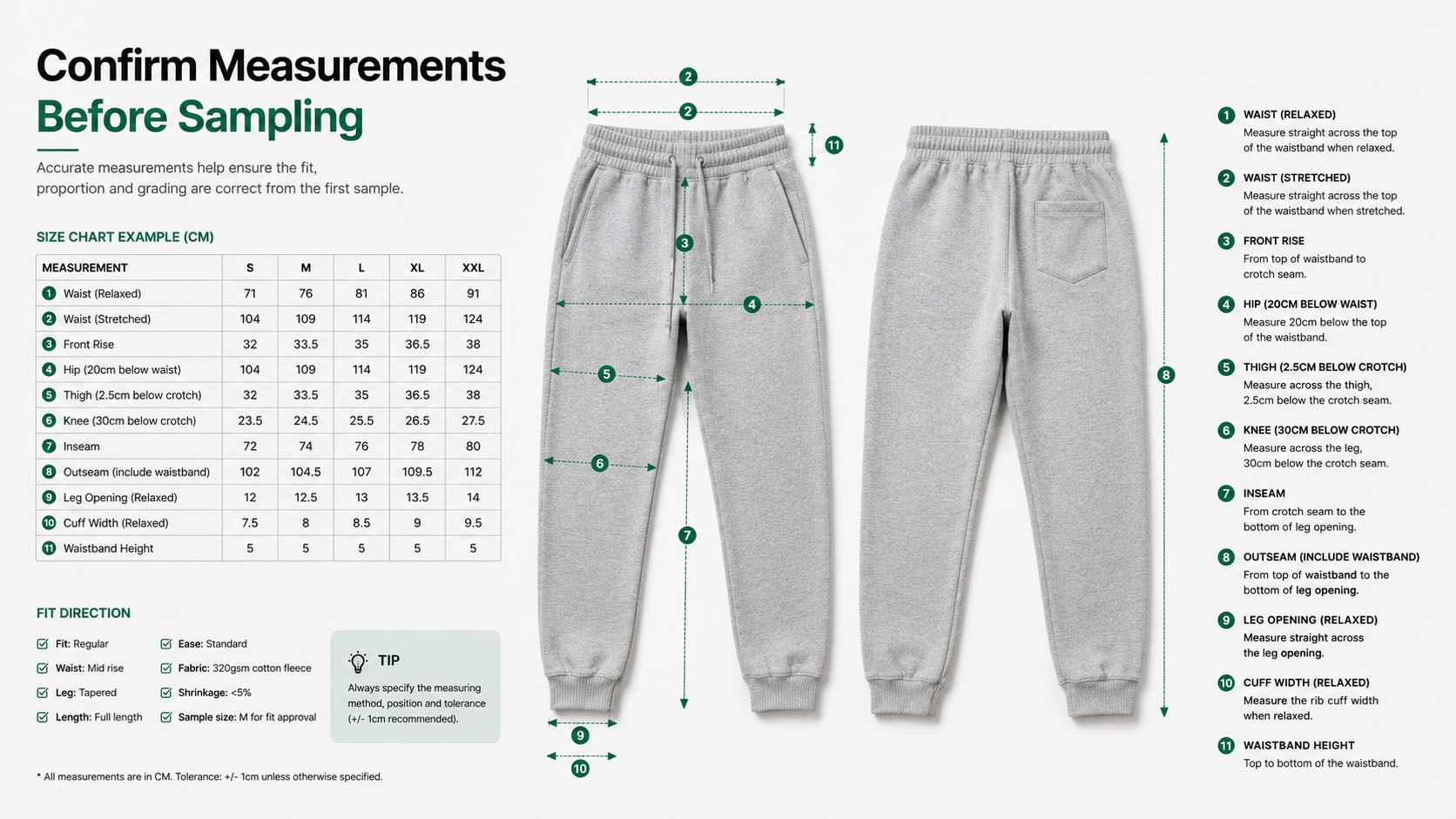
3. Prepare the Size Chart and Fit Direction
Fit is one of the most common reasons for sweatpants sample revisions. A clear size chart and fit direction can reduce confusion before the first sample is made.
Key Measurements to Prepare
A sweatpants size chart should include:
Waist
Rise
Hip
Thigh
Knee
Inseam
Outseam
Leg opening
Cuff width if cuffed
Waistband height
Pocket position if important
For baggy sweatpants, rise, thigh width, knee width, leg opening, and inseam are especially important. For joggers, taper, cuff opening, cuff recovery, and lower-leg shape become more important.
Describe the Fit in Production Language
Instead of only saying "baggy," "relaxed," or "oversized," use more specific language.
Better examples:
Relaxed rise with wide thigh and open leg
Baggy fit with controlled stacking at the ankle
Tapered jogger with relaxed upper leg and firm cuff
Wide-leg sweatpants without tight cuffs
Heavyweight fleece sweatpants with structured drape
Clear fit language helps the manufacturer make better pattern decisions before cutting the sample.
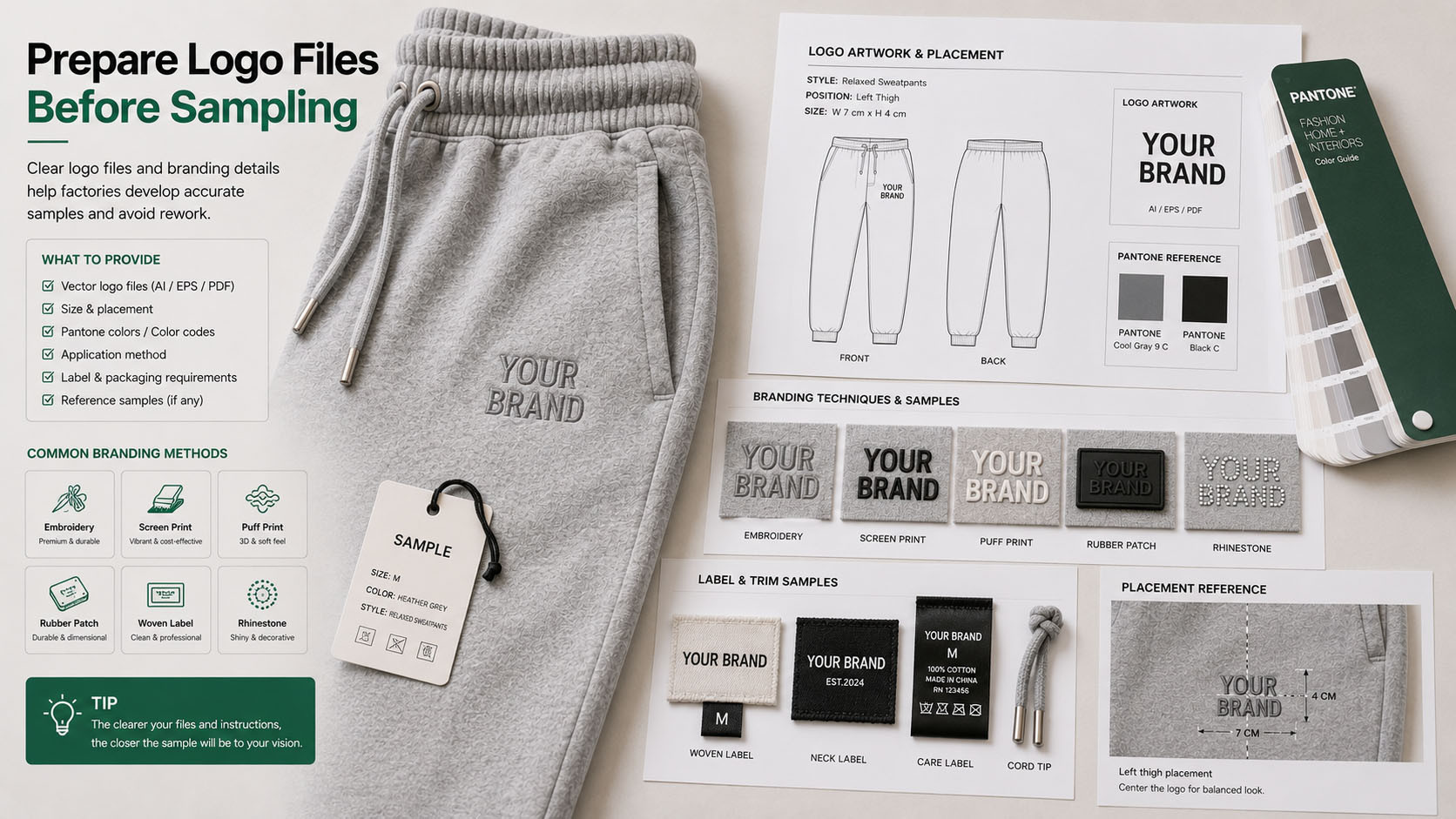
4. Prepare Fabric Direction Before Sampling
Fabric direction affects sample accuracy, quotation, fit behavior, sewing difficulty, shrinkage, and final hand feel. A manufacturer needs more than the phrase "fleece fabric."
Fabric Details to Confirm
Prepare these details if available:
Fabric structure
Approximate fabric weight
Composition preference
Inside surface feel
Hand feel direction
Color standard
Shrinkage concern
Wash requirement
Rib or cuff matching direction
Seasonal target
Price direction
Common options for sweatpants include brushed fleece, loopback fleece, French terry, cotton-poly fleece, and other fleece blends. Each option can create a different look, feel, and production requirement.
What If You Do Not Know the Exact Fabric?
If you do not know the exact fabric, describe the product goal. For example:
"We want heavyweight baggy sweatpants with a structured hand feel."
"We want soft brushed fleece for fall and winter."
"We want a cleaner French terry feel for year-round wear."
"We want fabric that can work with pigment wash and embroidery."
The factory can then recommend suitable fabric directions for sampling.
For fabric selection, wash, printing, embroidery, and trim development, buyers can review Vanrd's fabric and technique customization support.
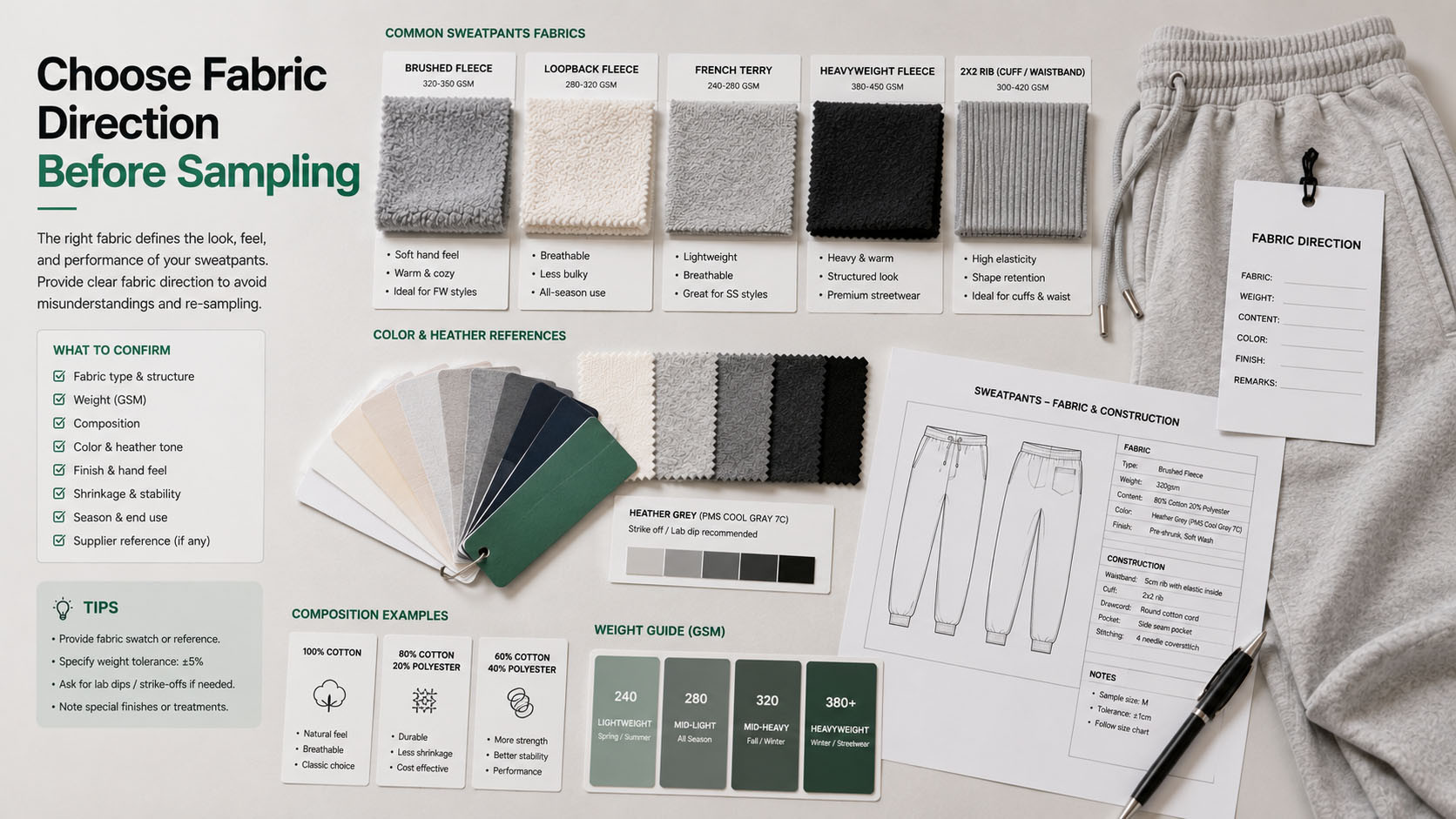
5. Prepare Waistband, Cuffs, and Pocket Requirements
Waistband, cuffs, and pockets are small details that strongly affect comfort, function, and perceived quality. They should be clarified before sample development.
Waistband Details
Confirm:
Elastic width
Elastic strength
Waistband height
Drawcord type
Drawcord placement
Hidden or exposed drawcord
Eyelet or buttonhole structure
Topstitching method
Inside waistband finish
A stronger waistband may be needed for heavier fleece or baggy sweatpants with more fabric volume. A lighter jogger may need a cleaner and more flexible waistband.
Cuff or Hem Details
Confirm:
Open hem or cuffed hem
Cuff fabric
Cuff height
Cuff opening
Rib recovery
Sewing method
Leg shape balance
Joggers rely more heavily on cuff recovery. Baggy sweatpants may use open hems, loose cuffs, or wider cuff openings depending on the target silhouette.
Pocket Details
Confirm:
Side pockets
Back pocket
Cargo pocket
Zipper pocket
Pocket bag material
Pocket opening shape
Pocket placement
Bar tack or reinforcement
Pocket placement should be checked in the sample because a small position error can affect the full garment appearance.
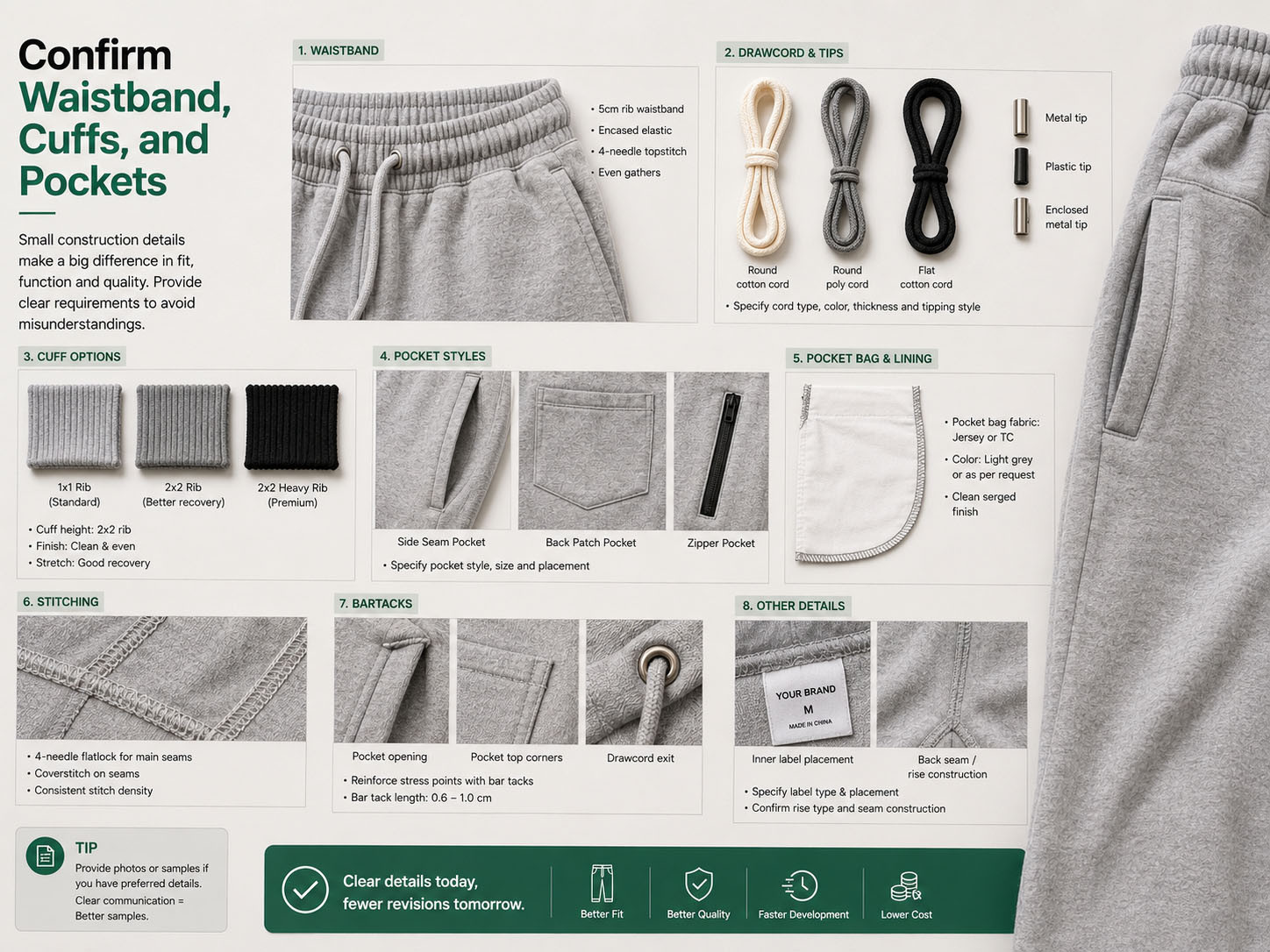
6. Prepare Logo Artwork and Branding Details
Branding should be prepared before sampling because logo method, placement, size, and color can affect fabric selection, wash process, sewing sequence, and sample cost.
Logo Details to Prepare
Prepare:
Logo artwork file
Logo size
Logo color
Logo placement
Technique preference
Artwork position on each size if needed
Distance from pocket, seam, or cuff
Brand label requirement
Hangtag requirement
Packaging sticker or barcode requirement
Common Logo Techniques for Sweatpants
Common methods include:
Screen print
Puff print
Heat transfer
Embroidery
Applique
Woven patch
Rubber patch
Reflective print
Rhinestone decoration
Each technique has different production requirements. For example, embroidery on thick fleece may need backing and puckering control. Puff print may need test samples. Rhinestone decoration needs placement and adhesion review. Washed sweatpants may require additional logo compatibility checks.
7. Prepare Wash, Dye, or Finishing References If Needed
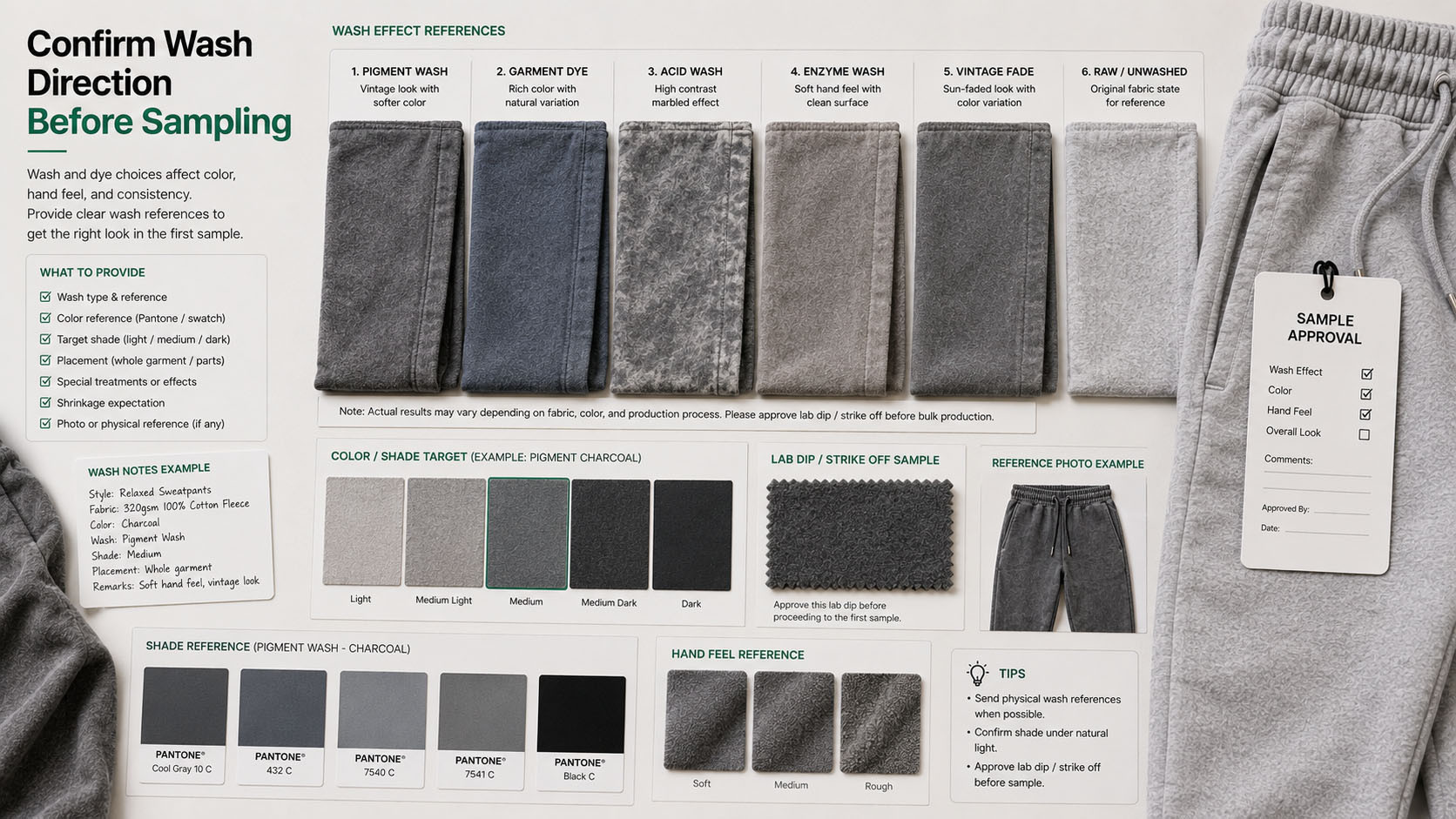
If the sweatpants require garment dye, pigment wash, acid wash, enzyme wash, faded effect, vintage wash, or other finishing, the buyer should prepare references before sampling.
What to Prepare for Washed Sweatpants
Prepare:
Wash reference images
Target shade
Color standard
Acceptable variation range
Fabric direction
Logo method
Shrinkage concern
Hand feel expectation
Sample approval standard
Wash can change fabric hand feel, measurements, shade, and logo appearance. Therefore, the wash reference should be clear before the sample is approved.
Why Wash References Matter
Words like vintage, faded, washed, or distressed are not precise enough. One buyer's "vintage wash" may look very different from another buyer's expectation. Visual references help reduce this uncertainty.
8. Prepare Label, Packaging, and Private Label Requirements
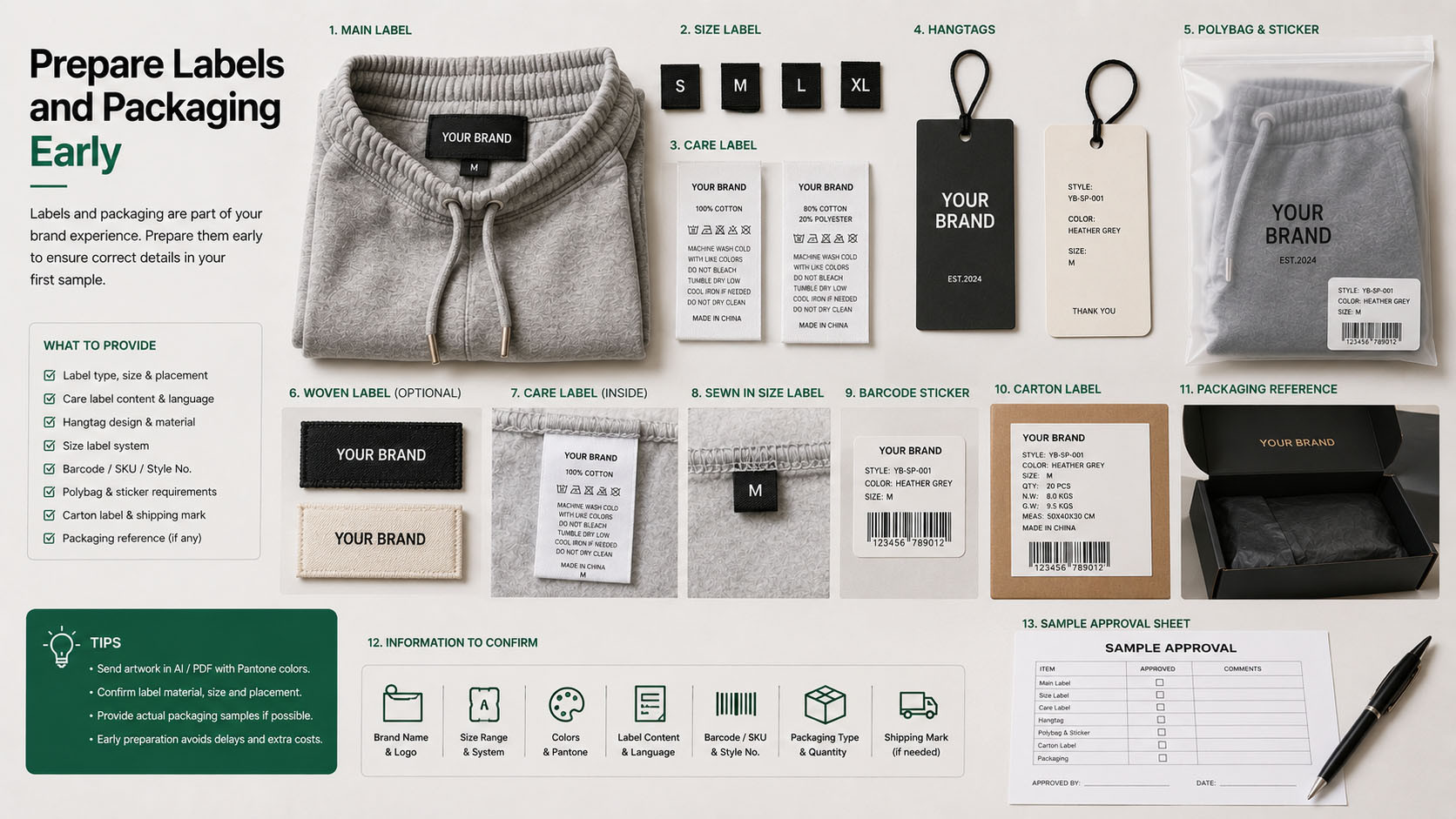
Private label details should be discussed before sampling, especially if the brand wants a retail-ready or wholesale-ready product package.
Label Requirements
Prepare:
Main label
Size label
Care label
Woven label
Printed label
Patch label
Country or care information if needed
Label placement
Label artwork
Packaging Requirements
Prepare:
Hangtag
Sticker
Polybag
Barcode label
Folding method
Carton mark
Packaging sample reference
Special packing instructions
Packaging details can affect sample presentation, production planning, and final quotation. If packaging is added late, the quotation and timeline may need to be updated.
9. Prepare Target Quantity, MOQ Direction, and Timeline
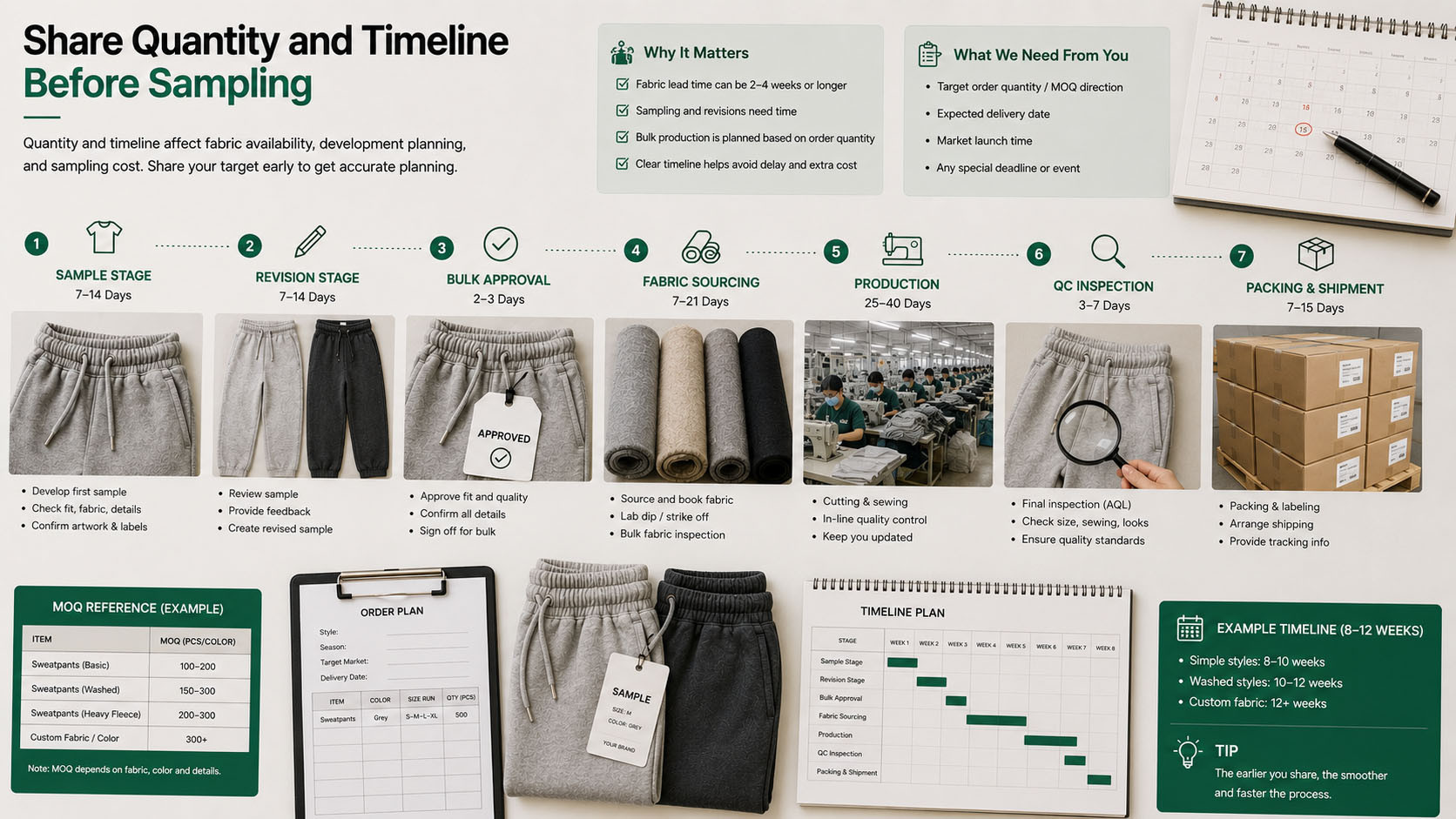
Quantity and timeline affect quotation, fabric sourcing, trim ordering, sampling priority, and production planning. Buyers should prepare realistic information before requesting a sample.
Quantity Information to Prepare
Prepare:
Target first order quantity
Number of colors
Number of sizes
Potential repeat order expectation
Sample quantity
Sales channel if relevant
Wholesale or ecommerce plan if relevant
MOQ is not only a factory rule. It may also be affected by fabric suppliers, dyeing or wash suppliers, trim suppliers, label suppliers, and packaging suppliers.
Timeline Information to Prepare
Prepare:
Desired sample review date
Target bulk delivery window
Launch or drop date if relevant
Approval deadline
Urgency level
Potential revision time
The more complex the fabric, wash, branding, or packaging, the more important timeline planning becomes.
10. Prepare QC Expectations Before the First Sample
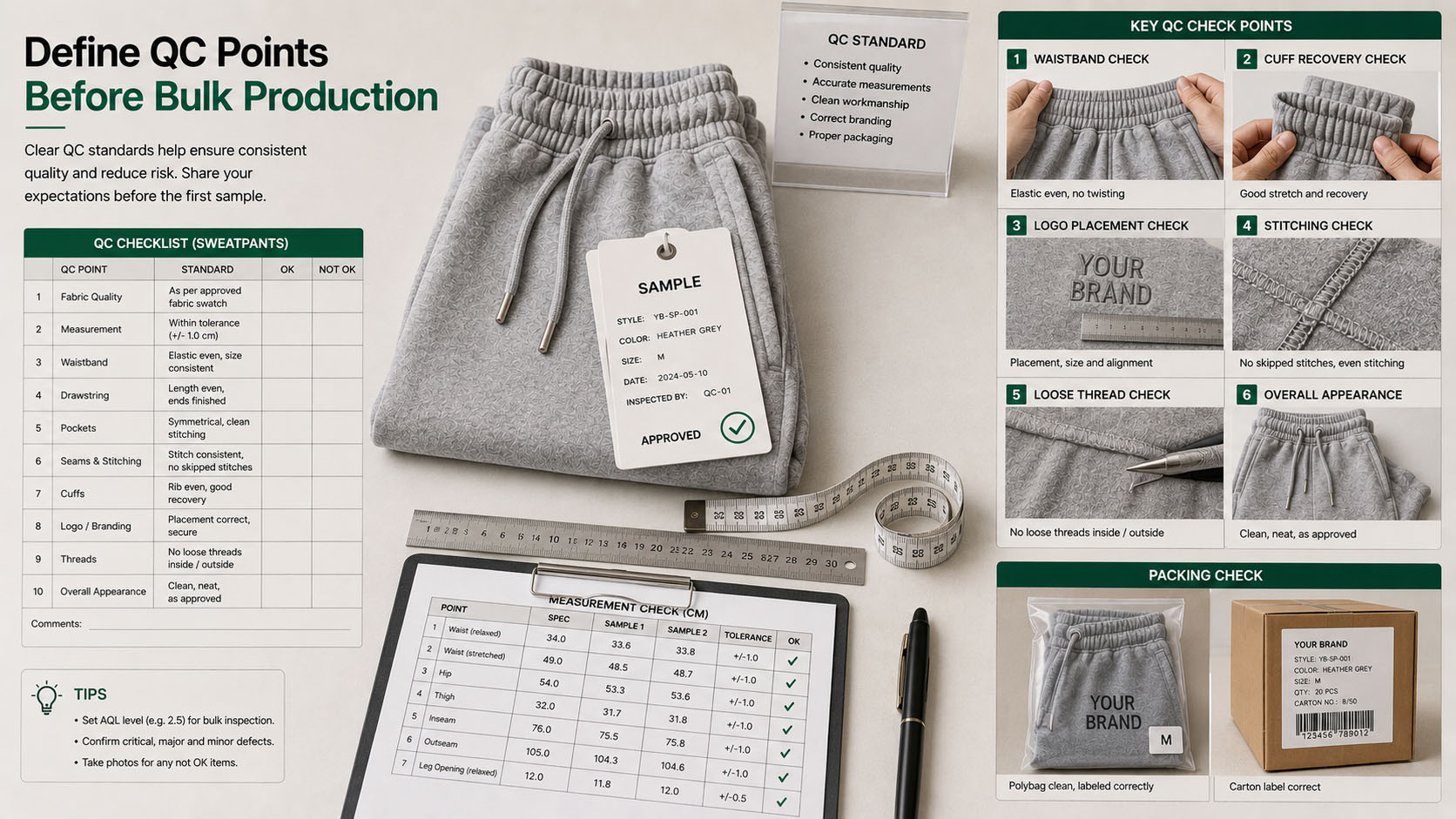
QC should not be discussed only after bulk goods are finished. Brands should prepare basic QC expectations before sampling because the sample becomes the approval standard for bulk production.
Sweatpants QC Points to Prepare
Important QC points include:
Fabric hand feel
Fabric color
Shrinkage
Waist measurement
Rise
Hip
Thigh
Inseam
Leg opening
Cuff recovery
Waistband tension
Pocket position
Logo placement
Stitching quality
Loose threads
Packing method
Why QC Expectations Should Start Early
If a brand has strict measurement tolerance or packaging requirements, the factory should know early. This helps the manufacturer develop the sample with the final production standard in mind.
For inspection planning and production quality control, buyers can review Vanrd's quality control and inspection standards.
11. Sample Preparation Checklist for Buyers
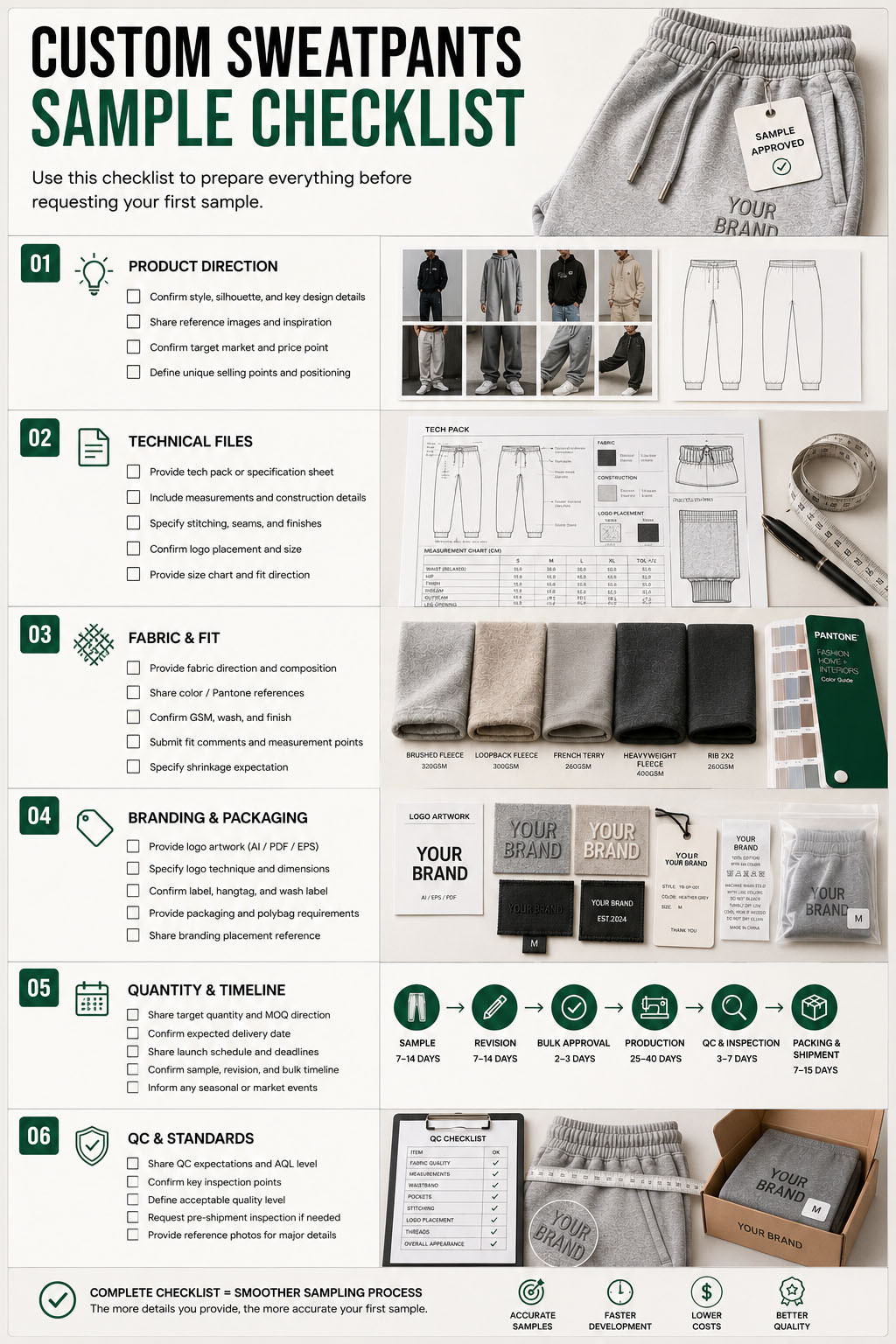
Use this checklist before sending a custom sweatpants sample request.
Product Direction
Sweatpants type confirmed
Target customer confirmed
Reference images prepared
Fit direction explained
Product goal clarified
Open questions listed
Technical Files
Tech pack prepared if available
Size chart prepared
Measurement points confirmed
Artwork files prepared
Color standard prepared
Construction notes prepared
Fabric and Fit
Fabric structure direction confirmed
Fabric weight direction confirmed
Hand feel expectation explained
Wash requirement confirmed if needed
Rise, thigh, and leg shape reviewed
Cuff or hem direction confirmed
Branding and Packaging
Logo file prepared
Logo size confirmed
Logo placement confirmed
Logo technique selected or open for recommendation
Labels prepared
Hangtag and packaging direction confirmed
Quantity and QC
Target quantity prepared
Color and size breakdown prepared if available
Timeline shared
QC points listed
Packing requirements prepared
Sample approval process planned
12. How to Communicate Your Sample Request to a Manufacturer
A good sample request should be specific, organized, and easy for the manufacturer to review. It should not be a long scattered message with missing details.
A Better Sample Request Structure
Use this structure:
Project overview
Product type
Reference images
Fabric direction
Fit direction
Size chart or key measurements
Waistband and cuff details
Logo artwork and placement
Labels and packaging
Target quantity
Timeline
QC concerns
Open questions
Example of Clear Sample Request Language
"We are developing custom baggy sweatpants for a private label streetwear collection. The target fit is relaxed with more thigh volume and a wider leg opening. We prefer midweight to heavyweight fleece with a structured hand feel. Please review the attached reference images, size chart, logo artwork, and waistband details. We need your recommendation on rib matching and cuff construction before sampling."
This type of request gives the factory enough direction while still leaving room for professional feedback.
13. Factory Reality: Why Incomplete Sample Requests Cause Delays
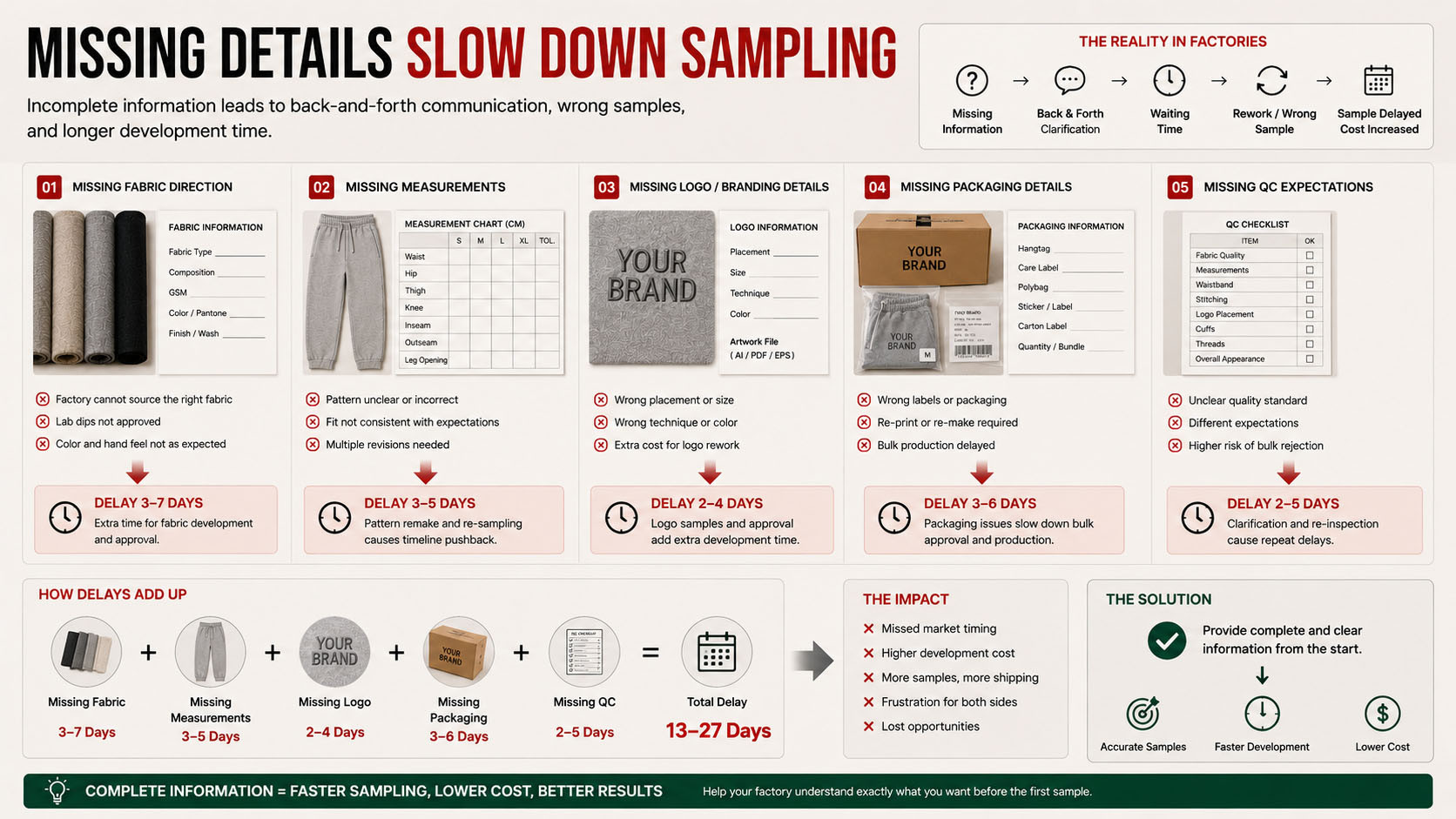
Incomplete sample requests often create delays because the manufacturer must stop and ask for missing details before development can move forward. In some cases, the factory may make assumptions, and those assumptions may lead to sample revisions.
Missing Fabric Direction
If the buyer does not explain fabric structure, hand feel, or weight direction, the sample may not match the expected look or cost level.
Missing Measurements
If the buyer only says "baggy" or "relaxed," the pattern may not match the intended silhouette. Measurement points help reduce misunderstanding.
Missing Logo Details
If logo size, file format, technique, or placement is unclear, the branding sample may need to be revised.
Missing Packaging Requirements
If packaging is added after sampling, the quote and production plan may need to be updated.
Missing QC Expectations
If measurement tolerance, packing method, or inspection concerns are not discussed early, the sample may not reflect the final bulk standard.
Vanrd's custom apparel service process can help buyers understand how sample review, revision, and bulk approval fit into the development workflow.
14. Common Mistakes Before Starting a Custom Sweatpants Sample
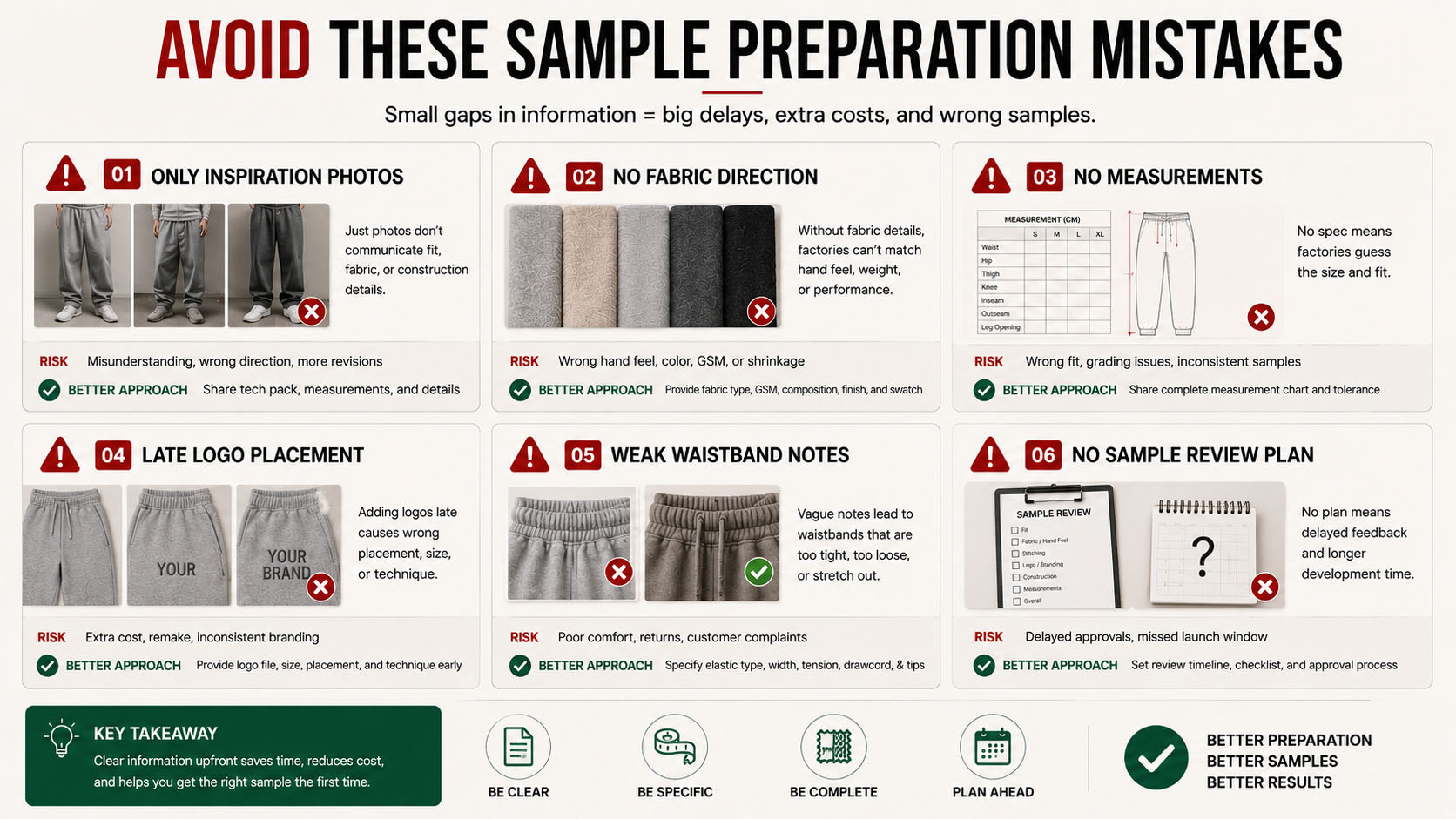
Most sample problems come from unclear preparation rather than the idea itself.
Mistake 1: Sending Only Inspiration Photos
Inspiration photos are useful, but they do not replace measurements, fabric direction, and construction notes.
Mistake 2: Asking for a Quote Without Fabric Details
The quote may change later if the fabric weight, wash process, logo method, or packaging requirement changes.
Mistake 3: Using Generic Fit Words Without Measurements
Words like baggy, oversized, relaxed, and tapered mean different things to different people. Measurements and references make them clearer.
Mistake 4: Confirming Logo Placement Too Late
Logo placement affects sample development, decoration testing, and bulk standards. It should be prepared before sampling.
Mistake 5: Ignoring Waistband and Cuff Details
Waistband and cuffs affect comfort, silhouette, and quality feel. They should not be treated as minor details.
Mistake 6: Not Planning How the Sample Will Be Reviewed
A sample should be reviewed by fabric, fit, measurements, waistband, cuffs, branding, stitching, and overall appearance. Without a review plan, feedback may be vague.
Next Steps Before Starting a Custom Sweatpants Sample
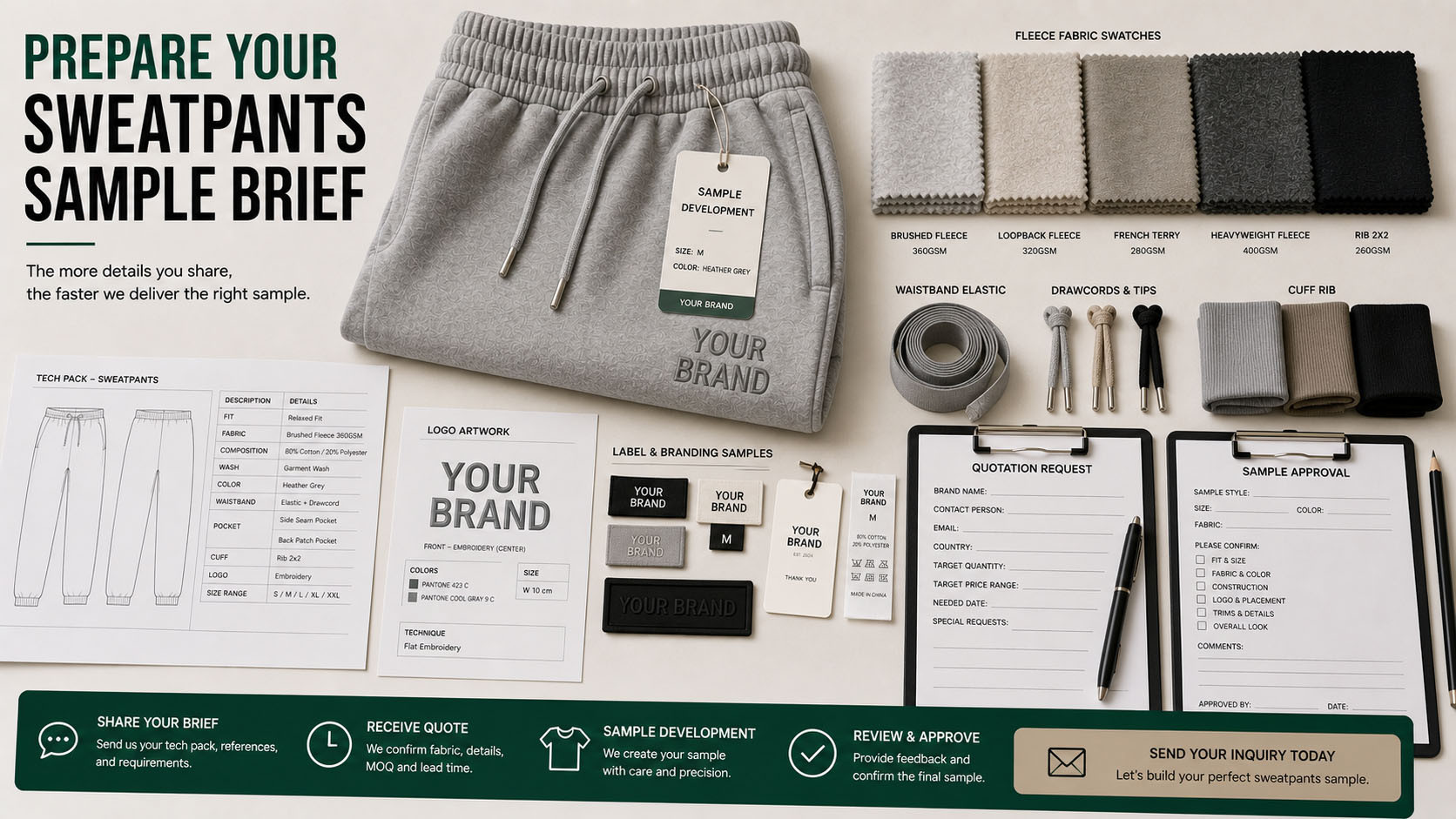
Before starting a custom sweatpants sample, brands should organize the project into confirmed details and open decisions. The goal is not to have every answer ready. The goal is to give the manufacturer enough information to develop the right first sample and ask useful follow-up questions.
Prepare These Details First
Product type
Reference images
Tech pack or basic specification sheet
Size chart or key measurements
Fabric direction
Fit direction
Waistband and cuff notes
Pocket layout
Logo artwork
Label and packaging requirements
Target quantity
Target timeline
QC expectations
Open questions for factory recommendation
Vanrd supports private label and streetwear buyers with custom sweatpants sampling, fabric selection, fit development, trim coordination, logo technique support, bulk production, and quality control. Buyers preparing a new sweatpants program can also review Vanrd's factory strength before starting development.
FAQ
What do I need before making a custom sweatpants sample?
You should prepare reference images, tech pack if available, size chart, fabric direction, fit notes, waistband and cuff details, logo artwork, label requirements, packaging needs, target quantity, timeline, and QC expectations.
Can I start a sample without a full tech pack?
Yes, you can start the discussion without a full tech pack, but you should still provide reference images, key measurements, fabric direction, logo artwork, target fit, and target quantity. The factory can then identify what still needs to be confirmed.
How long does a custom sweatpants sample take?
Sampling time depends on fabric availability, pattern complexity, logo method, wash requirement, trim sourcing, packaging needs, and buyer feedback speed. More complex styles usually need more review before bulk approval.
What measurements are most important for sweatpants sampling?
Important measurements include waist, rise, hip, thigh, knee, inseam, outseam, leg opening, cuff width, waistband height, and pocket position. The most important points depend on whether the style is baggy, tapered, stacked, or cuffed.
What files should I send for logo development?
Send logo artwork, preferred logo size, color, placement, technique, and any brand label files. Vector artwork is useful when available, especially for embroidery, print, patch, or private label development.
Should packaging be prepared before sample development?
Packaging should be discussed early if the brand needs private label presentation, hangtags, barcode labels, stickers, polybags, or special folding. Late packaging changes can affect quotation and production planning.
What should I check when reviewing the first sweatpants sample?
Check fabric hand feel, fit, measurements, waistband comfort, cuff shape, pocket placement, logo size and placement, stitching, loose threads, label placement, and overall silhouette. Feedback should be specific and measurable.
Final CTA
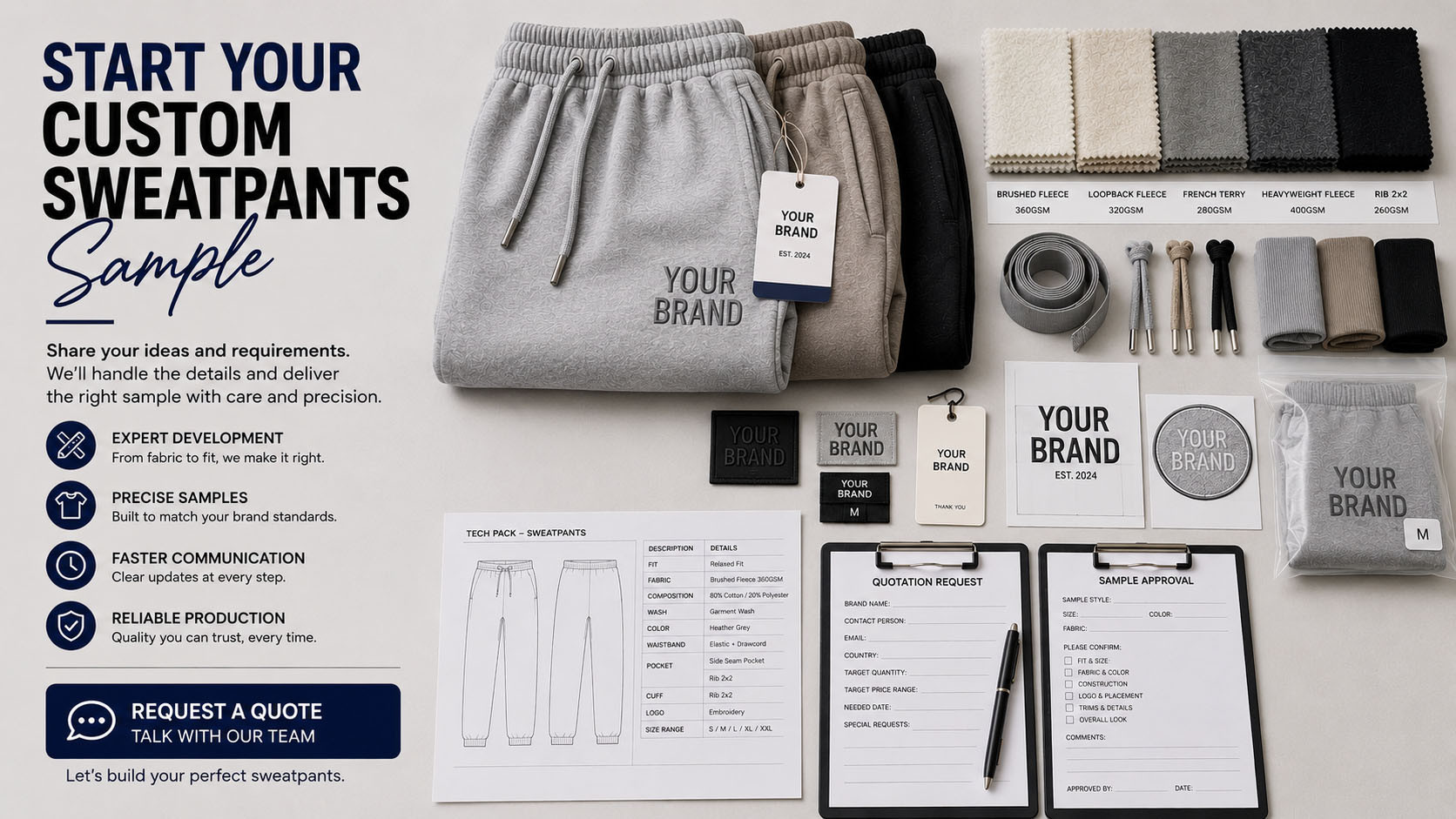
A custom sweatpants sample becomes easier to develop when the brand prepares clear files, fabric direction, fit notes, waistband and cuff requirements, branding details, packaging needs, and QC expectations before sampling starts. Better preparation helps reduce confusion, improve sample accuracy, and make quotation discussions more practical.
If your brand is preparing baggy sweatpants, joggers, heavyweight fleece sweatpants, washed sweatpants, or private label fleece bottoms, send your project brief, reference images, tech pack, and target quantity to Vanrd. Our team can review your requirements and help plan the next step for sampling and production.
Contact Vanrd through the custom apparel inquiry page to discuss your custom sweatpants sample requirements.