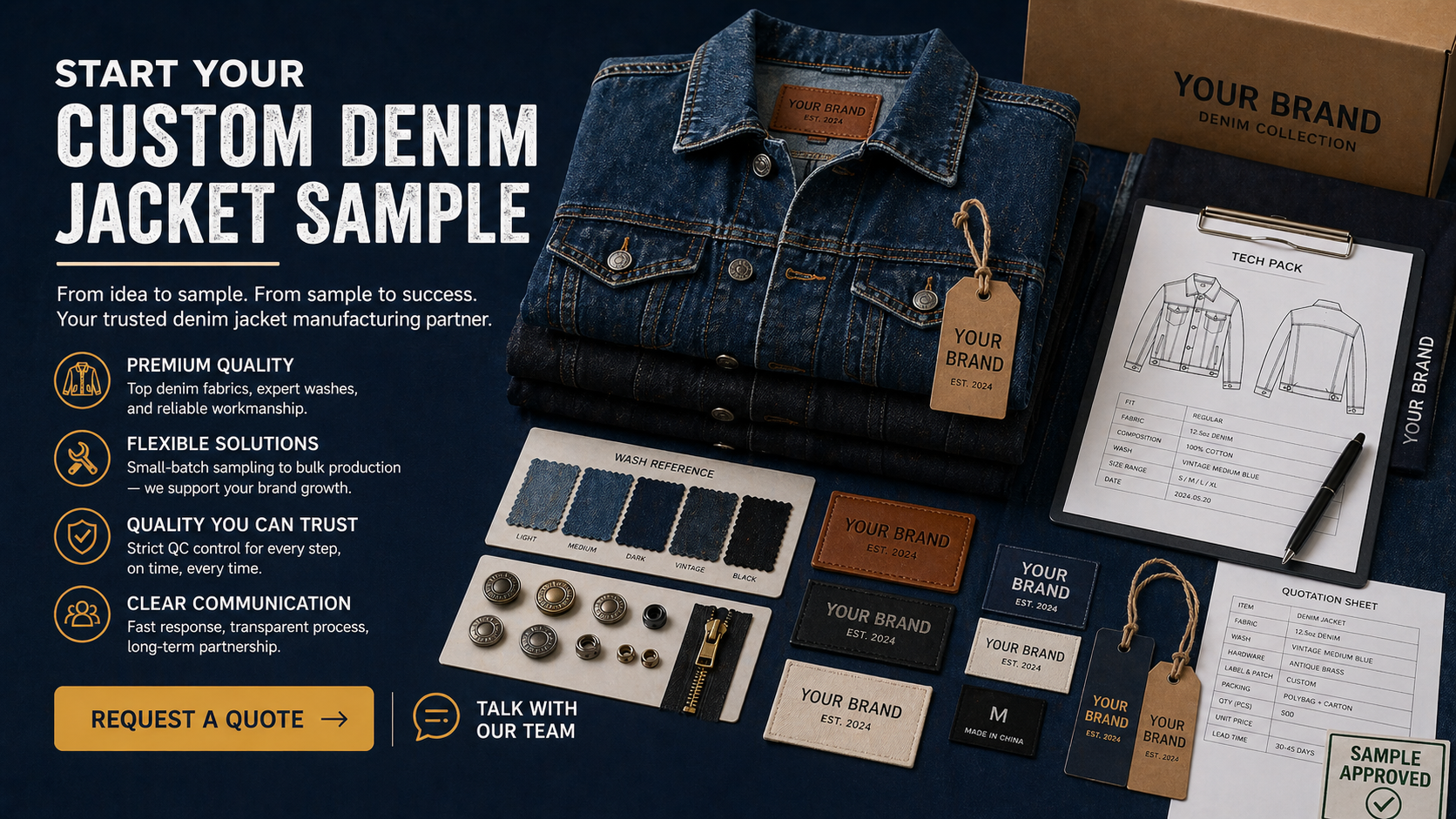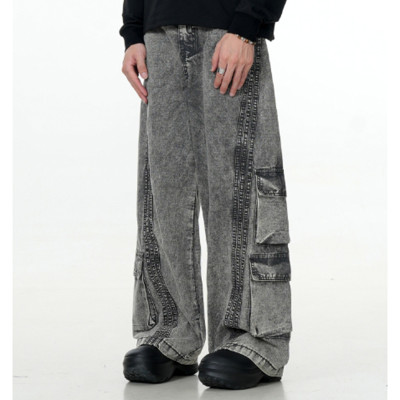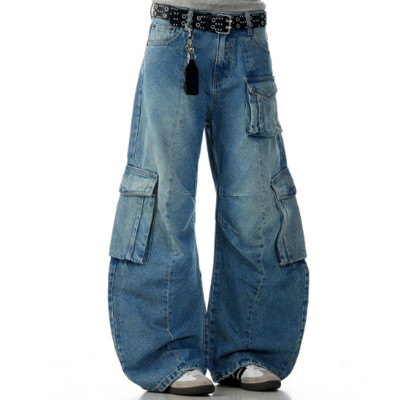
Top 7 Denim Jacket Manufacturers for Fashion Brands
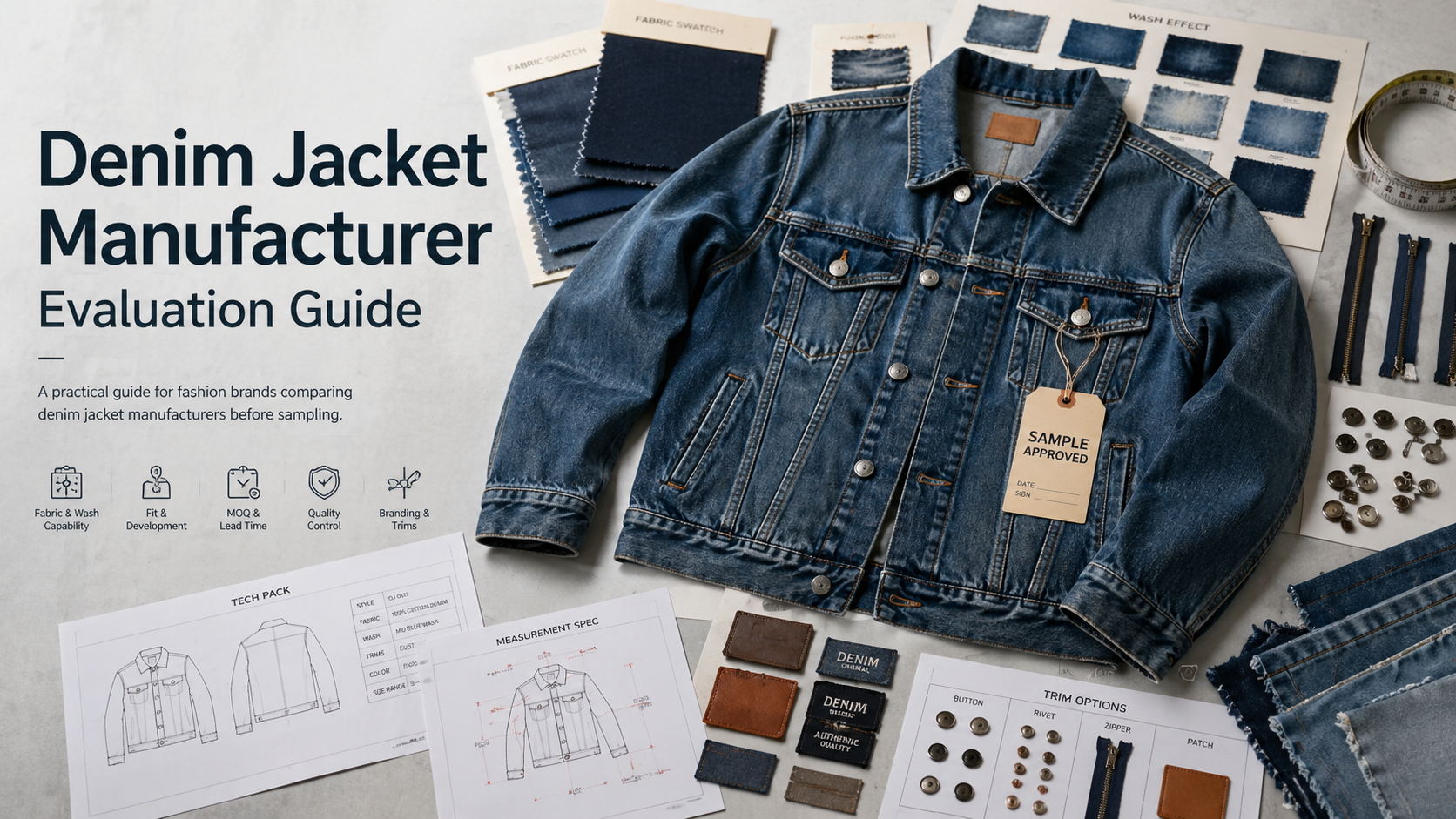
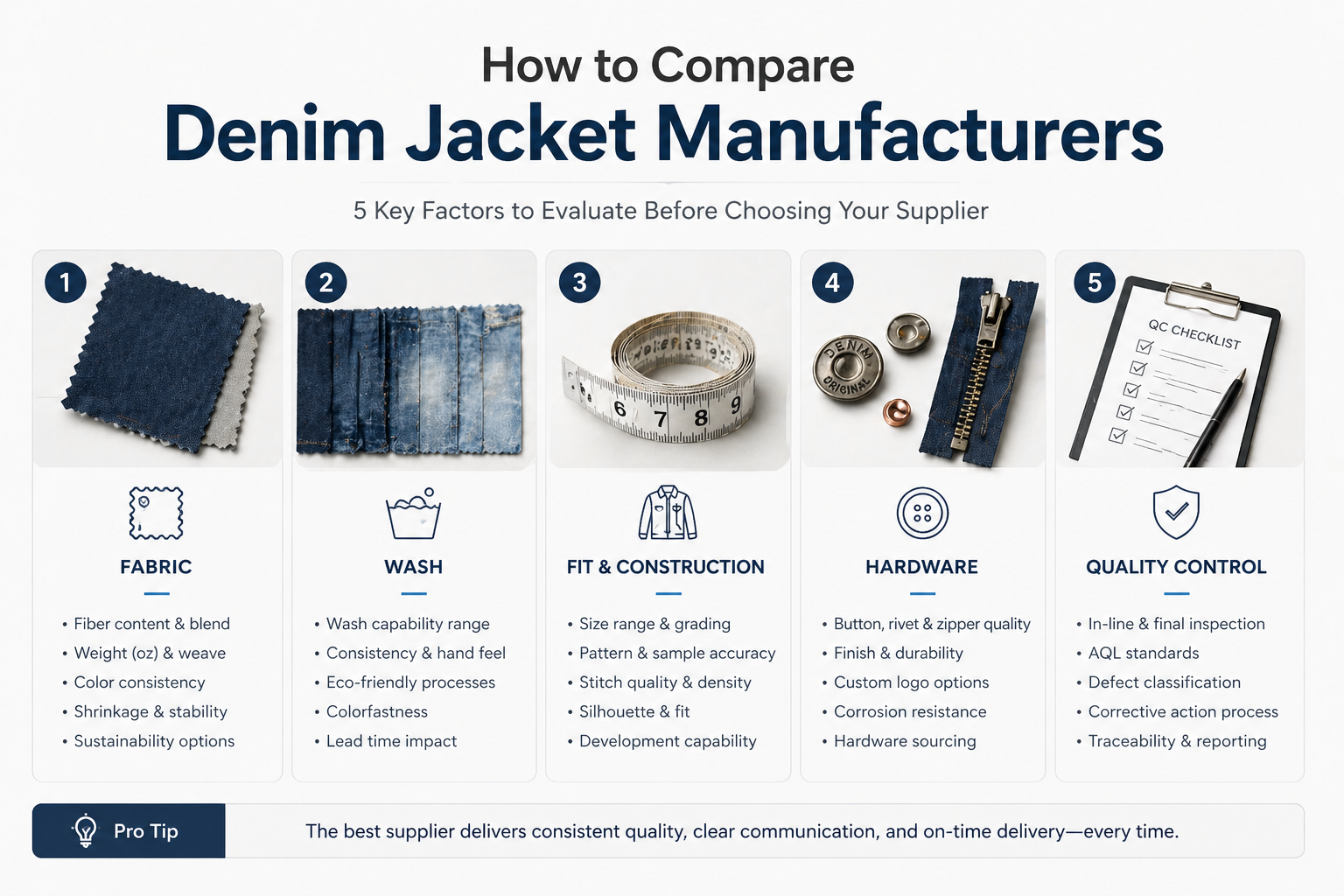
The right denim jacket manufacturer depends on fabric sourcing, wash development, fit control, trim selection, branding method, production workflow, and QC standards. Fashion brands should compare suppliers by denim jacket capability, not only by price or sample photos. A strong manufacturer should help confirm fabric weight, wash effect, shrinkage, measurements, hardware, logo placement, and bulk inspection points before production.
Quick Answers
What is a denim jacket manufacturer?
A denim jacket manufacturer is a production partner that helps brands develop and produce denim jackets based on fabric, fit, wash effect, trims, labels, and quality requirements. Depending on the factory, this may include pattern development, sample making, wash testing, bulk production, and final inspection.
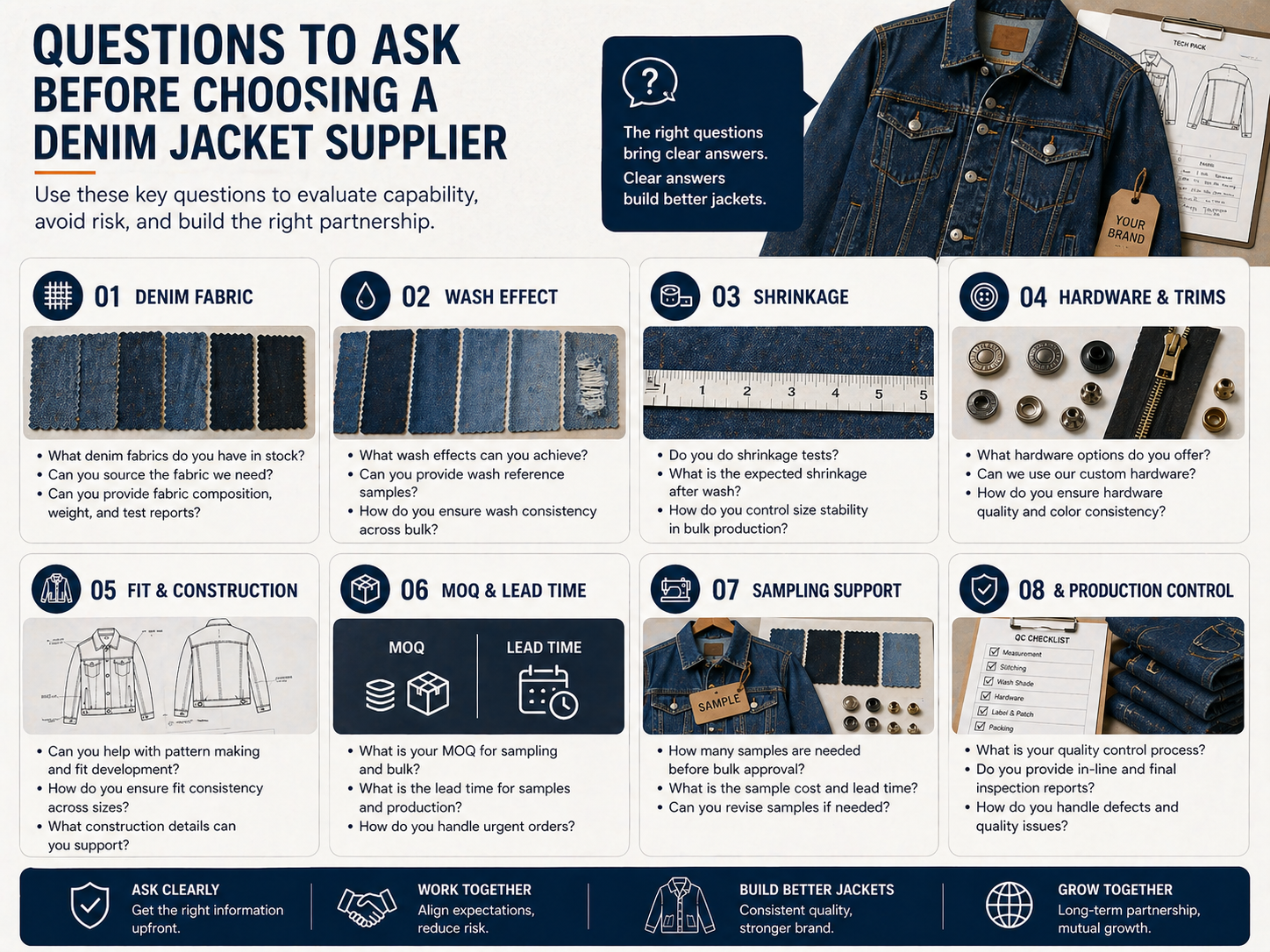
How should fashion brands choose a denim jacket manufacturer?
Fashion brands should choose a denim jacket manufacturer by checking denim fabric knowledge, wash capability, pattern control, hardware sourcing, sample workflow, MOQ planning, and QC standards. A supplier should be evaluated by whether it can control the exact jacket your brand wants to produce.
What type of denim jacket manufacturer is best for washed denim styles?
Washed denim jackets need a manufacturer that can control shrinkage, shade variation, hand feel, distressing, seam puckering, and bulk consistency. Wash capability is especially important for vintage, stone wash, enzyme wash, acid wash, and distressed denim jacket programs.
What should brands prepare before requesting a denim jacket sample?
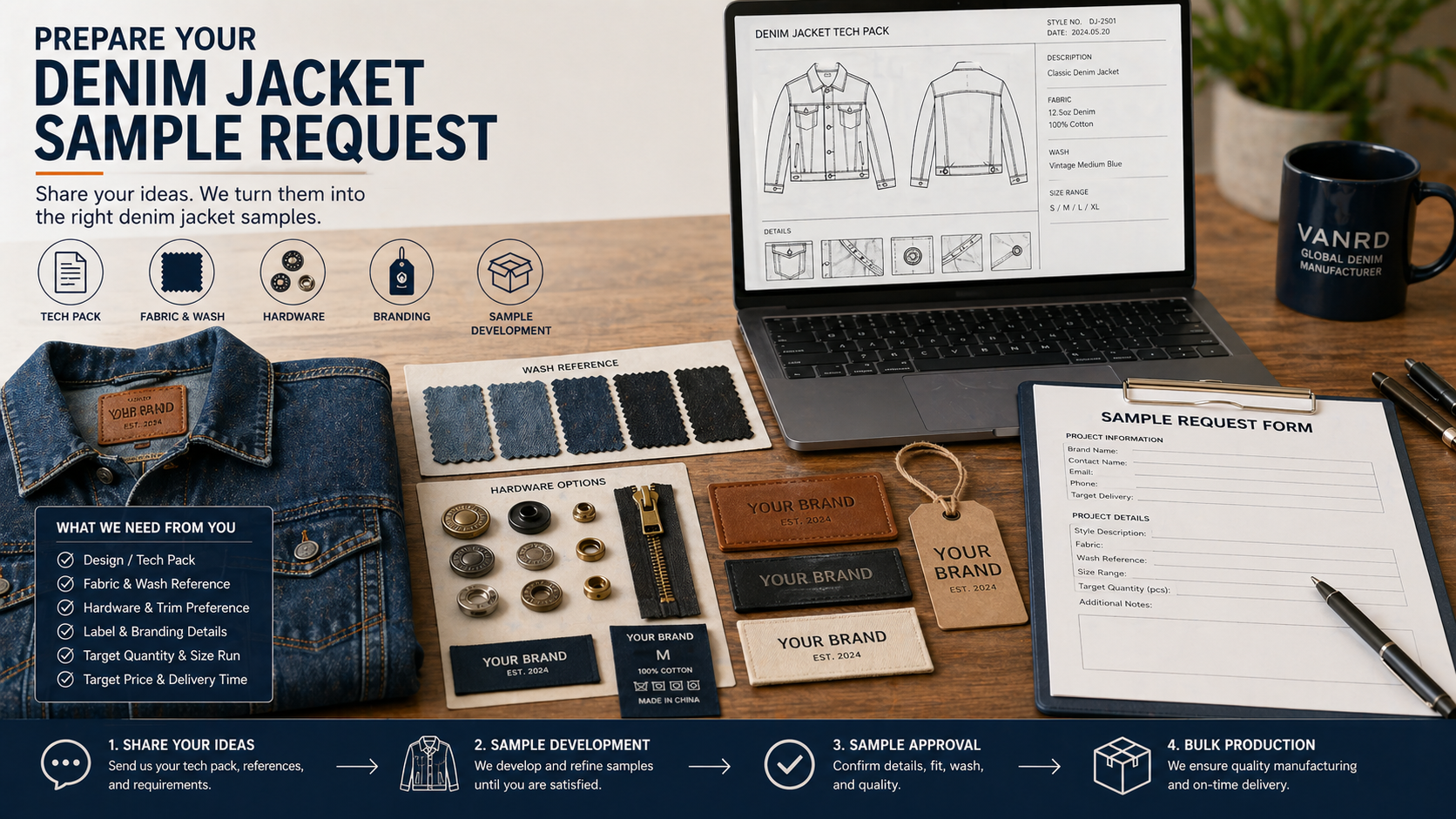
Brands should prepare reference images, tech pack if available, size chart, denim fabric direction, wash references, logo artwork, button or hardware requirements, label details, target quantity, and QC expectations. If some details are not final, they should be clearly marked for factory recommendation.
Is a denim jacket harder to produce than a basic woven jacket?
In many cases, yes. Denim jackets often require wash testing, shrinkage control, hardware placement, topstitching consistency, seam strength, and shade matching. These details make denim jacket development more technical than many basic woven jacket styles.
What QC points matter most for denim jacket production?
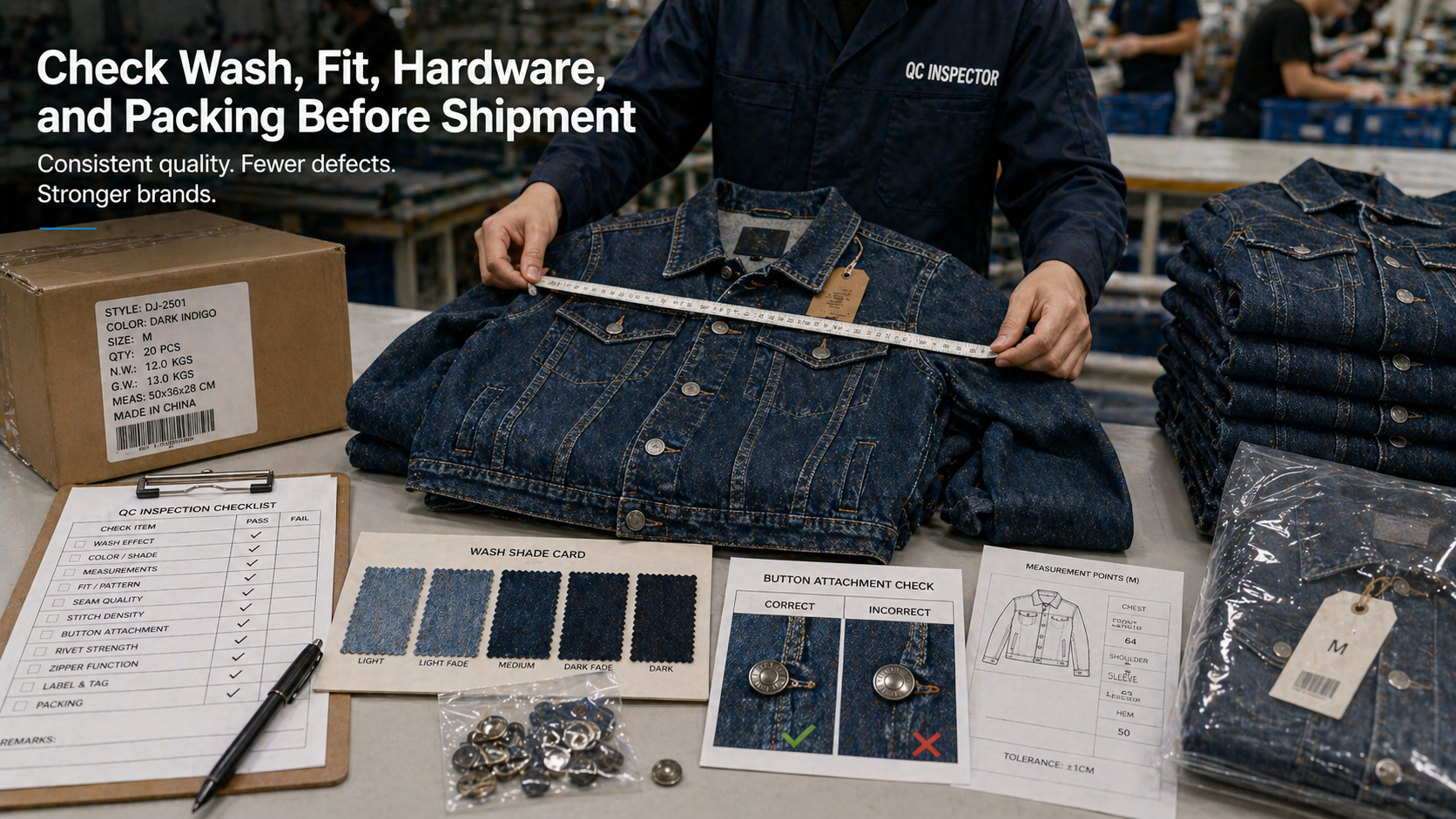
Important QC points include fabric quality, wash shade, shrinkage, measurements, collar shape, sleeve length, button placement, pocket symmetry, topstitching, seam strength, logo placement, and packing consistency.
Can one factory make denim jackets, jeans, hoodies, and other streetwear pieces?
Some manufacturers can support multiple categories, but brands should still verify category-specific ability. Denim jacket production requires denim fabric knowledge, wash control, hardware sourcing, pattern balance, and QC experience.
Why This Is Not Just a Simple Top 8 Ranking
A "Top 7 denim jacket manufacturers" article can be misleading if it ranks factories without verified production data, factory audits, buyer feedback, or comparable denim category evidence. For fashion brands, the more practical question is not "Who is number one?" but "Which type of denim jacket manufacturer fits this project?"
A brand developing a clean raw denim jacket has different needs from a brand producing vintage washed denim jackets with distressing and custom hardware. A supplier that is good at basic woven jackets may not understand denim shrinkage after washing. A denim wash specialist may be strong in wash effects but may not be the right fit for brands that need full private label development.
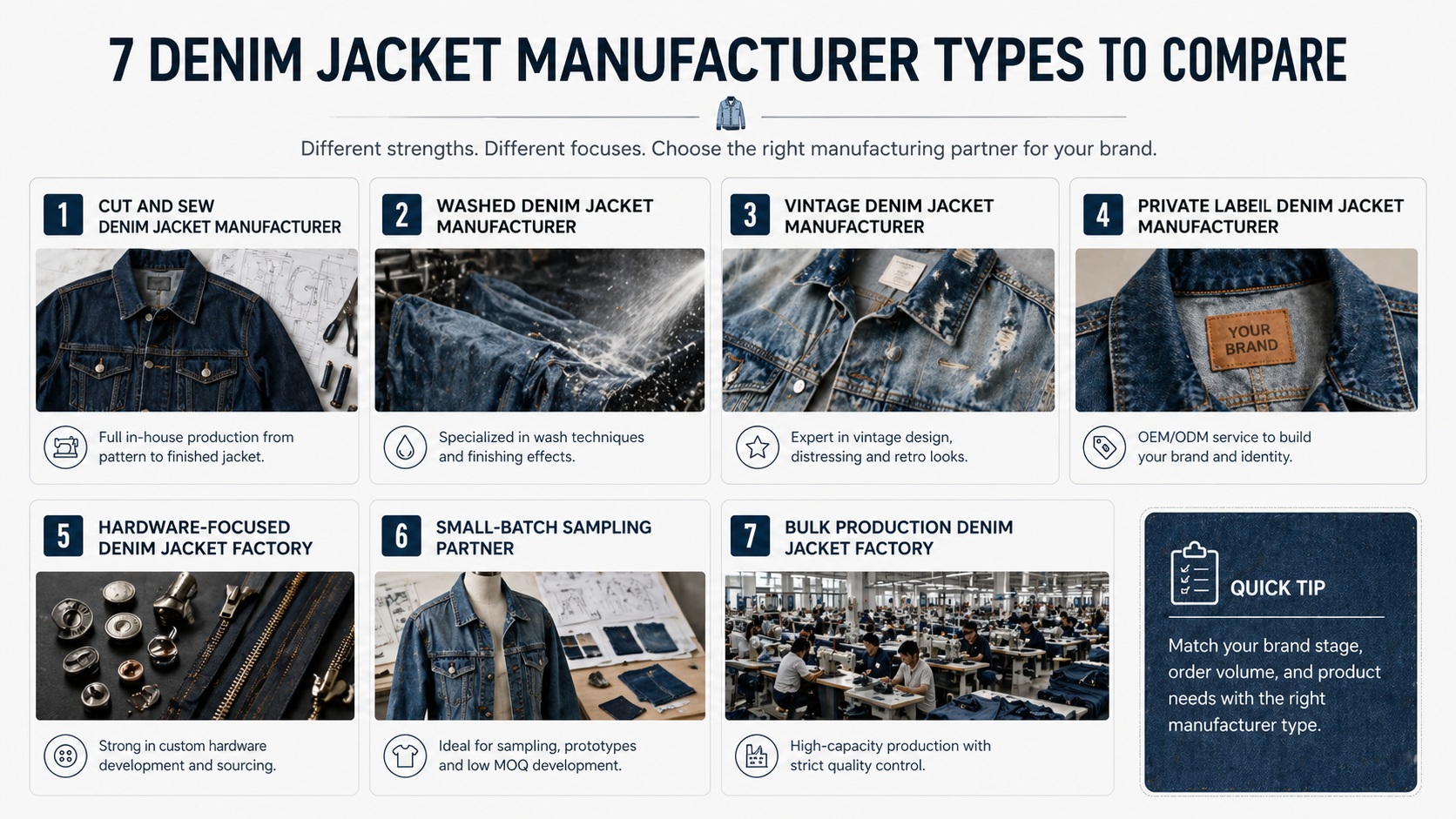
This guide explains 7 types of denim jacket manufacturers fashion brands should compare before sampling. It is designed to help buyers shortlist the right supplier based on product stage, fabric needs, wash complexity, trims, MOQ planning, and QC expectations.
Brands that need custom development support can review Vanrd's OEM/ODM apparel manufacturing services to understand how custom denim jacket projects can move from idea to sample and bulk production.
Top 7 Denim Jacket Manufacturer Types for Fashion Brands
The right denim jacket manufacturer depends on your product goal, brand stage, wash requirement, fabric direction, and production risk. Below are 7 manufacturer types to compare before starting sampling.
1. Cut and Sew Denim Jacket Manufacturer
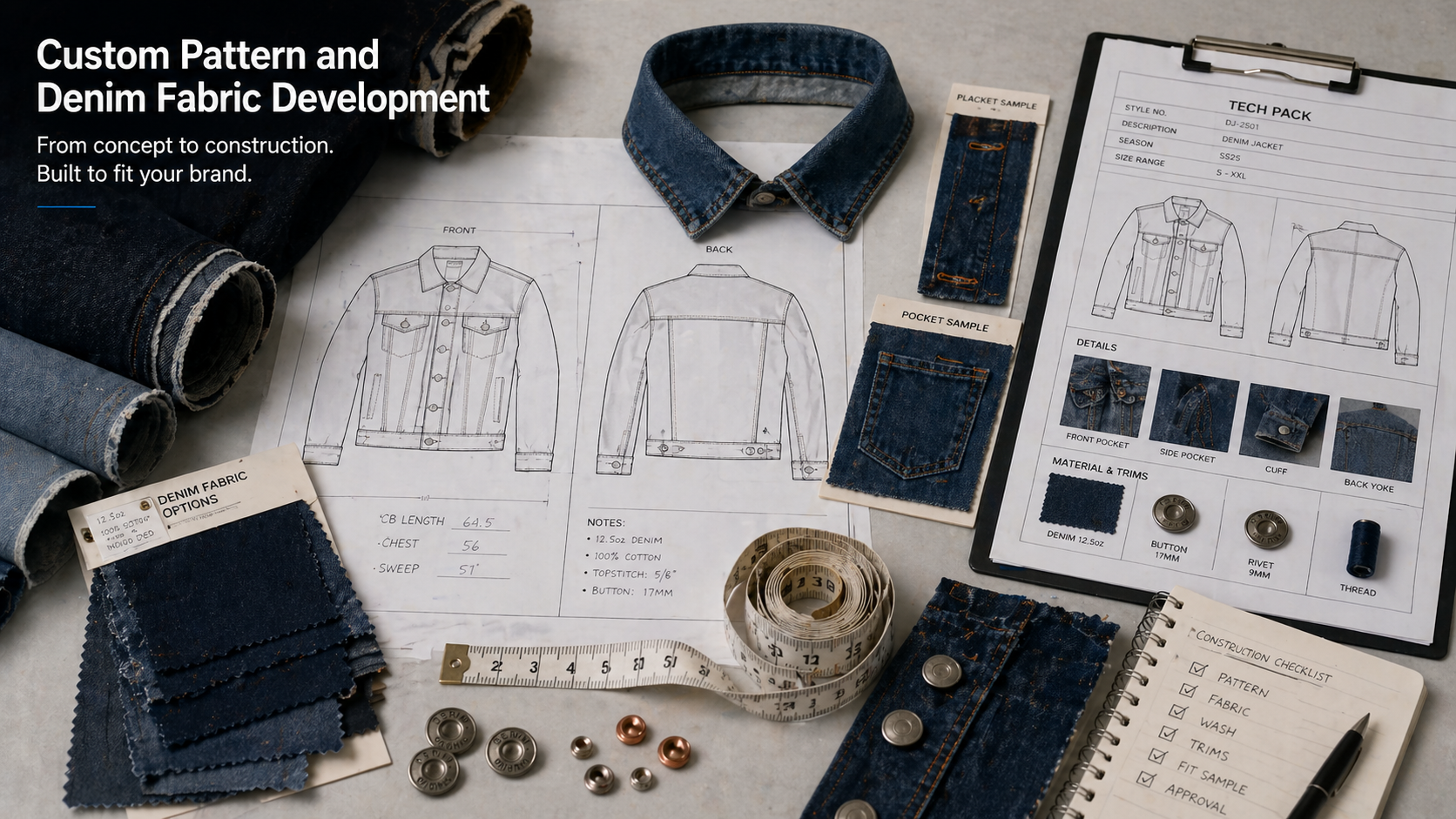
A cut and sew denim jacket manufacturer is suitable for brands that need full control over pattern, fabric, construction, pocket shape, collar structure, hardware, labels, and branding. Instead of using an existing jacket blank, the garment is developed from the brand's design direction.
Best for:
Custom denim jacket collections
Private label denim jackets
Original fashion brand silhouettes
Oversized denim jackets
Cropped denim jackets
Structured streetwear denim jackets
What to check:
Can the factory develop a pattern from a tech pack or reference sample?
Can it control shoulder width, chest width, sleeve length, and body length?
Can it source suitable denim fabric and matching trims?
Can it handle pockets, plackets, collars, cuffs, and waistband construction?
Can it explain sample revision steps clearly?
Cut and sew is usually the better route when the brand wants a denim jacket that does not look like a generic ready-made style. It gives more control, but it also requires clearer specifications from the buyer.
2. Washed Denim Jacket Manufacturer
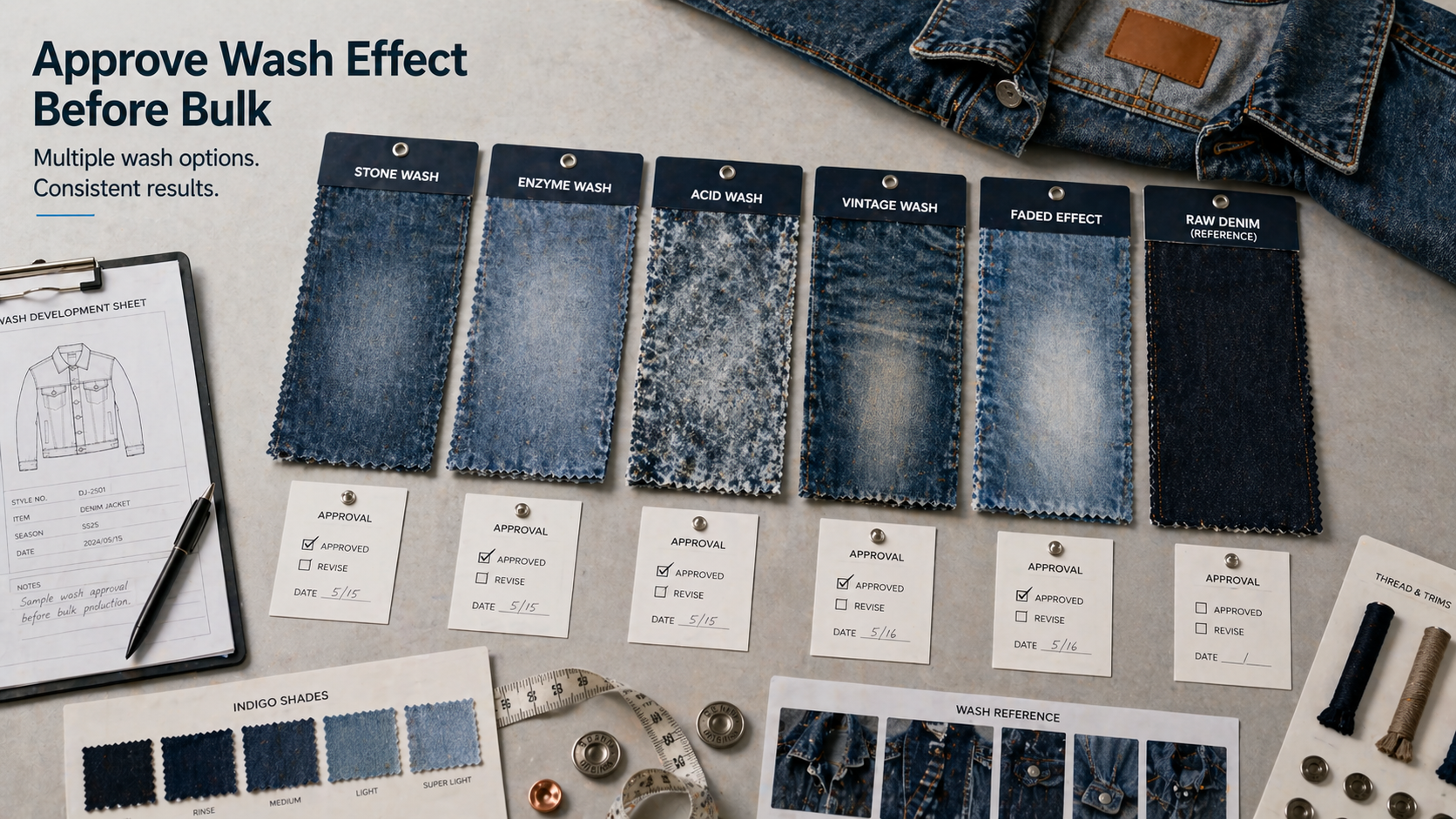
A washed denim jacket manufacturer is suitable for brands developing stone wash, enzyme wash, acid wash, vintage wash, garment wash, dirty wash, or faded denim effects. This manufacturer type should be evaluated by wash development and bulk consistency.
Best for:
Vintage washed denim jackets
Stone wash denim jackets
Enzyme wash denim jackets
Acid wash denim jackets
Faded denim jackets
Distressed denim jackets
What to check:
Can the supplier develop wash samples before bulk production?
Can it explain shrinkage risk after washing?
Can it control shade difference across panels and sizes?
Can it manage seam puckering after wash?
Can it match the approved wash sample in bulk production?
Washed denim jacket production should not start with vague instructions such as "make it vintage." Brands should provide reference photos, target shade, fabric type, wash direction, distressing placement, and acceptable variation range.
Brands comparing denim wash, fabric, printing, embroidery, and trim options can review Vanrd's fabric and technique customization support.
3. Vintage and Distressed Denim Jacket Manufacturer
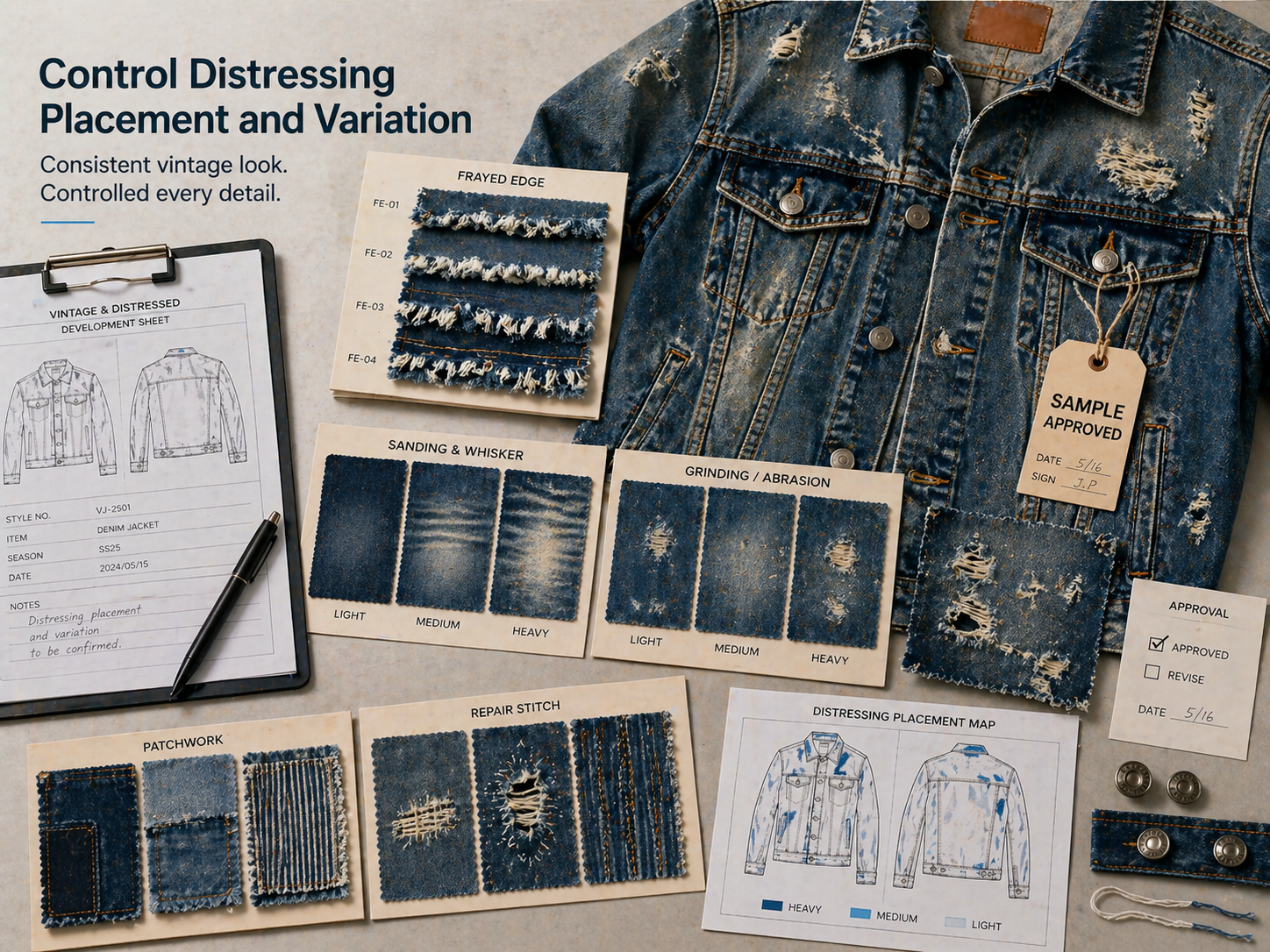
A vintage and distressed denim jacket manufacturer is suitable for brands that want worn-in character, hand sanding, whisker effects, grinding, frayed edges, repaired details, patchwork, or streetwear-inspired aging effects.
Best for:
Distressed denim jackets
Vintage effect denim jackets
Frayed denim jackets
Patchwork denim jackets
Repaired denim jackets
Streetwear denim jacket capsules
What to check:
Can the factory control distressing placement?
Can it keep damage effects wearable and production-safe?
Can it explain which distressing methods are manual and which are process-based?
Can it control variation across bulk production?
Can it avoid weakening key stress points too much?
Distressing should be treated as a production technique, not only a visual effect. If the damage is too aggressive near seams, pockets, or stress points, the garment may become weaker or less consistent in bulk.
4. Private Label Denim Jacket Manufacturer
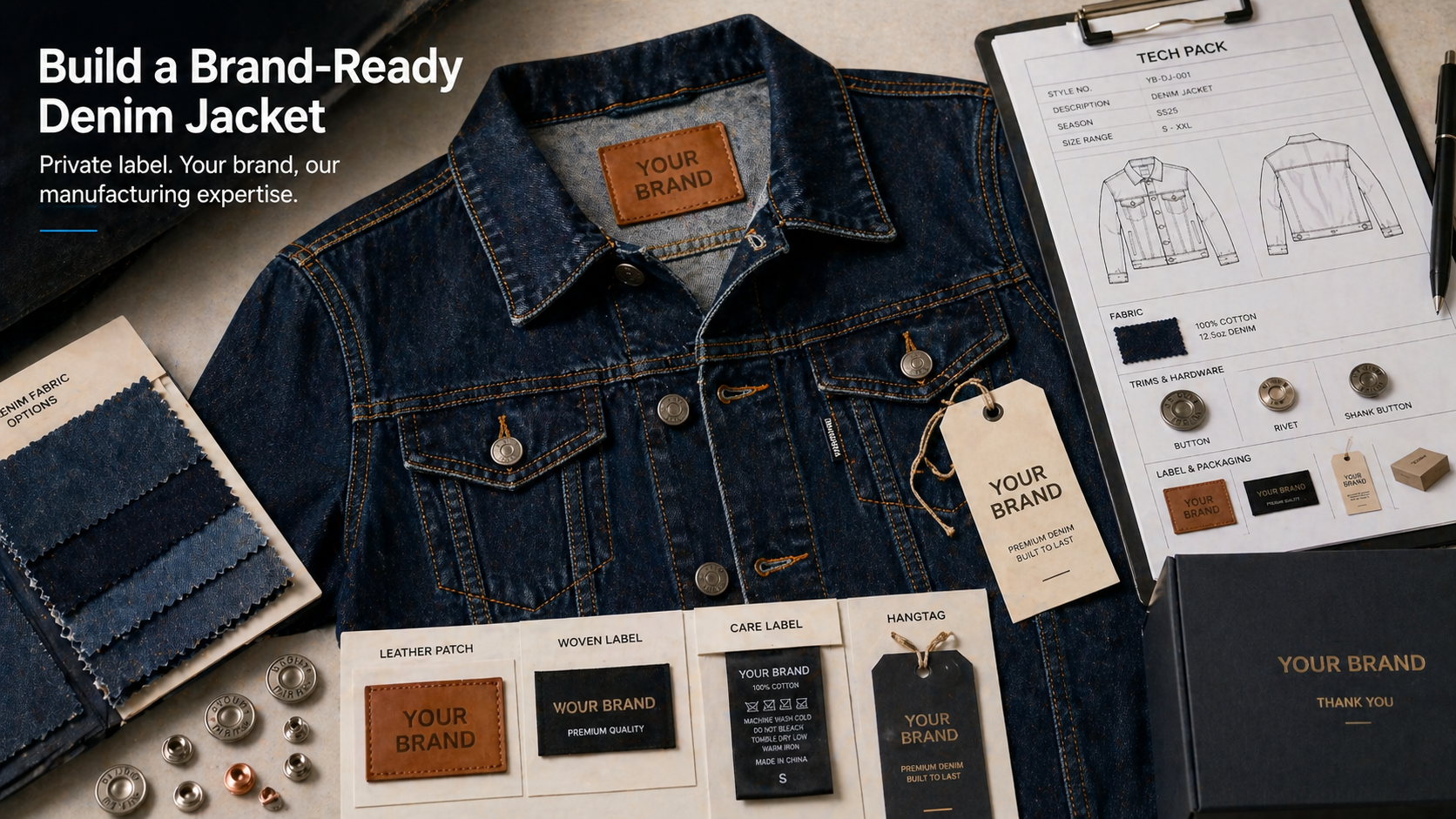
A private label denim jacket manufacturer is suitable for brands that need not only garment production but also brand identity support, including labels, hangtags, leather patches, button branding, packaging, and bulk order coordination.
Best for:
Fashion brands building a denim category
Private label denim jacket programs
Streetwear brands adding denim outerwear
Wholesale denim jacket projects
Brands needing custom labels and packaging
Repeat denim jacket production
What to check:
Can the factory support woven labels, leather patches, care labels, and hangtags?
Can it source custom buttons, rivets, and zipper pullers if needed?
Can it manage packaging and carton requirements?
Can it support sample approval before bulk production?
Can it align production with your brand standard?
Private label denim jacket production requires more than sewing. The supplier should understand how garment construction, trims, labels, wash, and packaging work together as one brand-ready product.
5. Hardware-Focused Denim Jacket Factory
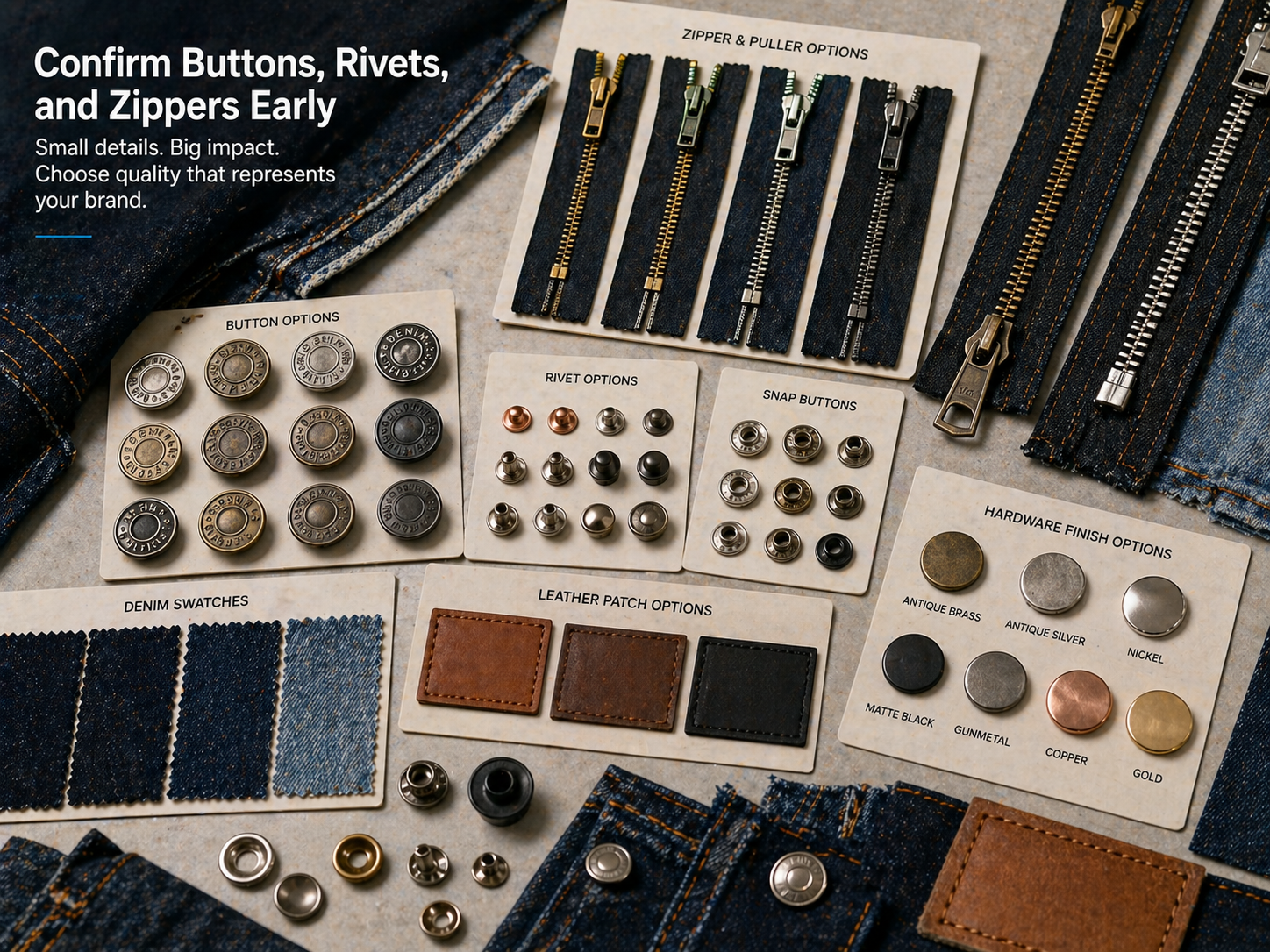
A hardware-focused denim jacket factory is suitable for designs that require strong control over buttons, rivets, snaps, zippers, pullers, buckles, adjusters, and metal trims. Hardware can strongly affect both function and perceived value.
Best for:
Button-front denim jackets
Zipper denim jackets
Utility denim jackets
Workwear-inspired denim jackets
Denim jackets with rivets or snaps
Custom hardware denim jacket programs
What to check:
Can the factory source the correct button and rivet types?
Can it control button placement and attachment strength?
Can it prevent metal trim color mismatch?
Can it manage zipper alignment if the jacket uses a zipper front?
Can it check hardware function before packing?
Hardware should be approved before bulk production. A denim jacket can look less refined if buttons, rivets, and zippers do not match the fabric weight, wash effect, and brand positioning.
6. Small-Batch Denim Jacket Sampling Partner
A small-batch denim jacket sampling partner is suitable for brands testing a new silhouette, wash direction, or denim category before scaling. This type of supplier should be judged by communication, sample accuracy, revision support, and development clarity.
Best for:
Startup fashion brands
First denim jacket sample development
Fit testing
Wash testing
Fabric testing
Small collection validation
What to check:
Can the supplier explain what information is missing?
Can it develop a sample from partial files?
Can it separate sample cost from bulk cost?
Can it give realistic fabric and wash feedback?
Can it scale later if the denim jacket performs well?
Small-batch sampling is useful, but brands should confirm whether the supplier can support bulk production later. A sample-only partner may not always be the right long-term factory.
Vanrd's custom apparel service process explains how development, sampling, approval, and production communication can be structured for custom apparel projects.
7. Bulk Production Denim Jacket Factory
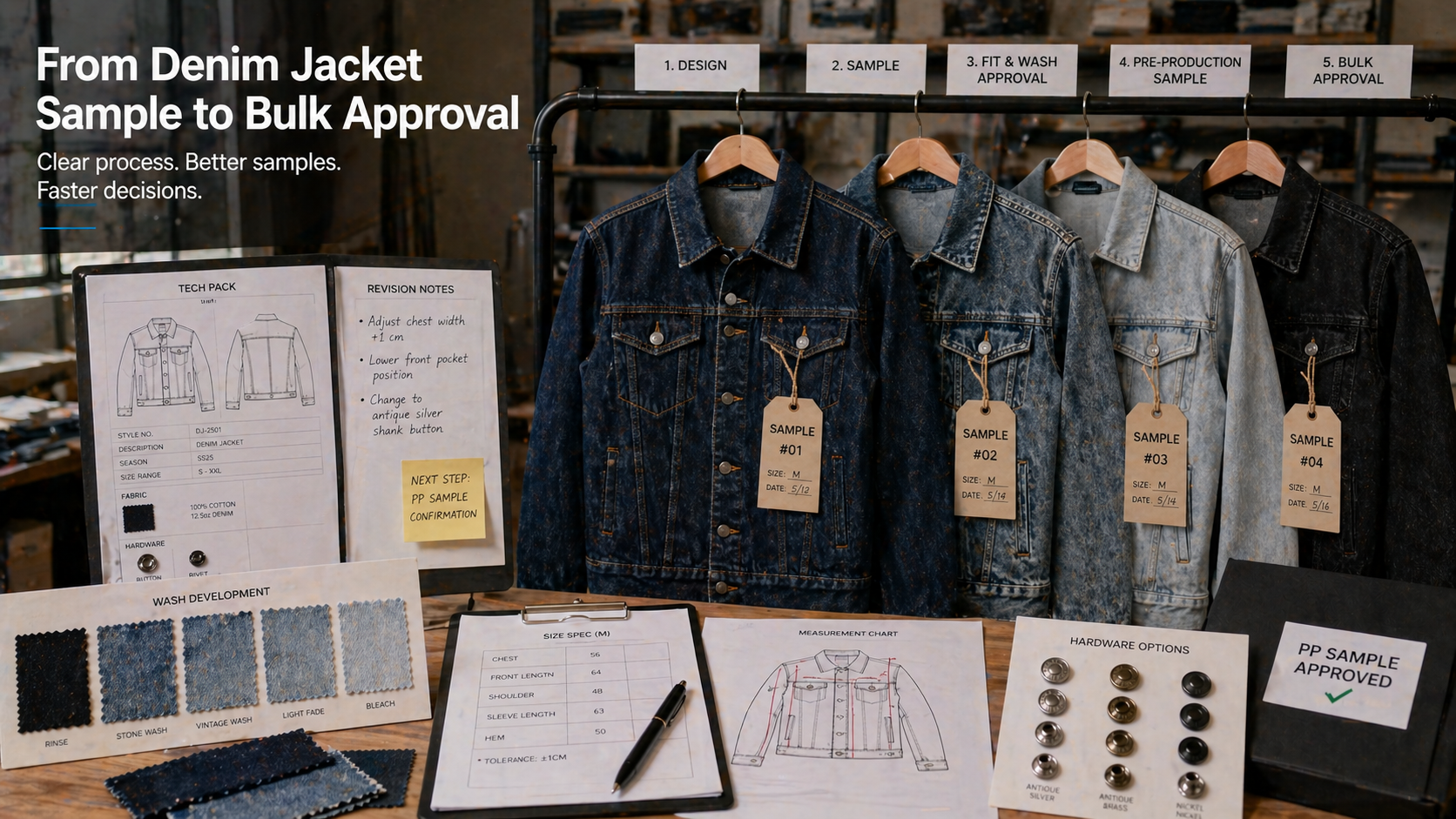
A bulk production denim jacket factory is suitable for brands with approved samples, confirmed fabric, approved wash effect, stable size chart, confirmed hardware, and defined QC standards. This manufacturer type should be evaluated by repeatability and production control.
Best for:
Established fashion brands
Wholesale denim jacket programs
Repeat denim jacket orders
Multi-color denim production
Multi-size private label programs
Bulk washed denim jacket production
What to check:
Can the factory keep fabric quality consistent?
Can it control shrinkage and measurement tolerance?
Can it manage wash shade consistency across bulk?
Can it inspect buttons, rivets, seams, and pocket placement?
Can it plan production and communicate risks early?
Bulk denim jacket production requires more than making one good sample. The supplier must transfer the approved standard into repeated production across colors, sizes, washes, and quantities.
For inspection logic and production control, buyers can review Vanrd's quality control and inspection standards.
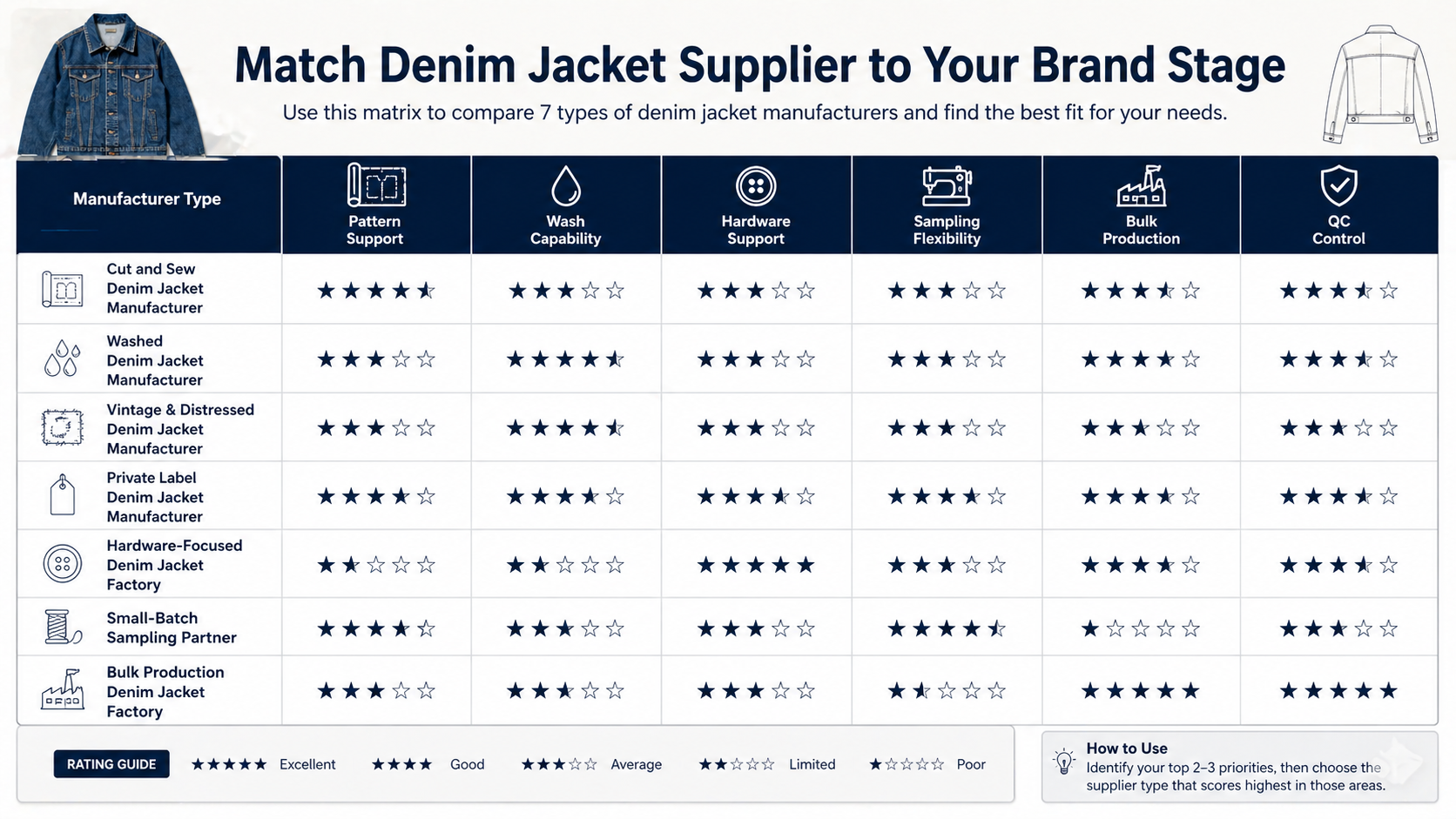
Comparison Table: Which Denim Jacket Manufacturer Type Fits Your Brand?
| Manufacturer Type | Best For | Main Strength | Main Risk to Check |
Cut and sew denim jacket manufacturer | Original silhouettes | Pattern and construction control | Requires clear tech pack and fit direction |
Washed denim jacket manufacturer | Stone wash, enzyme wash, acid wash, vintage wash | Wash development | Shade variation and shrinkage |
Vintage and distressed denim jacket manufacturer | Frayed, repaired, distressed, patchwork styles | Distressing and visual effects | Inconsistent damage placement |
Private label denim jacket manufacturer | Brand-ready denim jacket programs | Labels, patches, packaging, trims | Branding details approved too late |
Hardware-focused denim jacket factory | Button, rivet, zipper, utility denim styles | Hardware sourcing and placement | Metal trim mismatch or weak attachment |
| Small-batch denim jacket sampling partner | Early-stage testing | Flexible development | May not scale well |
Bulk production denim jacket factory | Repeat and larger orders | Production consistency | Requires approved standards |
What Fashion Brands Should Check Before Contacting a Denim Jacket Manufacturer
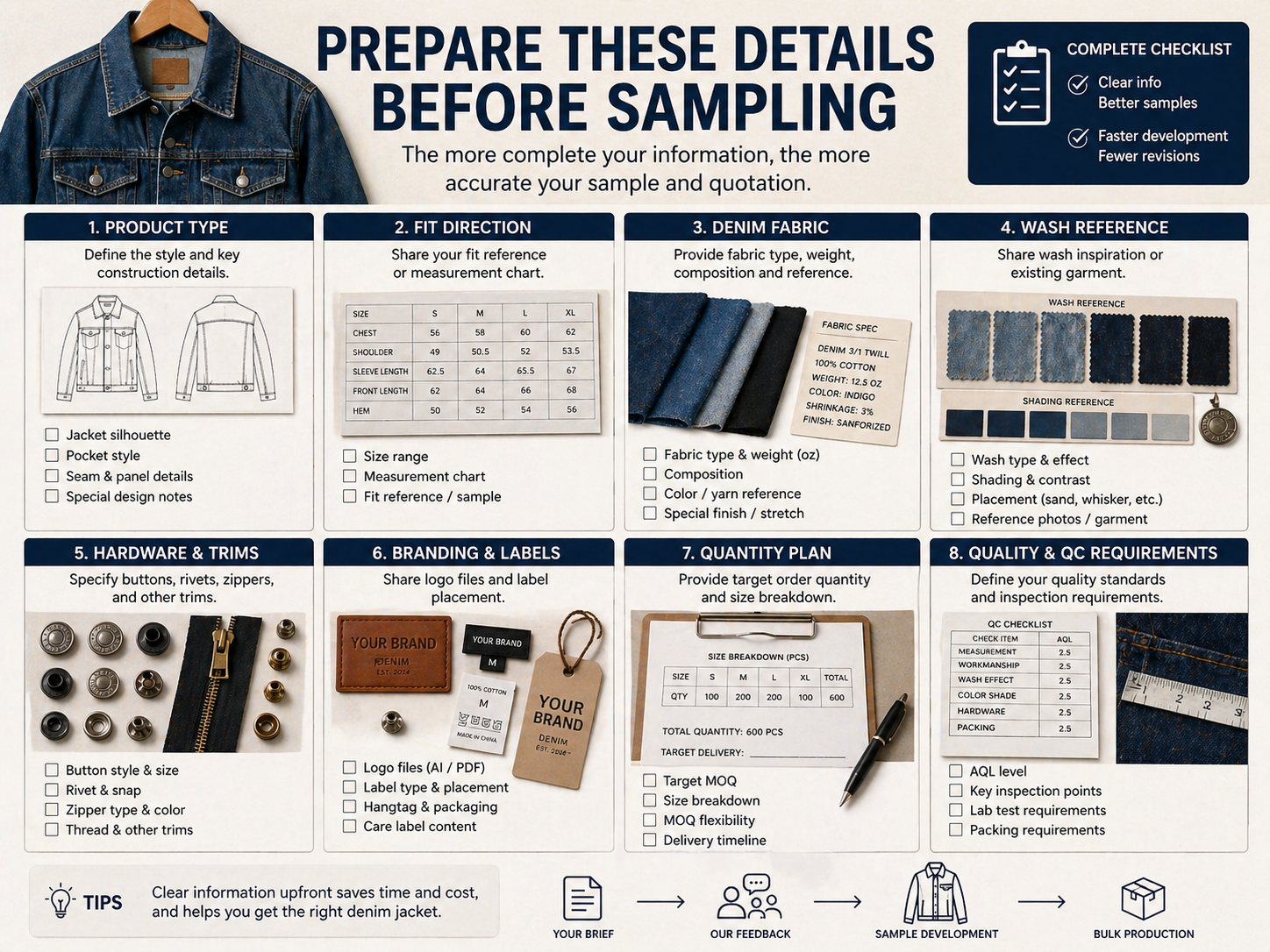
Before contacting a denim jacket manufacturer, brands should organize their project into clear production variables. This helps the supplier understand the design and respond with more accurate feedback.
Product Type
Define the denim jacket type first. Is it a classic trucker jacket, oversized denim jacket, cropped denim jacket, workwear denim jacket, zip denim jacket, lined denim jacket, patchwork denim jacket, or distressed denim jacket? Each type affects pattern, fabric, trims, and sample process.
Fit Direction
Denim jacket fit should be described clearly. Terms like oversized, cropped, relaxed, or regular are helpful, but measurements are better. Brands should confirm shoulder width, chest width, body length, sleeve length, collar shape, armhole, cuff opening, and hem width.
Fabric Direction
Denim fabric can vary by weight, composition, stretch, texture, color, and finish. Brands should confirm whether they need raw denim, washed denim, rigid denim, stretch denim, black denim, colored denim, or special surface effects.
Wash Direction
Wash direction is one of the most important denim jacket decisions. Brands should provide reference images for stone wash, enzyme wash, acid wash, vintage wash, dirty wash, fade level, distressing placement, and acceptable shade range.
Trims and Packaging
Buttons, rivets, zippers, snaps, leather patches, woven labels, hangtags, polybags, stickers, and carton markings should be confirmed before bulk production. Small trims can affect both cost and final quality perception.
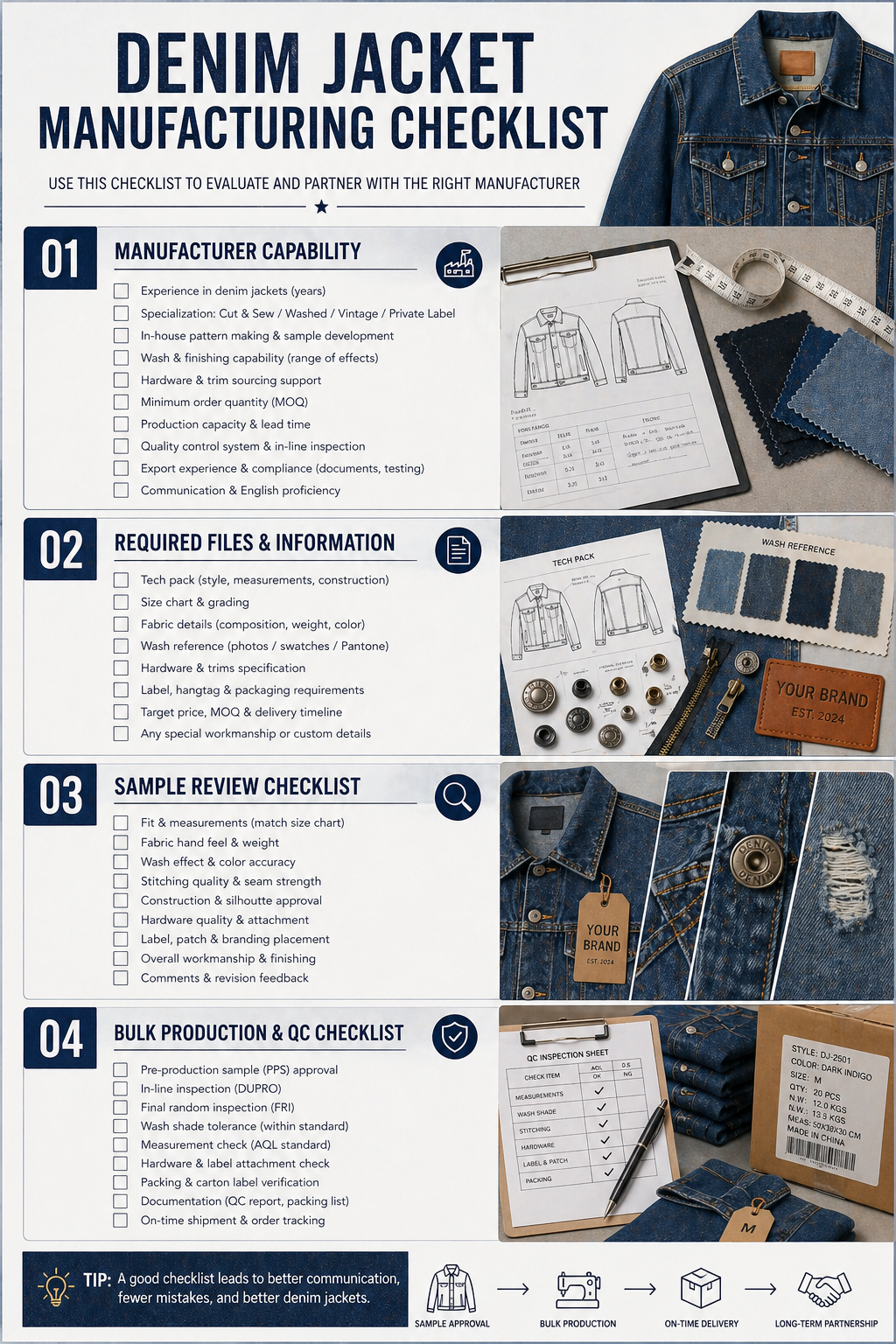
Denim Jacket Manufacturer Evaluation Checklist
Use this checklist before shortlisting a denim jacket supplier.
Capability Checklist
The factory understands denim jacket construction
The factory can develop custom patterns
The factory can source denim fabric options
The factory can support wash development
The factory can source hardware and labels
The factory can explain sample workflow
The factory can support bulk production
The factory can discuss QC standards
File Checklist
Reference images prepared
Tech pack prepared if available
Size chart prepared
Denim fabric direction prepared
Wash references prepared
Logo artwork prepared
Hardware requirements prepared
Label and packaging requirements prepared
Target quantity prepared
Sample Review Checklist
Fabric hand feel approved
Wash shade approved
Shrinkage checked
Shoulder and chest fit approved
Sleeve length approved
Body length approved
Collar shape approved
Pocket placement approved
Button and rivet placement approved
Logo and patch placement approved
Measurement tolerance discussed
Bulk QC Checklist
Fabric quality checked
Wash shade checked
Measurement tolerance checked
Topstitching checked
Pocket symmetry checked
Button and rivet attachment checked
Seam strength checked
Logo and patch placement checked
Loose threads checked
Packing method checked
Carton requirements checked
Factory Reality: Why Denim Jacket Manufacturers Perform Differently
Many denim jacket manufacturers may show similar product photos, but their real capability can be very different. The difference usually appears in denim sourcing, pattern development, wash control, shrinkage management, sample revision, and bulk consistency.
Product Photos Do Not Prove Production Control
A product photo does not show wash shrinkage, measurement tolerance, seam strength, button attachment, shade variation, or bulk inspection. Buyers should use photos as a starting point, not as final proof of capability.
Wash Development Changes the Whole Jacket
Stone wash, enzyme wash, acid wash, and vintage wash can change fabric hand feel, shade, measurements, and overall structure. A denim jacket should be reviewed after wash, not only before wash.
Denim Fabric Weight Affects Fit and Shape
A lightweight denim jacket and a heavyweight denim jacket will not behave the same way. Fabric weight affects drape, structure, seam thickness, button attachment, and final comfort.
Hardware Needs Early Approval
Buttons, rivets, zippers, snaps, and patches should be approved before bulk production. Late hardware changes can affect sampling, cost, and production planning.
Bulk Production Requires Repeatability
One approved sample does not automatically mean bulk production will be consistent. The factory needs approved fabric, wash standard, measurements, trims, logo standard, packaging method, and QC points before production.
Common Mistakes When Choosing a Denim Jacket Manufacturer
Most sourcing problems happen when brands compare suppliers too quickly or provide incomplete information.
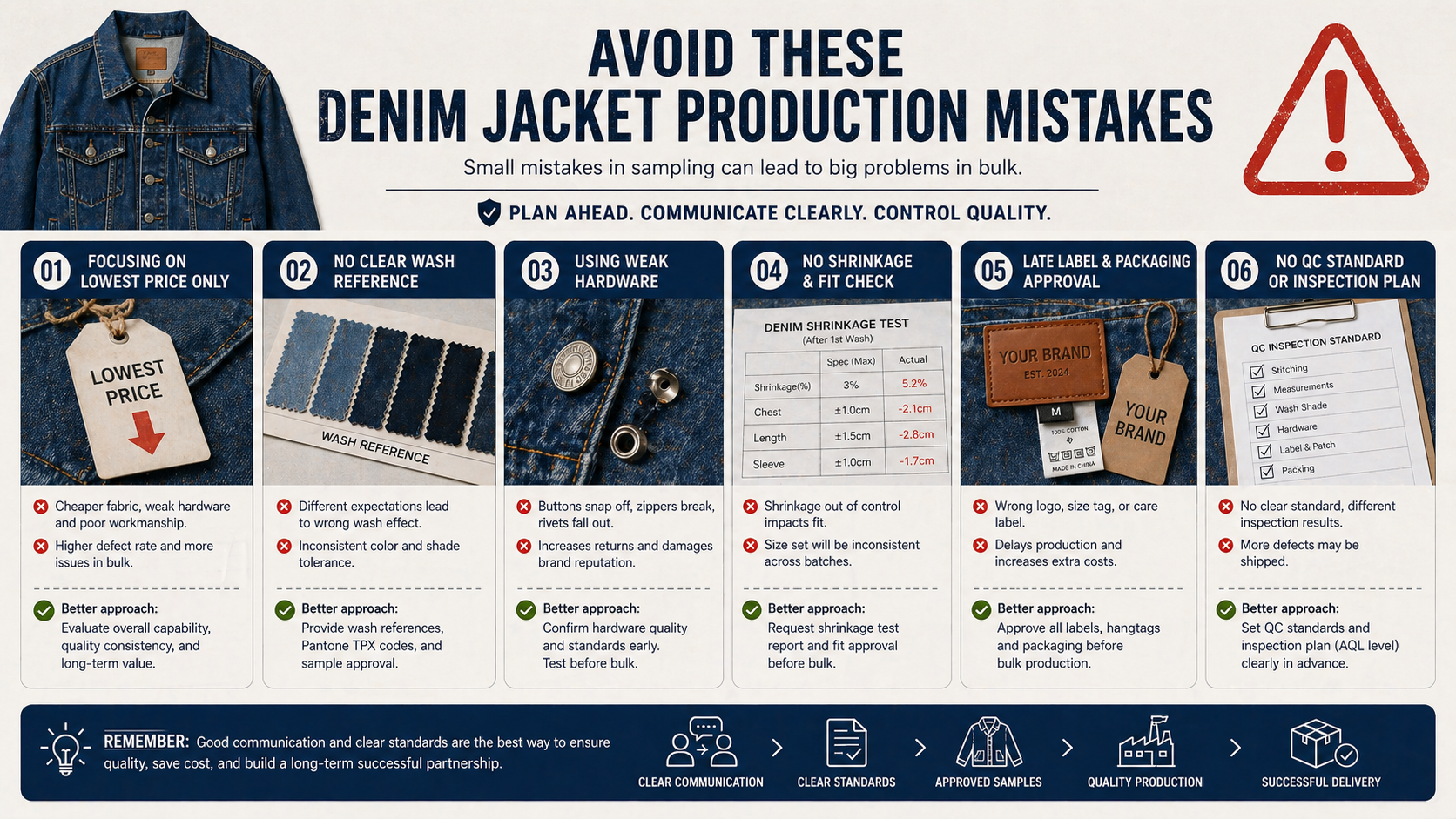
Mistake 1: Choosing Only by Lowest Price
The lowest price may not include suitable denim fabric, wash testing, shrinkage control, hardware quality, sample revision, QC time, or packaging requirements. Brands should compare what is included in the quote.
Mistake 2: Ignoring Wash Capability
A denim jacket supplier without strong wash control may struggle with vintage effects, shade consistency, distressing, and shrinkage. Wash capability should be checked before sampling.
Mistake 3: Starting Sampling Without Wash References
Words like vintage, faded, or distressed are not precise enough. Brands should send visual references and explain the target wash effect clearly.
Mistake 4: Using a Basic Woven Jacket Supplier for a Denim Jacket Project
A basic woven jacket supplier may understand general sewing, but denim jacket production also needs denim fabric, wash, hardware, topstitching, and shrinkage control.
Mistake 5: Approving the Sample Before Checking Measurements After Wash
Denim jackets can shrink or change shape after washing. Measurements should be checked after the final wash process, not only before wash.
Mistake 6: Leaving QC Standards Until the End
QC should be discussed before bulk production. Measurement tolerance, wash shade, stitching standard, hardware function, logo placement, packing method, and fabric defects should be aligned early.
Next Steps for Fashion Brands
Before contacting a denim jacket manufacturer, prepare your project details in a clear and organized way. The goal is not to make every detail perfect before inquiry. The goal is to separate confirmed decisions from open questions.
Prepare These Details First
Denim jacket type
Target fit
Reference photos
Tech pack if available
Size chart
Denim fabric direction
Wash reference
Color standard
Logo artwork
Patch or label requirements
Button, rivet, or zipper requirements
Target quantity
Target timeline
QC concerns
How Vanrd Can Support Denim Jacket Development
Vanrd works with private label and fashion buyers that need OEM/ODM development, denim jacket sampling, fabric and trim coordination, wash direction discussion, bulk production, and quality control. If your brand is comparing denim jacket manufacturer options, you can send your product brief, reference images, and development requirements for review.
For company and manufacturing context, buyers can also review Vanrd's factory strength before starting a custom denim jacket project.
FAQ
What is the difference between a denim jacket manufacturer and a general jacket manufacturer?
A denim jacket manufacturer should understand denim fabric, wash development, shrinkage, topstitching, hardware placement, and shade consistency. A general jacket manufacturer may understand outerwear sewing but may not have enough experience with denim wash and bulk shade control.
Should fashion brands choose cut and sew denim jacket production?
Cut and sew is suitable when the brand needs a custom silhouette, fabric, wash, fit, trim, label, or construction detail. If the brand only needs a basic existing denim jacket with simple decoration, full cut and sew development may not be necessary.
How long does denim jacket sampling take?
Denim jacket sampling time depends on fabric availability, pattern complexity, wash development, hardware sourcing, trim approval, and buyer feedback speed. Washed, distressed, or hardware-heavy denim jackets usually require more development discussion than basic styles.
What files should I send to a denim jacket manufacturer?
Send a tech pack if available, reference images, size chart, denim fabric direction, wash references, logo artwork, hardware requirements, label details, packaging requirements, target quantity, and QC expectations.
What denim fabric is best for custom denim jackets?
The best denim fabric depends on the brand's product goal. Rigid denim can create a structured look, washed denim can create a softer vintage feel, stretch denim can improve comfort, and heavier denim can support a more substantial jacket shape.
Why is wash control important in denim jacket production?
Wash control is important because washing can change color, hand feel, shrinkage, measurements, and surface effect. Without an approved wash standard, bulk denim jackets may not match the sample closely enough.
What should be approved before bulk denim jacket production?
Before bulk production, brands should approve denim fabric, wash shade, fit, measurements, hardware, button and rivet placement, logo method, patch placement, labels, packaging, and QC standards.
Final CTA
Choosing a denim jacket manufacturer should be based on fabric capability, wash development, fit control, hardware support, sample workflow, MOQ planning, and QC standards. A strong supplier should help your brand reduce uncertainty before sampling and make bulk production easier to control.
If your brand is developing oversized denim jackets, washed denim jackets, vintage denim jackets, cropped denim jackets, distressed denim jackets, or private label denim jacket collections, send your project brief, tech pack, reference images, and target quantity to Vanrd. Our team can review your requirements and help you plan the next step for sampling and production.
Contact Vanrd through the custom apparel inquiry page to discuss your custom denim jacket manufacturing project.