Sweatpants Manufacturing Checklist: Fabric, Fit, Waistband, Cuffs, and QC
A sweatpants manufacturing checklist helps brands confirm the details that affect fit, comfort, appearance, and production consistency before sampling or bulk production. The most important points are fabric behavior, rise and leg shape, waistband structure, cuff construction, logo method, and QC standards. Clear specifications reduce revisions, improve communication, and make custom sweatpants production easier to control.
Quick Answers
What should be included in a sweatpants manufacturing checklist?
A useful checklist should cover fabric, fit, waistband, cuffs, pockets, logo method, labels, packaging, sample approval, and QC standards. For B2B production, it should also include measurement tolerance, wash or shrinkage expectations, and bulk inspection points.
What fabric is usually used for custom sweatpants?
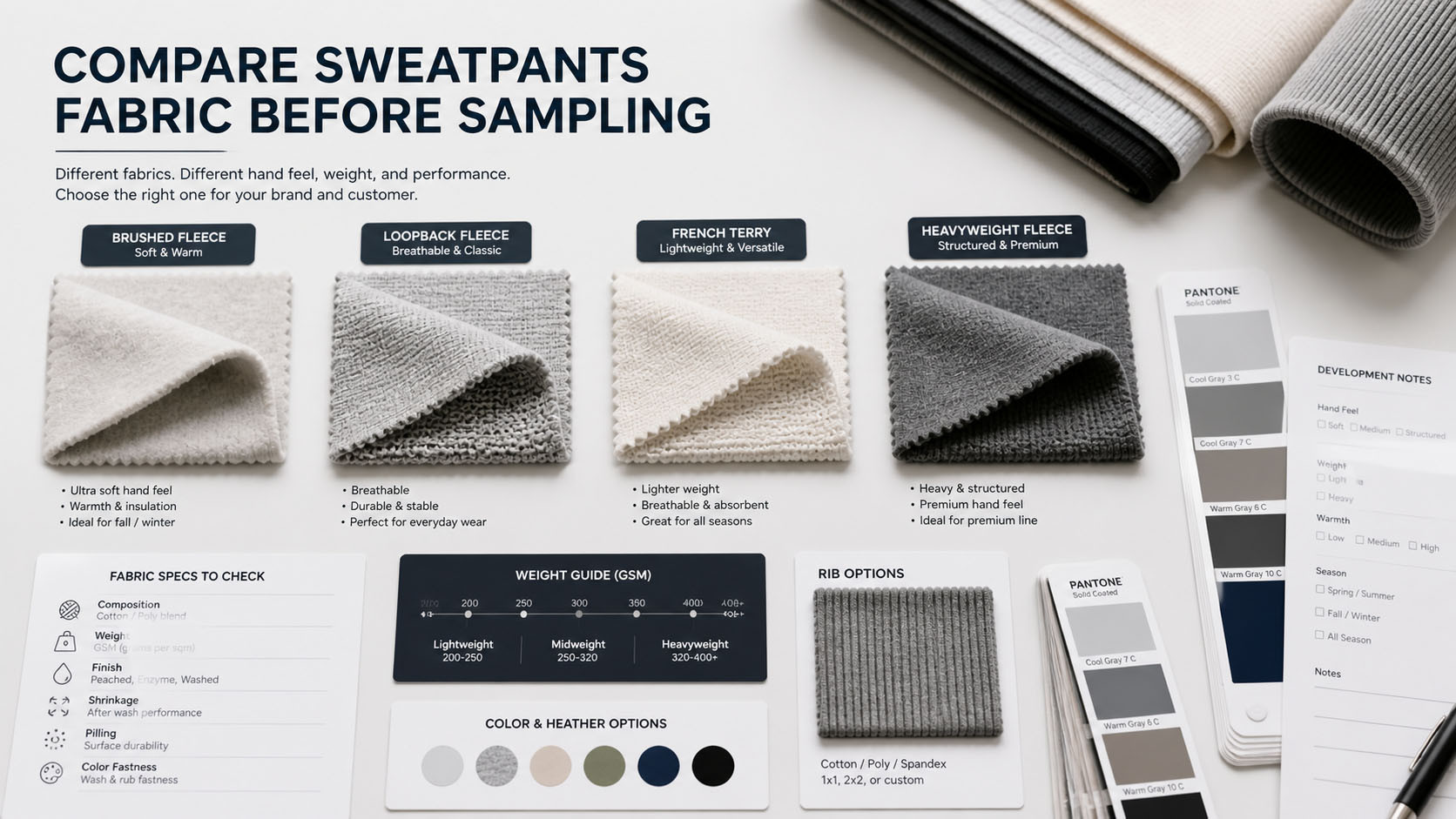
Custom sweatpants often use brushed fleece, loopback fleece, French terry, or cotton-poly fleece blends. The right fabric depends on the target silhouette, hand feel, season, price range, and whether the brand wants a softer, heavier, cleaner, or more structured look.
What fit points matter most for sweatpants?
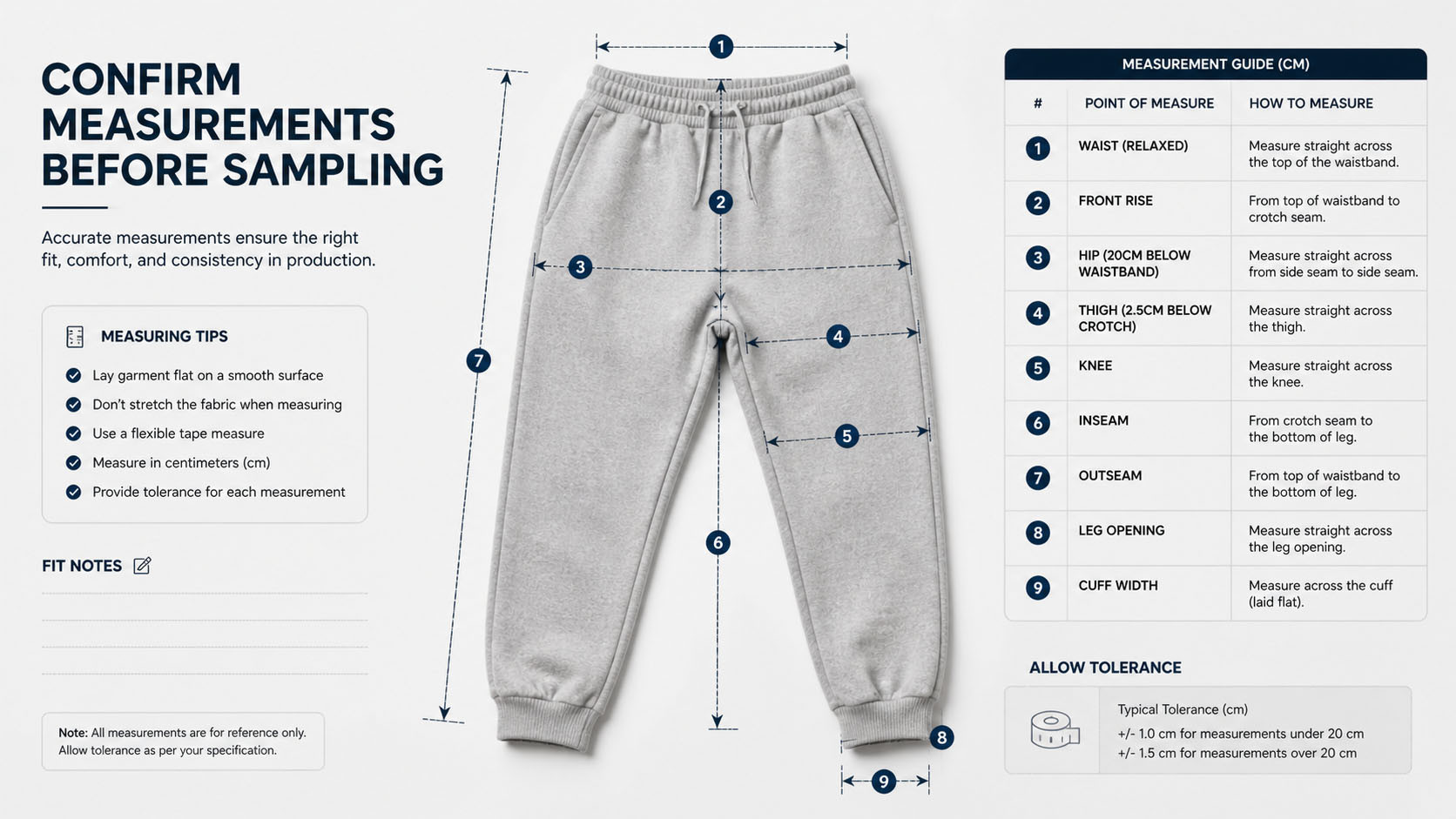
The key fit points are waist, rise, hip, thigh, knee, inseam, outseam, leg opening, and cuff width. These measurements affect whether the sweatpants feel baggy, relaxed, tapered, stacked, or more athletic.
Why are waistband and cuffs important in sweatpants production?
Waistband and cuffs strongly affect both comfort and perceived quality. Weak elastic, poor drawcord placement, or low-recovery cuffs can make sweatpants feel less refined even when the fabric is good.
What should brands prepare before requesting a sweatpants sample?
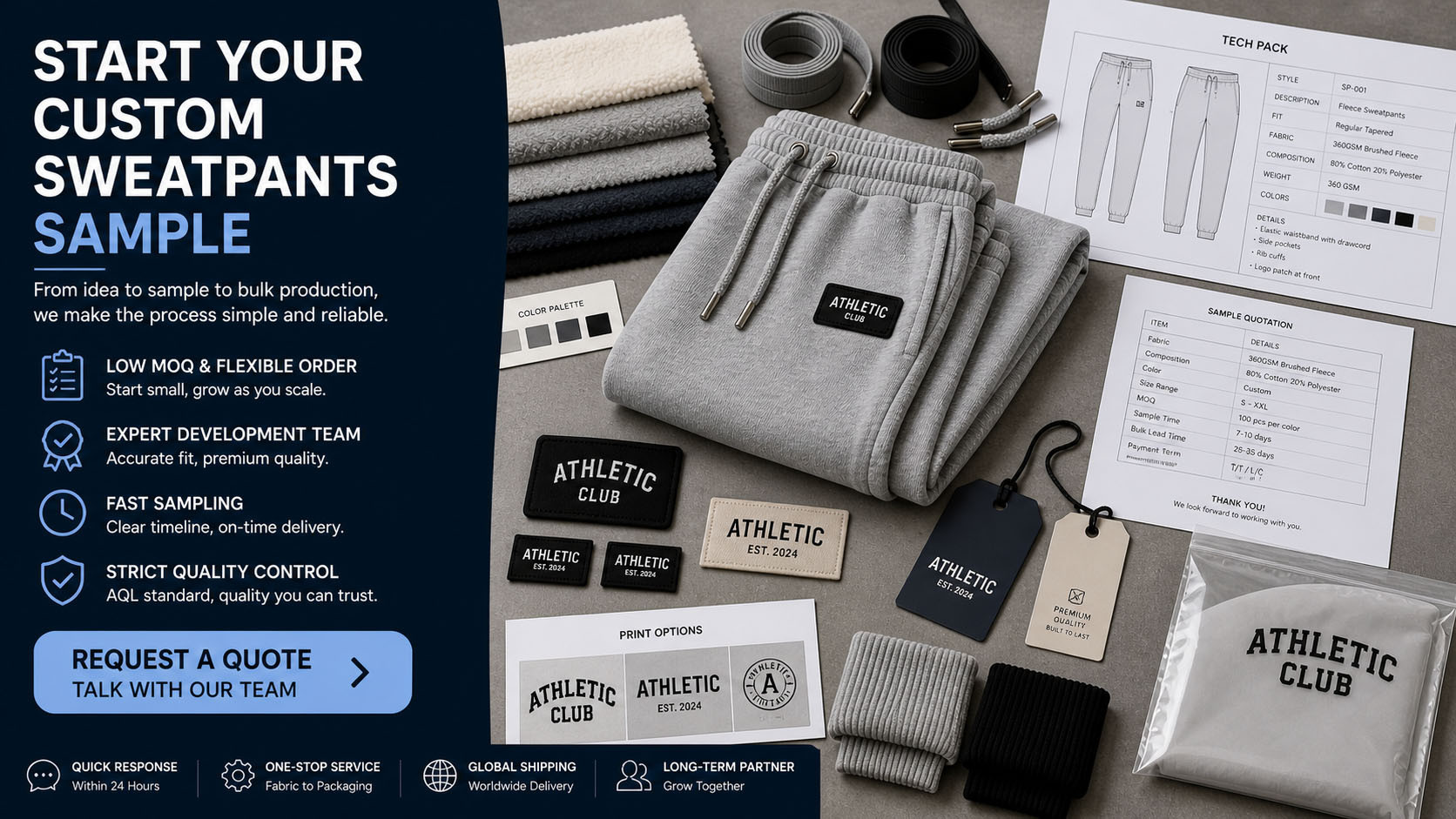
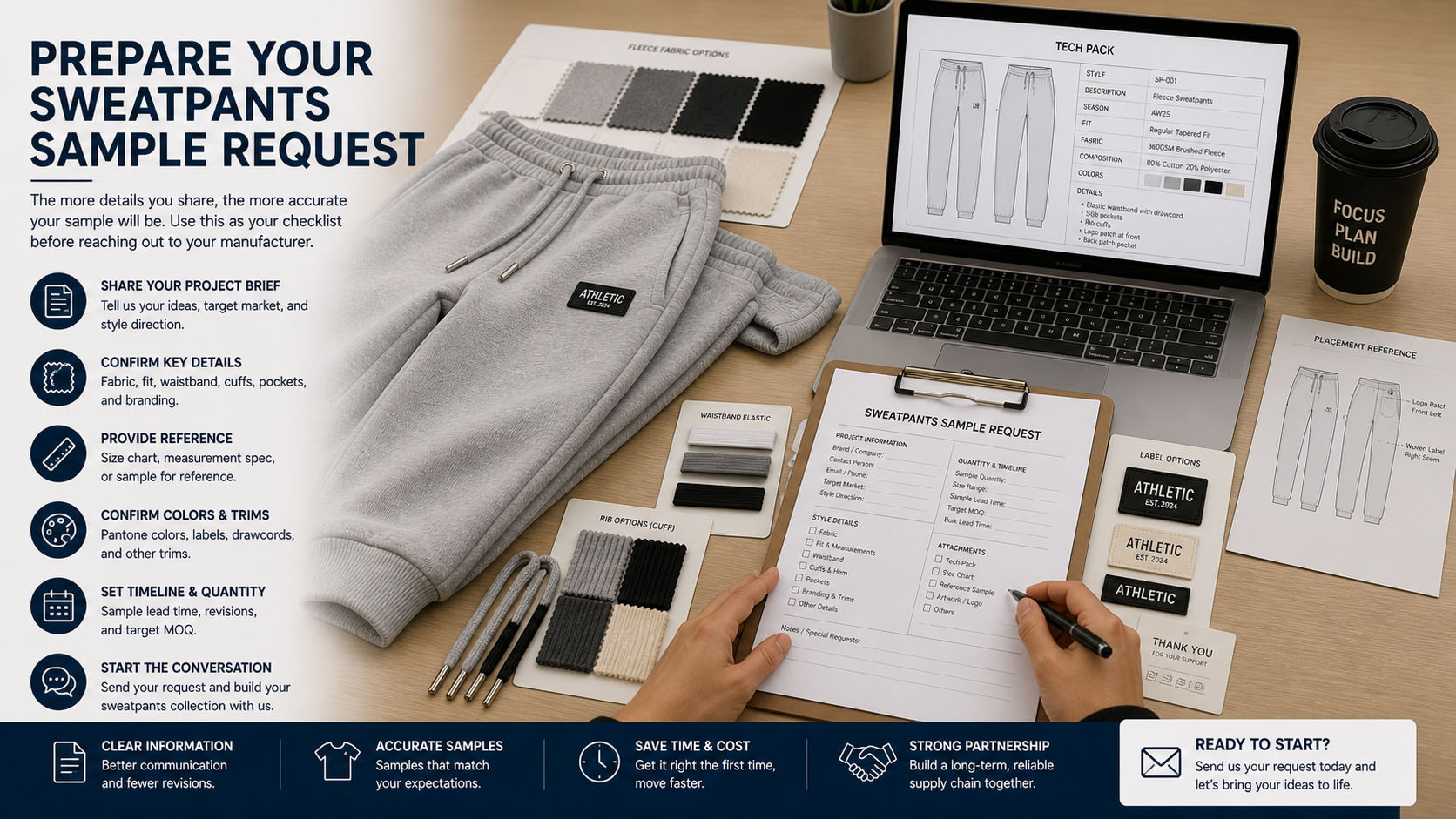
A buyer should prepare reference images, tech pack if available, size chart, fit direction, fabric preference, logo artwork, trim requirements, label details, target quantity, and QC expectations. If some details are not final, they should be clearly marked for factory recommendation.
How can brands reduce QC problems in sweatpants production?
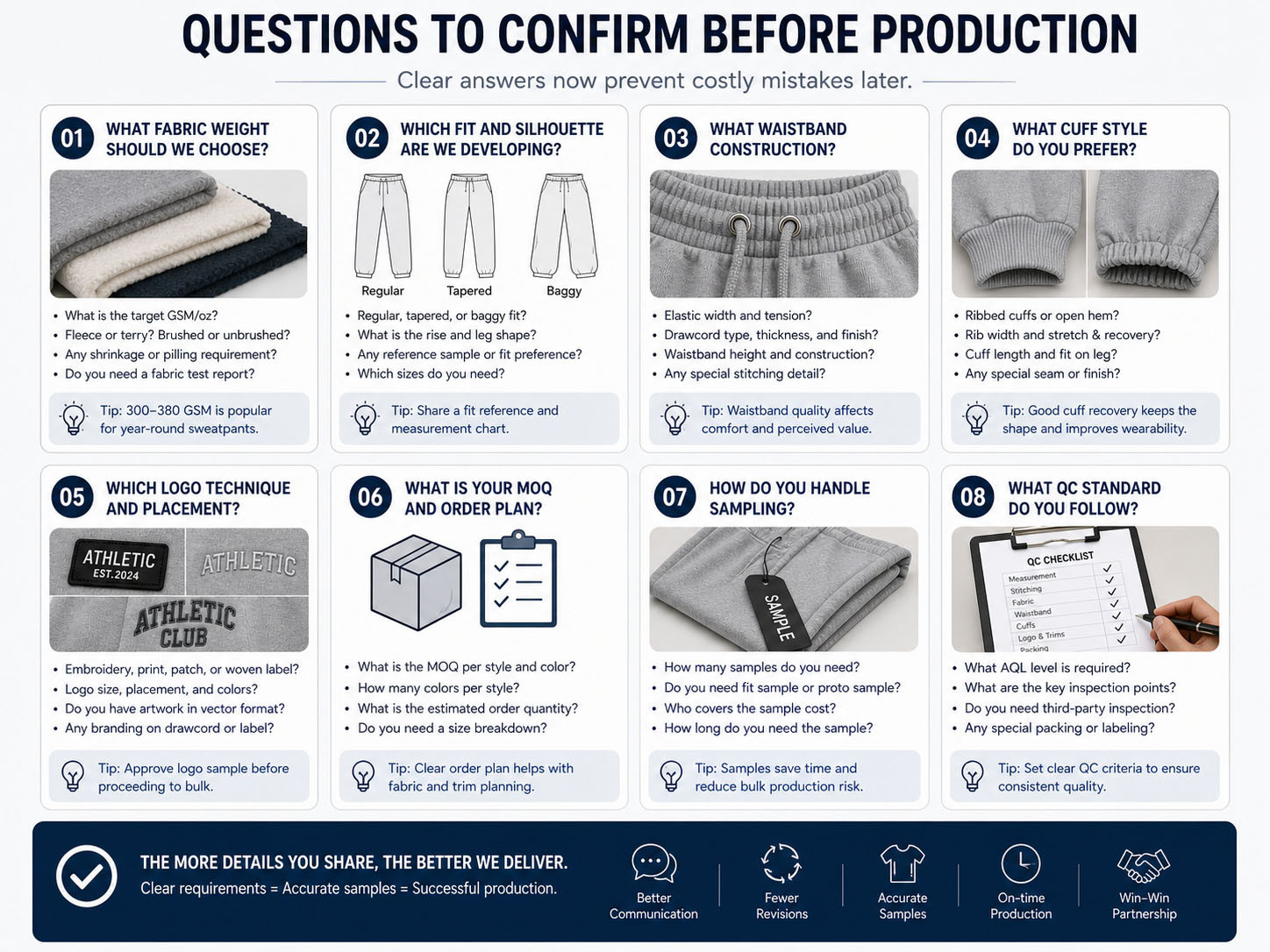
Brands can reduce QC problems by approving fabric, measurements, waistband construction, cuff structure, logo placement, and packaging before bulk production. A clear QC standard helps the factory check shrinkage, stitching, symmetry, and packing consistency more accurately.
What is the difference between baggy sweatpants and joggers in manufacturing terms?
Baggy sweatpants usually require more volume in the rise, thigh, knee, and leg opening, while joggers are more tapered and usually rely more heavily on controlled cuff shape. The production logic is different because the silhouette balance is different.
Why a Sweatpants Manufacturing Checklist Matters
A sweatpants checklist is not just a document for the factory. It is a communication tool that helps the buyer, designer, merchandiser, and production team stay aligned before sampling or bulk production. Sweatpants may look simple, but they depend on a combination of fleece behavior, fit balance, waistband structure, cuff control, trim function, decoration compatibility, and quality inspection.
For private label brands, a checklist also reduces unnecessary revisions. If the fabric, fit, waistband, and branding are only loosely defined, the first sample may not match the brand's expectations. When the checklist is clear, the manufacturer can quote more accurately, develop a more relevant sample, and control bulk production more effectively.
Brands that want to understand how custom apparel development can be structured can review Vanrd's OEM/ODM services: https://www.vanrd.com/comm26/OEMODM-Services.htm
1. Fabric Checklist for Custom Sweatpants
Fabric is the first major decision in sweatpants manufacturing because it affects drape, warmth, shrinkage, hand feel, appearance, cost, and even silhouette. A supplier needs more than the phrase "fleece fabric." The buyer should explain the product target more clearly.
Key Fabric Points to Confirm
Confirm these fabric details before sampling:
Fabric composition
Fabric weight or approximate hand feel
Brushed fleece, loopback fleece, French terry, or other structure
Surface appearance
Soft, structured, smooth, or washed hand feel
Shrinkage concern
Color standard
Garment wash requirement if applicable
Seasonal target
Matching rib or cuff material if required
A heavier fleece can support a more structured, premium streetwear look. A lighter French terry may suit a more versatile or seasonal product. A brushed interior may create a softer feel, while a loopback interior may look cleaner and feel less bulky.
Common Fabric Options for Sweatpants
Brushed fleece is often chosen for warmth and softness.
Loopback fleece is often chosen for a cleaner, less bulky interior.
French terry can work well for transitional or lighter sweatpants.
Cotton-poly blends can be useful when a brand wants a balance between softness, stability, and cost control.
The right choice depends on product positioning, target market, fit direction, and price expectations.
For fabric and garment development support, buyers can review Vanrd's Fabrics and Techniques page: https://www.vanrd.com/comm44/Fabrics-Techniques.htm
2. Fit Checklist: What Measurements Matter Most
Fit is one of the most common reasons for sweatpants sample revisions. For streetwear and private label programs, the fit should be checked through the product's intended silhouette, not just through basic size labels.
Key Fit Points to Confirm
A strong sweatpants fit checklist should include:
Waist
Rise
Hip
Thigh
Knee
Inseam
Outseam
Leg opening
Cuff width if cuffed
Overall silhouette
Baggy sweatpants need controlled volume across the rise, thigh, and leg. Joggers usually rely on a more tapered leg and more controlled cuff shape. Stacked sweatpants require careful planning around inseam, leg width, and overall length.
Fit Direction Matters More Than Generic Labels
Words like oversized, relaxed, or tapered are helpful, but measurements are more useful. If a buyer wants a baggy streetwear silhouette, the factory needs to know how much extra volume is expected in the thigh and leg. If the buyer wants a slimmer jogger, the leg shape and cuff opening become more important.
The sample should be judged by both flat measurements and worn appearance. Sweatpants can measure correctly on paper but still look visually wrong if the proportions are unbalanced.
3. Waistband Checklist: Comfort, Function, and Appearance
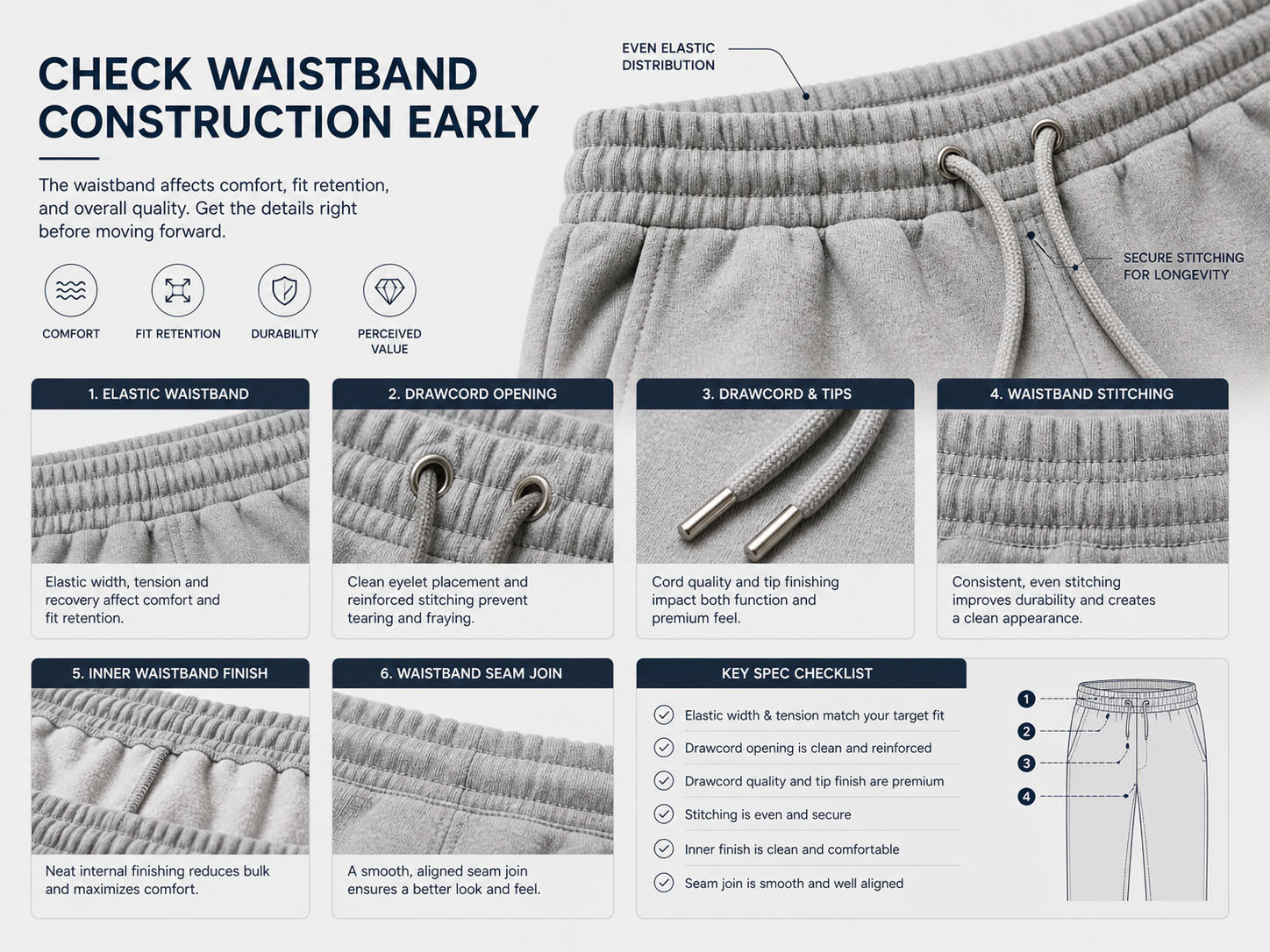
The waistband is one of the most important quality signals in sweatpants production. It affects comfort, security, fit, and visual balance.
Waistband Details to Confirm
Elastic width
Elastic strength
Waistband height
Drawcord type
Drawcord thickness
Drawcord placement
Hidden or exposed drawcord
Eyelet or buttonhole structure
Topstitching around waistband
Waistband seam structure
A waistband that is too weak may feel loose and unstable. A waistband that is too strong may feel restrictive. The right balance depends on fabric weight, product positioning, and customer expectation.
Drawcord Details Matter
Drawcords may seem like a minor trim, but they affect both style and function. Streetwear sweatpants may use thicker cords or premium-looking tips, while simpler styles may use more minimal drawcords. The factory should know whether the buyer wants tonal drawcords, contrast drawcords, branded drawcords, or cleaner hidden construction.
4. Cuff Checklist: Shape, Recovery, and Silhouette Control
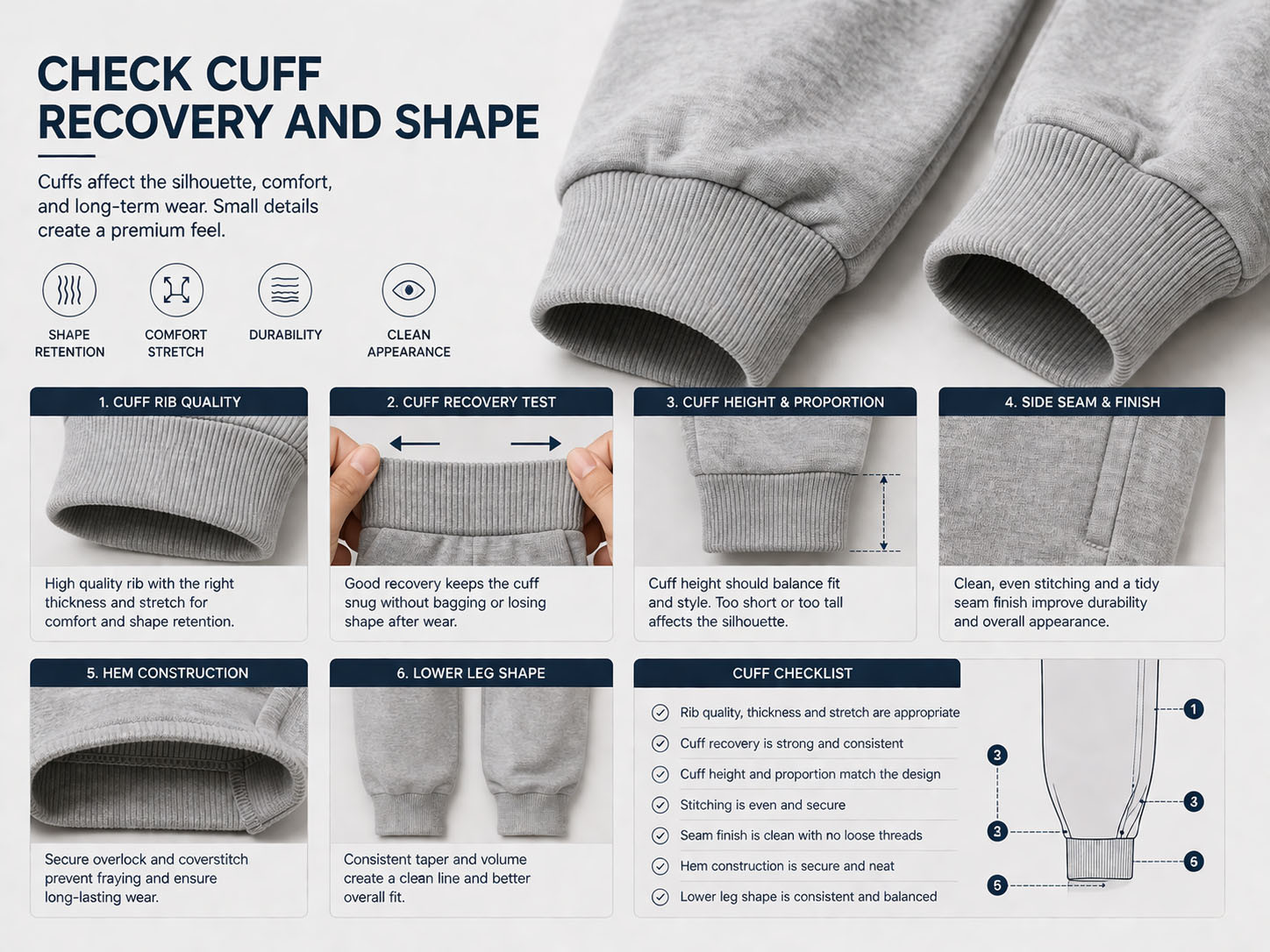
Cuffs are often overlooked, but in sweatpants production they can strongly influence the final silhouette. This is especially true for joggers, cuffed sweatpants, and streetwear styles with visible stacking or ankle shape.
Cuff Details to Confirm
Cuff fabric or rib type
Cuff height
Cuff opening
Rib recovery
Stitching quality
Attachment method
Balance with leg width
Ankle shape after wear
If the cuff is too loose, the silhouette may look weak. If it is too tight, the product may feel uncomfortable and pull the leg shape out of balance. For joggers, cuff quality affects the entire lower-leg appearance.
Cuffs and Leg Shape Should Be Reviewed Together
A cuff should never be approved in isolation. It needs to be reviewed together with leg opening, taper, and inseam. A good cuff on the wrong leg shape will still create an unsatisfactory product.
5. Pocket, Trim, and Branding Checklist
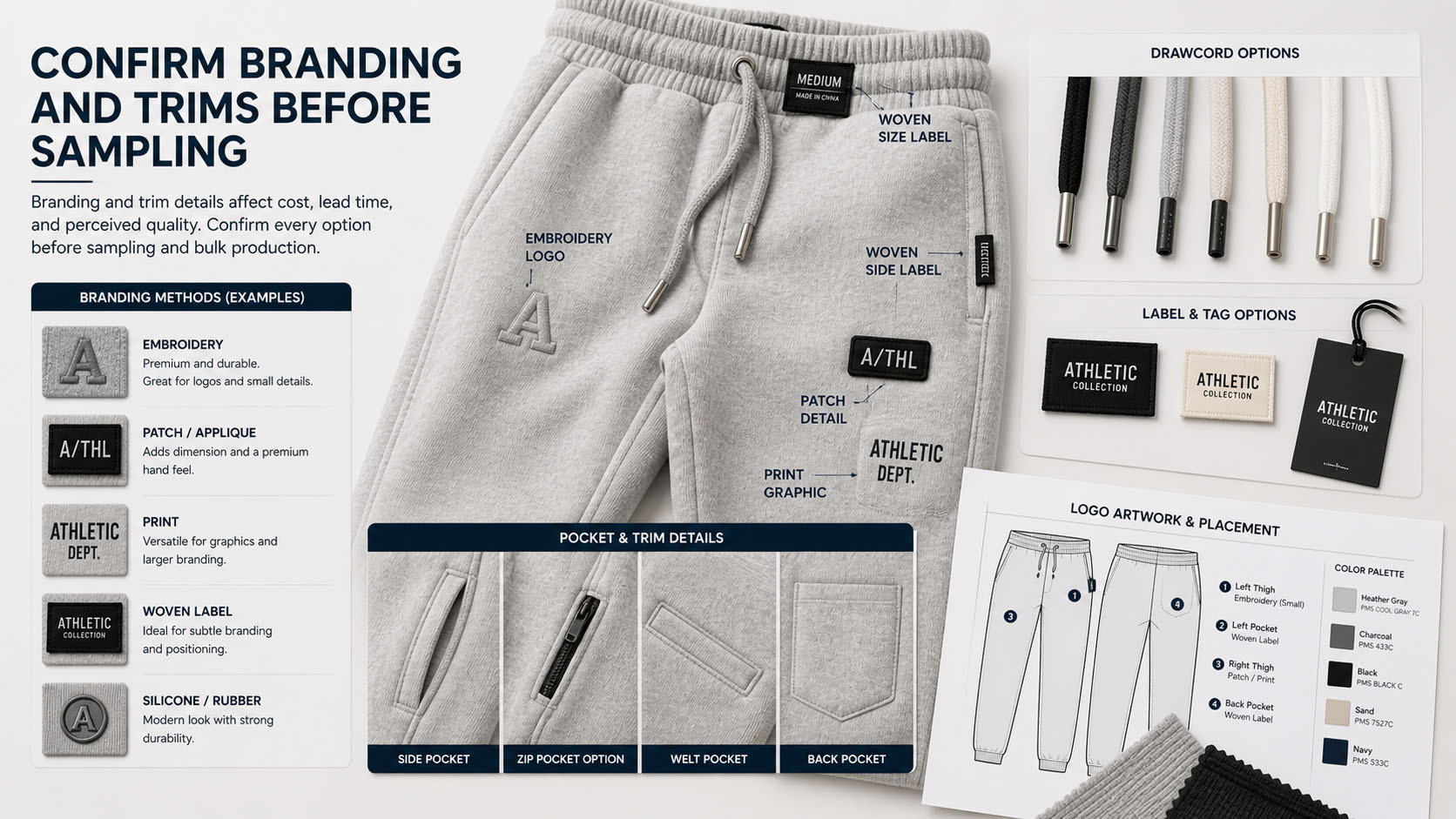
Sweatpants often include pockets, labels, drawcords, patches, prints, embroidery, or other branding details. These elements affect both production logic and final product identity.
Pocket and Trim Points to Confirm
Pocket type
Pocket opening
Pocket bag construction
Pocket placement
Bar tack or reinforcement requirement
Drawcord material
Cord tip style
Label type
Woven patch, embroidery, or print option
Packaging requirements
Pocket placement affects both function and appearance. A poorly placed pocket can make the product look awkward even when the fit is otherwise acceptable.
Branding Method Should Match the Fabric
The logo technique should be chosen based on fabric surface, wash direction, and visual effect. Common methods may include screen print, puff print, embroidery, woven patch, heat transfer, or other private label treatments.
If the product uses washed or garment-dyed fleece, the branding method should also be tested for compatibility with the final treatment.
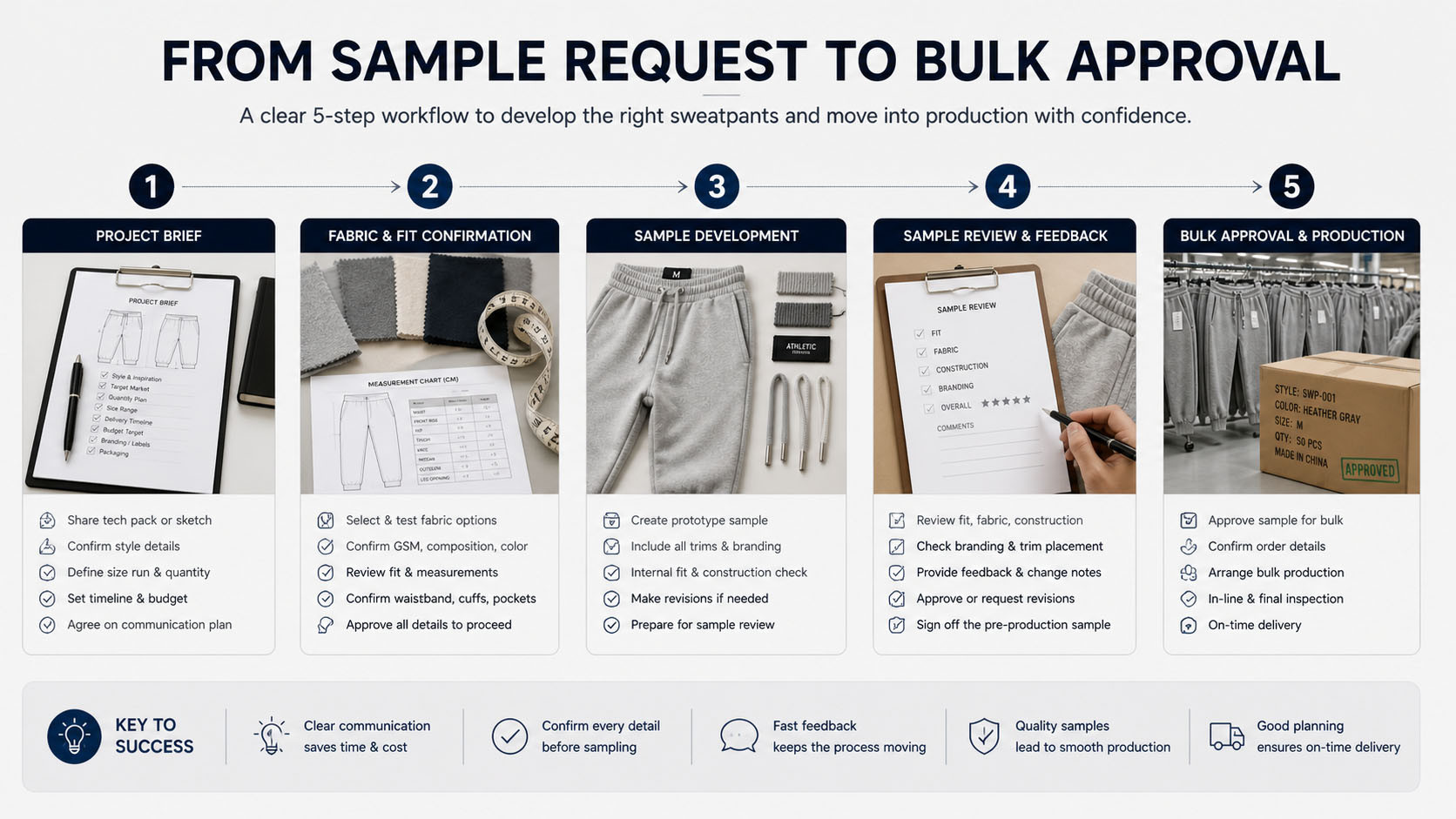
6. Sample Preparation Checklist Before Development
A sample is easier to develop when the buyer provides a clear project brief. The first sample does not have to be perfect, but the available information should be organized clearly.
What Buyers Should Prepare
Reference images
Tech pack if available
Size chart
Fabric direction
Fit direction
Waistband and cuff requirements
Pocket layout
Logo artwork
Label and packaging needs
Target quantity
Target delivery window
QC expectations
If some details are not final, they should be marked as open decisions. That allows the factory to know which parts need recommendation and which parts already have approval direction.
For a broader view of how development and sampling can be structured, buyers can review Vanrd's Service Process page: https://www.vanrd.com/comm47/Service-Process.htm
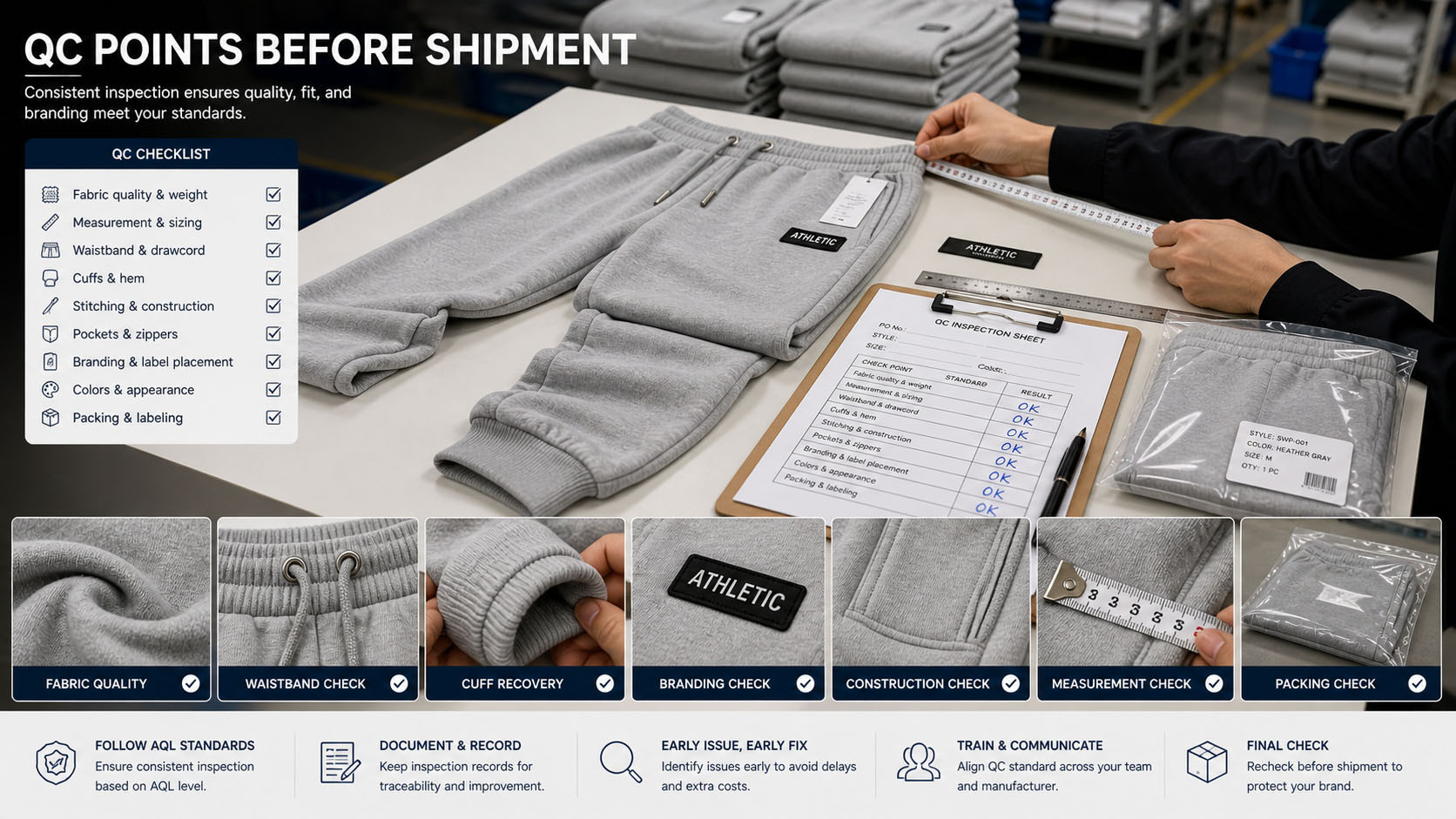
7. QC Checklist for Sweatpants Production
QC should be planned before bulk production, not only after goods are finished. This helps both the buyer and factory stay aligned on what matters most.
Fabric and Appearance QC
Fabric matches approved reference
Fabric color matches approved standard
No obvious stains or fabric defects
No unacceptable shade difference
Hand feel is consistent
Shrinkage behavior is understood
Measurement QC
Waist within agreed tolerance
Rise within agreed tolerance
Hip and thigh within agreed tolerance
Inseam and outseam checked
Leg opening checked
Cuff width and recovery checked
Left and right symmetry checked
Sewing and Trim QC
Stitching is even
No skipped stitches
No loose threads
Drawcord placement is correct
Elastic function is acceptable
Pocket position is correct
Logo placement is consistent
Labels are attached correctly
Packing method follows requirements
QC standards should be practical and clear. If the buyer and factory do not align on measurement tolerance, logo placement, or acceptable visual variation, the same issue can be judged differently later.
For more detail on inspection logic, buyers can review Vanrd's Q&C page: https://www.vanrd.com/comm48/Q-C.htm
8. Factory Reality: What Affects Sweatpants Development
In real manufacturing, sweatpants development depends on more than the visual design. Fabric availability, rib matching, elastic sourcing, branding method, sample revisions, and approval speed can all affect the workflow.
Fabric Availability Can Change the Timeline
Some fleece fabrics are standard and easy to source. Others may require special dyeing, brushing, or weight matching. If the product needs a specific feel or wash effect, fabric confirmation becomes more important.
Fit Revisions Affect More Than Measurements
Changing the rise, thigh, or leg opening may also change fabric consumption, pattern balance, and even the visual identity of the product. Fit revisions should be treated carefully rather than casually.
Elastic, Cuffs, and Drawcords Need Separate Attention
These details may come from different sources or need separate approval. They may seem minor, but they often affect the final quality perception of the sweatpants.
Buyer Feedback Speed Matters
Even a clear project can slow down if feedback on samples, trims, or logo placement takes too long. A practical approval flow helps reduce delays and confusion.
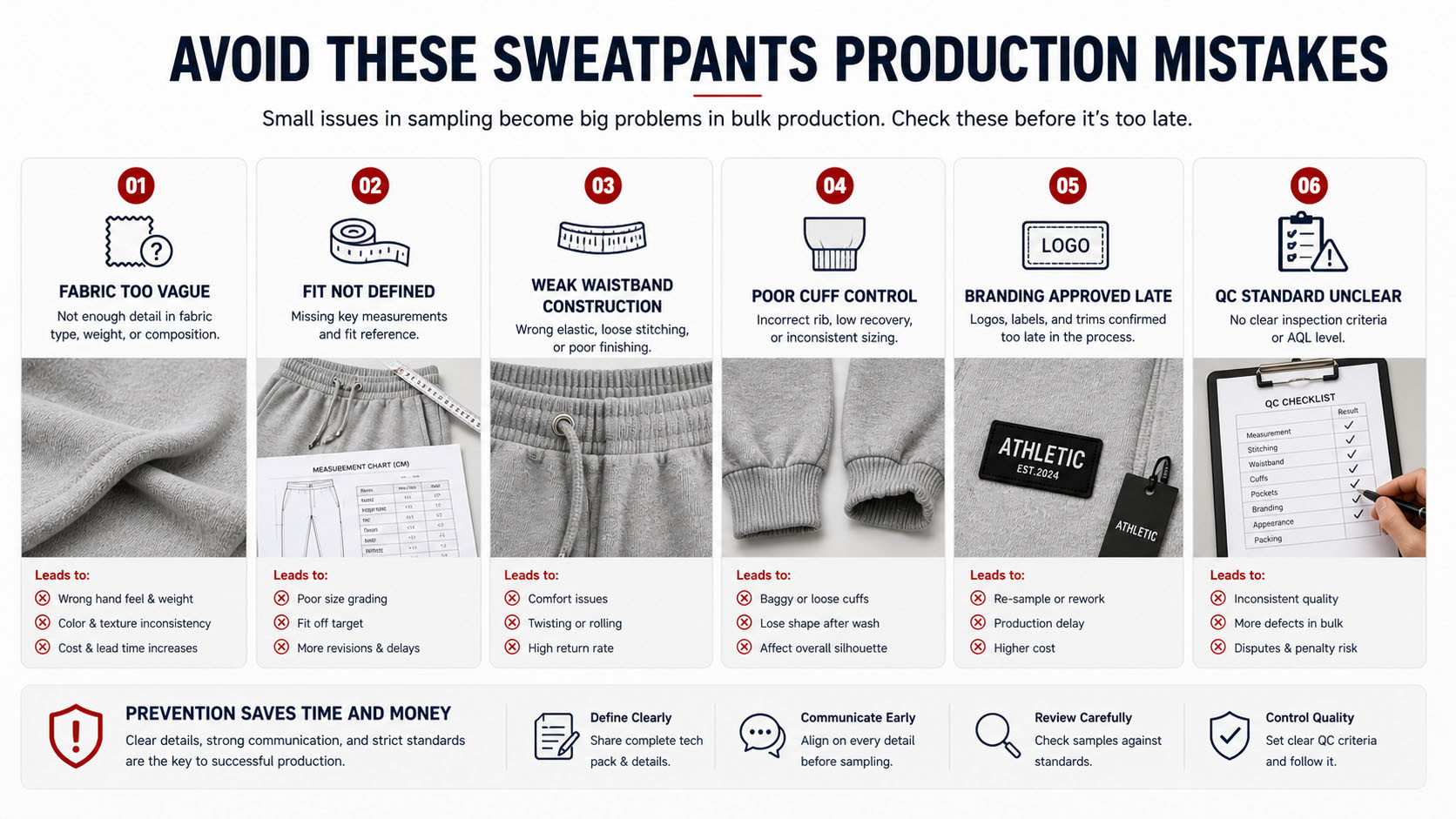
9. Common Mistakes in Sweatpants Manufacturing
Many avoidable problems come from incomplete specifications or late decisions.
Mistake 1: Choosing Fabric Only by a General Name
Terms like fleece or terry are too broad. Brands should explain the weight, hand feel, structure, and product goal more clearly.
Mistake 2: Using Generic Fit Language
Words like baggy or relaxed are not enough on their own. The factory needs measurements or a much clearer fit direction.
Mistake 3: Treating the Waistband as a Minor Detail
A weak or uncomfortable waistband can reduce the quality impression of the full product. Waistband structure should be defined early.
Mistake 4: Ignoring Cuff Quality
Low-recovery cuffs can make the lower-leg shape look weak or inconsistent. The cuff should be reviewed as part of the full silhouette.
Mistake 5: Approving Branding Too Late
The logo method, size, and placement should be decided before bulk production. Late changes can cause extra revisions and misunderstandings.
Mistake 6: Leaving QC Standards Until the End
QC should be discussed before bulk production. Measurement tolerance, trim function, packaging requirements, and acceptable variation should be aligned in advance.
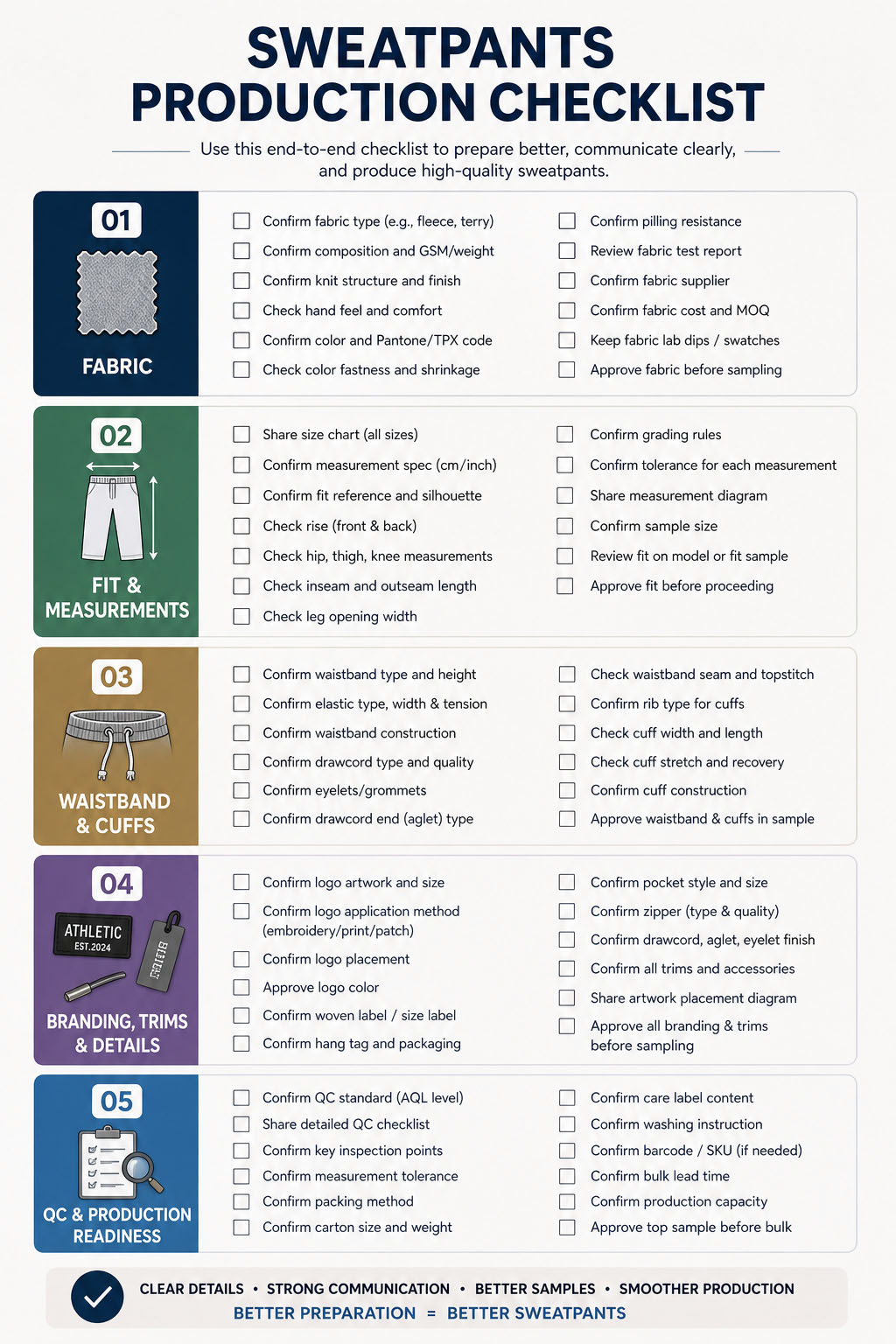
10. Full Sweatpants Manufacturing Checklist for Buyers
Use this checklist before sending a sample request or approving bulk production.
Fabric
Fabric composition confirmed
Fabric structure confirmed
Fabric hand feel confirmed
Fabric weight direction confirmed
Color standard confirmed
Shrinkage concern discussed
Wash requirement confirmed if needed
Fit
Waist confirmed
Rise confirmed
Hip confirmed
Thigh confirmed
Knee confirmed
Inseam confirmed
Outseam confirmed
Leg opening confirmed
Cuff width confirmed if applicable
Overall silhouette confirmed
Waistband and Cuffs
Elastic width confirmed
Elastic strength confirmed
Waistband height confirmed
Drawcord type confirmed
Drawcord placement confirmed
Cuff fabric confirmed
Cuff height confirmed
Cuff recovery checked
Pockets and Branding
Pocket layout confirmed
Pocket placement confirmed
Reinforcement details confirmed
Logo file provided
Logo method confirmed
Logo size confirmed
Logo placement confirmed
Labels confirmed
Packaging confirmed
QC
Measurement tolerance discussed
Shrinkage control discussed
Stitching expectations discussed
Logo placement standard approved
Packing requirements approved
Inspection points aligned
11. How to Communicate the Checklist to a Manufacturer
The checklist works best when it is paired with files, visuals, and clear notes. A buyer should avoid sending scattered requirements in many separate messages without a central document or clear reference.
Recommended File Package
Tech pack
Reference images
Size chart
Fabric direction
Color standard
Logo artwork
Pocket and trim notes
Label and packaging requirements
Target quantity
QC notes
Recommended Communication Flow
Send the project brief
Confirm fabric and fit direction
Confirm waistband, cuff, and trim direction
Develop sample
Review measurements and wearing effect
Revise sample if needed
Approve pre-production details
Start bulk production
Inspect and pack finished goods
If the buyer does not yet have a complete tech pack, it is still possible to begin the conversation. The key is to make it clear which details are fixed and which are still open.
12. Next Steps Before Starting a Custom Sweatpants Sample
Before starting a custom sweatpants sample, brands should organize what is already confirmed and what still needs development support. This helps the manufacturer respond with more relevant suggestions and fewer assumptions.
Prepare These Details First
Sweatpants type
Target fit
Reference photos
Fabric direction
Waistband requirement
Cuff requirement
Pocket layout
Logo artwork
Label and packaging needs
Target quantity
Target timeline
QC concerns
Vanrd works with private label and custom apparel buyers that need OEM/ODM development, custom sampling, fabric and trim coordination, bulk production, and quality control. Buyers who are preparing a sweatpants project can also review Vanrd's factory background: https://www.vanrd.com/comm45/Factory-Strength.htm
FAQ
What is the most important part of a sweatpants manufacturing checklist?
The most important part is alignment between fabric, fit, waistband construction, cuffs, and QC standards. Sweatpants may look simple, but these elements control comfort, silhouette, and consistency in production.
How long does sweatpants sampling take?
Sampling time depends on fabric availability, pattern complexity, branding method, trim sourcing, and buyer feedback speed. Washed, heavily branded, or fit-sensitive styles usually require more review than basic styles.
Do brands need a full tech pack before contacting a manufacturer?
A full tech pack is useful, but it is not always required for the first discussion. Buyers can start with reference images, size direction, fabric preference, logo artwork, and target quantity, then clarify missing details before sampling.
What should be included in a sweatpants tech pack?
A sweatpants tech pack should typically include reference images, flat sketches, measurements, fabric direction, waistband and cuff details, pocket layout, logo placement, labels, packaging requirements, and production notes.
How do manufacturers control sweatpants shrinkage?
Manufacturers usually manage shrinkage by selecting the right fabric, understanding the wash or finishing process, checking measurements after treatment when relevant, and aligning approval standards before bulk production.
Can the same checklist be used for joggers and baggy sweatpants?
Some sections are similar, such as fabric, branding, and QC. However, the fit logic is different. Joggers need more focus on taper and cuffs, while baggy sweatpants need more control over rise, thigh volume, and leg balance.
What should be approved before bulk sweatpants production?
Before bulk production, buyers should approve fabric, color, measurements, waistband, cuffs, branding, labels, packaging, and QC standards. Any unresolved decision should be clarified before production begins.
Final CTA
A sweatpants project becomes easier to quote, sample, and produce when the fabric, fit, waistband, cuffs, branding, and QC expectations are clearly prepared before development starts. If your brand is planning custom sweatpants, Vanrd can review your project brief, reference images, and production requirements before sample development.
Send your project details through Vanrd's contact page to discuss sampling, customization, and production planning for your next sweatpants program: https://www.vanrd.com/contact-us.htm