How to Choose Nylon Fabric for Custom Tracksuit Production?
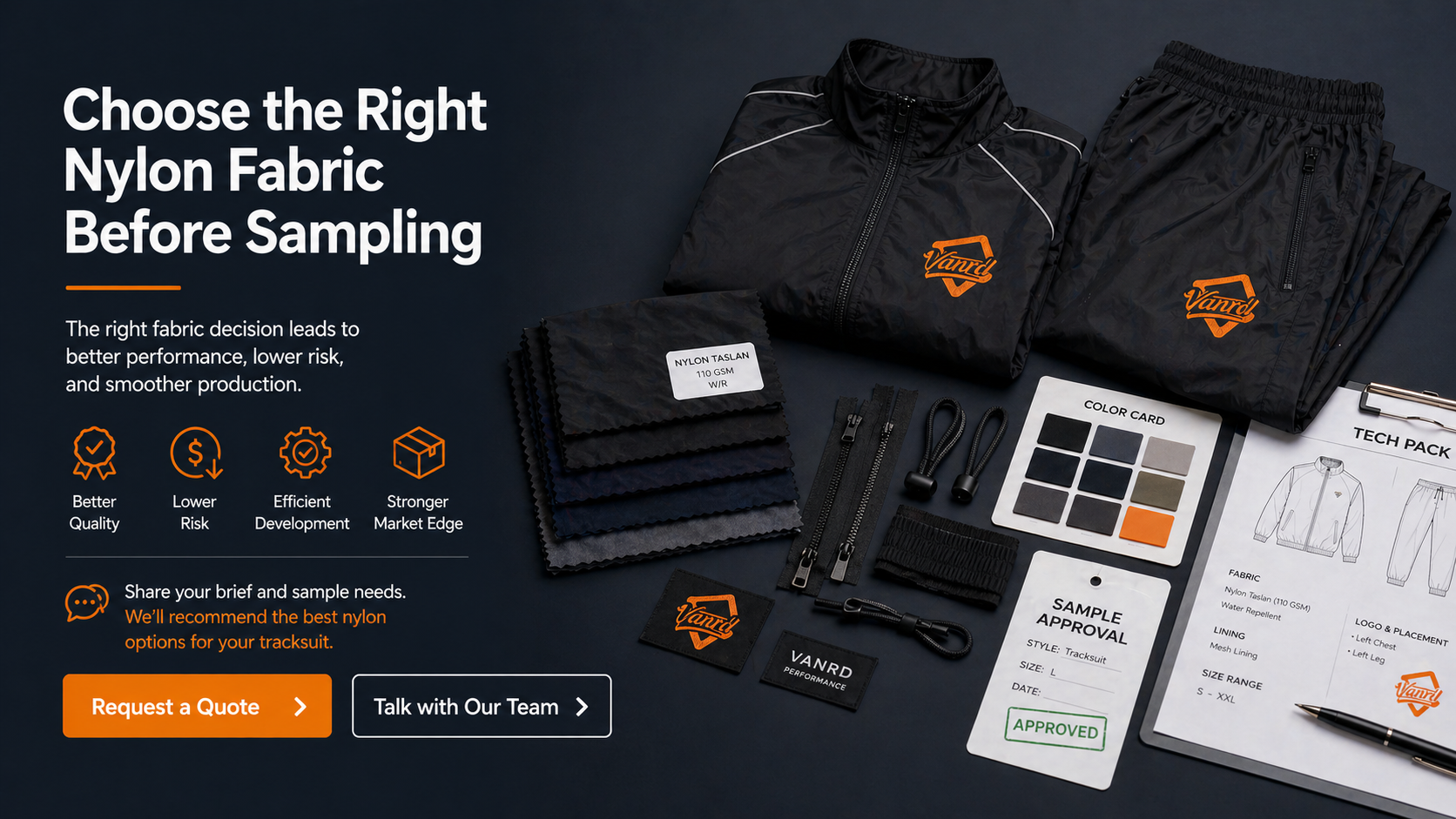
Choosing nylon fabric for custom tracksuit production requires more than selecting the word "nylon." Buyers need to confirm fabric weight, hand feel, surface finish, stretch, lining, coating, color, branding compatibility, and production feasibility before sampling.
For private label brands, the best nylon fabric depends on the product's target use, fit direction, price level, and bulk production plan. A clear fabric brief helps the manufacturer recommend more suitable options and reduce sample revisions.
Quick Answers
What nylon fabric is best for custom tracksuits?
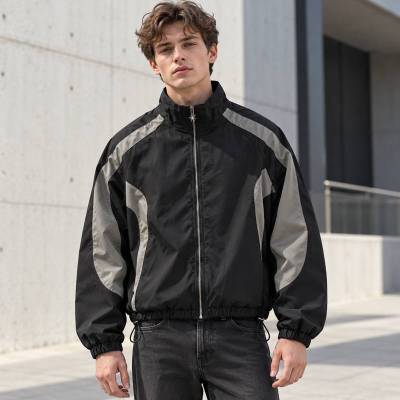
The best nylon fabric depends on the tracksuit's intended use. Lightweight nylon may suit windbreaker-style sets, stretch nylon can support movement, and coated or structured nylon may work better for technical or streetwear-inspired tracksuits.
What should brands check before choosing tracksuit nylon fabric?
Brands should check fabric weight, texture, shine level, stretch, coating, lining, breathability, color availability, logo compatibility, seam stability, and cost feasibility before sampling.
Is nylon fabric good for tracksuit production?
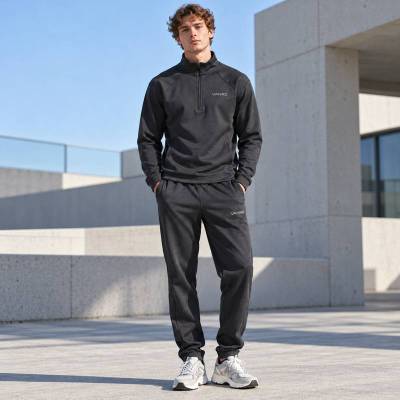
Nylon can be suitable for tracksuit production when the brand wants a smooth, lightweight, technical, or premium shell fabric. The final result depends on the exact fabric construction, finish, lining, trims, and garment pattern.
Should nylon tracksuits use lining?
Lining depends on comfort, structure, and product positioning. Mesh lining can improve comfort in many sportswear-inspired styles, while smooth woven lining can make the garment easier to wear over layers.
Can nylon fabric be printed or embroidered?
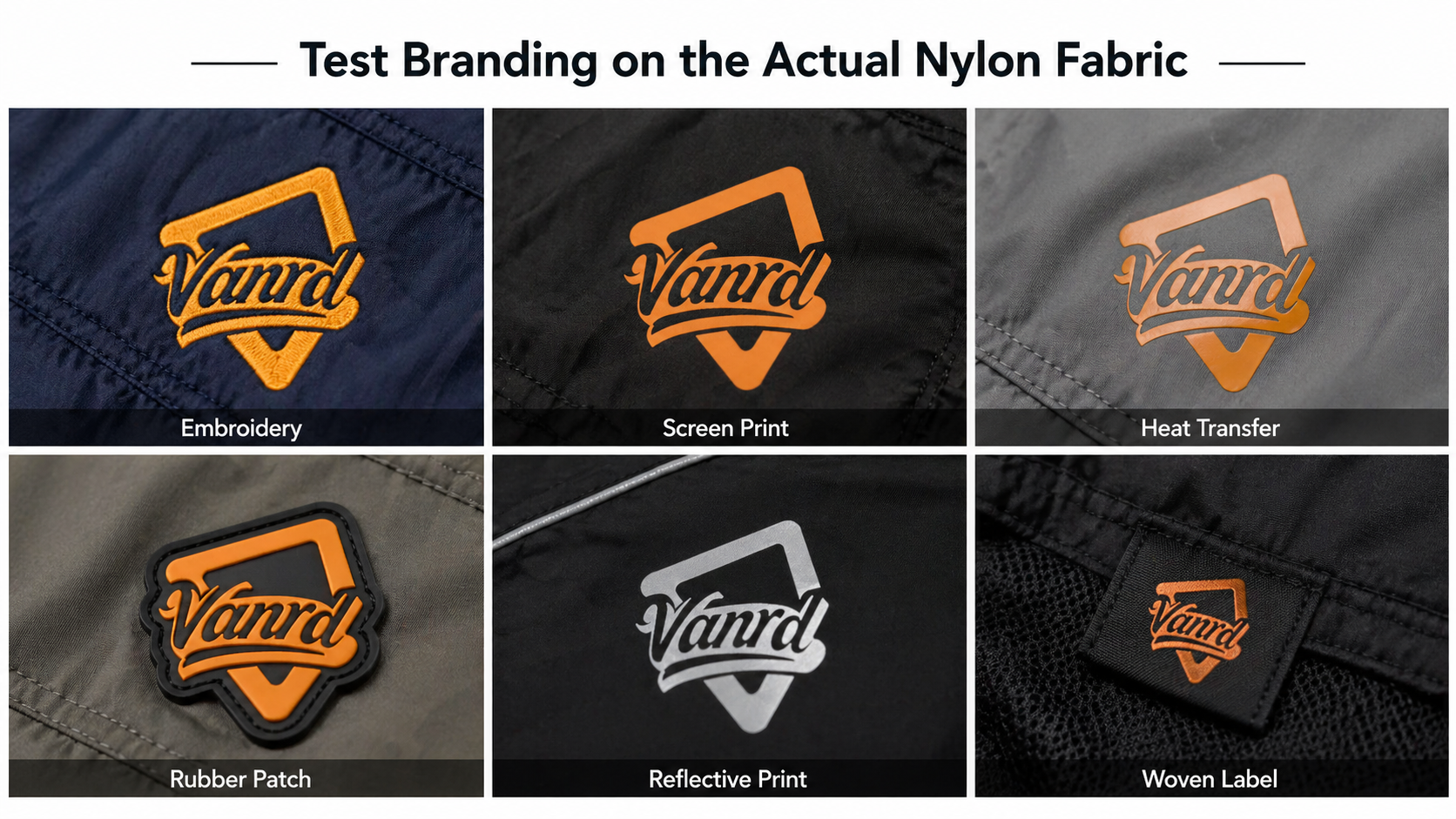
Yes, but the logo method should be tested on the actual nylon fabric. Printing, heat transfer, embroidery, rubber patches, and applique can behave differently depending on coating, surface texture, and fabric weight.
How does nylon fabric choice affect production cost?
Nylon fabric choice affects cost through fabric grade, finish, coating, color, lining, trims, branding method, pattern complexity, and order quantity. Buyers should compare fabric options before requesting final pricing.
Why Nylon Fabric Choice Matters in Custom Tracksuit Production
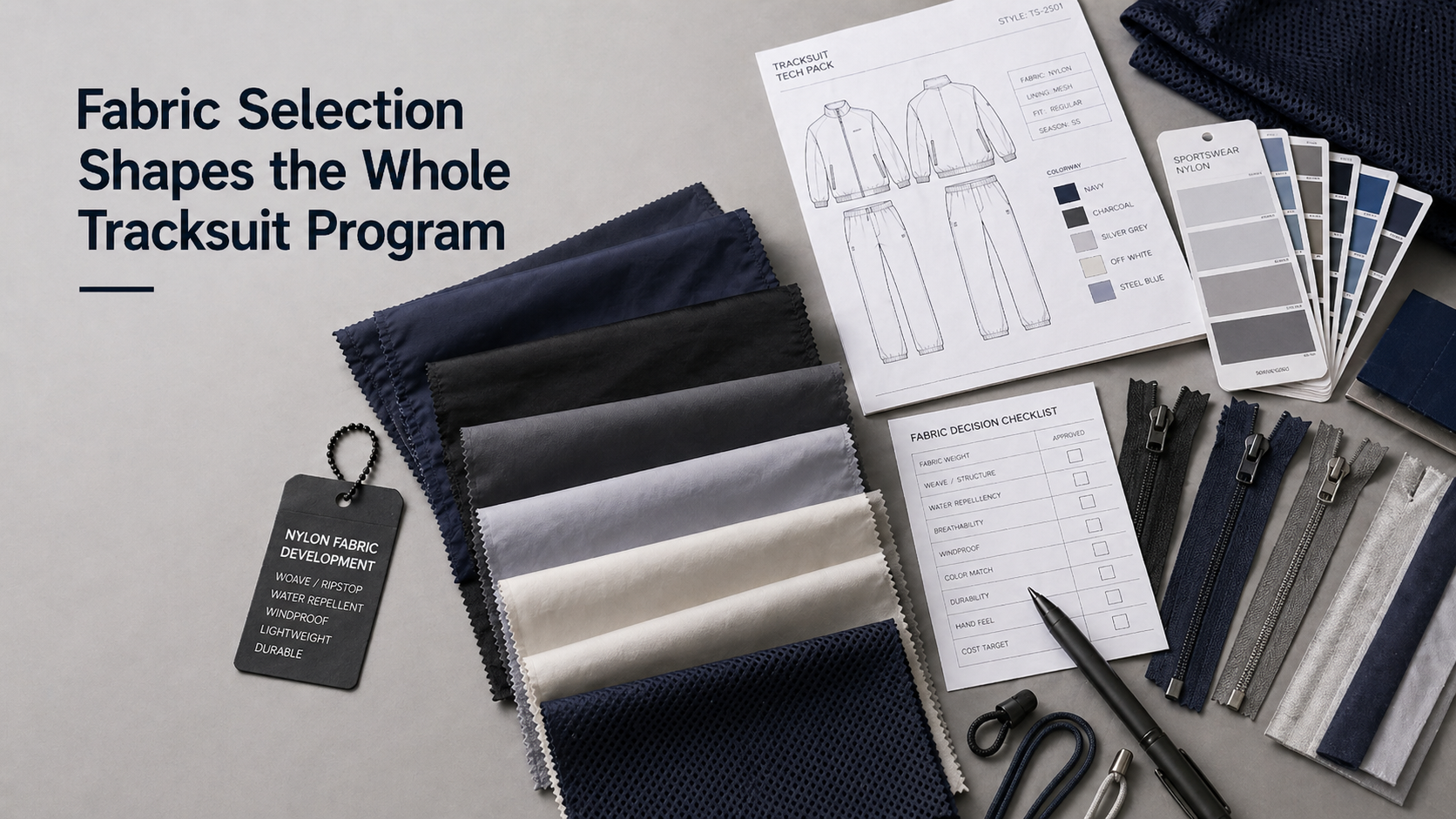
Nylon fabric choice affects the look, hand feel, comfort, structure, cost, and production stability of a custom tracksuit. For private label brands, the fabric is not just a material decision. It influences fit, lining, trims, logo methods, sample revisions, and bulk production consistency.
A nylon tracksuit can feel lightweight, crisp, smooth, technical, sporty, or streetwear-inspired depending on the selected fabric. Two nylon fabrics can look similar in photos but behave very differently during sewing, fitting, and wearing. One may have a soft drape, while another may feel structured or noisy. One may accept heat transfer well, while another may require a different branding method.
This is why buyers should not ask only for "tracksuit nylon fabric." A better approach is to define the intended use case, target price level, fabric hand feel, surface effect, stretch requirement, lining preference, and branding method before sampling.
Vanrd supports private label and OEM/ODM custom apparel development for brands that need fabric selection, sampling, production planning, and quality control support. Buyers can review Vanrd's OEM/ODM Services to understand how custom development is normally planned.
Step 1: Define the Tracksuit Use Case First
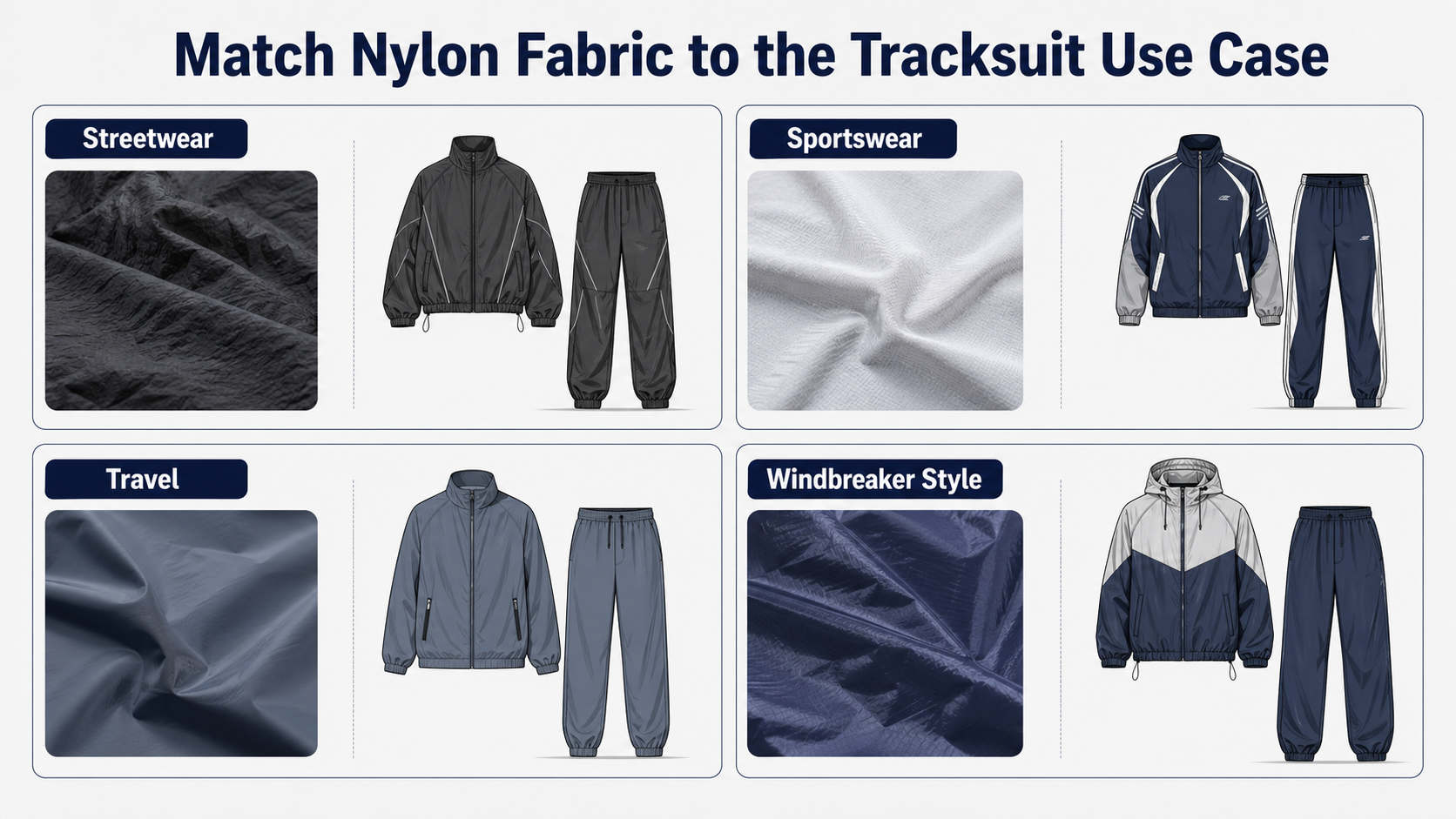
The right nylon fabric should match the intended use case of the tracksuit. A fabric that works for a windbreaker-style streetwear set may not be the best choice for a training tracksuit or a lightweight travel set.
Common Use Cases for Nylon Tracksuits
Private label brands may develop nylon tracksuits for:
1.Streetwear capsules
2.Lightweight sportswear sets
3.Windbreaker-style tracksuits
4.Travel or outdoor-inspired apparel
5.Athleisure programs
6.Teamwear or merch collections
7.Technical casualwear
8.Seasonal brand drops
Each use case has different fabric priorities. A streetwear collection may care more about texture, silhouette, and visual impact. A sportswear program may prioritize movement, breathability, lining, and durability. A merch program may require cost control, repeatability, and stable color matching.
Questions to Ask Before Fabric Selection
Before choosing fabric, buyers should answer:
1.Should the tracksuit feel light, structured, soft, crisp, or technical?
2.Will the product be worn for movement, styling, layering, or promotional use?
3.Does the set need lining?
4.Should the surface be matte, semi-shiny, crinkled, or smooth?
5.Is stretch required for comfort or performance?
6.What price level should the final product fit?
7.Will the tracksuit use printing, embroidery, patches, or heat transfer?
These answers help the manufacturer recommend fabric options that match the product goal rather than guessing from a broad material term.
Step 2: Compare Different Nylon Fabric Types
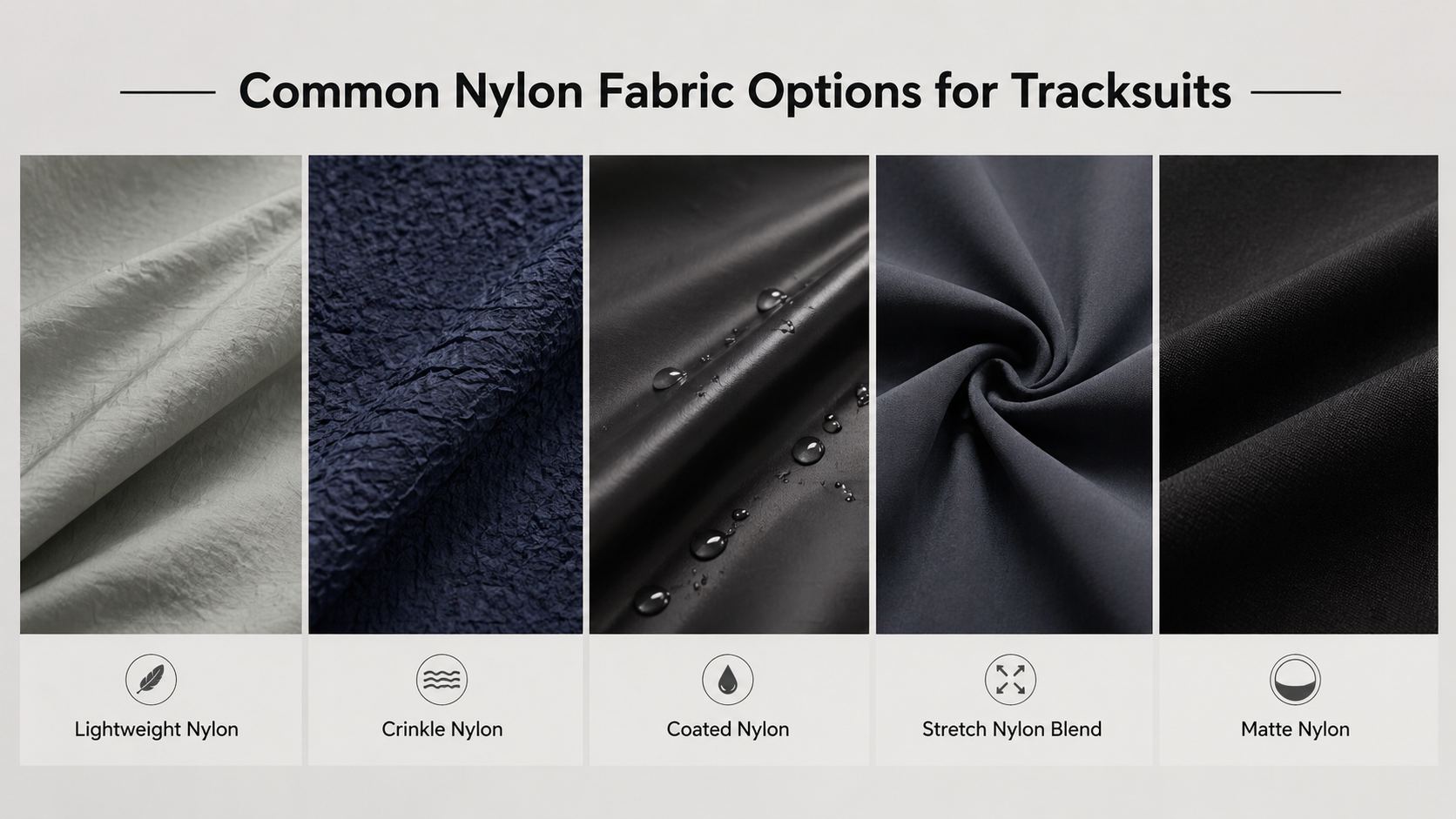
"Nylon fabric" is a broad category. Buyers should compare specific nylon fabric types instead of treating all nylon materials as the same.
Lightweight Nylon
Lightweight nylon can be suitable for windbreaker-style tracksuits, travel sets, and light shell garments. It can create a clean technical look, but buyers should check whether it feels too thin, noisy, or transparent for the intended product.
Crinkle Nylon
Crinkle nylon has a textured surface that can add visual interest to streetwear and retro-inspired tracksuit programs. Buyers should check whether the texture remains consistent and whether the fabric works well with logos, zippers, and panel construction.
Coated Nylon
Coated nylon can support a more technical or weather-resistant direction, depending on the coating. Buyers should confirm the surface finish, breathability expectation, heat sensitivity, and logo compatibility before sampling.
Stretch Nylon Blend
Stretch nylon blends can improve comfort and movement. They may be useful for tracksuits that need better mobility, but buyers should check recovery, seam behavior, and measurement stability.
Matte Nylon
Matte nylon can be suitable for brands that want a modern, less shiny surface. It often works well for clean private label tracksuits, but the actual hand feel and structure must still be confirmed by swatch.
Step 3: Check Fabric Weight, Hand Feel, and Surface Finish
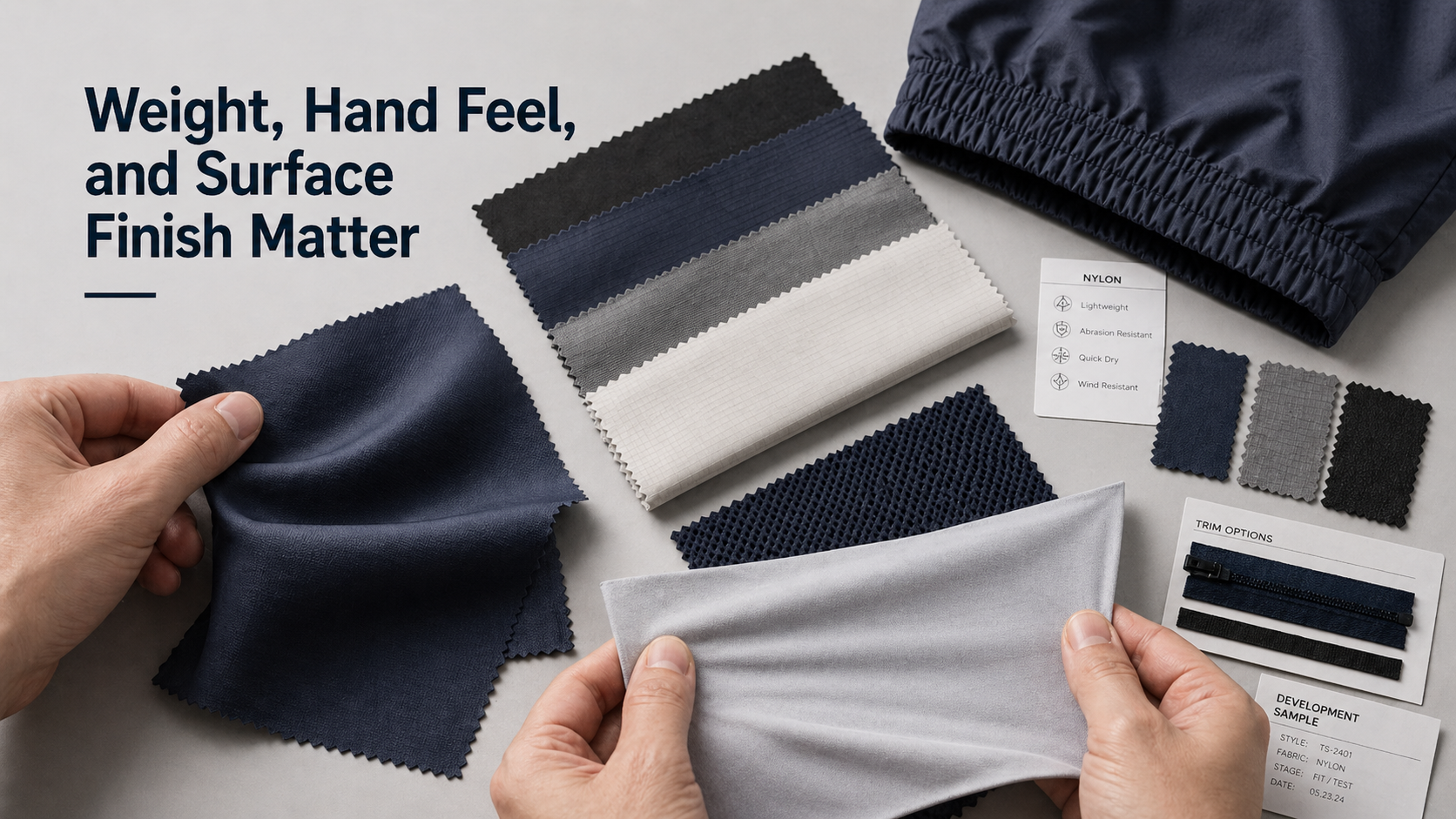
Fabric weight, hand feel, and surface finish are three of the most important checks before sampling a nylon tracksuit. These factors influence how the garment looks on the body and how buyers perceive its quality.
Fabric Weight
Fabric weight affects structure, drape, comfort, and cost. A lighter nylon may work for a packable or windbreaker-style tracksuit, while a heavier or more structured nylon may support a stronger streetwear silhouette. However, heavier does not automatically mean better. The fabric must match the design goal.
Hand Feel
Hand feel refers to how the fabric feels when touched, folded, and worn. Nylon may feel smooth, crisp, soft, dry, slippery, or structured depending on yarn, weave, and finish. Buyers should check real swatches instead of relying only on photos.
Surface Finish
Surface finish affects visual identity and branding compatibility. Common finish directions include matte, semi-shiny, crinkled, coated, smooth, or technical. A shiny surface may support a retro sportswear look, while a matte surface may feel more modern and understated.
For fabric selection, trims, printing, embroidery, finishing, and customization options, buyers can review Vanrd's Fabrics & Techniques.
Step 4: Decide Whether the Tracksuit Needs Lining
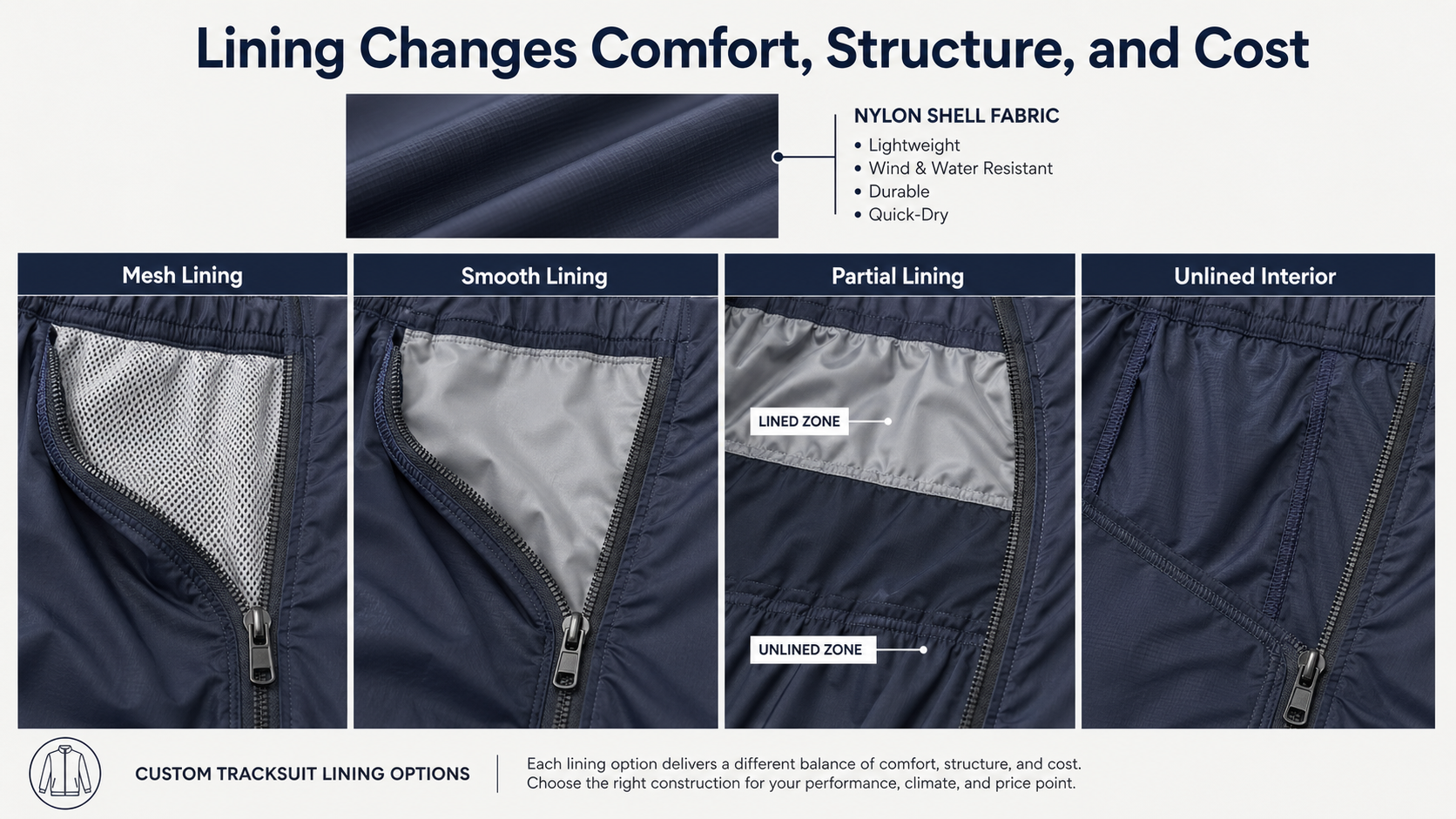
Lining changes the comfort, structure, warmth, and perceived quality of a nylon tracksuit. Buyers should decide lining early because it affects pattern, cost, sewing method, fit, and sample review.
Mesh Lining
Mesh lining is often used for sportswear-inspired nylon tracksuits. It can improve comfort and reduce direct contact between the shell fabric and the skin. Buyers should check mesh quality, softness, breathability, and color matching.
Smooth Woven Lining
Smooth woven lining can make the tracksuit easier to wear over other garments. It may support a cleaner inside finish and a more structured feel. Buyers should check whether the lining makes the garment too warm or changes the drape.
Partial Lining
Partial lining may be suitable when the brand wants comfort in key areas without adding too much weight or cost. This requires clear construction planning.
No Lining
Unlined nylon tracksuits may be simpler and lighter, but inside seam finishing becomes more important. Buyers should check whether the inside feels acceptable and whether seam allowances look clean.
Step 5: Test Branding Compatibility on the Actual Fabric
Branding methods should be checked on the actual nylon fabric before bulk production. The surface finish, coating, heat sensitivity, and fabric weight can affect how logos appear and how stable they remain.
Common Branding Methods for Nylon Tracksuits
Private label brands may consider:
1.Screen printing
2.Heat transfer
3.Embroidery
4.Rubber patches
5.Woven labels
6.Reflective details
7.Applique
8.Custom zipper pullers
9.Branded drawcord tips
10.Inside labels
What to Check Before Approving Branding
Buyers should confirm logo size, placement, color, technique, backing, edge finishing, and durability expectations. A lightweight nylon may pucker under embroidery if not handled correctly. A coated nylon surface may require careful testing before heat transfer. A patch may look strong visually, but its weight and placement must match the garment structure.
Branding should be planned together with fabric selection, not after the sample is finished.
Step 6: Match Fabric With Trims and Construction Details
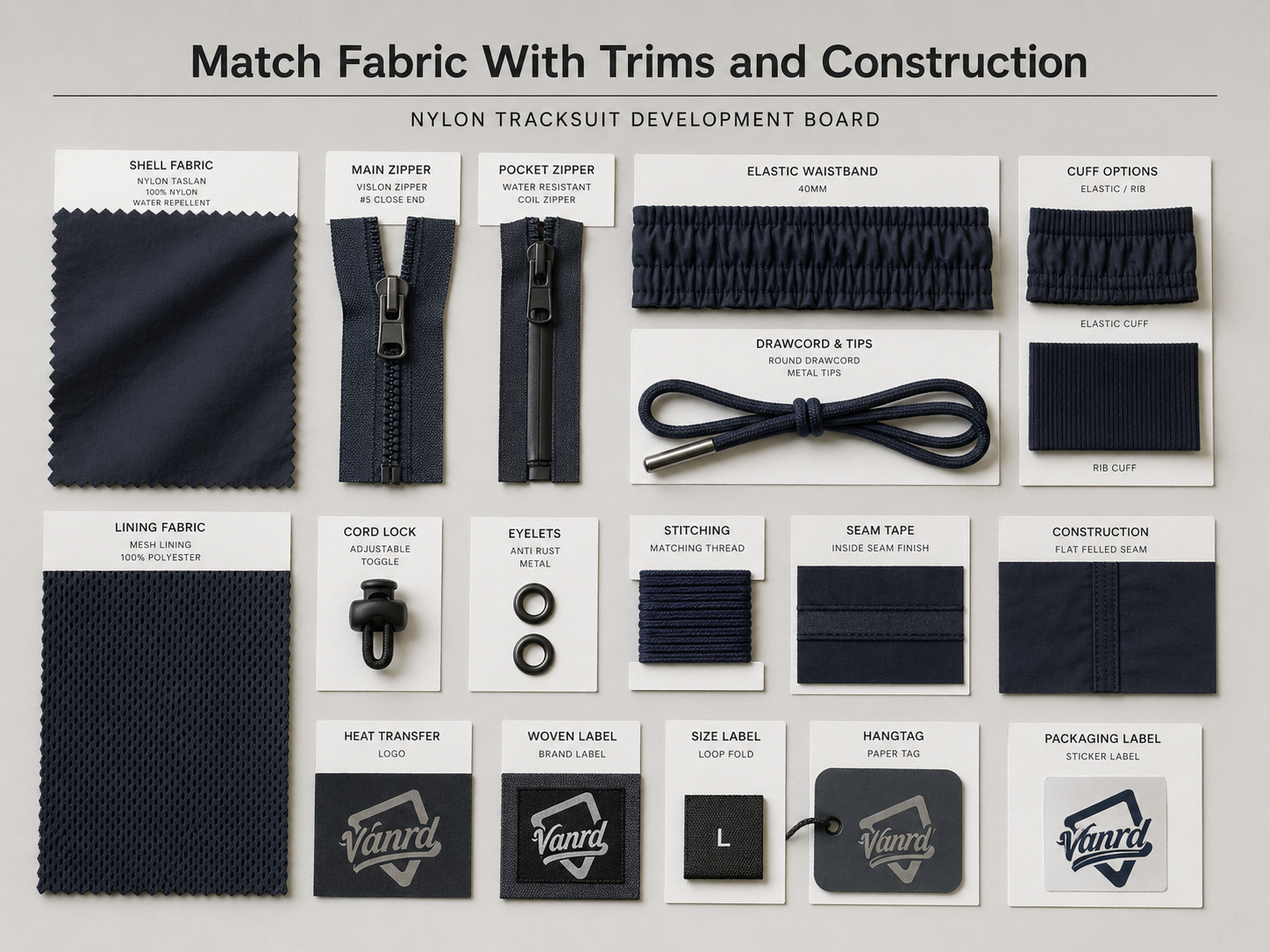
The nylon fabric must work with the trims and construction details of the tracksuit. A strong fabric choice can still fail if the zipper, waistband, pocket, cuff, or seam construction does not match the garment.
Zippers
The zipper should match the fabric weight, jacket structure, and target price. Buyers should check zipper size, puller shape, tape color, smoothness, and whether the zipper causes waving or puckering on the nylon shell.
Pockets
Pocket construction can affect both function and appearance. Seam pockets, zip pockets, patch pockets, and welt pockets all require different construction planning. Nylon fabrics may show tension more clearly, so pocket placement and reinforcement should be checked.
Waistband and Cuffs
Elastic recovery is important for pants and cuffs. Buyers should check waistband comfort, drawcord quality, cuff tension, and whether the elastic holds shape after stretching.
Seams
Seam smoothness matters because some nylon fabrics show puckering more easily. Buyers should check stitch tension, seam allowance, inside finishing, and whether the construction matches the fabric behavior.
Step 7: Review Sample Performance Before Bulk Production
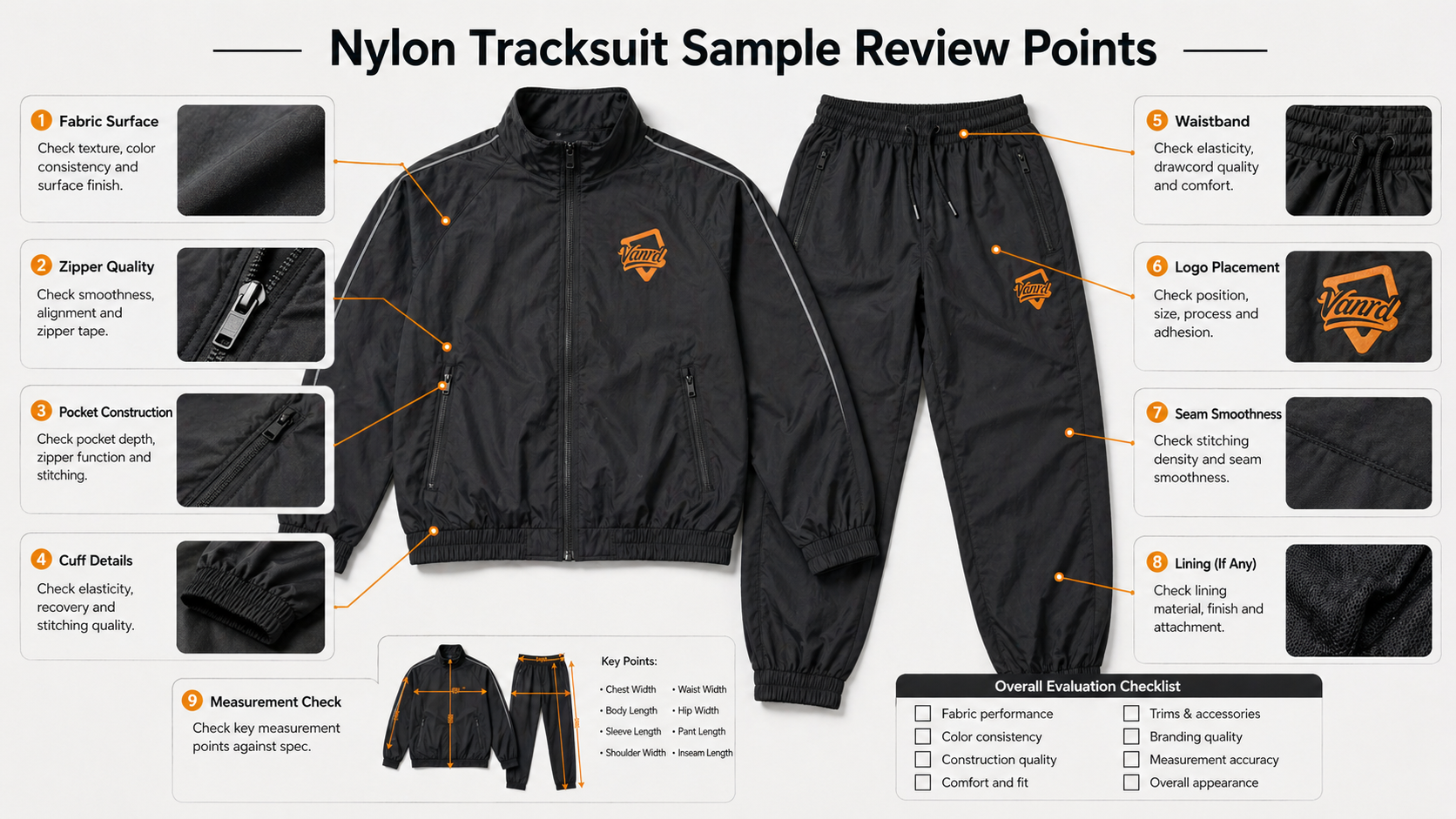
A fabric decision is not complete until the sample is reviewed as a finished garment. The buyer should evaluate how the nylon behaves after sewing, fitting, branding, lining, and trim application.
Sample Review Checklist
Before approving the sample, check:
1.Does the fabric match the expected hand feel?
2.Is the surface finish correct?
3.Does the color match the approved standard?
4.Does the fabric make too much noise during movement?
5.Is the lining comfortable?
6.Does the fabric support the intended silhouette?
7.Are seams smooth and stable?
8.Do zippers sit flat?
9.Are pockets symmetrical and functional?
10.Does branding look clean on the fabric?
11.Does embroidery or patching create tension?
12.Are jacket and pants balanced as a set?
13.Are measurements within the agreed tolerance?
14.Are revision comments specific enough for the next sample?
For inspection thinking, measurement tolerance, defect prevention, and bulk production quality control, buyers can review Vanrd's Q&C.
Factory Reality: Nylon Fabric Selection Is a Development Process
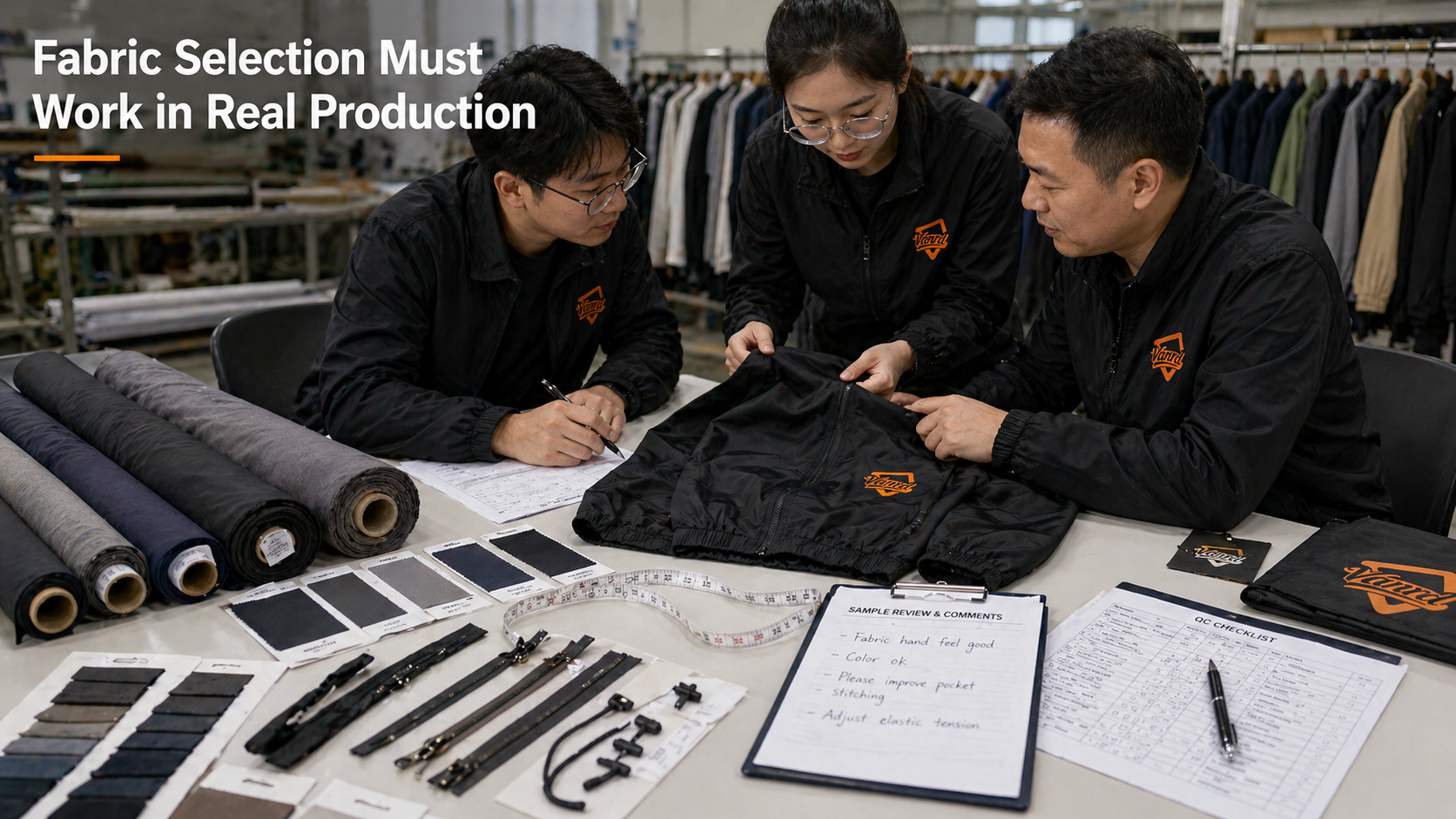
In factory development, nylon fabric selection is rarely a one-step decision. The buyer may begin with a reference image, but the manufacturer still needs to confirm fabric availability, hand feel, weight, finish, color, lining, trim matching, branding method, and production feasibility.
A fabric may look close to the reference but feel different. A fabric may have the right color but the wrong structure. A coating may support the visual direction but create issues for heat transfer. A lightweight nylon may look clean in flat photos but pucker near zippers or pockets after sewing.
This is why fabric swatch confirmation and sample review are both important. Sampling helps the buyer and manufacturer test whether the selected fabric can become a stable production standard.
Vanrd is based in Dongguan, Humen, and supports custom apparel development for brands that need fabric selection, sampling, and production planning. Buyers can learn more about Vanrd's production background through Factory Strength.
Risk Watchpoints When Choosing Nylon Fabric
Choosing nylon fabric too quickly can create problems during sampling or bulk production. Buyers should review key risk points before approving fabric direction.
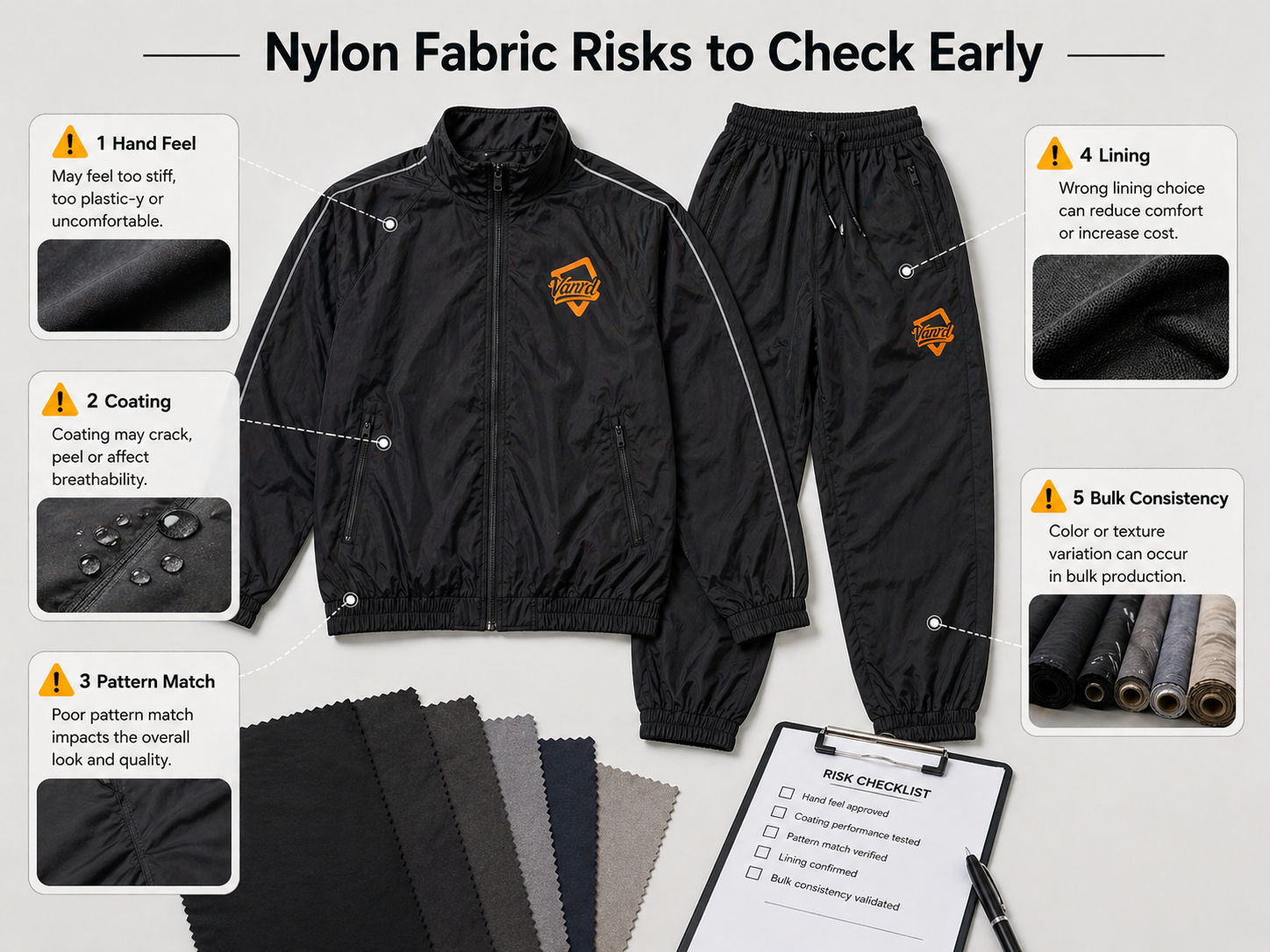
Risk 1: Fabric Looks Right but Feels Wrong
Photos can show color and surface, but they cannot fully show hand feel, noise, drape, or comfort. Buyers should confirm swatches or sample garments before final approval.
Risk 2: Coating Affects Branding
Some coated nylon fabrics may not work well with certain heat transfer or printing methods. The logo method should be tested or confirmed before bulk planning.
Risk 3: Fabric Does Not Match the Pattern
A fabric with too much stiffness may not suit a relaxed fit. A fabric with too little structure may not support a sharp silhouette. Pattern and fabric should be reviewed together.
Risk 4: Lining Changes the Fit
Adding lining can change the garment's comfort, thickness, drape, and measurements. Buyers should decide lining early instead of adding it late in the process.
Risk 5: Bulk Fabric Differs From Sample Fabric
Fabric sourcing and color consistency should be confirmed before bulk production. If the fabric is changed after sample approval, the buyer should review whether it affects fit, hand feel, branding, and cost.
Common Mistakes When Selecting Nylon Fabric for Tracksuits
Many fabric problems come from unclear requirements rather than the fabric itself. Private label brands can reduce revisions by avoiding these common mistakes.
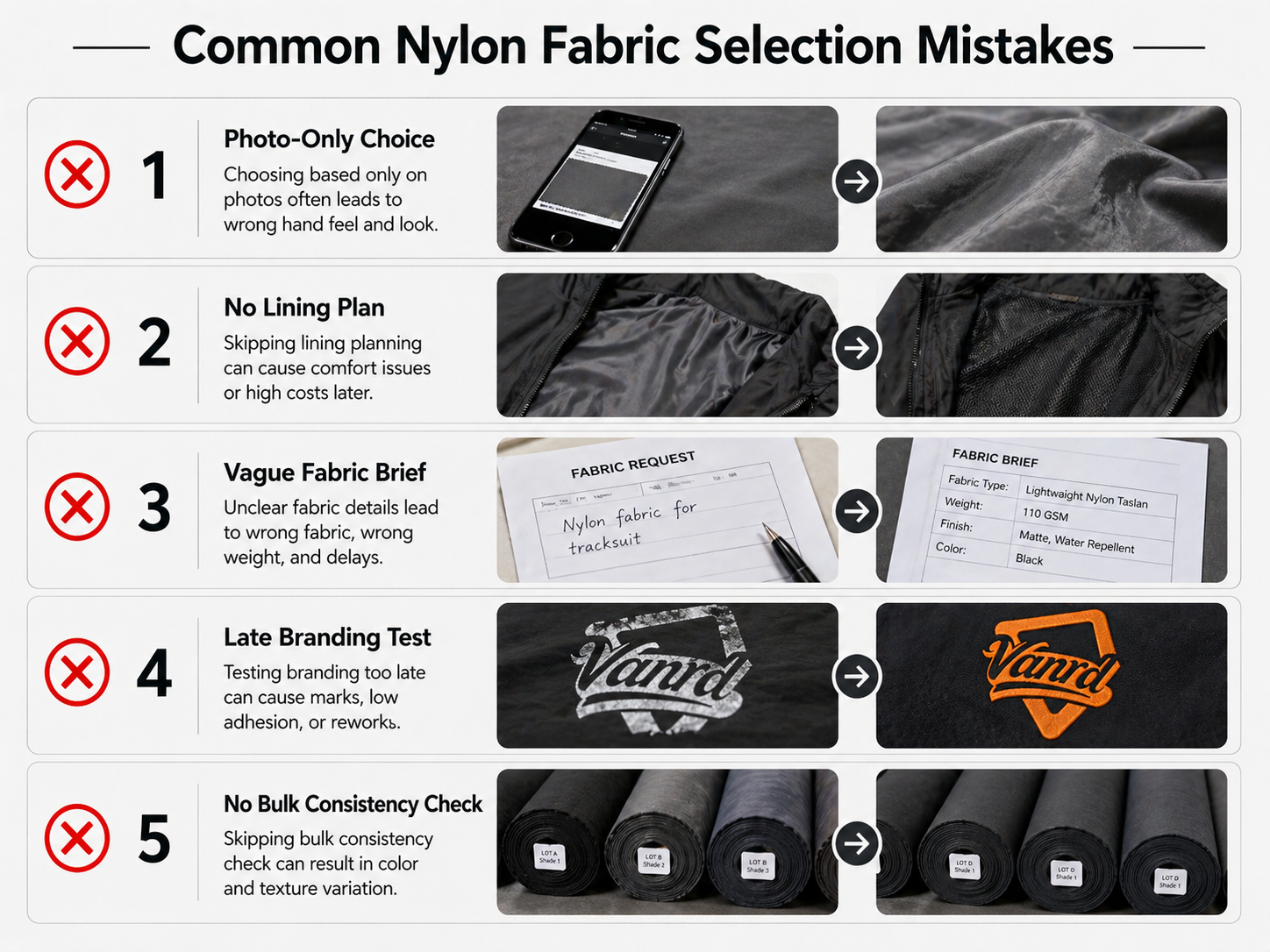
Mistake 1: Choosing Fabric Only From Photos
A photo cannot confirm hand feel, thickness, stretch, sound, coating, or comfort. Fabric swatches should be reviewed whenever possible.
Mistake 2: Ignoring Lining During the First Discussion
Lining affects construction, fit, cost, and comfort. If lining is added after the first sample, the pattern and sample result may need adjustment.
Mistake 3: Using a Vague Fabric Brief
A request like "we need nylon fabric" is too broad. A stronger brief explains target use, surface finish, weight direction, hand feel, color, stretch, and logo method.
Mistake 4: Testing Branding Too Late
Logo application should be considered before sampling or during the sample stage. Testing too late can delay approvals or require fabric changes.
Mistake 5: Forgetting Bulk Production Consistency
A fabric that works for one sample must also be available and repeatable for bulk production. Buyers should confirm fabric sourcing, color standard, and production feasibility before final approval.
What to Send Before Asking for Nylon Fabric Recommendations
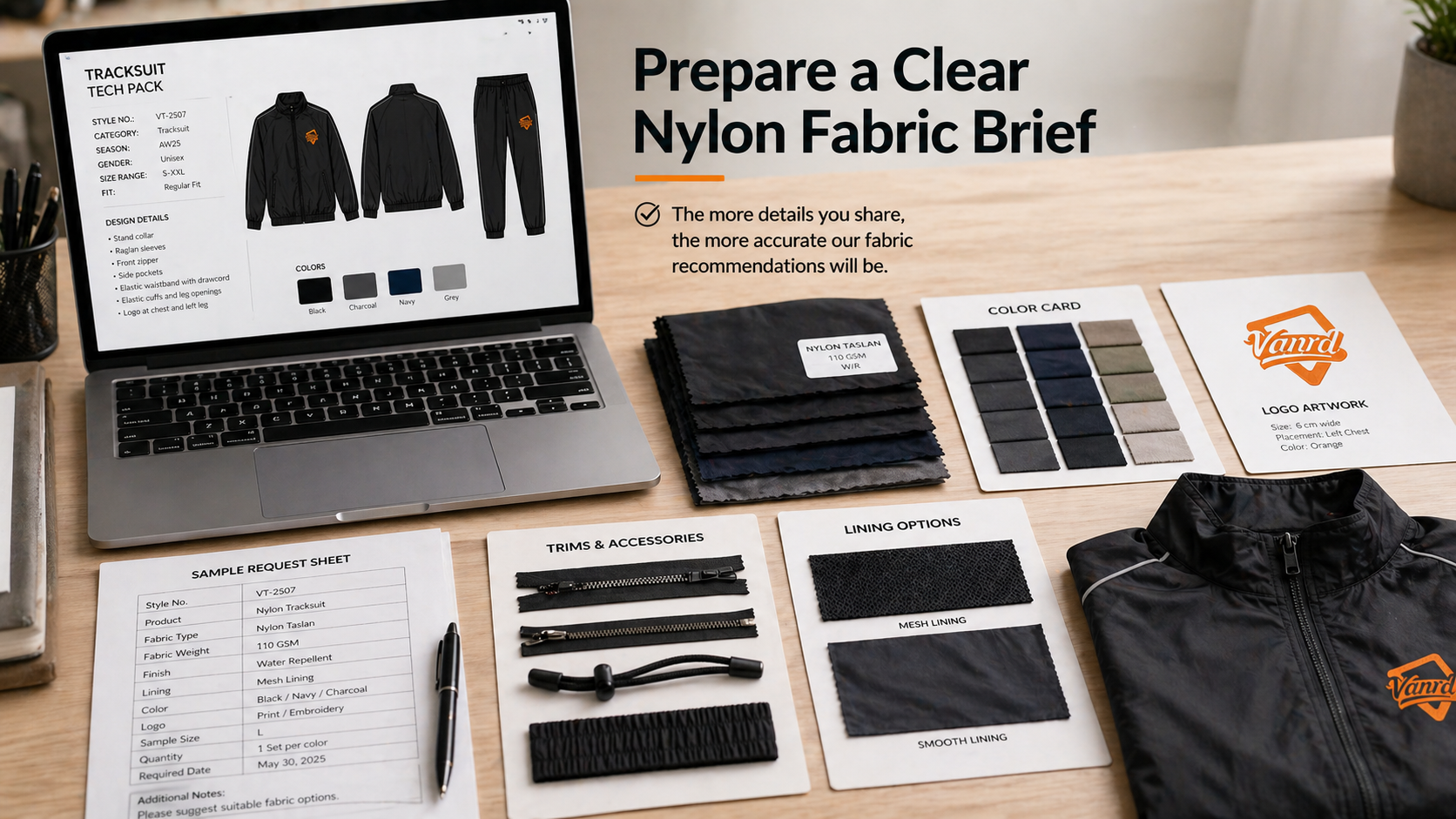
A manufacturer can recommend better nylon fabric options when the buyer provides clear project information. The goal is to explain the product result you want, not only the material name.
Useful Information to Prepare
Before asking for fabric advice, send:
1.Tracksuit reference images
2.Target use case
3.Tech pack or flat sketch
4.Size chart or fit direction
5.Preferred hand feel
6.Surface finish preference
7.Color references
8.Lining preference
9.Stretch requirement
10.Logo artwork
11.Branding method
12.Trim requirements
13.Target price level if available
14.Estimated order planning stage
15.Sample deadline if relevant
This information helps the manufacturer understand whether the project needs lightweight nylon, stretch nylon, coated nylon, matte nylon, crinkle nylon, or another suitable option.
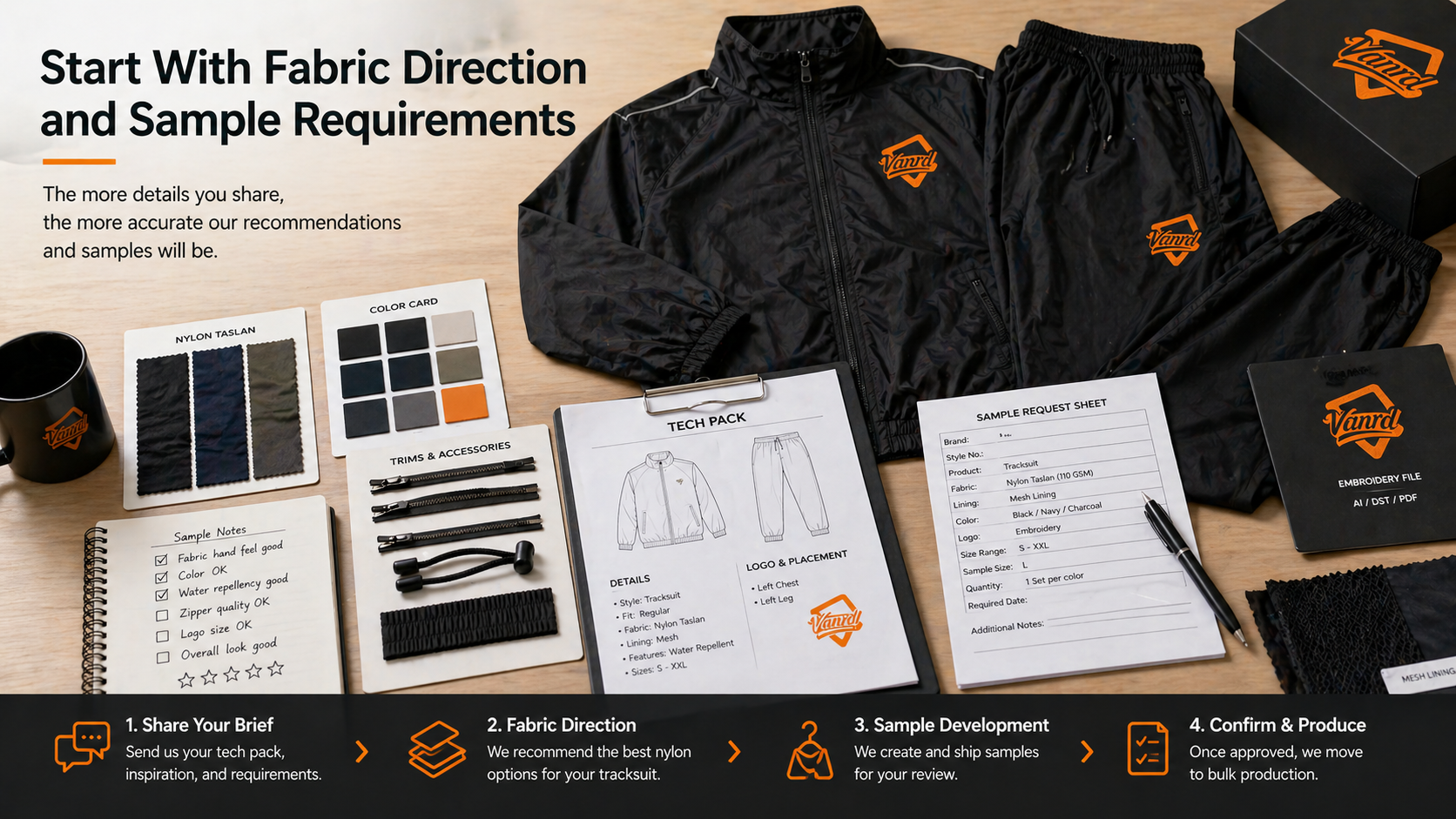
Vanrd's Service Process can help buyers understand how sample development, feedback, approvals, and production planning are connected.
Next Steps for Private Label Brands
Before choosing nylon fabric for custom tracksuit production, define the product use case, target fit, fabric hand feel, lining direction, branding method, and production plan. Then compare real swatches and test the selected fabric through sampling.
A practical next step is to send your tech pack, reference images, fabric direction, logo artwork, color requirements, trim details, and order planning information to the manufacturer. If the fabric direction is not clear yet, explain the final result you want so the manufacturer can recommend suitable options.
Private label brands planning custom nylon tracksuit production can contact Vanrd through the Contact Us page to discuss fabric selection, sampling requirements, and production feasibility.
FAQ
What nylon fabric is commonly used for custom tracksuits?
Common nylon directions for tracksuits include lightweight nylon, crinkle nylon, matte nylon, coated nylon, and stretch nylon blends. The best option depends on the target use, hand feel, lining, fit, branding method, and price level.
Is lightweight nylon suitable for tracksuit production?
Lightweight nylon can be suitable for windbreaker-style tracksuits, travel sets, and light shell garments. Buyers should check whether the fabric feels too thin, noisy, or unstable for the intended design before approving it.
Should I choose stretch nylon for a tracksuit?
Stretch nylon may be useful when the tracksuit needs better movement and comfort. However, buyers should check recovery, seam stability, measurement control, and whether the stretch level matches the intended fit.
Can nylon tracksuits be made without lining?
Yes, nylon tracksuits can be made without lining, but inside seam finishing and comfort should be reviewed carefully. Unlined construction may reduce complexity, but it may not suit every product direction.
What information should I send to a manufacturer before choosing nylon fabric?
Send a tech pack, reference images, target use case, fabric hand feel, color references, lining preference, logo artwork, trim details, size chart, and estimated order plan. This helps the manufacturer recommend more suitable fabric options.
Does nylon fabric choice affect lead time?
Yes. Lead time can be affected by fabric availability, color development, coating, lining, trim sourcing, logo testing, and sample revisions. Special fabric requirements may need more confirmation before production.
How can brands reduce fabric-related sample revisions?
Brands can reduce revisions by reviewing real swatches, defining hand feel clearly, confirming lining early, testing branding methods, checking sample construction, and giving specific revision comments after the first sample.
Final CTA
Need help choosing nylon fabric for your custom tracksuit program?
Send Vanrd your tech pack, reference images, target use case, fabric direction, logo artwork, lining preference, trim details, and order planning information. Our team can review your requirements and help you compare suitable nylon fabric options before sampling.
Contact Vanrd to start your custom nylon tracksuit fabric and sampling discussion: Contact Us.