How Brands Can Develop Custom Varsity Jackets Without Overcomplicating Fabric, Trim, and Decoration Decisions
A hoodie usually looks vintage when fabric, color, wash, graphic treatment, fit, and finishing work together to create a worn-in but controlled result. In manufacturing terms, "vintage" is usually an effect system, not a single fabric or process name. Brands that define the look clearly before sampling often get better alignment on development, approvals, and bulk consistency.
Why Varsity Jacket Development Gets Overcomplicated
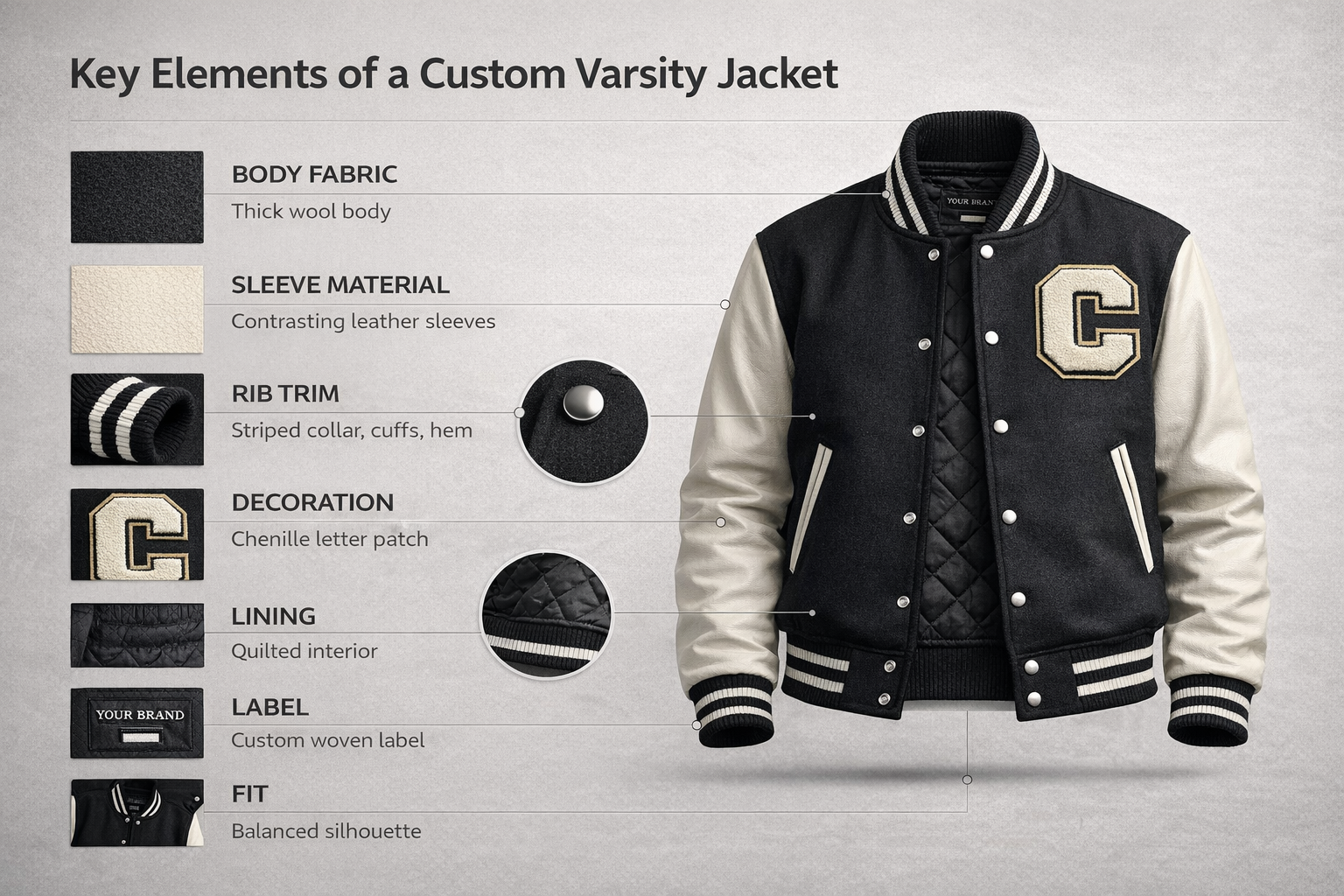
A custom varsity jacket usually becomes complicated when too many visible choices are treated as equally urgent from the start. In practice, body material, sleeve material, rib, snap buttons, patch application, embroidery, lining, label details, and fit can all affect the final look. If these decisions are not prioritized, the sample process can become slow, fragmented, and harder to approve.
From a manufacturer perspective, the best way to simplify development is to build a decision sequence. That usually means defining the product architecture first, then refining trim and decoration based on the intended brand image, use case, and budget range.
For private label projects, that is also why early alignment on OEM/ODM Services and the relevant Fabrics and Techniques is more useful than adjusting every visible detail at the same time.
What Buyers Should Lock First Before Sampling
A varsity jacket usually becomes easier to sample when the buyer locks these four areas first:
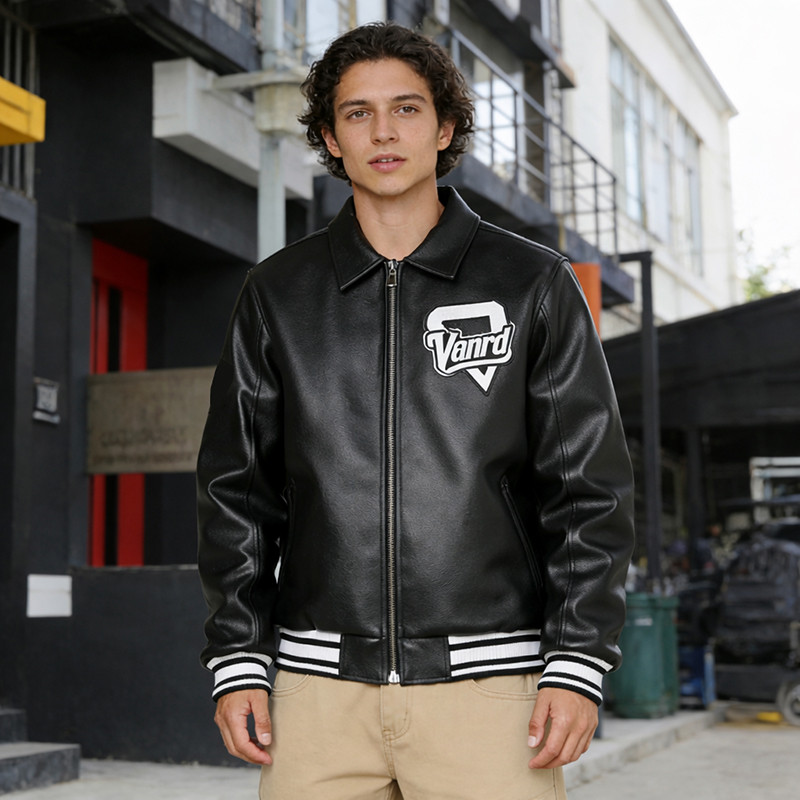
1. Overall Product Direction
The first question is not chenille or embroidery. The first question is what type of varsity jacket the brand wants to build.
Typical starting directions may include:
1.traditional heritage varsity jacket
2.fashion-forward oversized varsity jacket
3.simplified private label varsity jacket
4.streetwear varsity jacket with heavier graphic identity
5.lighter casual varsity jacket for broader wearability
If the overall direction is vague, later material and decoration decisions can become inconsistent.
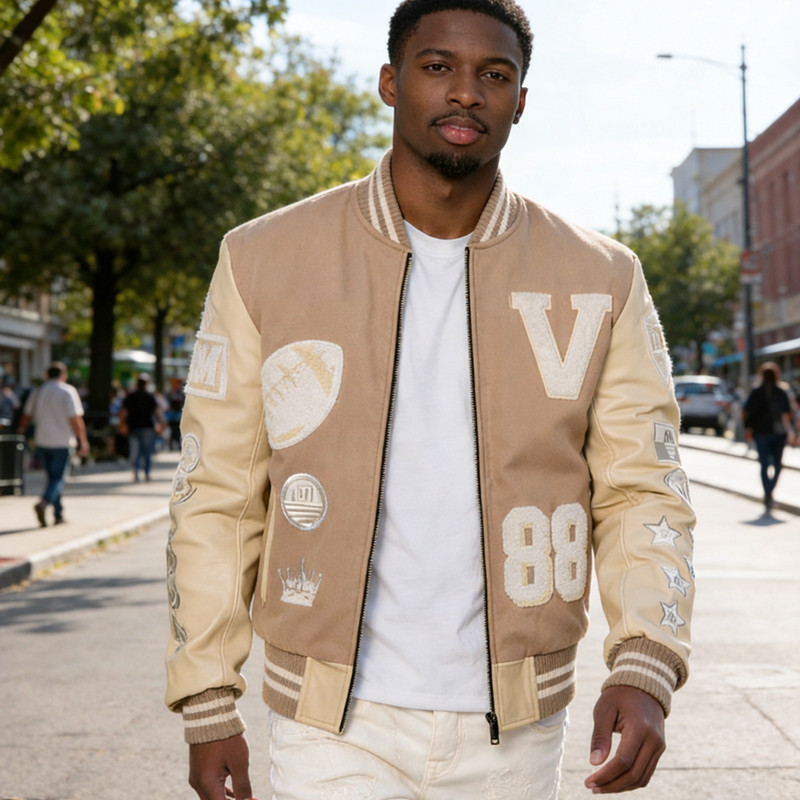
2. Body and Sleeve Material Pairing
The next priority is usually the material structure. This affects weight, shape, cost direction, and how authentic the final varsity look feels.
Common combinations may include:
1.wool-blend body with contrast sleeves
2.fleece or sweatshirt body with simpler sleeves
3.cotton-rich body with a lighter casual positioning
4.synthetic or leather-look sleeves depending on target use and budget
This is usually the point where buyers should align material intent through the relevant Fabrics and Techniques
discussion rather than relying only on mood images.
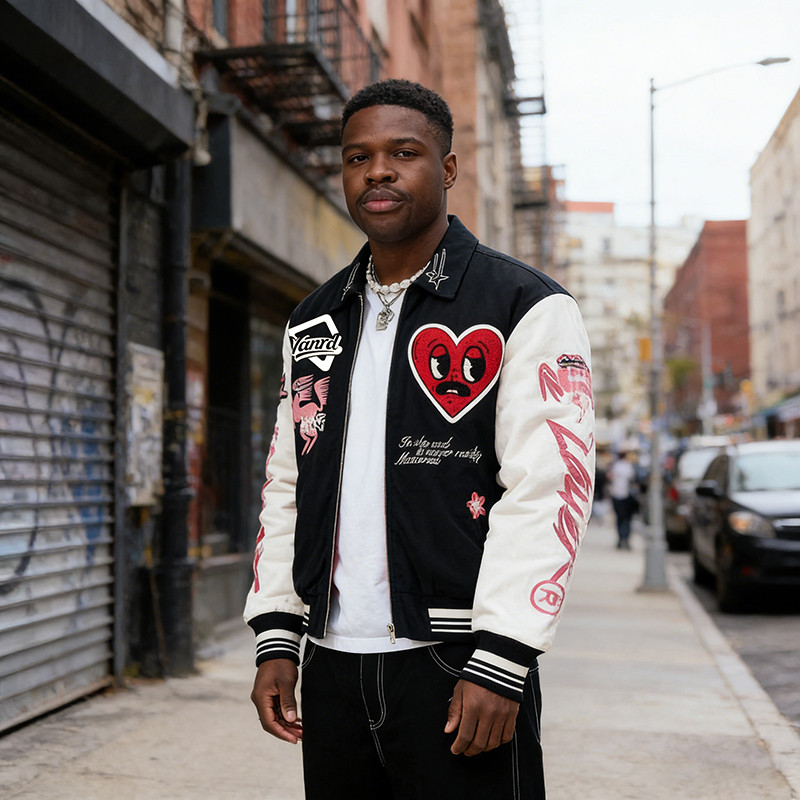
3. Main Decoration Method
Before discussing every badge or trim, buyers should decide the primary branding method.
Typical decoration options may include:
1.chenille patch
2.embroidery
3.applique
4.woven patch
5.screen print in selected areas
6.mixed logo applications
The goal is not to use every method. The goal is to choose the method that best fits the intended look and production logic.
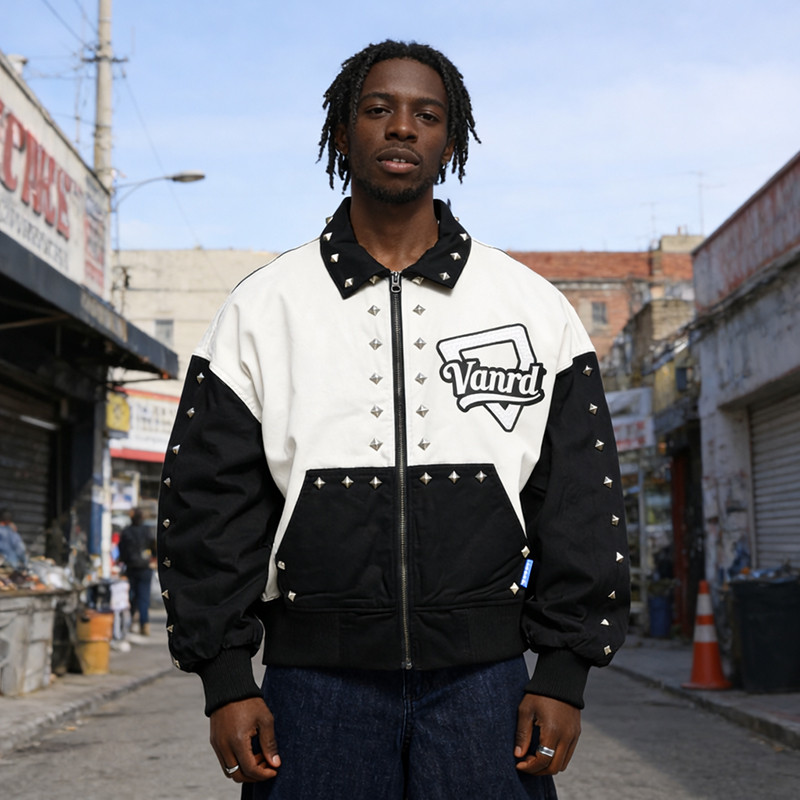
4. Approval Priority
A sample becomes easier to review when the buyer decides what matters most in the first round. For example:
1.overall silhouette first
2.material pairing first
3.chest branding first
4.sleeve contrast first
5.rib and closure balance first
Without this approval order, sample comments can become too broad and slow down revisions.
Fabric, Trim, and Decoration: What Usually Matters Most
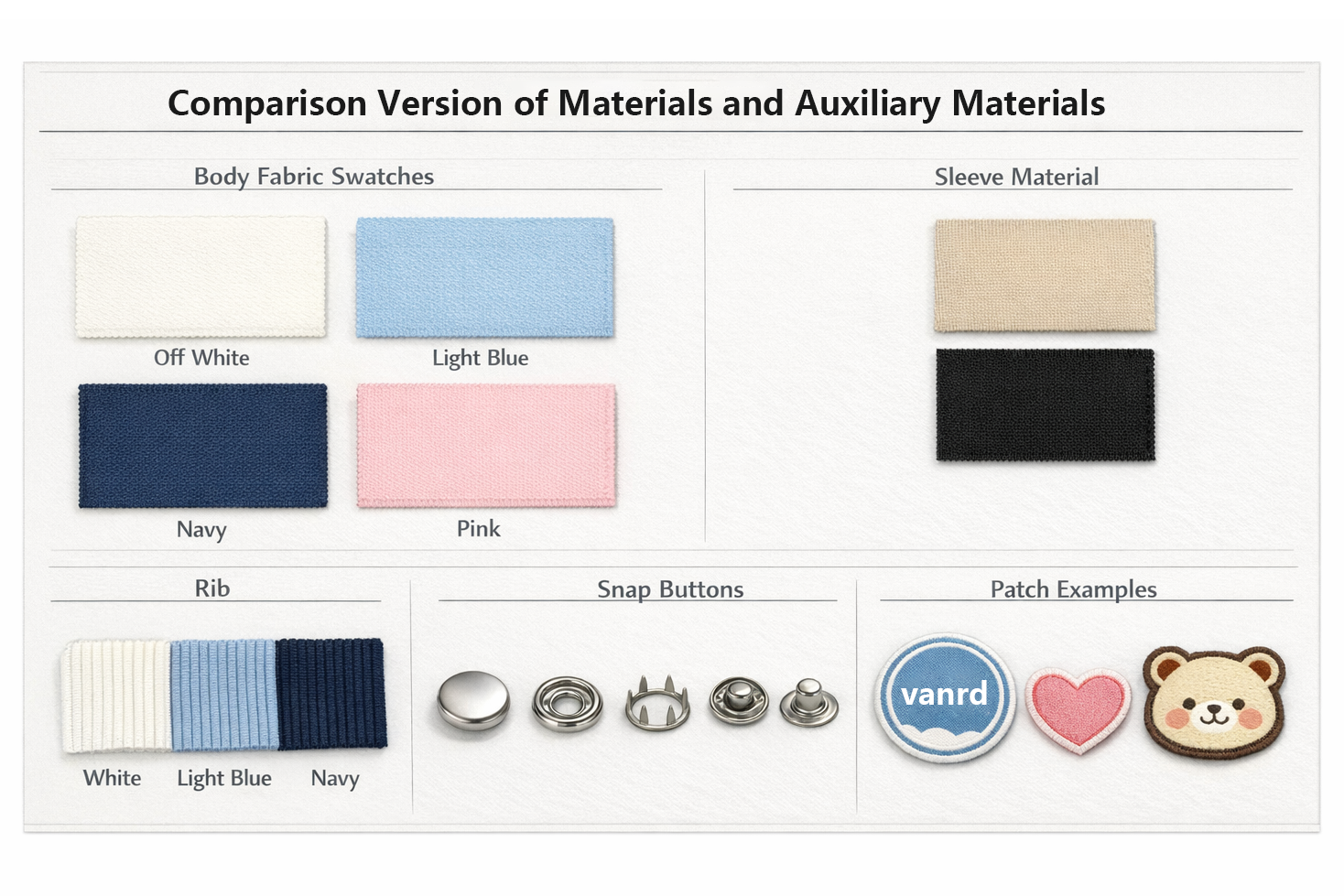
Fabric Decisions
Fabric usually sets the jacket's identity before decoration does. A heavier body can create a stronger heritage varsity feel, while a softer or lighter base can make the jacket more commercial and easier to wear.
In many cases, buyers should compare:
1.weight and structure
2.surface character
3.contrast with sleeve material
4.seasonality
5.how the fabric supports patch or embroidery placement
Trim Decisions
Trim decisions often make a varsity jacket look finished or unresolved. Rib quality, stripe balance, snap button finish, pocket shape, and lining direction can all affect the final impression.
Common trim checkpoints include:
1.rib color balance
2.stripe spacing
3.snap finish and durability
4.pocket shape and construction
5.label and hang loop placement
Decoration Decisions
Decoration should support the jacket concept, not overload it. A strong chest patch and a clean sleeve detail can often be more effective than too many scattered branding elements.
A useful rule is this: if fabric, sleeve contrast, and silhouette already create enough varsity identity, decoration can usually stay more controlled.
Chenille Patch vs Embroidery: When Each Option Is More Suitable
Option | Usually Better For | Watchpoints |
Chenille Patch | Traditional varsity look, bold letter logos, heritage team-inspired visuals | bulk thickness, stitching neatness, patch edge control |
| Embroidery | Cleaner logos, smaller branding, less bulky decoration | fill density, thread detail, logo readability |
| Applique | larger panels, layered branding, material contrast | edge finish, attachment quality, added complexity |
| Mixed Methods | more developed premium concepts | easier to overcomplicate if not prioritized |
A common confusion in varsity jacket development is assuming chenille is automatically the best option. In reality, chenille is usually more suitable when the brand wants a classic varsity signal. Embroidery can be more suitable when the brand wants a cleaner or more commercial look. Mixed methods can work, but they usually require better control over placement, balance, and sample approval.
A Practical Sampling Checklist for Custom Varsity Jackets
| Before sending a varsity jacket sample request, buyers should usually prepare: |
| 1.front and back reference images |
| 2.logo artwork files in editable format when available |
| 3.preferred material direction for body and sleeves |
4.fit comments, including silhouette and intended size balance |
5.trim comments for rib, snaps, pockets, and lining |
6.decoration priority, such as chenille first or embroidery first |
7.notes on what must be approved in the first sample |
8.comments on what can wait until later rounds |
This makes the Service Process more efficient because the supplier can review the project in a structured order rather than trying to interpret multiple unfinished ideas.
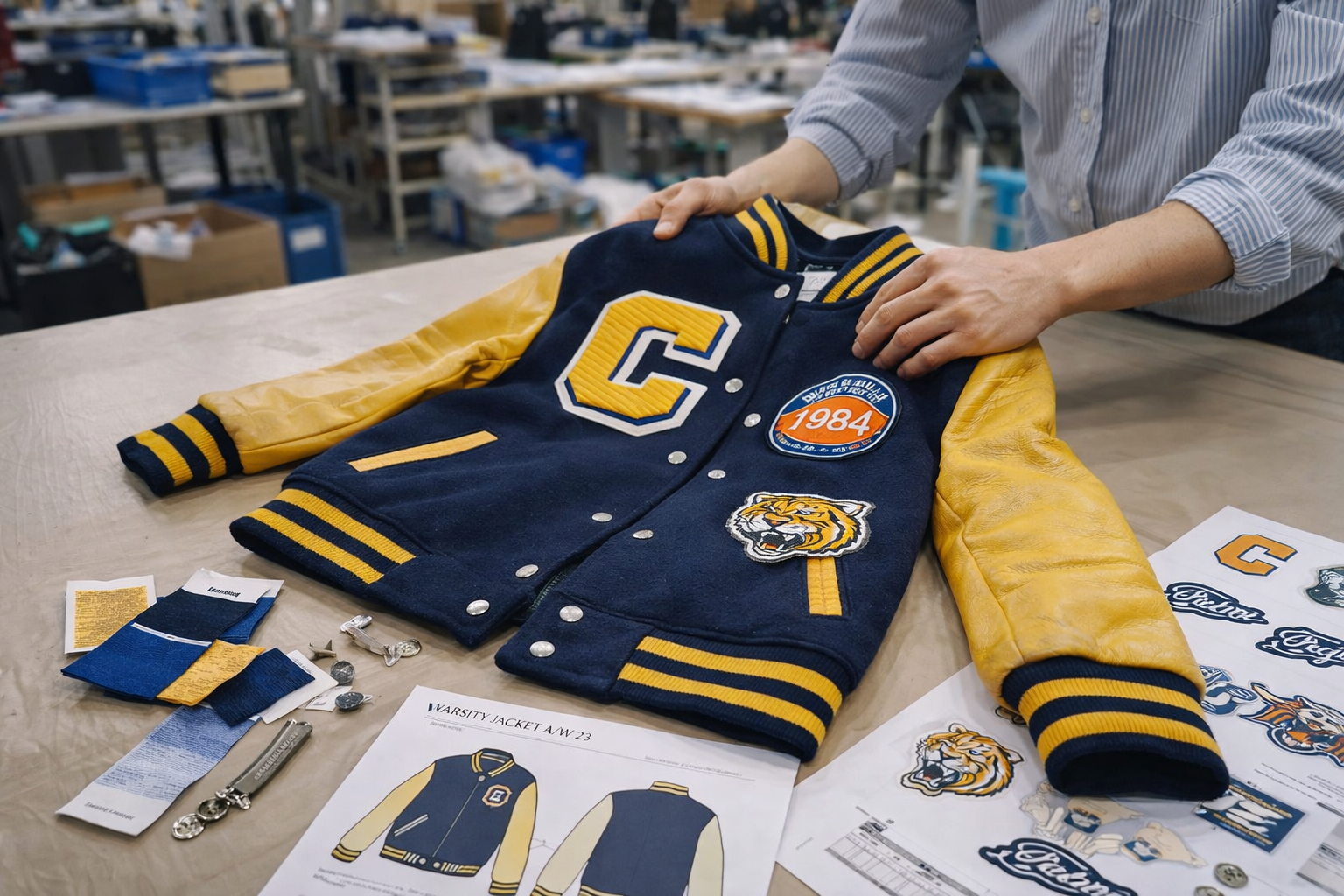
Factory Reality: Simpler Decisions Usually Lead to Better Samples
From a factory perspective, varsity jackets are visual products with many moving parts. That means a good sample is not only about sewing quality. It is also about coordination between materials, trims, decoration methods, and approval logic.
At Vanrd in Dongguan (Humen), the practical challenge is often not whether a varsity jacket can be made. The challenge is whether the buyer has defined the project clearly enough for the first sample to move in the right direction.
Three factory realities matter here:
Material Pairing Affects More Than Appearance
Body and sleeve materials do not only change the look. They also affect weight balance, shape retention, logo handling, and stitching behavior.
Decoration Quality Depends on Base Construction
Patch placement, embroidery cleanliness, and edge control are often influenced by fabric stability, panel shape, and seam location.
Every Added Detail Can Create Another Approval Point
Extra patch placements, multiple contrast details, and mixed trim finishes can work, but they also create more variables that need to be checked through Q and C
and sample review before bulk production.
Brands that want smoother execution should also review whether the supplier has suitable Factory Strength for coordinated jacket development rather than only basic cut-and-sew execution.
Common Mistakes and Risk Watchpoints
Mistake 1: Starting With Decoration Before Structure
A varsity jacket often looks better when the structure is right first. If decoration is finalized before material and silhouette, the final balance can feel off.
Mistake 2: Using Too Many Branding Methods in the First Sample
Chenille, embroidery, applique, sleeve badges, back artwork, and woven details can all work, but too many methods in the first sample can make review less efficient.
Mistake 3: Treating Trim as a Minor Detail
Rib, snaps, pocket edges, and lining can strongly influence the finished look. These are not minor details in varsity jacket development.
Mistake 4: Sending Incomplete Artwork or Unclear Placement Notes
If chest artwork, sleeve patch size, or back logo placement is unclear, sample corrections can become slower and more expensive.
Mistake 5: Approving by Photo Only
Photo review can help, but varsity jackets often need closer evaluation of material contrast, patch edge finish, rib feel, and overall structure before full approval.
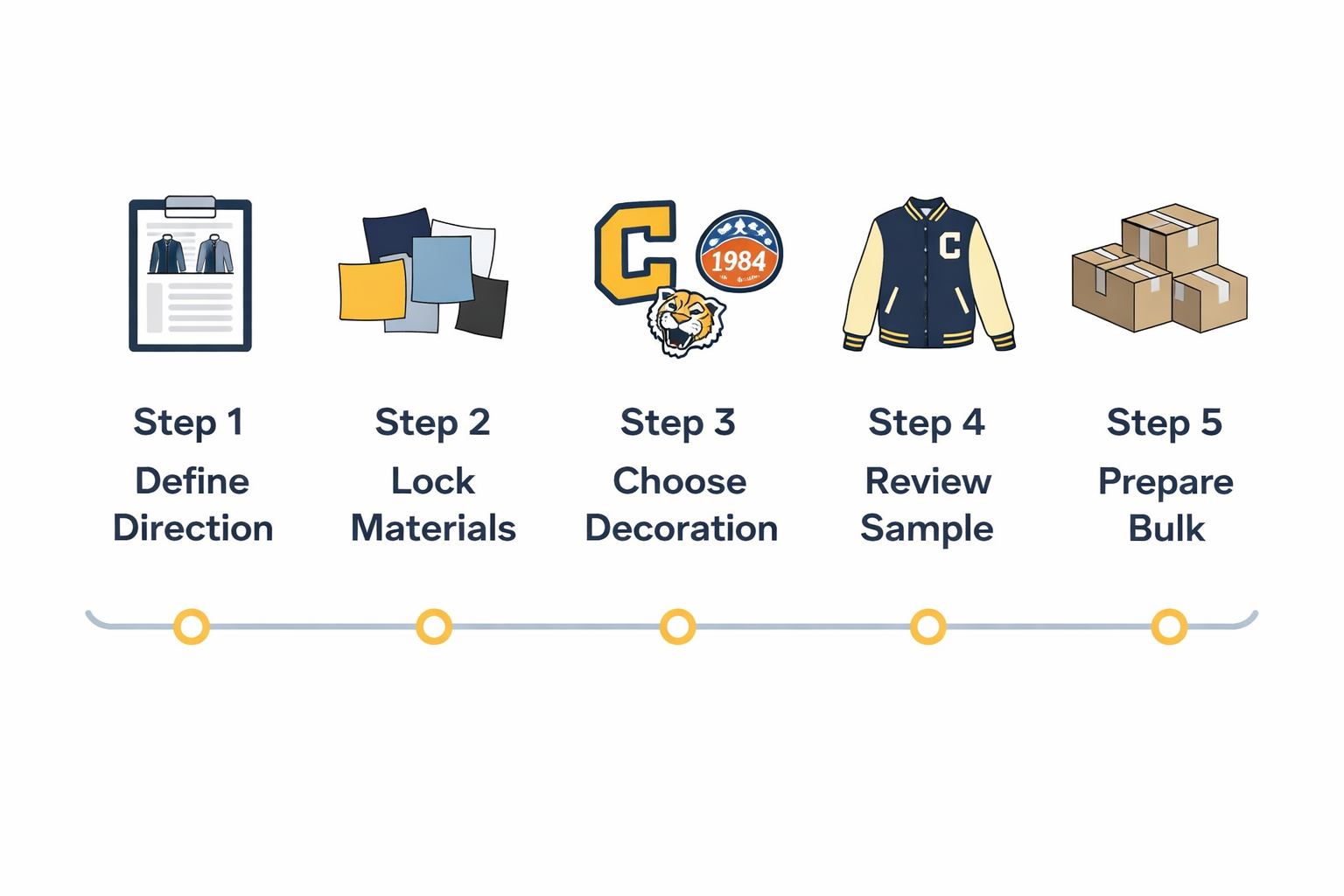
Next Steps: A Simpler Way to Build a Custom Varsity Jacket Program
A more workable varsity jacket development flow usually looks like this:
Step 1: Define the Product Direction
Choose whether the jacket should feel traditional, fashion-led, simplified, oversized, or commercially flexible.
Step 2: Lock the Material Structure
Decide the body and sleeve direction first, then confirm whether rib, lining, and closure should support a heavier or lighter final look.
Step 3: Choose One Main Decoration Priority
Decide whether chenille, embroidery, applique, or another method is the lead branding expression. Secondary details can follow later.
Step 4: Review the First Sample With a Clear Approval Order
Review the first sample in sequence:
1.silhouette
2.material pairing
3.trim balance
4.logo method
5.visual proportion
This usually produces more useful comments than reviewing every detail equally.
Step 5: Move Into Controlled Bulk Planning
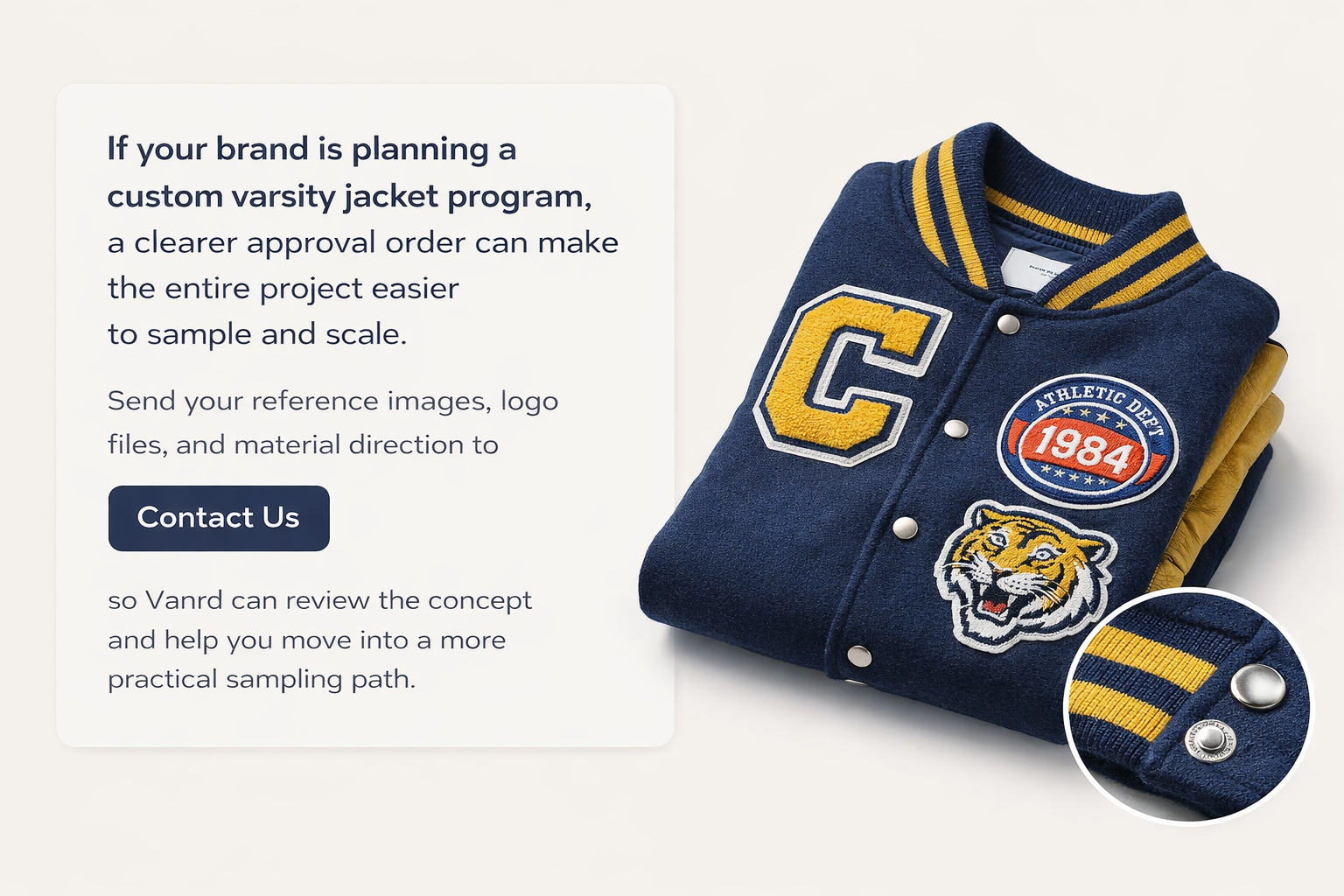
Once the product direction is stable, move toward inquiry, sample refinement, and production planning through the appropriate Contact Us path with your updated comments, files, and approval priorities.
FAQ
What fabrics are commonly used in custom varsity jackets?
Common options often include wool-blend body fabrics, fleece, heavyweight cotton, contrast sleeves, ribbed trims, and selected lining materials, depending on the target market and brand position.
Is chenille patch better than embroidery for varsity jackets?
Not automatically. Chenille is usually more suitable for a classic varsity look, while embroidery can be more suitable for cleaner branding or smaller logo areas.
What files should I send before requesting a varsity jacket sample?
A useful starting package usually includes reference images, editable logo files when available, placement comments, material direction, fit notes, and trim preferences.
Does a varsity jacket usually take longer to sample than a simpler jacket style?
In many cases, yes. Varsity jackets often involve more visible approval points around body fabric, sleeve material, rib, snaps, and logo methods.
What is the most common reason varsity jacket samples need extra revisions?
A common reason is that buyers try to finalize too many details at once without setting a clear approval order for structure, trims, and decoration.
Can I combine chenille, embroidery, and applique in one varsity jacket?
Yes, in many cases, but more decoration methods usually create more review points. It is often better to confirm the main branding direction first, then add complexity carefully.
How should brands compare varsity jacket manufacturers before sampling?
Brands should usually compare supplier capability in material sourcing, trim coordination, patch or embroidery handling, sample communication, and outerwear quality control rather than only comparing headline claims.